A1 · Beginner
Cultural Landscape of Khinalig and the Koc Yolu Route
High mountain stone homes, long sheep migration trails, and pastoral traditions in northern Azerbaijan.
High Mountain Village and Stone Houses
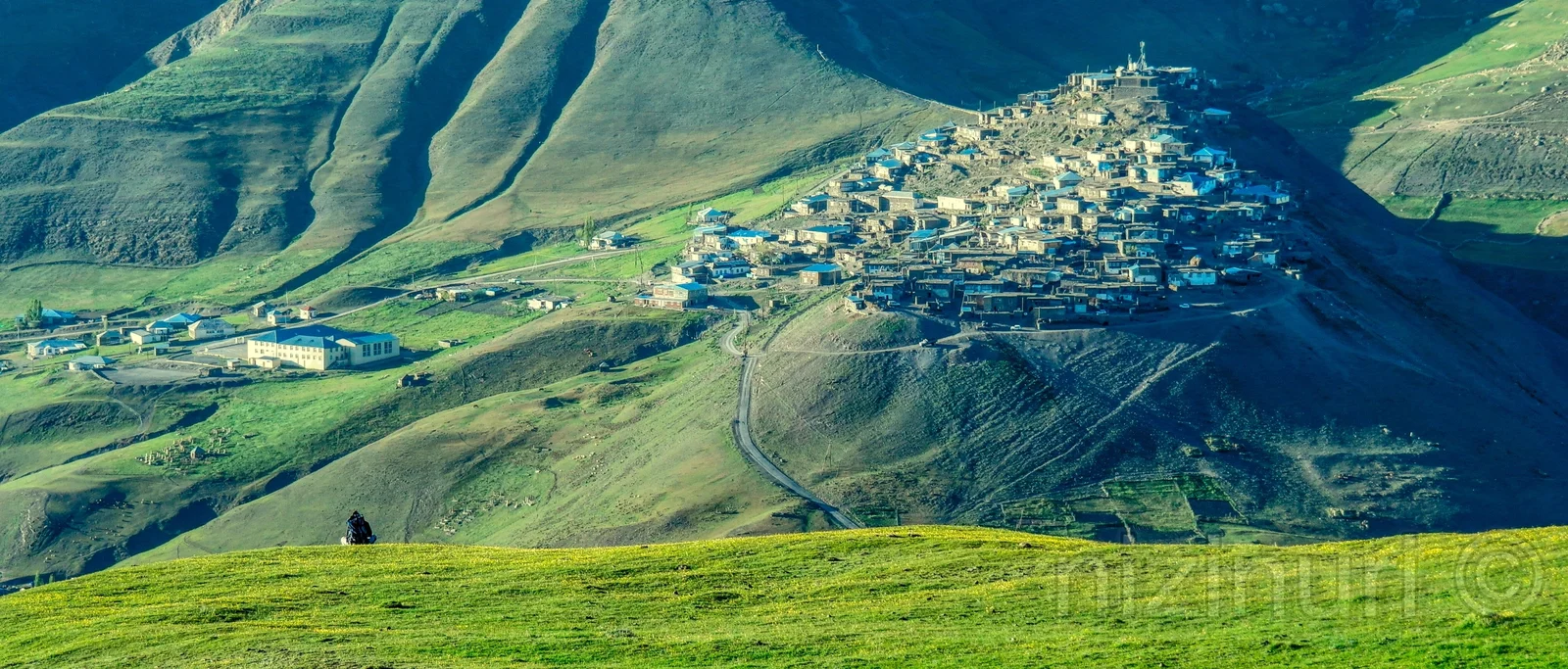
Khinalig is a very high stone village in the northern mountains of Azerbaijan.
People built simple stone houses close together on the steep rocky hillside.
The flat roof of each lower house forms an open yard for the house above it.
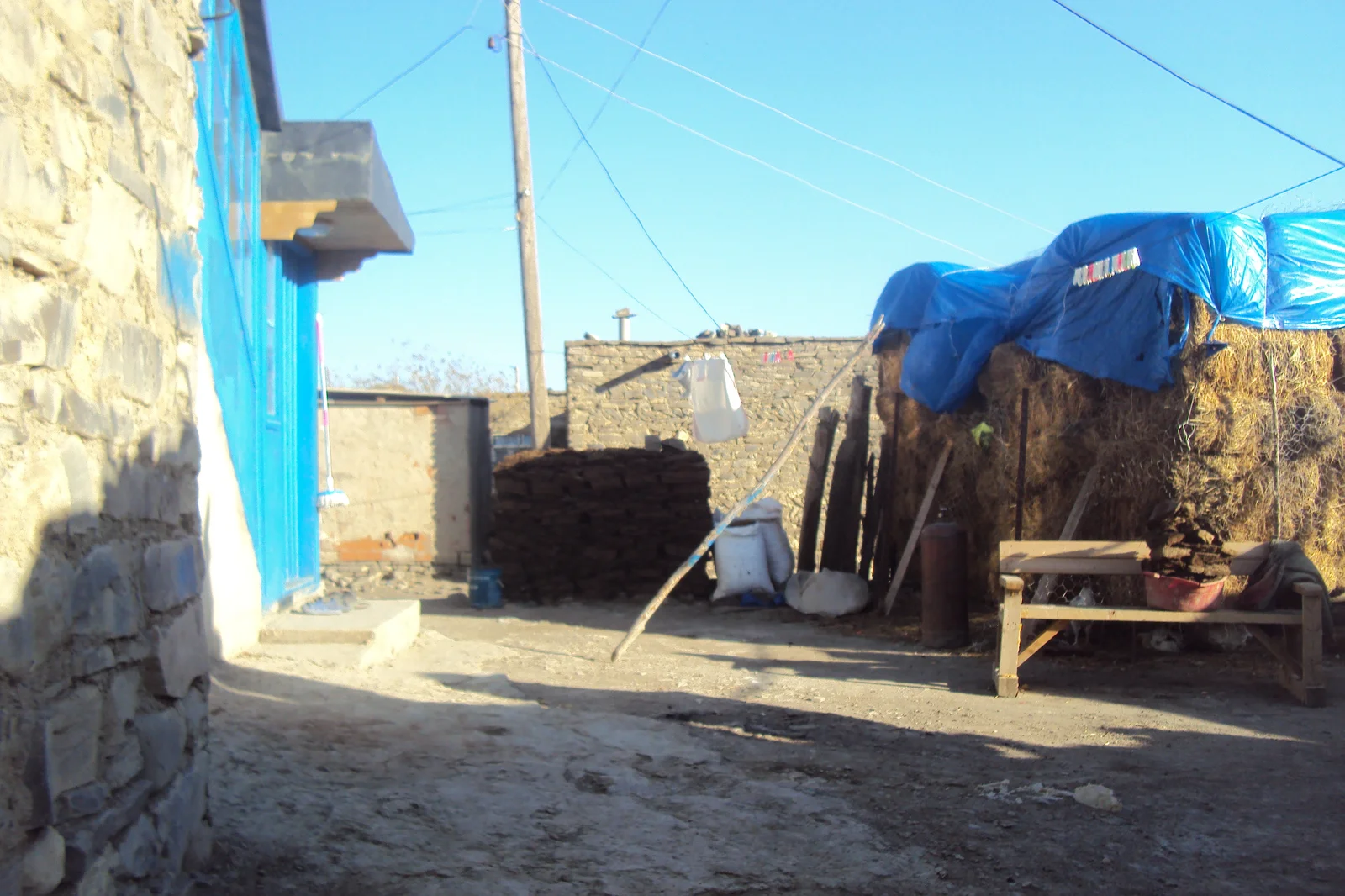
Builders used river cobbles and rough mountain stones to build strong thick walls.
Villagers speak their own old Khinalug language in this quiet mountain home.
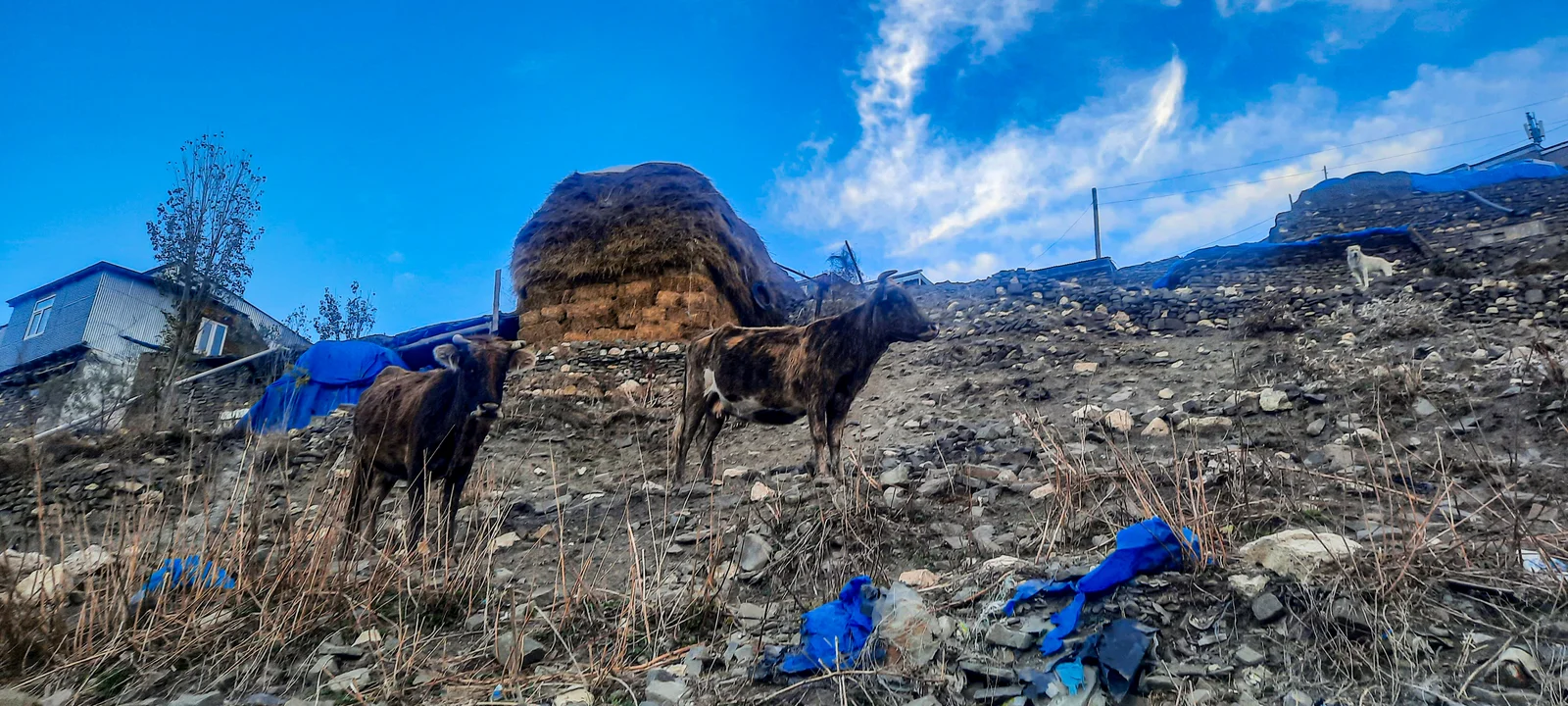
Families keep animals warm on the lower floor and heat rooms with dry manure fuel.
The Long Migration Route and Seasonal Moves
The famous Koc Yolu path is a long trail between high mountains and lowland pastures.
Shepherds move large flocks of fat-tailed sheep along this road twice every year.
In spring herds walk up toward green mountain meadows when the cold snow melts.
In autumn shepherds lead their flocks down toward dry plains before winter storms arrive.
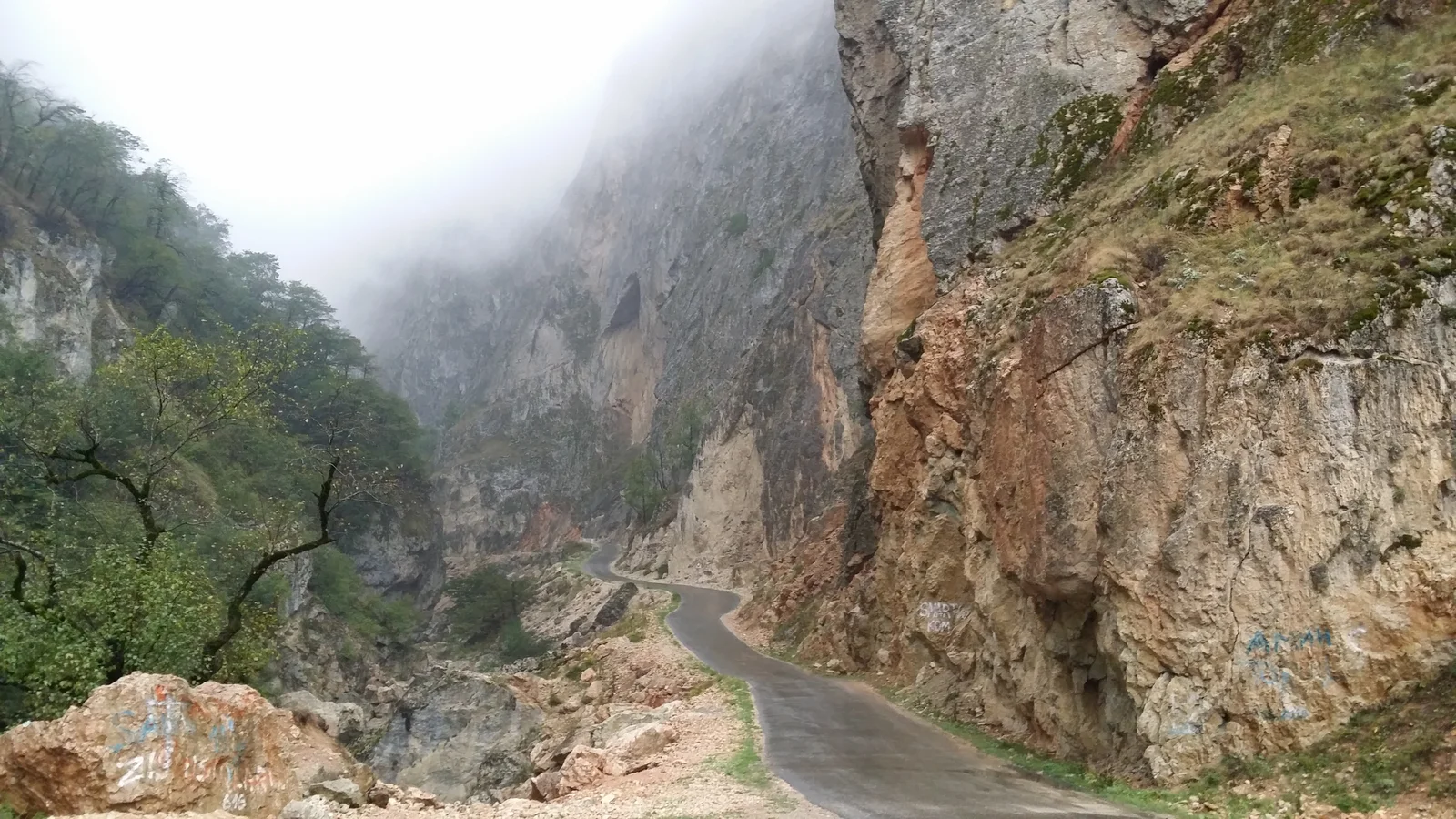
The historic route crosses dry fields, deep river gorges, and green high hills.
Strong Caucasian shepherd dogs walk beside the flocks to guard against hungry wolves.
Pasture Camps, Corrals, and Mountain Water
Herds rest at traditional seasonal camps along the long mountain trail.
Stone corrals and earthen pens keep sheep safe during dark cold nights.
Animals drink clean water from mountain springs and stone troughs along the way.
Small stone huts and tents protect shepherds when heavy rain and wind begin.
Shepherds follow customary corridor paths so sheep do not walk on farm fields.
Families make tasty sheep milk cheese and store food for the long journey.
Village Rules and Modern Protection
Village elders use communal rules so herds do not damage the green grass.
In 2023 UNESCO recognized this mountain cultural landscape as world heritage.
A national reserve protects the historic stone village and old customs.
Government teams work with local herders to keep the migration route open.
Highland families change travel days when snow melts early or winter begins soon.
Careful visitors come to see the stone village and support local family work.
A2 · Elementary
Cultural Landscape of Khinalig and the Koc Yolu Transhumance Route
Ancient alpine architecture, seasonal livestock migration, and customary pastoral heritage in the Caucasus.
High-Altitude Village and Vernacular Architecture
Khinalig stands at an elevation of 2,300 meters above sea level in northern Azerbaijan.
The historic village consists of dense stone houses clustered along steep mountain ridges.
Because slopes are so steep, the flat earthen roof of one house serves as the courtyard above.
Local builders joined river stones and unshaped limestone with clay mortar to withstand cold winters.
Residents speak the ancient Khinalug language, which remained distinct due to mountain isolation.
Stone stables occupy the ground floor of houses to provide natural warmth from the animals.
The Koc Yolu Migration Corridor and Seasonal Cycles
The Koc Yolu is an ancient 200-kilometer trail connecting alpine pastures with winter rangelands.
Pastoralists guide thousands of fat-tailed sheep along this rugged pathway twice each year.
During late spring, shepherds lead their flocks uphill toward rich subalpine meadows.
In early autumn, families move the animals downhill toward lowland plains before freezing blizzards hit.
The route crosses arid coastal plains, deep river valleys, and windy alpine mountain passes.
Large Caucasian shepherd dogs guard the herds against wolves along the isolated mountain tracks.
Pasture Infrastructure, Seasonal Camps, and Water Supply
Pastoral groups stop at seasonal camps known as binas along the migratory corridor.
Stone corrals and circular pens provide secure enclosures for resting sheep during the night.
Freshwater springs and stone troughs provide drinking water for animals throughout the trek.
Simple drystone huts and felt tents shelter shepherds during sudden alpine storms.
Customary right-of-way agreements guide herds through designated paths away from agricultural fields.
Shepherds produce traditional motal cheese in sheepskin sacks during summer camp stays.
Customary Governance and International Heritage Status
Community councils manage pasture rotation to prevent overgrazing and maintain healthy grasslands.
UNESCO inscribed the Khinalig cultural landscape and the Koc Yolu route on the World Heritage List in 2023.
The Khinalig State Reserve protects traditional stone houses and supports local ethnographic research.
National agencies coordinate with local pastoralists to protect migration trails from highway construction.
Herding communities adapt their seasonal travel dates as alpine snowfall patterns shift over time.
Sustainable village tourism generates supplementary income for residents while protecting ancient traditions.
B1 · Intermediate
Cultural Landscape of Khinalig and the Koc Yolu Transhumance Route
High Caucasus vernacular masonry, seasonal pastoral migrations, and communal rangeland stewardship.
Alpine Settlement Patterns and Vernacular Stone Architecture
Situated at an altitude of approximately 2,300 meters, Khinalig represents one of the highest villages in the Greater Caucasus.
The settlement features tightly terraced masonry houses that follow the natural contours of the steep mountain slope.
Owing to the dramatic incline, the flat clay-and-stone roof of each lower dwelling functions as an open terrace for the house above.
Craftsmen gathered river cobbles and limestone slabs, setting them in clay mortar to create buildings that endure heavy tremors and frost.
The local population preserves the indigenous Khinalug language, maintaining an independent linguistic heritage shaped by isolation.
Traditional houses integrate ground-floor stables that channel radiant animal heat into the living quarters above during cold winters.
The Koc Yolu Transhumance Corridor and Migratory Rhythms
Extending over 200 kilometers, the historic Koc Yolu transhumance corridor connects summer alpine meadows with winter lowland pastures.
Each year, pastoralist families navigate tens of thousands of hardy fat-tailed sheep along this challenging mountain highway.
In late spring, herders begin the upward trek as melting snow exposes fresh green pastures across high subalpine slopes.
By mid-autumn, pastoralists guide their flocks down toward dry plains before severe frosts block high mountain passes.
The corridor spans diverse ecological settings, traversing arid Caspian lowlands, deep river canyons, and rocky mountain ridges.
Caucasian shepherd dogs accompany the flocks, deterring predatory wolves and bears along remote mountain stretches.
Pastoral Waystations, Water Management, and Encampments
The practical function of the migration network depends on seasonal encampments known as binas and obas along the route.
Pastoralists rely on drystone corrals and earthen enclosures to gather and protect livestock during overnight halts.
Sustaining large herds requires a dependable network of freshwater springs, carved stone troughs, and mountain water channels.
Sturdy stone cabins and canvas shelters provide emergency refuge when sudden mountain blizzards sweep across high passes.
Customary agreements define livestock transit corridors, ensuring that migrating animals do not trespass onto cultivated farm plots.
At highland pastures, herders process fresh sheep milk into savory motal cheese packed tightly inside salted skins.
Communal Rangeland Management and World Heritage Conservation
Traditional village councils known as camaat allocate grazing rights and rotational schedules to prevent rangeland degradation.
In 2023, UNESCO recognized the Cultural Landscape of Khinalig People and Koc Yolu Transhumance Route as a World Heritage property.
The Khinalig State Historical-Architectural Reserve enforces conservation standards to maintain authentic vernacular masonry.
Regional authorities work alongside herders to ensure modern transportation infrastructure does not disrupt traditional migration corridors.
Highland pastoralists continuously adjust seasonal departure times to accommodate changing precipitation and snowfall trends.
Well-managed cultural tourism offers local households valuable economic support while reinforcing community pride in pastoral heritage.
B2 · Upper Intermediate
Cultural Landscape of Khinalig and the Koc Yolu Transhumance Route
Terraced alpine settlements, 200-kilometer pastoral corridors, and customary rangeland governance in Azerbaijan.
High-Altitude Urbanism and Vernacular Construction Techniques
Perched at an elevation of 2,300 meters in the Quba district, Khinalig exemplifies long-term human adaptation to harsh Caucasian alpine conditions.
The village presents an extraordinarily dense urban fabric where flat-roofed stone dwellings form amphitheater-like tiers along steep slopes.
Because of the severe mountain grade, the roof of each residence serves directly as the outdoor courtyard and pedestrian thoroughfare for the tier above.
Local builders utilized unshaped limestone, river cobbles, and earthen mortar, producing thick load-bearing walls resistant to alpine seismic activity.
The community maintains the endangered Khinalug language, an isolated Northeast Caucasian tongue protected by mountain geography.
Ground-level animal stables provide essential geothermal and livestock warmth to upper residential rooms, supplemented by dried manure hearths.
The Koc Yolu Transhumance Corridor and Seasonal Mobility
The Koc Yolu constitutes a 200-kilometer transhumance corridor linking the high-altitude yaylag summer pastures with lowland qishlag winter grounds.
Twice annually, pastoralist communities mobilize tens of thousands of indigenous fat-tailed sheep across this historic livestock highway.
During May and June, shepherds direct flocks upward through thawed mountain valleys toward nutrient-rich subalpine grazing zones.
When autumn temperatures drop in October, herders retrace the route downward to avoid treacherous blizzards across high Caucasian passes.
The migration corridor traverses remarkable ecological transitions, moving from semi-arid Caspian steppes through forested gorges to alpine peaks.
Specially trained Caucasian Shepherd dogs patrol the migratory columns, defending valuable livestock against predatory wolves and brown bears.
Pastoral Infrastructure, Overnight Waystations, and Hydraulic Systems
The viability of transhumance pastoralism rests upon durable route infrastructure, including seasonal pastoral camps called binas and obas.
Sheltered resting stations equipped with drystone enclosures and earthen corrals allow herders to pen livestock securely at dusk.
Strategic watering points, including captured mountain springs and carved stone drinking troughs, sustain animal health along dry trail segments.
Robust drystone huts and portable felt tents shield pastoralists from severe subalpine winds and unpredictable mountain storms.
Strict customary agreements govern migratory rights-of-way, preventing passing herds from trampling cultivated agricultural fields in foothill valleys.
Pastoralists process sheep milk into motal cheese aged inside sheepskins, creating durable foodstuffs during extended mountain encampments.
Customary Governance Frameworks and UNESCO Heritage Protection
Customary communal assemblies known as camaat regulate pasture access and rotational grazing periods to safeguard rangeland ecology.
In 2023, UNESCO inscribed the cultural landscape and pastoral corridor on the World Heritage List under cultural criteria (iii) and (v).
The Khinalig State Historical-Architectural and Ethnographic Reserve oversees structural restorations and authentic stone masonry guidelines.
State environmental authorities coordinate with pastoralist unions to preserve corridor connectivity against industrial development and road building.
Pastoralist families monitor shifting snowfall patterns and alpine stream flows, modifying migratory timetables to mitigate climatic fluctuations.
Community-led hospitality initiatives generate complementary revenue for highland families while honoring living nomadic traditions.
C1 · Advanced
Cultural Landscape of Khinalig and the Koc Yolu Transhumance Route
Alpine vernacular architecture, 200-kilometer pastoral corridors, and customary rangeland stewardship in the Greater Caucasus.
High-Altitude Vernacular Masonry and Spatial Organization
Occupying an altitude of 2,300 meters in northern Azerbaijan, Khinalig demonstrates remarkable vernacular adaptation to extreme mountain elevation.
The village exhibits dense vernacular architecture, where multi-story limestone dwellings form tightly clustered terraces across steep ravines.
Given the precipitous mountain gradient, the flat earthen roof of each lower dwelling serves as the working courtyard for the household above.
Masons assembled unhewn limestone, river cobbles, and earthen binder, creating resilient walls capable of withstanding freeze-thaw cycles and tremors.
The community preserves the Khinalug tongue, sustaining a distinct Northeast Caucasian linguistic lineage through geographic seclusion.
Domestic quarters utilize lower-level livestock stables for thermal insulation, supplemented by central hearth installations burning manure cakes.
The Koc Yolu Transhumance Corridor and Seasonal Mobility
Connecting high summer yaylag pastures with lowland winter grazing plains, the 200-kilometer Koc Yolu represents an ancient system of transhumance.
Twice annually, pastoralist groups steer tens of thousands of hardy fat-tailed sheep across this demanding pastoral artery.
In late spring, shepherds commence an arduous ascent into the Greater Caucasus as melting snow unveils luxuriant subalpine rangelands.
By October, pastoralists initiate their southward descent, guiding flocks toward sheltered lowlands before winter blizzards seal mountain passes.
The route charts a complex ecological transect, spanning semi-arid Caspian steppes, foothill canyons, and glaciated alpine ridges.
Formidable Caucasian Shepherd dogs provide essential canine vigilance, protecting travelling herds from apex predators like wolves and bears.
Route Infrastructure, Hydraulic Networks, and Seasonal Habitation
The operational endurance of the transhumance corridor depends upon specialized seasonal encampment sites, known as binas, established along the trail.
Nightly stopping stations feature drystone enclosures and earthen corrals designed to confine and protect livestock from predators.
Watering stations fed by natural mountain springs and stone troughs tap into high alpine aquifer reserves to sustain migrating flocks.
Crude drystone huts and portable felt tents afford temporary habitation for shepherds confronted with sudden blizzard emergencies.
Customary easement protocols delineate strict migration corridors, preventing livestock herds from infringing upon valley farming plots.
Highland camps support dairy preservation, where herders process surplus sheep milk into pungent motal cheese aged inside skins.
Customary Resource Governance and International Safeguarding
Communal rangeland allocation is regulated through customary assemblies known as camaat, preventing overgrazing through rotational pasture use.
In 2023, UNESCO recognized this living pastoral tradition by inscribing the landscape on the World Heritage List under international stewardship.
The Khinalig State Reserve enforces conservation measures to preserve authentic vernacular architecture and prevent inappropriate modernization.
State agencies partner with pastoralists to protect migration corridors from highway expansion, pipeline development, and agricultural enclosure.
Herders continually modify seasonal itineraries to accommodate changing precipitation cycles and variable snowpack conditions in high valleys.
Regulated cultural tourism delivers supplementary revenue to highland households without undermining traditional pastoral routines.
C2 · Mastery
Cultural Landscape of Khinalig and the Koc Yolu Transhumance Route
High Caucasus vernacular urbanism, a 200-kilometer pastoral migration corridor, and customary commons governance.
Vernacular High-Altitude Morphology and Spatial Choreography
Positioned at an altitude of 2,300 meters in the Greater Caucasus, Khinalig displays an extraordinarily stratified vernacular settlement morphology.
The mountain village constitutes a dense conglomeration of flat-roofed stone dwellings terraced along precipitous limestone amphitheaters.
Exploiting the extreme mountain gradient, each home relies on the flat earthen roof below it to provide a functional cantilevered courtyard.
Master masons bonded unworked river cobbles and limestone slabs with earthen mortars to withstand seismic vibrations and subterranean dampness.
Through geographical seclusion, the inhabitants maintained the Khinalug tongue, preserving an isolated Caucasian linguistic lineage.
Residential layouts employ subterranean stables for passive thermal heating, complemented by central hearth fixtures burning dried manure briquettes.
The Koc Yolu Transhumance Corridor and Ecological Trajectories
The 200-kilometer Koc Yolu transhumance corridor connects highland yaylag summer pastures with semi-arid lowland qishlag rangelands.
Bi-annually, pastoralist communities orchestrate the movement of vast sheep flocks along this historic Greater Caucasus livestock highway.
Spring melt releases lush alpine pastures, prompting pastoralists to execute their rigorous altitudinal migration into high mountain valleys.
Before severe autumn frosts choke the passes, shepherds negotiate the downward descent across rugged topographic contours.
The route constitutes a profound ecological transect, linking arid Caspian scrublands, riverine defiles, and periglacial ridges.
Trained Caucasian Shepherd dogs maintain fierce custodianship over migrating flocks, deterring wolves and bears on remote trailways.
Waystation Infrastructure, Hydraulic Systems, and Pastoral Habitation
The physical continuity of pastoral migration hinges upon specialized seasonal infrastructure, including bina encampments and roadside corrals.
Shepherds erect drystone pens and earthen breastworks at designated intervals to safeguard resting livestock against night predators.
The vitality of moving herds requires systematic access to hydrographic resources, including mountain springs, stone troughs, and runoff conduits.
Primitive drystone shelters and collapsible felt dwellings afford emergency pastoral habitation when torrential blizzard systems strike the passes.
Customary grazing tenure defines right-of-way corridors, preventing transient livestock herds from encroaching upon cultivated peasant plots.
Summer camps provide the operational base for dairy maturation, notably the production of pungent motal cheese aged within sheepskins.
Customary Commons Governance and International Safeguarding Regimes
Customary village assemblies termed camaat administer communal pasture governance, enforcing strict grazing quotas to avert rangeland degradation.
In 2023, UNESCO formalized the global significance of this pastoral system through World Heritage inscription under criteria (iii) and (v).
Statutory management by the Khinalig State Reserve enforces rigorous conservation guidelines to protect historic masonry and village integrity.
State authorities collaborate with herder collectives to defend the corridor from infrastructure fragmentation, road engineering, and enclosure.
Pastoralists dynamically alter migration timetables to counteract shifts in seasonal snowfall, glacial hydrology, and mountain climate cycles.
Community-managed cultural tourism provides supplemental financial resilience to villagers while honoring living Caucasian nomadic traditions.
Check your understanding
Choose how closely you want to revisit the article. You can refer back while answering, and review explanations when you finish.
Quick Quiz A1
Try one question, then create a free account for the full Quick Quiz. Sign Up Free
Answer every question before checking. There is no time limit.
Your results
/ 1 correct (%)
Read the explanations to see how each answer connects to the article.
-
Where is the high stone settlement of Khinalig situated in Azerbaijan?
1. Answer:
Quick Quiz A2
Try one question, then create a free account for the full Quick Quiz. Sign Up Free
Answer every question before checking. There is no time limit.
Your results
/ 1 correct (%)
Read the explanations to see how each answer connects to the article.
-
Where is the high stone settlement of Khinalig situated in Azerbaijan?
1. Answer:
Quick Quiz B1
Try one question, then create a free account for the full Quick Quiz. Sign Up Free
Answer every question before checking. There is no time limit.
Your results
/ 1 correct (%)
Read the explanations to see how each answer connects to the article.
-
Where is the high stone settlement of Khinalig situated in Azerbaijan?
1. Answer:
Quick Quiz B2
Try one question, then create a free account for the full Quick Quiz. Sign Up Free
Answer every question before checking. There is no time limit.
Your results
/ 1 correct (%)
Read the explanations to see how each answer connects to the article.
-
Where is the high stone settlement of Khinalig situated in Azerbaijan?
1. Answer:
Quick Quiz C1
Try one question, then create a free account for the full Quick Quiz. Sign Up Free
Answer every question before checking. There is no time limit.
Your results
/ 1 correct (%)
Read the explanations to see how each answer connects to the article.
-
Where is the high stone settlement of Khinalig situated in Azerbaijan?
1. Answer:
Quick Quiz C2
Try one question, then create a free account for the full Quick Quiz. Sign Up Free
Answer every question before checking. There is no time limit.
Your results
/ 1 correct (%)
Read the explanations to see how each answer connects to the article.
-
Where is the high stone settlement of Khinalig situated in Azerbaijan?
1. Answer:
