A1 · Beginner
Languages in Azerbaijan
Census tables, village mother tongues, and city signs show languages in Azerbaijan.
Counting Languages Across the Nation
The national census office collects language facts from people across the whole country.
Most people in Azerbaijan tell the survey that Azerbaijani is their main mother tongue.
The survey forms ask if citizens speak Russian or English as a second tongue.
Counting papers record personal declarations rather than public street talk.
Official census lists show language numbers for every town and rural district.
These state tables give basic demographic facts about homes in each neighborhood.
Regional Mother Tongues in Northern and Southern Towns
Many different historic community languages live together in the green northern and southern regions.
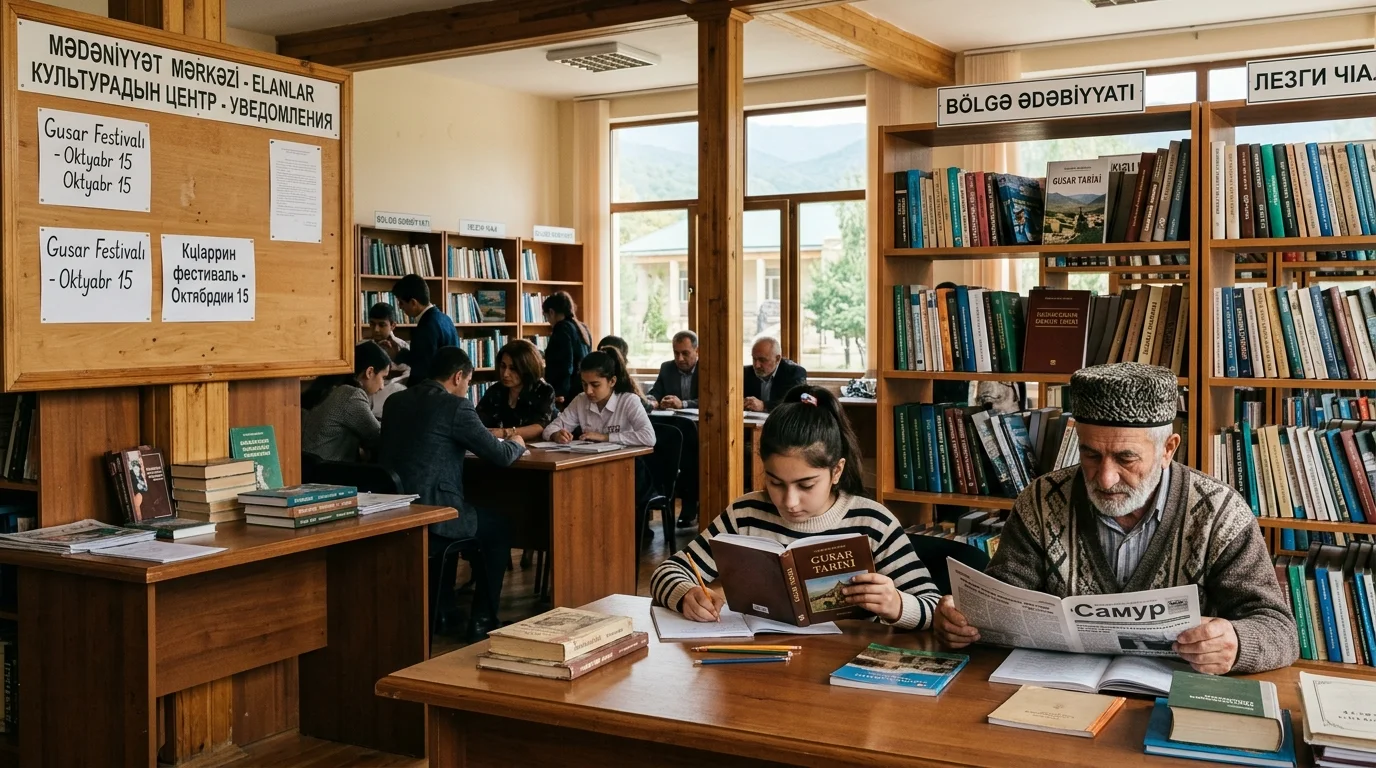
In northern towns like Gusar and Quba, families speak the Lezgian mother tongue at home.
Families in southern districts like Lankaran and Astara speak the Talysh language together.
Small village settlements also keep old tongues like Tsakhur, Avar, and Georgian alive.
Local town libraries keep storybooks and folk poems in these native regional tongues.
Village schools offer primary classes so young children can learn their local mother tongue.
Public Signs and Service Desks
The national constitution names Azerbaijani as the official state language for public business.
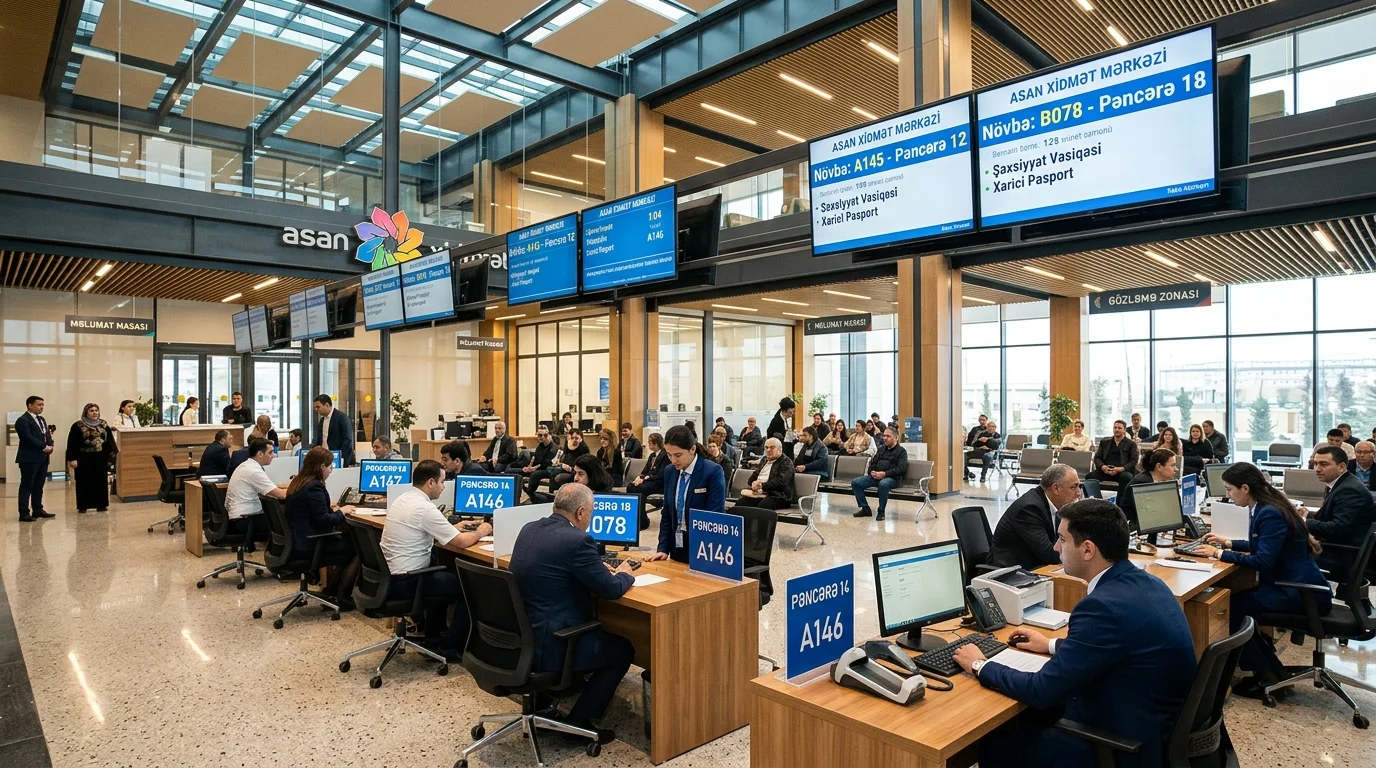
Modern ASAN Service halls show neat Latin letters on digital screens and ticket counters.
Public service desks also show screens in Russian and English for visiting guests.
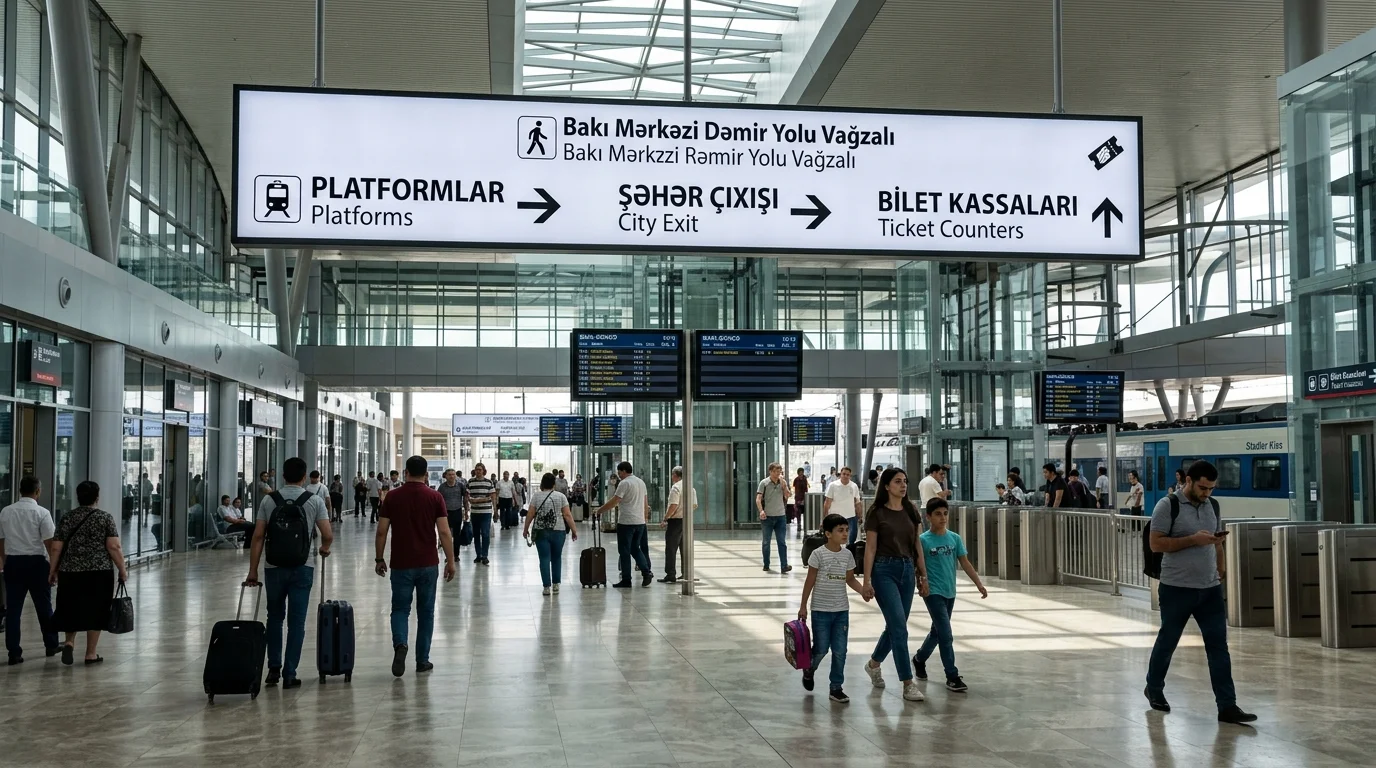
Bright signs at Baku Central Railway Station show directions in Azerbaijani and English.
Blue metal signs on city walls show street names in clear Latin letters.
Shop signs on main city streets must show their primary words in Azerbaijani.
Daily Conversations in City Life
People hear many friendly voices in busy city markets and street tea houses.
Office workers in Baku often switch between Azerbaijani and Russian during daily conversations.
Cozy bookstores in Baku sell great books in Azerbaijani, Turkish, English, and Russian.
University students in Baku read modern English for classwork and digital computer jobs.
National television channels broadcast news mostly in Azerbaijani while sharing regional programs.
City life in Baku mixes proud state words with friendly world tongues.

A2 · Elementary
Azerbaijani Language Census and Multilingual Demography
National census language tables, regional mother tongues, public signage, and urban communication in Azerbaijan.
National Census Methods and Language Statistics
The State Statistical Committee conducts the national census to record mother tongue declarations and foreign language skills.
Census demographic returns show that over ninety-two percent of the population reports Azerbaijani as their native tongue.
Official census questionnaires register whether citizens possess conversational fluency in secondary languages like Russian or English.
Statistical analysts note that census tables aggregate self-reported declarations rather than observing live spoken encounters.
Published census data classify language distribution across urban municipalities and rural administrative districts.
Sociolinguistic scholars observe that census tables provide broad statistical benchmarks while leaving micro-level neighborhood speech unrecorded.
Regional Mother Tongues Across Northern and Southern Districts
Azerbaijan possesses rich regional linguistic diversity concentrated in northern and southern rural districts.
Northern communities in Gusar and Quba maintain Lezgian as a vibrant mother tongue used in daily domestic life.
Southern settlements around Lankaran, Astara, and Lerik preserve Talysh across close-knit rural households.
Census ledgers also record smaller linguistic communities speaking Tsakhur, Avar, Tat, Udi, and Georgian.
Regional cultural centers and municipal libraries preserve community literature and traditional folk songs in minority languages.
Designated public schools provide primary classroom instruction and cultural textbooks in indigenous regional mother tongues.
Official State Language and Public Service Wayfinding
The Constitution of Azerbaijan establishes Azerbaijani as the official state language for all government institutions.
Modern ASAN Service centers feature standardized Azerbaijani Latin lettering across automated ticket kiosks and service counters.
Public administrative centers maintain supplementary touchscreen options in Russian and English for international visitors.
Major transit hubs like Baku Central Railway Station feature bilingual wayfinding signage in Azerbaijani and English.
Municipal authorities install uniform blue enamel street plaques displaying street addresses in Azerbaijani Latin typography.
Commercial retail regulations ensure that private storefronts and advertising boards display primary informational text in Azerbaijani.
Urban Sociolinguistic Encounters Across Metropolitan Baku
Everyday public life across Baku involves dynamic multilingual encounters in bazaars, cafes, and neighborhood shops.
Bilingual city residents frequently use spontaneous code-switching between conversational Azerbaijani and Russian at work.
Independent bookstores in central Baku stock extensive literature published in Azerbaijani, Turkish, English, and Russian.
University students and technology professionals in Baku increasingly adopt English alongside Azerbaijani for research and digital work.
Public broadcast media regulations mandate that national television stations broadcast primarily in Azerbaijani while airing minority programs.
Urban language dynamics in Baku demonstrate an energetic balance between state language usage and cosmopolitan linguistic diversity.
B1 · Intermediate
Language Demography and Everyday Public Speech in Azerbaijan
An analysis of census language tables, regional minority mother tongues, civic signage, and urban communication.
Statistical Census Frameworks and Language Data
The State Statistical Committee conducts decennial national censuses collecting self-reported data regarding mother tongue and secondary languages.
Demographic census tabulations confirm that Azerbaijani serves as the primary mother tongue for over ninety-two percent of citizens.
Census questionnaires document whether respondents maintain working speaking competency in foreign languages such as Russian and English.
Demographic researchers emphasize that census records aggregate self-declared responses rather than directly observing daily conversational exchanges in public spaces.
Official statistical bulletins present language distributions categorized by administrative district, economic region, and urban residency.
Sociolinguists highlight that while census statistics supply essential baseline data, they leave subtle neighborhood speech patterns unmeasured.
Regional Ethno-Linguistic Communities and Heritage Mother Tongues
Historic linguistic pluralism remains clearly visible across northern and southern districts where indigenous languages flourish alongside Azerbaijani.
In northern districts like Gusar and Quba, community members maintain Lezgian as an active home language and vernacular tongue.
Southern districts including Lankaran, Astara, and Lerik encompass historic communities where Talysh is spoken across multi-generational households.
Surveys also document smaller linguistic groups speaking Tsakhur, Avar, Tat, Udi, and Georgian across designated rural settlements.
Municipal public libraries and community cultural houses maintain bilingual book collections and local folk literature in regional tongues.
Elementary schools in designated minority districts provide primary-level lessons and specialized reading materials in indigenous community languages.
State Language Governance, Public Signage, and Administrative Portals
Article 21 of the national constitution formally establishes Azerbaijani as the official state language governing public administration and judiciary proceedings.
Public ASAN Service centers employ rigorous Azerbaijani Latin orthography across digital ticketing kiosks, document windows, and queue monitors.
Civil service reception desks provide supplementary digital portals in English and Russian to assist foreign residents and diplomatic personnel.
Urban transport facilities including Baku Central Railway Station and the Baku Metro exhibit illuminated overhead directional signage in Azerbaijani and English.
Municipal street infrastructure throughout Baku features standardized blue enamel plaques displaying historic street names in Latin Azerbaijani script.
Commercial regulations instruct commercial storefronts and retail advertising signs to feature primary descriptive text in the Azerbaijani state language.
Urban Sociolinguistic Interaction and Spoken Realities in Baku
Everyday public encounters in central Baku illustrate vibrant multilingual exchanges across open markets, transport terminals, and street cafes.
Many metropolitan residents engage in spontaneous code-switching between colloquial Azerbaijani and Russian during informal business and social conversations.
Independent bookstores and literary cafes throughout central Baku offer extensive shelf selections of books in Azerbaijani, Turkish, English, and Russian.
Younger demographics across the capital increasingly utilize English alongside Azerbaijani for academic research, digital employment, and software development.
State broadcast regulations require national television and radio networks to broadcast primarily in Azerbaijani while scheduling minority language segments.
Everyday urban encounters across Baku demonstrate a harmonious relationship between national state language consolidation and cosmopolitan multilingual practices.
B2 · Upper Intermediate
Azerbaijani Language Census and Multilingual Sociolinguistics
A critical examination of census language metrics, regional linguistic diversity, administrative signage, and urban speech.
National Census Methodology and Linguistic Data Collection
The decennial population census administered by the State Statistical Committee collects structured data regarding primary mother tongue and secondary competencies.
Statistical census releases demonstrate that Azerbaijani constitutes the declared native language for over ninety-two percent of the national population.
Census questionnaires register whether individual respondents possess active conversational fluency in major secondary languages including Russian and English.
Demographic researchers underscore that statistical tables aggregate self-reported identity claims rather than recording real-time spoken interactions in civic spaces.
Official census tabulations classify linguistic distributions across economic regions, municipal jurisdictions, and rural settlements.
Sociolinguistic scholars observe that census metrics provide macro-level demographic baselines while leaving nuanced neighborhood conversational dynamics unmeasured.
Regional Mother Tongues and Ethno-Linguistic Pluralism
Azerbaijan sustains significant regional linguistic diversity, prominently concentrated in northern and southern districts where indigenous tongues endure alongside Azerbaijani.
Northern districts such as Gusar and Quba maintain robust communities where Lezgian functions as an active domestic mother tongue.
Southern districts including Lankaran, Astara, and Lerik preserve established communities where Talysh is transmitted across multi-generational households.
National linguistic inventories also record smaller populations speaking Tsakhur, Avar, Tat, Udi, and Georgian within specific rural settlements.
Regional cultural centers and district municipal libraries maintain bilingual collections, historical monographs, and folk poetry in native minority languages.
Public school curricula in recognized minority districts offer primary-grade instruction and native-language reading modules in indigenous mother tongues.
State Language Administration, Civic Signage, and Public Navigation
Article 21 of the national constitution establishes Azerbaijani as the sole state language governing public administration, legal documentation, and official business.
Public ASAN Service complexes apply standardized Azerbaijani Latin orthography across digital queuing kiosks, administrative counters, and civic paperwork.
Public administrative centers provide supplementary touchscreen navigation in Russian and English to facilitate access for international residents.
Transit hubs such as Baku Central Railway Station and metropolitan metro stations display illuminated overhead wayfinding signage in Azerbaijani Latin script paired with English.
Urban street architecture across the capital incorporates standardized blue enamel plaques presenting municipal thoroughfare names in Latin Azerbaijani typography.
Commercial regulations require retail storefronts and outdoor marketing displays to prioritize Azerbaijani text before incorporating foreign translations.
Urban Sociolinguistics and Multilingual Realities in Metropolitan Baku
Daily conversational life throughout metropolitan Baku features dynamic multilingual encounters across traditional bazaars, coffee shops, and commercial promenades.
Urban professionals frequently engage in spontaneous code-switching between colloquial Azerbaijani and Russian during informal workplace discussions.
Independent bookstores and literary salons in central Baku provide curated selections of published literature in Azerbaijani, Turkish, English, and Russian.
Younger cohorts across Baku increasingly incorporate English alongside Azerbaijani for higher education coursework, technical careers, and internet platforms.
National broadcasting mandates require domestic television and radio channels to broadcast predominantly in Azerbaijani while maintaining scheduled minority cultural programming.
Everyday linguistic encounters across Baku illuminate a dynamic synthesis between state language consolidation and cosmopolitan multilingual habits.
C1 · Advanced
Azerbaijan Population Census Language Tables and Sociolinguistic Realities
Statistical census metrics, regional indigenous mother tongues, institutional signage standards, and urban multilingualism in Azerbaijan.
National Census Methodology and Macro-Demographic Metrics
The national census convened by the State Statistical Committee collects self-reported data regarding primary mother tongue and secondary competencies.
Demographic census tabulations confirm that Azerbaijani represents the mother tongue for more than ninety-two percent of the national population.
Official questionnaires record whether citizens possess active speaking competency in secondary languages including Russian and English.
Eminent demographers emphasize that census tables aggregate individual identity declarations rather than directly recording daily spoken encounters in public spaces.
Official statistical tabulations classify language figures across economic zones, administrative districts, and rural settlements.
Leading sociolinguists observe that census figures establish valuable macro-level demographic baselines while leaving neighborhood conversational dynamics unmeasured.
Regional Mother Tongues and Indigenous Linguistic Pluralism
Regional linguistic diversity is concentrated across northern and southern districts where indigenous community languages flourish alongside Azerbaijani.
In northern districts including Gusar and Quba, communities maintain Lezgian as a widely spoken mother tongue and vibrant vernacular.
Southern districts including Lankaran, Astara, and Lerik preserve historic communities where Talysh is spoken across multi-generational households.
Linguistic surveys record additional indigenous minority languages, including Tsakhur, Avar, Tat, Udi, and Georgian across rural settlements.
Regional municipal libraries and community cultural centers stock bilingual literature and local folk publications in native minority languages.
Educational curricula in designated minority districts provide primary-level instruction or supplementary classes in local indigenous mother tongues.
State Language Governance, Public Signage, and Administrative Interfaces
Article 21 of the national constitution establishes Azerbaijani as the official state language governing public administration and legal proceedings.
Modern ASAN Service centers employ standardized Azerbaijani Latin orthography across digital ticketing terminals and service desk counters.
Public administrative portals and service centers provide supplementary user interfaces in English and Russian to assist foreign residents and visitors.
Major transit hubs like Baku Central Railway Station display illuminated overhead wayfinding signage in Azerbaijani Latin script paired with English.
Municipal street signage across Baku features standardized blue enamel plaques displaying street names in Latin Azerbaijani typography.
Commercial regulations require retail storefronts and advertising signs to feature primary descriptive text in the Azerbaijani state language.
Urban Sociolinguistic Encounters and Multilingual Realities in Baku
Daily conversational life in central Baku features frequent multilingual encounters across open-air markets, cafes, and retail shops.
Urban residents often engage in spontaneous code-switching between colloquial Azerbaijani and Russian during informal workplace conversations.
Independent bookstores and literary cafes in central Baku offer wide selections of literature in Azerbaijani, Turkish, English, and Russian.
Younger demographics in Baku increasingly utilize English alongside Azerbaijani for university coursework, tech employment, and digital platforms.
Broadcast media regulations require domestic television and radio networks to broadcast primarily in Azerbaijani while permitting scheduled minority programs.
Urban linguistic encounters in Baku reflect a dynamic interaction between state language consolidation and cosmopolitan multilingual habits.
C2 · Mastery
Azerbaijan Population Census Language Tables and Sociolinguistic Realities
Statistical census metrics, regional indigenous mother tongues, institutional signage standards, and urban multilingualism in Azerbaijan.
National Census Methodology and Macro-Demographic Metrics
The national census administered by the State Statistical Committee relies on methodical aggregation to document mother tongues and secondary fluencies.
Official demographic tabulations demonstrate that Azerbaijani serves as the primary mother tongue for over ninety-two percent of the population.
Statistical questionnaires record whether respondents possess active speaking competency in secondary languages including Russian and English.
Distinguished scholars in demography emphasize that census tables record self-declarations rather than documenting micro-level spoken exchanges.
Official statistical bulletins classify linguistic returns across economic regions, administrative districts, and rural settlements.
Leading sociolinguistic researchers observe that while census tables supply macro-level baselines, they leave neighborhood dynamics unmeasured.
Regional Mother Tongues and Indigenous Linguistic Pluralism
Regional linguistic diversity reflects rich indigenousness across northern and southern districts where community languages flourish alongside Azerbaijani.
In northern districts including Gusar and Quba, communities maintain Lezgian as a widely spoken mother tongue and regional vernacular.
Southern districts including Lankaran, Astara, and Lerik preserve communities where Talysh is spoken across multi-generational households.
National surveys record additional indigenous minority languages, including Tsakhur, Avar, Tat, Udi, and Georgian across rural settlements.
Regional municipal libraries and community cultural centers stock extensive holdings of bilingual literature and local folk publications.
Educational curricula in designated minority districts provide primary-level instruction or supplementary classes in local indigenous mother tongues.
State Language Governance, Public Signage, and Administrative Interfaces
Constitutional jurisprudence formally establishes Azerbaijani as the official state language governing public administration and legal proceedings.
Modern ASAN Service centers employ standardized codification in Latin orthography across digital ticketing terminals and service counters.
Public administrative portals provide supplementary user interfaces in English and Russian to assist foreign residents and international visitors.
The central concourse of Baku Railway Station displays illuminated overhead wayfinding signage in Azerbaijani Latin script paired with English.
Municipal street signage across Baku features standardized blue enamel plaques displaying historic street names in Latin typography.
Commercial regulations mandate that commercial storefronts and advertising displays feature primary descriptive text in the state language.
Urban Sociolinguistic Encounters and Multilingual Realities in Baku
Daily conversational life in central Baku reveals an intricate polyphony across open-air markets, neighborhood cafes, and commercial promenades.
Metropolitan residents frequently alternate between distinct conversational registers through code-switching between colloquial Azerbaijani and Russian at work.
Independent bookstores and literary cafes in central Baku offer curated selections of literature, essays, and regional periodicals.
Younger demographics in Baku increasingly utilize English alongside Azerbaijani for university coursework, tech employment, and digital platforms.
Statutory broadcast quotas require domestic television and radio networks to broadcast primarily in Azerbaijani while permitting scheduled minority programs.
Urban linguistic encounters in Baku reflect a dynamic delineation between state language consolidation and cosmopolitan multilingual habits.
Check your understanding
Choose how closely you want to revisit the article. You can refer back while answering, and review explanations when you finish.
Quick Quiz A1
Try one question, then create a free account for the full Quick Quiz. Sign Up Free
Answer every question before checking. There is no time limit.
Your results
/ 1 correct (%)
Read the explanations to see how each answer connects to the article.
-
What data does the national census office and State Statistical Committee collect from people?
1. Answer:
Quick Quiz A2
Try one question, then create a free account for the full Quick Quiz. Sign Up Free
Answer every question before checking. There is no time limit.
Your results
/ 1 correct (%)
Read the explanations to see how each answer connects to the article.
-
What data does the national census office and State Statistical Committee collect from people?
1. Answer:
Quick Quiz B1
Try one question, then create a free account for the full Quick Quiz. Sign Up Free
Answer every question before checking. There is no time limit.
Your results
/ 1 correct (%)
Read the explanations to see how each answer connects to the article.
-
What data does the national census office and State Statistical Committee collect from people?
1. Answer:
Quick Quiz B2
Try one question, then create a free account for the full Quick Quiz. Sign Up Free
Answer every question before checking. There is no time limit.
Your results
/ 1 correct (%)
Read the explanations to see how each answer connects to the article.
-
What data does the national census office and State Statistical Committee collect from people?
1. Answer:
Quick Quiz C1
Try one question, then create a free account for the full Quick Quiz. Sign Up Free
Answer every question before checking. There is no time limit.
Your results
/ 1 correct (%)
Read the explanations to see how each answer connects to the article.
-
What data does the national census office and State Statistical Committee collect from people?
1. Answer:
Quick Quiz C2
Try one question, then create a free account for the full Quick Quiz. Sign Up Free
Answer every question before checking. There is no time limit.
Your results
/ 1 correct (%)
Read the explanations to see how each answer connects to the article.
-
What data does the national census office and State Statistical Committee collect from people?
1. Answer:
