A1 · Beginner
Azerbaijani Mugham Music and Beautiful Songs
Old musical modes, wonderful singing, traditional instruments, and national pride in Azerbaijan.
Old Melodies and Classic Poems
Azerbaijani mugham is an old musical art that joins singing with classic poetry.
Musicians learn seven main musical modes including Rast, Shur, and Seygah.
Singers use famous old poems written by great writers like Nizami and Fuzuli.
Each song moves slowly from soft beginnings up to high emotional notes.
Some special songs follow quick dance rhythms with strong clapping and drums.
This deep music brings peace and strong feelings to everyone who listens.
Three Musicians and Their Instruments
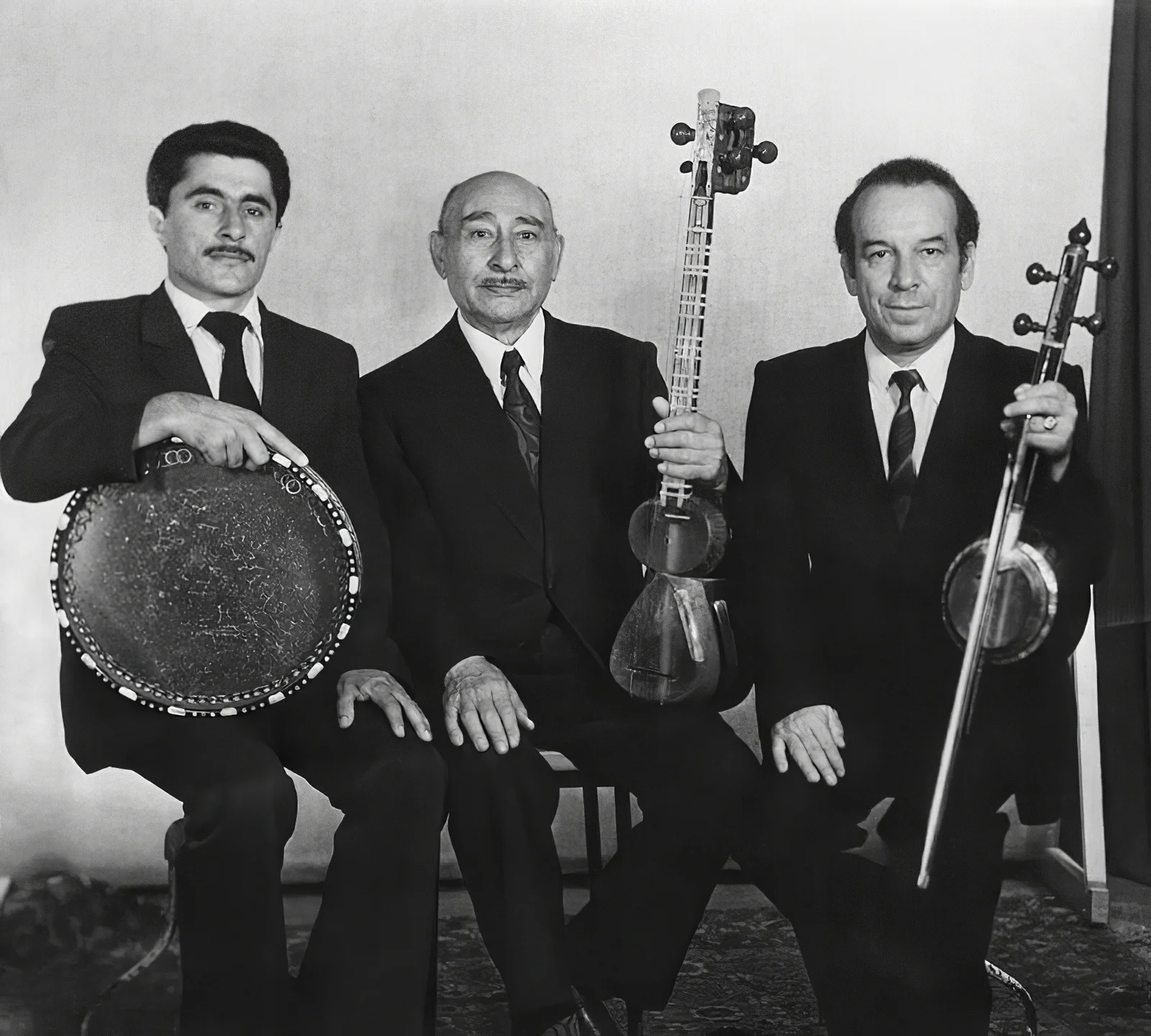
Three artists play together in a traditional small group called the sazanda trio.
The lead singer holds a round daf frame drum to keep the steady beat.
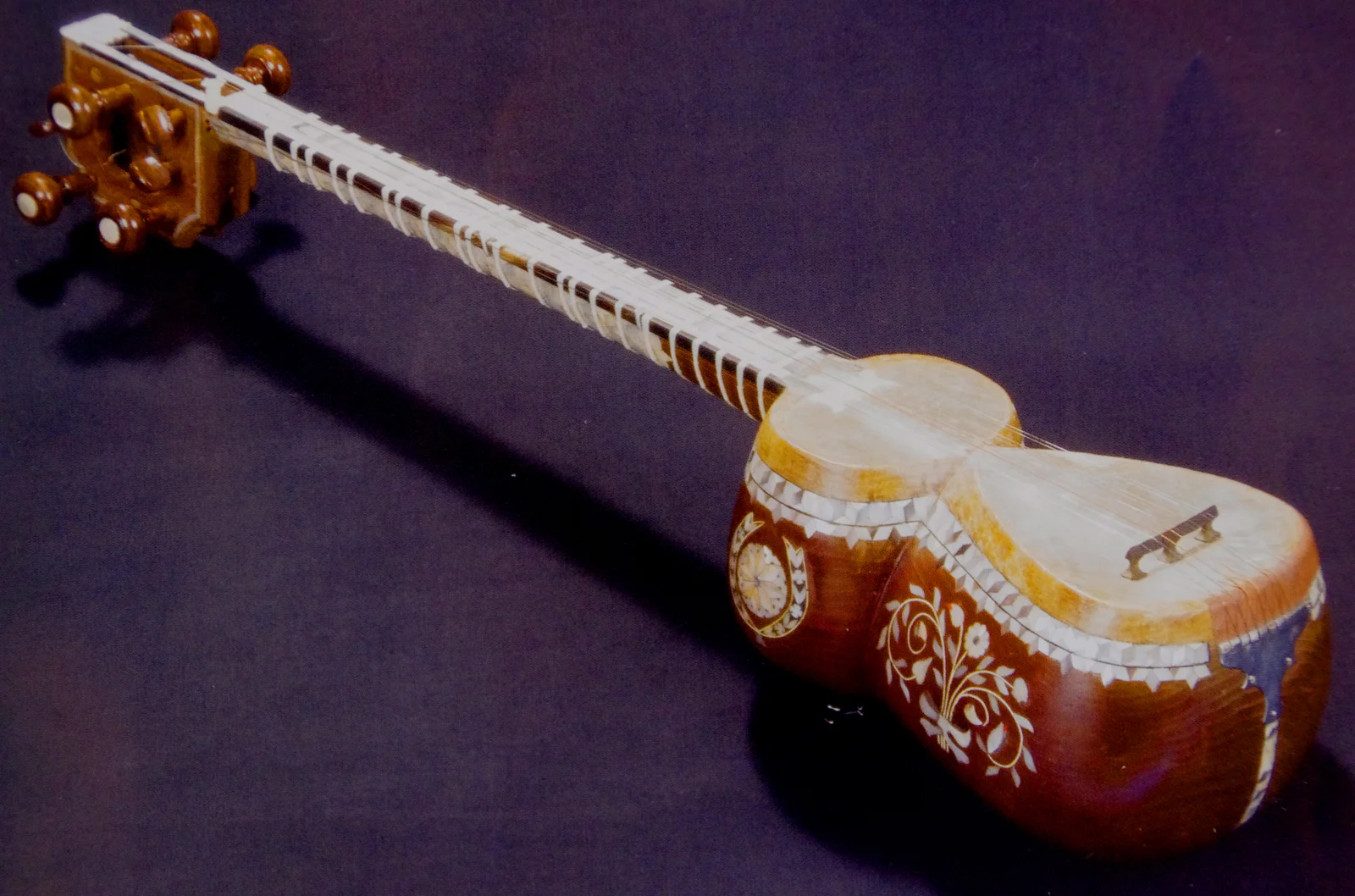
A master plays the long-necked tar lute made from dry mulberry wood.
An old master named Sadigjan added more strings to make the tar louder.
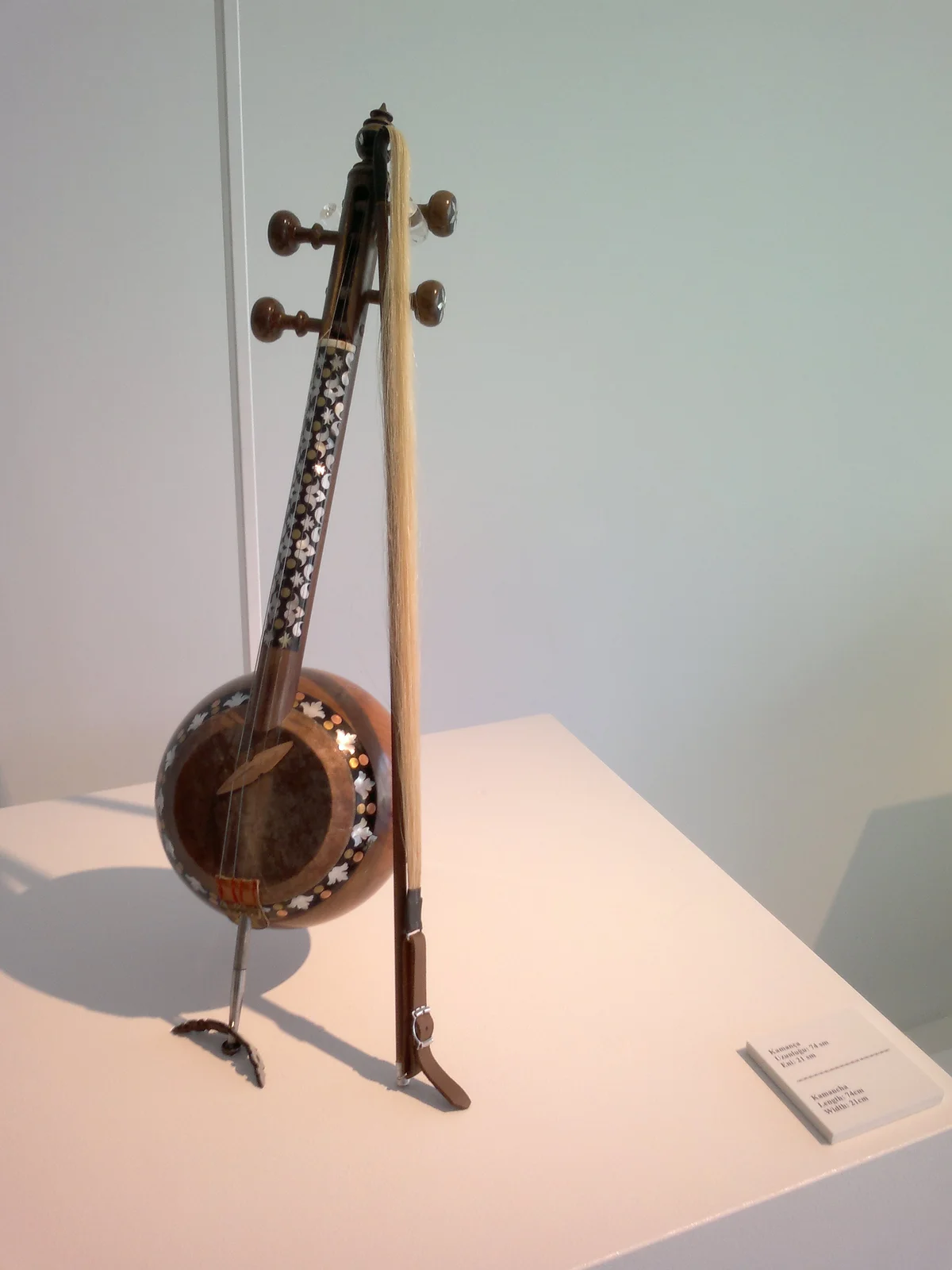
The kamancha player uses a bow across four metal strings for sweet sounds.
Animal skin over the wooden instruments makes the musical sound very bright.
Learning Songs from Master Teachers
Young apprentice students learned without written scores by listening to master teachers.
The mountain city of Shusha was famous for raising the finest mugham singers.
Poets and musicians gathered in friendly clubs to share new songs and verse.
A famous writer named Uzeyir Hajibeyli wrote the first big book on mugham rules.
Today a big music school in Baku teaches both modern notes and old songs.
Children sing on television shows to win prizes and become new musical stars.
World Recognition and Modern Concerts
In 2008 UNESCO placed Azerbaijani mugham on its world cultural heritage list.
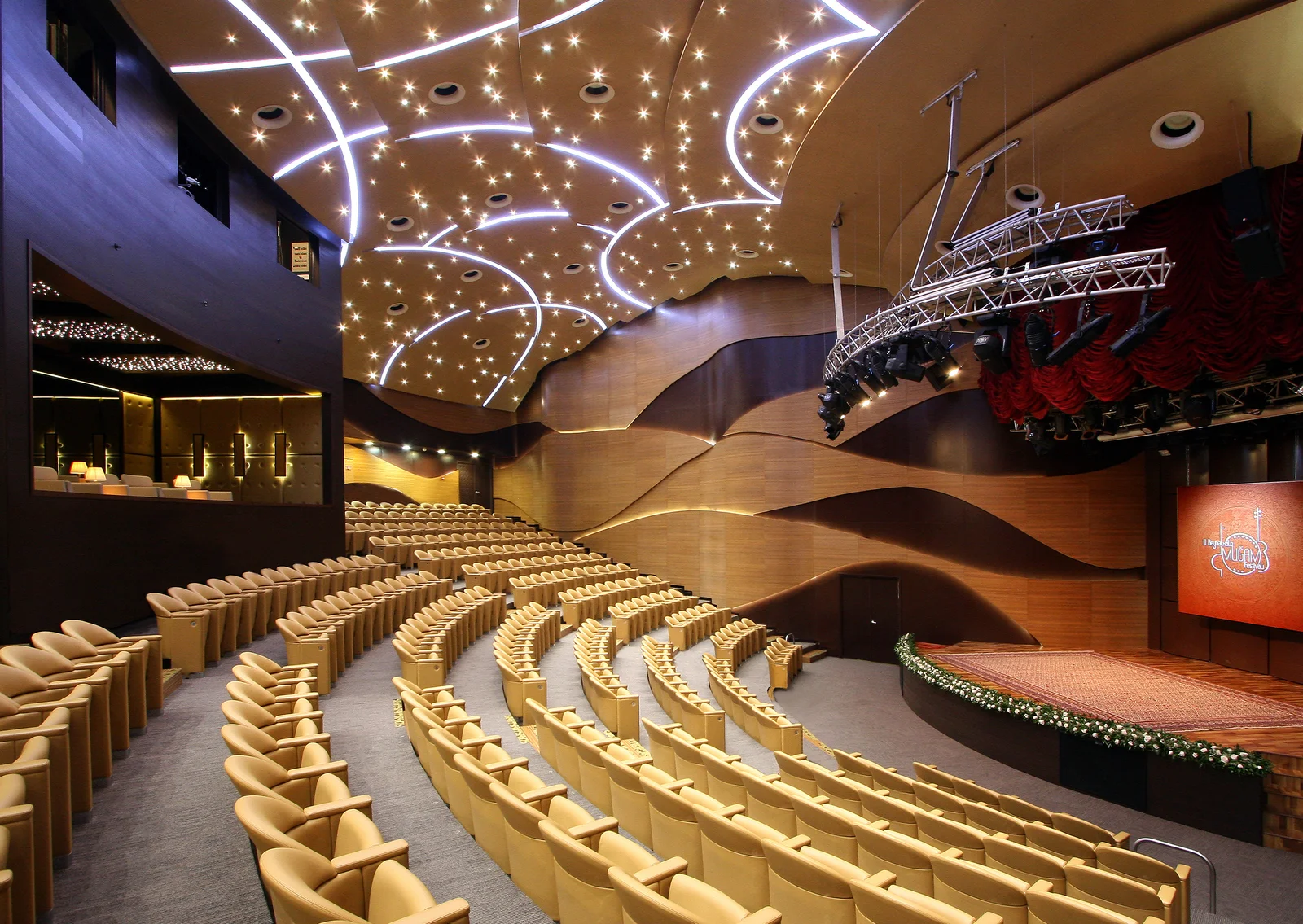
A modern round concert hall on Baku Boulevard hosts big mugham shows.
The famous singer Alim Qasimov travelled to many foreign lands to sing.
Musicians from many friendly countries travel to Baku for a big music festival.
Young players mix old mugham melodies with modern jazz and piano chords.
The government helps craftspeople build good instruments and records old songs.
A2 · Elementary
Azerbaijani Mugham and Traditional Musical Art
Modal improvisation, classical poetic ghazals, the sazanda trio, and living cultural heritage.
Modal Architecture and Classical Poetic Foundations
Azerbaijani mugham is a complex modal art form combining vocal improvisation with classical metric poetry.
The traditional theoretical system contains seven primary modal families, known as dastgahs, including Rast, Shur, and Seygah.
Singers select classical ghazals written by famous medieval Azerbaijani poets including Nizami Ganjavi and Fuzuli.
A complete musical performance begins with an opening daramad before rising toward an expressive emotional climax.
Performers also present lively zarbi-mugham compositions featuring defined rhythmic dance meters alongside solo pieces.
The artistic philosophy of mugham focuses on spiritual contemplation, emotional release, and intricate vocal ornaments.
The Sazanda Trio and Instrument Craftsmanship
Mugham is classically performed by an intimate ensemble called the sazanda trio.
The khananda serves as lead vocalist, singing demanding melodic lines while playing the daf frame drum.
The eleven-stringed Azerbaijani tar features a figure-eight mulberry body that provides harmonic foundation.
In the 1870s, master craftsman Sadigjan redesigned the tar by adding extra strings and resting it against the chest.
The kamancha spike fiddle features a round walnut resonator covered with sturgeon skin for expressive bowing.
A thin animal membrane covering the soundbox produces the bright, resonant timbre distinctive to Azerbaijani instruments.
Oral Transmission and the Karabakh Vocal School
For generations, mugham was transmitted orally from master to apprentice through attentive listening and memorization.
The historic fortress city of Shusha in Karabakh became celebrated as the preeminent regional center of mugham.
Nineteenth-century literary assemblies like the Majlisi-Uns salon in Shusha brought poets and musicians together.
Celebrated composer Uzeyir Hajibeyli documented traditional modal theory in his influential 1945 research treatise.
The Azerbaijan National Conservatory in Baku prepares students through both oral coaching and academic study.
National youth competitions broadcast across television identify talented young singers from towns and villages.
Global Recognition and Contemporary Performance
UNESCO inscribed Azerbaijani Mugham on the Representative List of the Intangible Cultural Heritage of Humanity in 2008.
The International Mugham Center on Baku Boulevard features world-class acoustic concert halls and museum exhibitions.
Renowned vocalist Alim Qasimov achieved international recognition through global concerts and prestigious music awards.
Baku hosts the biennial International World of Mugham Festival, welcoming virtuoso performers from around the world.
Contemporary composers blend traditional mugham modes with modern jazz harmonies and symphonic orchestrations.
State cultural programs support master instrument builders and fund digital archiving of historic audio recordings.
B1 · Intermediate
Azerbaijani Mugham and Traditional Musical Art
Modal vocal improvisation, classical poetic ghazals, the sazanda trio, and UNESCO musical safeguarding in Baku.
Modal Architecture and Classical Poetic Foundations
Azerbaijani mugham represents a sophisticated modal art form that weaves vocal improvisation around classical metric verse.
The modal framework is structured around seven primary dastgah suites, notably Rast, Shur, Seygah, and Chahargah.
Vocalists draw their lyrical texts from timeless ghazals penned by medieval Azerbaijani literary figures like Nizami and Fuzuli.
Each modal composition unfolds through an established cyclical hierarchy, advancing from the daramad prelude to an intense climax.
In addition to free-meter suites, ensembles perform rhythmic zarbi-mugham pieces characterized by structured dance cadences.
The aesthetic depth of mugham emphasizes profound spiritual contemplation, expressive catharsis, and subtle vocal ornaments.
The Sazanda Trio and Instrument Craftsmanship
Mugham is traditionally interpreted by the sazanda trio, an ensemble uniting a singer, a tarist, and a kamancha player.
The khananda acts as principal vocalist, delivering elaborate melismatic passages while maintaining tempo on the daf drum.
Carved from seasoned mulberry wood, the eleven-stringed Azerbaijani tar provides rich harmonic and rhythmic accompaniment.
During the 1870s, the virtuoso craftsman Sadigjan modernized the tar, adding resonance strings and elevating it to the chest.
The four-stringed kamancha spike fiddle incorporates a walnut sphere covered with fish skin to trace the vocal melody.
The animal pericardium membrane covering the soundbox yields the bright metallic timbre that distinguishes the Azerbaijani tar.
Oral Transmission and the Karabakh Vocal School
For centuries, mugham was passed down orally from master to apprentice without relying on written musical scores.
Perched in the mountains of Karabakh, the city of Shusha emerged as the renowned historical cradle of Azerbaijani mugham.
Nineteenth-century cultural salons, such as the famous Majlisi-Uns circle in Shusha, united prominent poets with master musicians.
Pioneering composer Uzeyir Hajibeyli codified modal principles in his 1945 theoretical treatise on Azerbaijani folk music.
The Azerbaijan National Conservatory in Baku combines traditional master-apprentice instruction with comprehensive music theory.
Televised national competitions systematically discover exceptional young vocalists from regional communities across the country.
Global Acclaim and Contemporary Renaissance
In 2008, UNESCO inscribed Azerbaijani Mugham on the Representative List of the Intangible Cultural Heritage of Humanity.
Constructed on the Baku seaside promenade, the International Mugham Center provides state-of-the-art acoustic concert auditoriums.
Internationally celebrated master Alim Qasimov introduced mugham to worldwide audiences through collaborative world-music projects.
The biennial World of Mugham festival in Baku attracts virtuoso vocalists and ethnomusicologists from across several continents.
Visionary modern artists merge classical mugham modes with jazz improvisation, creating dynamic contemporary fusion genres.
National cultural initiatives provide stipends for master instrument crafters and finance digital preservation of archive tapes.
B2 · Upper Intermediate
Azerbaijani Mugham and Traditional Musical Art
Modal improvisation, classical poetic ghazals, sazanda chamber ensembles, and living musical heritage in Azerbaijan.
Modal Architecture and Classical Literary Foundations
Azerbaijani mugham constitutes a complex modal art form uniting melodic improvisation with classical metric poetry.
The theoretical system of mugham encompasses seven primary modal families termed dastgahs, including Rast, Shur, and Seygah.
Khananda vocalists set classical poetic ghazals composed by revered medieval masters such as Nizami Ganjavi and Fuzuli.
A dastgah cycle progresses through an established compositional hierarchy, building from the daramad prelude toward an emotional zenith.
Musicians also interpret rhythmic zarbi-mugham suites structured around metric dance pulses alongside solo instrumental suites.
The philosophical essence of mugham revolves around spiritual meditation, emotional release, and nuanced microtonal inflection.
The Sazanda Trio and Organological Engineering
The traditional vehicle for mugham performance is the sazanda chamber trio, comprising a vocalist, a tarist, and a kamancha player.
The khananda commands the performance, executing complex vocal coloratura while maintaining metric cadence on the daf drum.
Featuring an hourglass double-bowl carved from aged mulberry wood, the eleven-stringed Azerbaijani tar supplies harmonic accompaniment.
In the 1870s, legendary innovator Sadigjan redesigned the tar, adding resonance strings and raising the instrument to the player's chest.
The kamancha spike fiddle utilizes a spherical walnut resonator faced with sturgeon skin to deliver expressive bowed counterpoint.
A stretched animal pericardium membrane across the dual soundbox produces the signature resonant timbre of the Azerbaijani tar.
Oral Pedagogy and the Historical Shusha Academy
Mugham was transmitted exclusively through oral master-apprentice pedagogy, relying upon intensive auditory memorization.
The historic fortress town of Shusha in Karabakh flourished as the preeminent cradle and conservatory of Caucasian vocalists.
Distinguished nineteenth-century cultural assemblies, such as the Majlisi-Uns salon in Shusha, united virtuoso poets and instrumentalists.
Eminent composer Uzeyir Hajibeyli formalized modal grammar in his landmark 1945 musicological treatise on Azerbaijani folk music.
The Azerbaijan National Conservatory in Baku preserves this heritage, combining oral coaching with rigorous academic musicology.
National televised competitions provide institutional support and exposure for prodigy vocalists discovered in provincial districts.
International Inscription and Contemporary Vibrancy
In 2008, UNESCO inscribed Azerbaijani Mugham on the Representative List of the Intangible Cultural Heritage of Humanity.
Situated on Baku Boulevard, the International Mugham Center features an architectural silhouette evoking a tar and superb acoustic halls.
Master vocalist Alim Qasimov earned international acclaim, winning the prestigious IMC-UNESCO Music Prize for global cultural dialogue.
The biennial International World of Mugham Festival in Baku convenes celebrated modal artists, scholars, and chamber ensembles worldwide.
Avant-garde Azerbaijani composers actively fuse classical mugham scales with progressive jazz idioms and orchestral arrangements.
Comprehensive state heritage policies fund master instrument workshops, acoustic documentation, and public broadcast programming.
C1 · Advanced
Azerbaijani Mugham and Traditional Musical Art
Modal improvisation, classical poetic ghazals, sazanda organology, and UNESCO musical safeguarding in Baku.
Modal Architecture and Classical Poetic Foundations
Azerbaijani mugham represents a highly refined modal art form synthesizing melodic vocal improvisation with classical metric poetry.
The modal framework is organized around an intricate theoretical hierarchy encompassing seven primary dastgah suites.
Master vocalists interpret classical poetic ghazals composed by medieval Azerbaijani luminaries such as Nizami Ganjavi and Fuzuli.
Each dastgah suite advances through an established cyclical progression, building from the daramad prelude toward an ecstatic crescendo.
Alongside contemplative suites, ensembles perform rhythmic zarbi-mugham compositions driven by structured metric percussion.
The aesthetic philosophy of mugham centers on profound spiritual reflection, microtonal ornamentation, and intense emotional catharsis.
The Sazanda Trio and Organological Engineering
Mugham finds its canonical expression within the sazanda trio, an intimate chamber ensemble of voice, plucked lute, and bowed fiddle.
The khananda vocalist leads the ensemble with melismatic declamations while marking metric accents upon the daf frame drum.
Crafted from aged mulberry wood, the eleven-stringed Azerbaijani tar supplies indispensable harmonic and rhythmic resonance.
In the 1870s, the virtuoso innovator Sadigjan reconstructed the tar, adding sympathetic strings and elevating the instrument to the chest.
The spherical kamancha spike fiddle weaves an agile melodic counterpoint around the voice using bow pressure and finger glides.
A dried bovine pericardium membrane stretched over the dual soundbox produces the luminous, percussive timbre of the modern tar.
Oral Transmission and the Karabakh Vocal School
For generations, mugham pedagogy depended entirely upon oral transmission, passing from master to apprentice through dedicated memorization.
The mountain citadel of Shusha in Karabakh functioned as the supreme cradle of mugham, producing generation after generation of virtuoso singers.
Nineteenth-century aristocratic assemblies, such as the renowned Majlisi-Uns literary salon in Shusha, united poets and instrumentalists.
Composer Uzeyir Hajibeyli systematically documented modal principles in his seminal 1945 theoretical treatise on Azerbaijani folk music.
The Azerbaijan National Conservatory in Baku balances traditional master coaching with comprehensive institutional musicology.
High-profile national competitions identify provincial youth prodigy talents, ensuring the uninterrupted continuity of the vocal tradition.
International Inscription and Contemporary Vibrancy
In 2008, UNESCO inscribed Azerbaijani Mugham on the Representative List of the Intangible Cultural Heritage of Humanity.
Erected on Baku Boulevard, the International Mugham Center incorporates an iconic tar silhouette and specialized acoustic auditoriums.
Master vocalist Alim Qasimov elevated mugham onto global concert stages through international collaborations and prestigious global awards.
The biennial World of Mugham festival in Baku gathers international modal musicians, ethnomusicologists, and chamber artists.
Modern Azerbaijani composers synthesize traditional mugham modes with contemporary jazz and symphonic scoring.
Targeted state safeguarding programs finance traditional lutherie workshops, archival digitization, and educational broadcasts.
C2 · Mastery
Azerbaijani Mugham and Traditional Musical Art
Modal improvisation, classical poetic ghazals, sazanda organology, and UNESCO musical safeguarding in Baku.
Modal Architecture and Classical Poetic Foundations
Azerbaijani mugham constitutes an elaborate modal art form synthesizing melodic vocal improvisation with classical metric verse.
The conceptual taxonomy of mugham comprises seven primary dastgah suites, notably Rast, Shur, Seygah, and Chahargah.
Khananda vocalists animate the sublime lyricism of classical Azerbaijani ghazals composed by Nizami Ganjavi and Fuzuli.
A dastgah cycle advances through an established formal hierarchy, ascending toward an intense spiritual culmination.
Musicians also perform vibrant zarbi-mugham compositions underpinned by rigid metric dance pulses and solo pieces.
The aesthetic ethos of mugham demands emotional catharsis achieved through sophisticated microtonal ornamentation.
The Sazanda Trio and Organological Engineering
The canonical performance medium is the sazanda trio, an organology combining voice, plucked lute, and bowed fiddle.
The lead vocalist delivers melismatic declamation while maintaining rhythmic stability on the daf frame drum.
Crafted from resonant mulberry wood, the eleven-stringed Azerbaijani lute provides essential harmonic counterpoint.
In the 1870s, master craftsman Sadigjan resolved to reconstruct the tar, adding resonance strings and elevating it to the chest.
The four-stringed kamancha spike fiddle generates an intricate polyphonic counterpoint woven around the vocal line.
A dried bovine pericardium membrane stretched over the dual soundbox produces the signature timbre of the Azerbaijani tar.
Oral Pedagogy and the Historical Shusha Academy
Historically, mugham transmission relied upon didactic oral imitation from master to student without notation.
The mountain redoubt of Shusha in Karabakh flourished as the preeminent cradle, fostering an illustrious vocal dynasty.
Nineteenth-century literary salons, notably the Majlisi-Uns assembly in Shusha, united celebrated poets and virtuoso musicians.
Pioneering composer Uzeyir Hajibeyli chose to formalize modal theory in his seminal 1945 musicological treatise.
The Azerbaijan National Conservatory integrates oral coaching with an advanced musicological curriculum in Baku.
Televised competitions replenish the national vocal repertory by unearthing prodigy vocalists across rural districts.
International Inscription and Contemporary Vibrancy
In 2008, UNESCO formalized global recognition through World Heritage inscription on the Representative List of Intangible Heritage.
Situated on the Baku waterfront, the International Mugham Center incorporates a monumental auditorium shaped like a tar.
Virtuoso Alim Qasimov garnered international acclaim, winning the prestigious IMC-UNESCO Music Prize for cross-cultural performance.
The biennial World of Mugham festival convenes celebrated modal artists, scholars, and chamber ensembles worldwide in Baku.
Contemporary Azerbaijani composers actively hybridize classical mugham modes with avant-garde jazz and symphonic orchestrations.
State cultural agencies finance instrument lutherie, digital archival restoration, and continuous public broadcast programming.
Check your understanding
Choose how closely you want to revisit the article. You can refer back while answering, and review explanations when you finish.
Quick Quiz A1
Try one question, then create a free account for the full Quick Quiz. Sign Up Free
Answer every question before checking. There is no time limit.
Your results
/ 1 correct (%)
Read the explanations to see how each answer connects to the article.
-
What fundamental artistic elements does Azerbaijani mugham synthesize as an elaborate modal musical art form?
1. Answer:
Quick Quiz A2
Try one question, then create a free account for the full Quick Quiz. Sign Up Free
Answer every question before checking. There is no time limit.
Your results
/ 1 correct (%)
Read the explanations to see how each answer connects to the article.
-
What fundamental artistic elements does Azerbaijani mugham synthesize as an elaborate modal musical art form?
1. Answer:
Quick Quiz B1
Try one question, then create a free account for the full Quick Quiz. Sign Up Free
Answer every question before checking. There is no time limit.
Your results
/ 1 correct (%)
Read the explanations to see how each answer connects to the article.
-
What fundamental artistic elements does Azerbaijani mugham synthesize as an elaborate modal musical art form?
1. Answer:
Quick Quiz B2
Try one question, then create a free account for the full Quick Quiz. Sign Up Free
Answer every question before checking. There is no time limit.
Your results
/ 1 correct (%)
Read the explanations to see how each answer connects to the article.
-
What fundamental artistic elements does Azerbaijani mugham synthesize as an elaborate modal musical art form?
1. Answer:
Quick Quiz C1
Try one question, then create a free account for the full Quick Quiz. Sign Up Free
Answer every question before checking. There is no time limit.
Your results
/ 1 correct (%)
Read the explanations to see how each answer connects to the article.
-
What fundamental artistic elements does Azerbaijani mugham synthesize as an elaborate modal musical art form?
1. Answer:
Quick Quiz C2
Try one question, then create a free account for the full Quick Quiz. Sign Up Free
Answer every question before checking. There is no time limit.
Your results
/ 1 correct (%)
Read the explanations to see how each answer connects to the article.
-
What fundamental artistic elements does Azerbaijani mugham synthesize as an elaborate modal musical art form?
1. Answer:
