A1 · Beginner
Traditional Azerbaijani Carpet Weaving and Wool Craft
Soft wool yarn, natural plant dyes, wooden looms, and historic weaving traditions in Azerbaijan.
Wool Shearing and Natural Plant Dyes
Azerbaijani carpet weaving begins with fine wool taken from healthy sheep during sunny spring seasons.
Artisans wash dirty wool in clear water and spin yarn on simple wooden spindles.
Makers dig wild madder plant roots from dry soil to create bright red colors.
Boiling walnut husks and sweet pomegranate skins produces rich brown and yellow dyes in copper pots.
Natural salt and sour fruit juices keep the yarn bright for many long decades.
Dyers dry colorful wet threads under the warm summer sun on wooden lines.
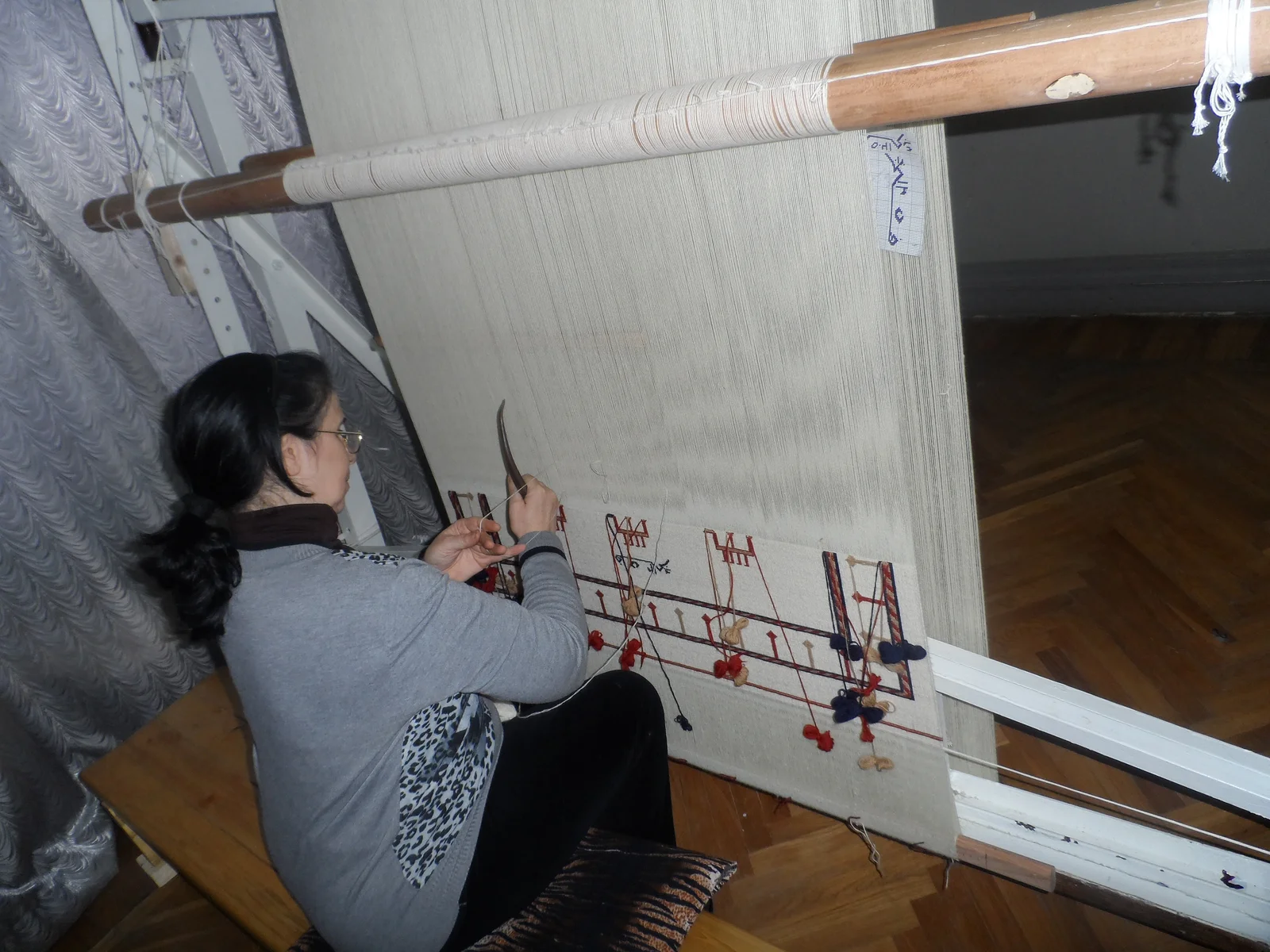
Upright Looms and Tight Knots
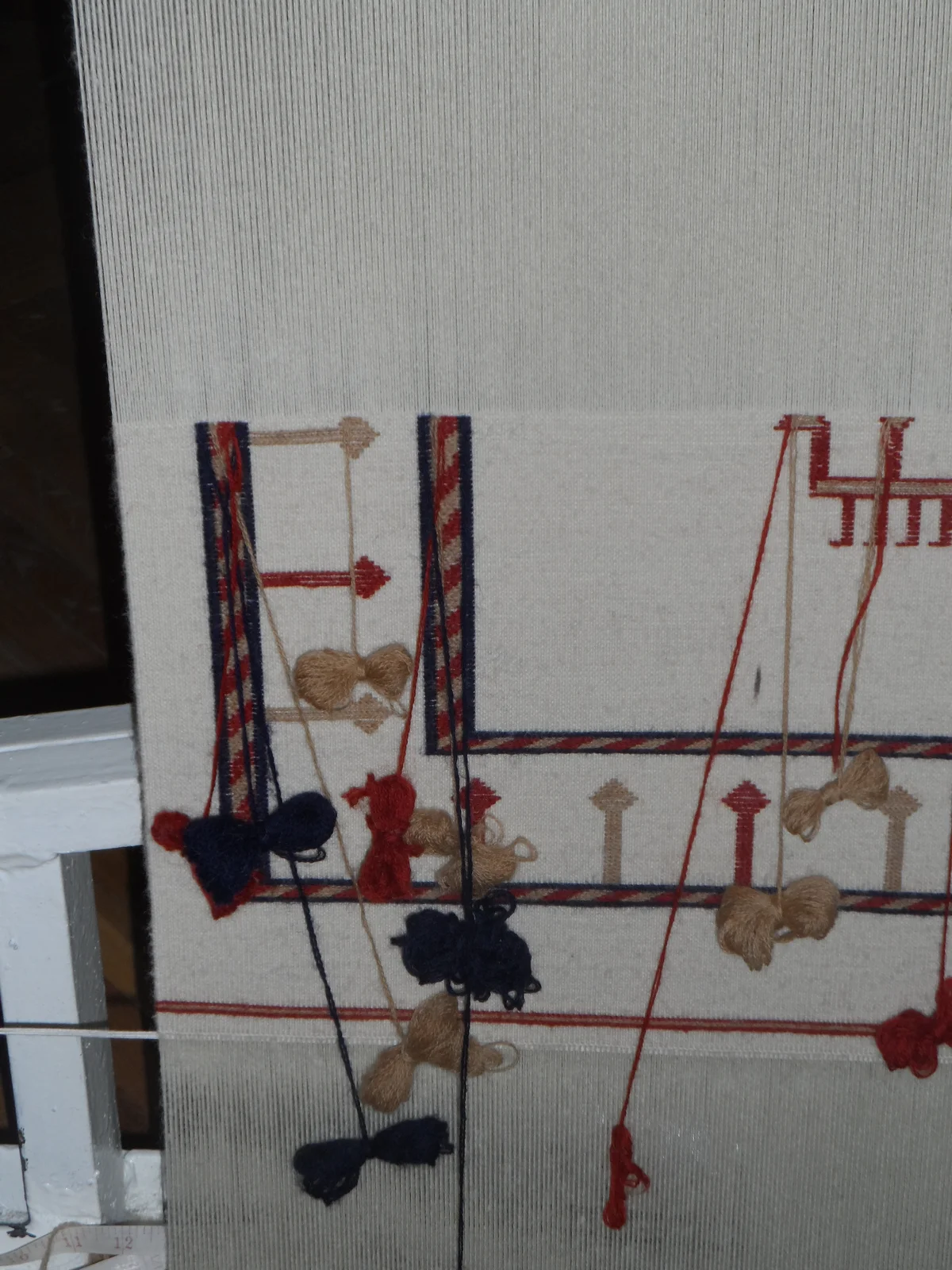
Artisans build tall upright wooden frames called hana looms inside bright family homes.
Weavers tie double Turkish knots by hand around two strong white warp strings.
A small iron knife helps the maker cut each wool knot with quick speed.
The worker beats the thick rows down with a heavy iron comb called a heve.
Sharp curved scissors cut the soft wool surface to keep every carpet line neat.
Families also weave smooth flat rugs called kilims that have no thick wool knots.
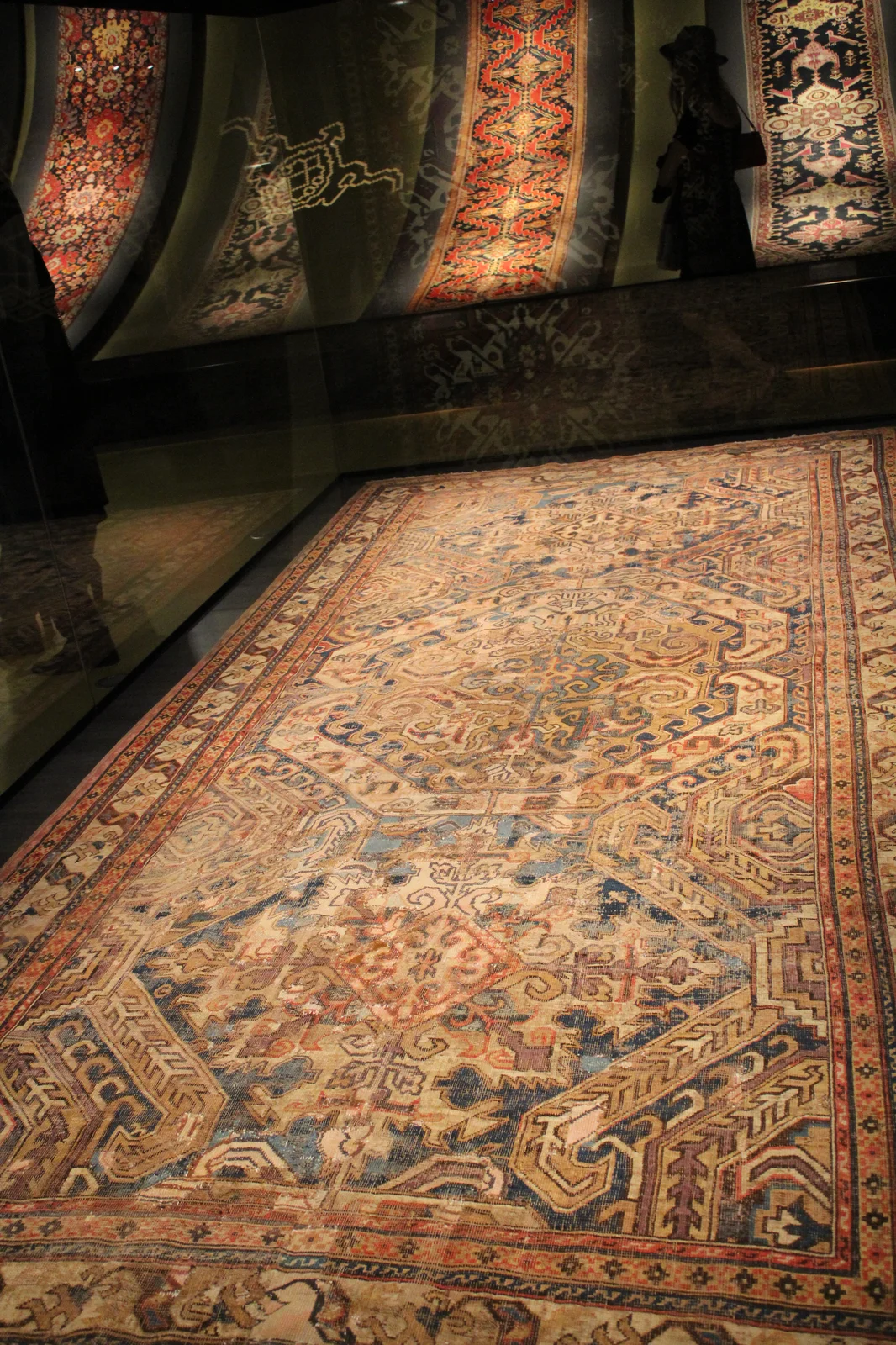
Karabakh Dragon Patterns and Village Work
The mountain workshops of Karabakh are famous across the world for large artistic rugs.
Antique dragon carpets from Karabakh display fierce mythical animals that bring good luck.
Round sun medallions and pretty floral leaves decorate popular Chelebi carpets.
Weavers choose deep crimson red and dark turquoise blue wool for rich contrasting shades.
Village women gather in winter rooms to weave carpets together while singing traditional songs.
Mothers give fine handmade wool carpets to young daughters on happy wedding days.
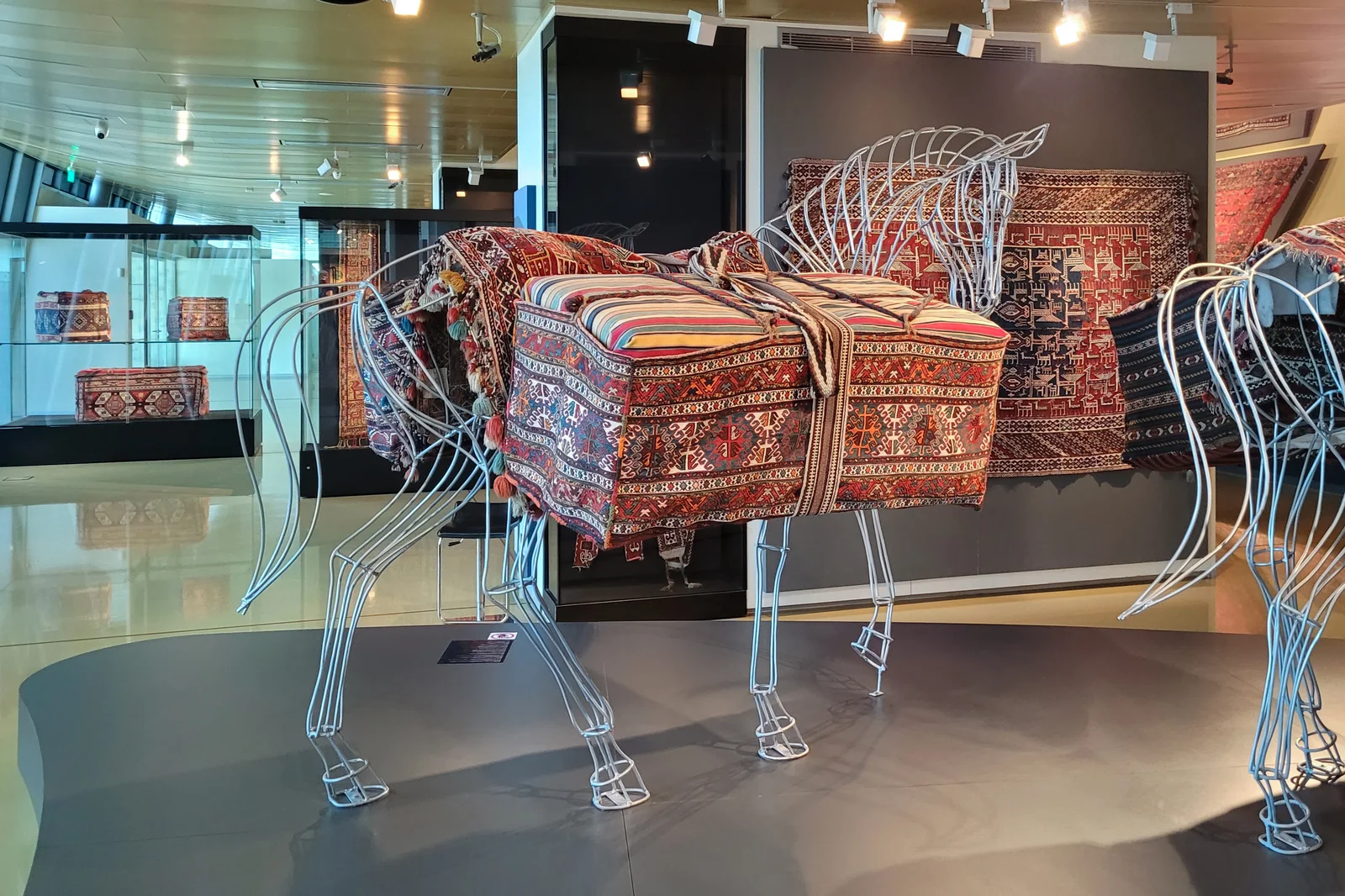
The Baku Carpet Museum and National Pride
In 2010 UNESCO placed Azerbaijani carpet weaving on its global cultural heritage list.
A famous artist named Latif Karimov founded the world carpet museum in Baku in 1967.
The modern museum building on Baku Boulevard looks like a huge rolled golden carpet.
Old books by clever scholars divide Azerbaijani carpets into four main regional styles.
State craft workshops in quiet villages hire rural women to make classic historical designs.
Art schools in Baku teach young boys and girls how to dye wool and tie knots.
A2 · Elementary
Traditional Azerbaijani Carpet Weaving Across Regional Schools
Botanical dyeing methods, upright hana looms, Karabakh dragon motifs, and world heritage preservation.
Fleece Preparation and Botanical Dyeing Methods
Traditional Azerbaijani carpet weaving depends on high-quality sheep fleece gathered during spring and autumn shearings.
Skilled craftswomen wash the raw wool in flowing mountain streams before spinning yarn with wooden drop spindles.
Dyers collect wild madder roots across lowland plains to extract intense red dye pigments.
Artisans boil fermented indigo leaves, green walnut husks, and pomegranate rinds inside heavy copper cauldrons.
Natural mineral alum fixes the botanical dyes firmly into the wool to ensure lasting color resilience.
The dyeing cycle follows seasonal harvesting calendars that rely on strong summer warmth for rapid drying.
Upright Hana Looms and Symmetrical Gordi Knotting
Weavers construct sturdy vertical wooden looms known as hana frames to maintain strong warp tension.
Azerbaijani pile carpets feature the symmetrical gordi knot, tied firmly around two parallel warp threads.
Artisans employ hook-bladed knives called garmag to catch warp strings and slice yarn tufts quickly.
A heavy toothed iron comb called a heve packs horizontal weft threads tightly against tied knots.
Makers trim the pile surface evenly using curved gaychi scissors to highlight crisp ornamental details.
Alongside knotted pile carpets, master weavers produce smooth flat-weave textiles including kilims, palases, and shaddas.
The Karabakh Weaving School and Ajdahaly Dragon Motifs
The historic Karabakh weaving school developed in mountain towns like Shusha, creating carpets with monumental proportions.
Historic Ajdahaly carpets from Karabakh depict stylized dragon palmettes that symbolize ancient protection.
Celebrated Chelebi carpets display radiating circular sun medallions framed by intricate geometric leaf borders.
Karabakh dyers combine cochineal crimsons, emerald greens, and bright turquoise across dark wool backgrounds.
Women in rural settlements wove carpets collaboratively during cold winter months, singing folk songs while sharing patterns.
Handwoven carpets served as prestigious bridal dowries and provided essential furnishings for solemn household gatherings.
The Azerbaijan Carpet Museum and Safeguarding Programs
UNESCO recognized the traditional art of Azerbaijani carpet weaving as intangible cultural heritage in 2010.
Artist Latif Karimov established the Azerbaijan National Carpet Museum in Baku in 1967 as the first specialized institution.
The museum facility on the Caspian promenade presents an innovative facade shaped like a monumental rolled carpet.
Scholar Latif Karimov systematized carpet studies by classifying historical rugs into four primary geographical groups.
Public enterprises like Azerkhalcha operate regional weaving centers that employ village artisans and recreate historic designs.
Fine arts academies and vocational schools instruct new generations of designers in structural geometry and natural dyeing.
B1 · Intermediate
Traditional Azerbaijani Carpet Weaving: Material, Technique, and Legacy
Wool sorting, botanical cauldron dyeing, vertical loom mechanics, Karabakh dragon motifs, and national safeguarding.
Wool Preparation and Natural Botanical Dyes
The material foundation of traditional Azerbaijani carpet weaving rests upon select sheep fleece harvested during seasonal spring and autumn shearings.
Artisan households wash the greasy wool in running water, card the clean fibers, and spin dense yarn using wooden drop spindles.
Red dyestuffs originate from the cultivated roots of wild madder plants that thrive across the Absheron peninsula and Kura lowlands.
Workshops boil fermented indigo cakes, crushed green walnut husks, and pomegranate peels within copper cauldrons to yield dark blues, chestnuts, and ochres.
Dyers introduce natural mineral alum and acidic fruit mordants to bond botanical pigments securely into the animal fibers.
Because outdoor drying demands dry air, the primary dyeing operations coincide with the hottest summer months.
Vertical Loom Mechanics and Knotting Techniques
Weavers assemble vertical timber frames called hana looms that maintain uniform tension across hundreds of parallel cotton or wool warp strings.
Traditional Azerbaijani pile carpets rely on the double symmetrical Turkish knot, locally designated as the gordi knot.
Artisans utilize a curved hook-bladed knife called a garmag to grasp adjacent warps and sever woolen yarn with rapid precision.
After finishing each horizontal row, the weaver drives a heavy iron beater comb called a heve downward to consolidate the foundation.
Craftswomen shear the woolen pile using curved gaychi scissors, maintaining an even pile height to accentuate intricate contours.
In addition to knotted pile floorings, regional workshops manufacture diverse flat-weave textiles including lightweight kilims, palases, and decorative shaddas.
The Karabakh School and Ajdahaly Dragon Motifs
The Karabakh weaving tradition achieved international prominence in highland workshops around Shusha, renowned for dramatic scales and sophisticated compositions.
Seventeenth and eighteenth-century Ajdahaly dragon carpets from Karabakh incorporate stylized serpentine dragon palmettes embodying talismanic power.
Chelebi compositions feature magnificent radiating sun medallions surrounded by geometric floral cartouches and serrated palmettes.
Karabakh artisans favor deep cochineal crimson backgrounds accented by vivid emerald greens, golden yellows, and rich turquoise contrasts.
Communal labor traditions gathered village women around shared looms throughout winter, chanting melodic weaving verses that guided pattern counts.
Ornate carpets formed the centerpiece of bridal dowries and fulfilled vital ceremonial roles during communal assemblies and life milestones.
The National Carpet Museum and UNESCO Safeguarding
In 2010 UNESCO inscribed the traditional art of Azerbaijani carpet weaving on the Representative List of the Intangible Cultural Heritage of Humanity.
Founded in 1967 through the visionary initiative of artist Latif Karimov, the Baku institution became the world's first specialized carpet museum.
The modern museum building along Baku Boulevard commands international attention through an architectural structure mimicking a giant rolled carpet.
Latif Karimov established scientific carpetology in Azerbaijan, classifying historical production into four distinct regional groups and dozens of sub-styles.
The state enterprise Azerkhalcha manages regional carpet manufacturing hubs across rural provinces, reviving historical designs and providing local employment.
Specialized vocational colleges and the Azerbaijan State Academy of Fine Arts provide comprehensive instruction in carpet geometry, dyeing, and loom mastery.
B2 · Upper Intermediate
Traditional Azerbaijani Carpet Weaving: Artistry, Loom Mechanics, and Heritage
Fleece processing, mordant cauldron chemistry, the gordi knot, Karabakh medallion compositions, and museum preservation.
Wool Preparation and Natural Botanical Dyes
The structural integrity of traditional Azerbaijani carpet weaving derives from resilient sheep wool harvested during spring and autumn shearings.
Artisans meticulously wash raw fleeces in alkaline solutions before carding and spinning balanced warp, weft, and pile yarns on drop spindles.
Vibrant crimson shades are extracted from the dried rhizomes of wild madder plants cultivated throughout the Kura river valley.
Master dyers ferment imported indigo cakes and simmer crushed walnut husks and pomegranate rinds in copper vessels to produce lustrous blues, browns, and ambers.
Mineral alum mordants and sour fruit acids chemically bind these organic pigments to the keratin matrix, guaranteeing centuries of lightfast stability.
The entire dyeing campaign conforms to regional meteorological rhythms, taking advantage of arid summer heat for optimal yarn curing.
Vertical Loom Mechanics and Knotting Techniques
Carpets are manufactured on rigid vertical timber scaffolding called hana looms, designed to support heavy warp tension without structural deflection.
Azerbaijani pile weaving predominantly employs the symmetrical gordi knot, tied securely around two warp threads to yield superior surface durability.
Weavers manipulate a specialized curved hook-knife called a garmag to snag warp pairs and trim knot tails with rapid dexterity.
Each successive knotting course is locked into place by inserting weft shoots and pounding them vigorously with a serrated iron comb called a heve.
Artisans carefully shave the pile face using offset gaychi shears to ensure uniform texture and preserve sharp geometric boundaries.
Complementing dense pile carpets, regional weavers produce versatile non-pile flatweaves including kilims, patterned palases, and banded shaddas.
The Karabakh School and Ajdahaly Dragon Motifs
The Karabakh regional school flourished within urban and village ateliers around Shusha, establishing a reputation for expansive formats and expressive coloration.
Celebrated seventeenth and eighteenth-century Karabakh dragon carpets, known as Ajdahaly, feature sinuous dragon palmettes and phoenixes guarding ancient palatial gardens.
Chelebi carpets showcase bold solar medallions ringed by blossoming cartouches and stepped floral polygons that command the central field.
The Karabakh chromatic signature unites rich cochineal scarlet and deep madder red with vibrant turquoise, forest green, and ivory highlights.
Village women practiced communal weaving during winter months, reciting rhythmic mnemonic verses to coordinate knotting sequences across the loom bench.
Finished carpets served as prestigious components of matrimonial dowries and established domestic prestige during ceremonial festivals and weddings.
The National Carpet Museum and UNESCO Safeguarding
UNESCO formally inscribed the traditional art of Azerbaijani carpet weaving onto the Representative List of Intangible Cultural Heritage in 2010.
Pioneered in 1967 by carpet artist and researcher Latif Karimov, the Azerbaijan National Carpet Museum inaugurated formal institutional conservation in Baku.
The museum headquarters on the Caspian seafront presents a landmark architectural profile conceived by Austrian architects in the form of a rolled carpet.
Latif Karimov's seminal publications codified scientific carpetology, categorizing Azerbaijan's weaving heritage into four principal regional schools: Guba-Shirvan, Ganja-Gazakh, Karabakh, and Tabriz.
The state-backed Azerkhalcha corporation establishes modern weaving workshops throughout regional provinces, providing reliable rural employment and preserving endangered motifs.
Academic institutions including the Azerbaijan State Academy of Fine Arts offer specialized degree programs in textile design, natural dye chemistry, and historical carpet analysis.
C1 · Advanced
Traditional Azerbaijani Carpet Weaving: Materiality, Structural Typologies, and Living Heritage
Wool agronomy, natural mordanted dyes, vertical loom mechanics, the Karabakh dragon tradition, and institutional safeguarding.
Wool Preparation and Natural Botanical Dyes
The material authenticity of traditional Azerbaijani carpet weaving originates in the selective procurement of fleece from indigenous mountain sheep during spring and autumn shearings.
Village craftswomen wash the greasy fleece in alkaline river water before carding and spinning the resilient wool yarn on wooden drop spindles.
Deep scarlet pigments are derived from the harvested rhizomes of Rubia tinctorum, commonly known as madder, which proliferates across the Kura basin.
Master colorists ferment imported indigo cakes and macerate green walnut pericarps alongside pomegranate peelings within massive copper vats to generate rich azure and sienna hues.
The incorporation of potassium alum and organic acids establishes an irreversible chemical mordant bond that endows the wool with exceptional permanence.
This dye preparation represents a calibrated seasonal enterprise timed to exploit arid summer heat and prolonged solar exposure for uniform skein drying.
Vertical Loom Mechanics and Knotting Techniques
Weavers construct robust vertical timber frames called hana looms capable of sustaining substantial warp tension without structural distortion.
Azerbaijani pile weaving centers upon the symmetrical gordi knot, tied securely around two warp threads to impart extraordinary structural tensile resistance.
Artisans employ an ergonomic hooked knife called a garmag to manipulate warp threads and sever yarn strands in rapid succession.
Each row of knotted pile is firmly locked between weft shoots through the aggressive downward impact of a heavy serrated iron beater comb called a heve.
A meticulous surface shearing executed with curved gaychi shears levels the pile nap, revealing crisp geometric contours and chromatic boundaries.
Alongside knotted floorings, artisans maintain ancient non-pile textile typologies including flat-woven kilims, reversible palases, and brocaded shaddas.
The Karabakh School and Ajdahaly Dragon Motifs
The Karabakh weaving school attained profound historical distinction in mountain workshops surrounding Shusha, pioneering expansive compositions and majestic scales.
Seventeenth-century Ajdahaly carpets from Karabakh incorporate stylized zoomorphic dragon figures and phoenixes that functioned as apotropaic guardians.
The Chelebi design utilizes magnificent radiating sun medallions surrounded by blossoming cartouches and stepped floral brackets.
Karabakh master dyers established a dramatic chromatic signature characterized by rich cochineal scarlet, luminous turquoise, and dense forest green.
Communal winter weaving sessions fostered vibrant oral solidarity, where women recited rhythmic mnemonic verses to coordinate intricate knot placements.
Beyond functional insulation, master carpets constituted indispensable bridal dowries and demarcated social prestige within domestic and ceremonial domains.
The National Carpet Museum and UNESCO Safeguarding
In 2010 UNESCO formally inscribed the traditional art of Azerbaijani carpet weaving onto the Representative List of the Intangible Cultural Heritage of Humanity.
Conceived in 1967 by scholar and artist Latif Karimov, the Baku institution became the world's first specialized museum dedicated exclusively to carpet art.
Occupying a prominent site along Baku Boulevard, the contemporary museum building displays an inventive architectural form evoking an enormous rolled carpet.
Latif Karimov established scientific carpetology in Azerbaijan, formulating a definitive taxonomy that organized national production into four principal regional schools.
The state-backed Azerkhalcha enterprise operates manufacturing hubs across provincial districts, reviving historical compositions while generating meaningful rural employment.
Academic centers such as the Azerbaijan State Academy of Fine Arts offer specialized degrees integrating textile chemistry, computer-aided drafting, and historic loom craft.
C2 · Mastery
Traditional Azerbaijani Carpet Weaving: Materiality, Semiotics, and Institutional Safeguarding
Agronomic fleece processing, tannin cauldron chemistry, the gordi knot, Karabakh dragon palmettes, and academic taxonomy.
Wool Preparation and Natural Botanical Dyes
The material integrity of traditional Azerbaijani carpet weaving derives from the seasonal procurement of virgin fleece from indigenous sheep breeds during spring and autumn shearings.
Artisanal preparers thoroughly wash raw fleeces in mountain waters before hand-carding and spinning the elastic yarns using balanced wooden drop spindles.
Luminous crimson colorants are extracted from the subterranean rhizomes of Rubia tinctorum, commonly called madder, which thrives across the Kura lowlands.
Master dyers ferment imported indigo cakes and boil pulverized walnut pericarps and sour pomegranate rinds within copper vessels to yield indelible azure and bronze shades.
The addition of potassium alum mordants establishes a permanent chemical bond with keratin fibers, ensuring century-long colorfast stability against ultraviolet degradation.
This labor-intensive preparatory regimen adheres to precise climatic rhythms, utilizing arid summer warmth to achieve thorough skein desiccation.
Vertical Loom Mechanics and Knotting Techniques
Weavers assemble vertical timber frames designated as hana looms, engineering rigid supports capable of sustaining high warp tension without structural warping.
Azerbaijani pile weaving centers upon the symmetrical gordi knot, tied securely around adjacent warp strands to provide extraordinary tensile endurance.
Craftswomen operate an ergonomic hooked knife called a garmag to separate warp threads and sever yarn ends in continuous, rapid succession.
Successive courses of knotted wool are compressed against structural weft shoots through the rhythmic downward stroke of a heavy serrated iron beater comb called a heve.
Careful manual shearing with curved gaychi shears levels the pile nap, creating a uniform velvet plane that accentuates crisp geometric contours.
In concert with dense pile carpets, regional artisans manufacture diverse non-pile flatweaves including slit-tapestry kilims, reversible palases, and brocaded shaddas.
The Karabakh School and Ajdahaly Dragon Motifs
The Karabakh weaving tradition achieved international artistic prominence in mountain ateliers around Shusha, celebrated for expansive formats and expressive visual poetry.
Antique seventeenth-century Ajdahaly carpets from Karabakh incorporate stylized zoomorphic dragon figures and phoenixes serving as apotropaic sentinels within serrated palmettes.
Chelebi compositions feature radiating circular sun medallions flanked by stepped geometric leaves and blossoming floral cartouches.
Karabakh master dyers developed a vivid chromatic aesthetic dominated by saturated cochineal scarlet, vibrant turquoise, and deep emerald accents on dark fields.
Communal winter weaving assemblies fostered rich oral solidarity, where women chanted rhythmic mnemonic rhymes to memorize complex graph sequences.
Handwoven carpets served as prestigious components of matrimonial dowries and visibly demarcated lineage prestige during sacred rites of passage.
The National Carpet Museum and UNESCO Safeguarding
In 2010 UNESCO formally inscribed the traditional art of Azerbaijani carpet weaving onto the Representative List of the Intangible Cultural Heritage of Humanity.
Conceived in 1967 by visionary artist Latif Karimov, the Baku institution became the world's first specialized museum dedicated exclusively to the study of carpets.
Situated along the Caspian shoreline, the modern museum edifice exhibits a striking architectural profile designed to evoke a colossal rolled oriental carpet.
Latif Karimov established scientific carpetology in Azerbaijan, formulating a rigorous taxonomy that organized national production into four principal regional schools.
The state-supported enterprise Azerkhalcha operates weaving workshops across rural districts, reviving historic patterns while generating sustainable artisan employment.
Academic centers such as the Azerbaijan State Academy of Fine Arts offer specialized degrees integrating textile chemistry, computer-aided drafting, and historic loom craft.
Check your understanding
Choose how closely you want to revisit the article. You can refer back while answering, and review explanations when you finish.
Quick Quiz A1
Try one question, then create a free account for the full Quick Quiz. Sign Up Free
Answer every question before checking. There is no time limit.
Your results
/ 1 correct (%)
Read the explanations to see how each answer connects to the article.
-
When do artisans shear sheep wool and harvest fleece for traditional carpet weaving?
1. Answer:
Quick Quiz A2
Try one question, then create a free account for the full Quick Quiz. Sign Up Free
Answer every question before checking. There is no time limit.
Your results
/ 1 correct (%)
Read the explanations to see how each answer connects to the article.
-
When do artisans shear sheep wool and harvest fleece for traditional carpet weaving?
1. Answer:
Quick Quiz B1
Try one question, then create a free account for the full Quick Quiz. Sign Up Free
Answer every question before checking. There is no time limit.
Your results
/ 1 correct (%)
Read the explanations to see how each answer connects to the article.
-
When do artisans shear sheep wool and harvest fleece for traditional carpet weaving?
1. Answer:
Quick Quiz B2
Try one question, then create a free account for the full Quick Quiz. Sign Up Free
Answer every question before checking. There is no time limit.
Your results
/ 1 correct (%)
Read the explanations to see how each answer connects to the article.
-
When do artisans shear sheep wool and harvest fleece for traditional carpet weaving?
1. Answer:
Quick Quiz C1
Try one question, then create a free account for the full Quick Quiz. Sign Up Free
Answer every question before checking. There is no time limit.
Your results
/ 1 correct (%)
Read the explanations to see how each answer connects to the article.
-
When do artisans shear sheep wool and harvest fleece for traditional carpet weaving?
1. Answer:
Quick Quiz C2
Try one question, then create a free account for the full Quick Quiz. Sign Up Free
Answer every question before checking. There is no time limit.
Your results
/ 1 correct (%)
Read the explanations to see how each answer connects to the article.
-
When do artisans shear sheep wool and harvest fleece for traditional carpet weaving?
1. Answer:
