A1 · Beginner
The International Mugham Center in Baku
A modern musical hall, singing concerts, folk instruments, and seaside culture in Azerbaijan.
A Musical Building by the Sea
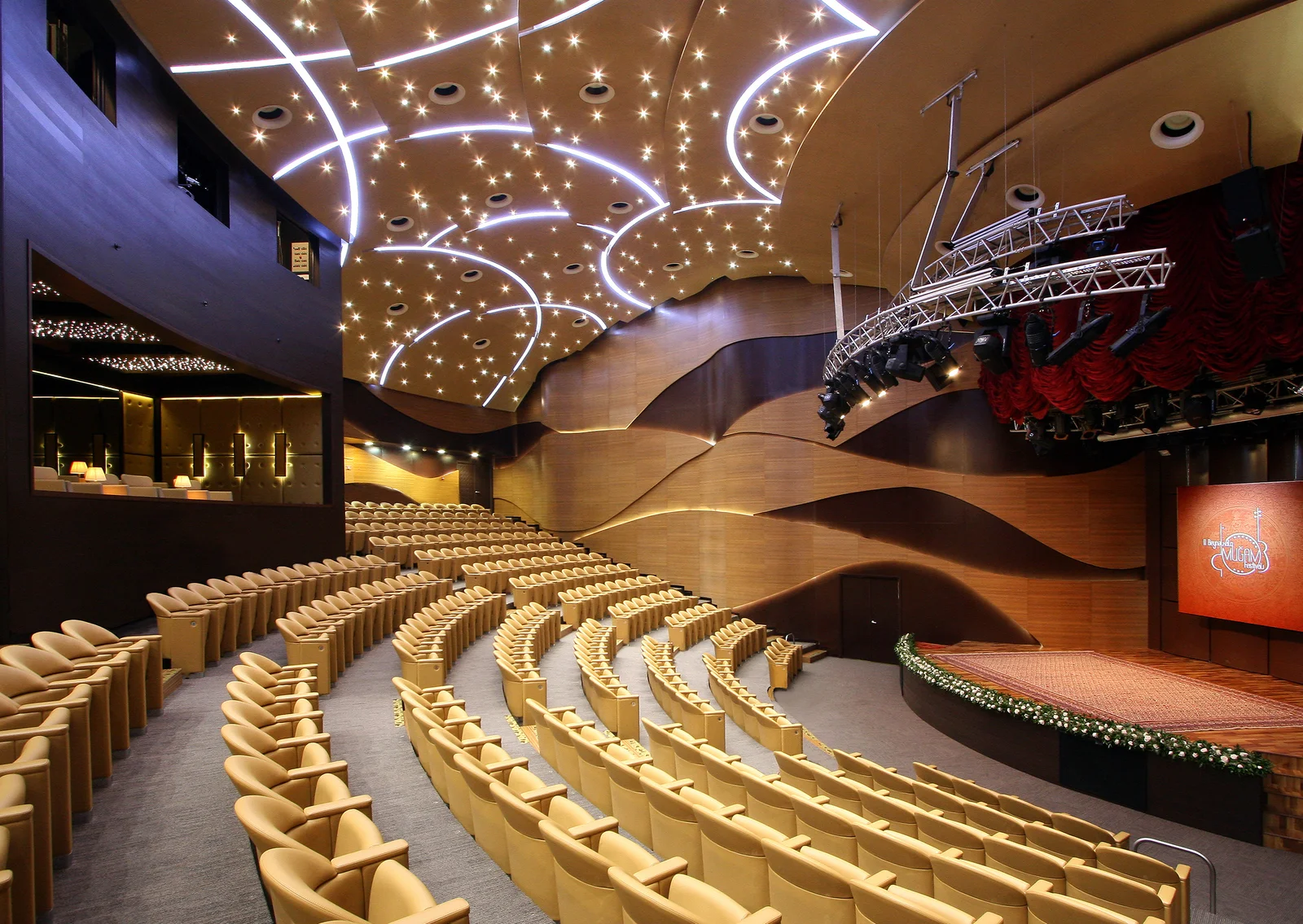
Constructed along the Baku seaside boulevard, the modern building looks like the body of a tar lute.
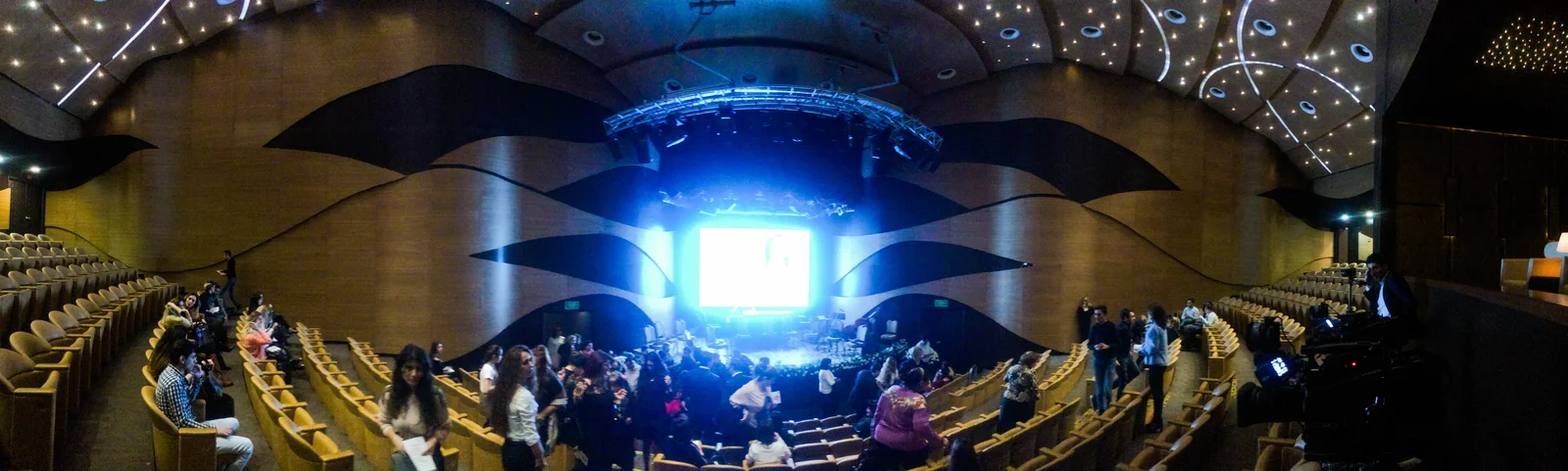
A curved wooden concert room holds three hundred and fifty guests for soft unamplified singing.
The three-story building has practice rooms, sound studios, and big open art halls.
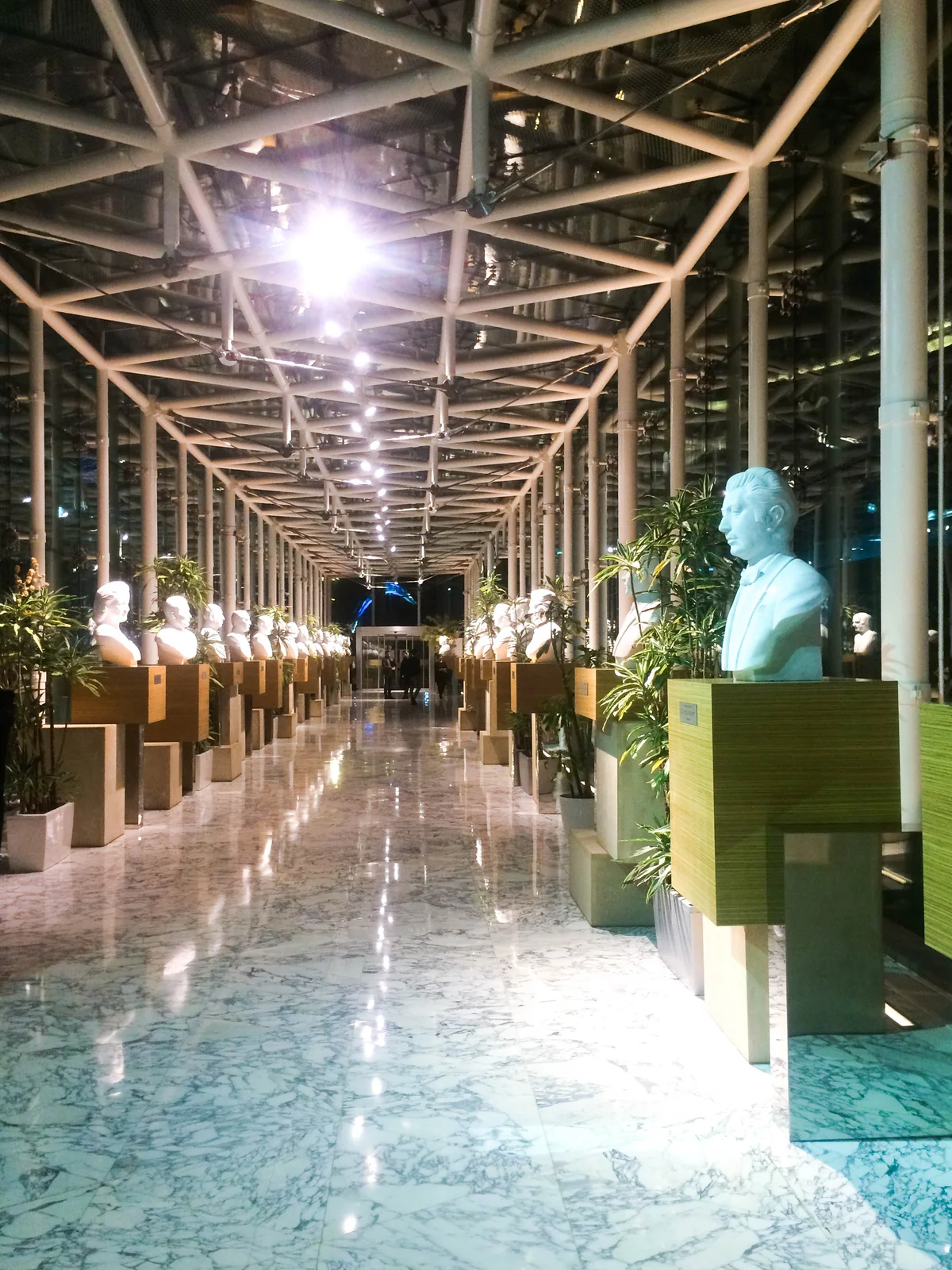
Sculpted bronze heads in the Hall of Fame honor famous singers and old masters from history.
Glass display cases showcase antique tars, kamancha fiddles, and historical music pages.
People enjoy peaceful walks along the Caspian seaside promenade before musical concerts begin.
Anniversary Shows and Big Concerts
The center announced an exciting new calendar of musical shows for the year 2026.
Special jubilee concerts celebrate the birthdays of famous singers who lived long ago.
Musicians practice their instruments on stage and check the room sound before each show.
Choirs sing classic modal songs together with many harmonious vocal parts.
The national orchestra joins traditional players on stage to make very grand music.
Staff curators maintain verification logs to confirm artist attendance and completed shows.
Folk Bards and Modern Jazz
Traditional ashug bards visit the center to play long wooden saz lutes.
The folk singers tell brave adventure tales while playing quick rhythmic tunes.
Modern pianists join traditional singers on stage to blend old songs with jazz chords.
Old master musicians teach young students how to sing very difficult modal notes.
Music teachers from many lands meet in meeting rooms to talk about old tunes.
Friendly guest artists from distant Silk Road lands travel to Baku to share songs.
Regional Tours and Preserving Heritage
Singers travel out from Baku to give concerts in Aghdam, Ganja, and Shusha.
Sound engineers make clear digital audio recordings of live shows for public broadcasts.
The center prints helpful music books and notes for young classroom learners.
School children visit on sunny mornings to see real instruments without paying money.
Low ticket prices allow everyday families to enjoy high-quality music together.
The busy center protects precious musical heritage under global cultural rules.
A2 · Elementary
International Mugham Center and Contemporary Musical Performance
Tar-shaped architecture, the 2026 performance programme, ashug bardic concerts, and regional outreach.
Architectural Design and Acoustic Engineering
Constructed along the Baku seaside boulevard, the International Mugham Center exhibits an iconic exterior evoking the curved body of a tar.
The center's three-hundred-and-fifty-seat concert auditorium incorporates specialized wooden wall panels engineered for intimate unamplified modal music.
The three-story cultural complex houses dedicated rehearsal halls, digital sound studios, archival vaults, and exhibition galleries.
An exhibition hall known as the Hall of Fame presents bronze portrait busts honouring historic master vocalists and classical poets.
Public glass cabinets display antique hand-crafted tars, bowed kamanchas, and historical modal music manuscripts.
The facility's seaside promenade setting on Baku Boulevard connects public strolls with formal musical heritage.
The 2026 Annual Programme and Anniversary Events
The International Mugham Center announced its comprehensive 2026 performance programme detailing planned anniversary tributes and concerts.
The seasonal calendar schedules commemorative jubilee concerts celebrating milestone birth anniversaries of celebrated twentieth-century khanandas.
Technical crews conduct rehearsals and acoustic sound checks to prepare chamber trios and guest artists for live stage broadcasts.
The seasonal repertoire introduces polyphonic choral adaptations that arrange classical modal melodies for multi-part vocal ensembles.
Specialized evening concerts unite traditional modal instrumentalists with the Azerbaijan State Symphony Orchestra for grand symphonic performances.
Center curators maintain formal verification logs tracking artist confirmations, rehearsals, and completed performance dates.
Ashug Traditions and Interdisciplinary Dialogue
The center's seasonal programming highlights traditional ashug concerts, presenting regional bardic minstrels playing the plucked long-necked saz lute.
Folk artists recite heroic dastan verse narratives, pairing metric storytelling with rhythmic instrumental motifs on the concert stage.
The venue hosts popular mugham-jazz fusion sessions, pairing traditional vocal improvisation with syncopated piano rhythms.
Veteran masters conduct public masterclasses, instructing conservatory apprentices in microtonal vocal nuances and ornamentation.
The center convenes academic musicology conferences, uniting ethnomusicologists to analyze modal taxonomy and historical poetic meters.
Collaborative artistic exchanges invite guest performers from Central Asia and the Middle East to foster cross-cultural modal dialogue.
Regional Outreach and Multimedia Safeguarding
The center organizes regional concert tours, presenting curated musical ensembles in provincial cultural centers including Aghdam, Ganja, and Shusha.
Sound engineers produce high-definition digital recordings of live stage performances for preservation in national audiovisual archives.
The institution publishes musicological monographs, critical scores, and annotated songbooks to support academic instruction.
Weekend educational matinees provide free admission for school groups, introducing younger generations to traditional instruments.
State cultural funding guarantees affordable ticket pricing, ensuring broad public accessibility to living musical heritage.
The center serves as a cornerstone of cultural policy fulfilling Azerbaijan's national commitments under UNESCO heritage conventions.
B1 · Intermediate
The International Mugham Center: Acoustic Architecture, Public Programming, and Living Heritage
Iconic tar-inspired design, the 2026 performance schedule, ashug dastan storytelling, and regional outreach.
Architectural Design and Acoustic Engineering
Erected within the Baku Seaside National Park, the International Mugham Center presents an architectural contour inspired by the silhouette of the Azerbaijani tar.
The facility features an intimate three-hundred-and-fifty-seat auditorium, where curved acoustic timber paneling supports unamplified modal singing.
The three-level cultural complex integrates advanced sound-recording studios, administrative offices, archival repositories, and luminous exhibition spaces.
Within the commemorative Hall of Fame gallery, visitors encounter sculpted bronze portrait busts honoring celebrated vocalists, composers, and classical poets.
Glass exhibition cases display historic nineteenth-century tars, decorated kamanchas, and calligraphic manuscripts documenting ancient modal systems.
Its scenic position along the Caspian boulevard enables residents and international visitors to transition seamlessly from seaside promenades into live concert halls.
The 2026 Annual Programme and Anniversary Events
In early 2026 the International Mugham Center publicized its official annual performance schedule, detailing anniversary celebrations, choral collaborations, and orchestral programs.
The seasonal calendar features dedicated jubilee concerts commemorating the milestone birth anniversaries of eminent twentieth-century khananda vocalists.
Artistic directors supervise systematic rehearsal cycles and acoustic sound checks to prepare resident trios and visiting virtuosos for public broadcasts.
The 2026 repertory incorporates ambitious polyphonic choral arrangements that translate traditionally monophonic modal melodies into layered vocal compositions.
Collaborative symphonic programs bring together traditional tar and kamancha soloists alongside the full Azerbaijan State Symphony Orchestra.
Administrative curators maintain detailed verification records, documenting confirmed artist rosters, rehearsal schedules, and finalized performance reviews.
Ashug Traditions and Interdisciplinary Dialogue
The auditorium regularly hosts ashug bardic performances, celebrating rural folk minstrels who accompany oral poetry with the plucked saz lute.
Master ashugs narrate extended dastan verse epics, punctuating dramatic vocal recitations with brisk polyphonic strumming patterns.
Contemporary crossover evenings explore mugham-jazz fusion, blending delicate modal improvisation with chromatic piano chord progressions and syncopated drumming.
Renowned vocal masters lead instructional masterclasses on the main stage, guiding conservatory apprentices through microtonal ornaments and modal transitions.
The institution sponsors international academic symposiums where musicologists analyze dastgah hierarchies, historical notation systems, and poetic metrics.
Cross-cultural artist residencies invite modal musicians from across the historic Silk Road to participate in collaborative ensemble workshops.
Regional Outreach and Multimedia Safeguarding
Extending its mission beyond the capital, the center coordinates traveling performance circuits to regional stages in Aghdam, Ganja, and Shusha.
In-house recording engineers produce high-resolution digital audio and video archives of every stage performance for public broadcasting.
The center's publishing division releases musicological monographs, instructional manuals, and critical transcriptions of historical mugham scores.
Specially organized educational matinees offer complimentary admission to school assemblies, cultivating acoustic music appreciation among younger audiences.
Subsidized ticketing models supported by the Ministry of Culture maintain equitable public access across diverse socioeconomic demographics.
The institution functions as a cornerstone of cultural policy, sustaining Azerbaijan's statutory safeguarding commitments under UNESCO intangible heritage frameworks.
B2 · Upper Intermediate
The International Mugham Center: Acoustic Architecture, Curatorial Mandates, and Contemporary Practice
Acoustic timber design, the 2026 commemorative season, bardic ashug recitals, and regional heritage distribution.
Architectural Design and Acoustic Engineering
Situated prominently within the Baku seaside boulevard, the International Mugham Center exemplifies sculptural architecture modeled directly after the profile of the Azerbaijani tar.
The venue incorporates an intimate three-hundred-and-fifty-seat auditorium, engineered with specialized reflective timber surfaces to optimize pure unamplified acoustic transmission.
The comprehensive three-tier facility houses professional multi-track recording studios, climate-controlled archival repositories, and versatile multimedia exhibition galleries.
A commemorative Hall of Fame gallery exhibits meticulously sculpted bronze busts honoring pioneering master vocalists, instrumentalists, and medieval lyric poets.
Illuminated museum vitrines display antique mother-of-pearl inlaid tars, carved walnut kamanchas, and foundational treatise manuscripts documenting dastgah theory.
Its panoramic waterfront orientation on Baku Boulevard embeds high modal culture directly within the daily civic rhythms of the Caspian capital.
The 2026 Annual Programme and Anniversary Events
The International Mugham Center announced its official 2026 performance programme through state cultural channels, outlining an extensive calendar of commemorative celebrations.
The curated season highlights landmark jubilee concerts honoring the milestone birth anniversaries of celebrated twentieth-century khananda masters.
Technical management conducts rigorous acoustic sound checks and staging rehearsals to synchronize resident chamber trios and international guest artists.
The schedule showcases innovative polyphonic choral adaptations that interpret classical monophonic mugham themes through multi-voice harmonic arrangements.
Joint orchestral evenings integrate traditional modal virtuosos with the Azerbaijan State Symphony Orchestra, executing intricate symphonic mugham scores.
Curatorial staff uphold stringent verification protocols, monitoring artist confirmations, rehearsal attendance, and documented performance outcomes.
Ashug Traditions and Interdisciplinary Dialogue
Seasonal programming systematically spotlights the ashug bardic art, featuring regional folk minstrels who accompany recited poetry on the long-necked saz lute.
Accomplished performers recite traditional dastan heroic epics, interweaving metric declamation with dynamic rhythmic flourishes on metal saz strings.
The center champions contemporary experimentation through mugham-jazz fusion sessions, pairing modal vocal flourishes with sophisticated post-bop harmonic voicings.
Distinguished khanandas host pedagogical masterclasses, training conservatory students in microtonal vocal inflections and melismatic ornamentation.
The venue convenes international musicological colloquia, bringing together ethnomusicologists to debate dastgah modal theory and classical ghazal meters.
Artistic exchange initiatives convene instrumental masters from across Central Asia and the Caucasus to explore shared modal heritage.
Regional Outreach and Multimedia Safeguarding
Dispersing its curatorial footprint beyond Baku, the center organizes touring concert series that activate regional performance halls in Aghdam, Ganja, and Shusha.
Acoustic technicians master high-fidelity multi-channel audiovisual recordings of live events, enriching the national intangible heritage digital archive.
The institution publishes peer-reviewed musicological treatises, educational curricula, and definitive critical editions of traditional modal repertoires.
Regular educational matinees provide structured stage demonstrations and free admission for schoolchildren, fostering early appreciation for classical modal music.
Generous state cultural subsidies guarantee modest ticket tariffs, democratizing access to premier national and international performances.
The complex serves as a cornerstone of cultural policy, executing Azerbaijan's safeguarding commitments under UNESCO intangible heritage charters.
C1 · Advanced
The International Mugham Center: Acoustic Architecture, Curatorial Governance, and Living Heritage
Organological architectural symbolism, the 2026 performance ledger, bardic ashug narratives, and regional dissemination.
Architectural Design and Acoustic Engineering
Occupying a conspicuous promontory along the Baku seaside boulevard, the International Mugham Center translates the organological contours of the Azerbaijani tar into monumental architecture.
The center's three-hundred-and-fifty-seat auditorium is engineered with parabolic timber baffles specifically calibrated to amplify subtle unamplified modal microtones.
The three-story cultural complex incorporates broadcast-grade recording studios, temperature-regulated archival vaults, and expansive curatorial galleries.
Within the monumental Hall of Fame, visitors encounter commemorative bronze portrait busts celebrating foundational khanandas, lutenists, and medieval lyric poets.
Curated exhibition vitrines preserve nineteenth-century bone-inlaid tars, parchment modal treatises, and antique kamanchas showcasing refined vernacular craftsmanship.
This Caspian promenade setting integrates public civic promenading with accessible institutional engagement, anchoring traditional modal music in metropolitan life.
The 2026 Annual Programme and Anniversary Events
In early 2026 the International Mugham Center released its programmatic prospectus, delineating scheduled jubilee observances, choral adaptations, and orchestral commissions.
The commemorative itinerary prioritizes milestone jubilee concerts celebrating the centenary and decennial birth anniversaries of twentieth-century vocal masters.
Curatorial directors oversee meticulous technical sound checks and stage rehearsals to optimize microphone acoustics and ensemble synchronization.
A prominent compositional innovation includes polyphonic choral adaptations that reconfigure traditionally soloistic modal dastgahs into choral textures.
Collaborative symphonic programs unite virtuoso tar and kamancha performers with the Azerbaijan State Symphony Orchestra to deliver monumental symphonic suites.
Institutional administrators implement rigorous programmatic tracking mechanisms, validating event fulfillment and reconciling scheduled listings with actual performances.
Ashug Traditions and Interdisciplinary Dialogue
The venue regularly stages ancestral ashug bardic recitals, featuring itinerant regional poets who accompany heroic narratives upon the long-necked saz lute.
Soloists deliver extended dastan recitations, integrating improvised metric storytelling with the intricate polyphonic accompaniment of fretted metal strings.
The auditorium fosters avant-garde stylistic hybridization through mugham-jazz dialogues, juxtaposing microtonal modal vocalises with chromatic piano voicings.
Senior master performers conduct rigorous vocal masterclasses, imparting uncodified oral wisdom, breathing mechanics, and subtle ornamentation techniques to apprentices.
The center convenes academic ethnomusicology symposiums, gathering international music theorists to examine dastgah taxonomy, microtonal intervals, and historical ghazal aesthetics.
Intercultural residency programs convene virtuoso modal instrumentalists from Transcaucasia and Central Asia, fostering fruitful comparative musicological dialogue.
Regional Outreach and Multimedia Safeguarding
Transcendental to its metropolitan base, the institution coordinates touring concert delegations that activate newly restored municipal venues in Aghdam, Ganja, and Shusha.
Audio archivists capture uncompressed multi-track recordings of premier concerts, depositing high-fidelity master copies into the national heritage registry.
The center's scholarly press disseminates peer-reviewed monographs, annotated transcriptions, and pedagogical facsimiles of classical music treatises.
Subsidized educational matinees welcome regional youth cohorts, providing unmediated acoustic exposure to traditional organology and live improvisation.
State cultural policy maintains nominal ticket pricing structures, insulating premier traditional performances from commercial market pressures.
The complex serves as a cornerstone of cultural policy, fulfilling Azerbaijan's institutional obligations under the 2003 UNESCO Intangible Heritage Convention.
C2 · Mastery
The International Mugham Center: Architectural Semiotics, Curatorial Governance, and Living Heritage
Organological architectural symbolism, the 2026 seasonal prospectus, bardic saz traditions, and regional dissemination.
Architectural Design and Acoustic Engineering
Occupying a conspicuous promontory along the Baku seaside boulevard, the International Mugham Center translates the organological contours of the Azerbaijani tar into monumental architecture.
The center's three-hundred-and-fifty-seat auditorium incorporates parabolic timber baffles specifically engineered to project delicate unamplified modal microtones.
The three-story cultural complex incorporates broadcast-grade recording studios, temperature-regulated archival vaults, and expansive curatorial galleries.
Within the monumental Hall of Fame, visitors encounter commemorative bronze portrait busts celebrating foundational khanandas, lutenists, and medieval lyric poets.
Curated exhibition vitrines preserve nineteenth-century bone-inlaid tars, parchment modal treatises, and antique kamanchas showcasing refined vernacular craftsmanship.
This Caspian promenade setting integrates public civic promenading with accessible institutional engagement, anchoring traditional modal music in metropolitan life.
The 2026 Annual Programme and Anniversary Events
In early 2026 the International Mugham Center released its programmatic prospectus, delineating scheduled jubilee observances, choral adaptations, and orchestral commissions.
The commemorative itinerary prioritizes milestone jubilee concerts celebrating the centenary and decennial birth anniversaries of twentieth-century vocal masters.
Curatorial directors oversee meticulous technical sound checks and stage rehearsals to optimize microphone acoustics and ensemble synchronization.
A prominent compositional innovation includes polyphonic choral adaptations that reconfigure traditionally soloistic modal dastgahs into choral textures.
Collaborative symphonic programs unite virtuoso tar and kamancha performers with the Azerbaijan State Symphony Orchestra to deliver monumental symphonic suites.
Institutional administrators implement rigorous programmatic tracking mechanisms, validating event fulfillment and reconciling scheduled listings with actual performances.
Ashug Traditions and Interdisciplinary Dialogue
The venue regularly stages ancestral ashug bardic recitals, featuring itinerant regional poets who accompany heroic narratives upon the long-necked saz lute.
Soloists deliver extended dastan recitations, integrating improvised metric storytelling with the intricate polyphonic accompaniment of fretted metal strings.
The auditorium fosters avant-garde stylistic hybridization through mugham-jazz dialogues, juxtaposing microtonal modal vocalises with chromatic piano voicings.
Senior master performers conduct rigorous vocal masterclasses, imparting uncodified oral wisdom, breathing mechanics, and subtle ornamentation techniques to apprentices.
The center convenes academic ethnomusicology symposiums, gathering international music theorists to examine dastgah taxonomy, microtonal intervals, and historical ghazal aesthetics.
Intercultural residency programs convene virtuoso modal instrumentalists from Transcaucasia and Central Asia, fostering fruitful comparative musicological dialogue.
Regional Outreach and Multimedia Safeguarding
Transcendental to its metropolitan base, the institution coordinates touring concert delegations that activate newly restored municipal venues in Aghdam, Ganja, and Shusha.
Audio archivists capture uncompressed multi-track recordings of premier concerts, depositing high-fidelity master copies into the national heritage registry.
The center's scholarly press disseminates peer-reviewed monographs, annotated transcriptions, and pedagogical facsimiles of classical music treatises.
Subsidized educational matinees welcome regional youth cohorts, providing unmediated acoustic exposure to traditional organology and live improvisation.
State cultural policy maintains nominal ticket pricing structures, insulating premier traditional performances from commercial market pressures.
The complex serves as a cornerstone of cultural policy, fulfilling Azerbaijan's institutional obligations under the 2003 UNESCO Intangible Heritage Convention.
Check your understanding
Choose how closely you want to revisit the article. You can refer back while answering, and review explanations when you finish.
Quick Quiz A1
Try one question, then create a free account for the full Quick Quiz. Sign Up Free
Answer every question before checking. There is no time limit.
Your results
/ 1 correct (%)
Read the explanations to see how each answer connects to the article.
-
What traditional musical instrument inspired the architectural body and exterior of the International Mugham Center?
1. Answer:
Quick Quiz A2
Try one question, then create a free account for the full Quick Quiz. Sign Up Free
Answer every question before checking. There is no time limit.
Your results
/ 1 correct (%)
Read the explanations to see how each answer connects to the article.
-
What traditional musical instrument inspired the architectural body and exterior of the International Mugham Center?
1. Answer:
Quick Quiz B1
Try one question, then create a free account for the full Quick Quiz. Sign Up Free
Answer every question before checking. There is no time limit.
Your results
/ 1 correct (%)
Read the explanations to see how each answer connects to the article.
-
What traditional musical instrument inspired the architectural body and exterior of the International Mugham Center?
1. Answer:
Quick Quiz B2
Try one question, then create a free account for the full Quick Quiz. Sign Up Free
Answer every question before checking. There is no time limit.
Your results
/ 1 correct (%)
Read the explanations to see how each answer connects to the article.
-
What traditional musical instrument inspired the architectural body and exterior of the International Mugham Center?
1. Answer:
Quick Quiz C1
Try one question, then create a free account for the full Quick Quiz. Sign Up Free
Answer every question before checking. There is no time limit.
Your results
/ 1 correct (%)
Read the explanations to see how each answer connects to the article.
-
What traditional musical instrument inspired the architectural body and exterior of the International Mugham Center?
1. Answer:
Quick Quiz C2
Try one question, then create a free account for the full Quick Quiz. Sign Up Free
Answer every question before checking. There is no time limit.
Your results
/ 1 correct (%)
Read the explanations to see how each answer connects to the article.
-
What traditional musical instrument inspired the architectural body and exterior of the International Mugham Center?
1. Answer:
