A1 · Beginner
Bosnian Pita and Burek Pastry Making
Bakers stretch thin dough and bake savory pies in round metal pans.
Making the Soft Wheat Dough
Bakers mix white wheat flour, warm water, oil, and salt inside large bakery bowls.
Strong kneading makes the soft gluten stretchy so it stretches without tearing.
Workers cut the dough into round balls called jufke and cover them with oil.
The oil keeps the dough moist while it rests for one hour.
Warm bakery air helps the dough soften before rolling begins.
Resting the dough well stops cracks from forming during stretching.
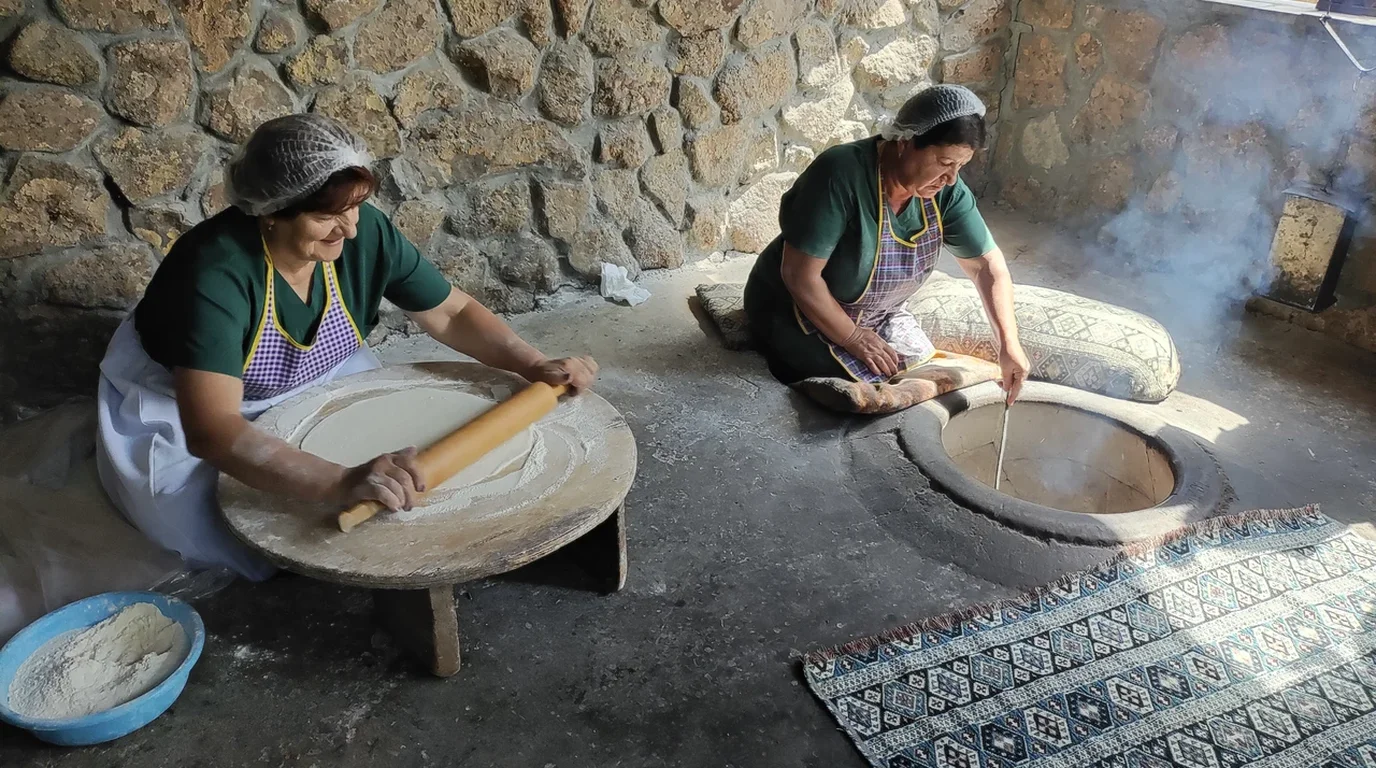
Stretching the Thin Dough Sheet
The baker rolls each dough ball with a long wooden pin called an oklagija.
Workers lay the rolled dough across a wide clean cloth on the table.
Artisans walk backward around the table while pulling the dough gently with their hands.
Slow pulling stretches the dough into a giant paper thin sheet.
The pastry sheet becomes so thin that people can see through it clearly.
A sharp knife trims thick outer edges away from the round table.
Traditional Savory Fillings
Bosnian diners use the special name burek only for pies filled with minced meat.
Burek meat filling mixes ground beef with diced onions, salt, and black pepper.
Sirnica pies contain fresh white cheese curd mixed with rich sour cream and eggs.
Zeljanica pies combine green chopped spinach leaves with fresh cheese.
Krompirusa pies feature small cut potatoes seasoned with black pepper and oil.
The cook places long lines of filling near the outer edge of the dough.
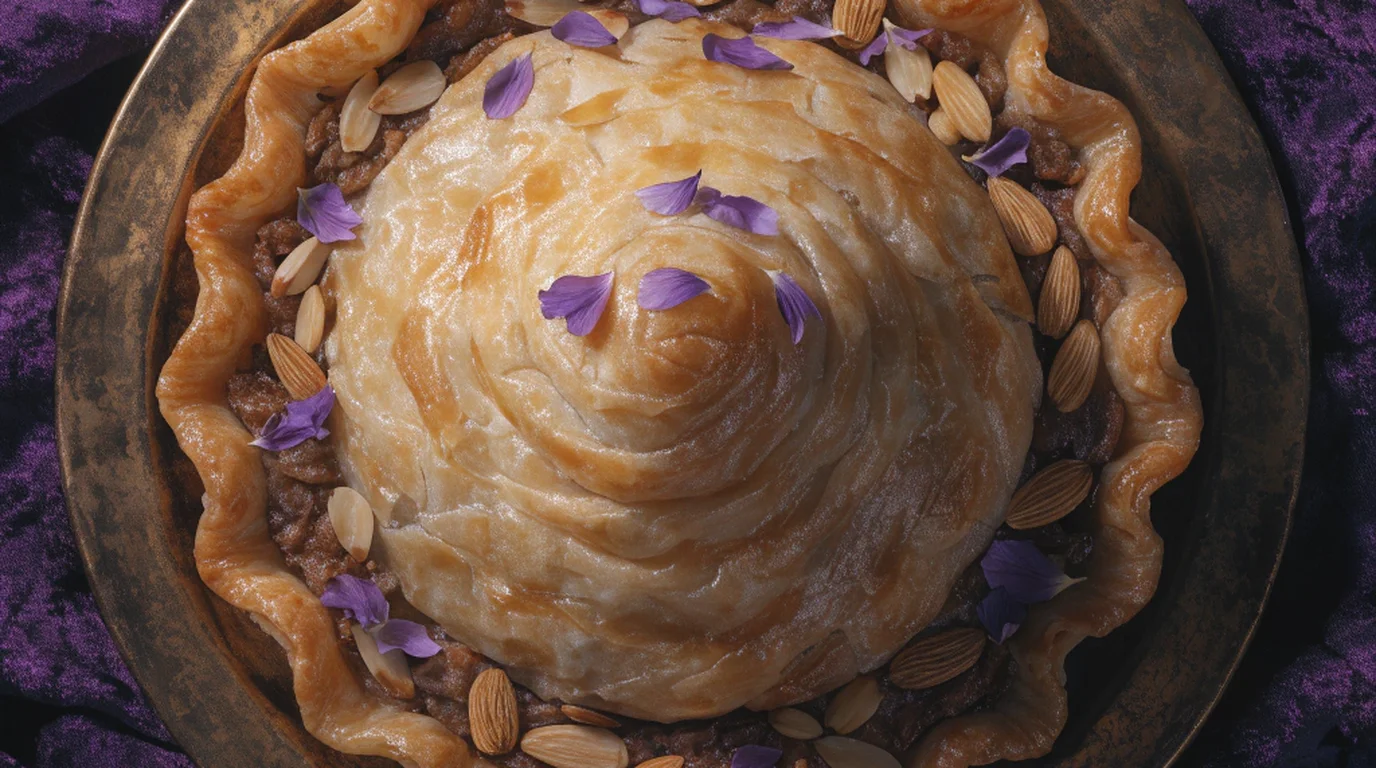
Rolling, Baking, and Serving
Bakers lift the table cloth to roll the thin dough into long ropes.
Cooks coil the filled pastry ropes into round metal pans called tepsija.
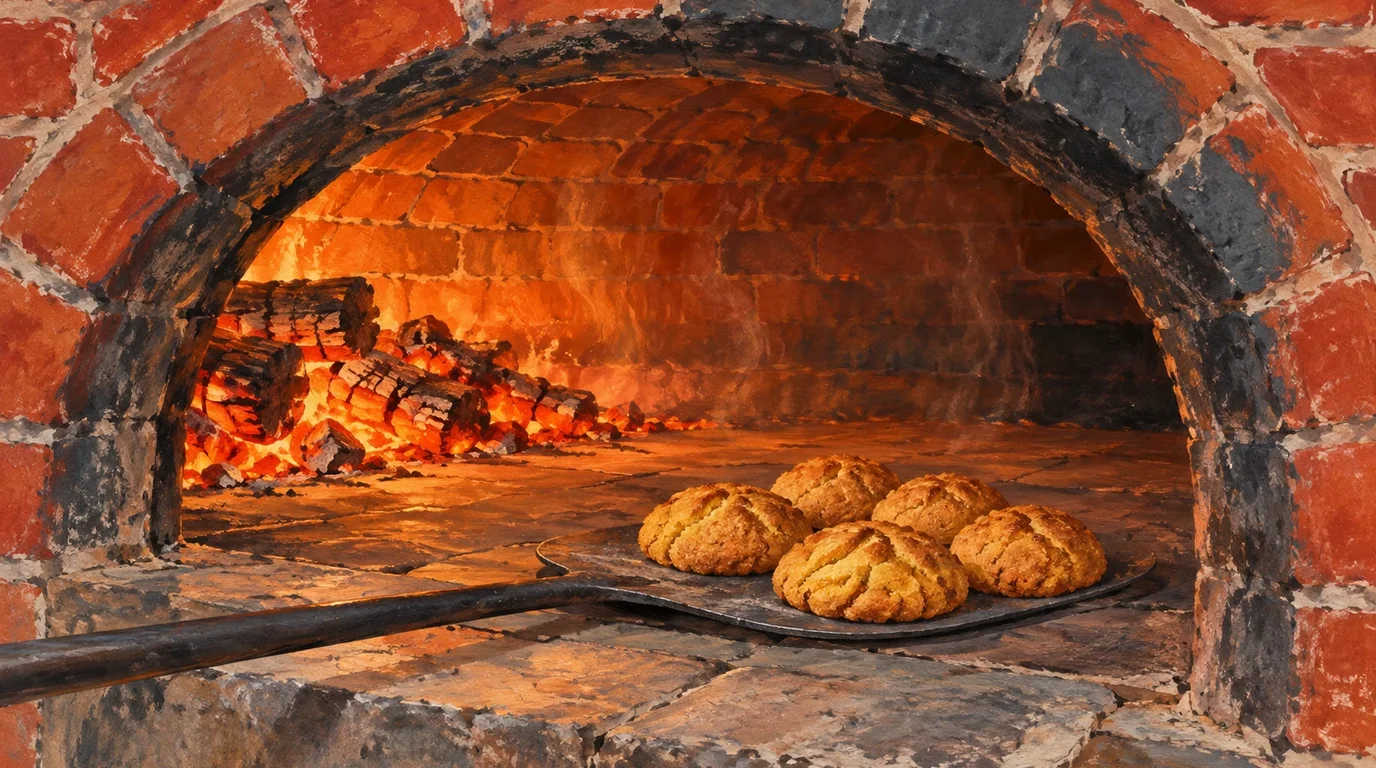
Hot wood fire ovens bake the round pies until golden brown.
Intense oven heat puffs the many pastry layers with hot trapped steam.
Cooks brush the hot pie with warm butter and water right after baking.
Traditional pie shops sell warm slices by weight alongside cold white yogurt.
A2 · Elementary
Bosnian Pita and Burek Pastry Traditions
Hand-stretched phyllo dough, distinct savory fillings, and wood-fired hearth baking in Sarajevo.
Phyllo Dough Formulation and Gluten Resting
Bosnian pita pastry begins with unleavened wheat dough made from high-gluten flour, lukewarm water, oil, and salt.
Thorough kneading develops an elastic gluten structure that allows extensive stretching without tearing.
Bakers divide the dough into round portions called jufke and coat them with sunflower oil.
The oil layer prevents the surface from drying out while the dough rests for forty minutes.
Kitchen staff maintain warm room temperature to keep the resting dough soft and pliable.
Artisans know that rushing the resting process causes the gluten to tear during rolling.
Manual Jufka Stretching Techniques
Bakers begin rolling the dough ball using a long, thin wooden rolling pin called an oklagija.
The rolled disk is placed onto a large linen cloth covering the wide wooden bakery table.
Pastry chefs slide the backs of their hands under the dough, walking backward around the table.
Careful manual stretching expands the pastry into an immense, paper-thin sheet across the table.
Traditional bakery standards require the stretched jufka sheet to be translucent enough to see through.
Workers trim away the thicker outer perimeter with a small knife before adding the filling.
Classification of Savory Fillings
Bosnian culinary rules strictly reserve the term burek for pastries filled exclusively with minced beef.
The classic burek filling combines ground beef, finely chopped yellow onions, black pepper, and salt.
Sirnica features a popular filling made of fresh unripened curd cheese, sour cream, and eggs.
Zeljanica incorporates tender chopped spinach or chard mixed with salted white curd cheese.
Krompiruša contains finely diced raw potatoes tossed with grated onions, sunflower oil, and black pepper.
The chosen filling is arranged along the outer borders of the stretched dough sheet.
Tepsija Coiling and Hearth Baking
Bakers lift the edges of the linen cloth to roll the dough into long filled cylinders.
These filled pastry rolls are arranged in tight circular spirals inside a round metal tepsija pan.
The tepsija trays bake inside wood-fired brick ovens or beneath heavy iron bells covered with embers.
High baking heat turns moisture into steam, separating the delicate dough sheets into crisp layers.
Immediately after baking, cooks splash the hot pastry with warm salted butter water called zaljevanje.
Dedicated buregdžinica shops serve fresh portions by weight alongside cold glasses of plain yogurt.
B1 · Intermediate
Artisanal Bosnian Pita and Burek Pastry Making
Translucent jufka stretching, strict savory nomenclature, and wood-fired tepsija baking in Bascarsija.
Dough Chemistry and Gluten Network Development
Authentic Bosnian pita production relies on simple unleavened dough prepared from high-gluten wheat flour, water, sunflower oil, and salt.
Disciplined kneading establishes an elastic gluten network capable of enduring multi-directional stretching without structural failure.
The dough is divided into rounded balls known as jufke, which receive a protective coating of vegetable oil.
This oil film prevents surface dehydration while molecular gluten bonds relax during an extended resting period.
Pastry artisans control ambient kitchen temperature and humidity to ensure the dough remains pliable for rolling.
Experience dictates that insufficient dough resting leads to snapped gluten strands and uneven pastry thickness.
The Craft of Hand-Stretching Translucent Jufka
Artisans initiate dough expansion using a slender wooden rolling pin known locally as an oklagija.
The flattened disk is transferred onto a large linen tablecloth that absorbs excess surface moisture during handling.
Bakers slip the backs of their hands under the pastry, stepping backward around the table to stretch it outward.
Gentle manual manipulation transforms the dough into an expansive, paper-thin sheet exceeding two square meters in area.
Guild benchmarks demand that the stretched jufka sheet achieves sufficient translucence to read newsprint placed beneath the cloth.
The thickened outer edge of the sheet is trimmed away with a sharp blade to ensure uniform flakiness.
Strict Taxonomy of Traditional Savory Fillings
Bosnian gastronomic tradition strictly reserves the title burek for pastries filled exclusively with seasoned minced beef or veal.
Authentic burek filling incorporates minced beef, diced onions, cracked black pepper, and salt without extraneous herbs.
Sirnica highlights a delicate filling of fresh cow milk curd, sour cream, beaten eggs, and salt.
Zeljanica combines blanched spinach or wild chard with fresh curd cheese and eggs for savory balance.
Krompiruša consists of finely diced raw potatoes seasoned with black pepper, grated onions, and sunflower oil.
The selected filling is distributed in even rows along the perimeter of the stretched dough sheet.
Spiral Coiling, Oven Lamination, and Table Service
Bakers raise the edges of the underlying linen tablecloth to roll the filled pastry into long cylindrical ropes.
These pastry cylinders are coiled into tight concentric spirals within large circular metal baking pans called tepsija.
The pans bake inside wood-fired brick hearths or under cast-iron sač bells covered with glowing hardwood embers.
Intense oven heat converts internal moisture into steam, driving rapid expansion between the delicate pastry layers.
Freshly baked pita is immediately basted with zaljevanje, a light mixture of boiling salted water and melted butter.
Traditional buregdžinica eateries sell hot pastry portions by weight, universally paired with chilled plain yogurt.
B2 · Upper Intermediate
Sarajevo Pita and Burek Pastry Architecture
Phyllo gluten elasticity, strict gastronomic taxonomy, and wood-fired lamination protocols in historic Bascarsija.
Phyllo Rheology and Gluten Relaxation
Bosnian pita relies on an unleavened wheat dough formulated exclusively with high-gluten flour, lukewarm water, sunflower oil, and salt.
Rigorously disciplined kneading cultivates an elastic gluten matrix capable of sustaining extreme multi-directional expansion without tearing.
The prepared dough is portioned into rounded mounds called jufke, which are thoroughly coated in vegetable oil.
This lipid coating prevents surface moisture loss and oxidation while gluten polymers relax during thirty to sixty minutes of resting.
Bakery masters regulate ambient room temperature and humidity to ensure optimal dough pliability before manual stretching.
Pastry artisans recognize that inadequate resting induces micro-fractures in the gluten strands, resulting in irregular pastry thickness.
Manual Jufka Manipulation and Sheet Calibration
Bakers commence sheet extension using an oklagija, a slender cylindrical wooden rolling pin tailored for delicate dough.
The pre-rolled round is transferred onto a coarse linen tablecloth that absorbs surface perspiration throughout manual handling.
Artisans insert the dorsal surfaces of their hands beneath the dough, walking backward around the perimeter to draw the sheet outward.
Continuous manual extension stretches the dough into an expansive, paper-thin membrane covering more than two square meters.
Artisanal standards mandate that the finished jufka achieve sufficient optical translucence to distinguish print through the dough.
Bakery staff meticulously excise the thickened perimeter border with a sharp blade to preserve pastry uniformity.
Culinary Taxonomy of Traditional Fillings
Bosnian culinary taxonomy strictly restricts the designation burek exclusively to pastries filled with seasoned minced beef.
The classic burek filling features coarsely ground beef, diced yellow onions, black pepper, and salt without garlic additions.
Sirnica incorporates an unctuous filling composed of fresh cow milk curd, sour cream, whole eggs, and salt.
Zeljanica unites finely shredded blanched spinach or wild chard with fresh curd cheese and eggs for moisture retention.
Krompiruša incorporates finely cubed raw potatoes seasoned aggressively with coarse black pepper, grated onions, and oil.
The seasoned filling is arranged in calibrated lines along the outermost margins of the expanded pastry sheet.
Tepsija Geometry, Steam Lamination, and Bureaucracy of Taste
Bakers elevate the edges of the underlying linen tablecloth to roll the filled dough into continuous cylindrical ropes.
These filled cylinders are coiled into tight concentric spirals within heavy circular metal baking trays known as tepsija.
The tepsija trays bake inside wood-fired brick hearths or under heavy cast-iron sač bells blanketed with hardwood embers.
Searing baking temperatures above two hundred degrees Celsius trigger immediate steam lamination between the paper-thin sheets.
Upon extraction, the blistering crust is tempered with zaljevanje, an emulsion of boiling salted water and clarified butter.
Specialized buregdžinica establishments vend the golden coils by weight, serving each portion alongside fermented plain yogurt.
C1 · Advanced
The Gastronomic Architecture of Bosnian Pita and Burek
Gluten rheology, artisanal jufka translucence, and wood-fired thermal lamination across Sarajevo bakeries.
Gluten Polymer Dynamics and Dough Relaxation
Authentic Bosnian pita fabrication commences with an unleavened dough derived from high-gluten wheat flour, water, vegetable oil, and salt.
Disciplined manual kneading develops a viscoelastic gluten network capable of enduring multi-directional expansion without structural rupture.
The cohesive dough is divided into spherical units designated as jufke, which receive a protective lipid coating.
This continuous lipid barrier impedes surface dehydration and oxidation while intermolecular gluten bonds relax over an hour of resting.
Artisanal bakers carefully regulate ambient room temperature and humidity to optimize the pliability of the resting dough.
Pastry masters understand that deficient resting causes micro-tears in the gluten mesh, generating an uneven pastry thickness.
Manual Jufka Translucence and Stretching Mastery
Bakers initiate manual thinning using an oklagija, a slender wooden rolling pin engineered for delicate pastry manipulation.
The preliminary round is transferred onto a dense linen tablecloth that regulates ambient moisture absorption during outward extension.
Artisans slide the dorsal surfaces of their hands beneath the sheet, retreating along the perimeter to draw the membrane outward.
Progressive radial stretching transforms the dough into an expansive, paper-thin translucent sheet exceeding two square meters in area.
Historic guild standards demand that the stretched membrane exhibit sufficient clarity to discern printed text through the fabric.
Artisans excise the dense outer perimeter with a razor blade to guarantee uniform pastry crispness.
Strict Culinary Taxonomy and Filling Formulations
Bosnian culinary nomenclature rigorously reserves the term burek exclusively for pastries containing seasoned minced beef or veal.
Traditional burek filling unites coarsely ground beef with finely minced yellow onions, cracked black pepper, and unrefined salt.
Sirnica showcases a savory filling of fresh unripened curd cheese, cultured cream, beaten eggs, and salt.
Zeljanica incorporates blanched spinach or wild chard blended with fresh curd cheese and eggs to preserve interior moisture.
Krompiruša incorporates finely diced raw potatoes seasoned assertively with black pepper, grated onions, and sunflower oil.
The seasoned filling is deposited in uniform linear borders along the outermost perimeter of the stretched pastry membrane.
Spiral Tepsija Geometry, Sač Baking, and Communal Consumption
Bakers lift the opposing borders of the linen tablecloth to roll the filled pastry into elongated cylindrical tubes.
These filled cylinders are coiled into tight concentric spirals within circular metal baking trays designated as tepsija.
The tepsija trays bake within wood-fired refractory brick ovens or beneath domed cast-iron sač bells buried in charcoal embers.
Searing thermal convective currents induce rapid steam lamination, separating adjacent dough strata into crisp leaves.
Following hearth extraction, the blistering pastry is brushed with zaljevanje, an aromatic wash of boiling salted water and butter.
Historic buregdžinica venues dispense the fresh pastry by metric weight, pairing the savory pie with fermented artisanal yogurt.
C2 · Mastery
The Artisanal Gastronomy of Bosnian Pita and Burek
Phyllo rheology, manual membrane expansion, and wood-fired steam lamination in Bascarsija.
Gluten Polymer Rheology and Macromolecular Relaxation
Artisanal Bosnian pita production begins with an unleavened wheat dough formulated from high-gluten flour, lukewarm water, sunflower oil, and salt.
Disciplined manual kneading develops a robust viscoelastic gluten matrix engineered to sustain multi-directional tensile strain without rupture.
The cohesive dough is divided into spherical portions designated as jufke, which receive a protective lipid coating.
This continuous lipid barrier impedes surface dehydration and oxidation while molecular gluten polymers relax during resting.
Artisanal bakeries maintain strict ambient temperature and humidity parameters to preserve optimal dough pliability before stretching.
Experienced guild masters stress that deficient resting causes micro-ruptures across the gluten lattice, creating irregular pastry thickness.
Membrane Expansion and Jufka Translucence
Pastry artisans commence initial dough extension utilizing an oklagija, a slender wooden rolling pin engineered for delicate manual work.
The pre-rolled round is transferred onto a dense linen tablecloth that regulates ambient moisture absorption during manual handling.
Bakers insert the dorsal surfaces of their hands beneath the sheet, retreating around the table to draw the membrane outward.
Progressive radial stretching transforms the dough into an expansive, paper-thin translucent sheet exceeding two square meters in area.
Historic guild benchmarks demand that the stretched membrane achieve sufficient clarity to discern printed text through the fabric.
Artisans excise the dense outer perimeter with a razor blade to preserve uniform pastry crispness.
Gastronomic Taxonomy and Classical Fillings
Bosnian culinary nomenclature rigorously enforces the absolute restriction of the title burek exclusively to minced beef preparations.
The canonical burek filling unites coarsely ground beef with finely diced yellow onions, cracked black pepper, and unrefined salt.
Sirnica incorporates an unctuous filling composed of fresh unripened cow milk curd, cultured sour cream, beaten eggs, and salt.
Zeljanica combines blanched spinach or wild chard with fresh curd cheese and eggs to ensure interior moisture retention.
Krompiruša incorporates finely diced raw potatoes seasoned assertively with coarse black pepper, grated onions, and sunflower oil.
The seasoned filling is deposited in uniform linear ribbons along the outermost perimeter of the expanded pastry membrane.
Tepsija Geometry, Sač Lamination, and Communal Consumption
Bakers raise the opposing borders of the linen tablecloth to roll the filled pastry into continuous cylindrical tubes.
These filled cylinders are coiled into tight concentric spirals within heavy circular metal baking trays designated as tepsija.
The tepsija trays bake within wood-fired refractory brick ovens or beneath domed cast-iron sač bells buried in hardwood embers.
Searing thermal convective currents induce rapid steam lamination, separating adjacent dough strata into crisp leaves.
Following hearth extraction, the blistering pastry is brushed with zaljevanje, an aromatic wash of boiling salted water and butter.
Historic buregdžinica venues dispense the fresh pastry by metric weight, pairing the savory pie with fermented artisanal yogurt.
Check your understanding
Choose how closely you want to revisit the article. You can refer back while answering, and review explanations when you finish.
Quick Quiz A1
Try one question, then create a free account for the full Quick Quiz. Sign Up Free
Answer every question before checking. There is no time limit.
Your results
/ 1 correct (%)
Read the explanations to see how each answer connects to the article.
-
What ingredients do bakers mix to make the soft dough?
1. Answer:
Quick Quiz A2
Try one question, then create a free account for the full Quick Quiz. Sign Up Free
Answer every question before checking. There is no time limit.
Your results
/ 1 correct (%)
Read the explanations to see how each answer connects to the article.
-
What ingredients do bakers use to make unleavened pita dough?
1. Answer:
Quick Quiz B1
Try one question, then create a free account for the full Quick Quiz. Sign Up Free
Answer every question before checking. There is no time limit.
Your results
/ 1 correct (%)
Read the explanations to see how each answer connects to the article.
-
What ingredients are used to prepare authentic Bosnian pita dough?
1. Answer:
Quick Quiz B2
Try one question, then create a free account for the full Quick Quiz. Sign Up Free
Answer every question before checking. There is no time limit.
Your results
/ 1 correct (%)
Read the explanations to see how each answer connects to the article.
-
What ingredients formulate the unleavened wheat dough for Bosnian pita?
1. Answer:
Quick Quiz C1
Try one question, then create a free account for the full Quick Quiz. Sign Up Free
Answer every question before checking. There is no time limit.
Your results
/ 1 correct (%)
Read the explanations to see how each answer connects to the article.
-
What ingredients formulate the unleavened dough for Bosnian pita?
1. Answer:
Quick Quiz C2
Try one question, then create a free account for the full Quick Quiz. Sign Up Free
Answer every question before checking. There is no time limit.
Your results
/ 1 correct (%)
Read the explanations to see how each answer connects to the article.
-
What ingredients formulate the unleavened wheat dough for artisanal pita?
1. Answer:
