A1 · Beginner
Traditional Bosnian Coffee Culture and Dzezva Rituals
Fresh ground coffee brews inside small copper pots across old Sarajevo.
Grinding the Coffee Beans
Cooks grind roasted brown coffee beans into very fine soft powder.
Workers turn a tall brass hand mill called a rucni mlin to crush beans.
The metal grinder turns slowly so the coffee beans stay cool and fresh.
The dry coffee powder warms gently inside a copper pot before water arrives.
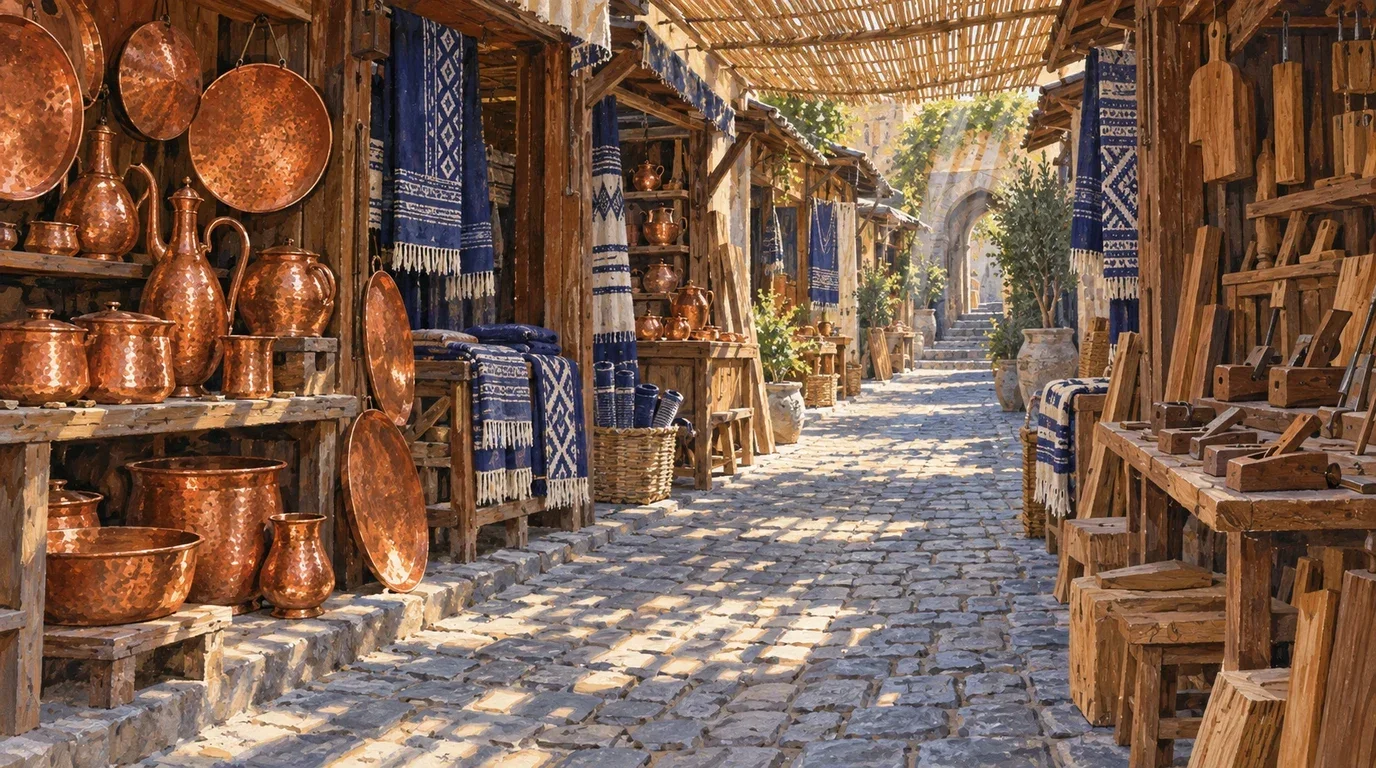
Coppersmiths make small metal coffee pots called dzezva along old market streets.
The narrow top of the metal pot helps the coffee brew evenly.
Brewing Coffee in the Dzezva
Bakers boil clean fresh water inside a pot before adding coffee powder.
The cook pours a little boiling water into a cup to save for later.
Dark coffee powder enters the hot copper pot with steaming hot water.
The hot stove creates a thick golden foam layer on top called kajmak.
The cook lifts the copper pot quickly before the hot foam spills over.
Adding the saved hot water makes heavy grounds sink to the bottom.
Serving Coffee on Metal Trays
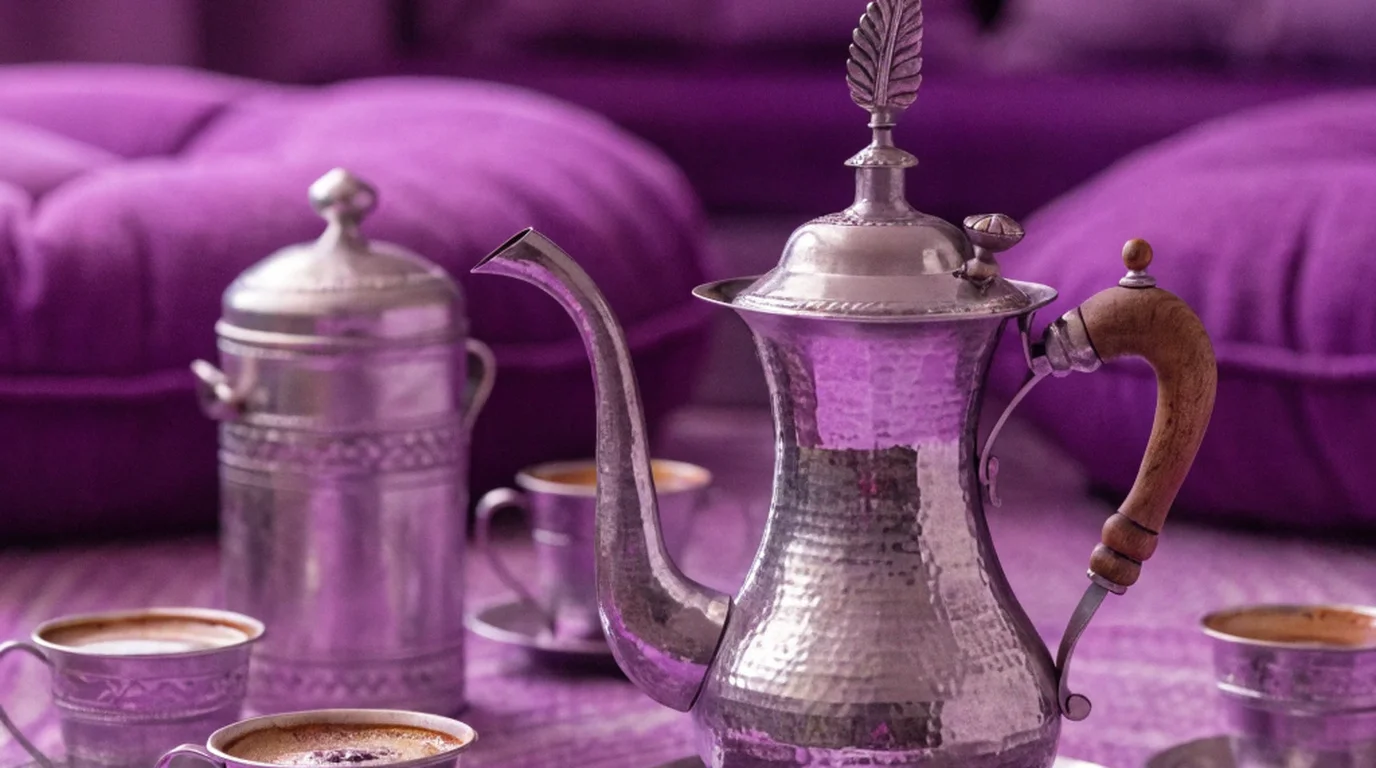
Waiters carry coffee on round metal trays called tabla to cafe tables.
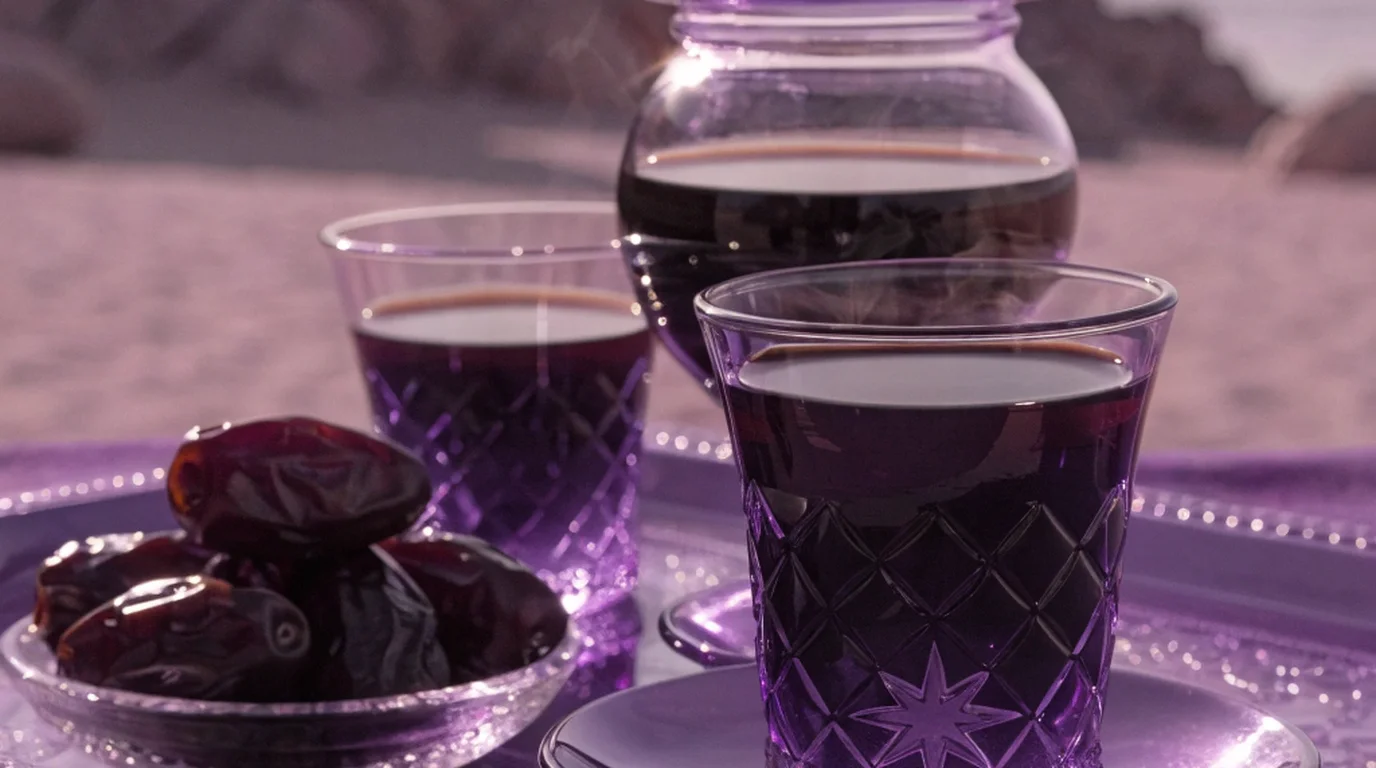
Guests drink hot coffee from small white cups without handles called fildzani.
The host puts a spoon of golden foam into each cup before pouring.
The metal tray holds hard sugar cubes, sweet rahat lokum candy, and cold water.
People dip a white sugar cube into hot coffee instead of stirring.
Guests drink cold water first to taste the rich coffee flavors better.
Social Cafes and Daily Life
Drinking slow coffee represents an old Bosnian tradition of quiet daily enjoyment.
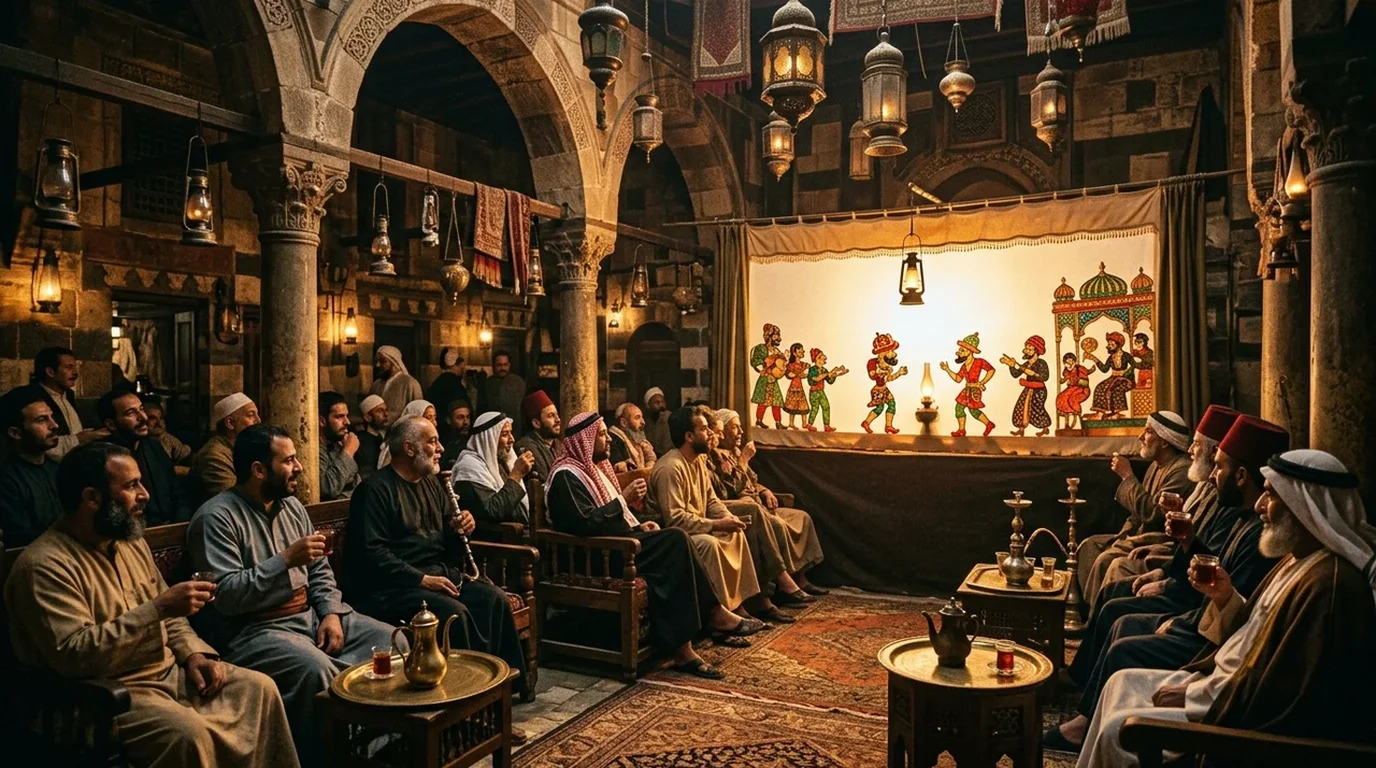
Town coffeehouses function as open rooms for business and neighborhood socializing.
Old coffeehouses in the historic bazaar have welcomed travelers for many centuries.
Serving fresh coffee shows warm welcome to visitors inside family homes.
Guests look at dark coffee mud called telva in cups for fun stories.
City leaders protect these old coffee customs as valuable local cultural heritage.
A2 · Elementary
Traditional Bosnian Coffee Culture and Dzezva Rituals
Hand-ground Arabica beans, copper pot brewing, and communal hospitality in Sarajevo.
Bean Selection and Brass Hand Grinding
Bosnian coffee preparation begins with lightly roasted Arabica beans ground to an ultra-fine powder.
Artisans grind the roasted beans manually using a cylindrical brass hand grinder called a ručni mlin.
The slow mechanical grinding crushes the coffee beans without producing heat that damages aromatic oils.
Ground coffee is gently warmed inside a dry copper pot before hot water is added.
Skilled coppersmiths along Baščaršija forge specialized narrow-necked džezva pots lined with protective tin.
The conical shape of the copper pot concentrates rising heat toward the narrow opening.
The Džezva Brewing Process
In the traditional Bosnian method, fresh water is brought to a boil before the grounds are mixed.
A small portion of boiling water is decanted into a side cup to hold as a reserve.
Fine coffee powder is added to the warm copper džezva, followed by the remaining boiling water.
Returning the džezva to the heat creates a dense, golden-brown crema foam known as kajmak.
The brewer removes the pot from the heat just before it boils over to preserve the foam.
Pouring the reserved boiling water back into the pot helps the heavy grinds settle to the bottom.
Table Service and Fildžan Etiquette
Traditional table service presents the coffee on a decorative engraved metal tray known as a tabla.
Coffee is served inside the hot copper džezva alongside small handleless ceramic cups called fildžani.
The host carefully spoons a layer of thick surface foam into each fildžan before pouring the liquid.
The tray arrangement includes sugar cubes, a glass of cold water, and a piece of rahat lokum confection.
Bosnian coffee is never sweetened while boiling, so drinkers dip sugar cubes directly into their cup.
Diners take a small sip of cold water before tasting the coffee to cleanse their palate.
Kafana Heritage and Communal Gathering
Coffee drinking in Bosnia represents an essential social custom defined by the peaceful spirit of ćejf.
Neighborhood coffeehouses serve as important meeting places for discussion, trade, and friendly conversation.
Historic kafana venues across old Sarajevo have welcomed residents and travelers since the sixteenth century.
Offering a freshly brewed pot of coffee serves as a traditional gesture of sincere household hospitality.
After finishing the drink, guests examine the dark residue called telva left in the cup for fortune tales.
National heritage registries honor the Bosnian coffee ritual as an important intangible cultural treasure.
B1 · Intermediate
Traditional Bosnian Coffee Rituals and Coffeehouse Culture
Cylindrical brass hand mills, copper dzezva brewing mastery, and unhurried hospitality in Sarajevo.
Artisanal Milling and Coppersmith Vessels
Authentic Bosnian coffee preparation begins with lightly roasted Arabica beans ground to an exceptionally fine powder.
Artisans grind the beans manually utilizing a cylindrical brass hand grinder known as a ručni mlin.
The gentle mechanical motion of the brass grinder mills the beans without generating thermal friction that degrades delicate oils.
The dry ground coffee is warmed briefly inside a copper pot to release volatile aromatic fragrances.
Coppersmiths in the historic Kazandžiluk quarter forge narrow-necked džezva pots lined with food-grade tin.
The distinctive conical geometry of the džezva concentrates rising thermal currents toward the narrow aperture.
Precision Decanting and Crema Foam Development
Unlike standard regional variations, the Bosnian brewing technique requires bringing water to a rolling boil separately.
A small measure of boiling water is decanted into a side cup, leaving a measured base for infusion.
Fine coffee grounds are introduced directly into the warm copper vessel, followed by boiling water.
Returning the džezva to glowing coals or flame triggers the formation of a dense, golden foam called kajmak.
The brewer lifts the pot from the heat source precisely as the crema rises, preventing boiling over.
Decanted boiling water is gently returned to the vessel, precipitating suspended grinds to the bottom.
Ceremonial Service and Fildžan Customs
Table service presents the boiling brew on an intricately engraved metal tray designated as a tabla.
The coffee remains inside the copper džezva, accompanied by small handleless porcelain cups called fildžani.
The server distributes a generous spoonful of thick kajmak foam into each cup before pouring the dark liquid.
The service includes solid sugar cubes, a glass of chilled water, and a cube of rahat lokum confection.
Bosnian coffee is brewed entirely without sugar, inviting drinkers to nibble a dipped sugar cube separately.
Patrons consume a sip of cold water beforehand to clear the palate and appreciate the nuanced roast.
Civic Forums and the Philosophy of Ćejf
Coffee drinking in Bosnia functions as a social institution centered on the cultural philosophy of ćejf.
Historic coffeehouse venues operate as democratic forums where citizens debate politics, negotiate business, and socialize.
Traditional kafana establishments across Baščaršija have hosted communal gatherings continuously since the sixteenth century.
Hospitality conventions use specific coffee servings to welcome guests or signal the conclusion of a social visit.
The thick layer of grounds termed telva resting at the base of the fildžan inspires informal fortune telling.
Official cultural registries designate the Bosnian coffee ceremony as an essential intangible cultural heritage pillar.
B2 · Upper Intermediate
The Cultural Gastronomy of Bosnian Coffee and Dzezva Rituals
Precision decanting protocols, copper craftsmanship, and the civic philosophy of cejf in Bascarsija.
Milling Rheology and Coppersmith Metallurgy
Bosnian coffee preparation commences with lightly roasted Arabica beans pulverized into an ultra-fine flour.
Practitioners mill the beans manually utilizing a cylindrical brass hand grinder designated as a ručni mlin.
The precise burr geometry of the brass mill grinds beans without thermal buildup that oxidizes volatile aromatic oils.
The ground coffee is gently pre-warmed within a dry copper vessel to activate latent aromatic compounds.
Artisanal coppersmiths along Kazandžiluk hand-hammer specialized narrow-necked džezva pots lined with non-reactive tin.
The conical architecture of the džezva concentrates ascending thermal convective currents toward a narrow aperture.
Thermal Decanting Protocols and Crema Stabilization
Distinct from Turkish brewing protocols, the Bosnian ritual requires boiling water independently before introducing grounds.
The brewer decants a calculated measure of boiling water into an auxiliary cup to establish a thermal reserve.
Fine coffee powder is deposited into the heated copper džezva and immediately infused with boiling water.
Returning the vessel to glowing embers cultivates a dense, velvety crema foam known culturally as kajmak.
The operator withdraws the vessel from the heat source just prior to boiling over, consolidating the crema.
The decanted water is poured back into the džezva, precipitating suspended grinds to the bottom of the pot.
Service Geometry and Fildžan Rituals
Ceremonial table service arranges the boiling brew on an embossed brass or copper tray known as a tabla.
Coffee is presented directly within the brewing džezva alongside small handleless ceramic vessels designated as fildžani.
The host ladles a portion of the thick surface kajmak foam into each fildžan before decanting the liquid.
The presentation includes crystalline sugar cubes, chilled spring water, and a piece of rahat lokum Turkish delight.
Bosnian coffee is brewed strictly unsweetened, encouraging patrons to dip a sugar cube between sips.
Diners take a preliminary sip of water to cleanse the palate and heighten appreciation of the dark roast.
The Sociological Architecture of Ćejf
Coffee consumption in Bosnia constitutes a profound civic ritual governed by the cultural ethos of ćejf.
Urban coffeehouses serve as egalitarian public spaces where diverse social strata deliberate politics and commerce.
Historic kafana venues across Baščaršija have sustained continuous neighborhood gatherings since Ottoman municipal origins.
Traditional etiquette utilizes contextual coffee offerings to express hospitality or convey subtle social boundaries.
The dense sediment of settled grinds called telva adhering to the fildžan basin invites recreational tasseography.
National heritage registries formally safeguard the Bosnian coffee ceremony as a cornerstone of intangible cultural tradition.
C1 · Advanced
The Gastronomic Architecture of Bosnian Coffee Rituals
Thermal decanting mechanics, artisanal Kazandziluk coppersmithing, and the civic ethos of cejf in Sarajevo.
Powder Metallurgy and Thermal Pre-Activation
Artisanal Bosnian coffee begins with lightly roasted Arabica beans pulverized into an exceptionally fine powder.
Practitioners mill the beans manually utilizing a cylindrical brass hand grinder designated as a ručni mlin.
The mechanical tolerance of the brass mill grinds beans without thermal accumulation that degrades volatile terpenes.
The pulverized coffee undergoes gentle dry pre-warming within a copper pot to liberate aromatic volatile compounds.
Master coppersmiths along Kazandžiluk hand-hammer specialized narrow-necked džezva vessels lined with non-reactive tin.
The conical architecture of the vessel concentrates ascending convective currents toward a narrow neck aperture.
Precision Decanting and Crema Emulsion Dynamics
Deviating from regional counterparts, the Bosnian method dictates bringing water to a rolling boil prior to infusion.
The practitioner decants a calibrated volume of boiling water into an auxiliary cup to maintain thermal equilibrium.
Pulverized coffee is introduced into the warmed copper vessel and reconstituted with the remaining boiling water.
Reintroducing the vessel to glowing charcoal embers triggers the rapid emergence of a golden crema emulsion termed kajmak.
The brewer elevates the pot from the hearth immediately before boil-over, allowing the foam to consolidate.
The decanted boiling water is gently returned to the brew, precipitating suspended grinds toward the vessel floor.
Ceremonial Service and Fildžan Aesthetics
Formal service presents the freshly brewed beverage upon an intricately engraved metal platter designated as a tabla.
The brew is served directly from the copper džezva alongside handleless ceramic receptacles known as fildžani.
The host ladles an equitable portion of surface kajmak foam into each cup before pouring the dark beverage.
The presentation incorporates crystalline sugar cubes, chilled spring water, and a piece of gelatinous rahat lokum confectionery.
Bosnian coffee is brewed strictly devoid of sugar, inviting patrons to dip a cube between consecutive sips.
Connoisseurs consume a preliminary sip of water to neutralize palate residues and heighten roasted perception.
Civic Discourse and the Philosophy of Ćejf
Coffee consumption in Bosnia represents an institutionalized civic ritual anchored in the philosophical ethos of ćejf.
Urban coffeehouses serve as egalitarian spaces where citizens negotiate commerce and deliberate civic governance.
Historic kafana establishments throughout Baščaršija have sustained continuous communal discourse since the sixteenth century.
Social etiquette utilizes specific coffee iterations to communicate hospitality or subtly conclude lengthy visits.
The dense sediment of settled grinds designated as telva coating the ceramic cup inspires informal divination.
Intangible heritage inventories formally recognize the Bosnian coffee ceremony as an irreplaceable cultural cornerstone.
C2 · Mastery
The Intangible Gastronomy of Bosnian Coffee Traditions
Thermal decanting mechanics, coppersmith metallurgy, and the civic ethos of cejf in Bascarsija.
Powder Metallurgy and Thermal Activation
Artisanal Bosnian coffee begins with lightly roasted Arabica beans pulverized into an exceptionally fine powder.
Practitioners mill the beans manually utilizing a cylindrical brass hand grinder designated as a ručni mlin.
The mechanical tolerance of the brass mill grinds beans without thermal accumulation that degrades volatile terpenes.
The pulverized coffee undergoes gentle dry pre-warming within a copper pot to liberate aromatic volatile compounds.
Master coppersmiths along Kazandžiluk hand-hammer specialized narrow-necked džezva vessels lined with non-reactive tin.
The conical architecture of the vessel concentrates ascending convective currents toward a narrow neck aperture.
Decanting Mechanics and Crema Emulsion Dynamics
Deviating from regional counterparts, the Bosnian method dictates bringing water to a rolling boil prior to infusion.
The practitioner decants a calibrated volume of boiling water into an auxiliary cup to maintain thermal equilibrium.
Pulverized coffee is introduced into the warmed copper vessel and reconstituted with the remaining boiling water.
Reintroducing the vessel to glowing charcoal embers triggers the rapid emergence of a golden crema emulsion termed kajmak.
The brewer elevates the pot from the hearth immediately before boil-over, allowing the foam to consolidate.
The decanted boiling water is gently returned to the brew, precipitating suspended grinds toward the vessel floor.
Service Aesthetics and Fildžan Rituals
Formal service presents the freshly brewed beverage upon an intricately engraved metal platter designated as a tabla.
The brew is served directly from the copper džezva alongside handleless ceramic receptacles known as fildžani.
The host ladles an equitable portion of surface kajmak foam into each cup before pouring the dark beverage.
The presentation incorporates crystalline sugar cubes, chilled spring water, and a piece of gelatinous rahat lokum confectionery.
Bosnian coffee is brewed strictly devoid of sugar, inviting patrons to dip a cube between consecutive sips.
Connoisseurs consume a preliminary sip of water to neutralize palate residues and heighten roasted perception.
Civic Discourse and the Philosophy of Ćejf
Coffee consumption in Bosnia represents an institutionalized civic ritual anchored in the philosophical ethos of ćejf.
Urban coffeehouses serve as egalitarian spaces where citizens negotiate commerce and deliberate civic governance.
Historic kafana establishments throughout Baščaršija have sustained continuous communal discourse since the sixteenth century.
Social etiquette utilizes specific coffee iterations to communicate hospitality or subtly conclude lengthy visits.
The dense sediment of settled grinds designated as telva coating the ceramic cup inspires informal divination.
Intangible heritage inventories formally recognize the Bosnian coffee ceremony as an irreplaceable cultural cornerstone.
Check your understanding
Choose how closely you want to revisit the article. You can refer back while answering, and review explanations when you finish.
Quick Quiz A1
Try one question, then create a free account for the full Quick Quiz. Sign Up Free
Answer every question before checking. There is no time limit.
Your results
/ 1 correct (%)
Read the explanations to see how each answer connects to the article.
-
How do cooks grind roasted brown coffee beans into powder?
1. Answer:
Quick Quiz A2
Try one question, then create a free account for the full Quick Quiz. Sign Up Free
Answer every question before checking. There is no time limit.
Your results
/ 1 correct (%)
Read the explanations to see how each answer connects to the article.
-
What roasted Arabica beans ground to ultra-fine powder begin preparation?
1. Answer:
Quick Quiz B1
Try one question, then create a free account for the full Quick Quiz. Sign Up Free
Answer every question before checking. There is no time limit.
Your results
/ 1 correct (%)
Read the explanations to see how each answer connects to the article.
-
What roasted Arabica beans ground to fine powder begin preparation?
1. Answer:
Quick Quiz B2
Try one question, then create a free account for the full Quick Quiz. Sign Up Free
Answer every question before checking. There is no time limit.
Your results
/ 1 correct (%)
Read the explanations to see how each answer connects to the article.
-
What roasted Arabica beans pulverized into flour begin preparation?
1. Answer:
Quick Quiz C1
Try one question, then create a free account for the full Quick Quiz. Sign Up Free
Answer every question before checking. There is no time limit.
Your results
/ 1 correct (%)
Read the explanations to see how each answer connects to the article.
-
What roasted Arabica beans pulverized into fine powder begin preparation?
1. Answer:
Quick Quiz C2
Try one question, then create a free account for the full Quick Quiz. Sign Up Free
Answer every question before checking. There is no time limit.
Your results
/ 1 correct (%)
Read the explanations to see how each answer connects to the article.
-
What roasted Arabica beans pulverized into fine powder begin preparation?
1. Answer:
