A1 · Beginner
Haida Argillite Carving: Quarry, Stone, and Living Art
On Haida Gwaii, carvers harvest black slate from Slatechuck Mountain to shape world-renowned stone artworks.
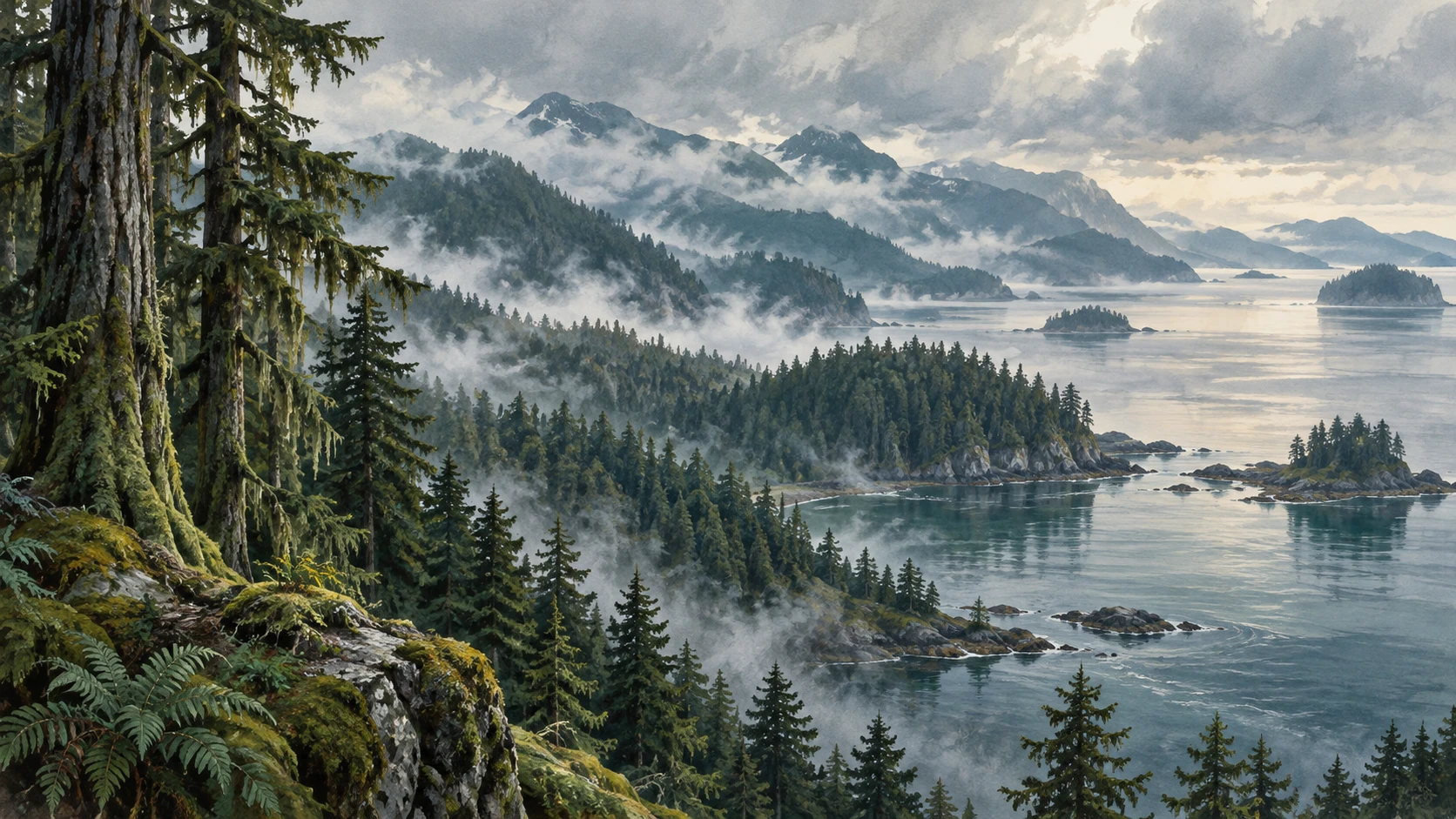
The Mountain Quarry at Tllgaduu TlldaG̱aaw
Slatechuck Mountain stands on Graham Island near Skidegate Inlet in Haida Gwaii. In the Haida language, the mountain is called Tllgaduu TlldaG̱aaw.
The high mountain holds a special quarry for black stone called argillite. Argillite is a dense carbonaceous shale formed in rock strata near Slatechuck Creek. The raw stone is soft and workable when carvers dig it from damp ground. As dry air touches the stone, evaporation of moisture hardens the mineral layers. This isolated quarry remains a famous place for Haida stone extraction.
Carrying the Stone Down the Mountain
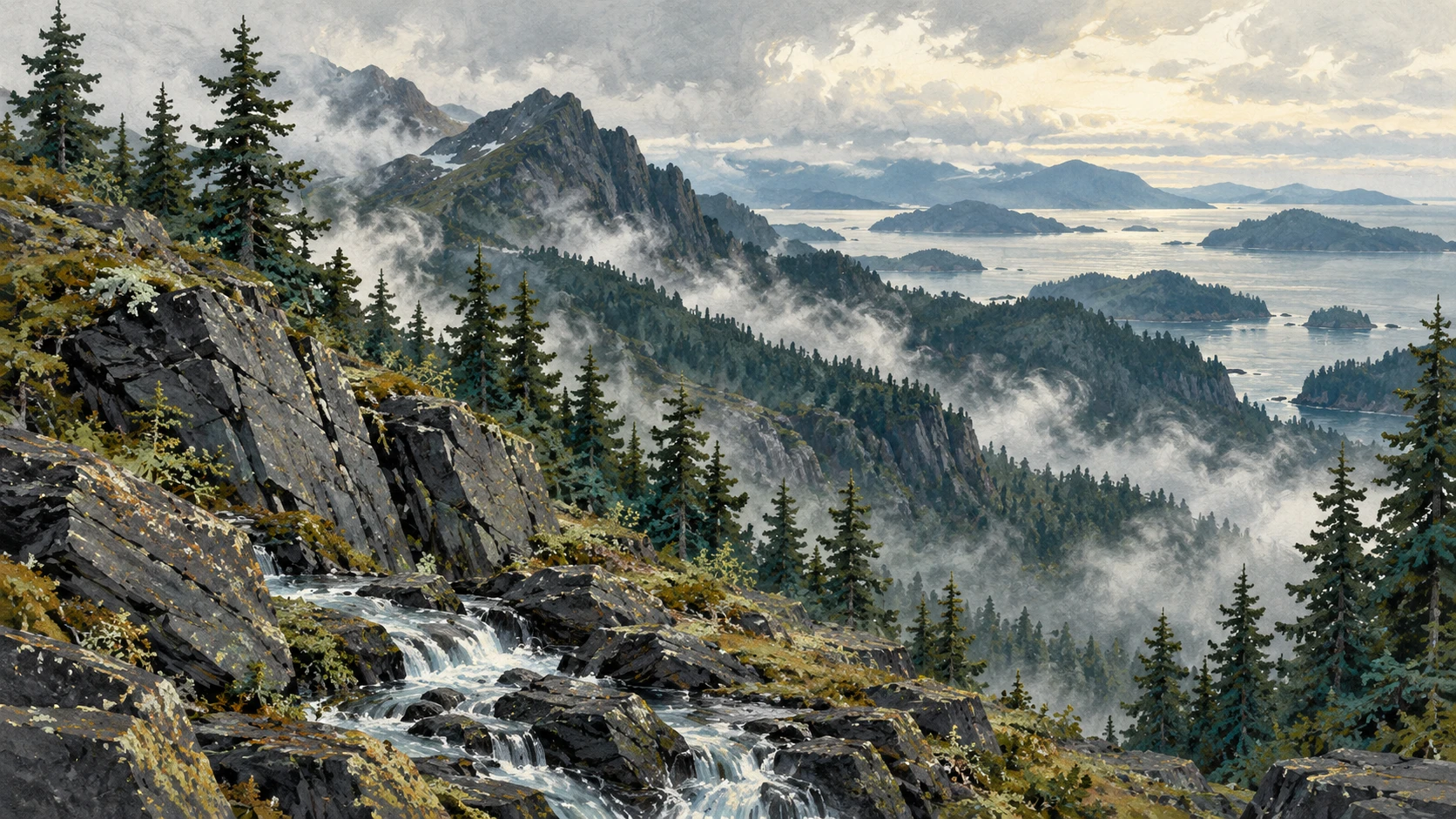
Carvers walk up steep forested slopes through thick rainforest terrain. They harvest the stone blocks by hand along natural seams. Harvesters use simple steel wedges and pry bars to lift each slab.
Workers do not use explosives or heavy machinery because blasts shatter delicate stone cleavage planes. Carvers wrap the wet pieces in moss and damp cloth to protect interior moisture. Then people carry the heavy packs downhill on foot along rugged trails. This hard descent means workers carry only high-grade blocks without hidden fractures.
Shaping the Stone in Village Workshops
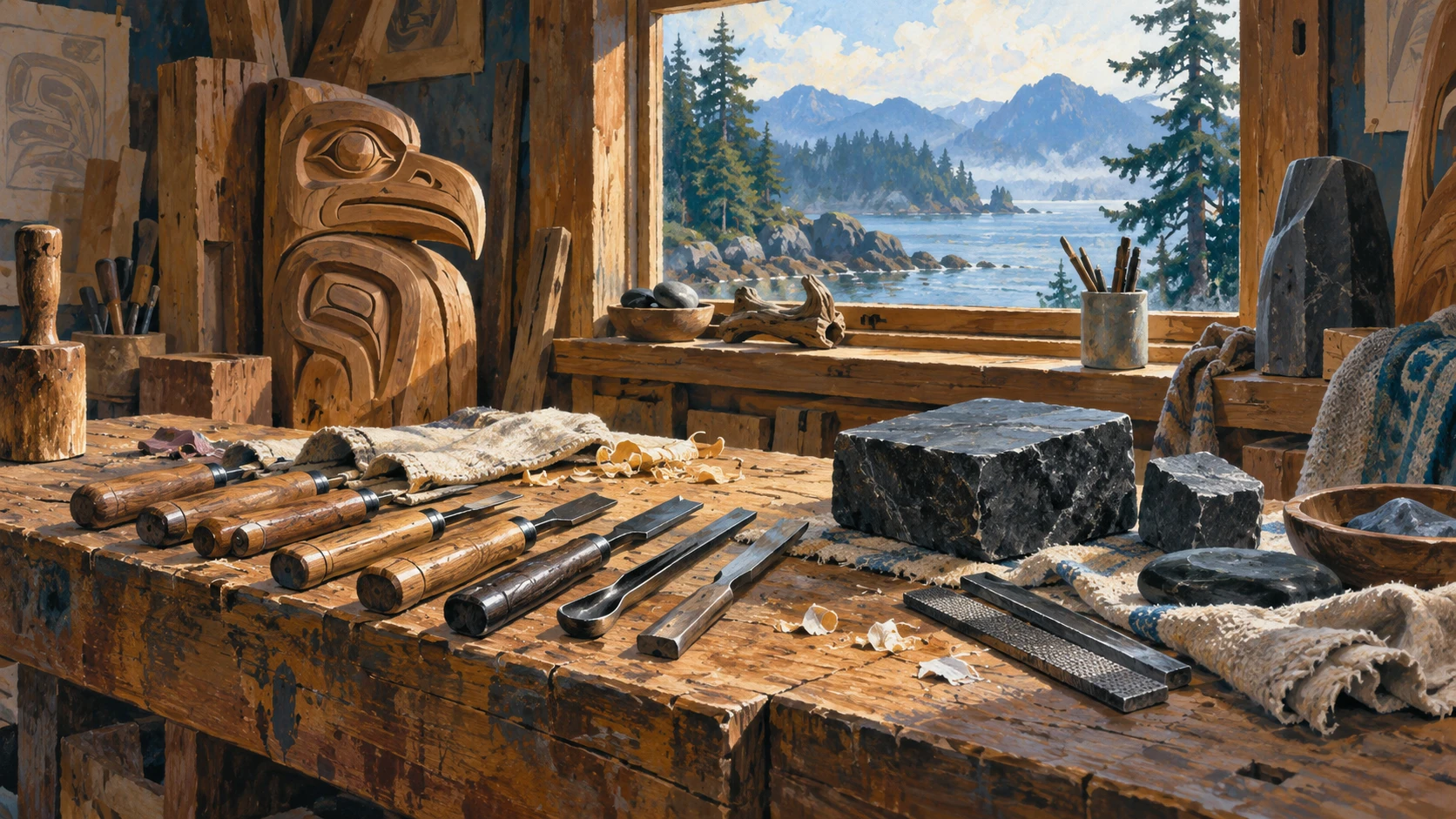
Inside village workshops, carvers cut the raw blocks into blanks with hand saws. Artisans shape the dark stone with sharp chisels, gouges, and steel files.
The fine grain of the argillite allows makers to cut intricate incisions. Carvers create three-dimensional forms with detailed relief lines. Artisans polish the stone surfaces with sharkskin, natural reeds, and fine sandpaper. Finally, makers rub the dry surface with seal grease or plant oils. This traditional polish gives the dark stone a smooth reflective finish.
Nineteenth-Century Trade with Visiting Ships
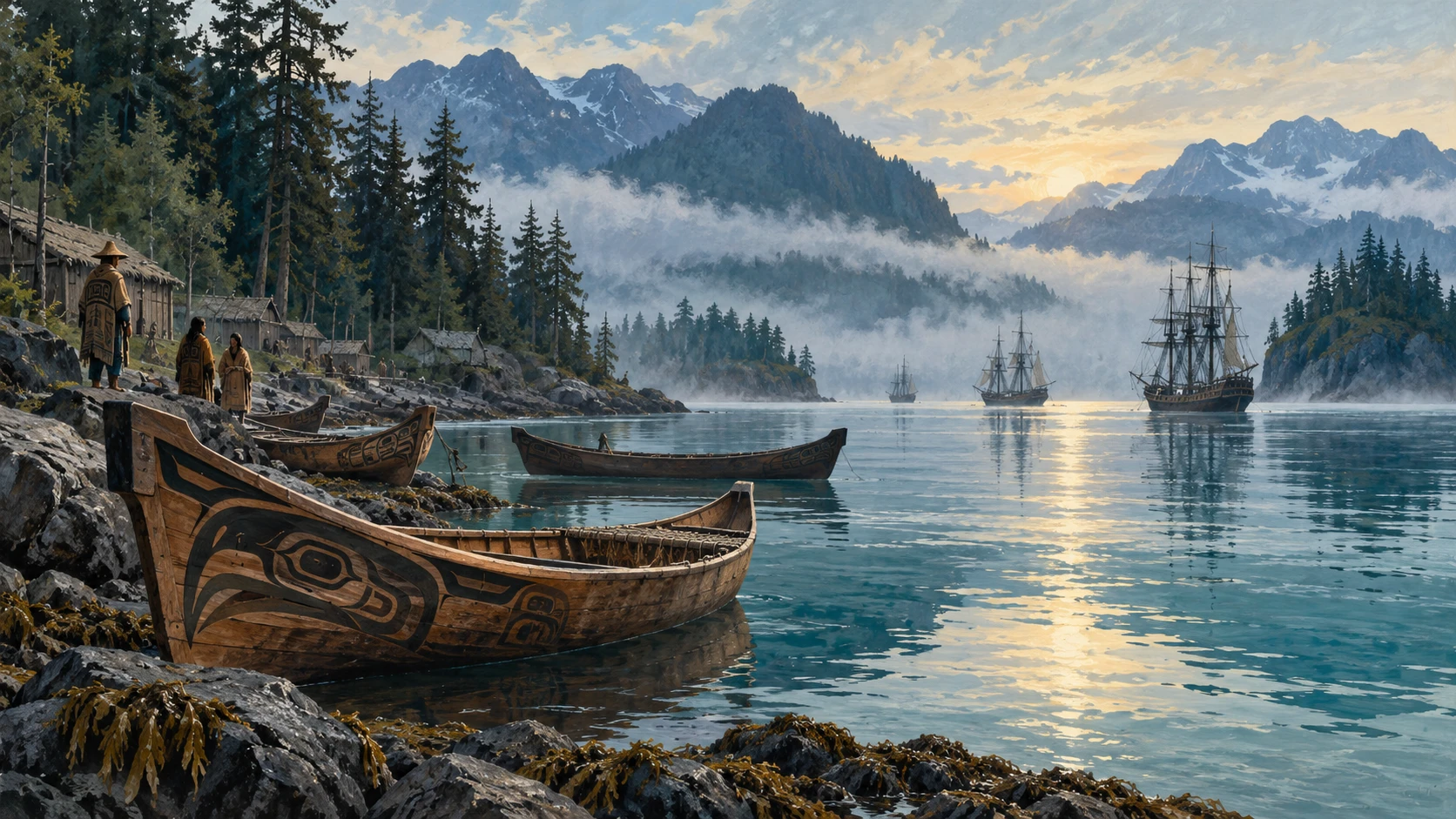
During the 1820s, the maritime sea otter fur trade began to decline. Haida carvers started an external trade in new stone artworks. Visiting European and American merchant sailors bought these stone pieces as souvenirs.
Carvers created ornamental tobacco pipes, flutes, and ship portraits for trade. Later, carvers made model totem poles, feast dishes, and small animal figures. Master carver Charles Edenshaw gained international fame for his technical skill. Today, historic argillite works rest in major museum collections around the world.
Protecting the Quarry on Haida Gwaii
The Council of the Haida Nation provides quarry stewardship on Slatechuck Mountain. Quarry access is restricted exclusively to citizens of the Haida Nation. Community laws prohibit the commercial export of unworked, raw stone from the islands.
This protective governance policy safeguards the finite mineral deposit from rapid depletion. Nearby, the Haida Gwaii Museum at Kay Llnagaay displays and preserves famous stone sculptures. Museum curators work closely with hereditary leaders to protect cultural provenance standards.
Living Art and Sovereign Heritage
Today, contemporary Haida artists continue to harvest stone from Tllgaduu TlldaG̱aaw for new sculptures. Modern carvers combine ancient formline design principles with contemporary jewelry and carvings. Family mentorship networks and apprenticeships pass stone knowledge to younger generations.
Cultural protocol requires that carvers hold proper hereditary clan rights to display specific crests. Artists explain that argillite is a sovereign material tied to ancestral territory. This ongoing creative work supports economic self-determination and living cultural continuity.
A2 · Elementary
Haida Argillite Carving: Quarry, Material, Labour, and Trade
High on Slatechuck Mountain, Haida carvers quarry black argillite to shape intricate sculptures that connect ancestral land, technical mastery, and living sovereignty.
The Mountain Quarry at Tllgaduu TlldaG̱aaw
Slatechuck Mountain rises above Graham Island near the waters of Skidegate Inlet in Haida Gwaii. Within the Haida language, this prominent peak bears the traditional name Tllgaduu TlldaG̱aaw.
The mountain contains the primary known quarry source for black argillite, the stone used in classical and modern Haida carving. Geologically, argillite from Slatechuck Creek is a dense carbonaceous shale formed within ancient sedimentary strata. Freshly quarried stone remains soft and workable while held in damp sub-surface ground. As air reaches the extracted material, the natural evaporation of moisture hardens the stone into solid rock. This geographic isolation made Slatechuck Mountain an essential centre for Haida stone extraction.
Extracting and Carrying the Raw Stone
Gathering argillite requires climbing steep forested slopes through the dense temperate rainforest of the island. Harvesters work by hand along natural seams to extract solid stone blocks from the rock face.
Workers carefully drive steel wedges and pry bars into natural fissures to separate workable slabs. Blasting explosives and heavy industrial machines are strictly avoided because shocks shatter delicate cleavage planes inside the stone. Harvesters immediately wrap extracted pieces in wet moss or cloth to protect interior moisture. Carvers then carry heavy pack frames loaded with raw stone downhill along steep wilderness trails. This demanding foot journey ensures that carvers bring only selected, high-grade blocks down to coastal villages.
Workshop Tools and Artisan Technique
Back in village workshops, carvers cut raw argillite blocks into sculptural blanks using hand saws. Artisans carefully shape the dark stone using hardened steel wood-carving gouges, ground chisels, and specialized files.
Because argillite possesses a remarkably fine grain, carvers can execute intricate incisions and high-relief figures. As the carving nears completion, makers polish the stone facets using traditional abrasives like sharkskin, horsetail reeds, and fine sandpaper. Traditional finishing requires rubbing the carved surface with seal grease or natural plant oils. This thorough polishing produces a smooth, lustrous dark sheen that reflects room light across delicate carved textures.
Nineteenth-Century Trade and Expanding Repertoire
During the 1820s, Haida carvers developed an external trade in argillite following the decline of the maritime sea otter fur trade. Visiting merchant sailors, naval officers, and traders purchased stone pieces as souvenirs and curiosities.
Early commercial carvings included elaborate tobacco pipes, flutes, and detailed ship portraits depicting foreign visitors. By the mid-nineteenth century, carvers expanded their artistic repertoire to create miniature model totem poles and feast dishes. Master carvers like Charles Edenshaw, known in Haida as Da.a xiigang, achieved international acclaim for extraordinary technical mastery. Over decades, these historical argillite artworks entered major museum collections throughout Europe and North America.
Sovereign Stewardship and Island Protection
Today, the Council of the Haida Nation exercises exclusive stewardship and jurisdictional authority over the Slatechuck Mountain quarry. Access to the quarry trail and deposit remains legally and culturally restricted exclusively to citizens of the Haida Nation.
In addition, Haida governance rules strictly prohibit the commercial export of unworked, raw argillite stone outside Haida Gwaii. This clear protective policy safeguards the finite mineral deposit against commercial depletion and unauthorized exploitation. Nearby in Skidegate, the Haida Gwaii Museum at Kay Llnagaay plays a vital role in documenting and exhibiting argillite artistry. Museum curators collaborate with community hereditary leaders to maintain strict provenance standards.
Contemporary Mastery and Living Protocol
Contemporary Haida carvers still ascend Tllgaduu TlldaG̱aaw to harvest stone for ambitious modern sculptures. Current artists unite classical formline design principles with innovative contemporary concepts and precious metal jewelry.
Dedicated family mentorship networks and formal apprenticeships transmit quarrying techniques and carving skills to younger generations. Cultural protocol dictates that artists must possess proper hereditary clan rights before carving specific crests and ancestral oral histories. Haida carvers stress that argillite is not merely an artistic medium but sovereign cultural property rooted in ancestral territory. Continuing this specialized carving tradition sustains Haida economic self-determination and artistic continuity.
B1 · Intermediate
Haida Argillite Carving: Quarry, Material, Labour, and Trade
High on Slatechuck Mountain, Haida carvers quarry black argillite to shape intricate sculptures that connect ancestral land, technical mastery, and living sovereignty.
The Mountain Quarry at Tllgaduu TlldaG̱aaw
Slatechuck Mountain rises steeply above Graham Island near the sheltered waters of Skidegate Inlet in Haida Gwaii. Known in the Haida language as Tllgaduu TlldaG̱aaw, this rugged peak has sustained generations of cultural life.
The mountain holds the primary known geological quarry for black argillite, the prized material at the heart of classical and modern Haida stone carving traditions. In geological classifications, the argillite found along Slatechuck Creek is a dense carbonaceous shale formed within ancient sedimentary strata. Freshly quarried stone remains remarkably soft and workable while resting in damp sub-surface rock seams. Once exposed to dry coastal air, the natural evaporation of moisture gradually hardens the compacted mineral layers into enduring stone. Because of this isolated geographic setting, Slatechuck Mountain became a focused centre for Haida stone extraction.
Extracting and Transporting the Raw Stone
Reaching the quarry requires a strenuous trek up steep forested slopes through dense temperate rainforest wilderness. Once on site, harvesters extract solid stone blocks entirely by hand, carefully reading the natural seams in the rock face.
Workers insert steel wedges and pry bars into natural fissures to free workable slabs without violent impact. Blasting explosives and heavy industrial machines are strictly avoided because explosive vibrations shatter delicate cleavage planes within the rock. To preserve interior moisture during transport, harvesters wrap fresh pieces in damp moss and heavy cloth. Carvers then secure the quarried stone onto pack frames, hauling heavy loads downhill on foot along rugged trails. This physically demanding descent ensures that carvers bring only selected, high-grade blocks free of hidden internal fractures into their workshops.
Workshop Tools and Sculptural Technique
Inside village workshops, carvers begin by sawing raw blocks into sculptural blanks with hand saws. Artisans shape the black stone using hardened steel wood-carving gouges, ground chisels, and modified hand files.
Because argillite features an exceptionally fine grain, carvers can execute intricate incisions and sculptural forms in high relief. As the composition takes shape, artisans smooth the stone facets using traditional abrasives like sharkskin, horsetail reeds, and fine sandpaper. Traditional finishing involves rubbing the polished surface with seal grease or natural plant oils, which soak into the porous matrix. This meticulous process yields a smooth, lustrous dark sheen that accentuates delicate textural contrasts across the carved surface.
Nineteenth-Century Maritime Trade and Stylistic Innovation
During the 1820s, Haida carvers developed an external trade in argillite artworks as the maritime sea otter fur trade rapidly declined. Visiting European and American merchant sailors, naval officers, and coastal traders eagerly purchased argillite sculptures as souvenirs and curiosities.
Early commercial carvings featured elaborate tobacco pipes, flutes, and intricate ship portraits depicting foreign vessels and crew members. By the mid-nineteenth century, carvers expanded their artistic repertoire to include miniature model totem poles, feast dishes, and complex figurative groupings. Nineteenth-century master carvers, notably Charles Edenshaw, recognized in Haida as Da.a xiigang, earned international acclaim for remarkable technical virtuosity. Historical argillite pieces soon entered prestigious museum collections and private holdings across North America and Europe.
Sovereign Governance and Quarry Stewardship
Today, the Council of the Haida Nation asserts exclusive stewardship and jurisdictional authority over the Slatechuck Mountain quarry. Access to the quarry trail and mineral deposit is legally and culturally restricted exclusively to citizens of the Haida Nation.
Furthermore, Haida governance rules strictly prohibit the commercial export of unworked, raw argillite stone beyond the archipelago. This firm conservation policy safeguards the finite mineral deposit against commercial depletion and unauthorized resource exploitation. In nearby Skidegate, the Haida Gwaii Museum at Kay Llnagaay plays a vital institutional role in conserving, researching, and exhibiting argillite artistry. Museum curators work in close partnership with community hereditary leaders to ensure that exhibitions respect cultural provenance standards.
Contemporary Artistry and Sovereign Heritage
Contemporary Haida carvers continue to harvest stone from Tllgaduu TlldaG̱aaw to create ambitious contemporary sculptural works. Modern artists combine classical formline design principles with innovative personal interpretations and precious metal inlay.
Family mentorship networks and structured apprenticeships ensure that quarrying expertise and technical carving methods pass smoothly to younger generations. Strict cultural protocols dictate that carvers must hold appropriate hereditary clan rights before portraying specific crests and ancestral stories. Haida artists emphasize that argillite is not merely an artistic medium but sovereign cultural property tied directly to ancestral territory. The sustained practice of argillite carving actively reinforces Haida economic self-determination and living artistic continuity.
B2 · Upper Intermediate
Haida Argillite Carving: Quarry, Material, Labour, and Trade
High on Slatechuck Mountain, Haida carvers quarry black argillite to shape intricate sculptures that connect ancestral land, technical mastery, and living sovereignty.
The Mountain Quarry at Tllgaduu TlldaG̱aaw
Slatechuck Mountain rises steeply on Graham Island near the sheltered marine waters of Skidegate Inlet in Haida Gwaii. Known in the Haida language as Tllgaduu TlldaG̱aaw, the mountain occupies an enduring position in Pacific Northwest Indigenous art history.
The peak holds the primary known geological quarry for black argillite, the dark stone that anchors both classical and modern Haida carving practice. Geologically, the argillite extracted along Slatechuck Creek is a dense, fine-grained carbonaceous shale preserved within ancient sedimentary strata. Freshly quarried stone remains remarkably soft and workable while held in damp sub-surface rock seams. Once exposed to ambient coastal air, the natural evaporation of moisture gradually hardens the compacted mineral layers into durable stone. This distinct geographic isolation established Slatechuck Mountain as a dedicated focal point for Haida stone extraction.
Extracting and Transporting the Raw Stone
Reaching the quarry requires a demanding wilderness ascent through steep forested slopes and dense temperate rainforest terrain. On the upper mountain, harvesters extract solid stone blocks entirely by hand, carefully reading the natural seams in the exposed rock face.
Workers drive hardened steel wedges and pry bars into natural fissures to free workable slabs without shattering the mineral matrix. Blasting explosives and heavy industrial machinery are strictly avoided because explosive shockwaves shatter delicate cleavage planes within the stone. To protect interior moisture during transit, harvesters wrap harvested pieces in damp forest moss and protective canvas. Carvers then mount the heavy quarried stone onto wooden pack frames, hauling their loads downhill on foot along rugged alpine trails. This arduous physical descent ensures that artisans transport only selected, high-grade blocks free of hidden internal fractures.
Workshop Tools and Sculptural Technique
Inside village workshops, carvers begin by sawing raw argillite blocks into sculptural blanks using tempered hand saws. Artisans shape the black stone using wood-carving gouges, ground chisels, and specialized steel files adapted from metalworking.
Because argillite exhibits an exceptionally fine grain, carvers can execute intricate incisions, undercut cavities, and complex sculptural forms in high relief. As sculptural detailing nears completion, artisans polish the stone facets using traditional abrasives like sharkskin, horsetail reeds, and progressively finer sandpaper. Traditional finishing requires thoroughly rubbing the polished stone with seal grease or natural plant oils, which penetrate the porous mineral matrix. This rigorous finishing process yields a smooth, lustrous dark sheen that highlights delicate textural contrasts and dramatic shadow lines.
Nineteenth-Century Maritime Trade and Stylistic Innovation
During the 1820s, Haida carvers established an external trade in argillite artworks as the maritime sea otter fur trade rapidly declined across the North Pacific. Visiting European and American merchant sailors, naval officers, and coastal commercial traders eagerly purchased argillite pieces as souvenirs and prestigious curiosities.
Early commercial production centred on elaborate tobacco pipes, flutes, and intricate ship portraits depicting foreign vessels and uniformed crews. By the mid-nineteenth century, carvers expanded their artistic repertoire to include miniature model totem poles, feast dishes, and complex figurative compendiums. Prominent nineteenth-century master carvers, notably Charles Edenshaw, recognized in Haida as Da.a xiigang, achieved international acclaim for extraordinary technical virtuosity and aesthetic sophistication. Over generations, these historic argillite artworks entered major museum collections and private holdings across North America and Europe.
Sovereign Governance and Quarry Stewardship
Today, the Council of the Haida Nation exercises exclusive stewardship and jurisdictional authority over the Slatechuck Mountain argillite quarry. Access to the quarry trail and mineral deposit remains legally and culturally restricted exclusively to citizens of the Haida Nation.
Furthermore, Haida governance rules strictly prohibit the commercial export of unworked, raw argillite stone beyond Haida Gwaii. This decisive conservation policy safeguards the finite mineral deposit against commercial depletion and unauthorized resource exploitation. In nearby Skidegate, the Haida Gwaii Museum at Kay Llnagaay plays a vital institutional role in conserving, researching, and exhibiting argillite artistry. Museum curators work in close partnership with community hereditary leaders to ensure that public exhibitions uphold rigorous provenance standards.
Contemporary Artistry and Cultural Protocol
Contemporary Haida carvers continue to ascend Tllgaduu TlldaG̱aaw to harvest stone for ambitious contemporary sculptural works. Modern artists combine classical formline design principles with innovative personal interpretations and precious metal jewelry.
Dedicated family mentorship networks and formal apprenticeships ensure that quarrying expertise and technical carving methods pass smoothly to younger generations. Strict cultural protocols dictate that carvers must hold appropriate hereditary clan rights before portraying specific crests and ancestral oral histories. Haida artists emphasize that argillite is not merely an artistic medium but sovereign cultural property tied directly to ancestral territory. The sustained practice of argillite carving actively reinforces Haida economic self-determination and living artistic continuity into the twenty-first century.
C1 · Advanced
Haida Argillite Carving: Quarry, Material, Labour, and Trade
High on Slatechuck Mountain, Haida carvers quarry black argillite to shape intricate sculptures that connect ancestral land, technical mastery, and living sovereignty.
The Mountain Quarry at Tllgaduu TlldaG̱aaw
Slatechuck Mountain rises steeply on Graham Island above the sheltered marine waters of Skidegate Inlet in Haida Gwaii. Known in the Haida language as Tllgaduu TlldaG̱aaw, this imposing landmark anchors an unbroken lineage of material culture and territorial belonging.
The mountain holds the primary known geological quarry for black argillite, the carbonaceous stone that defines both classical and contemporary Haida lapidary practice. In petrochemical and stratigraphic terms, argillite from Slatechuck Creek is a dense, fine-grained carbonaceous shale consolidated within ancient sedimentary strata. Freshly quarried stone remains remarkably soft and workable while insulated within damp sub-surface rock seams. Once exposed to ambient coastal air, the natural evaporation of moisture gradually hardens the compacted mineral layers into durable stone. This geographic isolation established Slatechuck Mountain as a dedicated focal point for Haida stone extraction.
Extraction Labour and Mountain Logistics
Harvesting argillite demands an arduous overland ascent through steep forested slopes and dense temperate rainforest terrain. On the upper slopes, harvesters extract solid stone blocks entirely by hand, reading the natural bedding seams of the exposed rock face.
Artisans drive hardened steel wedges and pry bars into natural fissures to separate workable slabs without shattering the mineral matrix. Blasting explosives and heavy industrial machinery are strictly avoided because explosive shockwaves shatter delicate cleavage planes within the stone. To protect interior moisture during transit, harvesters wrap fresh blocks in damp forest moss and protective canvas. Carvers then mount the heavy quarried stone onto wooden pack frames, hauling their loads downhill on foot along rugged alpine trails. This demanding physical descent ensures that carvers transport only selected, high-grade blocks free of hidden internal fractures.
Workshop Tools and Lapidary Technique
Inside village workshops, carvers begin by sawing raw argillite blocks into sculptural blanks using tempered hand saws. Artisans shape the black stone using wood-carving gouges, ground chisels, and specialized steel files adapted from metalworking.
Because argillite exhibits an exceptionally fine grain, carvers can execute intricate incisions, undercut cavities, and complex sculptural forms in high relief. As sculptural detailing nears completion, artisans polish the stone facets using traditional abrasives like sharkskin, horsetail reeds, and progressively finer sandpaper. Traditional finishing requires thoroughly rubbing the polished stone with seal grease or natural plant oils, which penetrate the porous mineral matrix. This rigorous finishing process yields a smooth, lustrous dark sheen that highlights delicate textural contrasts and dramatic shadow lines.
Nineteenth-Century Maritime Trade and Commercial Repertoires
During the 1820s, Haida carvers established an external trade in argillite artworks as the maritime sea otter fur trade rapidly declined across the North Pacific. Visiting European and American merchant sailors, naval officers, and coastal commercial traders eagerly purchased argillite pieces as souvenirs and prestigious curiosities.
Early commercial production centred on elaborate tobacco pipes, flutes, and intricate ship portraits depicting foreign vessels and uniformed crews. By the mid-nineteenth century, carvers expanded their artistic repertoire to include miniature model totem poles, feast dishes, and complex figurative compendiums. Prominent nineteenth-century master carvers, notably Charles Edenshaw, recognized in Haida as Da.a xiigang, achieved international acclaim for extraordinary technical virtuosity and aesthetic sophistication. Over generations, these historic argillite artworks entered major museum collections and private holdings across North America and Europe.
Sovereign Governance and Quarry Stewardship
Today, the Council of the Haida Nation exercises exclusive stewardship and jurisdictional authority over the Slatechuck Mountain argillite quarry. Access to the quarry trail and mineral deposit remains legally and culturally restricted exclusively to citizens of the Haida Nation.
Furthermore, Haida governance rules strictly prohibit the commercial export of unworked, raw argillite stone beyond Haida Gwaii. This decisive conservation policy safeguards the finite mineral deposit against commercial depletion and unauthorized resource exploitation. In nearby Skidegate, the Haida Gwaii Museum at Kay Llnagaay plays a vital institutional role in conserving, researching, and exhibiting argillite artistry. Museum curators work in close partnership with community hereditary leaders to ensure that public exhibitions uphold rigorous provenance standards.
Contemporary Artistry and Cultural Protocol
Contemporary Haida carvers continue to ascend Tllgaduu TlldaG̱aaw to harvest stone for ambitious contemporary sculptural works. Modern artists combine classical formline design principles with innovative personal interpretations and precious metal jewelry.
Dedicated family mentorship networks and formal apprenticeships ensure that quarrying expertise and technical carving methods pass smoothly to younger generations. Strict cultural protocols dictate that carvers must hold appropriate hereditary clan rights before portraying specific crests and ancestral oral histories. Haida artists emphasize that argillite is not merely an artistic medium but sovereign cultural property tied directly to ancestral territory. The sustained practice of argillite carving actively reinforces Haida economic self-determination and living artistic continuity into the twenty-first century.
C2 · Mastery
Haida Argillite Carving: Quarry, Material, Labour, and Trade
High on Slatechuck Mountain, Haida carvers quarry black argillite to shape intricate sculptures that connect ancestral land, technical mastery, and living sovereignty.
The Mountain Quarry at Tllgaduu TlldaG̱aaw
Slatechuck Mountain rises steeply on Graham Island above the sheltered marine waters of Skidegate Inlet in Haida Gwaii. Known in the Haida language as Tllgaduu TlldaG̱aaw, this imposing landmark anchors an unbroken lineage of material culture and territorial belonging.
The mountain holds the primary known geological quarry for black argillite, the carbonaceous stone that defines both classical and contemporary Haida lapidary practice. In petrochemical and stratigraphic terms, argillite from Slatechuck Creek is a dense, fine-grained carbonaceous shale consolidated within ancient sedimentary strata. Freshly quarried stone remains remarkably soft and workable while insulated within damp sub-surface rock seams. Once exposed to ambient coastal air, the natural evaporation of moisture gradually hardens the compacted mineral layers into durable stone. This geographic isolation established Slatechuck Mountain as a dedicated focal point for Haida stone extraction.
Extraction Labour and Mountain Logistics
Harvesting argillite demands an arduous overland ascent through steep forested slopes and dense temperate rainforest terrain. On the upper slopes, harvesters extract solid stone blocks entirely by hand, reading the natural bedding seams of the exposed rock face.
Artisans drive hardened steel wedges and pry bars into natural fissures to separate workable slabs without shattering the mineral matrix. Blasting explosives and heavy industrial machinery are strictly avoided because explosive shockwaves shatter delicate cleavage planes within the stone. To protect interior moisture during transit, harvesters wrap fresh blocks in damp forest moss and protective canvas. Carvers then mount the heavy quarried stone onto wooden pack frames, hauling their loads downhill on foot along rugged alpine trails. This demanding physical descent ensures that carvers transport only selected, high-grade blocks free of hidden internal fractures.
Workshop Tools and Lapidary Technique
Inside village workshops, carvers begin by sawing raw argillite blocks into sculptural blanks using tempered hand saws. Artisans shape the black stone using wood-carving gouges, ground chisels, and specialized steel files adapted from metalworking.
Because argillite exhibits an exceptionally fine grain, carvers can execute intricate incisions, undercut cavities, and complex sculptural forms in high relief. As sculptural detailing nears completion, artisans polish the stone facets using traditional abrasives like sharkskin, horsetail reeds, and progressively finer sandpaper. Traditional finishing requires thoroughly rubbing the polished stone with seal grease or natural plant oils, which penetrate the porous mineral matrix. This rigorous finishing process yields a smooth, lustrous dark sheen that highlights delicate textural contrasts and dramatic shadow lines.
Nineteenth-Century Maritime Trade and Commercial Repertoires
During the 1820s, Haida carvers established an external trade in argillite artworks as the maritime sea otter fur trade rapidly declined across the North Pacific. Visiting European and American merchant sailors, naval officers, and coastal commercial traders eagerly purchased argillite pieces as souvenirs and prestigious curiosities.
Early commercial production centred on elaborate tobacco pipes, flutes, and intricate ship portraits depicting foreign vessels and uniformed crews. By the mid-nineteenth century, carvers expanded their artistic repertoire to include miniature model totem poles, feast dishes, and complex figurative compendiums. Prominent nineteenth-century master carvers, notably Charles Edenshaw, recognized in Haida as Da.a xiigang, achieved international acclaim for extraordinary technical virtuosity and aesthetic sophistication. Over generations, these historic argillite artworks entered major museum collections and private holdings across North America and Europe.
Sovereign Governance and Quarry Stewardship
Today, the Council of the Haida Nation exercises exclusive stewardship and jurisdictional authority over the Slatechuck Mountain argillite quarry. Access to the quarry trail and mineral deposit remains legally and culturally restricted exclusively to citizens of the Haida Nation.
Furthermore, Haida governance rules strictly prohibit the commercial export of unworked, raw argillite stone beyond Haida Gwaii. This decisive conservation policy safeguards the finite mineral deposit against commercial depletion and unauthorized resource exploitation. In nearby Skidegate, the Haida Gwaii Museum at Kay Llnagaay plays a vital institutional role in conserving, researching, and exhibiting argillite artistry. Museum curators work in close partnership with community hereditary leaders to ensure that public exhibitions uphold rigorous provenance standards.
Contemporary Artistry and Cultural Protocol
Contemporary Haida carvers continue to ascend Tllgaduu TlldaG̱aaw to harvest stone for ambitious contemporary sculptural works. Modern artists combine classical formline design principles with innovative personal interpretations and precious metal jewelry.
Dedicated family mentorship networks and formal apprenticeships ensure that quarrying expertise and technical carving methods pass smoothly to younger generations. Strict cultural protocols dictate that carvers must hold appropriate hereditary clan rights before portraying specific crests and ancestral oral histories. Haida artists emphasize that argillite is not merely an artistic medium but sovereign cultural property tied directly to ancestral territory. The sustained practice of argillite carving actively reinforces Haida economic self-determination and living artistic continuity into the twenty-first century.
Check your understanding
Choose how closely you want to revisit the article. You can refer back while answering, and review explanations when you finish.
Quick Quiz A1
Try one question, then create a free account for the full Quick Quiz. Sign Up Free
Answer every question before checking. There is no time limit.
Your results
/ 1 correct (%)
Read the explanations to see how each answer connects to the article.
-
What is the Haida name for Slatechuck Mountain?
1. Answer:
Quick Quiz A2
Try one question, then create a free account for the full Quick Quiz. Sign Up Free
Answer every question before checking. There is no time limit.
Your results
/ 1 correct (%)
Read the explanations to see how each answer connects to the article.
-
What is the traditional Haida name for Slatechuck Mountain?
1. Answer:
Quick Quiz B1
Try one question, then create a free account for the full Quick Quiz. Sign Up Free
Answer every question before checking. There is no time limit.
Your results
/ 1 correct (%)
Read the explanations to see how each answer connects to the article.
-
By what traditional name is Slatechuck Mountain known in the Haida language?
1. Answer:
Quick Quiz B2
Try one question, then create a free account for the full Quick Quiz. Sign Up Free
Answer every question before checking. There is no time limit.
Your results
/ 1 correct (%)
Read the explanations to see how each answer connects to the article.
-
What is the traditional Haida name for Slatechuck Mountain?
1. Answer:
Quick Quiz C1
Try one question, then create a free account for the full Quick Quiz. Sign Up Free
Answer every question before checking. There is no time limit.
Your results
/ 1 correct (%)
Read the explanations to see how each answer connects to the article.
-
What is the traditional Haida name for Slatechuck Mountain?
1. Answer:
Quick Quiz C2
Try one question, then create a free account for the full Quick Quiz. Sign Up Free
Answer every question before checking. There is no time limit.
Your results
/ 1 correct (%)
Read the explanations to see how each answer connects to the article.
-
What is the traditional Haida name for Slatechuck Mountain?
1. Answer:
