A1 · Beginner
Canadian Maple Syrup: Sap, Weather, and Spring Forest Harvests
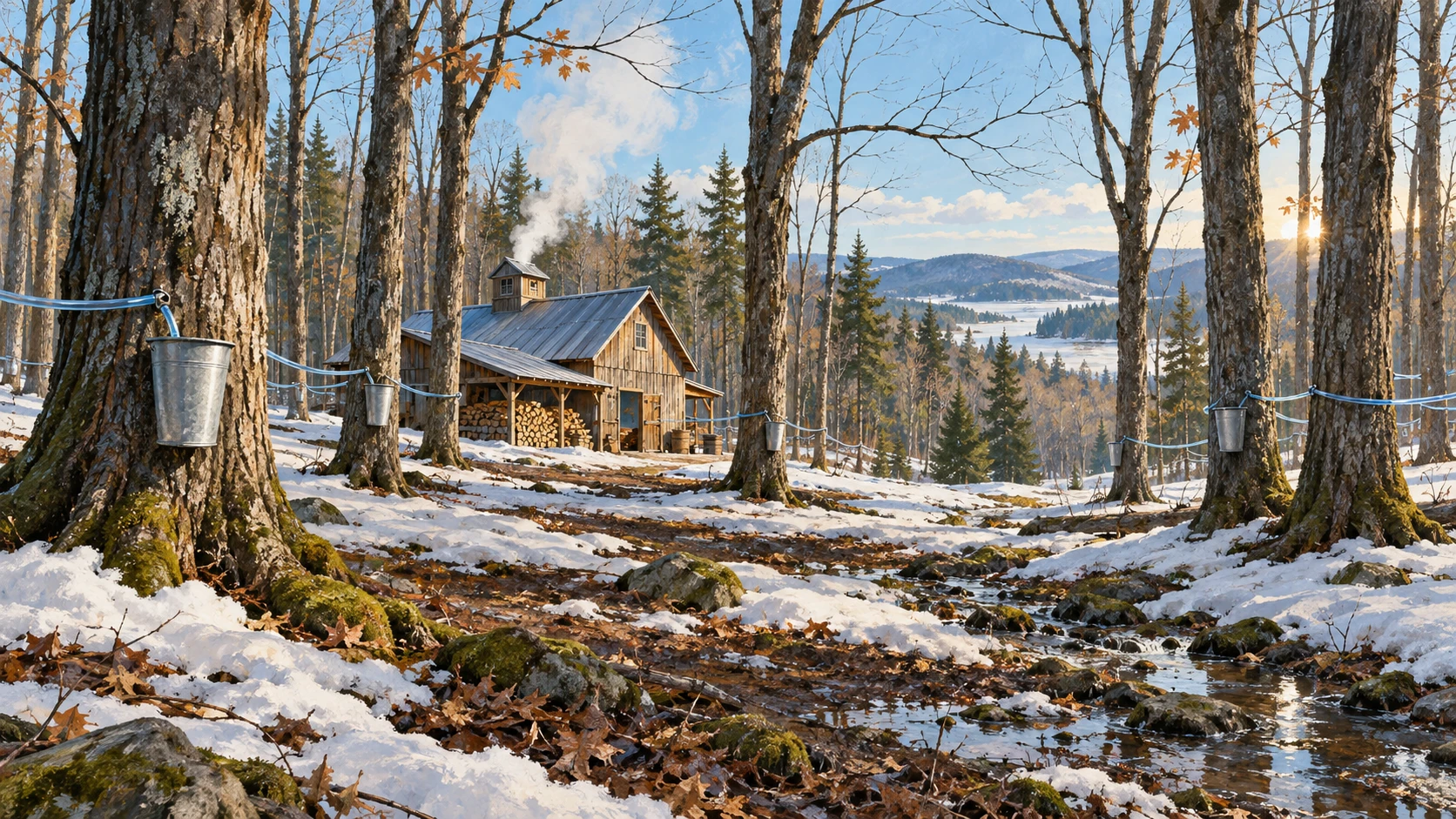
Sugar maple forests produce sweet syrup during early spring snowmelt. Cold freezing nights and warm sunny days start the annual harvest across Canadian woodlands.
Cold nights and sweet running sap
Sugar maple sap flow requires freezing nocturnal temperatures below zero degrees Celsius followed by daytime temperatures rising above freezing. In early spring, the forest experiences sharp diurnal temperature fluctuations. These temperature changes generate positive stem pressure within xylem vessels. The pressure forces clear liquid sap outward through tapped openings in the tree trunk. Natural raw sap collected from sugar maples consists predominantly of water. The clear liquid contains roughly two to three percent dissolved sucrose along with natural minerals.
The commercial tapping harvest typically spans a narrow window of four to eight weeks during late winter and early spring thaw. Foresters manage the sugar bush with great care. Healthy mature maple trees must attain a minimum trunk diameter of twenty-five centimetres before receiving their first commercial tap. Prolonged severe freezing pauses sap flow entirely across the woodland. When sustained spring warmth arrives, tree buds swell rapidly. This warm weather ends the season and imparts an unmarketable buddy off-flavour to any remaining liquid.
Plastic tubing lines and forest collection
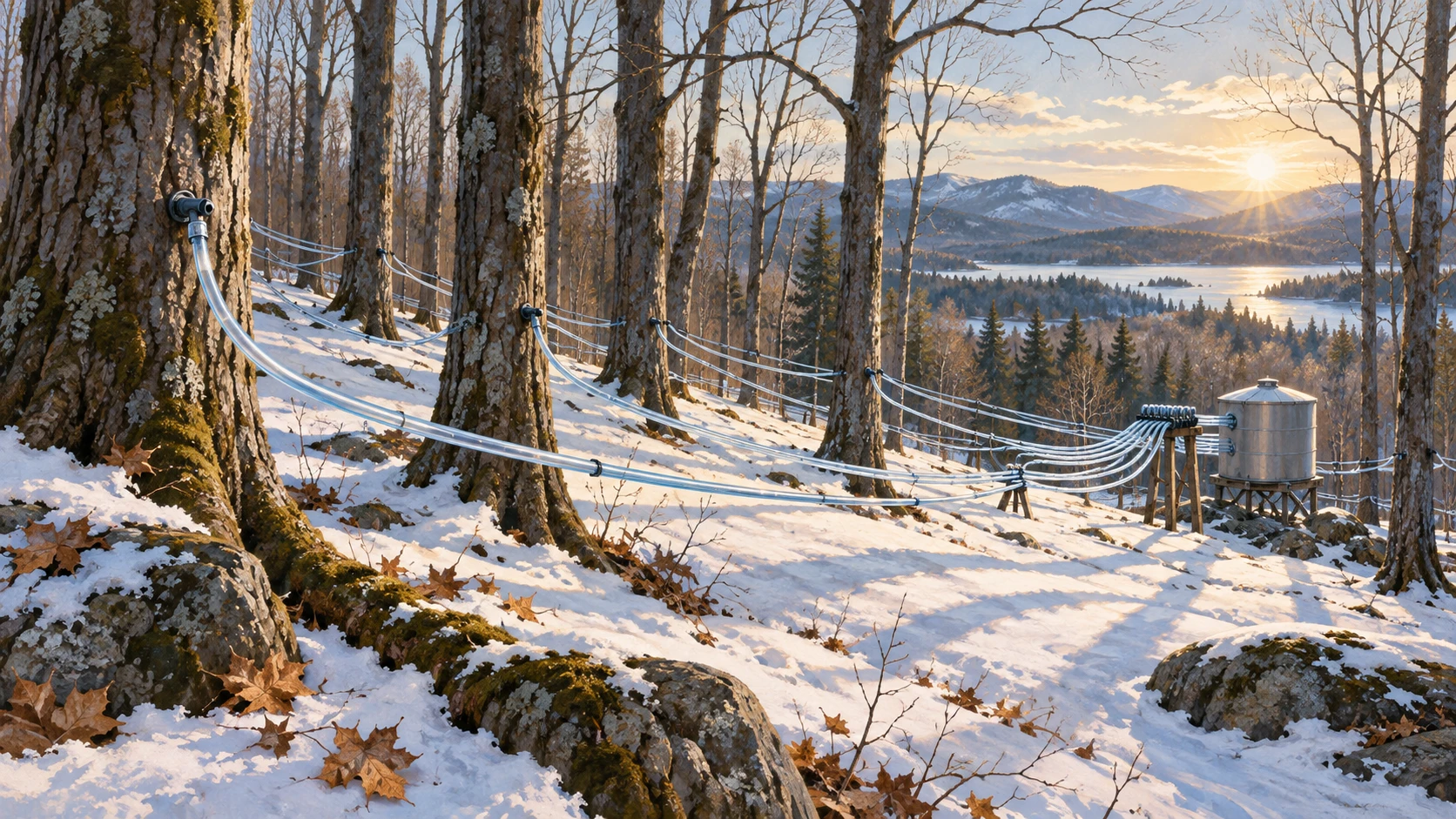
Modern commercial sugar bushes use networks of flexible food-grade plastic lateral lines attached directly to tree spiles. These blue and clear tubes run between maple trunks across the snowy forest floor. Electric vacuum pump systems maintain negative pressure along collection pipelines. The steady suction accelerates sap extraction without injuring vascular tissues inside the living wood. Tubing networks allow foresters to harvest steep hillside stands that were historically inaccessible with horse-drawn collection sleighs or manual buckets.
Centralized pump stations channel unboiled sap into refrigerated stainless steel holding tanks. Cold storage prevents microbial spoilage prior to processing in the sugarhouse. Producers replace plastic tap spiles and flush collection lines each season to maintain sanitary conditions and protect tapholes against microbial infections. Sugar bush foresters retain companion hardwood species alongside sugar maples. Mixed trees preserve forest biodiversity and protect soil health through natural leaf litter.
Boiling sap and official syrup grades
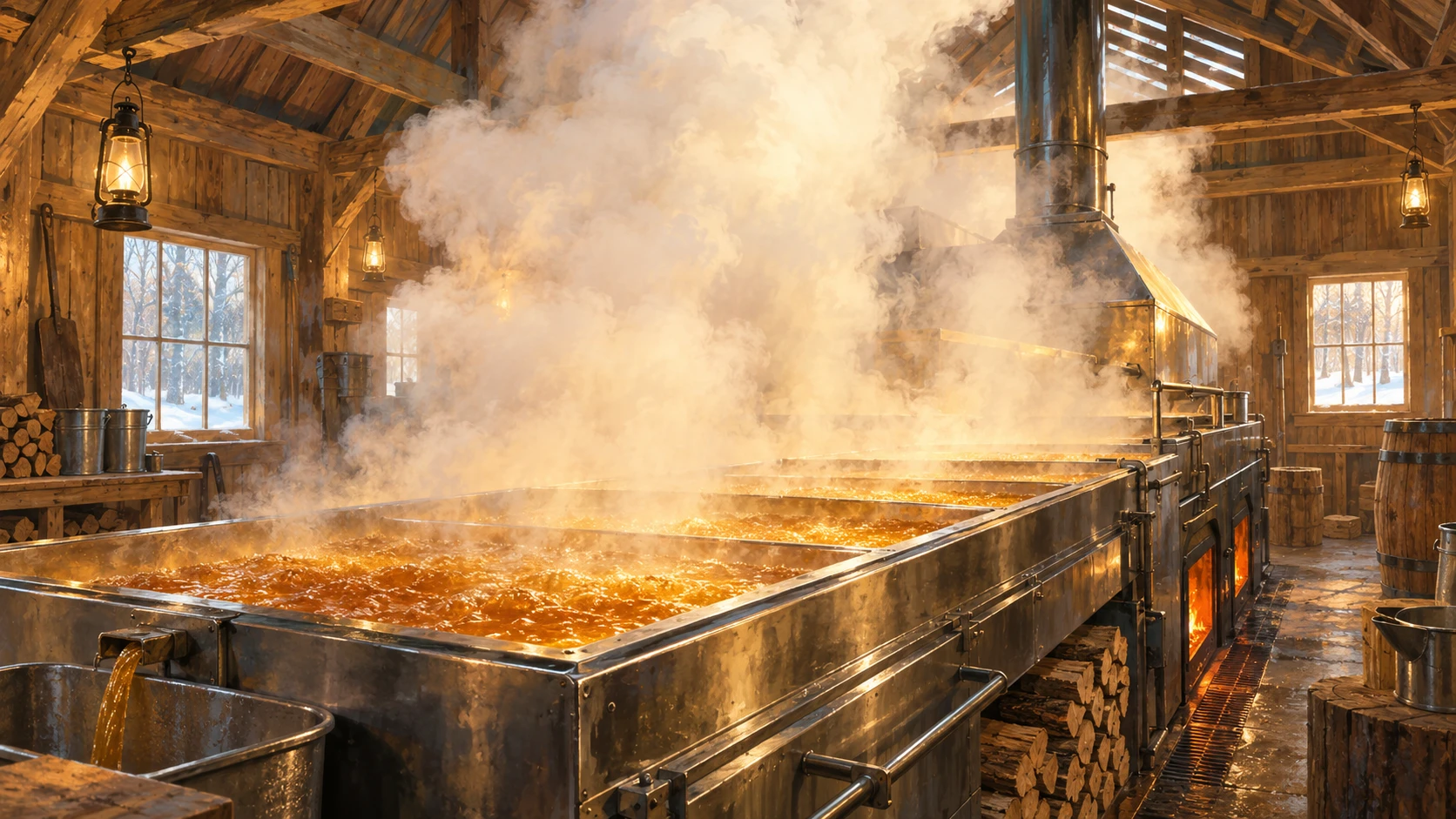
Reverse osmosis membrane systems concentrate raw sap before boiling. This modern filtration removes up to seventy-five percent of water to conserve evaporator fuel. Next, continuous-flow stainless steel evaporators boil concentrated sap until dissolved sugar density reaches exactly sixty-six degrees Brix. It requires approximately forty litres of raw maple sap with two percent sugar concentration to produce a single litre of pure maple syrup. The boiling liquid thickens and turns into rich golden syrup inside the hot pans.
Federal food standards classify maple syrup into four distinct colour classes: Golden, Amber, Dark, and Very Dark. Golden syrup with delicate taste flows during early cold runs. Later in spring, Very Dark syrup with robust flavor develops as microbial activity rises late in the season. Finally, processed maple syrup is hot-packed into sealed food-grade containers at a minimum temperature of eighty-two degrees Celsius to ensure preservation without artificial additives.
Maple farming across Canadian provinces
The province of Quebec is the dominant producer, accounting for more than ninety percent of Canada's commercial maple syrup harvest. Thousands of family farms operate commercial sugar bushes across rural Quebec counties. New Brunswick represents Canada's second-largest producer, expanding production through managed commercial sugary leases on provincial Crown lands. Public forest leases allow local operators to install modern collection tubing across extensive northern hardwood stands.
Ontario maintains a substantial maple sector concentrated across southwestern, central, and eastern farming counties. Further east, Nova Scotia sustains a specialized maritime maple industry shaped by coastal Atlantic microclimates and regional distribution networks. Statistics Canada records show national maple syrup production in 2022 reached record volumes exceeding seventeen million gallons. Provincial producer associations coordinate technical workshops, quality inspections, and equipment standards to support rural agricultural earnings.
Global syrup reserves and world trade
The Federation of Quebec Maple Syrup Producers administers the Global Strategic Maple Syrup Reserve to manage commodity supply. The central strategic reserve warehouse in Laurierville can store tens of millions of pounds of sealed syrup barrels to cushion harvest shortfalls. This massive inventory protects international buyers and farm families from wild harvest swings caused by warm or icy springs.
Canada exports approximately eighty-five percent of its annual maple syrup production to more than sixty international markets. The United States serves as Canada's largest international destination, receiving roughly sixty percent of total export volume. Export demand in Europe and Asia, including Germany, the United Kingdom, and Japan, has driven growth in certified organic syrup shipments. Controlled marketing quotas and collective reserve releases prevent catastrophic market price collapse during bumper harvest seasons.

Weather risks and forest conservation
Historical production registries cannot reliably forecast the exact onset or duration of upcoming spring tapping windows under shifting weather patterns. Rising winter temperatures can alter freeze-thaw cycles, advancing tapping dates earlier into winter and compressing seasonal boiling schedules. In warmer years, tapping begins in February instead of March. Forestry climate models project that southern maple habitats may experience increased heat stress, shifting favorable sap flow conditions northward over coming decades.
Severe weather disturbances like late winter ice storms and prolonged summer droughts can damage crown foliage and tree root systems. Annual harvest volumes exhibit substantial volatility driven by localized microclimates rather than uniform national weather trends. Furthermore, trade figures and export records cannot establish whether technical innovations like vacuum tubing can offset long-term ecological stresses on maple forests. Foresters therefore prioritize sustainable tapping rates to protect living trees for future decades.
A2 · Elementary
Canadian Maple Syrup Industry: Forest Ecology and Seasonal Harvests
Across eastern Canada, sugar maple groves awaken during the late winter thaw. Careful foresters collect sweet sap through tubing networks and boil it into pure maple syrup.
Temperature cycles and sap flow in maple stands
Sugar maple sap flow requires freezing nocturnal temperatures below zero degrees Celsius followed by daytime temperatures rising above freezing. During late winter, alternating freeze-thaw cycles create diurnal temperature fluctuations throughout the sugar bush. These natural temperature shifts generate positive stem pressure within xylem vessels, forcing clear liquid sap outward through tapped openings in tree trunks. Natural raw sap collected from sugar maples consists predominantly of water, containing roughly two to three percent dissolved sucrose alongside essential minerals and organic acids.
The commercial tapping harvest typically spans a narrow window of four to eight weeks during late winter and early spring thaw. Sustainable foresters follow strict conservation rules to maintain tree vitality. Healthy mature maple trees must attain a minimum trunk diameter of twenty-five centimetres before receiving their first commercial tap. Prolonged severe freezing pauses sap flow entirely across northern forests. Conversely, when sustained spring warmth causes tree buds to swell, the sap changes chemically and imparts an unmarketable buddy off-flavour that terminates harvesting operations.
Tubing networks and modern sugar bush management
Modern commercial sugar bushes use networks of flexible food-grade plastic lateral lines attached directly to tree spiles. These complex networks connect thousands of maple trees across hilly woodlands. Vacuum pump systems maintain negative pressure along collection pipelines to accelerate sap extraction without injuring vascular tissues inside the living trunks. Modern tubing networks allow foresters to harvest steep hillside stands that were historically inaccessible with horse-drawn collection sleighs or manual buckets.
Centralized pump stations channel unboiled sap into refrigerated stainless steel holding tanks to prevent microbial spoilage prior to processing. Keeping raw sap chilled preserves its delicate natural sweetness. Producers replace plastic tap spiles and flush collection lines each season to maintain sanitary conditions and protect tapholes against microbial infections. Furthermore, sugar bush foresters retain companion hardwood species alongside sugar maples. Preserving mixed trees maintains overall forest biodiversity and protects soil health across decades.
Reverse osmosis, evaporator boiling, and syrup grading
Processing raw sap requires significant energy, prompting producers to adopt fuel-saving technologies. Reverse osmosis membrane systems concentrate raw sap before boiling, removing up to seventy-five percent of water to conserve evaporator fuel. Following concentration, continuous-flow stainless steel evaporators boil concentrated sap until dissolved sugar density reaches exactly sixty-six degrees Brix. It requires approximately forty litres of raw maple sap with two percent sugar concentration to produce a single litre of pure maple syrup.
Federal food standards classify maple syrup into four distinct colour classes: Golden, Amber, Dark, and Very Dark. Golden syrup with delicate taste flows during early cold runs, whereas Very Dark syrup with robust flavor develops as microbial activity rises late in the season. Once evaporation is complete, processed maple syrup is hot-packed into sealed food-grade containers at a minimum temperature of eighty-two degrees Celsius to ensure preservation without synthetic preservatives.
Provincial production geography across eastern Canada
The province of Quebec is the dominant producer, accounting for more than ninety percent of Canada's commercial maple syrup harvest. Thousands of family enterprises across the Beauce, Bas-Saint-Laurent, and Eastern Townships regions manage vast sugar bushes. New Brunswick represents Canada's second-largest producer, expanding production through managed commercial sugary leases on provincial Crown lands. This public leasing model provides sustainable economic activity across northern rural communities.
Ontario maintains a substantial maple sector concentrated across southwestern, central, and eastern farming counties, serving large domestic markets. In the Atlantic region, Nova Scotia sustains a specialized maritime maple industry shaped by coastal Atlantic microclimates and regional distribution networks. Statistics Canada records show national maple syrup production in 2022 reached record volumes exceeding seventeen million gallons. Provincial producer associations coordinate technical workshops, quality inspections, and equipment standards to support rural agricultural earnings.
The strategic reserve and international export markets
Because annual harvest yields fluctuate according to spring weather, Quebec maintains a centralized supply management system. The Federation of Quebec Maple Syrup Producers administers the Global Strategic Maple Syrup Reserve to manage commodity supply. The central strategic reserve warehouse in Laurierville can store tens of millions of pounds of sealed syrup barrels to cushion harvest shortfalls. This buffer supply ensures that food manufacturers and retail distributors receive steady deliveries during lean years.
Canada exports approximately eighty-five percent of its annual maple syrup production to more than sixty international markets. The United States serves as Canada's largest international destination, receiving roughly sixty percent of total export volume. Additionally, export demand in Europe and Asia, including Germany, the United Kingdom, and Japan, has driven growth in certified organic syrup shipments. Controlled marketing quotas and collective reserve releases prevent catastrophic market price collapse during bumper harvest seasons.
Climate challenges and scientific observation limits
Historical production registries cannot reliably forecast the exact onset or duration of upcoming spring tapping windows under shifting weather patterns. Rising winter temperatures can alter freeze-thaw cycles, advancing tapping dates earlier into winter and compressing seasonal boiling schedules. In several regions, tapping now starts weeks earlier than it did half a century ago. Forestry climate models project that southern maple habitats may experience increased heat stress, shifting favorable sap flow conditions northward over future decades.
Forest ecosystems also face rising environmental hazards. Severe weather disturbances like late winter ice storms and prolonged summer droughts can damage crown foliage and tree root systems. Annual harvest volumes exhibit substantial volatility driven by localized microclimates rather than uniform national weather trends. Finally, trade figures and export records cannot establish whether technical innovations like vacuum tubing can offset long-term ecological stresses on maple forests.
B1 · Intermediate
Canadian Maple Syrup Industry: Forest Ecology, Evaporator Technology, and Supply Chains
Operating across eastern Canadian sugar maple woodlands, commercial maple syrup producers depend on specific freeze-thaw weather windows, modern vacuum tubing, and strategic reserves.
Thermal dynamics and xylem pressure in sugar maple groves
Sugar maple sap flow requires freezing nocturnal temperatures below zero degrees Celsius followed by daytime temperatures rising above freezing. In the transitional weeks between late winter and early spring, these diurnal temperature fluctuations generate positive stem pressure within xylem vessels, forcing clear liquid sap outward through tapped openings in the tree trunk. The biological mechanism relies on gas expansion and cellular contraction within the sapwood, causing fluids stored during winter dormancy to mobilize toward upper branch buds. Natural raw sap collected from sugar maples consists predominantly of water, containing roughly two to three percent dissolved sucrose along with essential minerals, amino acids, and organic compounds.
The commercial tapping harvest typically spans a narrow window of four to eight weeks during late winter and early spring thaw. Woodlot managers inspect tree vigor throughout autumn to ensure that tapping practices do not compromise woodland health. Healthy mature maple trees must attain a minimum trunk diameter of twenty-five centimetres before receiving their first commercial tap. Prolonged severe freezing pauses sap flow entirely across northern forest regions. Conversely, when sustained spring warmth causes tree buds to swell, chemical transformations produce an unmarketable buddy off-flavour that abruptly terminates commercial processing.
Tubing infrastructure, vacuum extraction, and forest stewardship
Modern commercial sugar bushes use networks of flexible food-grade plastic lateral lines attached directly to tree spiles. These complex networks replace traditional labour-intensive gathering systems, connecting individual tapholes through main pipelines leading directly to collection facilities. Vacuum pump systems maintain negative pressure along collection pipelines to accelerate sap extraction without injuring vascular tissues inside the living trunks. Modern tubing networks allow foresters to harvest steep hillside stands that were historically inaccessible with horse-drawn collection sleighs or manual buckets, substantially expanding productive acreage.
Centralized pump stations channel unboiled sap into refrigerated stainless steel holding tanks to prevent microbial spoilage prior to processing. Because raw sap possesses low sugar concentrations, keeping it chilled inhibits bacteria and yeast from metabolizing sucrose into unwanted invert sugars. Producers replace plastic tap spiles and flush collection lines each season to maintain sanitary conditions and protect tapholes against microbial infections. Furthermore, sugar bush foresters retain companion hardwood species alongside sugar maples. Preserving mixed trees maintains overall forest biodiversity and protects soil health across successive generations.
Membrane concentration, thermal evaporation, and statutory grading
Industrial syrup production demands substantial thermal energy, leading processors to integrate advanced mechanical separation systems. Reverse osmosis membrane systems concentrate raw sap before boiling, removing up to seventy-five percent of water to conserve evaporator fuel. By passing raw sap through semi-permeable membranes under extreme pressure, operators eliminate excess moisture before introducing the liquid into fuel-fired boiling pans. Following concentration, continuous-flow stainless steel evaporators boil concentrated sap until dissolved sugar density reaches exactly sixty-six degrees Brix. It requires approximately forty litres of raw maple sap with two percent sugar concentration to produce a single litre of pure maple syrup.
Federal food standards classify maple syrup into four distinct colour classes: Golden, Amber, Dark, and Very Dark. Golden syrup with delicate taste flows during early cold runs, whereas Very Dark syrup with robust flavor develops as microbial activity rises late in the season. Each category features precise light transmission parameters and distinct culinary applications. Once evaporation is complete, processed maple syrup is hot-packed into sealed food-grade containers at a minimum temperature of eighty-two degrees Celsius to ensure preservation without chemical stabilizers.
Regional specialization and provincial production capacities
The province of Quebec is the dominant producer, accounting for more than ninety percent of Canada's commercial maple syrup harvest. Concentrated heavily in rural agricultural regions south of the St. Lawrence River, Quebec's industry encompasses thousands of licensed farm operations operating under centralized supply management. New Brunswick represents Canada's second-largest producer, expanding production through managed commercial sugary leases on provincial Crown lands. This structured forestry lease program provides long-term tenure, encouraging capital investment into permanent tubing grids and automated sugarhouse infrastructure.
Ontario maintains a substantial maple sector concentrated across southwestern, central, and eastern farming counties, directing most production into domestic consumer channels. In Atlantic Canada, Nova Scotia sustains a specialized maritime maple industry shaped by coastal Atlantic microclimates and regional distribution networks. Statistics Canada records show national maple syrup production in 2022 reached record volumes exceeding seventeen million gallons. Provincial producer associations coordinate technical workshops, quality inspections, and equipment standards to support rural agricultural earnings.
Commodity reserves, buffer stocks, and global trade flows
Because annual harvest yields fluctuate according to unmanageable spring meteorological patterns, Quebec maintains an institutional stabilization mechanism. The Federation of Quebec Maple Syrup Producers administers the Global Strategic Maple Syrup Reserve to manage commodity supply. The central strategic reserve warehouse in Laurierville can store tens of millions of pounds of sealed syrup barrels to cushion harvest shortfalls. During surplus seasons, excess output enters storage, preventing producer market collapse, while during lean harvests, stored barrels are released to fulfill international commitments.
Canada exports approximately eighty-five percent of its annual maple syrup production to more than sixty international markets. The United States serves as Canada's largest international destination, receiving roughly sixty percent of total export volume. Additionally, export demand in Europe and Asia, including Germany, the United Kingdom, and Japan, has driven growth in certified organic syrup shipments. Controlled marketing quotas and collective reserve releases prevent catastrophic market price collapse during bumper harvest seasons.
Ecological vulnerability and empirical observation thresholds
Historical production registries cannot reliably forecast the exact onset or duration of upcoming spring tapping windows under shifting weather patterns. Rising winter temperatures can alter freeze-thaw cycles, advancing tapping dates earlier into winter and compressing seasonal boiling schedules. In several commercial districts, sap runs now commence in late winter rather than early spring, forcing producers to complete preparatory equipment checks prematurely. Forestry climate models project that southern maple habitats may experience increased heat stress, shifting favorable sap flow conditions northward over future decades.
Beyond shifting tapping dates, forest health faces compounded environmental pressures. Severe weather disturbances like late winter ice storms and prolonged summer droughts can damage crown foliage and tree root systems. Annual harvest volumes exhibit substantial volatility driven by localized microclimates rather than uniform national weather trends. Finally, trade figures and export records cannot establish whether technical innovations like vacuum tubing can offset long-term ecological stresses on maple forests.
B2 · Upper Intermediate
Canadian Maple Syrup Industry: Forest Physiology, Industrial Processing, and Global Commodity Stabilisation
Operating across eastern Canadian hardwood ecosystems, the commercial maple syrup sector combines precise forest phenology, membrane filtration technology, and institutional reserve mechanisms.
Stem pressure dynamics and xylem vascular transport in sugar maples
Sugar maple sap flow requires freezing nocturnal temperatures below zero degrees Celsius followed by daytime temperatures rising above freezing. During late winter thaw transitions, diurnal temperature fluctuations generate positive stem pressure within xylem vessels, forcing clear liquid sap outward through tapped openings in tree trunks. This biophysical process involves osmotic pressure gradients, cellular gas compression, and freeze-thaw cycles that force dormant water reserves upward through wood tissue. Natural raw sap collected from sugar maples consists predominantly of water, containing roughly two to three percent dissolved sucrose along with complex organic acids, trace minerals, and secondary metabolites synthesized during previous growing seasons.
The commercial tapping harvest typically spans a narrow window of four to eight weeks during late winter and early spring thaw. Forest managers impose strict silvicultural guidelines to ensure that harvesting does not deplete tree energy reserves or introduce fungal rot. Healthy mature maple trees must attain a minimum trunk diameter of twenty-five centimetres before receiving their first commercial tap. Prolonged severe freezing pauses sap flow entirely across northern forest zones. Conversely, when sustained spring warmth causes tree buds to swell, enzymatic metabolic shifts impart an unmarketable buddy off-flavour that immediately halts commercial processing.
Vacuum extraction networks, sanitary protocols, and hardwood stand management
Modern commercial sugar bushes use networks of flexible food-grade plastic lateral lines attached directly to tree spiles. These engineered distribution grids replace historical bucket systems, drawing raw sap directly from tree trunks through manifold tubes to collection hubs. Vacuum pump systems maintain negative pressure along collection pipelines to accelerate sap extraction without injuring vascular tissues inside the living trunks. Modern tubing networks allow foresters to harvest steep hillside stands that were historically inaccessible with horse-drawn collection sleighs or manual buckets, transforming previously marginal hardwood ridges into productive agricultural acreage.
Centralized pump stations channel unboiled sap into refrigerated stainless steel holding tanks to prevent microbial spoilage prior to processing. Because unboiled sap has a low sucrose threshold, keeping it near freezing inhibits wild yeasts and ambient bacteria from hydrolysing sucrose into invert monosaccharides. Producers replace plastic tap spiles and flush collection lines each season to maintain sanitary conditions and protect tapholes against microbial infections. Furthermore, sugar bush foresters retain companion hardwood species alongside sugar maples. Preserving mixed trees maintains overall forest biodiversity and protects soil health against systemic degradation.
Reverse osmosis pre-concentration, thermal evaporation, and statutory classification
Converting dilute raw sap into marketable syrup demands enormous thermal energy, driving processors toward advanced membrane technologies. Reverse osmosis membrane systems concentrate raw sap before boiling, removing up to seventy-five percent of water to conserve evaporator fuel. By subjecting sap to high-pressure semi-permeable spiral membranes, processors dramatically reduce boiling durations and commercial fossil fuel or firewood expenditures. Following concentration, continuous-flow stainless steel evaporators boil concentrated sap until dissolved sugar density reaches exactly sixty-six degrees Brix. It requires approximately forty litres of raw maple sap with two percent sugar concentration to produce a single litre of pure maple syrup.
Federal food standards classify maple syrup into four distinct colour classes: Golden, Amber, Dark, and Very Dark. Golden syrup with delicate taste flows during early cold runs, whereas Very Dark syrup with robust flavor develops as microbial activity rises late in the season. Each grade reflects distinct spectrophotometric light transmission values and specific industrial or retail applications. Once evaporation is complete, processed maple syrup is hot-packed into sealed food-grade containers at a minimum temperature of eighty-two degrees Celsius to ensure preservation without chemical additives.
Provincial output disparities, public tenure models, and regional economics
The province of Quebec is the dominant producer, accounting for more than ninety percent of Canada's commercial maple syrup harvest. Benefiting from extensive sugar maple tracts along the Appalachian foothills and the St. Lawrence River valley, Quebec sustains thousands of family producers organized within an enforceable collective marketing structure. New Brunswick represents Canada's second-largest producer, expanding production through managed commercial sugary leases on provincial Crown lands. This public leasing model grants multi-decade tenures that incentivize private capital deployment in permanent pipeline infrastructure and central sugarhouse engineering.
Ontario maintains a substantial maple sector concentrated across southwestern, central, and eastern farming counties, directing its yield predominantly into domestic consumer markets and regional agri-tourism. In the maritime sphere, Nova Scotia sustains a specialized maritime maple industry shaped by coastal Atlantic microclimates and regional distribution networks. Statistics Canada records show national maple syrup production in 2022 reached record volumes exceeding seventeen million gallons. Provincial producer associations coordinate technical workshops, quality inspections, and equipment standards to support rural agricultural earnings.
Global strategic reserve mechanics, export logistics, and international demand
Because annual harvest volumes remain vulnerable to uncontrollable spring meteorological events, Quebec employs an institutional stabilization framework. The Federation of Quebec Maple Syrup Producers administers the Global Strategic Maple Syrup Reserve to manage commodity supply. The central strategic reserve warehouse in Laurierville can store tens of millions of pounds of sealed syrup barrels to cushion harvest shortfalls. In exceptionally bountiful years, surplus syrup is pasteurized and held in food-grade industrial barrels, thereby shielding farmers from commodity price collapses while guaranteeing steady supplies for global commercial contracts.
Canada exports approximately eighty-five percent of its annual maple syrup production to more than sixty international markets. The United States serves as Canada's largest international destination, receiving roughly sixty percent of total export volume. Furthermore, export demand in Europe and Asia, including Germany, the United Kingdom, and Japan, has driven growth in certified organic syrup shipments. Controlled marketing quotas and collective reserve releases prevent catastrophic market price collapse during bumper harvest seasons.
Phenological shifts, climate uncertainties, and empirical recording bounds
Historical production registries cannot reliably forecast the exact onset or duration of upcoming spring tapping windows under shifting weather patterns. Rising winter temperatures can alter freeze-thaw cycles, advancing tapping dates earlier into winter and compressing seasonal boiling schedules. In numerous southern and eastern maple groves, tapping now begins in February rather than mid-March, forcing producers to adapt infrastructure schedules. Forestry climate models project that southern maple habitats may experience increased heat stress, shifting favorable sap flow conditions northward over future decades.
Simultaneously, compounded ecological pressures threaten long-term sugar bush resilience. Severe weather disturbances like late winter ice storms and prolonged summer droughts can damage crown foliage and tree root systems. Annual harvest volumes exhibit substantial volatility driven by localized microclimates rather than uniform national weather trends. Finally, trade figures and export records cannot establish whether technical innovations like vacuum tubing can offset long-term ecological stresses on maple forests.
C1 · Advanced
Canadian Maple Syrup Industry: Forest Phenology, Industrial Thermodynamics, and Global Supply Governance
Across eastern Canadian deciduous woodlands, commercial maple syrup extraction intersects delicate xylem biophysics, membrane filtration technology, and statutory buffer reserves.
Xylem biophysics and diurnal freeze-thaw mechanisms in sugar maples
Sugar maple sap flow requires freezing nocturnal temperatures below zero degrees Celsius followed by daytime temperatures rising above freezing. During late winter thaw transitions, diurnal temperature fluctuations generate positive stem pressure within xylem vessels, forcing clear liquid sap outward through tapped openings in tree trunks. This biophysical phenomenon relies on cellular freeze-thaw cycles, capillary action, and osmotic gradients across the sapwood, causing dormant carbohydrates synthesized during the previous summer to mobilize into liquid solution. Natural raw sap collected from sugar maples consists predominantly of water, containing roughly two to three percent dissolved sucrose along with complex organic acids, trace minerals, and precursor aromatic compounds.
The commercial tapping harvest typically spans a narrow window of four to eight weeks during late winter and early spring thaw. Foresters operate within strict silvicultural limits to preserve long-term woodlot health, recognizing that aggressive extraction can induce canopy decline. Healthy mature maple trees must attain a minimum trunk diameter of twenty-five centimetres before receiving their first commercial tap. Prolonged severe freezing pauses sap flow entirely across northern forest zones. Conversely, when sustained spring warmth causes tree buds to swell, enzymatic metabolic shifts impart an unmarketable buddy off-flavour that immediately halts commercial processing.
Engineered vacuum collection networks, sanitation protocols, and silvicultural diversity
Modern commercial sugar bushes use networks of flexible food-grade plastic lateral lines attached directly to tree spiles. These engineered distribution grids replace historical bucket systems, drawing raw sap directly from tree trunks through manifold tubes to collection hubs. Vacuum pump systems maintain negative pressure along collection pipelines to accelerate sap extraction without injuring vascular tissues inside the living trunks. Modern tubing networks allow foresters to harvest steep hillside stands that were historically inaccessible with horse-drawn collection sleighs or manual buckets, substantially expanding productive acreage across complex terrain.
Centralized pump stations channel unboiled sap into refrigerated stainless steel holding tanks to prevent microbial spoilage prior to processing. Because unboiled sap has a low sucrose threshold, keeping it near freezing inhibits wild yeasts and ambient bacteria from hydrolysing sucrose into invert monosaccharides. Producers replace plastic tap spiles and flush collection lines each season to maintain sanitary conditions and protect tapholes against microbial infections. Furthermore, sugar bush foresters retain companion hardwood species alongside sugar maples. Preserving mixed trees maintains overall forest biodiversity and protects soil health against systemic degradation.
Reverse osmosis thermodynamic efficiency, continuous evaporation, and statutory classification
Converting dilute raw sap into marketable syrup demands enormous thermal energy, driving processors toward advanced membrane separation technologies. Reverse osmosis membrane systems concentrate raw sap before boiling, removing up to seventy-five percent of water to conserve evaporator fuel. By subjecting sap to high-pressure semi-permeable spiral membranes, processors dramatically reduce boiling durations and commercial fossil fuel or firewood expenditures. Following concentration, continuous-flow stainless steel evaporators boil concentrated sap until dissolved sugar density reaches exactly sixty-six degrees Brix. It requires approximately forty litres of raw maple sap with two percent sugar concentration to produce a single litre of pure maple syrup.
Federal food standards classify maple syrup into four distinct colour classes: Golden, Amber, Dark, and Very Dark. Golden syrup with delicate taste flows during early cold runs, whereas Very Dark syrup with robust flavor develops as microbial activity rises late in the season. Each grade reflects distinct spectrophotometric light transmission values and specific industrial or retail culinary applications. Once evaporation is complete, processed maple syrup is hot-packed into sealed food-grade containers at a minimum temperature of eighty-two degrees Celsius to ensure preservation without chemical additives.
Provincial output concentration, Crown land tenures, and regional agricultural policy
The province of Quebec is the dominant producer, accounting for more than ninety percent of Canada's commercial maple syrup harvest. Pronounced provincial output disparities reflect geographic advantages along the Appalachian foothills and the St. Lawrence River valley, where Quebec sustains thousands of family producers organized within an enforceable collective marketing structure. New Brunswick represents Canada's second-largest producer, expanding production through managed commercial sugary leases on provincial Crown lands. This public leasing model grants multi-decade tenures that incentivize private capital deployment in permanent pipeline infrastructure and central sugarhouse engineering.
Ontario maintains a substantial maple sector concentrated across southwestern, central, and eastern farming counties, directing its yield predominantly into domestic consumer markets and regional agri-tourism. In the maritime sphere, Nova Scotia sustains a specialized maritime maple industry shaped by coastal Atlantic microclimates and regional distribution networks. Statistics Canada records show national maple syrup production in 2022 reached record volumes exceeding seventeen million gallons. Provincial producer associations coordinate technical workshops, quality inspections, and equipment standards to support rural agricultural earnings.
Strategic commodity reserve governance, export diversification, and international trade
Because annual harvest volumes remain vulnerable to uncontrollable spring meteorological events, Quebec employs an institutional stabilization framework. The Federation of Quebec Maple Syrup Producers administers the Global Strategic Maple Syrup Reserve to manage commodity supply. The central strategic reserve warehouse in Laurierville can store tens of millions of pounds of sealed syrup barrels to cushion harvest shortfalls. In exceptionally bountiful years, surplus syrup is pasteurized and held in food-grade industrial barrels, thereby shielding farmers from commodity price collapses while guaranteeing steady supplies for global commercial contracts.
Canada exports approximately eighty-five percent of its annual maple syrup production to more than sixty international markets. The United States serves as Canada's largest international destination, receiving roughly sixty percent of total export volume. Furthermore, export demand in Europe and Asia, including Germany, the United Kingdom, and Japan, has driven growth in certified organic syrup shipments. Controlled marketing quotas and collective reserve releases prevent catastrophic market price collapse during bumper harvest seasons.
Phenological vulnerability, climate uncertainty, and empirical documentation boundaries
Historical production registries cannot reliably forecast the exact onset or duration of upcoming spring tapping windows under shifting weather patterns. Rising winter temperatures can alter freeze-thaw cycles, advancing tapping dates earlier into winter and compressing seasonal boiling schedules. In numerous southern and eastern maple groves, tapping now begins in February rather than mid-March, forcing producers to adapt infrastructure schedules. Forestry climate models project that southern maple habitats may experience increased heat stress, shifting favorable sap flow conditions northward over future decades.
Simultaneously, ecological pressures threaten long-term sugar bush resilience. Severe weather disturbances like late winter ice storms and prolonged summer droughts can damage crown foliage and tree root systems. Annual harvest volumes exhibit substantial volatility driven by localized microclimates rather than uniform national weather trends. Finally, trade figures and export records cannot establish whether technical innovations like vacuum tubing can offset long-term ecological stresses on maple forests.
C2 · Mastery
Canadian Maple Syrup Industry: Vascular Biophysics, Industrial Concentration, and Supranational Commodity Stabilisation
Deep within eastern Canadian temperate deciduous biomes, commercial maple syrup extraction coordinates seasonal xylem biophysics, hyper-efficient membrane thermodynamics, and statutory buffer cartels.
Xylem biophysics, osmotic potential, and diurnal thermal oscillations
Sugar maple sap flow requires freezing nocturnal temperatures below zero degrees Celsius followed by daytime temperatures rising above freezing. During late winter thaw transitions, diurnal temperature fluctuations generate positive stem pressure within xylem vessels, forcing clear liquid sap outward through tapped openings in tree trunks. This biophysical phenomenon relies on cellular freeze-thaw cycles, capillary action, and osmotic gradients across the sapwood, causing dormant carbohydrates synthesized during the previous summer to mobilize into liquid solution. Natural raw sap collected from sugar maples consists predominantly of water, containing roughly two to three percent dissolved sucrose along with complex organic acids, trace minerals, and precursor aromatic compounds.
The commercial tapping harvest typically spans a narrow window of four to eight weeks during late winter and early spring thaw. Foresters operate within strict silvicultural limits to preserve long-term woodlot health, recognizing that aggressive extraction can induce canopy decline. Healthy mature maple trees must attain a minimum trunk diameter of twenty-five centimetres before receiving their first commercial tap. Prolonged severe freezing pauses sap flow entirely across northern forest zones. Conversely, when sustained spring warmth causes tree buds to swell, enzymatic metabolic shifts impart an unmarketable buddy off-flavour that immediately halts commercial processing.
Engineered vacuum collection networks, sanitation protocols, and silvicultural diversity
Modern commercial sugar bushes use networks of flexible food-grade plastic lateral lines attached directly to tree spiles. These engineered distribution grids replace historical bucket systems, drawing raw sap directly from tree trunks through manifold tubes to collection hubs. Vacuum pump systems maintain negative pressure along collection pipelines to accelerate sap extraction without injuring vascular tissues inside the living trunks. Modern tubing networks allow foresters to harvest steep hillside stands that were historically inaccessible with horse-drawn collection sleighs or manual buckets, substantially expanding productive acreage across complex terrain.
Centralized pump stations channel unboiled sap into refrigerated stainless steel holding tanks to prevent microbial spoilage prior to processing. Because unboiled sap has a low sucrose threshold, keeping it near freezing inhibits wild yeasts and ambient bacteria from hydrolysing sucrose into invert monosaccharides. Producers replace plastic tap spiles and flush collection lines each season to maintain sanitary conditions and protect tapholes against microbial infections. Furthermore, sugar bush foresters retain companion hardwood species alongside sugar maples. Preserving mixed trees maintains overall forest biodiversity and protects soil health against systemic degradation.
Reverse osmosis thermodynamic efficiency, continuous evaporation, and statutory classification
Converting dilute raw sap into marketable syrup demands enormous thermal energy, driving processors toward advanced membrane separation technologies. Reverse osmosis membrane systems concentrate raw sap before boiling, removing up to seventy-five percent of water to conserve evaporator fuel. By subjecting sap to high-pressure semi-permeable spiral membranes, processors dramatically reduce boiling durations and commercial fossil fuel or firewood expenditures. Following concentration, continuous-flow stainless steel evaporators boil concentrated sap until dissolved sugar density reaches exactly sixty-six degrees Brix. It requires approximately forty litres of raw maple sap with two percent sugar concentration to produce a single litre of pure maple syrup.
Federal food standards classify maple syrup into four distinct colour classes: Golden, Amber, Dark, and Very Dark. Golden syrup with delicate taste flows during early cold runs, whereas Very Dark syrup with robust flavor develops as microbial activity rises late in the season. Each grade reflects distinct spectrophotometric light transmission values and specific industrial or retail culinary applications. Once evaporation is complete, processed maple syrup is hot-packed into sealed food-grade containers at a minimum temperature of eighty-two degrees Celsius to ensure preservation without chemical additives.
Provincial output concentration, Crown land tenures, and regional agricultural policy
The province of Quebec is the dominant producer, accounting for more than ninety percent of Canada's commercial maple syrup harvest. Pronounced provincial output disparities reflect geographic advantages along the Appalachian foothills and the St. Lawrence River valley, where Quebec sustains thousands of family producers organized within an enforceable collective marketing structure. New Brunswick represents Canada's second-largest producer, expanding production through managed commercial sugary leases on provincial Crown lands. This public leasing model grants multi-decade tenures that incentivize private capital deployment in permanent pipeline infrastructure and central sugarhouse engineering.
Ontario maintains a substantial maple sector concentrated across southwestern, central, and eastern farming counties, directing its yield predominantly into domestic consumer markets and regional agri-tourism. In the maritime sphere, Nova Scotia sustains a specialized maritime maple industry shaped by coastal Atlantic microclimates and regional distribution networks. Statistics Canada records show national maple syrup production in 2022 reached record volumes exceeding seventeen million gallons. Provincial producer associations coordinate technical workshops, quality inspections, and equipment standards to support rural agricultural earnings.
Strategic commodity reserve governance, export diversification, and international trade
Because annual harvest volumes remain vulnerable to uncontrollable spring meteorological events, Quebec employs an institutional stabilization framework. The Federation of Quebec Maple Syrup Producers administers the Global Strategic Maple Syrup Reserve to manage commodity supply. The central strategic reserve warehouse in Laurierville can store tens of millions of pounds of sealed syrup barrels to cushion harvest shortfalls. In exceptionally bountiful years, surplus syrup is pasteurized and held in food-grade industrial barrels, thereby shielding farmers from commodity price collapses while guaranteeing steady supplies for global commercial contracts.
Canada exports approximately eighty-five percent of its annual maple syrup production to more than sixty international markets. The United States serves as Canada's largest international destination, receiving roughly sixty percent of total export volume. Furthermore, export demand in Europe and Asia, including Germany, the United Kingdom, and Japan, has driven growth in certified organic syrup shipments. Controlled marketing quotas and collective reserve releases prevent catastrophic market price collapse during bumper harvest seasons.
Phenological vulnerability, climate uncertainty, and empirical documentation boundaries
Historical production registries cannot reliably forecast the exact onset or duration of upcoming spring tapping windows under shifting weather patterns. Rising winter temperatures can alter freeze-thaw cycles, advancing tapping dates earlier into winter and compressing seasonal boiling schedules. In numerous southern and eastern maple groves, tapping now begins in February rather than mid-March, forcing producers to adapt infrastructure schedules. Forestry climate models project that southern maple habitats may experience increased heat stress, shifting favorable sap flow conditions northward over future decades.
Simultaneously, ecological pressures threaten long-term sugar bush resilience. Severe weather disturbances like late winter ice storms and prolonged summer droughts can damage crown foliage and tree root systems. Annual harvest volumes exhibit substantial volatility driven by localized microclimates rather than uniform national weather trends. Finally, trade figures and export records cannot establish whether technical innovations like vacuum tubing can offset long-term ecological stresses on maple forests.
Check your understanding
Choose how closely you want to revisit the article. You can refer back while answering, and review explanations when you finish.
Quick Quiz A1
Try one question, then create a free account for the full Quick Quiz. Sign Up Free
Answer every question before checking. There is no time limit.
Your results
/ 1 correct (%)
Read the explanations to see how each answer connects to the article.
-
What temperature condition is necessary for sugar maple sap flow?
1. Answer:
Quick Quiz A2
Try one question, then create a free account for the full Quick Quiz. Sign Up Free
Answer every question before checking. There is no time limit.
Your results
/ 1 correct (%)
Read the explanations to see how each answer connects to the article.
-
What nocturnal temperature condition is required for sugar maple sap to flow?
1. Answer:
Quick Quiz B1
Try one question, then create a free account for the full Quick Quiz. Sign Up Free
Answer every question before checking. There is no time limit.
Your results
/ 1 correct (%)
Read the explanations to see how each answer connects to the article.
-
What nocturnal and daytime temperature regime is essential for sugar maple sap flow?
1. Answer:
Quick Quiz B2
Try one question, then create a free account for the full Quick Quiz. Sign Up Free
Answer every question before checking. There is no time limit.
Your results
/ 1 correct (%)
Read the explanations to see how each answer connects to the article.
-
What atmospheric temperature conditions drive xylem sap flow in sugar maple trees?
1. Answer:
Quick Quiz C1
Try one question, then create a free account for the full Quick Quiz. Sign Up Free
Answer every question before checking. There is no time limit.
Your results
/ 1 correct (%)
Read the explanations to see how each answer connects to the article.
-
What diurnal temperature oscillation is required to initiate maple sap flow in late winter?
1. Answer:
Quick Quiz C2
Try one question, then create a free account for the full Quick Quiz. Sign Up Free
Answer every question before checking. There is no time limit.
Your results
/ 1 correct (%)
Read the explanations to see how each answer connects to the article.
-
What diurnal temperature oscillation is required to initiate maple sap flow in late winter?
1. Answer:
