
A1 · Beginner
Canadian Canola Crushing Sector: Observed Output and Disposition
National crushing statistics measure industrial seed throughput and oil production across Canada while keeping crop-year disposition separate.
Calendar-Year Canola Crushing Volumes
Statistics Canada recorded approximately 11 million metric tonnes of canola crushed across Canadian processing plants during calendar-year 2025.
The monthly oilseed crushing survey aggregates operating returns from major commercial crushing facilities across Saskatchewan, Alberta, and Manitoba.
Industrial crushing plants operate continuous mechanical expellers and solvent extraction units to process harvested canola seed.
Measured annual crushing volume in calendar-year 2025 reflects concrete industrial throughput rather than speculative market trading contracts.
Prairie processing hubs account for the predominant share of total primary oilseed processing capacity within Canada.
The monthly oilseed survey establishes empirical processing totals through mandatory statutory reporting by licensed crushing operators.

Vegetable Oil and Protein Meal Extraction
Industrial processing of canola seed separates raw oilseeds into crude vegetable oil and solid protein meal.
Standard commercial crushing extraction yields approximately 42 to 44 percent crude canola oil by weight from clean seed.
Canola meal byproduct represents the remaining solid fraction, constituting approximately 56 to 58 percent of processed seed mass.
Refineries process crude canola oil into food-grade edible oil and commercial industrial products.
Canola meal serves as a high-protein feed ingredient distributed widely to domestic and international livestock sectors.
Crushing plant laboratories monitor moisture content, residual oil levels, and protein concentration across all output batches.
Crop-Year Disposition and Handling Channels
The Canadian Grain Commission tracks official disposition of the canola harvest across the August-to-July 2024/25 crop year.
Crop-year 2024/25 disposition data distinguishes seed delivered to domestic crushing plants from unprocessed grain exported via marine ports.
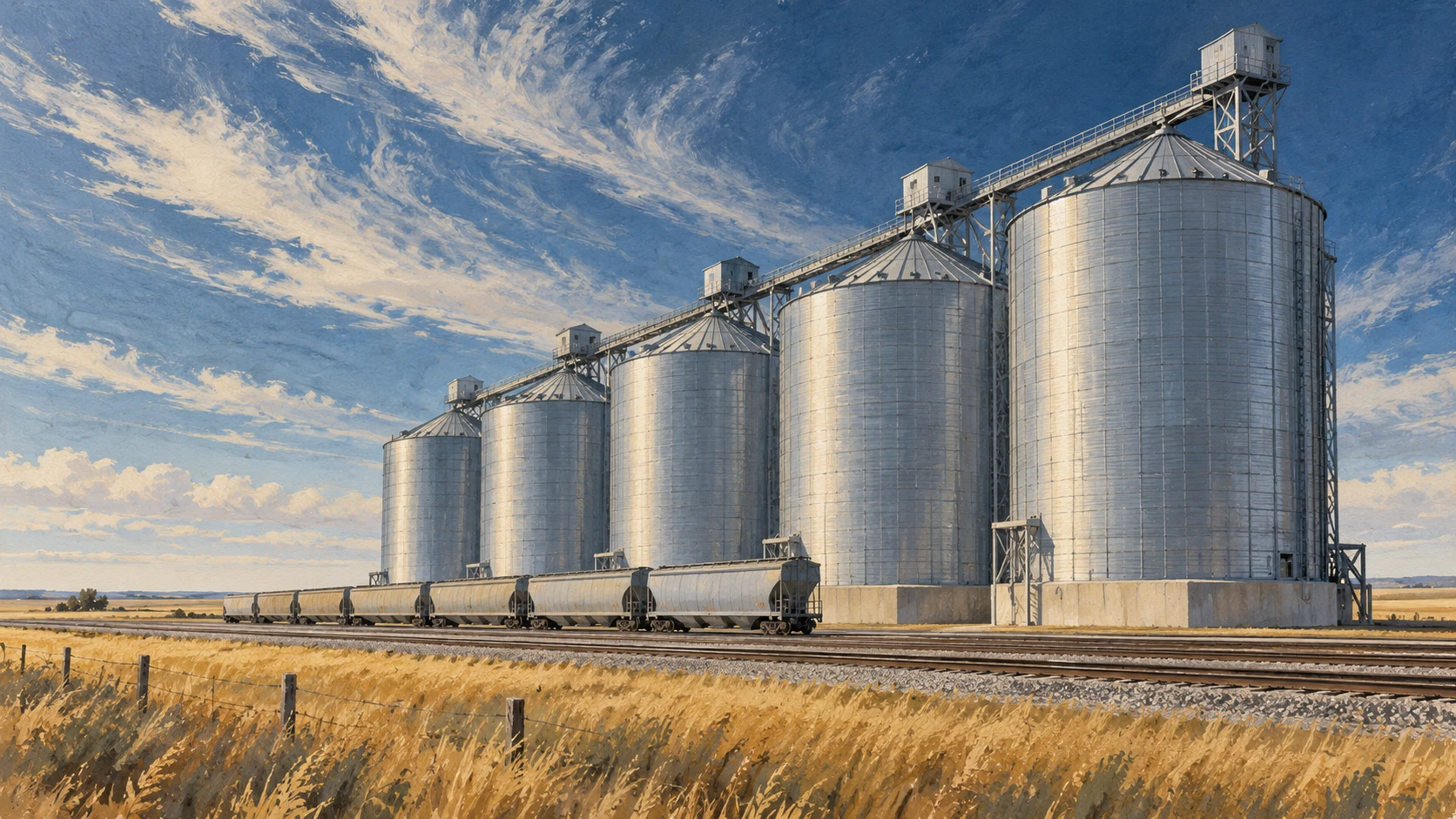
Licensed primary grain elevators coordinate bulk rail deliveries to ensure continuous raw feedstock supply for domestic processors.
In the 2024/25 crop year, domestic crushers absorbed over half of total commercial canola seed disposition.
Raw grain exports moved through Pacific and St. Lawrence marine terminals to supply overseas crushing customers.
Official disposition metrics evaluate physical grain movement through regulated handling channels rather than farm-gate storage inventories.
Food Manufacturing, Biofuel, and Export Markets
Processed canola oil supplies domestic commercial food manufacturing, restaurant frying, and packaged consumer cooking oils.
Industrial biofuel producers utilize refined canola oil as a low-carbon feedstock for renewable diesel and biodiesel blending.
Domestic market absorption accounts for steady volumes of canola oil consumed within Canadian food processing sectors.
Clean fuel standards and provincial low-carbon fuel mandates stimulate industrial procurement of agricultural feedstocks.
Export markets purchase substantial volumes of refined and crude canola oil under international shipping certificates.
Commercial oil buyers maintain strict chemical specifications regarding free fatty acids and phosphorus content.
Separating Historical Data from Agricultural Forecasts
Official statistics protocols strictly distinguish measured historical crushing records from forward-looking agricultural outlook models.
Agriculture and Agri-Food Canada outlook reports publish conditional medium-term projections subject to volatile market assumptions.
Unverified forward-looking demand projections cannot be incorporated into empirical statistical releases without rigorous profile validation.
Forecast models rely on assumed weather trends, overseas tariff policies, and hypothetical renewable fuel demand trajectories.
Statistics Canada releases report verified empirical throughput rather than predictive economic forecasts.
Analytical governance requires excluding unvetted forward projections to preserve the empirical integrity of national accounts.

Accounting Periods and Macroeconomic Complexity
Calendar-year 2025 crushing output covers a standard twelve-month calendar period ending in December.
Crop-year 2024/25 disposition follows the agricultural production cycle running from August 1 to July 31.
Discrepancies between calendar-year output and crop-year disposition reflect differing temporal accounting intervals.
Neither domestic food consumption nor biofuel demand can be treated as a single monocausal explanation for national economic growth.
The crushing sector operates as an interdependent link within complex global commodity and currency exchange networks.
Rigorous economic analysis distinguishes verified accounting periods from overarching speculative macroeconomic narratives.
A2 · Elementary
Canadian Canola Crushing Sector: Observed Output and Disposition
National crushing statistics measure industrial seed throughput and oil production across Canada while keeping crop-year disposition separate.
Calendar-Year Canola Crushing Volumes
Statistics Canada recorded approximately 11 million metric tonnes of canola crushed across Canadian processing plants during calendar-year 2025.
The monthly oilseed crushing survey aggregates operating returns from major commercial crushing facilities across Saskatchewan, Alberta, and Manitoba.
Industrial crushing plants operate continuous mechanical expellers and solvent extraction units to process harvested canola seed.
Measured annual crushing volume in calendar-year 2025 reflects concrete industrial throughput rather than speculative market trading contracts.
Prairie processing hubs account for the predominant share of total primary oilseed processing capacity within Canada.
The monthly oilseed survey establishes empirical processing totals through mandatory statutory reporting by licensed crushing operators.
Vegetable Oil and Protein Meal Extraction
Industrial processing of canola seed separates raw oilseeds into crude vegetable oil and solid protein meal.
Standard commercial crushing extraction yields approximately 42 to 44 percent crude canola oil by weight from clean seed.
Canola meal byproduct represents the remaining solid fraction, constituting approximately 56 to 58 percent of processed seed mass.
Refineries process crude canola oil into food-grade edible oil and commercial industrial products.
Canola meal serves as a high-protein feed ingredient distributed widely to domestic and international livestock sectors.
Crushing plant laboratories monitor moisture content, residual oil levels, and protein concentration across all output batches.
Crop-Year Disposition and Handling Channels
The Canadian Grain Commission tracks official disposition of the canola harvest across the August-to-July 2024/25 crop year.
Crop-year 2024/25 disposition data distinguishes seed delivered to domestic crushing plants from unprocessed grain exported via marine ports.
Licensed primary grain elevators coordinate bulk rail deliveries to ensure continuous raw feedstock supply for domestic processors.
In the 2024/25 crop year, domestic crushers absorbed over half of total commercial canola seed disposition.
Raw grain exports moved through Pacific and St. Lawrence marine terminals to supply overseas crushing customers.
Official disposition metrics evaluate physical grain movement through regulated handling channels rather than farm-gate storage inventories.
Food Manufacturing, Biofuel, and Export Markets
Processed canola oil supplies domestic commercial food manufacturing, restaurant frying, and packaged consumer cooking oils.
Industrial biofuel producers utilize refined canola oil as a low-carbon feedstock for renewable diesel and biodiesel blending.
Domestic market absorption accounts for steady volumes of canola oil consumed within Canadian food processing sectors.
Clean fuel standards and provincial low-carbon fuel mandates stimulate industrial procurement of agricultural feedstocks.
Export markets purchase substantial volumes of refined and crude canola oil under international shipping certificates.
Commercial oil buyers maintain strict chemical specifications regarding free fatty acids and phosphorus content.
Separating Historical Data from Agricultural Forecasts
Official statistics protocols strictly distinguish measured historical crushing records from forward-looking agricultural outlook models.
Agriculture and Agri-Food Canada outlook reports publish conditional medium-term projections subject to volatile market assumptions.
Unverified forward-looking demand projections cannot be incorporated into empirical statistical releases without rigorous profile validation.
Forecast models rely on assumed weather trends, overseas tariff policies, and hypothetical renewable fuel demand trajectories.
Statistics Canada releases report verified empirical throughput rather than predictive economic forecasts.
Analytical governance requires excluding unvetted forward projections to preserve the empirical integrity of national accounts.
Accounting Periods and Macroeconomic Complexity
Calendar-year 2025 crushing output covers a standard twelve-month calendar period ending in December.
Crop-year 2024/25 disposition follows the agricultural production cycle running from August 1 to July 31.
Discrepancies between calendar-year output and crop-year disposition reflect differing temporal accounting intervals.
Neither domestic food consumption nor biofuel demand can be treated as a single monocausal explanation for national economic growth.
The crushing sector operates as an interdependent link within complex global commodity and currency exchange networks.
Rigorous economic analysis distinguishes verified accounting periods from overarching speculative macroeconomic narratives.
B1 · Intermediate
Canadian Canola Crushing Sector: Observed Output and Disposition
National crushing statistics measure industrial seed throughput and oil production across Canada while keeping crop-year disposition separate.
Calendar-Year Canola Crushing Volumes
Statistics Canada recorded approximately 11 million metric tonnes of canola crushed across Canadian processing plants during calendar-year 2025.
The monthly oilseed crushing survey aggregates operating returns from major commercial crushing facilities across Saskatchewan, Alberta, and Manitoba.
Industrial crushing plants operate continuous mechanical expellers and solvent extraction units to process harvested canola seed.
Measured annual crushing volume in calendar-year 2025 reflects concrete industrial throughput rather than speculative market trading contracts.
Prairie processing hubs account for the predominant share of total primary oilseed processing capacity within Canada.
The monthly oilseed survey establishes empirical processing totals through mandatory statutory reporting by licensed crushing operators.
Vegetable Oil and Protein Meal Extraction
Industrial processing of canola seed separates raw oilseeds into crude vegetable oil and solid protein meal.
Standard commercial crushing extraction yields approximately 42 to 44 percent crude canola oil by weight from clean seed.
Canola meal byproduct represents the remaining solid fraction, constituting approximately 56 to 58 percent of processed seed mass.
Refineries process crude canola oil into food-grade edible oil and commercial industrial products.
Canola meal serves as a high-protein feed ingredient distributed widely to domestic and international livestock sectors.
Crushing plant laboratories monitor moisture content, residual oil levels, and protein concentration across all output batches.
Crop-Year Disposition and Handling Channels
The Canadian Grain Commission tracks official disposition of the canola harvest across the August-to-July 2024/25 crop year.
Crop-year 2024/25 disposition data distinguishes seed delivered to domestic crushing plants from unprocessed grain exported via marine ports.
Licensed primary grain elevators coordinate bulk rail deliveries to ensure continuous raw feedstock supply for domestic processors.
In the 2024/25 crop year, domestic crushers absorbed over half of total commercial canola seed disposition.
Raw grain exports moved through Pacific and St. Lawrence marine terminals to supply overseas crushing customers.
Official disposition metrics evaluate physical grain movement through regulated handling channels rather than farm-gate storage inventories.
Food Manufacturing, Biofuel, and Export Markets
Processed canola oil supplies domestic commercial food manufacturing, restaurant frying, and packaged consumer cooking oils.
Industrial biofuel producers utilize refined canola oil as a low-carbon feedstock for renewable diesel and biodiesel blending.
Domestic market absorption accounts for steady volumes of canola oil consumed within Canadian food processing sectors.
Clean fuel standards and provincial low-carbon fuel mandates stimulate industrial procurement of agricultural feedstocks.
Export markets purchase substantial volumes of refined and crude canola oil under international shipping certificates.
Commercial oil buyers maintain strict chemical specifications regarding free fatty acids and phosphorus content.
Separating Historical Data from Agricultural Forecasts
Official statistics protocols strictly distinguish measured historical crushing records from forward-looking agricultural outlook models.
Agriculture and Agri-Food Canada outlook reports publish conditional medium-term projections subject to volatile market assumptions.
Unverified forward-looking demand projections cannot be incorporated into empirical statistical releases without rigorous profile validation.
Forecast models rely on assumed weather trends, overseas tariff policies, and hypothetical renewable fuel demand trajectories.
Statistics Canada releases report verified empirical throughput rather than predictive economic forecasts.
Analytical governance requires excluding unvetted forward projections to preserve the empirical integrity of national accounts.
Accounting Periods and Macroeconomic Complexity
Calendar-year 2025 crushing output covers a standard twelve-month calendar period ending in December.
Crop-year 2024/25 disposition follows the agricultural production cycle running from August 1 to July 31.
Discrepancies between calendar-year output and crop-year disposition reflect differing temporal accounting intervals.
Neither domestic food consumption nor biofuel demand can be treated as a single monocausal explanation for national economic growth.
The crushing sector operates as an interdependent link within complex global commodity and currency exchange networks.
Rigorous economic analysis distinguishes verified accounting periods from overarching speculative macroeconomic narratives.
B2 · Upper Intermediate
Canadian Canola Crushing Sector: Observed Output and Disposition
National crushing statistics measure industrial seed throughput and oil production across Canada while keeping crop-year disposition separate.
Calendar-Year Canola Crushing Volumes
Statistics Canada recorded approximately 11 million metric tonnes of canola crushed across Canadian processing plants during calendar-year 2025.
The monthly oilseed crushing survey aggregates operating returns from major commercial crushing facilities across Saskatchewan, Alberta, and Manitoba.
Industrial crushing plants operate continuous mechanical expellers and solvent extraction units to process harvested canola seed.
Measured annual crushing volume in calendar-year 2025 reflects concrete industrial throughput rather than speculative market trading contracts.
Prairie processing hubs account for the predominant share of total primary oilseed processing capacity within Canada.
The monthly oilseed survey establishes empirical processing totals through mandatory statutory reporting by licensed crushing operators.
Vegetable Oil and Protein Meal Extraction
Industrial processing of canola seed separates raw oilseeds into crude vegetable oil and solid protein meal.
Standard commercial crushing extraction yields approximately 42 to 44 percent crude canola oil by weight from clean seed.
Canola meal byproduct represents the remaining solid fraction, constituting approximately 56 to 58 percent of processed seed mass.
Refineries process crude canola oil into food-grade edible oil and commercial industrial products.
Canola meal serves as a high-protein feed ingredient distributed widely to domestic and international livestock sectors.
Crushing plant laboratories monitor moisture content, residual oil levels, and protein concentration across all output batches.
Crop-Year Disposition and Handling Channels
The Canadian Grain Commission tracks official disposition of the canola harvest across the August-to-July 2024/25 crop year.
Crop-year 2024/25 disposition data distinguishes seed delivered to domestic crushing plants from unprocessed grain exported via marine ports.
Licensed primary grain elevators coordinate bulk rail deliveries to ensure continuous raw feedstock supply for domestic processors.
In the 2024/25 crop year, domestic crushers absorbed over half of total commercial canola seed disposition.
Raw grain exports moved through Pacific and St. Lawrence marine terminals to supply overseas crushing customers.
Official disposition metrics evaluate physical grain movement through regulated handling channels rather than farm-gate storage inventories.
Food Manufacturing, Biofuel, and Export Markets
Processed canola oil supplies domestic commercial food manufacturing, restaurant frying, and packaged consumer cooking oils.
Industrial biofuel producers utilize refined canola oil as a low-carbon feedstock for renewable diesel and biodiesel blending.
Domestic market absorption accounts for steady volumes of canola oil consumed within Canadian food processing sectors.
Clean fuel standards and provincial low-carbon fuel mandates stimulate industrial procurement of agricultural feedstocks.
Export markets purchase substantial volumes of refined and crude canola oil under international shipping certificates.
Commercial oil buyers maintain strict chemical specifications regarding free fatty acids and phosphorus content.
Separating Historical Data from Agricultural Forecasts
Official statistics protocols strictly distinguish measured historical crushing records from forward-looking agricultural outlook models.
Agriculture and Agri-Food Canada outlook reports publish conditional medium-term projections subject to volatile market assumptions.
Unverified forward-looking demand projections cannot be incorporated into empirical statistical releases without rigorous profile validation.
Forecast models rely on assumed weather trends, overseas tariff policies, and hypothetical renewable fuel demand trajectories.
Statistics Canada releases report verified empirical throughput rather than predictive economic forecasts.
Analytical governance requires excluding unvetted forward projections to preserve the empirical integrity of national accounts.
Accounting Periods and Macroeconomic Complexity
Calendar-year 2025 crushing output covers a standard twelve-month calendar period ending in December.
Crop-year 2024/25 disposition follows the agricultural production cycle running from August 1 to July 31.
Discrepancies between calendar-year output and crop-year disposition reflect differing temporal accounting intervals.
Neither domestic food consumption nor biofuel demand can be treated as a single monocausal explanation for national economic growth.
The crushing sector operates as an interdependent link within complex global commodity and currency exchange networks.
Rigorous economic analysis distinguishes verified accounting periods from overarching speculative macroeconomic narratives.
C1 · Advanced
Canadian Canola Crushing Sector: Observed Output and Disposition
National crushing statistics measure industrial seed throughput and oil production across Canada while keeping crop-year disposition separate.
Calendar-Year Canola Crushing Volumes
Statistics Canada recorded approximately 11 million metric tonnes of canola crushed across Canadian processing plants during calendar-year 2025.
The monthly oilseed crushing survey aggregates operating returns from major commercial crushing facilities across Saskatchewan, Alberta, and Manitoba.
Industrial crushing plants operate continuous mechanical expellers and solvent extraction units to process harvested canola seed.
Measured annual crushing volume in calendar-year 2025 reflects concrete industrial throughput rather than speculative market trading contracts.
Prairie processing hubs account for the predominant share of total primary oilseed processing capacity within Canada.
The monthly oilseed survey establishes empirical processing totals through mandatory statutory reporting by licensed crushing operators.
Vegetable Oil and Protein Meal Extraction
Industrial processing of canola seed separates raw oilseeds into crude vegetable oil and solid protein meal.
Standard commercial crushing extraction yields approximately 42 to 44 percent crude canola oil by weight from clean seed.
Canola meal byproduct represents the remaining solid fraction, constituting approximately 56 to 58 percent of processed seed mass.
Refineries process crude canola oil into food-grade edible oil and commercial industrial products.
Canola meal serves as a high-protein feed ingredient distributed widely to domestic and international livestock sectors.
Crushing plant laboratories monitor moisture content, residual oil levels, and protein concentration across all output batches.
Crop-Year Disposition and Handling Channels
The Canadian Grain Commission tracks official disposition of the canola harvest across the August-to-July 2024/25 crop year.
Crop-year 2024/25 disposition data distinguishes seed delivered to domestic crushing plants from unprocessed grain exported via marine ports.
Licensed primary grain elevators coordinate bulk rail deliveries to ensure continuous raw feedstock supply for domestic processors.
In the 2024/25 crop year, domestic crushers absorbed over half of total commercial canola seed disposition.
Raw grain exports moved through Pacific and St. Lawrence marine terminals to supply overseas crushing customers.
Official disposition metrics evaluate physical grain movement through regulated handling channels rather than farm-gate storage inventories.
Food Manufacturing, Biofuel, and Export Markets
Processed canola oil supplies domestic commercial food manufacturing, restaurant frying, and packaged consumer cooking oils.
Industrial biofuel producers utilize refined canola oil as a low-carbon feedstock for renewable diesel and biodiesel blending.
Domestic market absorption accounts for steady volumes of canola oil consumed within Canadian food processing sectors.
Clean fuel standards and provincial low-carbon fuel mandates stimulate industrial procurement of agricultural feedstocks.
Export markets purchase substantial volumes of refined and crude canola oil under international shipping certificates.
Commercial oil buyers maintain strict chemical specifications regarding free fatty acids and phosphorus content.
Separating Historical Data from Agricultural Forecasts
Official statistics protocols strictly distinguish measured historical crushing records from forward-looking agricultural outlook models.
Agriculture and Agri-Food Canada outlook reports publish conditional medium-term projections subject to volatile market assumptions.
Unverified forward-looking demand projections cannot be incorporated into empirical statistical releases without rigorous profile validation.
Forecast models rely on assumed weather trends, overseas tariff policies, and hypothetical renewable fuel demand trajectories.
Statistics Canada releases report verified empirical throughput rather than predictive economic forecasts.
Analytical governance requires excluding unvetted forward projections to preserve the empirical integrity of national accounts.
Accounting Periods and Macroeconomic Complexity
Calendar-year 2025 crushing output covers a standard twelve-month calendar period ending in December.
Crop-year 2024/25 disposition follows the agricultural production cycle running from August 1 to July 31.
Discrepancies between calendar-year output and crop-year disposition reflect differing temporal accounting intervals.
Neither domestic food consumption nor biofuel demand can be treated as a single monocausal explanation for national economic growth.
The crushing sector operates as an interdependent link within complex global commodity and currency exchange networks.
Rigorous economic analysis distinguishes verified accounting periods from overarching speculative macroeconomic narratives.
C2 · Mastery
Canadian Canola Crushing Sector: Observed Output and Disposition
National crushing statistics measure industrial seed throughput and oil production across Canada while keeping crop-year disposition separate.
Calendar-Year Canola Crushing Volumes
Statistics Canada recorded approximately 11 million metric tonnes of canola crushed across Canadian processing plants during calendar-year 2025.
The monthly oilseed crushing survey aggregates operating returns from major commercial crushing facilities across Saskatchewan, Alberta, and Manitoba.
Industrial crushing plants operate continuous mechanical expellers and solvent extraction units to process harvested canola seed.
Measured annual crushing volume in calendar-year 2025 reflects concrete industrial throughput rather than speculative market trading contracts.
Prairie processing hubs account for the predominant share of total primary oilseed processing capacity within Canada.
The monthly oilseed survey establishes empirical processing totals through mandatory statutory reporting by licensed crushing operators.
Vegetable Oil and Protein Meal Extraction
Industrial processing of canola seed separates raw oilseeds into crude vegetable oil and solid protein meal.
Standard commercial crushing extraction yields approximately 42 to 44 percent crude canola oil by weight from clean seed.
Canola meal byproduct represents the remaining solid fraction, constituting approximately 56 to 58 percent of processed seed mass.
Refineries process crude canola oil into food-grade edible oil and commercial industrial products.
Canola meal serves as a high-protein feed ingredient distributed widely to domestic and international livestock sectors.
Crushing plant laboratories monitor moisture content, residual oil levels, and protein concentration across all output batches.
Crop-Year Disposition and Handling Channels
The Canadian Grain Commission tracks official disposition of the canola harvest across the August-to-July 2024/25 crop year.
Crop-year 2024/25 disposition data distinguishes seed delivered to domestic crushing plants from unprocessed grain exported via marine ports.
Licensed primary grain elevators coordinate bulk rail deliveries to ensure continuous raw feedstock supply for domestic processors.
In the 2024/25 crop year, domestic crushers absorbed over half of total commercial canola seed disposition.
Raw grain exports moved through Pacific and St. Lawrence marine terminals to supply overseas crushing customers.
Official disposition metrics evaluate physical grain movement through regulated handling channels rather than farm-gate storage inventories.
Food Manufacturing, Biofuel, and Export Markets
Processed canola oil supplies domestic commercial food manufacturing, restaurant frying, and packaged consumer cooking oils.
Industrial biofuel producers utilize refined canola oil as a low-carbon feedstock for renewable diesel and biodiesel blending.
Domestic market absorption accounts for steady volumes of canola oil consumed within Canadian food processing sectors.
Clean fuel standards and provincial low-carbon fuel mandates stimulate industrial procurement of agricultural feedstocks.
Export markets purchase substantial volumes of refined and crude canola oil under international shipping certificates.
Commercial oil buyers maintain strict chemical specifications regarding free fatty acids and phosphorus content.
Separating Historical Data from Agricultural Forecasts
Official statistics protocols strictly distinguish measured historical crushing records from forward-looking agricultural outlook models.
Agriculture and Agri-Food Canada outlook reports publish conditional medium-term projections subject to volatile market assumptions.
Unverified forward-looking demand projections cannot be incorporated into empirical statistical releases without rigorous profile validation.
Forecast models rely on assumed weather trends, overseas tariff policies, and hypothetical renewable fuel demand trajectories.
Statistics Canada releases report verified empirical throughput rather than predictive economic forecasts.
Analytical governance requires excluding unvetted forward projections to preserve the empirical integrity of national accounts.
Accounting Periods and Macroeconomic Complexity
Calendar-year 2025 crushing output covers a standard twelve-month calendar period ending in December.
Crop-year 2024/25 disposition follows the agricultural production cycle running from August 1 to July 31.
Discrepancies between calendar-year output and crop-year disposition reflect differing temporal accounting intervals.
Neither domestic food consumption nor biofuel demand can be treated as a single monocausal explanation for national economic growth.
The crushing sector operates as an interdependent link within complex global commodity and currency exchange networks.
Rigorous economic analysis distinguishes verified accounting periods from overarching speculative macroeconomic narratives.
Check your understanding
Choose how closely you want to revisit the article. You can refer back while answering, and review explanations when you finish.
Quick Quiz A1
Try one question, then create a free account for the full Quick Quiz. Sign Up Free
Answer every question before checking. There is no time limit.
Your results
/ 1 correct (%)
Read the explanations to see how each answer connects to the article.
-
How much canola was crushed across Canadian processing plants during calendar-year 2025?
1. Answer:
Quick Quiz A2
Try one question, then create a free account for the full Quick Quiz. Sign Up Free
Answer every question before checking. There is no time limit.
Your results
/ 1 correct (%)
Read the explanations to see how each answer connects to the article.
-
How much canola was crushed across Canadian processing plants during calendar-year 2025?
1. Answer:
Quick Quiz B1
Try one question, then create a free account for the full Quick Quiz. Sign Up Free
Answer every question before checking. There is no time limit.
Your results
/ 1 correct (%)
Read the explanations to see how each answer connects to the article.
-
How much canola was crushed across Canadian processing plants during calendar-year 2025?
1. Answer:
Quick Quiz B2
Try one question, then create a free account for the full Quick Quiz. Sign Up Free
Answer every question before checking. There is no time limit.
Your results
/ 1 correct (%)
Read the explanations to see how each answer connects to the article.
-
How much canola was crushed across Canadian processing plants during calendar-year 2025?
1. Answer:
Quick Quiz C1
Try one question, then create a free account for the full Quick Quiz. Sign Up Free
Answer every question before checking. There is no time limit.
Your results
/ 1 correct (%)
Read the explanations to see how each answer connects to the article.
-
How much canola was crushed across Canadian processing plants during calendar-year 2025?
1. Answer:
Quick Quiz C2
Try one question, then create a free account for the full Quick Quiz. Sign Up Free
Answer every question before checking. There is no time limit.
Your results
/ 1 correct (%)
Read the explanations to see how each answer connects to the article.
-
How much canola was crushed across Canadian processing plants during calendar-year 2025?
1. Answer:
