
A1 · Beginner
Ontario Downstream Forest Sector: Processing Beyond Extraction
Provincial natural resource indicators quantify value-added wood manufacturing output, gross domestic product, and industrial employment across Ontario.
Ontario Table Geography and Satellite Accounts
Statistics Canada Table 36-10-0624-01 records provincial natural resource indicators for Ontario within the Natural Resources Satellite Account.
The statistical account explicitly partitions the forestry sector into primary extraction and downstream processing sub-sectors.
Provincial boundary parameters limit recorded macroeconomic values strictly to enterprises operating within Ontario.
National accounting principles structure annual data using the standardized System of National Accounts framework.
The accounting framework enables rigorous cross-provincial comparisons across output, GDP, trade, and employment measures.
Statistical table guidelines prohibit combining aggregate satellite accounting totals with speculative ecological forecasting models.
Primary Forest Harvesting and Extraction
Primary forestry harvesting encompasses commercial timber harvesting, logging operations, and timber tract management.
Upstream extraction produces raw industrial roundwood logs, pulpwood bolts, and harvested forestry biomass.
Ontario primary forestry extraction generated hundreds of millions in nominal gross output during reference year 2024.
Harvesting activity experiences seasonal variance driven by winter frozen road access, spring thaw restrictions, and forest fire seasons.
Primary extraction provides critical baseline employment across northern and central Ontario forested communities.
Official extraction metrics evaluate harvested raw timber volumes prior to manufacturing conversion and secondary processing.
Downstream Processing and Secondary Manufacturing
Downstream forest activities encompass solid wood product manufacturing, paper manufacturing, and converted packaging production.
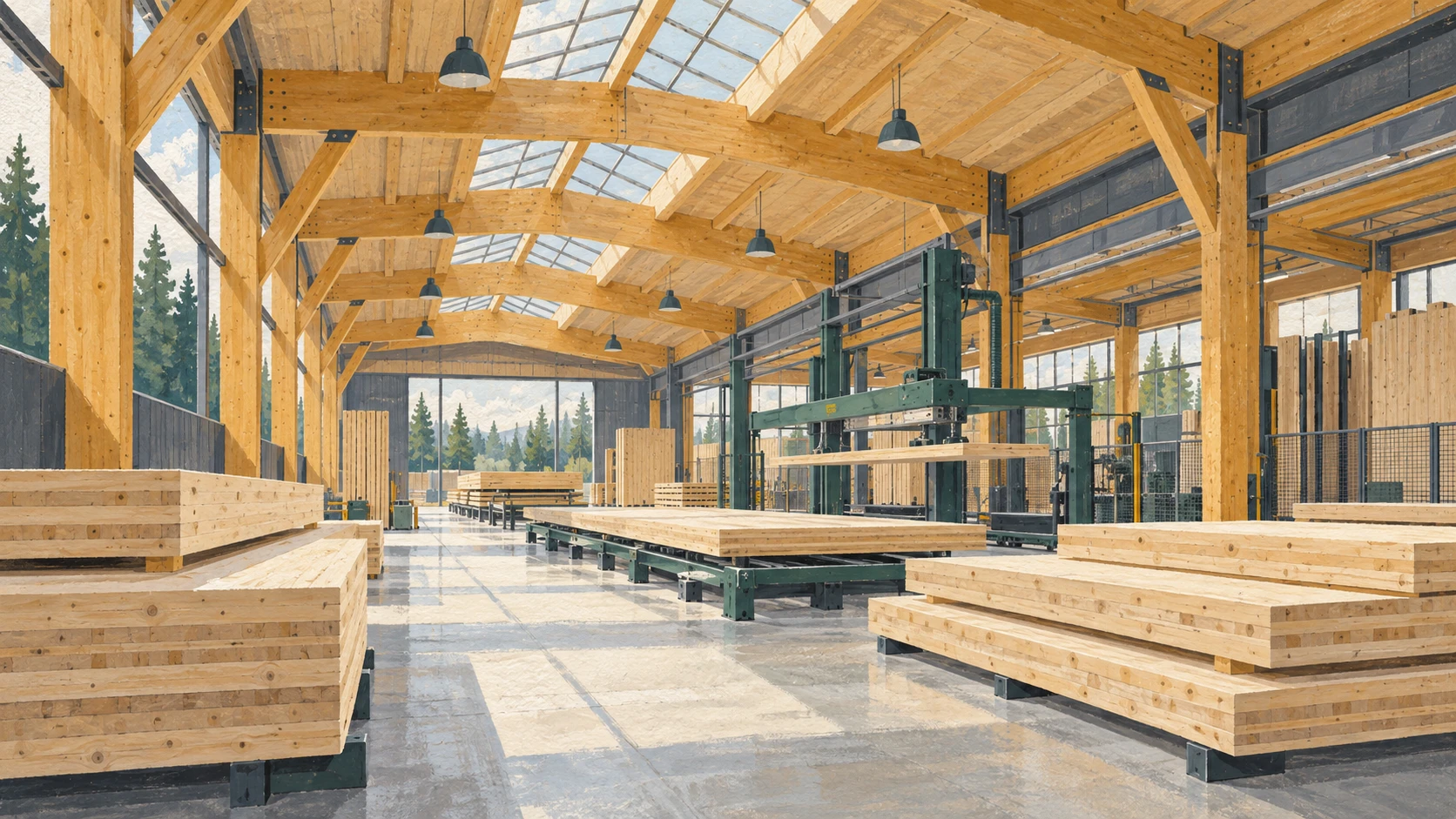
Secondary manufacturing includes engineered mass-timber components, cross-laminated timber panels, structural glulam beams, and wooden trusses.
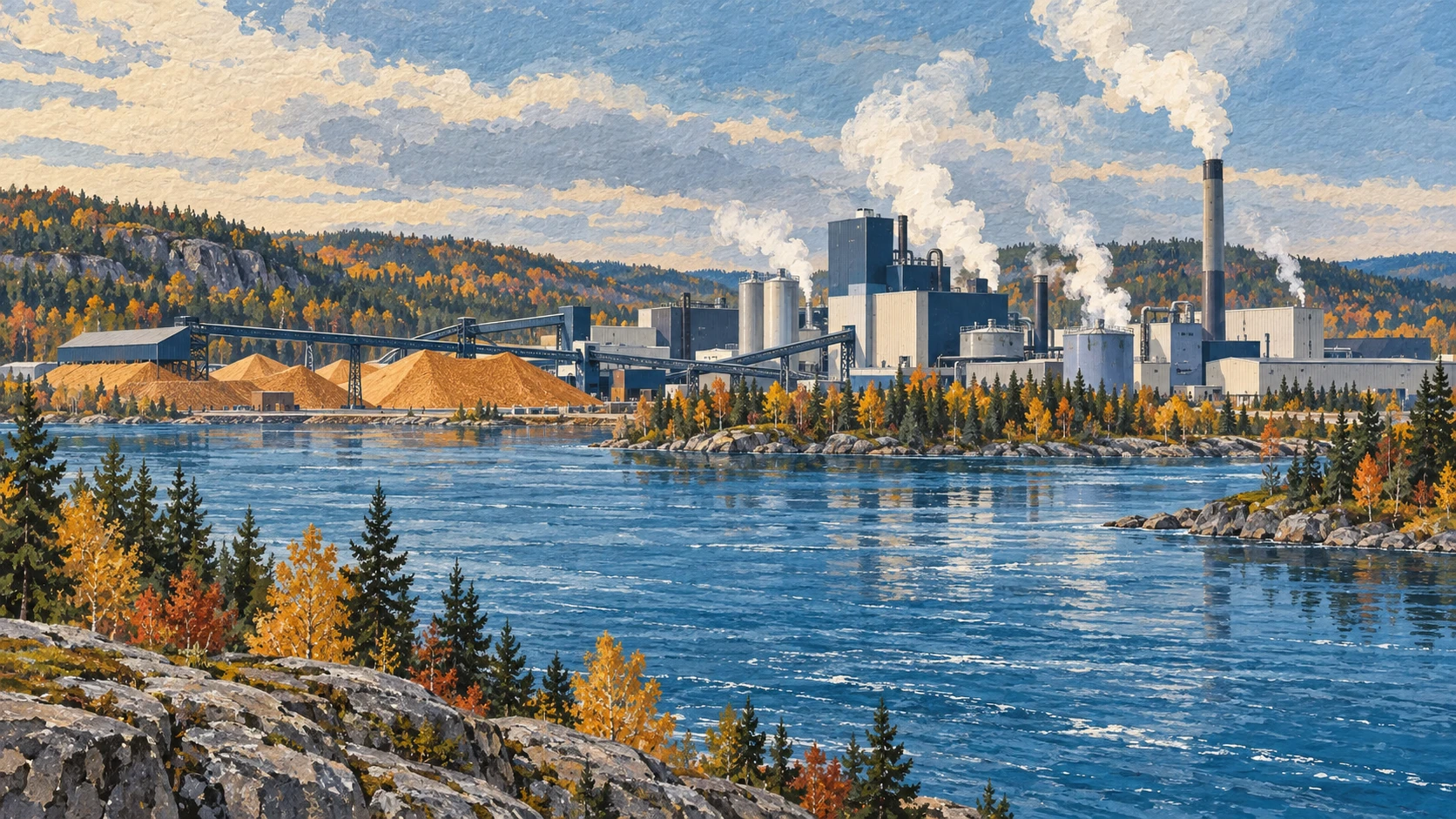
Downstream paper production manufactures corrugated packaging cardboard, industrial containerboard, newsprint, and specialty sanitary papers.
Ontario value-added wood processing supplies commercial furniture fabrication, specialized architectural millwork, and custom hardwood cabinetry.
Secondary wood manufacturing generates higher economic value-added and GDP contribution per cubic meter of timber than roundwood logging.
Downstream processing lines consume both freshly harvested primary logs and sawmill residue chips, shavings, and sawdust.
Gross Output, GDP, and Export Dynamics
Table 36-10-0624-01 quantifies nominal gross output, real GDP contributions, and trade balances for the downstream forest sector.
Ontario downstream forest gross output totaled over 10 billion dollars in 2024, far exceeding primary extraction output.
The downstream forest sub-sector generates multiple billions of dollars in provincial real gross domestic product annually.
Ontario manufacturers export significant volumes of manufactured paper packaging, lumber, and structural wood to American Midwest markets.
Interprovincial trade flows record major exchanges of unfinished lumber, wood pulp, and converted paper products with Quebec and western provinces.
Export statistics record values at the point of commercial border exit rather than final consumer retail delivery.
Employment Distribution and Labor Bounds
Natural Resources Satellite Account tables track direct employment counts across primary extraction and downstream processing categories.
Downstream manufacturing facilities employ several times more workers than primary timber harvesting operations in Ontario.
Manufacturing facilities require certified industrial millwrights, precision machine operators, chemical technicians, and skilled joiners.
Labor metrics evaluate formal payroll jobs and exclude non-commercial seasonal firewood cutting and informal subsistence harvesting.
Downstream manufacturing offers stable year-round indoor employment compared to weather-interrupted seasonal logging schedules.
Downstream industrial employment clusters around major transportation corridors in southern Ontario as well as northern regional hubs.

Analytical Boundaries and Rights-Holder Evidence
Macroeconomic aggregate statistics cannot establish operational safety or specific working conditions at an individual sawmill or paper mill.
National accounting tables do not measure localized forest ecological health, soil vitality, biodiversity, or carbon sequestration.
Aggregate economic data do not define Indigenous land title, treaty entitlements, or constitutional stewardship rights.
Verification of Aboriginal rights, title, and free, prior, and informed consent requires distinct legal and community evidence.
Evaluating single-industry community economic dependence requires granular local surveys rather than province-wide statistical totals.
Sound economic analysis maintains clear boundaries between aggregate monetary output and localized ecological or legal claims.
A2 · Elementary
Ontario Downstream Forest Sector: Processing Beyond Extraction
Provincial natural resource indicators quantify value-added wood manufacturing output, gross domestic product, and industrial employment across Ontario.
Ontario Table Geography and Satellite Accounts
Statistics Canada Table 36-10-0624-01 records provincial natural resource indicators for Ontario within the Natural Resources Satellite Account.
The statistical account explicitly partitions the forestry sector into primary extraction and downstream processing sub-sectors.
Provincial boundary parameters limit recorded macroeconomic values strictly to enterprises operating within Ontario.
National accounting principles structure annual data using the standardized System of National Accounts framework.
The accounting framework enables rigorous cross-provincial comparisons across output, GDP, trade, and employment measures.
Statistical table guidelines prohibit combining aggregate satellite accounting totals with speculative ecological forecasting models.
Primary Forest Harvesting and Extraction
Primary forestry harvesting encompasses commercial timber harvesting, logging operations, and timber tract management.
Upstream extraction produces raw industrial roundwood logs, pulpwood bolts, and harvested forestry biomass.
Ontario primary forestry extraction generated hundreds of millions in nominal gross output during reference year 2024.
Harvesting activity experiences seasonal variance driven by winter frozen road access, spring thaw restrictions, and forest fire seasons.
Primary extraction provides critical baseline employment across northern and central Ontario forested communities.
Official extraction metrics evaluate harvested raw timber volumes prior to manufacturing conversion and secondary processing.
Downstream Processing and Secondary Manufacturing
Downstream forest activities encompass solid wood product manufacturing, paper manufacturing, and converted packaging production.
Secondary manufacturing includes engineered mass-timber components, cross-laminated timber panels, structural glulam beams, and wooden trusses.
Downstream paper production manufactures corrugated packaging cardboard, industrial containerboard, newsprint, and specialty sanitary papers.
Ontario value-added wood processing supplies commercial furniture fabrication, specialized architectural millwork, and custom hardwood cabinetry.
Secondary wood manufacturing generates higher economic value-added and GDP contribution per cubic meter of timber than roundwood logging.
Downstream processing lines consume both freshly harvested primary logs and sawmill residue chips, shavings, and sawdust.
Gross Output, GDP, and Export Dynamics
Table 36-10-0624-01 quantifies nominal gross output, real GDP contributions, and trade balances for the downstream forest sector.
Ontario downstream forest gross output totaled over 10 billion dollars in 2024, far exceeding primary extraction output.
The downstream forest sub-sector generates multiple billions of dollars in provincial real gross domestic product annually.
Ontario manufacturers export significant volumes of manufactured paper packaging, lumber, and structural wood to American Midwest markets.
Interprovincial trade flows record major exchanges of unfinished lumber, wood pulp, and converted paper products with Quebec and western provinces.
Export statistics record values at the point of commercial border exit rather than final consumer retail delivery.
Employment Distribution and Labor Bounds
Natural Resources Satellite Account tables track direct employment counts across primary extraction and downstream processing categories.
Downstream manufacturing facilities employ several times more workers than primary timber harvesting operations in Ontario.
Manufacturing facilities require certified industrial millwrights, precision machine operators, chemical technicians, and skilled joiners.
Labor metrics evaluate formal payroll jobs and exclude non-commercial seasonal firewood cutting and informal subsistence harvesting.
Downstream manufacturing offers stable year-round indoor employment compared to weather-interrupted seasonal logging schedules.
Downstream industrial employment clusters around major transportation corridors in southern Ontario as well as northern regional hubs.
Analytical Boundaries and Rights-Holder Evidence
Macroeconomic aggregate statistics cannot establish operational safety or specific working conditions at an individual sawmill or paper mill.
National accounting tables do not measure localized forest ecological health, soil vitality, biodiversity, or carbon sequestration.
Aggregate economic data do not define Indigenous land title, treaty entitlements, or constitutional stewardship rights.
Verification of Aboriginal rights, title, and free, prior, and informed consent requires distinct legal and community evidence.
Evaluating single-industry community economic dependence requires granular local surveys rather than province-wide statistical totals.
Sound economic analysis maintains clear boundaries between aggregate monetary output and localized ecological or legal claims.
B1 · Intermediate
Ontario Downstream Forest Sector: Processing Beyond Extraction
Provincial natural resource indicators quantify value-added wood manufacturing output, gross domestic product, and industrial employment across Ontario.
Ontario Table Geography and Satellite Accounts
Statistics Canada Table 36-10-0624-01 records provincial natural resource indicators for Ontario within the Natural Resources Satellite Account.
The statistical account explicitly partitions the forestry sector into primary extraction and downstream processing sub-sectors.
Provincial boundary parameters limit recorded macroeconomic values strictly to enterprises operating within Ontario.
National accounting principles structure annual data using the standardized System of National Accounts framework.
The accounting framework enables rigorous cross-provincial comparisons across output, GDP, trade, and employment measures.
Statistical table guidelines prohibit combining aggregate satellite accounting totals with speculative ecological forecasting models.
Primary Forest Harvesting and Extraction
Primary forestry harvesting encompasses commercial timber harvesting, logging operations, and timber tract management.
Upstream extraction produces raw industrial roundwood logs, pulpwood bolts, and harvested forestry biomass.
Ontario primary forestry extraction generated hundreds of millions in nominal gross output during reference year 2024.
Harvesting activity experiences seasonal variance driven by winter frozen road access, spring thaw restrictions, and forest fire seasons.
Primary extraction provides critical baseline employment across northern and central Ontario forested communities.
Official extraction metrics evaluate harvested raw timber volumes prior to manufacturing conversion and secondary processing.
Downstream Processing and Secondary Manufacturing
Downstream forest activities encompass solid wood product manufacturing, paper manufacturing, and converted packaging production.
Secondary manufacturing includes engineered mass-timber components, cross-laminated timber panels, structural glulam beams, and wooden trusses.
Downstream paper production manufactures corrugated packaging cardboard, industrial containerboard, newsprint, and specialty sanitary papers.
Ontario value-added wood processing supplies commercial furniture fabrication, specialized architectural millwork, and custom hardwood cabinetry.
Secondary wood manufacturing generates higher economic value-added and GDP contribution per cubic meter of timber than roundwood logging.
Downstream processing lines consume both freshly harvested primary logs and sawmill residue chips, shavings, and sawdust.
Gross Output, GDP, and Export Dynamics
Table 36-10-0624-01 quantifies nominal gross output, real GDP contributions, and trade balances for the downstream forest sector.
Ontario downstream forest gross output totaled over 10 billion dollars in 2024, far exceeding primary extraction output.
The downstream forest sub-sector generates multiple billions of dollars in provincial real gross domestic product annually.
Ontario manufacturers export significant volumes of manufactured paper packaging, lumber, and structural wood to American Midwest markets.
Interprovincial trade flows record major exchanges of unfinished lumber, wood pulp, and converted paper products with Quebec and western provinces.
Export statistics record values at the point of commercial border exit rather than final consumer retail delivery.
Employment Distribution and Labor Bounds
Natural Resources Satellite Account tables track direct employment counts across primary extraction and downstream processing categories.
Downstream manufacturing facilities employ several times more workers than primary timber harvesting operations in Ontario.
Manufacturing facilities require certified industrial millwrights, precision machine operators, chemical technicians, and skilled joiners.
Labor metrics evaluate formal payroll jobs and exclude non-commercial seasonal firewood cutting and informal subsistence harvesting.
Downstream manufacturing offers stable year-round indoor employment compared to weather-interrupted seasonal logging schedules.
Downstream industrial employment clusters around major transportation corridors in southern Ontario as well as northern regional hubs.
Analytical Boundaries and Rights-Holder Evidence
Macroeconomic aggregate statistics cannot establish operational safety or specific working conditions at an individual sawmill or paper mill.
National accounting tables do not measure localized forest ecological health, soil vitality, biodiversity, or carbon sequestration.
Aggregate economic data do not define Indigenous land title, treaty entitlements, or constitutional stewardship rights.
Verification of Aboriginal rights, title, and free, prior, and informed consent requires distinct legal and community evidence.
Evaluating single-industry community economic dependence requires granular local surveys rather than province-wide statistical totals.
Sound economic analysis maintains clear boundaries between aggregate monetary output and localized ecological or legal claims.
B2 · Upper Intermediate
Ontario Downstream Forest Sector: Processing Beyond Extraction
Provincial natural resource indicators quantify value-added wood manufacturing output, gross domestic product, and industrial employment across Ontario.
Ontario Table Geography and Satellite Accounts
Statistics Canada Table 36-10-0624-01 records provincial natural resource indicators for Ontario within the Natural Resources Satellite Account.
The statistical account explicitly partitions the forestry sector into primary extraction and downstream processing sub-sectors.
Provincial boundary parameters limit recorded macroeconomic values strictly to enterprises operating within Ontario.
National accounting principles structure annual data using the standardized System of National Accounts framework.
The accounting framework enables rigorous cross-provincial comparisons across output, GDP, trade, and employment measures.
Statistical table guidelines prohibit combining aggregate satellite accounting totals with speculative ecological forecasting models.
Primary Forest Harvesting and Extraction
Primary forestry harvesting encompasses commercial timber harvesting, logging operations, and timber tract management.
Upstream extraction produces raw industrial roundwood logs, pulpwood bolts, and harvested forestry biomass.
Ontario primary forestry extraction generated hundreds of millions in nominal gross output during reference year 2024.
Harvesting activity experiences seasonal variance driven by winter frozen road access, spring thaw restrictions, and forest fire seasons.
Primary extraction provides critical baseline employment across northern and central Ontario forested communities.
Official extraction metrics evaluate harvested raw timber volumes prior to manufacturing conversion and secondary processing.
Downstream Processing and Secondary Manufacturing
Downstream forest activities encompass solid wood product manufacturing, paper manufacturing, and converted packaging production.
Secondary manufacturing includes engineered mass-timber components, cross-laminated timber panels, structural glulam beams, and wooden trusses.
Downstream paper production manufactures corrugated packaging cardboard, industrial containerboard, newsprint, and specialty sanitary papers.
Ontario value-added wood processing supplies commercial furniture fabrication, specialized architectural millwork, and custom hardwood cabinetry.
Secondary wood manufacturing generates higher economic value-added and GDP contribution per cubic meter of timber than roundwood logging.
Downstream processing lines consume both freshly harvested primary logs and sawmill residue chips, shavings, and sawdust.
Gross Output, GDP, and Export Dynamics
Table 36-10-0624-01 quantifies nominal gross output, real GDP contributions, and trade balances for the downstream forest sector.
Ontario downstream forest gross output totaled over 10 billion dollars in 2024, far exceeding primary extraction output.
The downstream forest sub-sector generates multiple billions of dollars in provincial real gross domestic product annually.
Ontario manufacturers export significant volumes of manufactured paper packaging, lumber, and structural wood to American Midwest markets.
Interprovincial trade flows record major exchanges of unfinished lumber, wood pulp, and converted paper products with Quebec and western provinces.
Export statistics record values at the point of commercial border exit rather than final consumer retail delivery.
Employment Distribution and Labor Bounds
Natural Resources Satellite Account tables track direct employment counts across primary extraction and downstream processing categories.
Downstream manufacturing facilities employ several times more workers than primary timber harvesting operations in Ontario.
Manufacturing facilities require certified industrial millwrights, precision machine operators, chemical technicians, and skilled joiners.
Labor metrics evaluate formal payroll jobs and exclude non-commercial seasonal firewood cutting and informal subsistence harvesting.
Downstream manufacturing offers stable year-round indoor employment compared to weather-interrupted seasonal logging schedules.
Downstream industrial employment clusters around major transportation corridors in southern Ontario as well as northern regional hubs.
Analytical Boundaries and Rights-Holder Evidence
Macroeconomic aggregate statistics cannot establish operational safety or specific working conditions at an individual sawmill or paper mill.
National accounting tables do not measure localized forest ecological health, soil vitality, biodiversity, or carbon sequestration.
Aggregate economic data do not define Indigenous land title, treaty entitlements, or constitutional stewardship rights.
Verification of Aboriginal rights, title, and free, prior, and informed consent requires distinct legal and community evidence.
Evaluating single-industry community economic dependence requires granular local surveys rather than province-wide statistical totals.
Sound economic analysis maintains clear boundaries between aggregate monetary output and localized ecological or legal claims.
C1 · Advanced
Ontario Downstream Forest Sector: Processing Beyond Extraction
Provincial natural resource indicators quantify value-added wood manufacturing output, gross domestic product, and industrial employment across Ontario.
Ontario Table Geography and Satellite Accounts
Statistics Canada Table 36-10-0624-01 records provincial natural resource indicators for Ontario within the Natural Resources Satellite Account.
The statistical account explicitly partitions the forestry sector into primary extraction and downstream processing sub-sectors.
Provincial boundary parameters limit recorded macroeconomic values strictly to enterprises operating within Ontario.
National accounting principles structure annual data using the standardized System of National Accounts framework.
The accounting framework enables rigorous cross-provincial comparisons across output, GDP, trade, and employment measures.
Statistical table guidelines prohibit combining aggregate satellite accounting totals with speculative ecological forecasting models.
Primary Forest Harvesting and Extraction
Primary forestry harvesting encompasses commercial timber harvesting, logging operations, and timber tract management.
Upstream extraction produces raw industrial roundwood logs, pulpwood bolts, and harvested forestry biomass.
Ontario primary forestry extraction generated hundreds of millions in nominal gross output during reference year 2024.
Harvesting activity experiences seasonal variance driven by winter frozen road access, spring thaw restrictions, and forest fire seasons.
Primary extraction provides critical baseline employment across northern and central Ontario forested communities.
Official extraction metrics evaluate harvested raw timber volumes prior to manufacturing conversion and secondary processing.
Downstream Processing and Secondary Manufacturing
Downstream forest activities encompass solid wood product manufacturing, paper manufacturing, and converted packaging production.
Secondary manufacturing includes engineered mass-timber components, cross-laminated timber panels, structural glulam beams, and wooden trusses.
Downstream paper production manufactures corrugated packaging cardboard, industrial containerboard, newsprint, and specialty sanitary papers.
Ontario value-added wood processing supplies commercial furniture fabrication, specialized architectural millwork, and custom hardwood cabinetry.
Secondary wood manufacturing generates higher economic value-added and GDP contribution per cubic meter of timber than roundwood logging.
Downstream processing lines consume both freshly harvested primary logs and sawmill residue chips, shavings, and sawdust.
Gross Output, GDP, and Export Dynamics
Table 36-10-0624-01 quantifies nominal gross output, real GDP contributions, and trade balances for the downstream forest sector.
Ontario downstream forest gross output totaled over 10 billion dollars in 2024, far exceeding primary extraction output.
The downstream forest sub-sector generates multiple billions of dollars in provincial real gross domestic product annually.
Ontario manufacturers export significant volumes of manufactured paper packaging, lumber, and structural wood to American Midwest markets.
Interprovincial trade flows record major exchanges of unfinished lumber, wood pulp, and converted paper products with Quebec and western provinces.
Export statistics record values at the point of commercial border exit rather than final consumer retail delivery.
Employment Distribution and Labor Bounds
Natural Resources Satellite Account tables track direct employment counts across primary extraction and downstream processing categories.
Downstream manufacturing facilities employ several times more workers than primary timber harvesting operations in Ontario.
Manufacturing facilities require certified industrial millwrights, precision machine operators, chemical technicians, and skilled joiners.
Labor metrics evaluate formal payroll jobs and exclude non-commercial seasonal firewood cutting and informal subsistence harvesting.
Downstream manufacturing offers stable year-round indoor employment compared to weather-interrupted seasonal logging schedules.
Downstream industrial employment clusters around major transportation corridors in southern Ontario as well as northern regional hubs.
Analytical Boundaries and Rights-Holder Evidence
Macroeconomic aggregate statistics cannot establish operational safety or specific working conditions at an individual sawmill or paper mill.
National accounting tables do not measure localized forest ecological health, soil vitality, biodiversity, or carbon sequestration.
Aggregate economic data do not define Indigenous land title, treaty entitlements, or constitutional stewardship rights.
Verification of Aboriginal rights, title, and free, prior, and informed consent requires distinct legal and community evidence.
Evaluating single-industry community economic dependence requires granular local surveys rather than province-wide statistical totals.
Sound economic analysis maintains clear boundaries between aggregate monetary output and localized ecological or legal claims.
C2 · Mastery
Ontario Downstream Forest Sector: Processing Beyond Extraction
Provincial natural resource indicators quantify value-added wood manufacturing output, gross domestic product, and industrial employment across Ontario.
Ontario Table Geography and Satellite Accounts
Statistics Canada Table 36-10-0624-01 records provincial natural resource indicators for Ontario within the Natural Resources Satellite Account.
The statistical account explicitly partitions the forestry sector into primary extraction and downstream processing sub-sectors.
Provincial boundary parameters limit recorded macroeconomic values strictly to enterprises operating within Ontario.
National accounting principles structure annual data using the standardized System of National Accounts framework.
The accounting framework enables rigorous cross-provincial comparisons across output, GDP, trade, and employment measures.
Statistical table guidelines prohibit combining aggregate satellite accounting totals with speculative ecological forecasting models.
Primary Forest Harvesting and Extraction
Primary forestry harvesting encompasses commercial timber harvesting, logging operations, and timber tract management.
Upstream extraction produces raw industrial roundwood logs, pulpwood bolts, and harvested forestry biomass.
Ontario primary forestry extraction generated hundreds of millions in nominal gross output during reference year 2024.
Harvesting activity experiences seasonal variance driven by winter frozen road access, spring thaw restrictions, and forest fire seasons.
Primary extraction provides critical baseline employment across northern and central Ontario forested communities.
Official extraction metrics evaluate harvested raw timber volumes prior to manufacturing conversion and secondary processing.
Downstream Processing and Secondary Manufacturing
Downstream forest activities encompass solid wood product manufacturing, paper manufacturing, and converted packaging production.
Secondary manufacturing includes engineered mass-timber components, cross-laminated timber panels, structural glulam beams, and wooden trusses.
Downstream paper production manufactures corrugated packaging cardboard, industrial containerboard, newsprint, and specialty sanitary papers.
Ontario value-added wood processing supplies commercial furniture fabrication, specialized architectural millwork, and custom hardwood cabinetry.
Secondary wood manufacturing generates higher economic value-added and GDP contribution per cubic meter of timber than roundwood logging.
Downstream processing lines consume both freshly harvested primary logs and sawmill residue chips, shavings, and sawdust.
Gross Output, GDP, and Export Dynamics
Table 36-10-0624-01 quantifies nominal gross output, real GDP contributions, and trade balances for the downstream forest sector.
Ontario downstream forest gross output totaled over 10 billion dollars in 2024, far exceeding primary extraction output.
The downstream forest sub-sector generates multiple billions of dollars in provincial real gross domestic product annually.
Ontario manufacturers export significant volumes of manufactured paper packaging, lumber, and structural wood to American Midwest markets.
Interprovincial trade flows record major exchanges of unfinished lumber, wood pulp, and converted paper products with Quebec and western provinces.
Export statistics record values at the point of commercial border exit rather than final consumer retail delivery.
Employment Distribution and Labor Bounds
Natural Resources Satellite Account tables track direct employment counts across primary extraction and downstream processing categories.
Downstream manufacturing facilities employ several times more workers than primary timber harvesting operations in Ontario.
Manufacturing facilities require certified industrial millwrights, precision machine operators, chemical technicians, and skilled joiners.
Labor metrics evaluate formal payroll jobs and exclude non-commercial seasonal firewood cutting and informal subsistence harvesting.
Downstream manufacturing offers stable year-round indoor employment compared to weather-interrupted seasonal logging schedules.
Downstream industrial employment clusters around major transportation corridors in southern Ontario as well as northern regional hubs.
Analytical Boundaries and Rights-Holder Evidence
Macroeconomic aggregate statistics cannot establish operational safety or specific working conditions at an individual sawmill or paper mill.
National accounting tables do not measure localized forest ecological health, soil vitality, biodiversity, or carbon sequestration.
Aggregate economic data do not define Indigenous land title, treaty entitlements, or constitutional stewardship rights.
Verification of Aboriginal rights, title, and free, prior, and informed consent requires distinct legal and community evidence.
Evaluating single-industry community economic dependence requires granular local surveys rather than province-wide statistical totals.
Sound economic analysis maintains clear boundaries between aggregate monetary output and localized ecological or legal claims.
Check your understanding
Choose how closely you want to revisit the article. You can refer back while answering, and review explanations when you finish.
Quick Quiz A1
Try one question, then create a free account for the full Quick Quiz. Sign Up Free
Answer every question before checking. There is no time limit.
Your results
/ 1 correct (%)
Read the explanations to see how each answer connects to the article.
-
Which statistical account records provincial natural resource indicators for Ontario?
1. Answer:
Quick Quiz A2
Try one question, then create a free account for the full Quick Quiz. Sign Up Free
Answer every question before checking. There is no time limit.
Your results
/ 1 correct (%)
Read the explanations to see how each answer connects to the article.
-
Which statistical account records provincial natural resource indicators for Ontario?
1. Answer:
Quick Quiz B1
Try one question, then create a free account for the full Quick Quiz. Sign Up Free
Answer every question before checking. There is no time limit.
Your results
/ 1 correct (%)
Read the explanations to see how each answer connects to the article.
-
Which statistical account records provincial natural resource indicators for Ontario?
1. Answer:
Quick Quiz B2
Try one question, then create a free account for the full Quick Quiz. Sign Up Free
Answer every question before checking. There is no time limit.
Your results
/ 1 correct (%)
Read the explanations to see how each answer connects to the article.
-
Which statistical account records provincial natural resource indicators for Ontario?
1. Answer:
Quick Quiz C1
Try one question, then create a free account for the full Quick Quiz. Sign Up Free
Answer every question before checking. There is no time limit.
Your results
/ 1 correct (%)
Read the explanations to see how each answer connects to the article.
-
Which statistical account records provincial natural resource indicators for Ontario?
1. Answer:
Quick Quiz C2
Try one question, then create a free account for the full Quick Quiz. Sign Up Free
Answer every question before checking. There is no time limit.
Your results
/ 1 correct (%)
Read the explanations to see how each answer connects to the article.
-
Which statistical account records provincial natural resource indicators for Ontario?
1. Answer:
