A1 · Beginner
Banff and the Rideau Canal: Mountain Parks and Waterways
Canada protects tall rocky mountains and historic water channels. Travellers explore cold alpine lakes, warm mineral springs, and stone boat locks.
Hot springs and the first mountain park
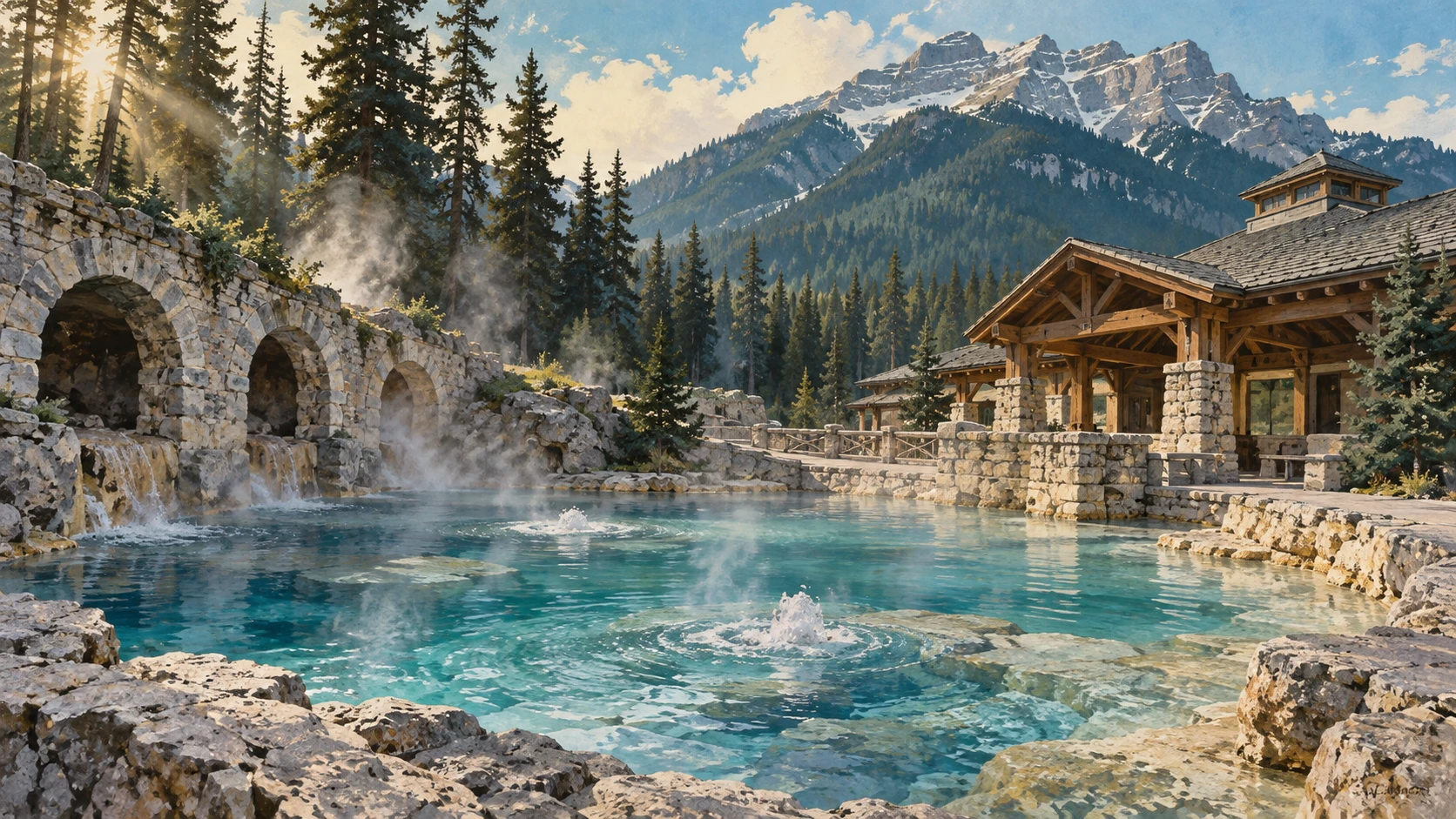
In the autumn of 1885, the government established a twenty-six-square-kilometre protected reserve. It safeguards the natural thermal springs at Cave and Basin on Sulphur Mountain. Parliament passed the Rocky Mountains Park Act in June 1887. This law established Canada's first national park across six hundred and seventy-four square kilometres of mountain wilderness. The modern boundary of Banff National Park encompasses six thousand six hundred and forty-one square kilometres. The territory protects glaciated alpine valleys, subalpine forests, and glacial lakes in southwestern Alberta.
Transcontinental railway engineers and mineral prospectors contested ownership of the thermal springs before the federal Crown intervened to reserve the landscape for public benefit. The Canadian Pacific Railway collaborated with park wardens to construct grand chateau-style lodging, promoting ecological tourism to international travellers seeking mineral therapies. The 1885 reservation marked the birth of Canada's National Park System. It established a lasting federal tradition of wilderness stewardship across the country.
Building the stone water route
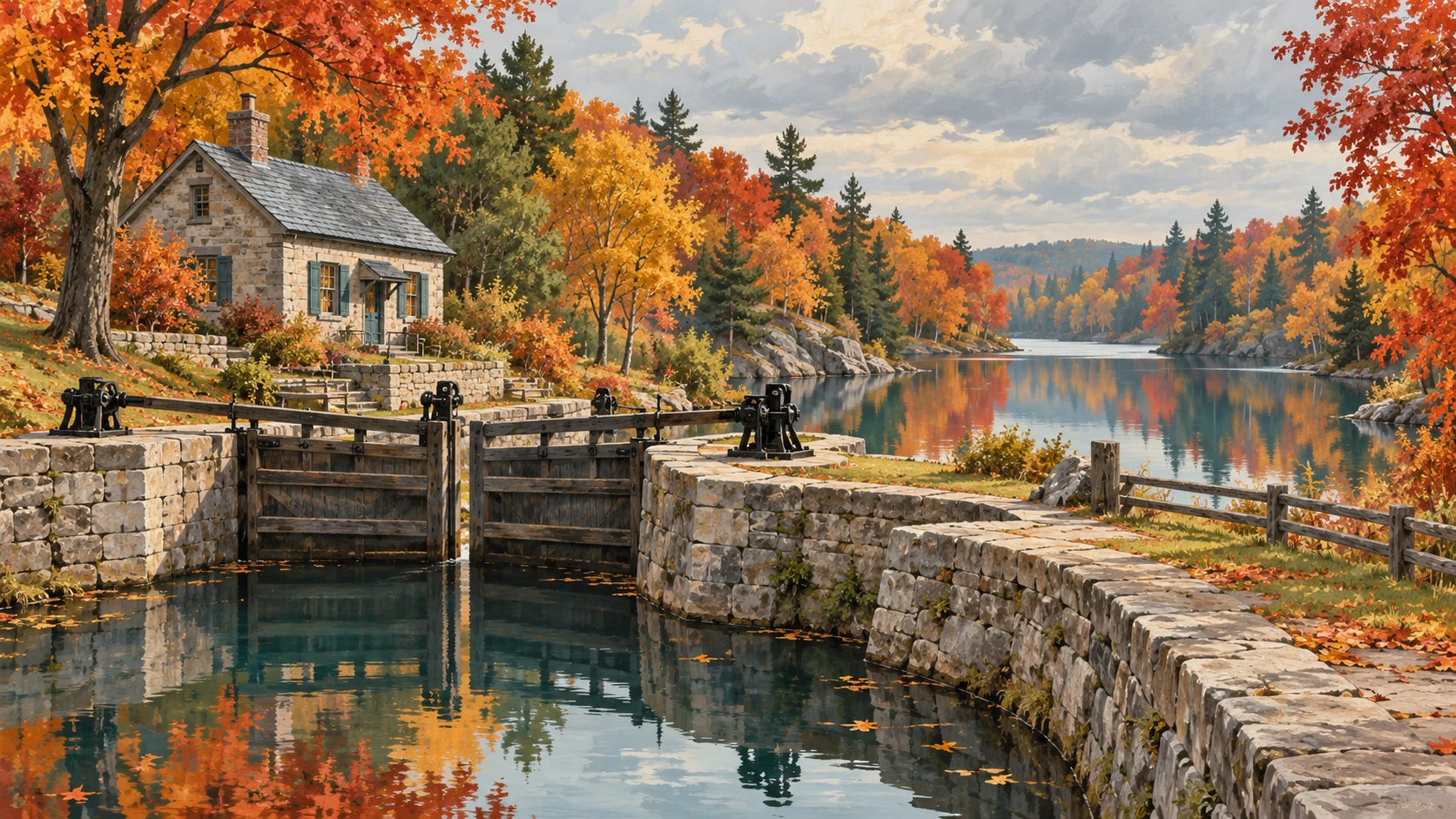
Construction on the Rideau Canal commenced in the autumn of 1826 under the direct supervision of Lieutenant-Colonel John By of the British Royal Engineers. The canal was engineered as a secure transport route between Montreal and Kingston. Builders planned the route after vulnerabilities exposed during the War of 1812. The completed navigation system stretches over two hundred and two kilometres across eastern Ontario. It connects the Ottawa River to Lake Ontario through fifty-two dams and forty-seven masonry locks across twenty-four lockstations.
Thousands of Irish immigrant labourers, French Canadian woodcutters, and Scottish stone masons completed the civil engineering works under arduous conditions through dense boreal wetlands. Lieutenant-Colonel By pioneered innovative slackwater canal engineering, constructing massive earthen and masonry dams to drown natural river rapids rather than excavating continuous narrow channels. The Rideau Canal represents the oldest continuously operated slackwater canal system in North America. It retains its original nineteenth-century hand-cranked timber lock gates and defensive stone blockhouses.
High peaks and wild animals in Banff
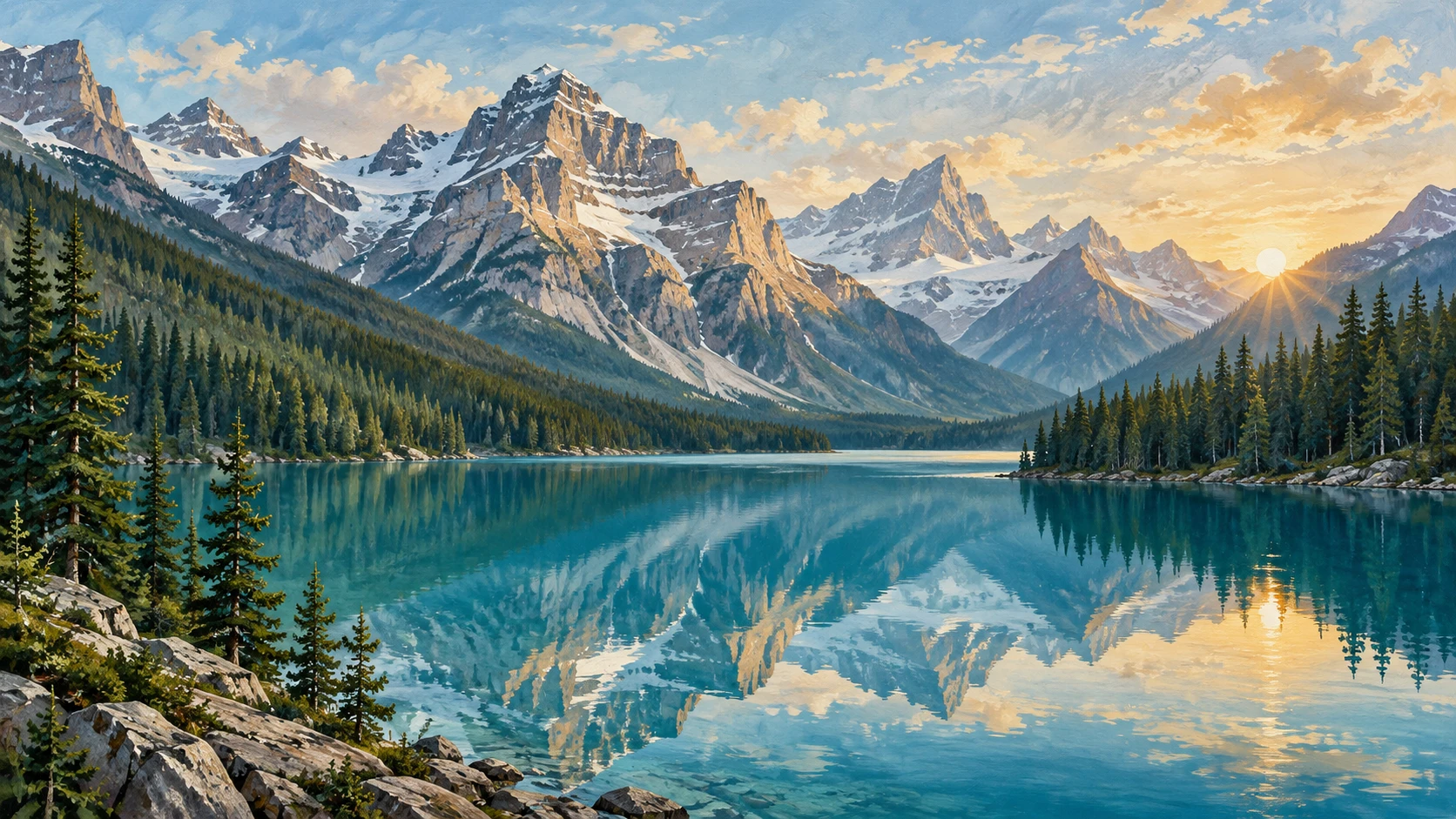
Banff National Park sits within the Front and Main ranges of the Canadian Rocky Mountains. It features jagged limestone peaks, hanging valleys, and active alpine glaciers. The park forms the headwaters of major continental watersheds, including the Bow River, which provides municipal drinking water, irrigation, and hydroelectric power downstream. Diverse elevation zones support varied ecological communities in Banff. These range from montane valley bottoms to fragile alpine tundra above the treeline.
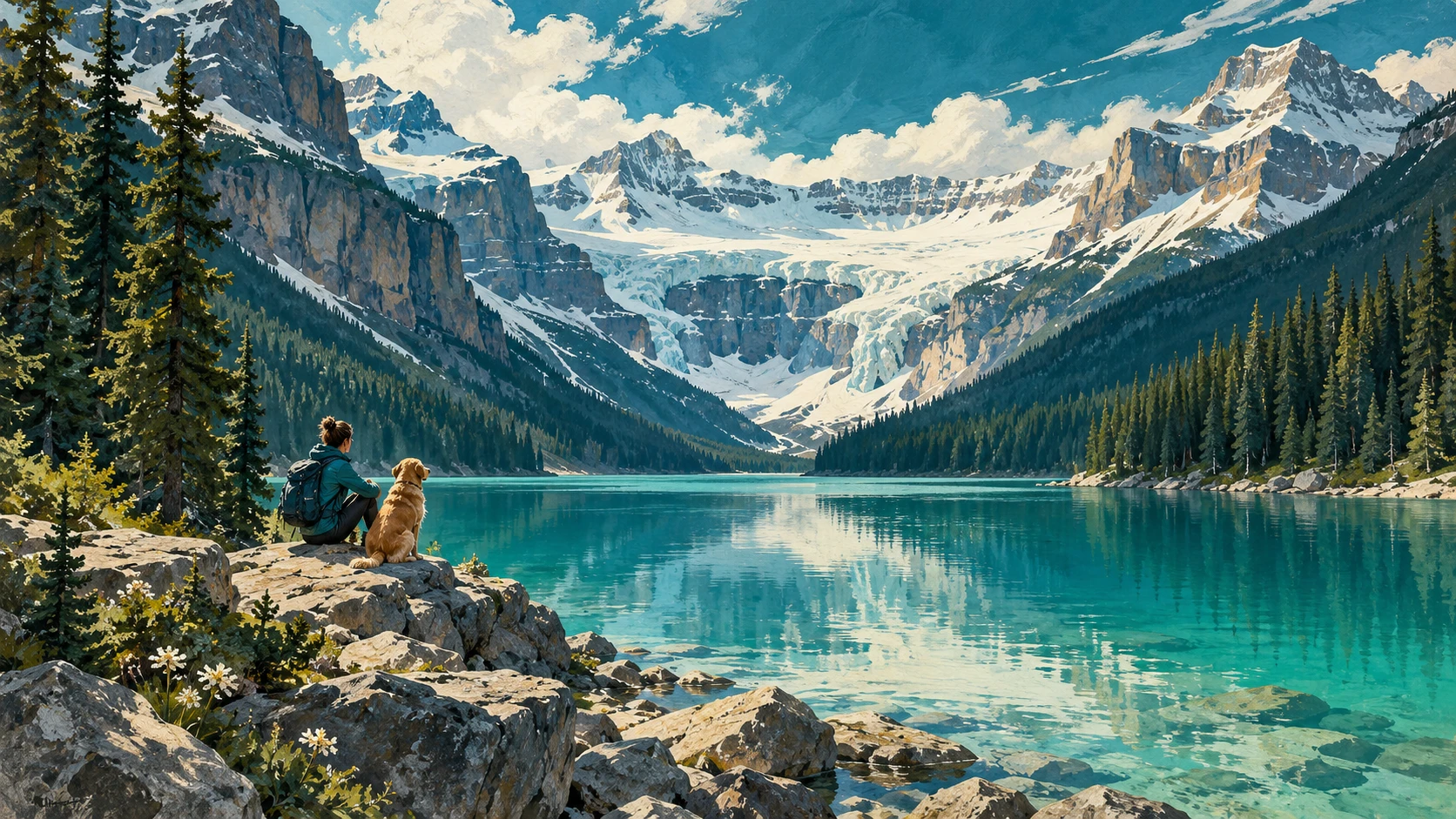
Banff provides protected wilderness habitat for iconic North American carnivores and ungulates, including grizzly bears, grey wolves, wolverines, elk, and bighorn sheep. High-elevation glacial lakes, notably Lake Louise and Moraine Lake, exhibit distinctive vivid turquoise waters caused by the suspended fine silt known as glacial flour. Special habitats near warm springs also protect the rare endangered snail species. Parks Canada wildlife biologists constructed pioneering vegetated wildlife overpasses and culvert underpasses along the Trans-Canada Highway, reducing vehicle-wildlife collisions by over eighty percent.
Lakes, marshes, and river wildlife
The Rideau Canal corridor encompasses a mosaic of shallow freshwater lakes, drowned river valleys, interconnected marshes, and canal cuts across the Canadian Shield and St. Lawrence lowlands. Slackwater wetlands created by nineteenth-century dam construction provide critical nesting and foraging habitats for migratory waterfowl, black terns, osprey, and great blue herons. The waterway hosts diverse warmwater fish populations, including largemouth bass, northern pike, black crappie, and walleye, supporting recreational angling along regulated stretches.
Surrounding riparian woodlands contain remnants of ancient eastern deciduous forests, including sugar maple, eastern hemlock, American beech, and rare butternut groves. Water levels throughout the two-hundred-kilometre canal route are monitored and managed through a network of reservoir control dams situated in the upper Rideau lakes. UNESCO inscribed the Rideau Canal on the World Heritage List in 2007. The listing praised its historic canal engineering and rich wetland ecosystems.
Ancient routes and cultural lands
Archaeological evidence demonstrates that Indigenous peoples inhabited the Bow Valley and the Canadian Rockies for more than ten thousand years prior to European contact. The thermal mineral springs at Cave and Basin held spiritual and healing significance for the Stoney Nakoda, Blackfoot, Tsuut'ina, and Ktunaxa nations. The Rideau waterway served as a traditional travel, seasonal harvesting, and portage corridor for the Algonquin Anishinaabeg and Haudenosaunee peoples across centuries.
Nineteenth-century park regulations and settlement policies systematically excluded Indigenous nations from traditional hunting, harvesting, and cultural practices within park lands. Contemporary park management actively partners with First Nations advisory councils to reintroduce cultural fire regimes, bison herds, and traditional botanical harvesting. Both the alpine valleys of Alberta and the wetland portages of Ontario reflect shared federal initiatives to incorporate Indigenous knowledge systems into federal historic designations.
Protecting nature for future generations
Parks Canada operates as the federal conservation agency entrusted with maintaining commemorative integrity and ecological health across national parks and historic canals. Banff National Park welcomes more than four million visitors annually. Transit shuttles and vehicle limits protect sensitive lake shorelines at Lake Louise and Moraine Lake. Engineering teams on the Rideau Canal utilize advanced sonar scanning and stone mortar analysis to restore historic masonry walls without altering original hydraulic profiles.
Federal legislation mandates that ecological integrity must serve as the first priority in all park planning, zoning, and public access decisions. Climate resilience initiatives monitor glacier recession in the Rocky Mountains and manage seasonal water flow regimes along the Rideau watershed to safeguard downstream habitats. From western mountain peaks to eastern historic waterways, Canada balances open public access with rigorous preservation protocols to protect its foundational public landscapes.
A2 · Elementary
Banff and the Rideau Canal: Preserving Nature and Heritage
From glaciated Rocky Mountain peaks to historic eastern canal waters, Canada protects natural habitats and nineteenth-century engineering across national historic sites.
Thermal springs and the birth of Canada's national parks
In the autumn of 1885, the Canadian federal government established a twenty-six-square-kilometre protected reserve around the natural thermal springs at Cave and Basin on the slopes of Sulphur Mountain. Parliament passed the Rocky Mountains Park Act in June 1887, formally establishing Canada's first national park across six hundred and seventy-four square kilometres of mountain wilderness. The modern boundary of Banff National Park encompasses six thousand six hundred and forty-one square kilometres of glaciated alpine valleys, subalpine forests, and glacial lakes in southwestern Alberta.
Transcontinental railway engineers and mineral prospectors contested ownership of the thermal springs before the federal Crown intervened to reserve the landscape for public benefit. The Canadian Pacific Railway collaborated with park wardens to construct grand chateau-style lodging, promoting ecological tourism to international travellers seeking mineral therapies. The 1885 reservation marked the birth of Canada's National Park System, establishing a statutory tradition of federal wilderness stewardship that preceded all subsequent provincial conservation estates.
Constructing the historic water highway across Ontario
Construction on the Rideau Canal commenced in the autumn of 1826 under the direct supervision of Lieutenant-Colonel John By of the British Royal Engineers. The canal was engineered as a secure alternative military transport route between Montreal and the naval dockyards at Kingston following defensive vulnerabilities exposed during the War of 1812. The completed navigation system stretches over two hundred and two kilometres across eastern Ontario, connecting the Ottawa River to Lake Ontario through fifty-two dams and forty-seven masonry locks across twenty-four lockstations.
Thousands of Irish immigrant labourers, French Canadian woodcutters, and Scottish stone masons completed the civil engineering works under arduous conditions through dense boreal wetlands. Lieutenant-Colonel By pioneered innovative slackwater canal engineering, constructing massive earthen and masonry dams to drown natural river rapids rather than excavating continuous narrow channels. The Rideau Canal represents the oldest continuously operated slackwater canal system in North America, retaining its original nineteenth-century hand-cranked timber lock gates and defensive stone blockhouses.
Glacial valleys, alpine lakes, and wildlife conservation
Banff National Park sits within the Front and Main ranges of the Canadian Rocky Mountains, characterised by jagged limestone peaks, hanging valleys, and active alpine glaciers. The park forms the headwaters of major continental watersheds, including the Bow River, which provides municipal drinking water, irrigation, and hydroelectric power downstream. Diverse elevation zones support varied ecological communities, ranging from montane valley bottoms dominated by lodgepole pine and Douglas fir to fragile alpine tundra above the treeline.
Banff provides protected wilderness habitat for iconic North American carnivores and ungulates, including grizzly bears, grey wolves, wolverines, elk, and bighorn sheep. High-elevation glacial lakes, notably Lake Louise and Moraine Lake, exhibit distinctive vivid turquoise waters caused by the suspended fine silt known as glacial flour. Parks Canada wildlife biologists constructed pioneering vegetated wildlife overpasses and culvert underpasses along the Trans-Canada Highway, reducing vehicle-wildlife collisions by over eighty percent. Thermal spring waters also shelter the rare endangered snail species found nowhere else on earth.
Wetland habitats and World Heritage status
The Rideau Canal corridor encompasses a mosaic of shallow freshwater lakes, drowned river valleys, interconnected marshes, and canal cuts across the Canadian Shield and St. Lawrence lowlands. Slackwater wetlands created by nineteenth-century dam construction provide critical nesting and foraging habitats for migratory waterfowl, black terns, osprey, and great blue herons. The waterway hosts diverse warmwater fish populations, including largemouth bass, northern pike, black crappie, and walleye, supporting recreational angling along regulated stretches.
Surrounding riparian woodlands contain remnants of ancient eastern deciduous forests, including sugar maple, eastern hemlock, American beech, and rare butternut groves. Water levels throughout the two-hundred-kilometre canal route are monitored and managed through a network of reservoir control dams situated in the upper Rideau lakes. UNESCO inscribed the Rideau Canal on the World Heritage List in 2007, citing its exceptional preservation of military canal engineering and harmonious integration with natural wetland ecosystems.
Indigenous heritage and modern cooperative stewardship
Archaeological evidence demonstrates that Indigenous peoples inhabited the Bow Valley and the Canadian Rockies for more than ten thousand years prior to European contact. The thermal mineral springs at Cave and Basin held spiritual and healing significance for the Stoney Nakoda, Blackfoot, Tsuut'ina, and Ktunaxa nations. The Rideau waterway served as a traditional travel, seasonal harvesting, and portage corridor for the Algonquin Anishinaabeg and Haudenosaunee peoples across centuries.
Nineteenth-century park regulations and settlement policies systematically excluded Indigenous nations from traditional hunting, harvesting, and cultural practices within park lands. Contemporary park management actively partners with First Nations advisory councils to reintroduce cultural fire regimes, bison herds, and traditional botanical harvesting. Both the alpine valleys of Alberta and the wetland portages of Ontario reflect shared federal initiatives to incorporate Indigenous knowledge systems into federal historic designations.
Balancing public access and ecological integrity
Parks Canada operates as the federal conservation agency entrusted with maintaining commemorative integrity and ecological health across national parks and historic canals. Banff National Park welcomes more than four million visitors annually, necessitating transit shuttles and vehicle limits to protect sensitive lake shorelines at Lake Louise and Moraine Lake. Engineering teams on the Rideau Canal utilize advanced sonar scanning and stone mortar analysis to restore historic masonry walls without altering original hydraulic profiles.
Federal legislation mandates that ecological integrity must serve as the first priority in all park planning, zoning, and public access decisions. Climate resilience initiatives monitor glacier recession in the Rocky Mountains and manage seasonal water flow regimes along the Rideau watershed to safeguard downstream habitats. From western mountain peaks to eastern historic waterways, Canada balances open public access with rigorous preservation protocols to protect its foundational public landscapes.
B1 · Intermediate
Banff and the Rideau Canal: Wilderness Reserves and Historic Waterways
Nineteenth-century railway expansion, military canal engineering, and modern conservation policies converge across Canada's most celebrated national park and historic waterway.
The 1885 mineral reserve and the emergence of national park policy
In the autumn of 1885, the Canadian federal government established a twenty-six-square-kilometre protected reserve around the natural thermal springs at Cave and Basin on the slopes of Sulphur Mountain. Parliament passed the Rocky Mountains Park Act in June 1887, formally establishing Canada's first national park across six hundred and seventy-four square kilometres of mountain wilderness. The modern boundary of Banff National Park encompasses six thousand six hundred and forty-one square kilometres of glaciated alpine valleys, subalpine forests, and glacial lakes in southwestern Alberta.
Transcontinental railway engineers and mineral prospectors contested ownership of the thermal springs before the federal Crown intervened to reserve the landscape for public benefit. The Canadian Pacific Railway collaborated with park wardens to construct grand chateau-style lodging, promoting ecological tourism to international travellers seeking mineral therapies. The 1885 reservation marked the birth of Canada's National Park System, establishing a statutory tradition of federal wilderness stewardship that preceded all subsequent provincial conservation estates.
Strategic defense, immigrant labour, and slackwater canal construction
Construction on the Rideau Canal commenced in the autumn of 1826 under the direct supervision of Lieutenant-Colonel John By of the British Royal Engineers. The canal was engineered as a secure alternative military transport route between Montreal and the naval dockyards at Kingston following defensive vulnerabilities exposed during the War of 1812. The completed navigation system stretches over two hundred and two kilometres across eastern Ontario, connecting the Ottawa River to Lake Ontario through fifty-two dams and forty-seven masonry locks across twenty-four lockstations.
Thousands of Irish immigrant labourers, French Canadian woodcutters, and Scottish stone masons completed the civil engineering works under arduous conditions through dense boreal wetlands. Lieutenant-Colonel By pioneered innovative slackwater canal engineering, constructing massive earthen and masonry dams to drown natural river rapids rather than excavating continuous narrow channels. The Rideau Canal represents the oldest continuously operated slackwater canal system in North America, retaining its original nineteenth-century hand-cranked timber lock gates and defensive stone blockhouses.
Rocky Mountain ecology, continental watersheds, and wildlife corridors
Banff National Park sits within the Front and Main ranges of the Canadian Rocky Mountains, characterised by jagged limestone peaks, hanging valleys, and active alpine glaciers. The park forms the headwaters of major continental watersheds, including the Bow River, which provides municipal drinking water, irrigation, and hydroelectric power downstream. Diverse elevation zones support varied ecological communities, ranging from montane valley bottoms dominated by lodgepole pine and Douglas fir to fragile alpine tundra above the treeline.
Banff provides protected wilderness habitat for iconic North American carnivores and ungulates, including grizzly bears, grey wolves, wolverines, elk, and bighorn sheep. High-elevation glacial lakes, notably Lake Louise and Moraine Lake, exhibit distinctive vivid turquoise waters caused by the suspended fine silt known as glacial flour. Parks Canada wildlife biologists constructed pioneering vegetated wildlife overpasses and culvert underpasses along the Trans-Canada Highway, reducing vehicle-wildlife collisions by over eighty percent. Thermal spring waters also shelter the rare endangered snail species found nowhere else on earth.
Aquatic biodiversity, riparian forests, and UNESCO World Heritage recognition
The Rideau Canal corridor encompasses a mosaic of shallow freshwater lakes, drowned river valleys, interconnected marshes, and canal cuts across the Canadian Shield and St. Lawrence lowlands. Slackwater wetlands created by nineteenth-century dam construction provide critical nesting and foraging habitats for migratory waterfowl, black terns, osprey, and great blue herons. The waterway hosts diverse warmwater fish populations, including largemouth bass, northern pike, black crappie, and walleye, supporting recreational angling along regulated stretches.
Surrounding riparian woodlands contain remnants of ancient eastern deciduous forests, including sugar maple, eastern hemlock, American beech, and rare butternut groves. Water levels throughout the two-hundred-kilometre canal route are monitored and managed through a network of reservoir control dams situated in the upper Rideau lakes. UNESCO inscribed the Rideau Canal on the World Heritage List in 2007, citing its exceptional preservation of military canal engineering and harmonious integration with natural wetland ecosystems.
Ancient territorial connections and contemporary co-stewardship partnerships
Archaeological evidence demonstrates that Indigenous peoples inhabited the Bow Valley and the Canadian Rockies for more than ten thousand years prior to European contact. The thermal mineral springs at Cave and Basin held spiritual and healing significance for the Stoney Nakoda, Blackfoot, Tsuut'ina, and Ktunaxa nations. The Rideau waterway served as a traditional travel, seasonal harvesting, and portage corridor for the Algonquin Anishinaabeg and Haudenosaunee peoples across centuries.
Nineteenth-century park regulations and settlement policies systematically excluded Indigenous nations from traditional hunting, harvesting, and cultural practices within park lands. Contemporary park management actively partners with First Nations advisory councils to reintroduce cultural fire regimes, bison herds, and traditional botanical harvesting. Both the alpine valleys of Alberta and the wetland portages of Ontario reflect shared federal initiatives to incorporate Indigenous knowledge systems into federal historic designations.
Ecological integrity legislation, visitor pressures, and watershed monitoring
Parks Canada operates as the federal conservation agency entrusted with maintaining commemorative integrity and ecological health across national parks and historic canals. Banff National Park welcomes more than four million visitors annually, necessitating transit shuttles and vehicle limits to protect sensitive lake shorelines at Lake Louise and Moraine Lake. Engineering teams on the Rideau Canal utilize advanced sonar scanning and stone mortar analysis to restore historic masonry walls without altering original hydraulic profiles.
Federal legislation mandates that ecological integrity must serve as the first priority in all park planning, zoning, and public access decisions. Climate resilience initiatives monitor glacier recession in the Rocky Mountains and manage seasonal water flow regimes along the Rideau watershed to safeguard downstream habitats. From western mountain peaks to eastern historic waterways, Canada balances open public access with rigorous preservation protocols to protect its foundational public landscapes.
B2 · Upper Intermediate
Banff and the Rideau Canal: Landscape Stewardship and Civil Engineering
Across subalpine watersheds and eastern lowlands, Canadian conservation frameworks reconcile nineteenth-century industrial development with ecological integrity and Indigenous co-governance.
Thermal springs reservation, crown intervention, and national park codification
In the autumn of 1885, the Canadian federal government established a twenty-six-square-kilometre protected reserve around the natural thermal springs at Cave and Basin on the slopes of Sulphur Mountain. Parliament passed the Rocky Mountains Park Act in June 1887, formally establishing Canada's first national park across six hundred and seventy-four square kilometres of mountain wilderness. The modern boundary of Banff National Park encompasses six thousand six hundred and forty-one square kilometres of glaciated alpine valleys, subalpine forests, and glacial lakes in southwestern Alberta.
Transcontinental railway engineers and mineral prospectors contested ownership of the thermal springs before the federal Crown intervened to reserve the landscape for public benefit. The Canadian Pacific Railway collaborated with park wardens to construct grand chateau-style lodging, promoting ecological tourism to international travellers seeking mineral therapies. The 1885 reservation marked the birth of Canada's National Park System, establishing a statutory tradition of federal wilderness stewardship that preceded all subsequent provincial conservation estates.
Military deterrence, immigrant labour forces, and slackwater hydraulics
Construction on the Rideau Canal commenced in the autumn of 1826 under the direct supervision of Lieutenant-Colonel John By of the British Royal Engineers. The canal was engineered as a secure alternative military transport route between Montreal and the naval dockyards at Kingston following defensive vulnerabilities exposed during the War of 1812. The completed navigation system stretches over two hundred and two kilometres across eastern Ontario, connecting the Ottawa River to Lake Ontario through fifty-two dams and forty-seven masonry locks across twenty-four lockstations.
Thousands of Irish immigrant labourers, French Canadian woodcutters, and Scottish stone masons completed the civil engineering works under arduous conditions through dense boreal wetlands. Lieutenant-Colonel By pioneered innovative slackwater canal engineering, constructing massive earthen and masonry dams to drown natural river rapids rather than excavating continuous narrow channels. The Rideau Canal represents the oldest continuously operated slackwater canal system in North America, retaining its original nineteenth-century hand-cranked timber lock gates and defensive stone blockhouses.
Elevation gradients, watershed hydrology, and highway fragmentation mitigation
Banff National Park sits within the Front and Main ranges of the Canadian Rocky Mountains, characterised by jagged limestone peaks, hanging valleys, and active alpine glaciers. The park forms the headwaters of major continental watersheds, including the Bow River, which provides municipal drinking water, irrigation, and hydroelectric power downstream. Diverse elevation zones support varied ecological communities, ranging from montane valley bottoms dominated by lodgepole pine and Douglas fir to fragile alpine tundra above the treeline.
Banff provides protected wilderness habitat for iconic North American carnivores and ungulates, including grizzly bears, grey wolves, wolverines, elk, and bighorn sheep. High-elevation glacial lakes, notably Lake Louise and Moraine Lake, exhibit distinctive vivid turquoise waters caused by the suspended fine silt known as glacial flour. Parks Canada wildlife biologists constructed pioneering vegetated wildlife overpasses and culvert underpasses along the Trans-Canada Highway, reducing vehicle-wildlife collisions by over eighty percent. Thermal spring waters also shelter the rare endangered snail species found nowhere else on earth.
Aquatic corridor ecology, riparian forestry, and multilateral heritage status
The Rideau Canal corridor encompasses a mosaic of shallow freshwater lakes, drowned river valleys, interconnected marshes, and canal cuts across the Canadian Shield and St. Lawrence lowlands. Slackwater wetlands created by nineteenth-century dam construction provide critical nesting and foraging habitats for migratory waterfowl, black terns, osprey, and great blue herons. The waterway hosts diverse warmwater fish populations, including largemouth bass, northern pike, black crappie, and walleye, supporting recreational angling along regulated stretches.
Surrounding riparian woodlands contain remnants of ancient eastern deciduous forests, including sugar maple, eastern hemlock, American beech, and rare butternut groves. Water levels throughout the two-hundred-kilometre canal route are monitored and managed through a network of reservoir control dams situated in the upper Rideau lakes. UNESCO inscribed the Rideau Canal on the World Heritage List in 2007, citing its exceptional preservation of military canal engineering and harmonious integration with natural wetland ecosystems.
Territorial heritage, colonial dispossession, and restorative co-management
Archaeological evidence demonstrates that Indigenous peoples inhabited the Bow Valley and the Canadian Rockies for more than ten thousand years prior to European contact. The thermal mineral springs at Cave and Basin held spiritual and healing significance for the Stoney Nakoda, Blackfoot, Tsuut'ina, and Ktunaxa nations. The Rideau waterway served as a traditional travel, seasonal harvesting, and portage corridor for the Algonquin Anishinaabeg and Haudenosaunee peoples across centuries.
Nineteenth-century park regulations and settlement policies systematically excluded Indigenous nations from traditional hunting, harvesting, and cultural practices within park lands. Contemporary park management addresses past colonial dispossession by partnering with First Nations advisory councils through co-management to reintroduce cultural fire regimes, bison herds, and traditional botanical harvesting. Both the alpine valleys of Alberta and the wetland portages of Ontario reflect shared federal initiatives to incorporate Indigenous knowledge systems into federal historic designations.
Statutory mandates, mass tourism mitigation, and climate adaptation
Parks Canada operates as the federal conservation agency entrusted with maintaining commemorative integrity and ecological health across national parks and historic canals. Banff National Park welcomes more than four million visitors annually, necessitating transit shuttles and vehicle limits to protect sensitive lake shorelines at Lake Louise and Moraine Lake. Engineering teams on the Rideau Canal utilize advanced sonar scanning and stone mortar analysis to restore historic masonry walls without altering original hydraulic profiles.
Federal legislation mandates that ecological integrity must serve as the first priority in all park planning, zoning, and public access decisions. Climate resilience initiatives monitor glacier recession in the Rocky Mountains and manage seasonal water flow regimes along the Rideau watershed to safeguard downstream habitats. From western mountain peaks to eastern historic waterways, Canada balances open public access with rigorous preservation protocols to protect its foundational public landscapes.
C1 · Advanced
From Military Redoubt to Continental Sanctuary: Engineering Canada's Landmark Landscapes
How imperial fortification along the Rideau and commercial rail transit through Banff shaped modern Canadian conservation governance.
Thermal springs, corporate railway logistics, and the origins of federal parkland
In November 1885, Order in Council 2197 set aside twenty-six square kilometres surrounding the thermal sulphur springs at Cave and Basin, terminating contentious private ownership claims raised by speculative rail workers. Two years later, the passage of the Rocky Mountains Park Act of June 1887 formally chartered Canada's premier national park across six hundred and seventy-four square kilometres of rugged mountain terrain, subsequently expanding to encompass six thousand six hundred and forty-one square kilometres of contiguous glaciated wilderness.
The impetus for state intervention derived largely from the Canadian Pacific Railway, whose general manager William Cornelius Van Horne famously realized that alpine scenery could generate profitable passenger traffic for a debt-laden transcontinental transit line. By erecting opulent château-style lodges and marketing thermal balneotherapy to international elites, the railway synthesized private corporate enterprise with federal conservation, establishing a developmental archetype wherein remote wilderness was sanctified as a sovereign asset.
Imperial deterrence, subterranean limestone geology, and slackwater hydraulics
Authorized by the British Board of Ordnance following strategic vulnerabilities exposed during the War of 1812, the Rideau Canal was engineered between 1826 and 1832 under the relentless supervision of Lieutenant-Colonel John By of the Royal Engineers. Conceived as a fortified inland water redoubt and alternative supply conduit linking Montreal to Lake Ontario without entering hostile American cross-border artillery range on the Saint Lawrence River, the waterway spanned two hundred and two kilometres across wild pre-Cambrian Shield and limestone lowlands.
Colonel By bypassed the arduous necessity of cutting continuous linear channels through solid granite by pioneering the slackwater canalization method, impounding natural rivers behind massive masonry dams to submerge turbulent rapids into navigable slack pools. The resulting navigation corridor linked forty-seven operational locks across twenty-four fortified lockstations, employing manually cranked iron crab winches and massive timber swing gates that remain operational today as pristine exemplars of early nineteenth-century heavy engineering.
Highway mitigation ecology, hydraulic preservation, and multilateral designations
The expansion of modern arterial transit corridors across mountainous topography introduced profound fragmentation across subalpine wildlife domains, prompting groundbreaking remediation along the Trans-Canada Highway through Banff. Beginning in the 1980s, Parks Canada constructed six parabolic vegetated overpasses and thirty-eight subterranean culverts along with continuous roadside exclusion fencing, yielding an extraordinary eighty percent reduction in wildlife-vehicle collisions and establishing an international benchmark in connectivity conservation.
Both landscapes achieved premier multilateral recognition under the UNESCO World Heritage Convention, with the Canadian Rocky Mountain Parks inscribed in 1984 for alpine geophysical integrity and the Rideau Canal recognized in 2007 as the best-preserved operational slackwater navigation system in North America. Retaining its nineteenth-century hand-cranked winches and masonry basins, the canal exemplifies enduring structural authenticity. These twin recognitions underscore how Canadian statecraft transitioned from resource exploitation and military garrison defense toward the permanent legislative stewardship of vulnerable ecological corridors and monumental public works.
Altitudinal biodiversity gradients, apex carnivores, and riparian wetland ecology
Banff National Park stratifies across distinct montane, subalpine, and alpine tundra ecoregions, sustaining demanding apex predators including grizzly bears, cougars, Canada lynx, and grey wolves alongside vulnerable herds of woodland caribou and mountain goats. The preservation of extensive altitudinal gradients within the Bow River watershed ensures genetic connectivity and seasonal foraging access for wide-ranging mammals navigating unforgiving montane weather patterns.
Contrasting sharply with western alpine topography, the Rideau waterway serves as an ecological spine linking the boreal forests of the Canadian Shield with the deciduous woodlands of the Great Lakes and Saint Lawrence lowlands. Its impounded backwaters and marshlands provide critical riparian habitat for forty-eight native fish species, diverse freshwater turtle populations, and thousands of migratory waterfowl that depend on unpolluted littoral wetland corridors during continental migrations.
Ancestral territorial continuity, historic displacement, and cooperative stewardship
Long before federal surveyor transits traversed the Bow Valley, Indigenous hunting bands established seasonal camps across the Canadian Rockies for over ten millennia, utilizing thermal springs at Sulphur Mountain for medicinal, ceremonial, and spiritual restoration among the Stoney Nakoda, Blackfoot, Tsuut'ina, and Ktunaxa nations. Concurrently, the Rideau waterway supported traditional hunting corridors, seasonal wild rice harvesting, and canoe portages for Algonquin Anishinaabeg and Haudenosaunee communities.
Nineteenth-century colonial policies and discriminatory park enactments systematically dispossessed Indigenous nations of their territorial hunting rights, severing long-standing ecological kinship with sacred landscapes. Contemporary Parks Canada governance seeks to reverse these historic injustices by instituting collaborative co-management agreements, restoring cultural burning techniques to renew subalpine meadows, and re-establishing wild plains bison herds within ancestral park valleys in direct consultation with Indigenous elders.
Ecological primacy, overtourism mitigation, and hydrological resilience
Parks Canada exercises statutory stewardship over federal protected zones under the legal mandate of the Canada National Parks Act, which enshrines ecological integrity as the paramount planning consideration overriding commercial development or concessionaire profits. With Banff attracting more than four million annual visitors, the agency implements strict visitor mitigation measures, including mandatory transit shuttles and restricted private vehicular access at fragile alpine tarns like Moraine Lake and Lake Louise.
Simultaneously, engineering conservators on the Rideau Canal integrate underwater sonar mapping and non-destructive mortar petrography to repair submerged limestone retaining walls without compromising nineteenth-century handiwork. In an era marked by accelerated glacial melting in the Rocky Mountains and extreme precipitation volatility across eastern Ontario watersheds, federal conservators deploy predictive hydrological modeling to safeguard both natural alpine water catchments and historic navigable floodplains for future generations.
C2 · Mastery
Sovereignty, Geostrategy, and Ecological Imperatives: The Dual Genesis of Canadian Conservation
An institutional analysis of imperial military hydraulics along the Rideau and corporate scenic commodification in Banff.
Thermal commodification, legislative charters, and the spatial expansion of federal reserves
The institutional provenance of Canadian wilderness conservation originated not in romantic transcendentalism, but in a contentious property dispute over the thermal mineral springs at Sulphur Mountain. When speculative prospecting by Canadian Pacific Railway workers threatened to commercialize the Cave and Basin fissures into an exclusionary enclave, Prime Minister John A. Macdonald's administration intervened via Order in Council 2197 in November 1885, withdrawing twenty-six square kilometres from private patent entry to retain state dominion over the subterranean hydrothermal resource.
This administrative reservation established the conceptual bedrock for the Rocky Mountains Park Act of June 1887, which formally demarcated Canada's inaugural national park across six hundred and seventy-four square kilometres. Recognizing that passenger revenues along the precarious transcontinental railway depended upon the scenic commodification of sublime mountain vistas, general manager William Cornelius Van Horne orchestrated the construction of luxury baronial hotels to lure European and American plutocrats. Subsequent statutory expansions consolidated this enclave into a contiguous ecological domain encompassing six thousand six hundred and forty-one square kilometres of glaciated cordillera.
Imperial hydro-engineering, defensive fortification, and slackwater innovation
Following the harrowing logistical vulnerabilities exposed during the War of 1812, wherein vulnerable Saint Lawrence supply convoys remained exposed to American shore batteries, the British Board of Ordnance commissioned an invulnerable interior water communication. Between 1826 and 1832, Lieutenant-Colonel John By of the Royal Engineers directed the construction of the Rideau Canal, transforming two hundred and two kilometres of inhospitable wilderness, peat swamps, and pre-Cambrian Shield into an inland fortified bastion linking Montreal with Lake Ontario at Kingston.
Rather than undertaking the cost-prohibitive excavation of continuous masonry trenches through resistant crystalline bedrock, Colonel By executed an unprecedented engineering feat by pioneering large-scale slackwater canalization. By erecting massive arched stone dams to drown natural river rapids and cascade barriers, he created navigable slack basins connected by forty-seven operational locks across twenty-four fortified lockstations. Defended by defensible blockhouses and operated by manually balanced timber swing gates and iron crab winches, the navigation corridor stands as an unexcelled monument to nineteenth-century military logistics.
Landscape permeability, structural retrofitting, and international conservation covenants
The mid-twentieth-century insertion of the Trans-Canada Highway through the Bow River valley fractured vital ecological pathways, bifurcating wildlife populations and precipitating unprecedented collision rates with vehicles. In response, Parks Canada pioneered a global benchmark in structural landscape permeability throughout the 1980s and 1990s, deploying six parabolic vegetated overpasses, thirty-eight subterranean culverts, and continuous exclusionary fencing, which collectively reduced wildlife mortality by an astonishing eighty percent.
These paired feats of territorial engineering eventually garnered multilateral inscription under the UNESCO World Heritage Convention: the Canadian Rocky Mountain Parks in 1984 for superlative geological formations and ecological integrity, and the Rideau Canal in 2007 as North America's most exceptionally preserved operational slackwater canal system. The dual designations validate a profound evolution in public stewardship, wherein infrastructure originally conceived for imperial defense and rail transport transitioned into internationally safeguarded ecological sanctuaries.
Biogeographical stratification, trophic hierarchies, and wetland riparian sanctuaries
Banff National Park manifests complex altitudinal zonation across montane valley floors, subalpine coniferous forests, and exposed alpine tundra, sustaining high-trophic-level obligates that require unfragmented home ranges. Keystone carnivores including grizzly bears, cougars, Canada lynx, and grey wolves forage alongside vulnerable ungulate populations such as woodland caribou and bighorn sheep across the Bow River watershed, where structural connectivity remains vital for long-term genetic viability and reproductive dispersal.
Conversely, the Rideau waterway traverses a vital biogeographical transition zone between the Canadian Shield and the Saint Lawrence lowlands, functioning as a lush aquatic spine connecting mixed boreal forests with mature deciduous stands. Its impounded backwaters and marshes provide indispensable littoral sanctuaries for forty-eight native ichthyological species, several species at risk of freshwater chelonians, and massive assemblies of migratory waterfowl traversing continental flyways.
Deep ancestral tenure, colonial dispossession, and regenerative co-stewardship
Archaeological excavations substantiate that Indigenous human occupation in the Canadian Rockies predated European contact by more than ten millennia, with the thermal mineral waters of Sulphur Mountain holding deep ceremonial, curative, and cosmological significance for the Stoney Nakoda, Blackfoot, Tsuut'ina, and Ktunaxa nations. Concurrently, the Rideau watershed constituted a longstanding canoe route, wild rice harvesting territory, and portage network for Algonquin Anishinaabeg and Haudenosaunee confederacies.
The establishment of nineteenth-century park sanctuaries was accompanied by systemic colonial dispossession, as statutory hunting bans and physical expulsions severed Indigenous peoples from customary territories. Contemporary park management has initiated regenerative co-stewardship compacts, integrating Indigenous ecological knowledge systems into fire regime restoration, facilitating cultural harvests, and establishing wild bison herds across ancestral valleys through structured co-management protocols.
Statutory supremacy, overtourism abatement, and dynamic climate adaptation
Parks Canada enforces federal jurisdiction under the statutory mandate of the Canada National Parks Act, wherein the maintenance or restoration of ecological integrity is legally prescribed as the preeminent priority in all administrative determinations. Confronting intense recreation pressures generated by over four million visitors per annum, the agency executes rigorous overtourism mitigation, mandating collective mass-transit shuttles and capping private vehicle access to delicate lacustrine ecosystems at Moraine Lake and Lake Louise.
Simultaneously, historical conservators on the Rideau Canal utilize advanced underwater sonar scanning and micro-mortar petrography to preserve underwater limestone revetments and lock masonry without disturbing historic hydraulic operations. As alpine glacier retreat accelerates across the Rocky Mountains and extreme precipitation volatility destabilizes eastern Ontario watersheds, federal conservators deploy predictive hydrological modeling to balance year-round flood mitigation with ecological water reserve quotas.
Check your understanding
Choose how closely you want to revisit the article. You can refer back while answering, and review explanations when you finish.
Quick Quiz A1
Try one question, then create a free account for the full Quick Quiz. Sign Up Free
Answer every question before checking. There is no time limit.
Your results
/ 1 correct (%)
Read the explanations to see how each answer connects to the article.
-
When was the protected reserve around Cave and Basin established?
1. Answer:
Quick Quiz A2
Try one question, then create a free account for the full Quick Quiz. Sign Up Free
Answer every question before checking. There is no time limit.
Your results
/ 1 correct (%)
Read the explanations to see how each answer connects to the article.
-
What area did the Rocky Mountains Park Act protect when passed in June 1887?
1. Answer:
Quick Quiz B1
Try one question, then create a free account for the full Quick Quiz. Sign Up Free
Answer every question before checking. There is no time limit.
Your results
/ 1 correct (%)
Read the explanations to see how each answer connects to the article.
-
What primary motivation drove the federal Crown to intervene in the thermal springs dispute at Cave and Basin?
1. Answer:
Quick Quiz B2
Try one question, then create a free account for the full Quick Quiz. Sign Up Free
Answer every question before checking. There is no time limit.
Your results
/ 1 correct (%)
Read the explanations to see how each answer connects to the article.
-
What core conflict preceded Crown intervention at the Cave and Basin thermal springs?
1. Answer:
Quick Quiz C1
Try one question, then create a free account for the full Quick Quiz. Sign Up Free
Answer every question before checking. There is no time limit.
Your results
/ 1 correct (%)
Read the explanations to see how each answer connects to the article.
-
What primary strategic factor prompted the British Board of Ordnance to authorize the Rideau Canal?
1. Answer:
Quick Quiz C2
Try one question, then create a free account for the full Quick Quiz. Sign Up Free
Answer every question before checking. There is no time limit.
Your results
/ 1 correct (%)
Read the explanations to see how each answer connects to the article.
-
What primary legal mechanism did the federal government utilize in 1885 to prevent private monopolization of Sulphur Mountain springs?
1. Answer:
