A1 · Beginner
Fira Mediterrania Arts Festival in Manresa
Every autumn, the Catalan city of Manresa hosts an international festival celebrating traditional music, dance, and human towers.
Festival Foundations and Dual Curatorial Vision
Fira Mediterrania is a famous arts festival held every October in the city of Manresa. The festival began in 1998 in the Catalonia region of northeastern Spain. Cultural foundations and the local city council fund this major autumn event. The non-profit foundation receives support from the Generalitat of Catalunya and the city Ajuntament. More than seventy performing companies travel to Manresa to present music, dance, and circus shows. The festival celebrates traditional Mediterranean root culture alongside modern creative arts.
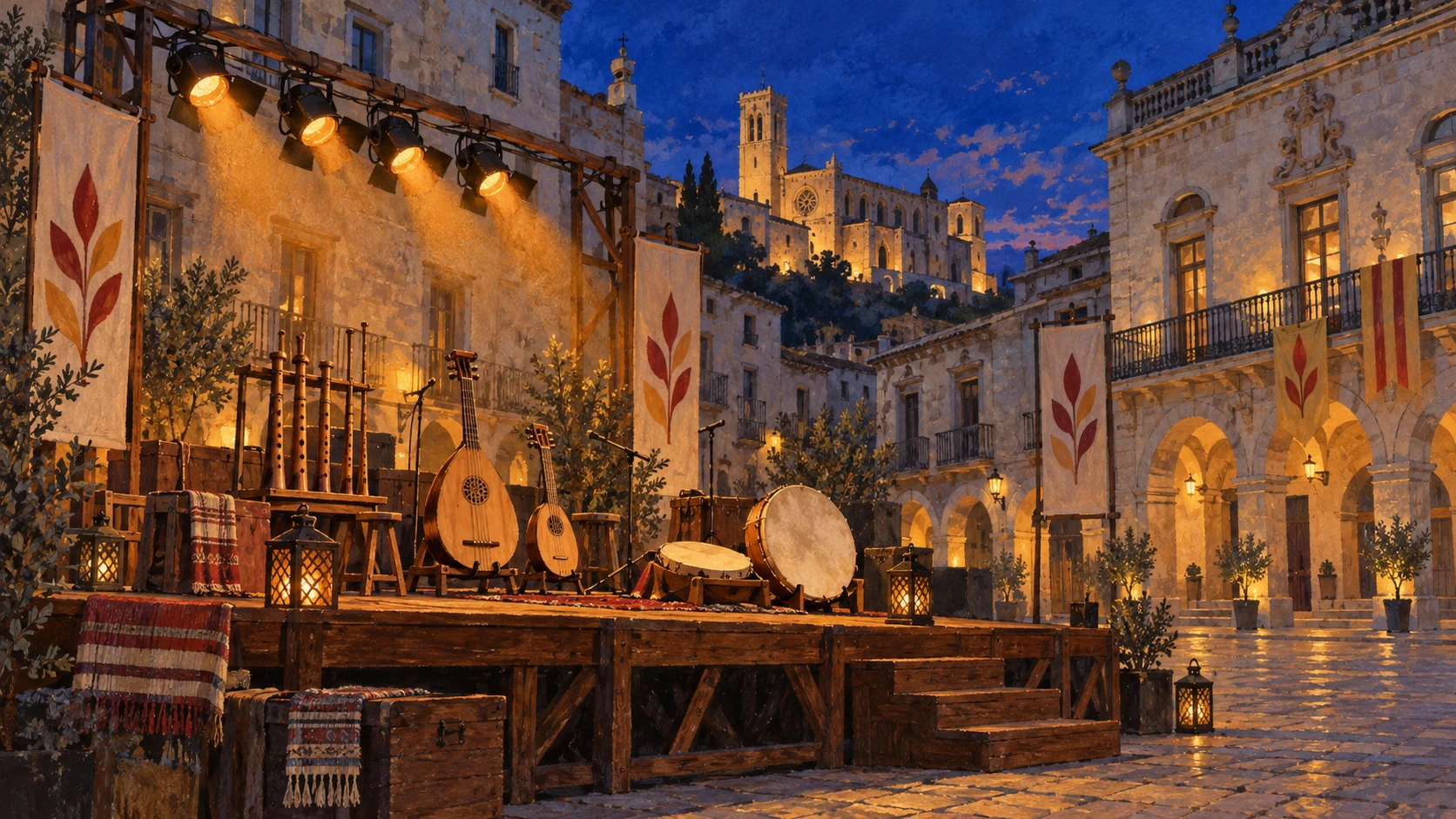
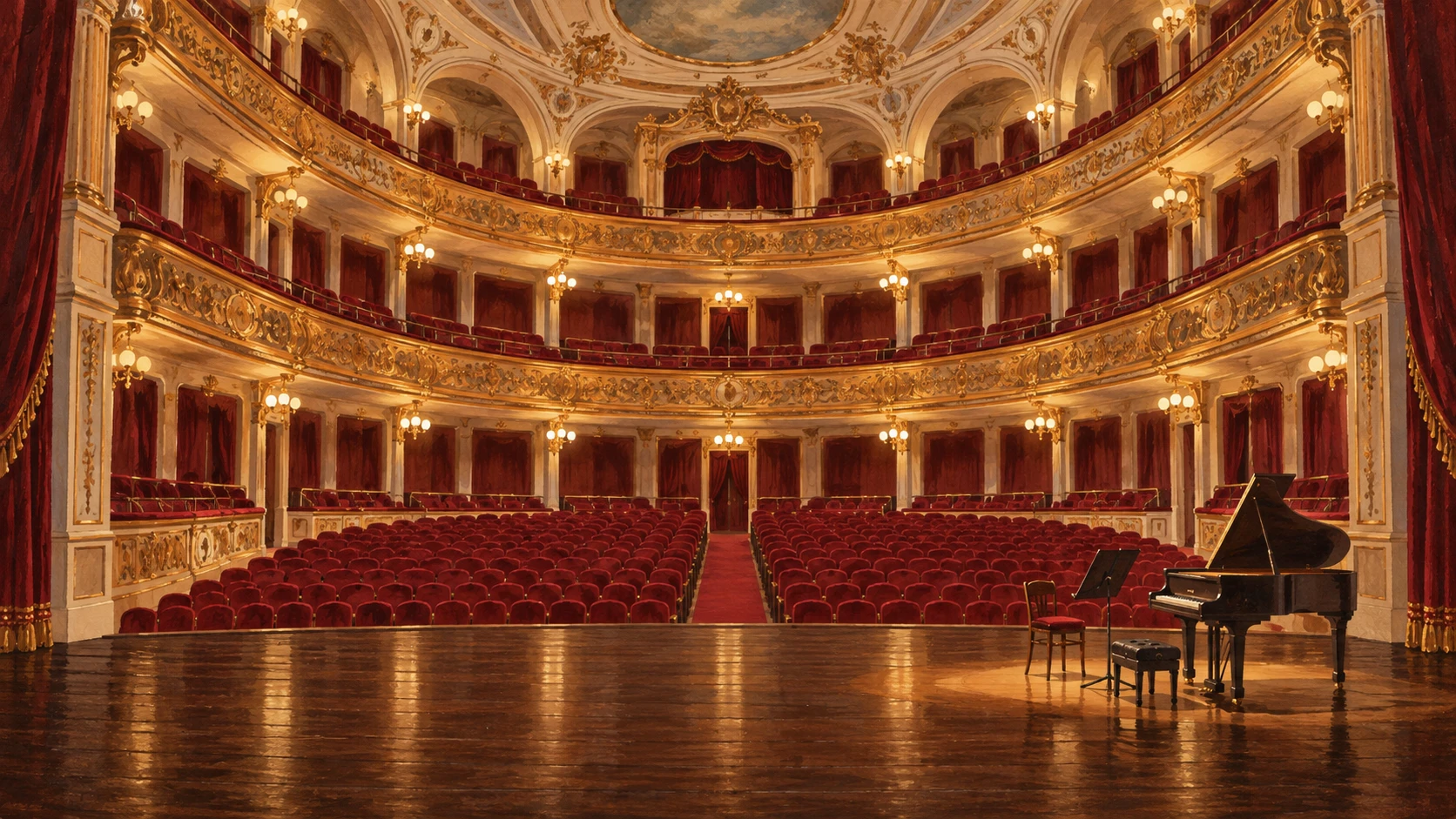
Performers present shows in historic halls such as the Kursaal Theater and the Conservatori Theater. Other artists perform outdoors in open public squares like Placa Major and Placa Sant Domenec. Historic streets near the ancient basilica turn into open stages for visiting families. Audiences can watch over one hundred performances during the four festival days.
Mediterranean Polyphony and Acoustic Traditions
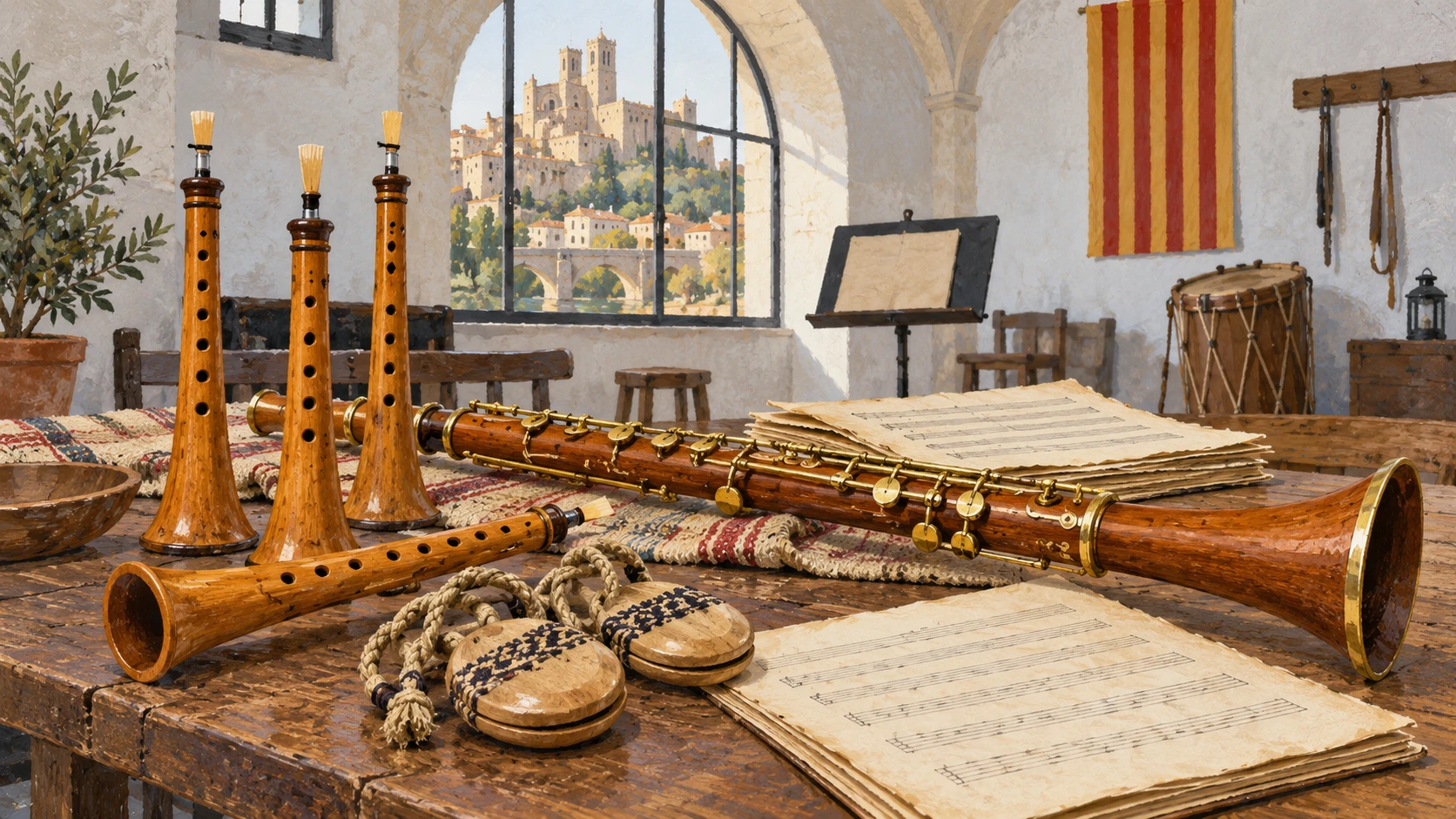
Musicians play traditional Catalan instruments including wooden gralla shawms, tenora pipes, and small drums. The festival tavern provides a warm gathering place for acoustic concerts late into the night. Singers from Mediterranean islands perform ancient polyphonic harmony songs together. Plucked string players bring Catalan lutes, Arabic ouds, and Greek bouzoukis to shared concert stages.
Young composers study historic folk songs preserved in cultural sound archives. Modern groups combine acoustic instruments with electronic sounds and creative dance movements. These lively concerts connect traditional village melodies with twenty-first-century performance styles.
Public Squares, Human Towers, and Festive Street Arts
Large crowds gather in sunny town squares to watch human towers called castells. Hundreds of team members build a strong human base called the pinya to support the tower. Young climbers scramble to the very top level and raise their hands to celebrate. This remarkable human tower tradition is recognized by UNESCO as world cultural heritage.
At night, energetic fire runs called correfocs fill historic streets with sparkling fireworks and loud drum beats. By day, traditional wind orchestras play music for public sardana ring dances where people hold hands. Street theater troupes entertain festival visitors with giant puppets, acrobatic jumps, and wooden stick dances.
La Llotja Professional Marketplace and Co-Productions
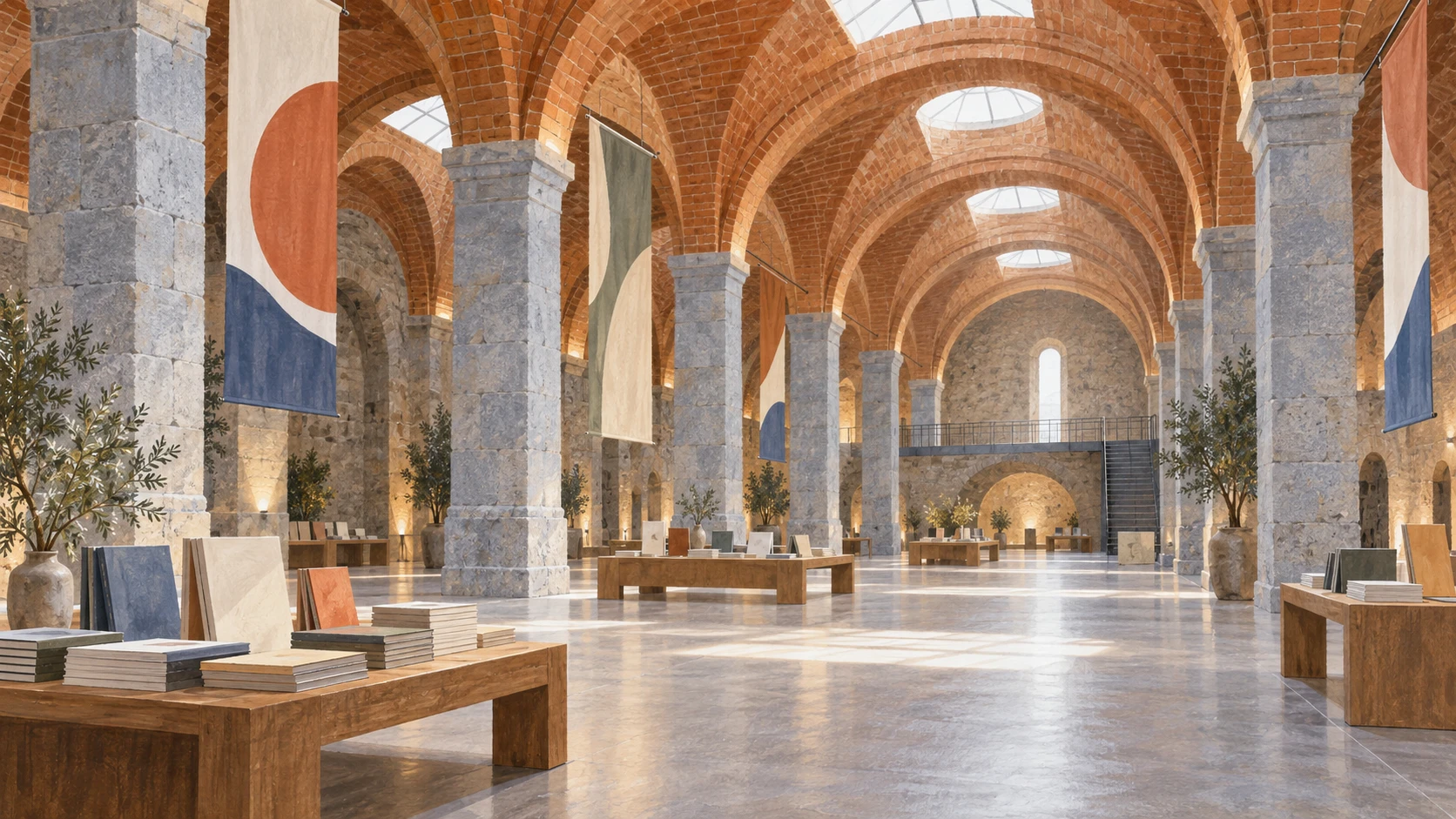
The professional market called La Llotja takes place inside the historic Museum of Technology. More than one thousand theater directors, festival managers, and booking agents visit the fair from thirty countries. Artists present new stage projects to international producers during organized business meetings. These professional meetings help independent performers find festival contracts across Europe.
A cultural grant program supports artists who create original shows inspired by traditional folk arts. Touring agreements signed during the festival provide jobs for dancers, musicians, and stage technicians throughout the year. The festival keeps traditional Mediterranean performance traditions vibrant, popular, and successful.
A2 · Elementary
Fira Mediterrània de Manresa: Root Arts, Human Towers, and Cultural Markets
From street castells to the La Llotja professional marketplace, Manresa convenes Mediterranean performing arts traditions every autumn.
Festival Foundations and Dual Curatorial Vision
Established in 1998 in Manresa, Catalonia, the Fira Mediterrània de Manresa operates as the leading international performing arts market dedicated to root culture and popular heritage across the Mediterranean basin. Governed by the non-profit Fundació Fira d'Espectacles d'Arrel Tradicional with core funding from the Generalitat de Catalunya and the Ajuntament de Manresa, the annual market convenes every October across central Catalonia. Over four intensive autumn days, more than seventy performing arts ensembles stage over one hundred ticketed indoor showcases and free open-air spectacles, transforming the regional capital of Bages into an energetic hub of Mediterranean exchange.
The curatorial mandate centers upon a creative dialogue bridging ancestral root arts with contemporary multidisciplinary performance, uniting folk music, contemporary dance, street circus, and physical theatre. Artistic programs unfold across premier municipal facilities, anchored by the restored modernist Teatre Kursaal with its horseshoe auditorium and the nineteenth-century Teatre Conservatori. Simultaneously, public plazas across Manresa, notably Plaça Major, Plaça Sant Domènec, and the medieval lanes framing the Collegiate Basilica of Santa Maria de la Seu, become open civic amphitheaters where itinerant troupes engage audiences directly.
Mediterranean Polyphony and Acoustic Traditions
Acoustic programming showcases heritage Catalan woodwinds that define regional soundscapes, including double-reed gralla shawms, resonant tenora and tible instruments, and the flabiol one-handed pipe played alongside the tamborí drum. Late into the night, the Taverna de la Fira becomes a bustling communal forum where musicians, singers, and delegates gather for spontaneous round-robin singing sessions and acoustic jam sessions that bypass formal stage conventions. These participatory gatherings preserve unamplified oral repertoires while fostering cross-generational camaraderie between veteran folklorists and young instrumentalists.
Beyond Iberian traditions, festival stages illuminate shared Mediterranean polyphonic heritages, linking Corsican paghjella, Sardinian cuncordu, and Occitan vocal harmonies with Iberian work chants. Plucked string instruments from diverse maritime shores, including Catalan lutes, Arabic ouds, Greek bouzoukis, and Spanish bandúrrias, blend in commissioned cross-cultural suites. Concurrently, experimental composers integrate acoustic instruments with digital synthesizers, modal jazz harmonies, and physical choreography, transcribing archival field recordings preserved in regional ethnomusicology vaults into forward-looking concert works.
Public Squares, Human Towers, and Festive Street Arts
Civic plazas host breathtaking displays of castells, the multi-tiered human towers inscribed on the UNESCO Representative List of the Intangible Cultural Heritage of Humanity in 2010. Colles castelleres assemble hundreds of coordinated members into the dense human base known as the pinya, providing structural ballast for rising concentric tiers of agile builders topped by young enxaneta climbers who raise four fingers to signal a completed tower. This collective architectural feat demonstrates communal solidarity, physical discipline, and intergenerational trust.
As darkness falls, nocturnal correfocs fire runs ignite historic cobblestone thoroughfares as colles de diables devils spin showers of sparkling pyrotechnic sparks from pitchforks, driven forward by relentless tabaler drum corps. By daylight, acoustic cobla orchestras provide melodic cadence for community sardana circle dances in public squares, where citizens link hands in expanding circles. In parallel, street theatre companies deploy giant papier-mâché gegants figures, aerial circus apparatuses, and participatory workshops teaching traditional ball de bastons stick dancing to public attendees.
La Llotja Professional Marketplace and Co-Productions
Staged inside the nineteenth-century brick water cistern halls of the Museu de la Tècnica de Manresa, the La Llotja professional marketplace serves as the commercial engine of the fair. Gathering over one thousand accredited cultural delegates from thirty countries, including theatre artistic directors, festival curators, government cultural attaches, and booking agents, the market functions as a transactional clearinghouse for Mediterranean performing arts. Specialized project pitching forums and speed-dating roundtables enable independent creators to connect directly with international programmers and securing co-production financing.
Institutional continuity is reinforced through the Obrador d'Arrel incubator program, which provides direct creation grants and production residencies for new works exploring root heritage. Co-production agreements signed during the October market translate into extensive touring contracts, performance bookings, and multi-city itineraries across European and Mediterranean festival circuits. These formal exchange channels sustain professional performing arts employment while ensuring that Catalan and Mediterranean folk heritage circulates dynamically across global stages.
B1 · Intermediate
Fira Mediterrània de Manresa: Mediterranean Polyphony, Street Arts, and Creative Markets
From street castells to the La Llotja professional marketplace, Manresa convenes Mediterranean performing arts traditions every autumn.
Festival Foundations and Dual Curatorial Vision
Established in 1998 in Manresa, Catalonia, the Fira Mediterrània de Manresa operates as the leading international performing arts market dedicated to root culture and popular heritage across the Mediterranean basin. Governed by the non-profit Fundació Fira d'Espectacles d'Arrel Tradicional with core funding from the Generalitat de Catalunya and the Ajuntament de Manresa, the annual market convenes every October across central Catalonia. Over four intensive autumn days, more than seventy performing arts ensembles stage over one hundred ticketed indoor showcases and free open-air spectacles, transforming the regional capital of Bages into an energetic hub of Mediterranean exchange.
The curatorial mandate centers upon a creative dialogue bridging ancestral root arts with contemporary multidisciplinary performance, uniting folk music, contemporary dance, street circus, and physical theatre. Artistic programs unfold across premier municipal facilities, anchored by the restored modernist Teatre Kursaal with its horseshoe auditorium and the nineteenth-century Teatre Conservatori. Simultaneously, public plazas across Manresa, notably Plaça Major, Plaça Sant Domènec, and the medieval lanes framing the Collegiate Basilica of Santa Maria de la Seu, become open civic amphitheaters where itinerant troupes engage audiences directly.
Mediterranean Polyphony and Acoustic Traditions
Acoustic programming showcases heritage Catalan woodwinds that define regional soundscapes, including double-reed gralla shawms, resonant tenora and tible instruments, and the flabiol one-handed pipe played alongside the tamborí drum. Late into the night, the Taverna de la Fira becomes a bustling communal forum where musicians, singers, and delegates gather for spontaneous round-robin singing sessions and acoustic jam sessions that bypass formal stage conventions. These participatory gatherings preserve unamplified oral repertoires while fostering cross-generational camaraderie between veteran folklorists and young instrumentalists.
Beyond Iberian traditions, festival stages illuminate shared Mediterranean polyphonic heritages, linking Corsican paghjella, Sardinian cuncordu, and Occitan vocal harmonies with Iberian work chants. Plucked string instruments from diverse maritime shores, including Catalan lutes, Arabic ouds, Greek bouzoukis, and Spanish bandúrrias, blend in commissioned cross-cultural suites. Concurrently, experimental composers integrate acoustic instruments with digital synthesizers, modal jazz harmonies, and physical choreography, transcribing archival field recordings preserved in regional ethnomusicology vaults into forward-looking concert works.
Public Squares, Human Towers, and Festive Street Arts
Civic plazas host breathtaking displays of castells, the multi-tiered human towers inscribed on the UNESCO Representative List of the Intangible Cultural Heritage of Humanity in 2010. Colles castelleres assemble hundreds of coordinated members into the dense human base known as the pinya, providing structural ballast for rising concentric tiers of agile builders topped by young enxaneta climbers who raise four fingers to signal a completed tower. This collective architectural feat demonstrates communal solidarity, physical discipline, and intergenerational trust.
As darkness falls, nocturnal correfocs fire runs ignite historic cobblestone thoroughfares as colles de diables devils spin showers of sparkling pyrotechnic sparks from pitchforks, driven forward by relentless tabaler drum corps. By daylight, acoustic cobla orchestras provide melodic cadence for community sardana circle dances in public squares, where citizens link hands in expanding circles. In parallel, street theatre companies deploy giant papier-mâché gegants figures, aerial circus apparatuses, and participatory workshops teaching traditional ball de bastons stick dancing to public attendees.
La Llotja Professional Marketplace and Co-Productions
Staged inside the nineteenth-century brick water cistern halls of the Museu de la Tècnica de Manresa, the La Llotja professional marketplace serves as the commercial engine of the fair. Gathering over one thousand accredited cultural delegates from thirty countries, including theatre artistic directors, festival curators, government cultural attaches, and booking agents, the market functions as a transactional clearinghouse for Mediterranean performing arts. Specialized project pitching forums and speed-dating roundtables enable independent creators to connect directly with international programmers and securing co-production financing.
Institutional continuity is reinforced through the Obrador d'Arrel incubator program, which provides direct creation grants and production residencies for new works exploring root heritage. Co-production agreements signed during the October market translate into extensive touring contracts, performance bookings, and multi-city itineraries across European and Mediterranean festival circuits. These formal exchange channels sustain professional performing arts employment while ensuring that Catalan and Mediterranean folk heritage circulates dynamically across global stages.
B2 · Upper Intermediate
Fira Mediterrània de Manresa: Root Arts, Civic Polyphony, and Performing Arts Markets
From street castells to the La Llotja professional marketplace, Manresa convenes Mediterranean performing arts traditions every autumn.
Festival Foundations and Dual Curatorial Vision
Established in 1998 in Manresa, Catalonia, the Fira Mediterrània de Manresa operates as the leading international performing arts market dedicated to root culture and popular heritage across the Mediterranean basin. Governed by the non-profit Fundació Fira d'Espectacles d'Arrel Tradicional with core funding from the Generalitat de Catalunya and the Ajuntament de Manresa, the annual market convenes every October across central Catalonia. Over four intensive autumn days, more than seventy performing arts ensembles stage over one hundred ticketed indoor showcases and free open-air spectacles, transforming the regional capital of Bages into an energetic hub of Mediterranean exchange.
The curatorial mandate centers upon a creative dialogue bridging ancestral root arts with contemporary multidisciplinary performance, uniting folk music, contemporary dance, street circus, and physical theatre. Artistic programs unfold across premier municipal facilities, anchored by the restored modernist Teatre Kursaal with its horseshoe auditorium and the nineteenth-century Teatre Conservatori. Simultaneously, public plazas across Manresa, notably Plaça Major, Plaça Sant Domènec, and the medieval lanes framing the Collegiate Basilica of Santa Maria de la Seu, become open civic amphitheaters where itinerant troupes engage audiences directly.
Mediterranean Polyphony and Acoustic Traditions
Acoustic programming showcases heritage Catalan woodwinds that define regional soundscapes, including double-reed gralla shawms, resonant tenora and tible instruments, and the flabiol one-handed pipe played alongside the tamborí drum. Late into the night, the Taverna de la Fira becomes a bustling communal forum where musicians, singers, and delegates gather for spontaneous round-robin singing sessions and acoustic jam sessions that bypass formal stage conventions. These participatory gatherings preserve unamplified oral repertoires while fostering cross-generational camaraderie between veteran folklorists and young instrumentalists.
Beyond Iberian traditions, festival stages illuminate shared Mediterranean polyphonic heritages, linking Corsican paghjella, Sardinian cuncordu, and Occitan vocal harmonies with Iberian work chants. Plucked string instruments from diverse maritime shores, including Catalan lutes, Arabic ouds, Greek bouzoukis, and Spanish bandúrrias, blend in commissioned cross-cultural suites. Concurrently, experimental composers integrate acoustic instruments with digital synthesizers, modal jazz harmonies, and physical choreography, transcribing archival field recordings preserved in regional ethnomusicology vaults into forward-looking concert works.
Public Squares, Human Towers, and Festive Street Arts
Civic plazas host breathtaking displays of castells, the multi-tiered human towers inscribed on the UNESCO Representative List of the Intangible Cultural Heritage of Humanity in 2010. Colles castelleres assemble hundreds of coordinated members into the dense human base known as the pinya, providing structural ballast for rising concentric tiers of agile builders topped by young enxaneta climbers who raise four fingers to signal a completed tower. This collective architectural feat demonstrates communal solidarity, physical discipline, and intergenerational trust.
As darkness falls, nocturnal correfocs fire runs ignite historic cobblestone thoroughfares as colles de diables devils spin showers of sparkling pyrotechnic sparks from pitchforks, driven forward by relentless tabaler drum corps. By daylight, acoustic cobla orchestras provide melodic cadence for community sardana circle dances in public squares, where citizens link hands in expanding circles. In parallel, street theatre companies deploy giant papier-mâché gegants figures, aerial circus apparatuses, and participatory workshops teaching traditional ball de bastons stick dancing to public attendees.
La Llotja Professional Marketplace and Co-Productions
Staged inside the nineteenth-century brick water cistern halls of the Museu de la Tècnica de Manresa, the La Llotja professional marketplace serves as the commercial engine of the fair. Gathering over one thousand accredited cultural delegates from thirty countries, including theatre artistic directors, festival curators, government cultural attaches, and booking agents, the market functions as a transactional clearinghouse for Mediterranean performing arts. Specialized project pitching forums and speed-dating roundtables enable independent creators to connect directly with international programmers and securing co-production financing.
Institutional continuity is reinforced through the Obrador d'Arrel incubator program, which provides direct creation grants and production residencies for new works exploring root heritage. Co-production agreements signed during the October market translate into extensive touring contracts, performance bookings, and multi-city itineraries across European and Mediterranean festival circuits. These formal exchange channels sustain professional performing arts employment while ensuring that Catalan and Mediterranean folk heritage circulates dynamically across global stages.
C1 · Advanced
Fira Mediterrània de Manresa: Performing Arts Curation, Polyphonic Lineages, and Cultural Markets
From street castells to the La Llotja professional marketplace, Manresa convenes Mediterranean performing arts traditions every autumn.
Festival Foundations and Dual Curatorial Vision
Established in 1998 in Manresa, Catalonia, the Fira Mediterrània de Manresa operates as the leading international performing arts market dedicated to root culture and popular heritage across the Mediterranean basin. Governed by the non-profit Fundació Fira d'Espectacles d'Arrel Tradicional with core funding from the Generalitat de Catalunya and the Ajuntament de Manresa, the annual market convenes every October across central Catalonia. Over four intensive autumn days, more than seventy performing arts ensembles stage over one hundred ticketed indoor showcases and free open-air spectacles, transforming the regional capital of Bages into an energetic hub of Mediterranean exchange.
The curatorial mandate centers upon a creative dialogue bridging ancestral root arts with contemporary multidisciplinary performance, uniting folk music, contemporary dance, street circus, and physical theatre. Artistic programs unfold across premier municipal facilities, anchored by the restored modernist Teatre Kursaal with its horseshoe auditorium and the nineteenth-century Teatre Conservatori. Simultaneously, public plazas across Manresa, notably Plaça Major, Plaça Sant Domènec, and the medieval lanes framing the Collegiate Basilica of Santa Maria de la Seu, become open civic amphitheaters where itinerant troupes engage audiences directly.
Mediterranean Polyphony and Acoustic Traditions
Acoustic programming showcases heritage Catalan woodwinds that define regional soundscapes, including double-reed gralla shawms, resonant tenora and tible instruments, and the flabiol one-handed pipe played alongside the tamborí drum. Late into the night, the Taverna de la Fira becomes a bustling communal forum where musicians, singers, and delegates gather for spontaneous round-robin singing sessions and acoustic jam sessions that bypass formal stage conventions. These participatory gatherings preserve unamplified oral repertoires while fostering cross-generational camaraderie between veteran folklorists and young instrumentalists.
Beyond Iberian traditions, festival stages illuminate shared Mediterranean polyphonic heritages, linking Corsican paghjella, Sardinian cuncordu, and Occitan vocal harmonies with Iberian work chants. Plucked string instruments from diverse maritime shores, including Catalan lutes, Arabic ouds, Greek bouzoukis, and Spanish bandúrrias, blend in commissioned cross-cultural suites. Concurrently, experimental composers integrate acoustic instruments with digital synthesizers, modal jazz harmonies, and physical choreography, transcribing archival field recordings preserved in regional ethnomusicology vaults into forward-looking concert works.
Public Squares, Human Towers, and Festive Street Arts
Civic plazas host breathtaking displays of castells, the multi-tiered human towers inscribed on the UNESCO Representative List of the Intangible Cultural Heritage of Humanity in 2010. Colles castelleres assemble hundreds of coordinated members into the dense human base known as the pinya, providing structural ballast for rising concentric tiers of agile builders topped by young enxaneta climbers who raise four fingers to signal a completed tower. This collective architectural feat demonstrates communal solidarity, physical discipline, and intergenerational trust.
As darkness falls, nocturnal correfocs fire runs ignite historic cobblestone thoroughfares as colles de diables devils spin showers of sparkling pyrotechnic sparks from pitchforks, driven forward by relentless tabaler drum corps. By daylight, acoustic cobla orchestras provide melodic cadence for community sardana circle dances in public squares, where citizens link hands in expanding circles. In parallel, street theatre companies deploy giant papier-mâché gegants figures, aerial circus apparatuses, and participatory workshops teaching traditional ball de bastons stick dancing to public attendees.
La Llotja Professional Marketplace and Co-Productions
Staged inside the nineteenth-century brick water cistern halls of the Museu de la Tècnica de Manresa, the La Llotja professional marketplace serves as the commercial engine of the fair. Gathering over one thousand accredited cultural delegates from thirty countries, including theatre artistic directors, festival curators, government cultural attaches, and booking agents, the market functions as a transactional clearinghouse for Mediterranean performing arts. Specialized project pitching forums and speed-dating roundtables enable independent creators to connect directly with international programmers and securing co-production financing.
Institutional continuity is reinforced through the Obrador d'Arrel incubator program, which provides direct creation grants and production residencies for new works exploring root heritage. Co-production agreements signed during the October market translate into extensive touring contracts, performance bookings, and multi-city itineraries across European and Mediterranean festival circuits. These formal exchange channels sustain professional performing arts employment while ensuring that Catalan and Mediterranean folk heritage circulates dynamically across global stages.
C2 · Mastery
Fira Mediterrània de Manresa: Root Culture Curation, Polyphony, and Mediterranean Performance Networks
From street castells to the La Llotja professional marketplace, Manresa convenes Mediterranean performing arts traditions every autumn.
Festival Foundations and Dual Curatorial Vision
Established in 1998 in Manresa, Catalonia, the Fira Mediterrània de Manresa operates as the leading international performing arts market dedicated to root culture and popular heritage across the Mediterranean basin. Governed by the non-profit Fundació Fira d'Espectacles d'Arrel Tradicional with core funding from the Generalitat de Catalunya and the Ajuntament de Manresa, the annual market convenes every October across central Catalonia. Over four intensive autumn days, more than seventy performing arts ensembles stage over one hundred ticketed indoor showcases and free open-air spectacles, transforming the regional capital of Bages into an energetic hub of Mediterranean exchange.
The curatorial mandate centers upon a creative dialogue bridging ancestral root arts with contemporary multidisciplinary performance, uniting folk music, contemporary dance, street circus, and physical theatre. Artistic programs unfold across premier municipal facilities, anchored by the restored modernist Teatre Kursaal with its horseshoe auditorium and the nineteenth-century Teatre Conservatori. Simultaneously, public plazas across Manresa, notably Plaça Major, Plaça Sant Domènec, and the medieval lanes framing the Collegiate Basilica of Santa Maria de la Seu, become open civic amphitheaters where itinerant troupes engage audiences directly.
Mediterranean Polyphony and Acoustic Traditions
Acoustic programming showcases heritage Catalan woodwinds that define regional soundscapes, including double-reed gralla shawms, resonant tenora and tible instruments, and the flabiol one-handed pipe played alongside the tamborí drum. Late into the night, the Taverna de la Fira becomes a bustling communal forum where musicians, singers, and delegates gather for spontaneous round-robin singing sessions and acoustic jam sessions that bypass formal stage conventions. These participatory gatherings preserve unamplified oral repertoires while fostering cross-generational camaraderie between veteran folklorists and young instrumentalists.
Beyond Iberian traditions, festival stages illuminate shared Mediterranean polyphonic heritages, linking Corsican paghjella, Sardinian cuncordu, and Occitan vocal harmonies with Iberian work chants. Plucked string instruments from diverse maritime shores, including Catalan lutes, Arabic ouds, Greek bouzoukis, and Spanish bandúrrias, blend in commissioned cross-cultural suites. Concurrently, experimental composers integrate acoustic instruments with digital synthesizers, modal jazz harmonies, and physical choreography, transcribing archival field recordings preserved in regional ethnomusicology vaults into forward-looking concert works.
Public Squares, Human Towers, and Festive Street Arts
Civic plazas host breathtaking displays of castells, the multi-tiered human towers inscribed on the UNESCO Representative List of the Intangible Cultural Heritage of Humanity in 2010. Colles castelleres assemble hundreds of coordinated members into the dense human base known as the pinya, providing structural ballast for rising concentric tiers of agile builders topped by young enxaneta climbers who raise four fingers to signal a completed tower. This collective architectural feat demonstrates communal solidarity, physical discipline, and intergenerational trust.
As darkness falls, nocturnal correfocs fire runs ignite historic cobblestone thoroughfares as colles de diables devils spin showers of sparkling pyrotechnic sparks from pitchforks, driven forward by relentless tabaler drum corps. By daylight, acoustic cobla orchestras provide melodic cadence for community sardana circle dances in public squares, where citizens link hands in expanding circles. In parallel, street theatre companies deploy giant papier-mâché gegants figures, aerial circus apparatuses, and participatory workshops teaching traditional ball de bastons stick dancing to public attendees.
La Llotja Professional Marketplace and Co-Productions
Staged inside the nineteenth-century brick water cistern halls of the Museu de la Tècnica de Manresa, the La Llotja professional marketplace serves as the commercial engine of the fair. Gathering over one thousand accredited cultural delegates from thirty countries, including theatre artistic directors, festival curators, government cultural attaches, and booking agents, the market functions as a transactional clearinghouse for Mediterranean performing arts. Specialized project pitching forums and speed-dating roundtables enable independent creators to connect directly with international programmers and securing co-production financing.
Institutional continuity is reinforced through the Obrador d'Arrel incubator program, which provides direct creation grants and production residencies for new works exploring root heritage. Co-production agreements signed during the October market translate into extensive touring contracts, performance bookings, and multi-city itineraries across European and Mediterranean festival circuits. These formal exchange channels sustain professional performing arts employment while ensuring that Catalan and Mediterranean folk heritage circulates dynamically across global stages.
Check your understanding
Choose how closely you want to revisit the article. You can refer back while answering, and review explanations when you finish.
Quick Quiz A1
Try one question, then create a free account for the full Quick Quiz. Sign Up Free
Answer every question before checking. There is no time limit.
Your results
/ 1 correct (%)
Read the explanations to see how each answer connects to the article.
-
What arts festival is held every October in the city of Manresa?
1. Answer:
Quick Quiz A2
Try one question, then create a free account for the full Quick Quiz. Sign Up Free
Answer every question before checking. There is no time limit.
Your results
/ 1 correct (%)
Read the explanations to see how each answer connects to the article.
-
When was the Fira Mediterrània de Manresa founded in Catalonia?
1. Answer:
Quick Quiz B1
Try one question, then create a free account for the full Quick Quiz. Sign Up Free
Answer every question before checking. There is no time limit.
Your results
/ 1 correct (%)
Read the explanations to see how each answer connects to the article.
-
When was the Fira Mediterrània de Manresa founded in Catalonia?
1. Answer:
Quick Quiz B2
Try one question, then create a free account for the full Quick Quiz. Sign Up Free
Answer every question before checking. There is no time limit.
Your results
/ 1 correct (%)
Read the explanations to see how each answer connects to the article.
-
When was the Fira Mediterrània de Manresa founded in Catalonia?
1. Answer:
Quick Quiz C1
Try one question, then create a free account for the full Quick Quiz. Sign Up Free
Answer every question before checking. There is no time limit.
Your results
/ 1 correct (%)
Read the explanations to see how each answer connects to the article.
-
When was the Fira Mediterrània de Manresa founded in Catalonia?
1. Answer:
Quick Quiz C2
Try one question, then create a free account for the full Quick Quiz. Sign Up Free
Answer every question before checking. There is no time limit.
Your results
/ 1 correct (%)
Read the explanations to see how each answer connects to the article.
-
When was the Fira Mediterrània de Manresa founded in Catalonia?
1. Answer:
