A1 · Beginner
Port of Algeciras: Big Ships and Trade Across the Sea
The Port of Algeciras moves millions of containers and connects Europe with North Africa across the Strait of Gibraltar.
Strategic Trade Geography on the Strait
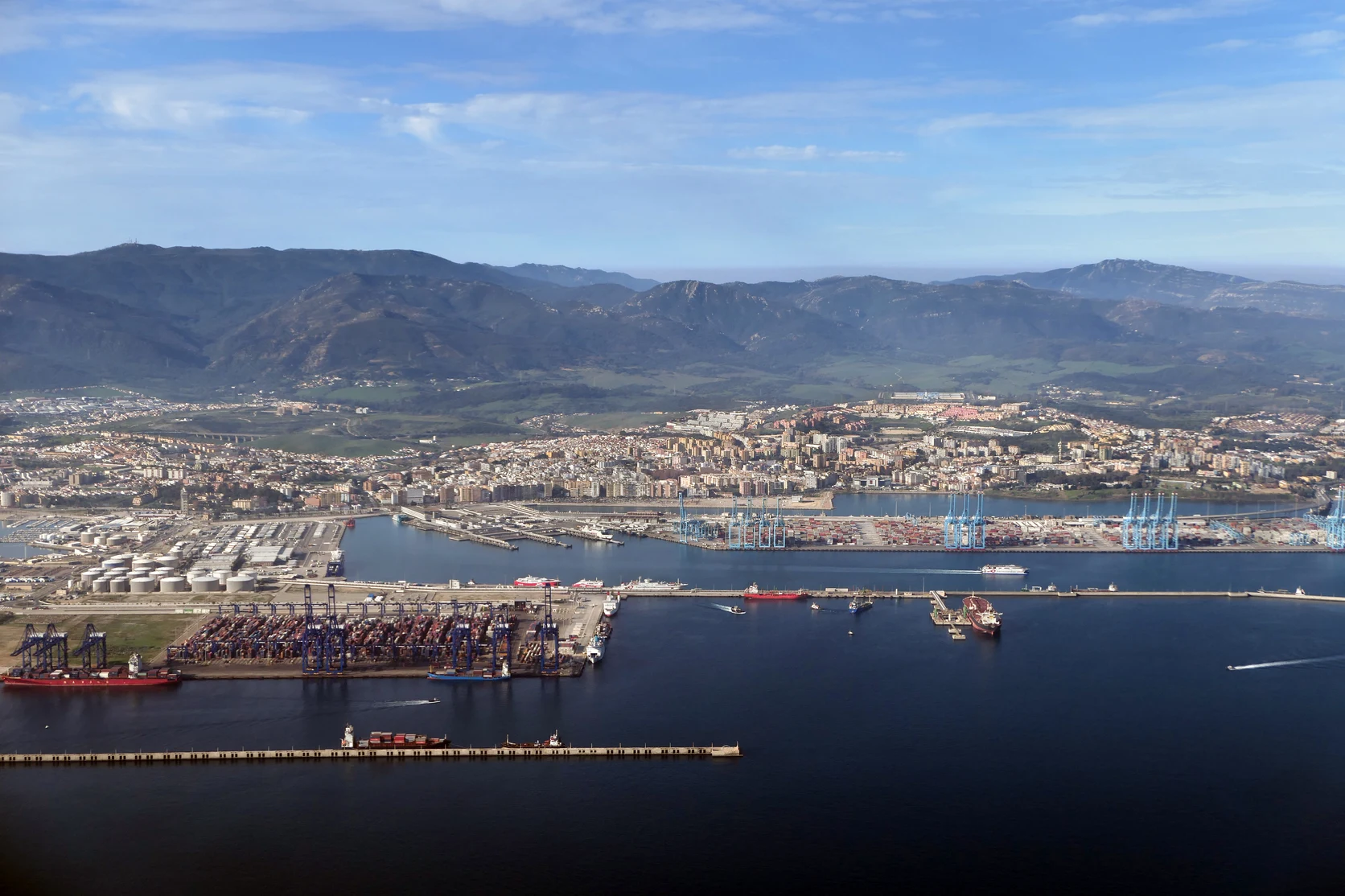
The Port of Algeciras is in the province of Cádiz. It sits on the Bay of Algeciras near the Strait of Gibraltar. Deep water depths allow large container ships to dock at each quay. Over 100,000 commercial vessels navigate through the strait each year.
The port connects major trade lanes between Asia, Europe, the Americas, and Africa. Many ships use sheltered anchorages in the bay to take on food and crew supplies. Traffic separation schemes coordinate ships moving between Atlantic and Mediterranean routes.
Industrial Container Terminals and Cargo Volumes
The port handles over one hundred million tonnes of cargo each year. Workers move between 4.7 million and 5.0 million twenty-foot container units at the terminals. More than eighty percent of this cargo is transshipment for other world ports.
APM Terminals operates along Muelle Juan Carlos I with nineteen large gantry crane units. Total Terminal International operates automated cranes at Isla Verde Exterior. Optical scanners and yard computers track container boxes day and night.
Intercontinental Ferry Logistics and Border Controls
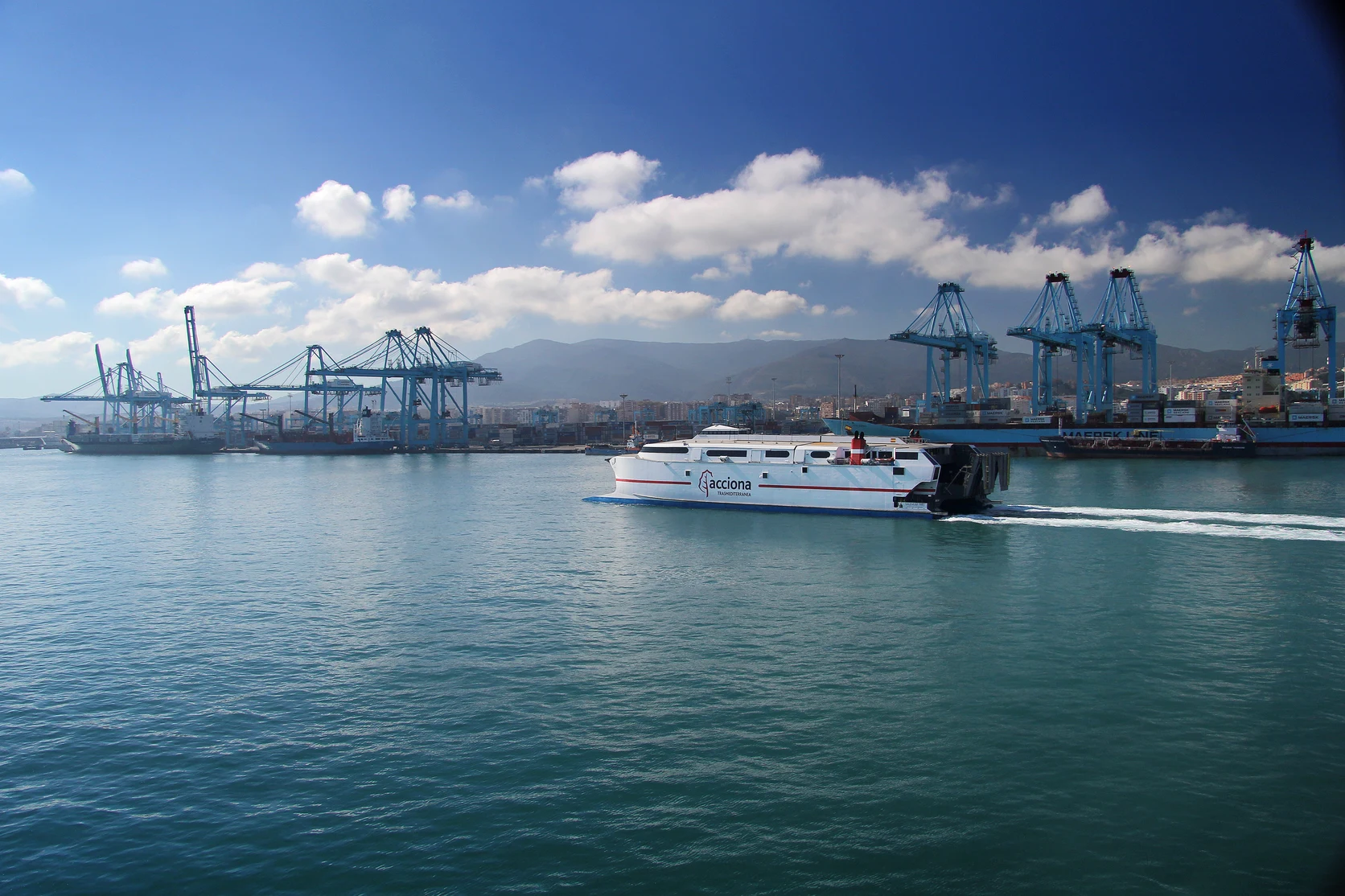
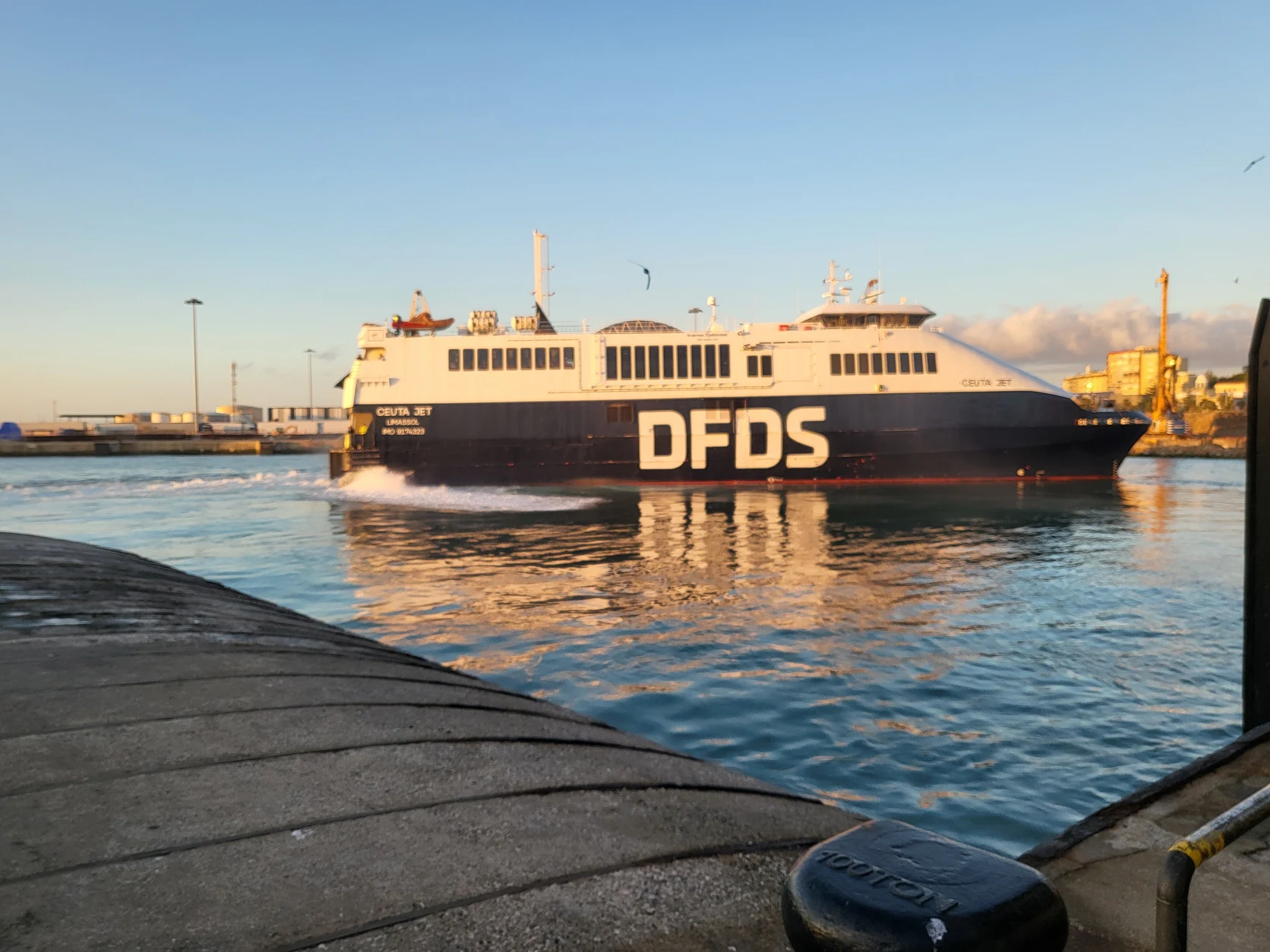
Ferry ships connect the port to Morocco at Tangier Med and the city of Ceuta. Fast passenger ferries make the crossing to Ceuta in one hour. Over 450,000 commercial freight trucks carry fresh produce and goods across the water each year.
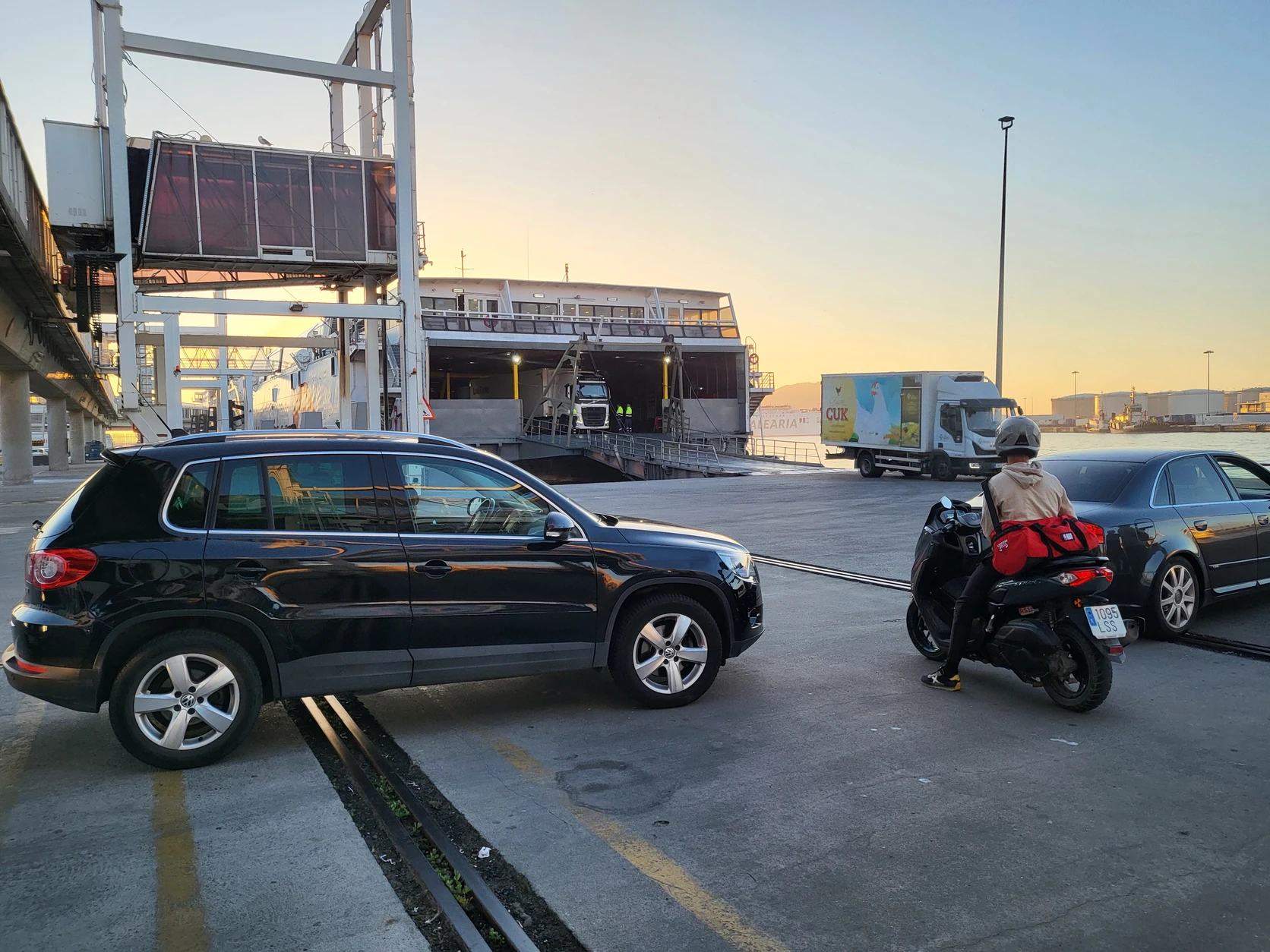
Every summer, Operación Paso del Estrecho helps three million passengers travel across the strait. Border police check passports at automated gates, while veterinary teams inspect food. Large vehicle staging lanes keep cars off municipal highways.
Marine Bunkering, Rail Connections, and Environmental Controls
Algeciras is a major center for marine fuel bunkering in the Mediterranean basin. Specialized tanker barges deliver low-sulfur oil and liquefied natural gas to ships. These fuel deliveries keep global cargo ships moving.
A railway line connects the port to the town of Bobadilla and European freight routes. Workers build electric lines and longer track loops for 750-meter freight trains. Monitoring teams test water chemistry, and electrical power plugs help docked ships turn off diesel generators.
A2 · Elementary
Port of Algeciras: Global Containers and Ferry Gateways
Deep water quays, heavy container cranes, and Strait of Gibraltar ferry routes shape Spain's largest maritime freight hub.
Strategic Trade Geography on the Strait
Official maritime registries record that the Port of Algeciras occupies a dominant littoral position along the Bay of Algeciras at the eastern entrance to the Strait of Gibraltar within the province of Cádiz, extending trade beyond the immediate hinterland. Deep natural water depths exceeding thirty meters permit navigation and quayside berthing of ultra-large container carriers along each quay, allowing vessels to bypass shallower regional ports without littoral congestion. Over 100,000 commercial vessels navigate through the maritime corridor of the Strait of Gibraltar each year, creating one of the densest maritime traffic corridors and strategic chokepoint passages on earth.
The port functions as an intercontinental transshipment hub connecting trading lanes across Asia, Europe, the Americas, and Africa with minimal deviation from major shipping routes. Sheltered anchorage zones within the port boundary allow commercial vessels to take on marine supplies, crew changes, and technical maintenance without entering formal docks. Dedicated traffic separation schemes and navigational demarcation rules coordinate navigation between westbound Atlantic traffic and eastbound Mediterranean routes, preventing collisions in the narrow strait passage.
Industrial Container Terminals and Cargo Volumes
Port authority documentation demonstrates that total annual cargo volume handled at Algeciras consistently exceeds one hundred million gross metric tonnes of freight tonnage. The facility processes between 4.7 million and 5.0 million twenty-foot equivalent container units each operational year, making it one of the largest freight gateways in Europe with massive throughput capacity. More than eighty percent of total container volumes handled across the quayside represent transshipment rather than local domestic cargo, avoiding quayside bottleneck delays through rapid container automation.
The APM Terminals Algeciras facility operates along Muelle Juan Carlos I with nineteen ship-to-shore gantry cranes handling deepwater container carrier vessels around the clock. At Isla Verde Exterior, Total Terminal International Algeciras operates a semi-automated container terminal with dedicated rail-mounted gantry cranes and advanced terminal superstructure. Yard operations employ optical character recognition scanner units and differential global positioning systems to track container locations across expansive marshalling storage zones, optimizing intercontinental logistics.
Intercontinental Ferry Logistics and Border Controls
Passenger and vehicle terminal facilities connect mainland Europe directly with northern Morocco at Tangier Med and the autonomous Spanish city of Ceuta across the Strait of Gibraltar for vehicular conveyance. Annual roll-on roll-off freight traffic exceeds 450,000 commercial freight trucks carrying industrial components and fresh agricultural produce between continents. High-speed passenger ferries complete the maritime crossing between Algeciras and Ceuta in approximately one hour under standard maritime conditions, providing rapid intercontinental transit.
During summer months, Operación Paso del Estrecho organizes the transit of more than three million seasonal ferry passengers and seven hundred thousand vehicles with streamlined customs clearance. Coordinated border control facilities deploy automated passport control gates alongside veterinary and phytosanitary border inspection posts to process cargo and prevent vehicle demurrage. Dedicated staging areas and vehicle waiting lanes covering tens of thousands of square meters prevent highway traffic congestion during peak travel waves.
Marine Bunkering, Rail Connections, and Environmental Controls
Fuelling statistics confirm that Algeciras is the leading marine hydrocarbon bunkering center in the Mediterranean basin, supplying millions of metric tonnes of fuel annually. Specialized double-hulled bunkering tanker barge fleets deliver low-sulfur marine gas oil and liquefied natural gas to anchored container ships in sheltered bay waters. These maritime logistics operations provide vital energy support to transcontinental cargo fleets and regional feeder networks.
On land, the single-track Bobadilla-Algeciras railway line forms the southern starting terminal of the European Atlantic and Mediterranean freight corridors, strengthening national railway infrastructure. Ongoing rail modernization programs target track electrification and passing loop extensions to support 750-meter intermodal freight trains and intermodal freight consolidation. Meanwhile, environmental monitoring networks continuously sample ambient air quality and marine water chemistry, while port decarbonization initiatives provide shore-to-ship electrical power connections enabling docked vessels to shut down auxiliary diesel generators.
B1 · Intermediate
The Port of Algeciras: Transshipment, Logistics, and Strait Corridors
Positioned on the Strait of Gibraltar, Algeciras connects global maritime trading lanes through advanced container quays and Ro-Ro transit.
Strategic Trade Geography on the Strait
Official maritime registries record that the Port of Algeciras occupies a dominant littoral position along the Bay of Algeciras at the eastern entrance to the Strait of Gibraltar within the province of Cádiz, extending trade beyond the immediate hinterland. Deep natural water depths exceeding thirty meters permit navigation and quayside berthing of ultra-large container carriers along each quay, allowing vessels to bypass shallower regional ports without littoral congestion. Over 100,000 commercial vessels navigate through the maritime corridor of the Strait of Gibraltar each year, creating one of the densest maritime traffic corridors and strategic chokepoint passages on earth.
The port functions as an intercontinental transshipment hub connecting trading lanes across Asia, Europe, the Americas, and Africa with minimal deviation from major shipping routes. Sheltered anchorage zones within the port boundary allow commercial vessels to take on marine supplies, crew changes, and technical maintenance without entering formal docks. Dedicated traffic separation schemes and navigational demarcation rules coordinate navigation between westbound Atlantic traffic and eastbound Mediterranean routes, preventing collisions in the narrow strait passage.
Industrial Container Terminals and Cargo Volumes
Port authority documentation demonstrates that total annual cargo volume handled at Algeciras consistently exceeds one hundred million gross metric tonnes of freight tonnage. The facility processes between 4.7 million and 5.0 million twenty-foot equivalent container units each operational year, making it one of the largest freight gateways in Europe with massive throughput capacity. More than eighty percent of total container volumes handled across the quayside represent transshipment rather than local domestic cargo, avoiding quayside bottleneck delays through rapid container automation.
The APM Terminals Algeciras facility operates along Muelle Juan Carlos I with nineteen ship-to-shore gantry cranes handling deepwater container carrier vessels around the clock. At Isla Verde Exterior, Total Terminal International Algeciras operates a semi-automated container terminal with dedicated rail-mounted gantry cranes and advanced terminal superstructure. Yard operations employ optical character recognition scanner units and differential global positioning systems to track container locations across expansive marshalling storage zones, optimizing intercontinental logistics.
Intercontinental Ferry Logistics and Border Controls
Passenger and vehicle terminal facilities connect mainland Europe directly with northern Morocco at Tangier Med and the autonomous Spanish city of Ceuta across the Strait of Gibraltar for vehicular conveyance. Annual roll-on roll-off freight traffic exceeds 450,000 commercial freight trucks carrying industrial components and fresh agricultural produce between continents. High-speed passenger ferries complete the maritime crossing between Algeciras and Ceuta in approximately one hour under standard maritime conditions, providing rapid intercontinental transit.
During summer months, Operación Paso del Estrecho organizes the transit of more than three million seasonal ferry passengers and seven hundred thousand vehicles with streamlined customs clearance. Coordinated border control facilities deploy automated passport control gates alongside veterinary and phytosanitary border inspection posts to process cargo and prevent vehicle demurrage. Dedicated staging areas and vehicle waiting lanes covering tens of thousands of square meters prevent highway traffic congestion during peak travel waves.
Marine Bunkering, Rail Connections, and Environmental Controls
Fuelling statistics confirm that Algeciras is the leading marine hydrocarbon bunkering center in the Mediterranean basin, supplying millions of metric tonnes of fuel annually. Specialized double-hulled bunkering tanker barge fleets deliver low-sulfur marine gas oil and liquefied natural gas to anchored container ships in sheltered bay waters. These maritime logistics operations provide vital energy support to transcontinental cargo fleets and regional feeder networks.
On land, the single-track Bobadilla-Algeciras railway line forms the southern starting terminal of the European Atlantic and Mediterranean freight corridors, strengthening national railway infrastructure. Ongoing rail modernization programs target track electrification and passing loop extensions to support 750-meter intermodal freight trains and intermodal freight consolidation. Meanwhile, environmental monitoring networks continuously sample ambient air quality and marine water chemistry, while port decarbonization initiatives provide shore-to-ship electrical power connections enabling docked vessels to shut down auxiliary diesel generators.
B2 · Upper Intermediate
Maritime Hegemony on the Strait: The Logistics Architecture of Algeciras
Operating at the crossroads of Atlantic and Mediterranean navigation, Algeciras commands heavy container transshipment, bunkering, and border logistics.
Strategic Trade Geography on the Strait
Official maritime registries record that the Port of Algeciras occupies a dominant littoral position along the Bay of Algeciras at the eastern entrance to the Strait of Gibraltar within the province of Cádiz, extending trade beyond the immediate hinterland. Deep natural water depths exceeding thirty meters permit navigation and quayside berthing of ultra-large container carriers along each quay, allowing vessels to bypass shallower regional ports without littoral congestion. Over 100,000 commercial vessels navigate through the maritime corridor of the Strait of Gibraltar each year, creating one of the densest maritime traffic corridors and strategic chokepoint passages on earth.
The port functions as an intercontinental transshipment hub connecting trading lanes across Asia, Europe, the Americas, and Africa with minimal deviation from major shipping routes. Sheltered anchorage zones within the port boundary allow commercial vessels to take on marine supplies, crew changes, and technical maintenance without entering formal docks. Dedicated traffic separation schemes and navigational demarcation rules coordinate navigation between westbound Atlantic traffic and eastbound Mediterranean routes, preventing collisions in the narrow strait passage.
Industrial Container Terminals and Cargo Volumes
Port authority documentation demonstrates that total annual cargo volume handled at Algeciras consistently exceeds one hundred million gross metric tonnes of freight tonnage. The facility processes between 4.7 million and 5.0 million twenty-foot equivalent container units each operational year, making it one of the largest freight gateways in Europe with massive throughput capacity. More than eighty percent of total container volumes handled across the quayside represent transshipment rather than local domestic cargo, avoiding quayside bottleneck delays through rapid container automation.
The APM Terminals Algeciras facility operates along Muelle Juan Carlos I with nineteen ship-to-shore gantry cranes handling deepwater container carrier vessels around the clock. At Isla Verde Exterior, Total Terminal International Algeciras operates a semi-automated container terminal with dedicated rail-mounted gantry cranes and advanced terminal superstructure. Yard operations employ optical character recognition scanner units and differential global positioning systems to track container locations across expansive marshalling storage zones, optimizing intercontinental logistics.
Intercontinental Ferry Logistics and Border Controls
Passenger and vehicle terminal facilities connect mainland Europe directly with northern Morocco at Tangier Med and the autonomous Spanish city of Ceuta across the Strait of Gibraltar for vehicular conveyance. Annual roll-on roll-off freight traffic exceeds 450,000 commercial freight trucks carrying industrial components and fresh agricultural produce between continents. High-speed passenger ferries complete the maritime crossing between Algeciras and Ceuta in approximately one hour under standard maritime conditions, providing rapid intercontinental transit.
During summer months, Operación Paso del Estrecho organizes the transit of more than three million seasonal ferry passengers and seven hundred thousand vehicles with streamlined customs clearance. Coordinated border control facilities deploy automated passport control gates alongside veterinary and phytosanitary border inspection posts to process cargo and prevent vehicle demurrage. Dedicated staging areas and vehicle waiting lanes covering tens of thousands of square meters prevent highway traffic congestion during peak travel waves.
Marine Bunkering, Rail Connections, and Environmental Controls
Fuelling statistics confirm that Algeciras is the leading marine hydrocarbon bunkering center in the Mediterranean basin, supplying millions of metric tonnes of fuel annually. Specialized double-hulled bunkering tanker barge fleets deliver low-sulfur marine gas oil and liquefied natural gas to anchored container ships in sheltered bay waters. These maritime logistics operations provide vital energy support to transcontinental cargo fleets and regional feeder networks.
On land, the single-track Bobadilla-Algeciras railway line forms the southern starting terminal of the European Atlantic and Mediterranean freight corridors, strengthening national railway infrastructure. Ongoing rail modernization programs target track electrification and passing loop extensions to support 750-meter intermodal freight trains and intermodal freight consolidation. Meanwhile, environmental monitoring networks continuously sample ambient air quality and marine water chemistry, while port decarbonization initiatives provide shore-to-ship electrical power connections enabling docked vessels to shut down auxiliary diesel generators.
C1 · Advanced
Geopolitics, Container Transshipment, and Bunkering Dynamics in Algeciras
A critical examination of deepwater container terminals, roll-on roll-off Strait logistics, and hydrocarbon bunkering at Spain's busiest seaport.
Strategic Trade Geography on the Strait
Official maritime registries record that the Port of Algeciras occupies a dominant littoral position along the Bay of Algeciras at the eastern entrance to the Strait of Gibraltar within the province of Cádiz, extending trade beyond the immediate hinterland. Deep natural water depths exceeding thirty meters permit navigation and quayside berthing of ultra-large container carriers along each quay, allowing vessels to bypass shallower regional ports without littoral congestion. Over 100,000 commercial vessels navigate through the maritime corridor of the Strait of Gibraltar each year, creating one of the densest maritime traffic corridors and strategic chokepoint passages on earth.
The port functions as an intercontinental transshipment hub connecting trading lanes across Asia, Europe, the Americas, and Africa with minimal deviation from major shipping routes. Sheltered anchorage zones within the port boundary allow commercial vessels to take on marine supplies, crew changes, and technical maintenance without entering formal docks. Dedicated traffic separation schemes and navigational demarcation rules coordinate navigation between westbound Atlantic traffic and eastbound Mediterranean routes, preventing collisions in the narrow strait passage.
Industrial Container Terminals and Cargo Volumes
Port authority documentation demonstrates that total annual cargo volume handled at Algeciras consistently exceeds one hundred million gross metric tonnes of freight tonnage. The facility processes between 4.7 million and 5.0 million twenty-foot equivalent container units each operational year, making it one of the largest freight gateways in Europe with massive throughput capacity. More than eighty percent of total container volumes handled across the quayside represent transshipment rather than local domestic cargo, avoiding quayside bottleneck delays through rapid container automation.
The APM Terminals Algeciras facility operates along Muelle Juan Carlos I with nineteen ship-to-shore gantry cranes handling deepwater container carrier vessels around the clock. At Isla Verde Exterior, Total Terminal International Algeciras operates a semi-automated container terminal with dedicated rail-mounted gantry cranes and advanced terminal superstructure. Yard operations employ optical character recognition scanner units and differential global positioning systems to track container locations across expansive marshalling storage zones, optimizing intercontinental logistics.
Intercontinental Ferry Logistics and Border Controls
Passenger and vehicle terminal facilities connect mainland Europe directly with northern Morocco at Tangier Med and the autonomous Spanish city of Ceuta across the Strait of Gibraltar for vehicular conveyance. Annual roll-on roll-off freight traffic exceeds 450,000 commercial freight trucks carrying industrial components and fresh agricultural produce between continents. High-speed passenger ferries complete the maritime crossing between Algeciras and Ceuta in approximately one hour under standard maritime conditions, providing rapid intercontinental transit.
During summer months, Operación Paso del Estrecho organizes the transit of more than three million seasonal ferry passengers and seven hundred thousand vehicles with streamlined customs clearance. Coordinated border control facilities deploy automated passport control gates alongside veterinary and phytosanitary border inspection posts to process cargo and prevent vehicle demurrage. Dedicated staging areas and vehicle waiting lanes covering tens of thousands of square meters prevent highway traffic congestion during peak travel waves.
Marine Bunkering, Rail Connections, and Environmental Controls
Fuelling statistics confirm that Algeciras is the leading marine hydrocarbon bunkering center in the Mediterranean basin, supplying millions of metric tonnes of fuel annually. Specialized double-hulled bunkering tanker barge fleets deliver low-sulfur marine gas oil and liquefied natural gas to anchored container ships in sheltered bay waters. These maritime logistics operations provide vital energy support to transcontinental cargo fleets and regional feeder networks.
On land, the single-track Bobadilla-Algeciras railway line forms the southern starting terminal of the European Atlantic and Mediterranean freight corridors, strengthening national railway infrastructure. Ongoing rail modernization programs target track electrification and passing loop extensions to support 750-meter intermodal freight trains and intermodal freight consolidation. Meanwhile, environmental monitoring networks continuously sample ambient air quality and marine water chemistry, while port decarbonization initiatives provide shore-to-ship electrical power connections enabling docked vessels to shut down auxiliary diesel generators.
C2 · Mastery
Maritime Geography, Multimodal Corridors, and Strait Logistics in Algeciras
A comprehensive analytical study of Strait of Gibraltar trade flows, automated container superstructures, and intermodal freight corridors.
Strategic Trade Geography on the Strait
Official maritime registries record that the Port of Algeciras occupies a dominant littoral position along the Bay of Algeciras at the eastern entrance to the Strait of Gibraltar within the province of Cádiz, extending trade beyond the immediate hinterland. Deep natural water depths exceeding thirty meters permit navigation and quayside berthing of ultra-large container carriers along each quay, allowing vessels to bypass shallower regional ports without littoral congestion. Over 100,000 commercial vessels navigate through the maritime corridor of the Strait of Gibraltar each year, creating one of the densest maritime traffic corridors and strategic chokepoint passages on earth.
The port functions as an intercontinental transshipment hub connecting trading lanes across Asia, Europe, the Americas, and Africa with minimal deviation from major shipping routes. Sheltered anchorage zones within the port boundary allow commercial vessels to take on marine supplies, crew changes, and technical maintenance without entering formal docks. Dedicated traffic separation schemes and navigational demarcation rules coordinate navigation between westbound Atlantic traffic and eastbound Mediterranean routes, preventing collisions in the narrow strait passage.
Industrial Container Terminals and Cargo Volumes
Port authority documentation demonstrates that total annual cargo volume handled at Algeciras consistently exceeds one hundred million gross metric tonnes of freight tonnage. The facility processes between 4.7 million and 5.0 million twenty-foot equivalent container units each operational year, making it one of the largest freight gateways in Europe with massive throughput capacity. More than eighty percent of total container volumes handled across the quayside represent transshipment rather than local domestic cargo, avoiding quayside bottleneck delays through rapid container automation.
The APM Terminals Algeciras facility operates along Muelle Juan Carlos I with nineteen ship-to-shore gantry cranes handling deepwater container carrier vessels around the clock. At Isla Verde Exterior, Total Terminal International Algeciras operates a semi-automated container terminal with dedicated rail-mounted gantry cranes and advanced terminal superstructure. Yard operations employ optical character recognition scanner units and differential global positioning systems to track container locations across expansive marshalling storage zones, optimizing intercontinental logistics.
Intercontinental Ferry Logistics and Border Controls
Passenger and vehicle terminal facilities connect mainland Europe directly with northern Morocco at Tangier Med and the autonomous Spanish city of Ceuta across the Strait of Gibraltar for vehicular conveyance. Annual roll-on roll-off freight traffic exceeds 450,000 commercial freight trucks carrying industrial components and fresh agricultural produce between continents. High-speed passenger ferries complete the maritime crossing between Algeciras and Ceuta in approximately one hour under standard maritime conditions, providing rapid intercontinental transit.
During summer months, Operación Paso del Estrecho organizes the transit of more than three million seasonal ferry passengers and seven hundred thousand vehicles with streamlined customs clearance. Coordinated border control facilities deploy automated passport control gates alongside veterinary and phytosanitary border inspection posts to process cargo and prevent vehicle demurrage. Dedicated staging areas and vehicle waiting lanes covering tens of thousands of square meters prevent highway traffic congestion during peak travel waves.
Marine Bunkering, Rail Connections, and Environmental Controls
Fuelling statistics confirm that Algeciras is the leading marine hydrocarbon bunkering center in the Mediterranean basin, supplying millions of metric tonnes of fuel annually. Specialized double-hulled bunkering tanker barge fleets deliver low-sulfur marine gas oil and liquefied natural gas to anchored container ships in sheltered bay waters. These maritime logistics operations provide vital energy support to transcontinental cargo fleets and regional feeder networks.
On land, the single-track Bobadilla-Algeciras railway line forms the southern starting terminal of the European Atlantic and Mediterranean freight corridors, strengthening national railway infrastructure. Ongoing rail modernization programs target track electrification and passing loop extensions to support 750-meter intermodal freight trains and intermodal freight consolidation. Meanwhile, environmental monitoring networks continuously sample ambient air quality and marine water chemistry, while port decarbonization initiatives provide shore-to-ship electrical power connections enabling docked vessels to shut down auxiliary diesel generators.
Check your understanding
Choose how closely you want to revisit the article. You can refer back while answering, and review explanations when you finish.
Quick Quiz A1
Try one question, then create a free account for the full Quick Quiz. Sign Up Free
Answer every question before checking. There is no time limit.
Your results
/ 1 correct (%)
Read the explanations to see how each answer connects to the article.
-
In which Spanish province is the Port of Algeciras located?
1. Answer:
Quick Quiz A2
Try one question, then create a free account for the full Quick Quiz. Sign Up Free
Answer every question before checking. There is no time limit.
Your results
/ 1 correct (%)
Read the explanations to see how each answer connects to the article.
-
Where does the Port of Algeciras sit according to official maritime registries?
1. Answer:
Quick Quiz B1
Try one question, then create a free account for the full Quick Quiz. Sign Up Free
Answer every question before checking. There is no time limit.
Your results
/ 1 correct (%)
Read the explanations to see how each answer connects to the article.
-
Where does the Port of Algeciras sit according to official maritime registries?
1. Answer:
Quick Quiz B2
Try one question, then create a free account for the full Quick Quiz. Sign Up Free
Answer every question before checking. There is no time limit.
Your results
/ 1 correct (%)
Read the explanations to see how each answer connects to the article.
-
Where does the Port of Algeciras sit according to official maritime registries?
1. Answer:
Quick Quiz C1
Try one question, then create a free account for the full Quick Quiz. Sign Up Free
Answer every question before checking. There is no time limit.
Your results
/ 1 correct (%)
Read the explanations to see how each answer connects to the article.
-
Where does the Port of Algeciras sit according to official maritime registries?
1. Answer:
Quick Quiz C2
Try one question, then create a free account for the full Quick Quiz. Sign Up Free
Answer every question before checking. There is no time limit.
Your results
/ 1 correct (%)
Read the explanations to see how each answer connects to the article.
-
Where does the Port of Algeciras sit according to official maritime registries?
1. Answer:
