A1 · Beginner
Ceylon Cinnamon: Trees, Peeling Tools, and Sweet Spice Rolls
Southern farmers in Sri Lanka grow small trees to harvest delicate bark and make sweet cinnamon rolls.
Botanical Agronomy and Southern Terroir
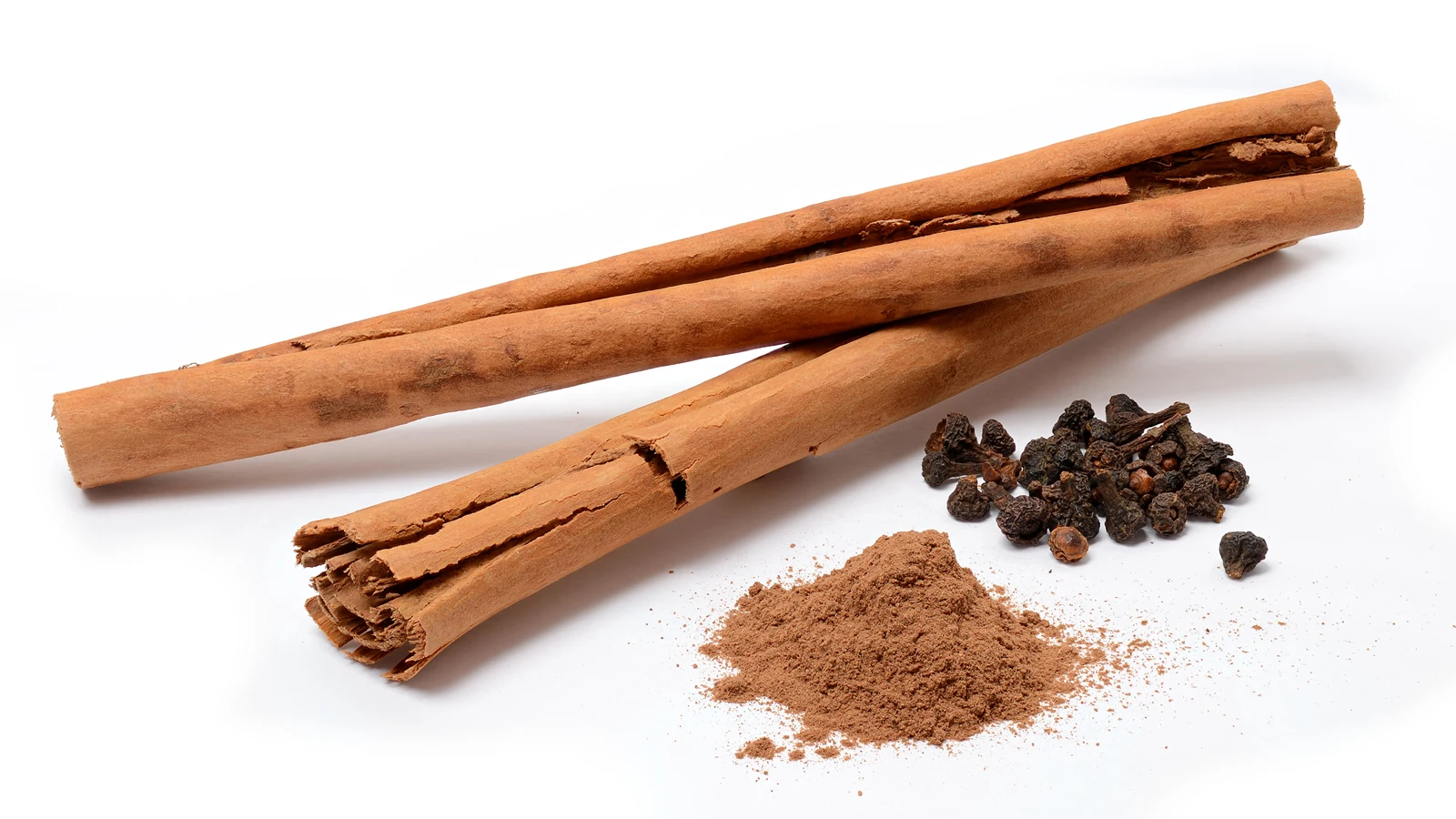
Ceylon cinnamon grows on small evergreen trees in Sri Lanka. The trees grow well in the warm southern districts near the ocean coast.
Farmers cut the young tree stems after two years of growth. Many straight green shoots grow quickly from the healthy root base.
Workers harvest the stems during the rainy monsoon season. The wet season helps the soft bark peel easily from the hard wood center.
Artisanal Peeling and Quill Fabrication
Workers peel the fresh stems with small curved knives. They scrape off the rough gray outer skin to find the clean inner bark.
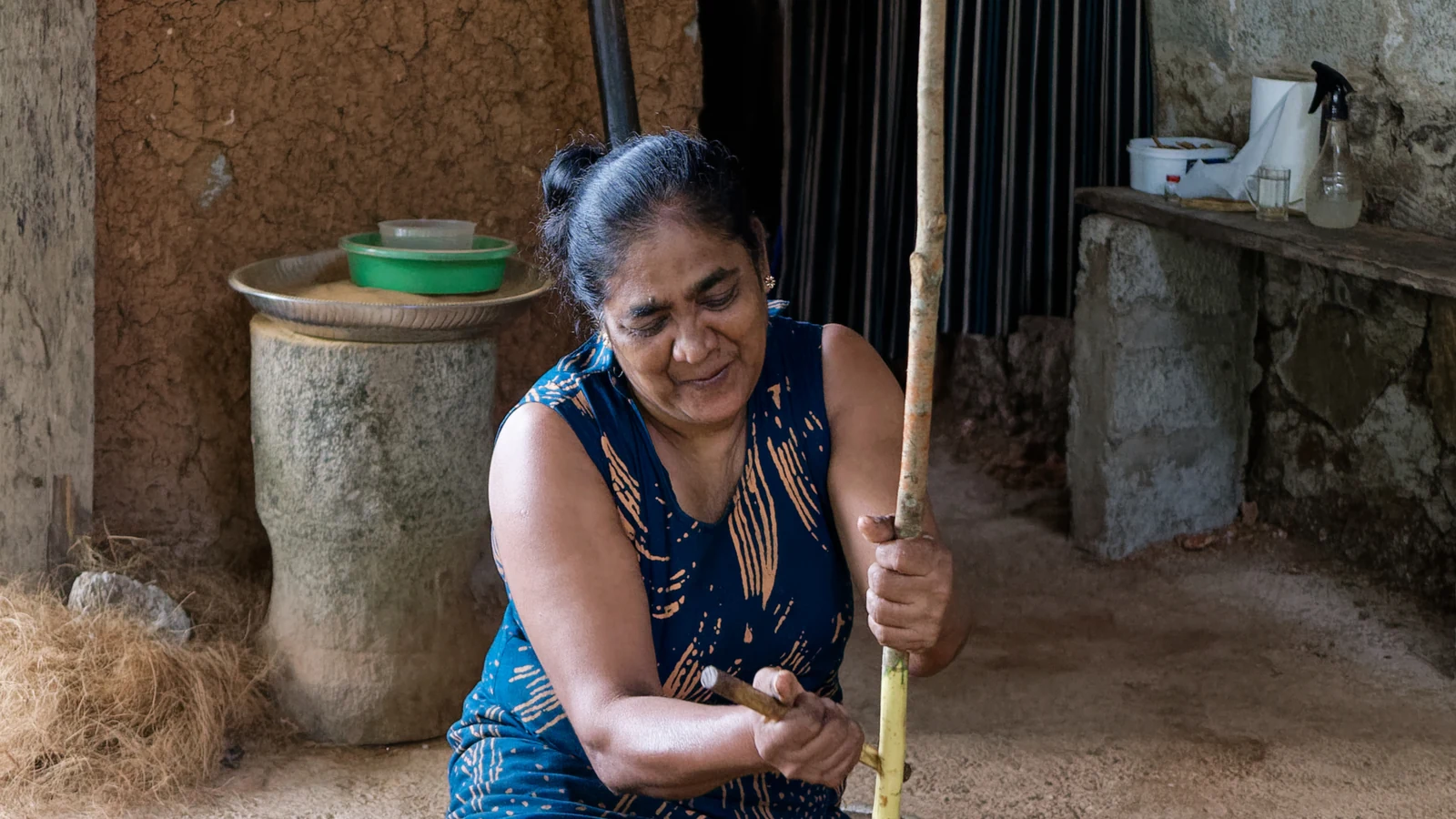
An artisan rubs the stem with a smooth brass tool. This gentle rubbing loosens the thin bark from the wood underneath.
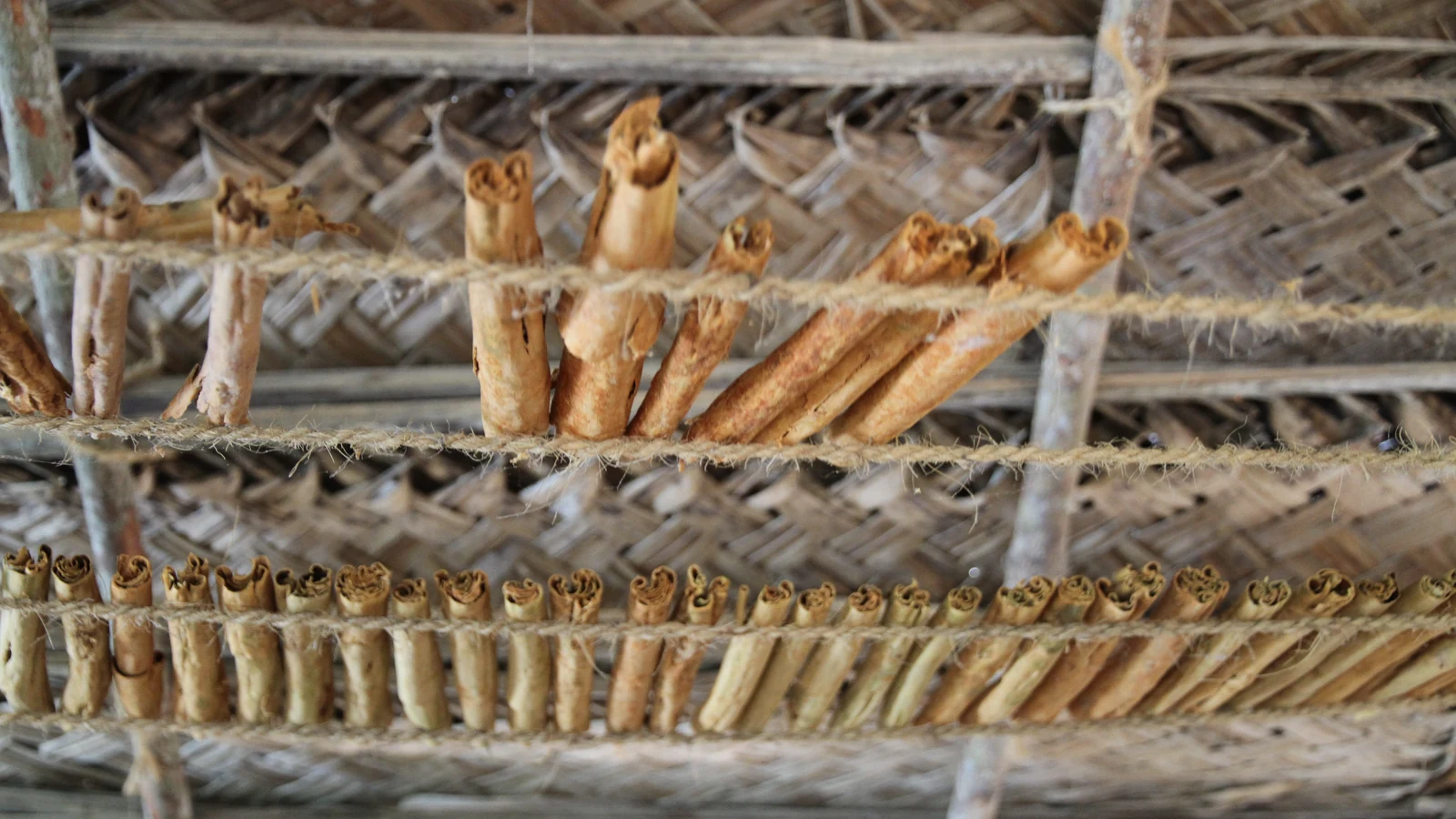
The workers roll many thin layers together to make long hollow tubes. They dry these cinnamon quills slowly on indoor wooden racks.
Standard Grading and GI Certification
Inspectors grade the dry cinnamon quills by thickness and quality. Alba is the highest grade and has very thin delicate rolls.
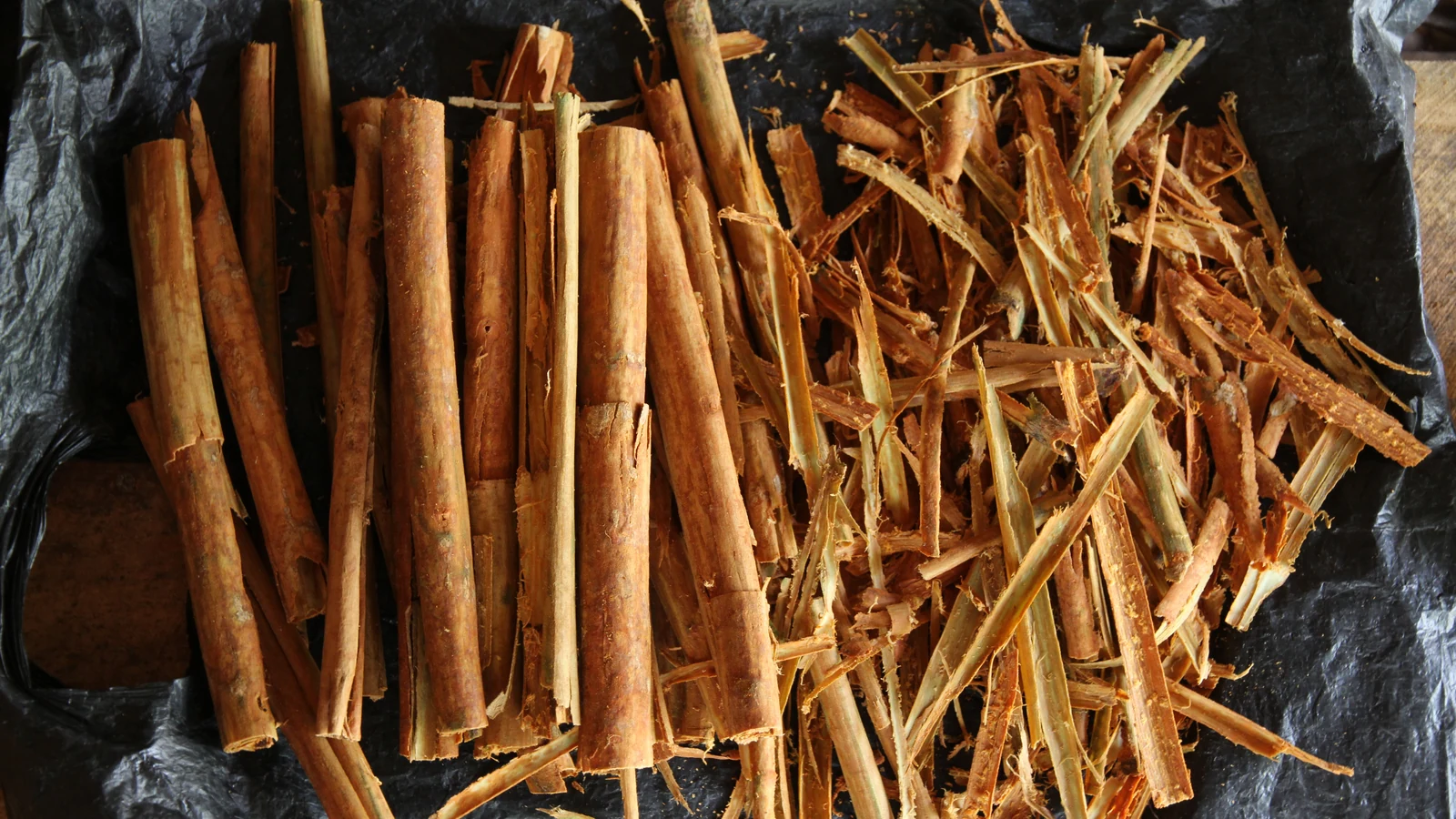
Other grades have wider rolls with thicker bark layers. Workers save all small broken pieces of bark to sell for ground spice.
In 2022 the European Union gave this special spice official geographic protection. A modern training school teaches workers clean food safety rules.
Chemical Profile and Export Commerce
Ceylon cinnamon has a sweet smell and a mild warm taste. It contains very low levels of harmful natural chemicals.
Workers also boil green leaves to collect aromatic oil. This golden leaf oil is used in soaps, perfumes, and health medicines.
Sri Lanka sells most of the true cinnamon in the world. Big ships carry boxes of dry quills with an official export mark to foreign buyers.
A2 · Elementary
Ceylon Cinnamon: Coastal Groves, Peeling Academies, and Standard Quills
Evergreen plantations in southern Sri Lanka yield delicate inner bark rolled into fragrant quills under national specifications.
Botanical Agronomy and Southern Terroir
Ceylon cinnamon originates from Cinnamomum verum, a perennial evergreen tree belonging to the botanical family Lauraceae that grows as an indigenous species in Sri Lanka. The most productive commercial plantations thrive along the southwestern coastal belt across the districts of Galle, Matara, Kalutara, and Ratnapura, where fertile tropical soils receive annual rainfall exceeding 2,000 millimeters. This humid maritime climate maintains consistent warmth and elevated soil moisture, fostering vigorous vegetative growth and soft aromatic bark tissue.
Cultivators manage plantations through systematic coppicing, cutting back young stems near ground level two years after planting. This pruning induces the root system to sprout numerous upright, straight shoots that grow unhindered by excessive lateral branching. Harvesters cut these shoots during seasonal monsoon transitions when active sap circulation loosens the outer layers from the inner wood core. Stems are selected when trunk diameters measure between 1.5 and 2.5 centimeters, exhibiting uniform green-to-bronze bark without deep fissure deformities.
This precise biological profile differentiates true Ceylon cinnamon from thicker Cassia species cultivated elsewhere across Southeast Asia. While cassia produces coarse, dark, and brittle tree bark with rough outer rinds, the Sri Lankan variety yields soft, pliable, and multi-layered inner tissues. Agricultural extension officers conduct regular field surveys to verify stem maturity, protecting plantations against premature cutting that degrades spice grade and canopy productivity.
Artisanal Peeling and Quill Fabrication
Transforming raw harvested stems into commercial quills requires delicate artisanal peeling techniques refined over generations. Peelers begin by scraping away the coarse gray periderm and outer cork tissue using small curved brass or stainless steel knives. Workers take care to avoid penetrating the underlying aromatic phloem, exposing a pristine, pale green underlayer that houses essential aromatic cells.
Following initial surface scraping, the artisan rubs the length of the stem firmly with a smooth brass rod called a koketta. The friction and localized mechanical pressure release volatile essential oils and detach the inner phloem from the woody xylem below. The peeler then makes continuous longitudinal incisions along the stem, inserting a slender bronze blade beneath the loosened bark to peel off paper-thin inner bark ribbons without rupturing delicate longitudinal fibers.
Craft workers assemble the moist bark ribbons into compound cylindrical rolls known commercially as quills. Outer sheets overlap edge-to-edge, while interior hollows are meticulously packed with smaller bark trimmings to ensure uniform cylindrical density. Once rolled, the quills are trimmed to standardized lengths of 106.7 centimeters before transfer to curing facilities. The quills dry on raised indoor racks under diffused air circulation, sheltered from harsh sunlight to prevent structural cracking and retain a luminous golden tan appearance.
Standard Grading and GI Certification
Commercial cinnamon trade adheres to rigorous quality classifications established by the Sri Lanka Standards Institution under specification SLS 81. The national standard sorts finished quills into four principal commercial tiers designated Alba, Continental, Mexican, and Hamburg. Alba represents the finest and most expensive tier, requiring slender quill diameters measuring under 6 millimeters formed from paper-thin bark ribbons. Lower classifications like Continental and Hamburg accommodate thicker inner bark layers and broader diameters suitable for industrial food formulation and retail grinding.
Small bark fragments, broken flakes, and trimmings separated during assembly are sorted into secondary industrial categories designated quillings, featherings, and chips. These secondary categories supply essential raw material for spice grinding facilities and oleoresin distillation plants, ensuring that zero harvested bark goes to waste. Independent laboratory inspectors examine moisture levels, bulk density, and total ash content before issuing official commercial batch certifications.
In February 2022, the European Union officially registered Ceylon Cinnamon as a Protected Geographical Indication, granting legal recognition and international protection against generic counterfeits. To uphold this protected status, the Cinnamon Training Academy in Kosgoda trains local peelers under accredited National Vocational Qualification guidelines. The academy certifies peeling teams in standardized hygienic practices, food safety management, and ergonomic tool maintenance across southern processing communities.
Chemical Profile and Export Commerce
The distinctive sensory character of Ceylon cinnamon stems from its unique biochemical composition and delicate volatile oil profile. High-performance liquid chromatography confirms that inner bark essential oil contains between 65 and 80 percent cinnamaldehyde, imparting refined sweetness, subtle floral undertones, and warm warmth without harsh throat burning. In stark contrast to cassia varieties that carry hazardous levels of coumarin up to one percent, Ceylon cinnamon contains only trace amounts below 0.004 percent, eliminating hepatotoxic health risks for regular consumers.
Beyond commercial bark quills, the tree provides valuable agricultural by-products through steam distillation of discarded leaves. This industrial distillation produces amber-colored cinnamon leaf oil characterized by high concentrations of eugenol ranging between 75 and 85 percent. Leaf oil serves as an indispensable aromatic precursor for pharmaceutical preparations, dental antiseptics, and high-end perfumery formulations across European fragrance houses.
Sri Lanka supplies between 85 and 90 percent of the total global export volume of true cinnamon quills traded on international commodity exchanges. Major overseas destinations include Mexico, the United States, Peru, and European gourmet culinary sectors that demand genuine Cinnamomum verum for confectionery, traditional baking, and fine dining. To protect market dominance, the Sri Lanka Export Development Board implements digital traceability registries, auditing processing warehouses and issuing authenticated seal trademarks for genuine shipments.
B1 · Intermediate
Artisanal Peeling and Agricultural Standards in Ceylon Cinnamon Production
Examining botanical coppicing routines, brass tool rubbing techniques, and European geographical indication rules.
Botanical Agronomy and Southern Terroir
Ceylon cinnamon originates from Cinnamomum verum, a perennial evergreen tree belonging to the botanical family Lauraceae that grows as an indigenous species in Sri Lanka. The most productive commercial plantations thrive along the southwestern coastal belt across the districts of Galle, Matara, Kalutara, and Ratnapura, where fertile tropical soils receive annual rainfall exceeding 2,000 millimeters. This humid maritime climate maintains consistent warmth and elevated soil moisture, fostering vigorous vegetative growth and soft aromatic bark tissue.
Cultivators manage plantations through systematic coppicing, cutting back young stems near ground level two years after planting. This pruning induces the root system to sprout numerous upright, straight shoots that grow unhindered by excessive lateral branching. Harvesters cut these shoots during seasonal monsoon transitions when active sap circulation loosens the outer layers from the inner wood core. Stems are selected when trunk diameters measure between 1.5 and 2.5 centimeters, exhibiting uniform green-to-bronze bark without deep fissure deformities.
This precise biological profile differentiates true Ceylon cinnamon from thicker Cassia species cultivated elsewhere across Southeast Asia. While cassia produces coarse, dark, and brittle tree bark with rough outer rinds, the Sri Lankan variety yields soft, pliable, and multi-layered inner tissues. Agricultural extension officers conduct regular field surveys to verify stem maturity, protecting plantations against premature cutting that degrades spice grade and canopy productivity.
Artisanal Peeling and Quill Fabrication
Transforming raw harvested stems into commercial quills requires delicate artisanal peeling techniques refined over generations. Peelers begin by scraping away the coarse gray periderm and outer cork tissue using small curved brass or stainless steel knives. Workers take care to avoid penetrating the underlying aromatic phloem, exposing a pristine, pale green underlayer that houses essential aromatic cells.
Following initial surface scraping, the artisan rubs the length of the stem firmly with a smooth brass rod called a koketta. The friction and localized mechanical pressure release volatile essential oils and detach the inner phloem from the woody xylem below. The peeler then makes continuous longitudinal incisions along the stem, inserting a slender bronze blade beneath the loosened bark to peel off paper-thin inner bark ribbons without rupturing delicate longitudinal fibers.
Craft workers assemble the moist bark ribbons into compound cylindrical rolls known commercially as quills. Outer sheets overlap edge-to-edge, while interior hollows are meticulously packed with smaller bark trimmings to ensure uniform cylindrical density. Once rolled, the quills are trimmed to standardized lengths of 106.7 centimeters before transfer to curing facilities. The quills dry on raised indoor racks under diffused air circulation, sheltered from harsh sunlight to prevent structural cracking and retain a luminous golden tan appearance.
Standard Grading and GI Certification
Commercial cinnamon trade adheres to rigorous quality classifications established by the Sri Lanka Standards Institution under specification SLS 81. The national standard sorts finished quills into four principal commercial tiers designated Alba, Continental, Mexican, and Hamburg. Alba represents the finest and most expensive tier, requiring slender quill diameters measuring under 6 millimeters formed from paper-thin bark ribbons. Lower classifications like Continental and Hamburg accommodate thicker inner bark layers and broader diameters suitable for industrial food formulation and retail grinding.
Small bark fragments, broken flakes, and trimmings separated during assembly are sorted into secondary industrial categories designated quillings, featherings, and chips. These secondary categories supply essential raw material for spice grinding facilities and oleoresin distillation plants, ensuring that zero harvested bark goes to waste. Independent laboratory inspectors examine moisture levels, bulk density, and total ash content before issuing official commercial batch certifications.
In February 2022, the European Union officially registered Ceylon Cinnamon as a Protected Geographical Indication, granting legal recognition and international protection against generic counterfeits. To uphold this protected status, the Cinnamon Training Academy in Kosgoda trains local peelers under accredited National Vocational Qualification guidelines. The academy certifies peeling teams in standardized hygienic practices, food safety management, and ergonomic tool maintenance across southern processing communities.
Chemical Profile and Export Commerce
The distinctive sensory character of Ceylon cinnamon stems from its unique biochemical composition and delicate volatile oil profile. High-performance liquid chromatography confirms that inner bark essential oil contains between 65 and 80 percent cinnamaldehyde, imparting refined sweetness, subtle floral undertones, and warm warmth without harsh throat burning. In stark contrast to cassia varieties that carry hazardous levels of coumarin up to one percent, Ceylon cinnamon contains only trace amounts below 0.004 percent, eliminating hepatotoxic health risks for regular consumers.
Beyond commercial bark quills, the tree provides valuable agricultural by-products through steam distillation of discarded leaves. This industrial distillation produces amber-colored cinnamon leaf oil characterized by high concentrations of eugenol ranging between 75 and 85 percent. Leaf oil serves as an indispensable aromatic precursor for pharmaceutical preparations, dental antiseptics, and high-end perfumery formulations across European fragrance houses.
Sri Lanka supplies between 85 and 90 percent of the total global export volume of true cinnamon quills traded on international commodity exchanges. Major overseas destinations include Mexico, the United States, Peru, and European gourmet culinary sectors that demand genuine Cinnamomum verum for confectionery, traditional baking, and fine dining. To protect market dominance, the Sri Lanka Export Development Board implements digital traceability registries, auditing processing warehouses and issuing authenticated seal trademarks for genuine shipments.
B2 · Upper Intermediate
Botanical Agronomy, Quill Architecture, and Global Commerce in Ceylon Cinnamon
An analytical study of southwestern plantation terroir, multi-layered inner bark morphology, and international spice trade.
Botanical Agronomy and Southern Terroir
Ceylon cinnamon originates from Cinnamomum verum, a perennial evergreen tree belonging to the botanical family Lauraceae that grows as an indigenous species in Sri Lanka. The most productive commercial plantations thrive along the southwestern coastal belt across the districts of Galle, Matara, Kalutara, and Ratnapura, where fertile tropical soils receive annual rainfall exceeding 2,000 millimeters. This humid maritime climate maintains consistent warmth and elevated soil moisture, fostering vigorous vegetative growth and soft aromatic bark tissue.
Cultivators manage plantations through systematic coppicing, cutting back young stems near ground level two years after planting. This pruning induces the root system to sprout numerous upright, straight shoots that grow unhindered by excessive lateral branching. Harvesters cut these shoots during seasonal monsoon transitions when active sap circulation loosens the outer layers from the inner wood core. Stems are selected when trunk diameters measure between 1.5 and 2.5 centimeters, exhibiting uniform green-to-bronze bark without deep fissure deformities.
This precise biological profile differentiates true Ceylon cinnamon from thicker Cassia species cultivated elsewhere across Southeast Asia. While cassia produces coarse, dark, and brittle tree bark with rough outer rinds, the Sri Lankan variety yields soft, pliable, and multi-layered inner tissues. Agricultural extension officers conduct regular field surveys to verify stem maturity, protecting plantations against premature cutting that degrades spice grade and canopy productivity.
Artisanal Peeling and Quill Fabrication
Transforming raw harvested stems into commercial quills requires delicate artisanal peeling techniques refined over generations. Peelers begin by scraping away the coarse gray periderm and outer cork tissue using small curved brass or stainless steel knives. Workers take care to avoid penetrating the underlying aromatic phloem, exposing a pristine, pale green underlayer that houses essential aromatic cells.
Following initial surface scraping, the artisan rubs the length of the stem firmly with a smooth brass rod called a koketta. The friction and localized mechanical pressure release volatile essential oils and detach the inner phloem from the woody xylem below. The peeler then makes continuous longitudinal incisions along the stem, inserting a slender bronze blade beneath the loosened bark to peel off paper-thin inner bark ribbons without rupturing delicate longitudinal fibers.
Craft workers assemble the moist bark ribbons into compound cylindrical rolls known commercially as quills. Outer sheets overlap edge-to-edge, while interior hollows are meticulously packed with smaller bark trimmings to ensure uniform cylindrical density. Once rolled, the quills are trimmed to standardized lengths of 106.7 centimeters before transfer to curing facilities. The quills dry on raised indoor racks under diffused air circulation, sheltered from harsh sunlight to prevent structural cracking and retain a luminous golden tan appearance.
Standard Grading and GI Certification
Commercial cinnamon trade adheres to rigorous quality classifications established by the Sri Lanka Standards Institution under specification SLS 81. The national standard sorts finished quills into four principal commercial tiers designated Alba, Continental, Mexican, and Hamburg. Alba represents the finest and most expensive tier, requiring slender quill diameters measuring under 6 millimeters formed from paper-thin bark ribbons. Lower classifications like Continental and Hamburg accommodate thicker inner bark layers and broader diameters suitable for industrial food formulation and retail grinding.
Small bark fragments, broken flakes, and trimmings separated during assembly are sorted into secondary industrial categories designated quillings, featherings, and chips. These secondary categories supply essential raw material for spice grinding facilities and oleoresin distillation plants, ensuring that zero harvested bark goes to waste. Independent laboratory inspectors examine moisture levels, bulk density, and total ash content before issuing official commercial batch certifications.
In February 2022, the European Union officially registered Ceylon Cinnamon as a Protected Geographical Indication, granting legal recognition and international protection against generic counterfeits. To uphold this protected status, the Cinnamon Training Academy in Kosgoda trains local peelers under accredited National Vocational Qualification guidelines. The academy certifies peeling teams in standardized hygienic practices, food safety management, and ergonomic tool maintenance across southern processing communities.
Chemical Profile and Export Commerce
The distinctive sensory character of Ceylon cinnamon stems from its unique biochemical composition and delicate volatile oil profile. High-performance liquid chromatography confirms that inner bark essential oil contains between 65 and 80 percent cinnamaldehyde, imparting refined sweetness, subtle floral undertones, and warm warmth without harsh throat burning. In stark contrast to cassia varieties that carry hazardous levels of coumarin up to one percent, Ceylon cinnamon contains only trace amounts below 0.004 percent, eliminating hepatotoxic health risks for regular consumers.
Beyond commercial bark quills, the tree provides valuable agricultural by-products through steam distillation of discarded leaves. This industrial distillation produces amber-colored cinnamon leaf oil characterized by high concentrations of eugenol ranging between 75 and 85 percent. Leaf oil serves as an indispensable aromatic precursor for pharmaceutical preparations, dental antiseptics, and high-end perfumery formulations across European fragrance houses.
Sri Lanka supplies between 85 and 90 percent of the total global export volume of true cinnamon quills traded on international commodity exchanges. Major overseas destinations include Mexico, the United States, Peru, and European gourmet culinary sectors that demand genuine Cinnamomum verum for confectionery, traditional baking, and fine dining. To protect market dominance, the Sri Lanka Export Development Board implements digital traceability registries, auditing processing warehouses and issuing authenticated seal trademarks for genuine shipments.
C1 · Advanced
Dermal Morphology, Phloem Extraction, and Essential Oil Profiles of Ceylon Cinnamon
An investigative critique of coppicing management, compound quill fabrication, chromatographic grading, and trade logistics.
Botanical Agronomy and Southern Terroir
Ceylon cinnamon originates from Cinnamomum verum, a perennial evergreen tree belonging to the botanical family Lauraceae that grows as an indigenous species in Sri Lanka. The most productive commercial plantations thrive along the southwestern coastal belt across the districts of Galle, Matara, Kalutara, and Ratnapura, where fertile tropical soils receive annual rainfall exceeding 2,000 millimeters. This humid maritime climate maintains consistent warmth and elevated soil moisture, fostering vigorous vegetative growth and soft aromatic bark tissue.
Cultivators manage plantations through systematic coppicing, cutting back young stems near ground level two years after planting. This pruning induces the root system to sprout numerous upright, straight shoots that grow unhindered by excessive lateral branching. Harvesters cut these shoots during seasonal monsoon transitions when active sap circulation loosens the outer layers from the inner wood core. Stems are selected when trunk diameters measure between 1.5 and 2.5 centimeters, exhibiting uniform green-to-bronze bark without deep fissure deformities.
This precise biological profile differentiates true Ceylon cinnamon from thicker Cassia species cultivated elsewhere across Southeast Asia. While cassia produces coarse, dark, and brittle tree bark with rough outer rinds, the Sri Lankan variety yields soft, pliable, and multi-layered inner tissues. Agricultural extension officers conduct regular field surveys to verify stem maturity, protecting plantations against premature cutting that degrades spice grade and canopy productivity.
Artisanal Peeling and Quill Fabrication
Transforming raw harvested stems into commercial quills requires delicate artisanal peeling techniques refined over generations. Peelers begin by scraping away the coarse gray periderm and outer cork tissue using small curved brass or stainless steel knives. Workers take care to avoid penetrating the underlying aromatic phloem, exposing a pristine, pale green underlayer that houses essential aromatic cells.
Following initial surface scraping, the artisan rubs the length of the stem firmly with a smooth brass rod called a koketta. The friction and localized mechanical pressure release volatile essential oils and detach the inner phloem from the woody xylem below. The peeler then makes continuous longitudinal incisions along the stem, inserting a slender bronze blade beneath the loosened bark to peel off paper-thin inner bark ribbons without rupturing delicate longitudinal fibers.
Craft workers assemble the moist bark ribbons into compound cylindrical rolls known commercially as quills. Outer sheets overlap edge-to-edge, while interior hollows are meticulously packed with smaller bark trimmings to ensure uniform cylindrical density. Once rolled, the quills are trimmed to standardized lengths of 106.7 centimeters before transfer to curing facilities. The quills dry on raised indoor racks under diffused air circulation, sheltered from harsh sunlight to prevent structural cracking and retain a luminous golden tan appearance.
Standard Grading and GI Certification
Commercial cinnamon trade adheres to rigorous quality classifications established by the Sri Lanka Standards Institution under specification SLS 81. The national standard sorts finished quills into four principal commercial tiers designated Alba, Continental, Mexican, and Hamburg. Alba represents the finest and most expensive tier, requiring slender quill diameters measuring under 6 millimeters formed from paper-thin bark ribbons. Lower classifications like Continental and Hamburg accommodate thicker inner bark layers and broader diameters suitable for industrial food formulation and retail grinding.
Small bark fragments, broken flakes, and trimmings separated during assembly are sorted into secondary industrial categories designated quillings, featherings, and chips. These secondary categories supply essential raw material for spice grinding facilities and oleoresin distillation plants, ensuring that zero harvested bark goes to waste. Independent laboratory inspectors examine moisture levels, bulk density, and total ash content before issuing official commercial batch certifications.
In February 2022, the European Union officially registered Ceylon Cinnamon as a Protected Geographical Indication, granting legal recognition and international protection against generic counterfeits. To uphold this protected status, the Cinnamon Training Academy in Kosgoda trains local peelers under accredited National Vocational Qualification guidelines. The academy certifies peeling teams in standardized hygienic practices, food safety management, and ergonomic tool maintenance across southern processing communities.
Chemical Profile and Export Commerce
The distinctive sensory character of Ceylon cinnamon stems from its unique biochemical composition and delicate volatile oil profile. High-performance liquid chromatography confirms that inner bark essential oil contains between 65 and 80 percent cinnamaldehyde, imparting refined sweetness, subtle floral undertones, and warm warmth without harsh throat burning. In stark contrast to cassia varieties that carry hazardous levels of coumarin up to one percent, Ceylon cinnamon contains only trace amounts below 0.004 percent, eliminating hepatotoxic health risks for regular consumers.
Beyond commercial bark quills, the tree provides valuable agricultural by-products through steam distillation of discarded leaves. This industrial distillation produces amber-colored cinnamon leaf oil characterized by high concentrations of eugenol ranging between 75 and 85 percent. Leaf oil serves as an indispensable aromatic precursor for pharmaceutical preparations, dental antiseptics, and high-end perfumery formulations across European fragrance houses.
Sri Lanka supplies between 85 and 90 percent of the total global export volume of true cinnamon quills traded on international commodity exchanges. Major overseas destinations include Mexico, the United States, Peru, and European gourmet culinary sectors that demand genuine Cinnamomum verum for confectionery, traditional baking, and fine dining. To protect market dominance, the Sri Lanka Export Development Board implements digital traceability registries, auditing processing warehouses and issuing authenticated seal trademarks for genuine shipments.
C2 · Mastery
Lauraceous Phloem Dynamics, Artisanal Metallurgy, and Geographical Indication in Ceylon Cinnamon
A rigorous analytical treatise on periderm peeling mechanics, cinnamaldehyde biochemical purity, and global export dominance.
Botanical Agronomy and Southern Terroir
Ceylon cinnamon originates from Cinnamomum verum, a perennial evergreen tree belonging to the botanical family Lauraceae that grows as an indigenous species in Sri Lanka. The most productive commercial plantations thrive along the southwestern coastal belt across the districts of Galle, Matara, Kalutara, and Ratnapura, where fertile tropical soils receive annual rainfall exceeding 2,000 millimeters. This humid maritime climate maintains consistent warmth and elevated soil moisture, fostering vigorous vegetative growth and soft aromatic bark tissue.
Cultivators manage plantations through systematic coppicing, cutting back young stems near ground level two years after planting. This pruning induces the root system to sprout numerous upright, straight shoots that grow unhindered by excessive lateral branching. Harvesters cut these shoots during seasonal monsoon transitions when active sap circulation loosens the outer layers from the inner wood core. Stems are selected when trunk diameters measure between 1.5 and 2.5 centimeters, exhibiting uniform green-to-bronze bark without deep fissure deformities.
This precise biological profile differentiates true Ceylon cinnamon from thicker Cassia species cultivated elsewhere across Southeast Asia. While cassia produces coarse, dark, and brittle tree bark with rough outer rinds, the Sri Lankan variety yields soft, pliable, and multi-layered inner tissues. Agricultural extension officers conduct regular field surveys to verify stem maturity, protecting plantations against premature cutting that degrades spice grade and canopy productivity.
Artisanal Peeling and Quill Fabrication
Transforming raw harvested stems into commercial quills requires delicate artisanal peeling techniques refined over generations. Peelers begin by scraping away the coarse gray periderm and outer cork tissue using small curved brass or stainless steel knives. Workers take care to avoid penetrating the underlying aromatic phloem, exposing a pristine, pale green underlayer that houses essential aromatic cells.
Following initial surface scraping, the artisan rubs the length of the stem firmly with a smooth brass rod called a koketta. The friction and localized mechanical pressure release volatile essential oils and detach the inner phloem from the woody xylem below. The peeler then makes continuous longitudinal incisions along the stem, inserting a slender bronze blade beneath the loosened bark to peel off paper-thin inner bark ribbons without rupturing delicate longitudinal fibers.
Craft workers assemble the moist bark ribbons into compound cylindrical rolls known commercially as quills. Outer sheets overlap edge-to-edge, while interior hollows are meticulously packed with smaller bark trimmings to ensure uniform cylindrical density. Once rolled, the quills are trimmed to standardized lengths of 106.7 centimeters before transfer to curing facilities. The quills dry on raised indoor racks under diffused air circulation, sheltered from harsh sunlight to prevent structural cracking and retain a luminous golden tan appearance.
Standard Grading and GI Certification
Commercial cinnamon trade adheres to rigorous quality classifications established by the Sri Lanka Standards Institution under specification SLS 81. The national standard sorts finished quills into four principal commercial tiers designated Alba, Continental, Mexican, and Hamburg. Alba represents the finest and most expensive tier, requiring slender quill diameters measuring under 6 millimeters formed from paper-thin bark ribbons. Lower classifications like Continental and Hamburg accommodate thicker inner bark layers and broader diameters suitable for industrial food formulation and retail grinding.
Small bark fragments, broken flakes, and trimmings separated during assembly are sorted into secondary industrial categories designated quillings, featherings, and chips. These secondary categories supply essential raw material for spice grinding facilities and oleoresin distillation plants, ensuring that zero harvested bark goes to waste. Independent laboratory inspectors examine moisture levels, bulk density, and total ash content before issuing official commercial batch certifications.
In February 2022, the European Union officially registered Ceylon Cinnamon as a Protected Geographical Indication, granting legal recognition and international protection against generic counterfeits. To uphold this protected status, the Cinnamon Training Academy in Kosgoda trains local peelers under accredited National Vocational Qualification guidelines. The academy certifies peeling teams in standardized hygienic practices, food safety management, and ergonomic tool maintenance across southern processing communities.
Chemical Profile and Export Commerce
The distinctive sensory character of Ceylon cinnamon stems from its unique biochemical composition and delicate volatile oil profile. High-performance liquid chromatography confirms that inner bark essential oil contains between 65 and 80 percent cinnamaldehyde, imparting refined sweetness, subtle floral undertones, and warm warmth without harsh throat burning. In stark contrast to cassia varieties that carry hazardous levels of coumarin up to one percent, Ceylon cinnamon contains only trace amounts below 0.004 percent, eliminating hepatotoxic health risks for regular consumers.
Beyond commercial bark quills, the tree provides valuable agricultural by-products through steam distillation of discarded leaves. This industrial distillation produces amber-colored cinnamon leaf oil characterized by high concentrations of eugenol ranging between 75 and 85 percent. Leaf oil serves as an indispensable aromatic precursor for pharmaceutical preparations, dental antiseptics, and high-end perfumery formulations across European fragrance houses.
Sri Lanka supplies between 85 and 90 percent of the total global export volume of true cinnamon quills traded on international commodity exchanges. Major overseas destinations include Mexico, the United States, Peru, and European gourmet culinary sectors that demand genuine Cinnamomum verum for confectionery, traditional baking, and fine dining. To protect market dominance, the Sri Lanka Export Development Board implements digital traceability registries, auditing processing warehouses and issuing authenticated seal trademarks for genuine shipments.
Check your understanding
Choose how closely you want to revisit the article. You can refer back while answering, and review explanations when you finish.
Quick Quiz A1
Try one question, then create a free account for the full Quick Quiz. Sign Up Free
Answer every question before checking. There is no time limit.
Your results
/ 1 correct (%)
Read the explanations to see how each answer connects to the article.
-
Where does Ceylon cinnamon grow in Sri Lanka?
1. Answer:
Quick Quiz A2
Try one question, then create a free account for the full Quick Quiz. Sign Up Free
Answer every question before checking. There is no time limit.
Your results
/ 1 correct (%)
Read the explanations to see how each answer connects to the article.
-
Which botanical species serves as the source of Ceylon cinnamon?
1. Answer:
Quick Quiz B1
Try one question, then create a free account for the full Quick Quiz. Sign Up Free
Answer every question before checking. There is no time limit.
Your results
/ 1 correct (%)
Read the explanations to see how each answer connects to the article.
-
Which botanical species serves as the source of Ceylon cinnamon?
1. Answer:
Quick Quiz B2
Try one question, then create a free account for the full Quick Quiz. Sign Up Free
Answer every question before checking. There is no time limit.
Your results
/ 1 correct (%)
Read the explanations to see how each answer connects to the article.
-
Which botanical species serves as the source of Ceylon cinnamon?
1. Answer:
Quick Quiz C1
Try one question, then create a free account for the full Quick Quiz. Sign Up Free
Answer every question before checking. There is no time limit.
Your results
/ 1 correct (%)
Read the explanations to see how each answer connects to the article.
-
Which botanical species serves as the source of Ceylon cinnamon?
1. Answer:
Quick Quiz C2
Try one question, then create a free account for the full Quick Quiz. Sign Up Free
Answer every question before checking. There is no time limit.
Your results
/ 1 correct (%)
Read the explanations to see how each answer connects to the article.
-
Which botanical species serves as the source of Ceylon cinnamon?
1. Answer:
