A1 · Beginner
Jaffna Crab Fishery: Boats, Traps, and Fresh Seafood Curries
Northern fishers catch big mud crabs in shallow waters using small boats and traditional wire traps.
Brackish Ecology and Artisanal Fishing Gear
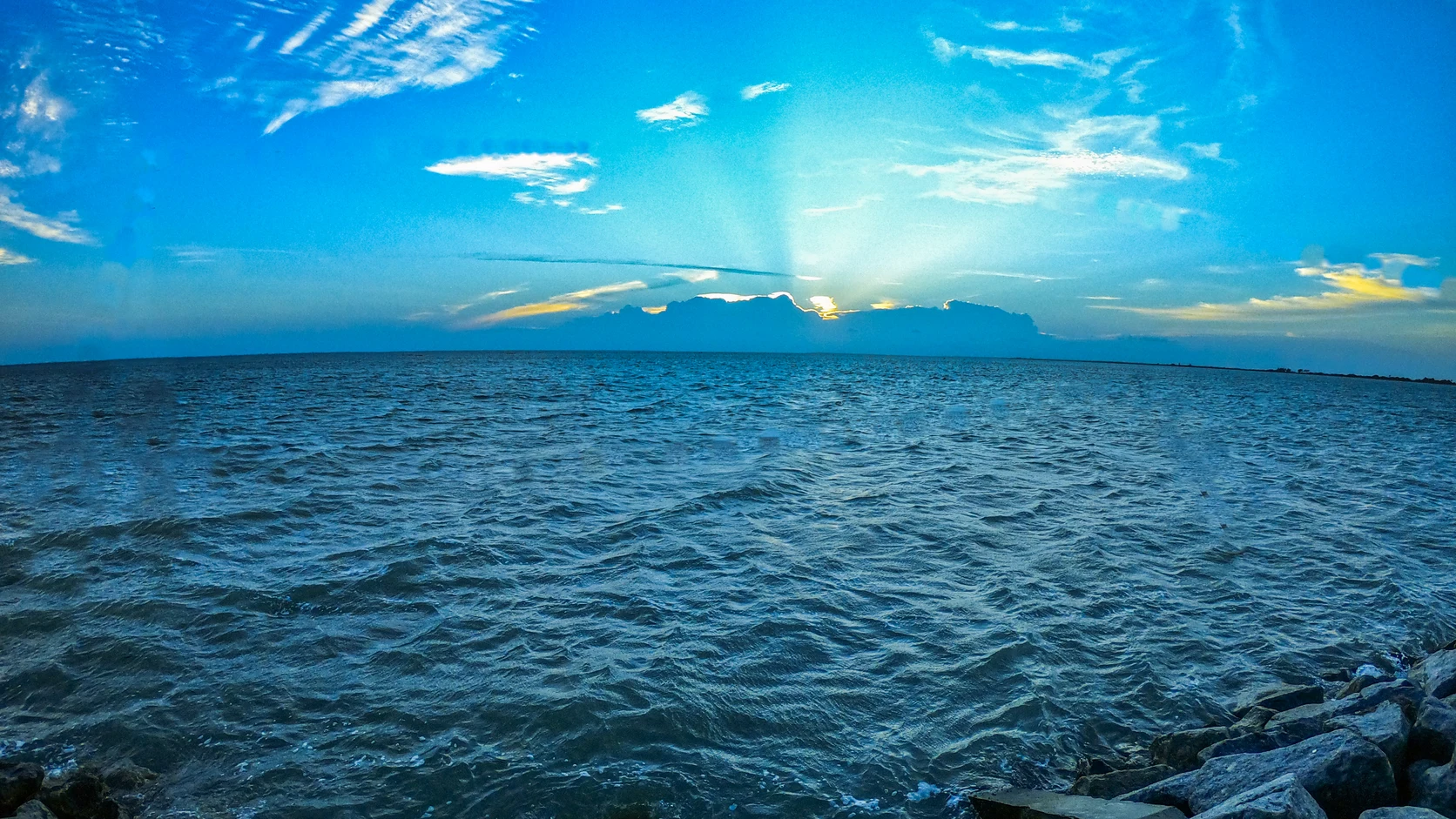
The shallow Jaffna Lagoon covers over four hundred square kilometers of green mangroves, sea plants, and sheltered water. Coastal fishers catch large mud crabs and blue swimming crabs in the bay. Local fishing cooperatives use wire traps called koodu and small nets to protect young crabs from early catch.
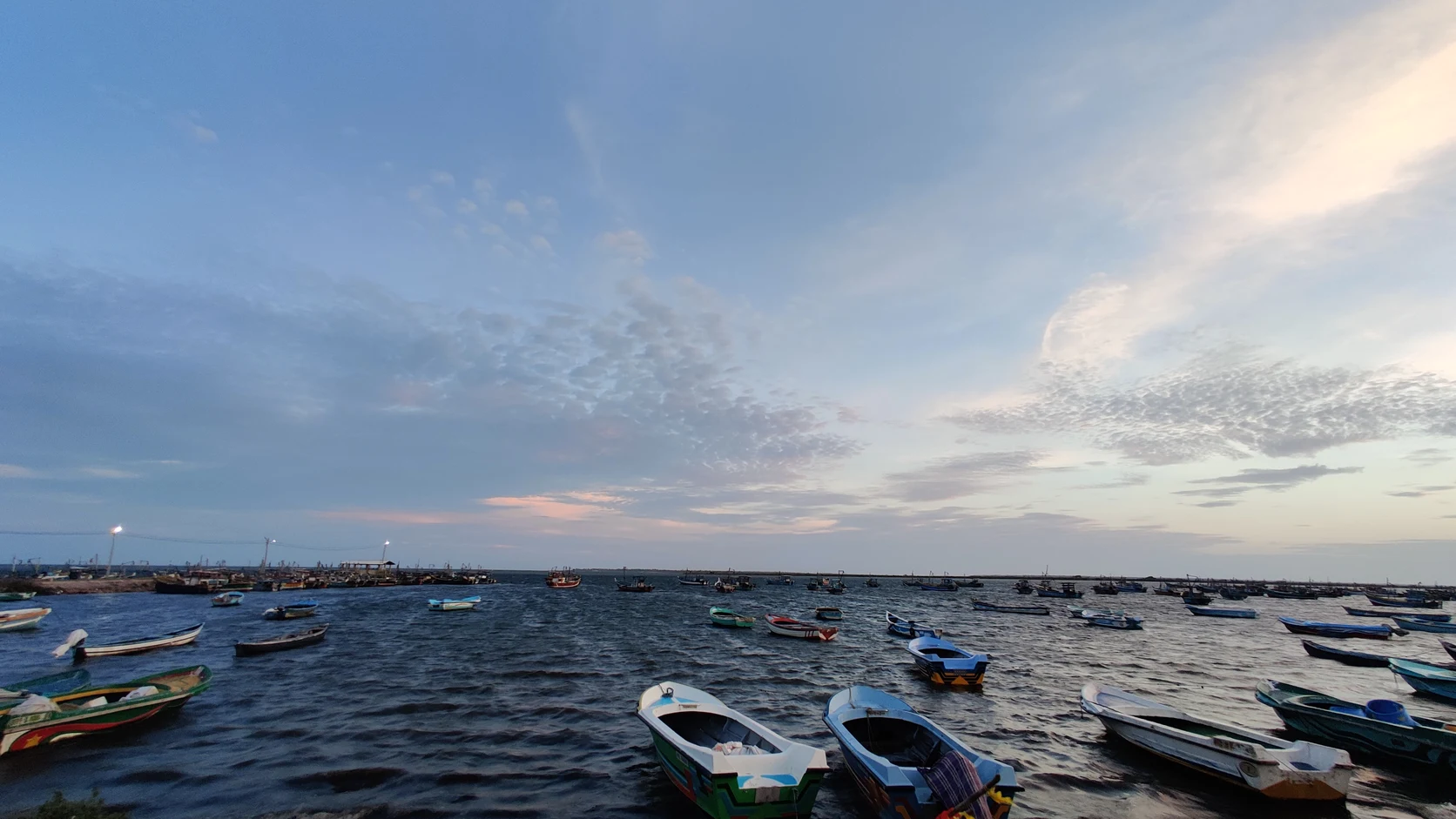
Crews paddle small wooden canoes and fiber vallam boats using long bamboo poles across shallow bays. Ocean water flows through Elephant Pass to keep lagoon salinity fresh and healthy for baby crabs. Fishers work at night using small lanterns hung above the water to guide crabs into wire traps.
Co-Management and Cooperative Governance
Fishery officers check that every caught crab measures at least eleven centimeters across its hard shell. Village cooperative societies inspect daily catches on the beach and protect mother crabs carrying egg sponges. Over fifteen thousand family households earn their living from catching, cleaning, and selling crabs.
Cooperative beach centers hold morning auctions where buyers bid on fresh crabs sorted by weight and shell hardness. New net rules help mitigate damage from heavy sea boats in coastal waters. Workers keep crabs in wooden holding pens in clean estuary channels before trucks arrive for market transport.
Culinary Chemistry and Northern Tamil Foodways
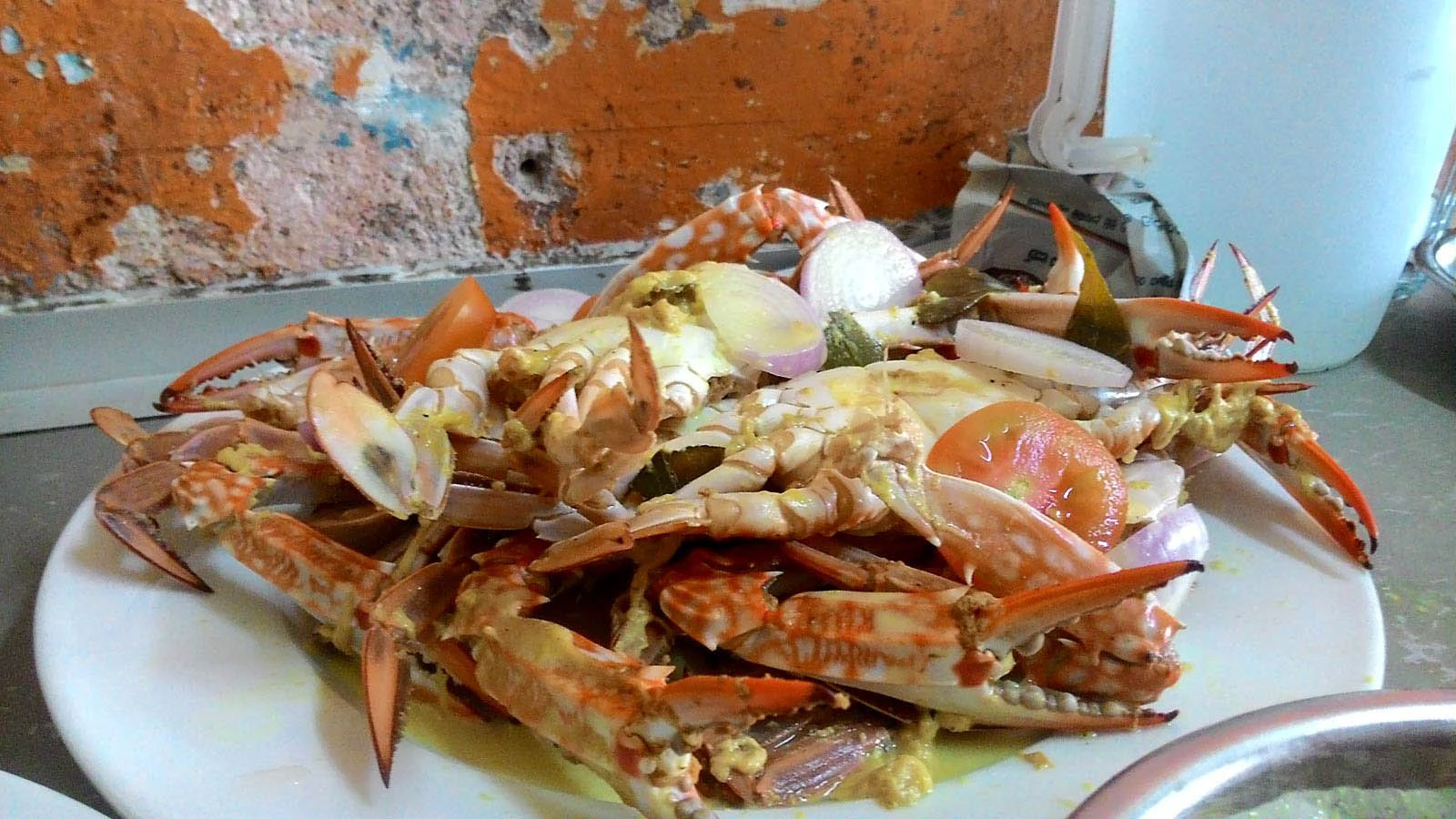
Jaffna crab curry is a famous traditional meal cooked with dark roasted spices and fresh coconut milk. Cooks make special curry powder by roasting coriander, cumin seeds, fennel, and red chilies in dry iron pans. Fresh green leaves from the drumstick tree are stirred into the boiling pot to add good flavor and vitamins.
Sweet coconut milk softens hot chili spices and makes a creamy soup as the crabs simmer on the stove. Sour tamarind fruit juice balances rich coconut milk and makes the claw meat soft and tender. Family cooks crack the thick crab claws with heavy knives so spices can enter the meat during cooking.
Market Logistics and Export Value Chains
Big mud crabs weighing over five hundred grams sell for high prices at sorting stations. Refrigerator trucks carry live crabs packed in wet sacks along the A9 highway to the Colombo airport. Air cargo planes fly fresh crabs to seafood restaurants in Singapore and Asian cities in one day.
Seafood restaurants in Colombo buy top quality crabs from northern lagoon fishers all year. Heavy monsoonal rains change water clarity and lagoon salinity between October and January. Families stir crab meat into hot palmyra flour soup called odiyal koozh during cold rainy days.
A2 · Elementary
Jaffna Crab Fishery: Lagoon Channels, Cooperative Rules, and Village Markets
Coastal cooperative societies, minimum landing sizes, and aromatic coconut gravies structure northern crab foodways.
Brackish Ecology and Artisanal Fishing Gear
The shallow, semi-enclosed waters of the Jaffna Lagoon encompass over four hundred square kilometers of critical mangrove, seagrass, and estuarine habitat supporting wild decapod crustaceans. Coastal fishers from northern villages target two primary commercial species: the mangrove mud crab Scylla serrata and the blue swimming crab Portunus pelagicus across intertidal channels. Village fisheries cooperatives regulate traditional bottom-set gillnets, baited wire traps known as koodu, and circular hoop lift nets to prevent juvenile crustacean exploitation.
Artisanal fishing crews operate non-motorized wooden canoes and small fiber-reinforced plastic vallam boats propelled by sails or long bamboo setting poles across shallow hydrodynamic shallows. Tidal water exchanges through the Elephant Pass channel and Palk Bay maintain seasonal salinity gradients essential for crustacean spawning migrations and larval recruitment. Nocturnal fishing operations rely on illuminated kerosene lanterns or battery-powered lamps suspended over shallow weed beds to lure foraging crabs into submerged entrapment gear upon complete water submersion.
Co-Management and Cooperative Governance
The Department of Fisheries and Aquatic Resources enforces a minimum harvestable carapace width of eleven centimeters for mud crabs to protect breeding stocks and reproductive equilibrium. Community-level fisheries cooperative societies in Jaffna inspect daily landings at designated beach shore centers, enforcing a strict prohibition on landing berried female crabs carrying external egg sponges to protect fecund female populations. Over fifteen thousand coastal households across the Jaffna peninsula derive primary or supplementary livelihood income directly from coastal fishing, processing, and localized crustacean trade.
Cooperative landing centres record daily auction bids where commercial buyers and middle agents purchase graded crabs sorted into meat quality and shell firmness categories to verify harvest provenance. Post-conflict fisheries recovery initiatives co-funded by international development agencies introduced sustainable mesh-size restrictions to mitigate destructive bottom trawling pressures in adjacent coastal waters. Live holding pens constructed of woven mangrove stakes or plastic crates in shallow estuary channels maintain crabs prior to transport, preventing crowded aggregation before wholesale export dispatch.
Culinary Chemistry and Northern Tamil Foodways
Authentic Jaffna crab curry, known locally as nandu kulambu, represents a culinary cornerstone of northern Tamil identity distinguished by dark roasted spices and intense aromatics. The distinctive flavor foundation relies on roasted Jaffna curry powder, incorporating coriander, cumin, fennel, dried red chilies, fenugreek, and black peppercorns dry-roasted until deeply fragrant. Fresh botanical leaves of the drumstick tree Moringa oleifera, known in Tamil as murungai ilai, are added toward the end of cooking to temper natural shell bitterness and enrich mineral nutrients.
Thick coconut milk extracted from mature northern coconuts softens pungent spice heat and forms an unctuous, rich velvety emulsion with crab lipids and shell essence during prolonged simmering. Crushed tamarind pulp provides essential tartness, fruit acid infusion, and phenolic organic acids that balance heavy coconut fats and tenderize dense claw meat through gentle maceration. In traditional family kitchens, cooks crack large crab claws prior to boiling so that spice-infused gravies penetrate the inner shell matrix and tender claw meat.
Market Logistics and Export Value Chains
Mud crabs landed across Jaffna collection points command premium export prices, graded systematically by weight, with each prime specimen exceeding five hundred grams designated as top tier for cold chain logistics and perishable shipment. Refrigerator trucks transport live crabs wrapped in damp burlap sacks along the A9 highway connecting Jaffna to processing packhouses near Bandaranaike International Airport for onward freight transshipment. Live airfreight shipments supply high-end seafood restaurants across Singapore, Hong Kong, and Southeast Asian urban consumer centers within twenty-four hours of packing.
Domestic hospitality demand across Colombo specialty seafood dining venues drives intense commercial competition for each top-tier Jaffna lagoon crab consignment throughout the year. Seasonal weather patterns, particularly the monsoonal rainfall between October and January, alter water turbidity, lagoon salinity, and coastal fishing yields across the northern peninsula. Traditional sundried palmyra root flour, known locally as odiyal koozh, incorporates shredded crab meat into ceremonial community seafood pot soups during rainy gatherings.
B1 · Intermediate
Artisanal Harvesting and Co-Management in the Jaffna Crab Fishery
Investigating lagoon water hydrology, community harvest inspections, and culinary traditions across the northern peninsula.
Brackish Ecology and Artisanal Fishing Gear
The shallow, semi-enclosed waters of the Jaffna Lagoon encompass over four hundred square kilometers of critical mangrove, seagrass, and estuarine habitat supporting wild decapod crustaceans. Coastal fishers from northern villages target two primary commercial species: the mangrove mud crab Scylla serrata and the blue swimming crab Portunus pelagicus across intertidal channels. Village fisheries cooperatives regulate traditional bottom-set gillnets, baited wire traps known as koodu, and circular hoop lift nets to prevent juvenile crustacean exploitation.
Artisanal fishing crews operate non-motorized wooden canoes and small fiber-reinforced plastic vallam boats propelled by sails or long bamboo setting poles across shallow hydrodynamic shallows. Tidal water exchanges through the Elephant Pass channel and Palk Bay maintain seasonal salinity gradients essential for crustacean spawning migrations and larval recruitment. Nocturnal fishing operations rely on illuminated kerosene lanterns or battery-powered lamps suspended over shallow weed beds to lure foraging crabs into submerged entrapment gear upon complete water submersion.
Co-Management and Cooperative Governance
The Department of Fisheries and Aquatic Resources enforces a minimum harvestable carapace width of eleven centimeters for mud crabs to protect breeding stocks and reproductive equilibrium. Community-level fisheries cooperative societies in Jaffna inspect daily landings at designated beach shore centers, enforcing a strict prohibition on landing berried female crabs carrying external egg sponges to protect fecund female populations. Over fifteen thousand coastal households across the Jaffna peninsula derive primary or supplementary livelihood income directly from coastal fishing, processing, and localized crustacean trade.
Cooperative landing centres record daily auction bids where commercial buyers and middle agents purchase graded crabs sorted into meat quality and shell firmness categories to verify harvest provenance. Post-conflict fisheries recovery initiatives co-funded by international development agencies introduced sustainable mesh-size restrictions to mitigate destructive bottom trawling pressures in adjacent coastal waters. Live holding pens constructed of woven mangrove stakes or plastic crates in shallow estuary channels maintain crabs prior to transport, preventing crowded aggregation before wholesale export dispatch.
Culinary Chemistry and Northern Tamil Foodways
Authentic Jaffna crab curry, known locally as nandu kulambu, represents a culinary cornerstone of northern Tamil identity distinguished by dark roasted spices and intense aromatics. The distinctive flavor foundation relies on roasted Jaffna curry powder, incorporating coriander, cumin, fennel, dried red chilies, fenugreek, and black peppercorns dry-roasted until deeply fragrant. Fresh botanical leaves of the drumstick tree Moringa oleifera, known in Tamil as murungai ilai, are added toward the end of cooking to temper natural shell bitterness and enrich mineral nutrients.
Thick coconut milk extracted from mature northern coconuts softens pungent spice heat and forms an unctuous, rich velvety emulsion with crab lipids and shell essence during prolonged simmering. Crushed tamarind pulp provides essential tartness, fruit acid infusion, and phenolic organic acids that balance heavy coconut fats and tenderize dense claw meat through gentle maceration. In traditional family kitchens, cooks crack large crab claws prior to boiling so that spice-infused gravies penetrate the inner shell matrix and tender claw meat.
Market Logistics and Export Value Chains
Mud crabs landed across Jaffna collection points command premium export prices, graded systematically by weight, with each prime specimen exceeding five hundred grams designated as top tier for cold chain logistics and perishable shipment. Refrigerator trucks transport live crabs wrapped in damp burlap sacks along the A9 highway connecting Jaffna to processing packhouses near Bandaranaike International Airport for onward freight transshipment. Live airfreight shipments supply high-end seafood restaurants across Singapore, Hong Kong, and Southeast Asian urban consumer centers within twenty-four hours of packing.
Domestic hospitality demand across Colombo specialty seafood dining venues drives intense commercial competition for each top-tier Jaffna lagoon crab consignment throughout the year. Seasonal weather patterns, particularly the monsoonal rainfall between October and January, alter water turbidity, lagoon salinity, and coastal fishing yields across the northern peninsula. Traditional sundried palmyra root flour, known locally as odiyal koozh, incorporates shredded crab meat into ceremonial community seafood pot soups during rainy gatherings.
B2 · Upper Intermediate
Estuarine Co-Management, Carapace Governance, and Culinary Traditions in Jaffna
An analytical study of lagoon crab conservation, auction economics, and spice-infused gastronomy in northern Sri Lanka.
Brackish Ecology and Artisanal Fishing Gear
The shallow, semi-enclosed waters of the Jaffna Lagoon encompass over four hundred square kilometers of critical mangrove, seagrass, and estuarine habitat supporting wild decapod crustaceans. Coastal fishers from northern villages target two primary commercial species: the mangrove mud crab Scylla serrata and the blue swimming crab Portunus pelagicus across intertidal channels. Village fisheries cooperatives regulate traditional bottom-set gillnets, baited wire traps known as koodu, and circular hoop lift nets to prevent juvenile crustacean exploitation.
Artisanal fishing crews operate non-motorized wooden canoes and small fiber-reinforced plastic vallam boats propelled by sails or long bamboo setting poles across shallow hydrodynamic shallows. Tidal water exchanges through the Elephant Pass channel and Palk Bay maintain seasonal salinity gradients essential for crustacean spawning migrations and larval recruitment. Nocturnal fishing operations rely on illuminated kerosene lanterns or battery-powered lamps suspended over shallow weed beds to lure foraging crabs into submerged entrapment gear upon complete water submersion.
Co-Management and Cooperative Governance
The Department of Fisheries and Aquatic Resources enforces a minimum harvestable carapace width of eleven centimeters for mud crabs to protect breeding stocks and reproductive equilibrium. Community-level fisheries cooperative societies in Jaffna inspect daily landings at designated beach shore centers, enforcing a strict prohibition on landing berried female crabs carrying external egg sponges to protect fecund female populations. Over fifteen thousand coastal households across the Jaffna peninsula derive primary or supplementary livelihood income directly from coastal fishing, processing, and localized crustacean trade.
Cooperative landing centres record daily auction bids where commercial buyers and middle agents purchase graded crabs sorted into meat quality and shell firmness categories to verify harvest provenance. Post-conflict fisheries recovery initiatives co-funded by international development agencies introduced sustainable mesh-size restrictions to mitigate destructive bottom trawling pressures in adjacent coastal waters. Live holding pens constructed of woven mangrove stakes or plastic crates in shallow estuary channels maintain crabs prior to transport, preventing crowded aggregation before wholesale export dispatch.
Culinary Chemistry and Northern Tamil Foodways
Authentic Jaffna crab curry, known locally as nandu kulambu, represents a culinary cornerstone of northern Tamil identity distinguished by dark roasted spices and intense aromatics. The distinctive flavor foundation relies on roasted Jaffna curry powder, incorporating coriander, cumin, fennel, dried red chilies, fenugreek, and black peppercorns dry-roasted until deeply fragrant. Fresh botanical leaves of the drumstick tree Moringa oleifera, known in Tamil as murungai ilai, are added toward the end of cooking to temper natural shell bitterness and enrich mineral nutrients.
Thick coconut milk extracted from mature northern coconuts softens pungent spice heat and forms an unctuous, rich velvety emulsion with crab lipids and shell essence during prolonged simmering. Crushed tamarind pulp provides essential tartness, fruit acid infusion, and phenolic organic acids that balance heavy coconut fats and tenderize dense claw meat through gentle maceration. In traditional family kitchens, cooks crack large crab claws prior to boiling so that spice-infused gravies penetrate the inner shell matrix and tender claw meat.
Market Logistics and Export Value Chains
Mud crabs landed across Jaffna collection points command premium export prices, graded systematically by weight, with each prime specimen exceeding five hundred grams designated as top tier for cold chain logistics and perishable shipment. Refrigerator trucks transport live crabs wrapped in damp burlap sacks along the A9 highway connecting Jaffna to processing packhouses near Bandaranaike International Airport for onward freight transshipment. Live airfreight shipments supply high-end seafood restaurants across Singapore, Hong Kong, and Southeast Asian urban consumer centers within twenty-four hours of packing.
Domestic hospitality demand across Colombo specialty seafood dining venues drives intense commercial competition for each top-tier Jaffna lagoon crab consignment throughout the year. Seasonal weather patterns, particularly the monsoonal rainfall between October and January, alter water turbidity, lagoon salinity, and coastal fishing yields across the northern peninsula. Traditional sundried palmyra root flour, known locally as odiyal koozh, incorporates shredded crab meat into ceremonial community seafood pot soups during rainy gatherings.
C1 · Advanced
Lagoon Hydrology, Crustacean Extraction, and Culinary Chemistry in Jaffna
An investigative examination of brackish water ecology, cooperative regulation, and export value chains in northern Sri Lanka.
Brackish Ecology and Artisanal Fishing Gear
The shallow, semi-enclosed waters of the Jaffna Lagoon encompass over four hundred square kilometers of critical mangrove, seagrass, and estuarine habitat supporting wild decapod crustaceans. Coastal fishers from northern villages target two primary commercial species: the mangrove mud crab Scylla serrata and the blue swimming crab Portunus pelagicus across intertidal channels. Village fisheries cooperatives regulate traditional bottom-set gillnets, baited wire traps known as koodu, and circular hoop lift nets to prevent juvenile crustacean exploitation.
Artisanal fishing crews operate non-motorized wooden canoes and small fiber-reinforced plastic vallam boats propelled by sails or long bamboo setting poles across shallow hydrodynamic shallows. Tidal water exchanges through the Elephant Pass channel and Palk Bay maintain seasonal salinity gradients essential for crustacean spawning migrations and larval recruitment. Nocturnal fishing operations rely on illuminated kerosene lanterns or battery-powered lamps suspended over shallow weed beds to lure foraging crabs into submerged entrapment gear upon complete water submersion.
Co-Management and Cooperative Governance
The Department of Fisheries and Aquatic Resources enforces a minimum harvestable carapace width of eleven centimeters for mud crabs to protect breeding stocks and reproductive equilibrium. Community-level fisheries cooperative societies in Jaffna inspect daily landings at designated beach shore centers, enforcing a strict prohibition on landing berried female crabs carrying external egg sponges to protect fecund female populations. Over fifteen thousand coastal households across the Jaffna peninsula derive primary or supplementary livelihood income directly from coastal fishing, processing, and localized crustacean trade.
Cooperative landing centres record daily auction bids where commercial buyers and middle agents purchase graded crabs sorted into meat quality and shell firmness categories to verify harvest provenance. Post-conflict fisheries recovery initiatives co-funded by international development agencies introduced sustainable mesh-size restrictions to mitigate destructive bottom trawling pressures in adjacent coastal waters. Live holding pens constructed of woven mangrove stakes or plastic crates in shallow estuary channels maintain crabs prior to transport, preventing crowded aggregation before wholesale export dispatch.
Culinary Chemistry and Northern Tamil Foodways
Authentic Jaffna crab curry, known locally as nandu kulambu, represents a culinary cornerstone of northern Tamil identity distinguished by dark roasted spices and intense aromatics. The distinctive flavor foundation relies on roasted Jaffna curry powder, incorporating coriander, cumin, fennel, dried red chilies, fenugreek, and black peppercorns dry-roasted until deeply fragrant. Fresh botanical leaves of the drumstick tree Moringa oleifera, known in Tamil as murungai ilai, are added toward the end of cooking to temper natural shell bitterness and enrich mineral nutrients.
Thick coconut milk extracted from mature northern coconuts softens pungent spice heat and forms an unctuous, rich velvety emulsion with crab lipids and shell essence during prolonged simmering. Crushed tamarind pulp provides essential tartness, fruit acid infusion, and phenolic organic acids that balance heavy coconut fats and tenderize dense claw meat through gentle maceration. In traditional family kitchens, cooks crack large crab claws prior to boiling so that spice-infused gravies penetrate the inner shell matrix and tender claw meat.
Market Logistics and Export Value Chains
Mud crabs landed across Jaffna collection points command premium export prices, graded systematically by weight, with each prime specimen exceeding five hundred grams designated as top tier for cold chain logistics and perishable shipment. Refrigerator trucks transport live crabs wrapped in damp burlap sacks along the A9 highway connecting Jaffna to processing packhouses near Bandaranaike International Airport for onward freight transshipment. Live airfreight shipments supply high-end seafood restaurants across Singapore, Hong Kong, and Southeast Asian urban consumer centers within twenty-four hours of packing.
Domestic hospitality demand across Colombo specialty seafood dining venues drives intense commercial competition for each top-tier Jaffna lagoon crab consignment throughout the year. Seasonal weather patterns, particularly the monsoonal rainfall between October and January, alter water turbidity, lagoon salinity, and coastal fishing yields across the northern peninsula. Traditional sundried palmyra root flour, known locally as odiyal koozh, incorporates shredded crab meat into ceremonial community seafood pot soups during rainy gatherings.
C2 · Mastery
Estuarine Decapod Ecology, Intertidal Harvesting, and Gastronomic Lineage in Jaffna
A rigorous analytical critique of artisanal trap dynamics, reproductive equilibrium, and airfreight logistics in Sri Lanka.
Brackish Ecology and Artisanal Fishing Gear
The shallow, semi-enclosed waters of the Jaffna Lagoon encompass over four hundred square kilometers of critical mangrove, seagrass, and estuarine habitat supporting wild decapod crustaceans. Coastal fishers from northern villages target two primary commercial species: the mangrove mud crab Scylla serrata and the blue swimming crab Portunus pelagicus across intertidal channels. Village fisheries cooperatives regulate traditional bottom-set gillnets, baited wire traps known as koodu, and circular hoop lift nets to prevent juvenile crustacean exploitation.
Artisanal fishing crews operate non-motorized wooden canoes and small fiber-reinforced plastic vallam boats propelled by sails or long bamboo setting poles across shallow hydrodynamic shallows. Tidal water exchanges through the Elephant Pass channel and Palk Bay maintain seasonal salinity gradients essential for crustacean spawning migrations and larval recruitment. Nocturnal fishing operations rely on illuminated kerosene lanterns or battery-powered lamps suspended over shallow weed beds to lure foraging crabs into submerged entrapment gear upon complete water submersion.
Co-Management and Cooperative Governance
The Department of Fisheries and Aquatic Resources enforces a minimum harvestable carapace width of eleven centimeters for mud crabs to protect breeding stocks and reproductive equilibrium. Community-level fisheries cooperative societies in Jaffna inspect daily landings at designated beach shore centers, enforcing a strict prohibition on landing berried female crabs carrying external egg sponges to protect fecund female populations. Over fifteen thousand coastal households across the Jaffna peninsula derive primary or supplementary livelihood income directly from coastal fishing, processing, and localized crustacean trade.
Cooperative landing centres record daily auction bids where commercial buyers and middle agents purchase graded crabs sorted into meat quality and shell firmness categories to verify harvest provenance. Post-conflict fisheries recovery initiatives co-funded by international development agencies introduced sustainable mesh-size restrictions to mitigate destructive bottom trawling pressures in adjacent coastal waters. Live holding pens constructed of woven mangrove stakes or plastic crates in shallow estuary channels maintain crabs prior to transport, preventing crowded aggregation before wholesale export dispatch.
Culinary Chemistry and Northern Tamil Foodways
Authentic Jaffna crab curry, known locally as nandu kulambu, represents a culinary cornerstone of northern Tamil identity distinguished by dark roasted spices and intense aromatics. The distinctive flavor foundation relies on roasted Jaffna curry powder, incorporating coriander, cumin, fennel, dried red chilies, fenugreek, and black peppercorns dry-roasted until deeply fragrant. Fresh botanical leaves of the drumstick tree Moringa oleifera, known in Tamil as murungai ilai, are added toward the end of cooking to temper natural shell bitterness and enrich mineral nutrients.
Thick coconut milk extracted from mature northern coconuts softens pungent spice heat and forms an unctuous, rich velvety emulsion with crab lipids and shell essence during prolonged simmering. Crushed tamarind pulp provides essential tartness, fruit acid infusion, and phenolic organic acids that balance heavy coconut fats and tenderize dense claw meat through gentle maceration. In traditional family kitchens, cooks crack large crab claws prior to boiling so that spice-infused gravies penetrate the inner shell matrix and tender claw meat.
Market Logistics and Export Value Chains
Mud crabs landed across Jaffna collection points command premium export prices, graded systematically by weight, with each prime specimen exceeding five hundred grams designated as top tier for cold chain logistics and perishable shipment. Refrigerator trucks transport live crabs wrapped in damp burlap sacks along the A9 highway connecting Jaffna to processing packhouses near Bandaranaike International Airport for onward freight transshipment. Live airfreight shipments supply high-end seafood restaurants across Singapore, Hong Kong, and Southeast Asian urban consumer centers within twenty-four hours of packing.
Domestic hospitality demand across Colombo specialty seafood dining venues drives intense commercial competition for each top-tier Jaffna lagoon crab consignment throughout the year. Seasonal weather patterns, particularly the monsoonal rainfall between October and January, alter water turbidity, lagoon salinity, and coastal fishing yields across the northern peninsula. Traditional sundried palmyra root flour, known locally as odiyal koozh, incorporates shredded crab meat into ceremonial community seafood pot soups during rainy gatherings.
Check your understanding
Choose how closely you want to revisit the article. You can refer back while answering, and review explanations when you finish.
Quick Quiz A1
Try one question, then create a free account for the full Quick Quiz. Sign Up Free
Answer every question before checking. There is no time limit.
Your results
/ 1 correct (%)
Read the explanations to see how each answer connects to the article.
-
How big is the shallow Jaffna Lagoon?
1. Answer:
Quick Quiz A2
Try one question, then create a free account for the full Quick Quiz. Sign Up Free
Answer every question before checking. There is no time limit.
Your results
/ 1 correct (%)
Read the explanations to see how each answer connects to the article.
-
What area of estuarine and mangrove habitat does the Jaffna Lagoon encompass?
1. Answer:
Quick Quiz B1
Try one question, then create a free account for the full Quick Quiz. Sign Up Free
Answer every question before checking. There is no time limit.
Your results
/ 1 correct (%)
Read the explanations to see how each answer connects to the article.
-
What area of estuarine and mangrove habitat does the Jaffna Lagoon encompass?
1. Answer:
Quick Quiz B2
Try one question, then create a free account for the full Quick Quiz. Sign Up Free
Answer every question before checking. There is no time limit.
Your results
/ 1 correct (%)
Read the explanations to see how each answer connects to the article.
-
What area of estuarine and mangrove habitat does the Jaffna Lagoon encompass?
1. Answer:
Quick Quiz C1
Try one question, then create a free account for the full Quick Quiz. Sign Up Free
Answer every question before checking. There is no time limit.
Your results
/ 1 correct (%)
Read the explanations to see how each answer connects to the article.
-
What area of estuarine and mangrove habitat does the Jaffna Lagoon encompass?
1. Answer:
Quick Quiz C2
Try one question, then create a free account for the full Quick Quiz. Sign Up Free
Answer every question before checking. There is no time limit.
Your results
/ 1 correct (%)
Read the explanations to see how each answer connects to the article.
-
What area of estuarine and mangrove habitat does the Jaffna Lagoon encompass?
1. Answer:
