A1 · Beginner
Pettah Market: Streets, Carts, and Fresh Food in Colombo
Pettah is a historic wholesale market in Colombo where strong porters and busy trucks move daily food supplies.
Urban Geography and Cross Street Specialization
Pettah is a busy market district in Colombo near the big train station. Many people call this famous trading area Pitakotuwa.
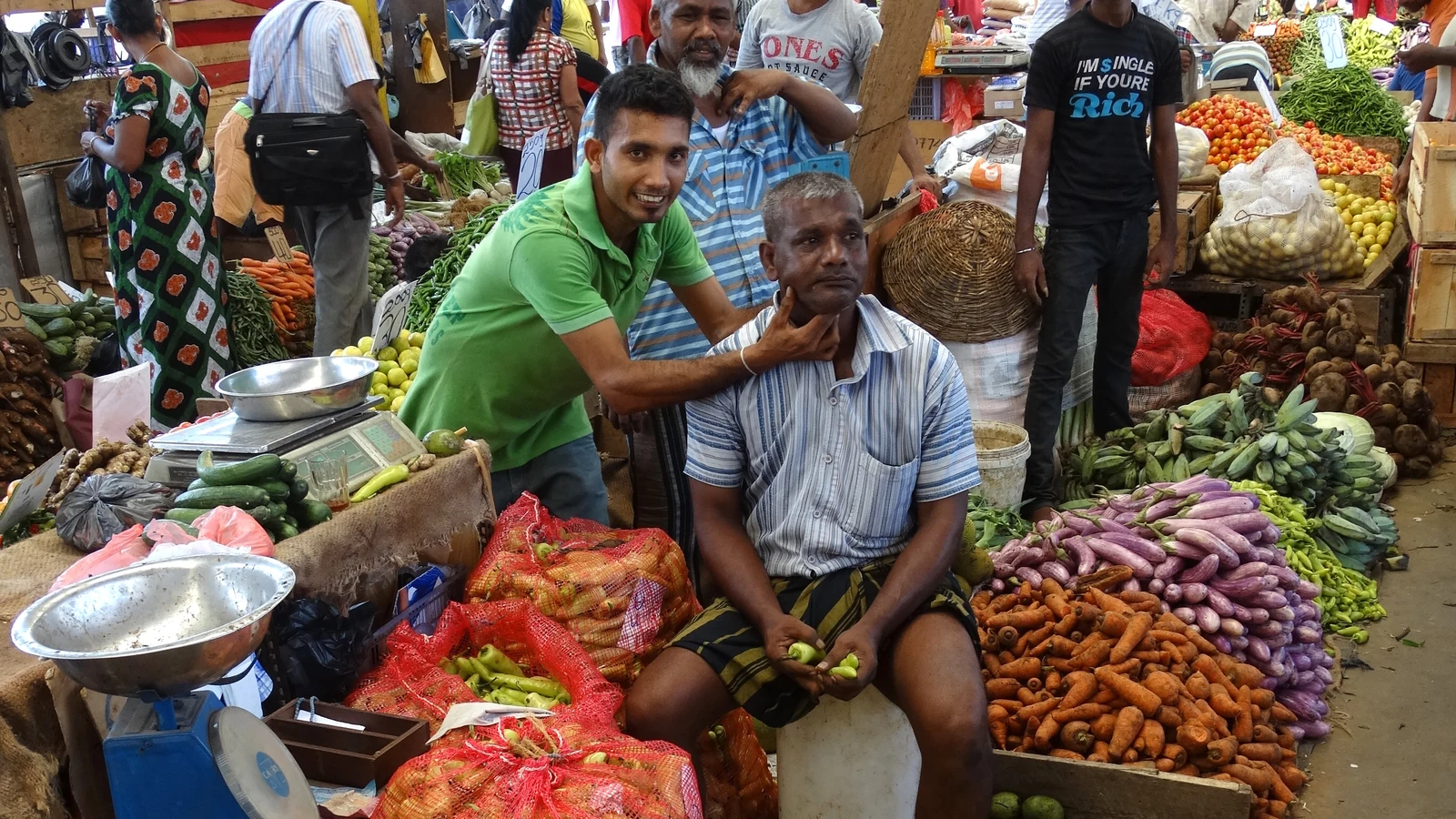
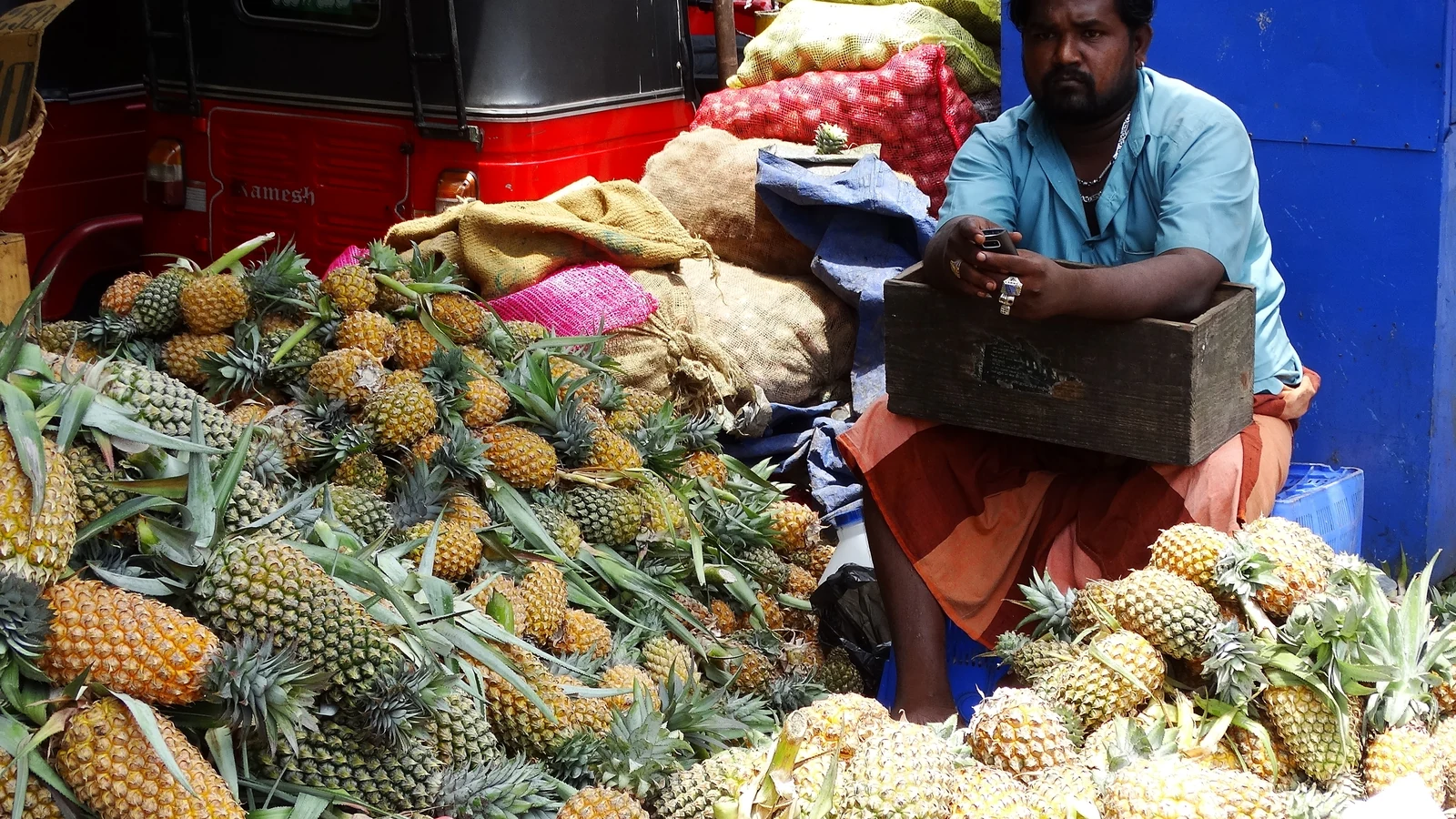
The long streets have numbers and sell different foods. Fifth Cross Street sells fresh green vegetables and sweet tropical fruits.
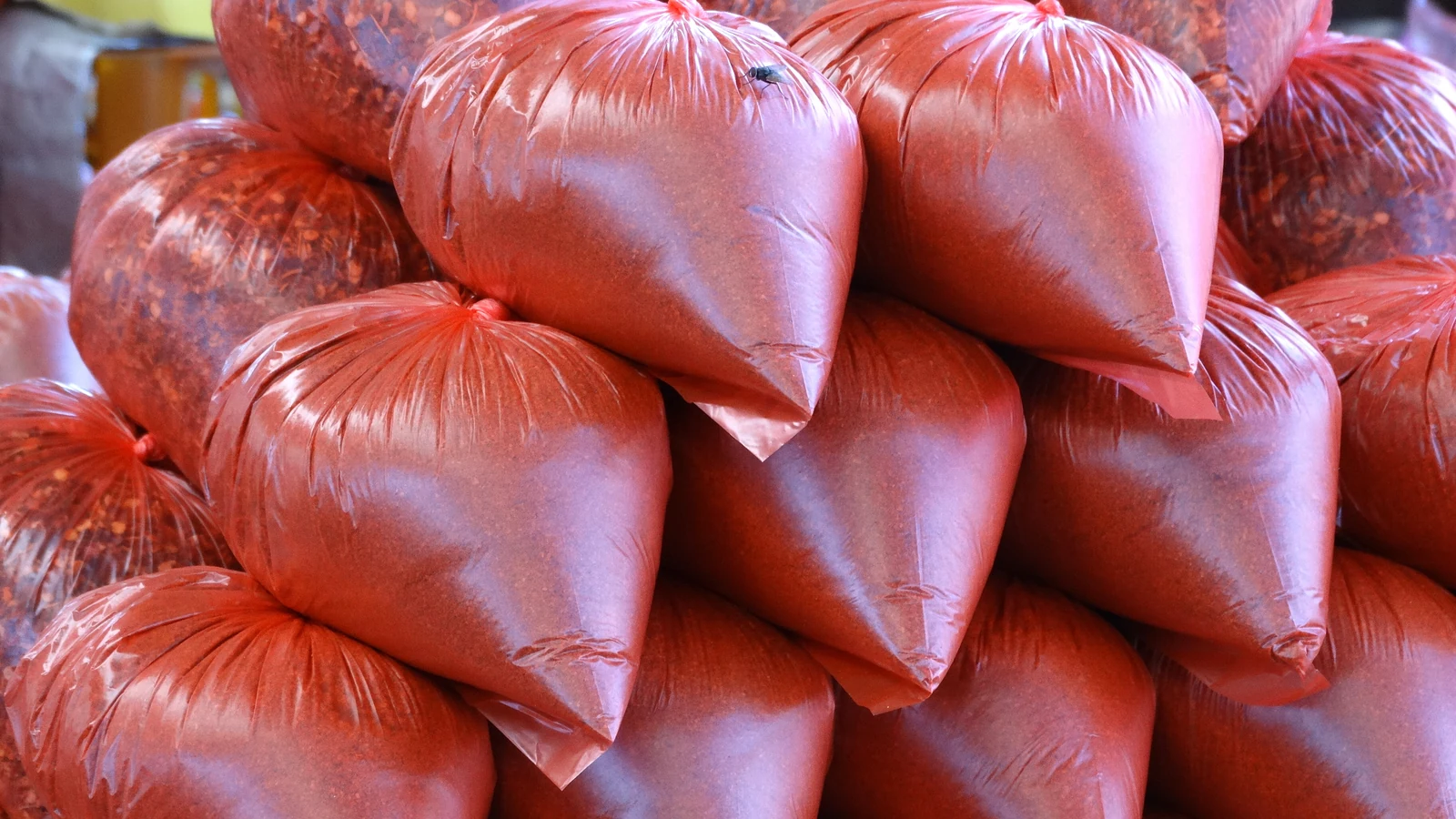
Other streets sell dry potatoes, red onions, and bags of rice. Gold shops on Sea Street give quick money loans to food buyers.
Traders distribute thousands of food bags across the Western Province every day.
The Natami Guilds and Manual Porterage
Strong market porters in Pettah are known as natamis. They carry heavy food sacks through crowded streets every day.
The porters pull large two-wheeled wooden carts called karaththa. These strong wooden carts carry over five hundred kilograms of food.
Workers carry big fifty-kilogram sacks on their heads up steep stairs. Merchants pay the porters for each heavy sack they move.
Wholesale Price Discovery and Market Logistics
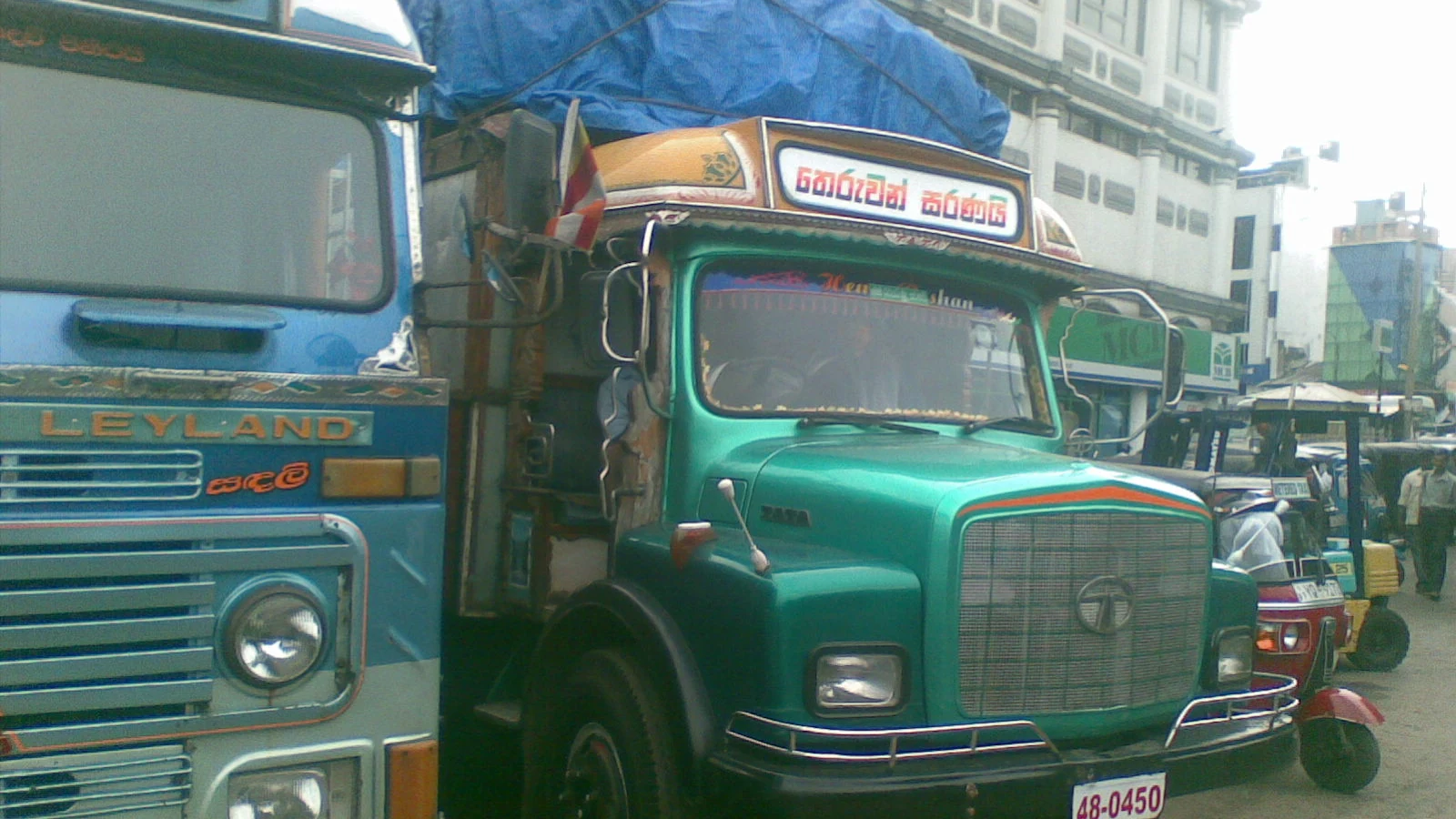
Big trucks bring fresh vegetables from highland farms during the night. The trucks arrive in Colombo between midnight and early dawn.
Market brokers sell the food quickly to local shop owners. The prices agreed in Pettah set food costs for the whole island. The Central Bank checks these daily prices to track the national cost of living.
The market floors are empty and clean before noon. Trucks carry the fresh produce to village shops across the province.
Modernization and the Peliyagoda Transition
For many years the famous Manning Market operated in Pettah. In 2020 the government moved the big vegetable market to Peliyagoda.
The new Peliyagoda center has wide roads, clean floors, and large parking areas. Big trucks unload there without blocking city traffic.
Modern supermarkets and digital food orders now buy direct from farms without using street brokers.
Pettah still sells dried food, sweet spices, cloth, and home goods. City cleaners sweep the old streets every night to keep them clean.
A2 · Elementary
Pettah Market: Cross Streets, Wholesale Stalls, and Porter Guilds
Wholesale produce networks, manual cart tariffs, and nocturnal lorry schedules structure Colombo central food distribution.
Urban Geography and Cross Street Specialization
Pettah, known natively in Sinhala as Pitakotuwa, borders Colombo Fort Railway Station and the busy Port of Colombo as Sri Lanka's historic wholesale trading quarter. This compact urban district operates as a labyrinth of commercial activity, organized along numbered cross streets where specific commercial commodities are strictly clustered by long-standing tradition. Commercial wholesale merchants occupy narrow multi-story shopfronts where ground levels serve as receiving bays and upper floors function as dry storage warehouses.
The spatial layout of the quarter reflects distinct commodity specializations. Fifth Cross Street historically anchored the wholesale trading of perishable green vegetables, tropical fruits, and highland produce arriving from regional agrarian hubs. Meanwhile, Fourth Cross Street and Keyzer Street concentrate transactions in bulk dry rations, including imported red onions, dry potatoes, garlic cloves, and sun-cured chili pods stacked in towering burlap sacks.
Adjacent to the spice and produce arteries, Sea Street accommodates traditional gold bullion dealers and jeweler brokers. These bullion houses provide crucial trade credit, clearing short-term liquidity and cash advances that enable wholesale food importers to settle containerized consignments rapidly. Daily wholesale transactions throughout Pettah channel thousands of metric tons of agricultural produce directly into coastal retail networks, sustaining the urban food supply of the Western Province.
The Natami Guilds and Manual Porterage
The physical movement of freight through Pettah's narrow, vehicle-choked corridors depends upon a specialized manual workforce known as natamis. These commercial porters handle the unloading, staging, and transfer of bulky agrarian produce where motorized trucks cannot easily maneuver. Porters navigate congested roadways using heavy two-wheeled wooden handcarts known as karaththa, maneuvering cargo loads exceeding 500 kilograms across fractured asphalt surfaces through coordinated physical power.
Natami labor organization relies on informal territorial guilds that control loading bays and delivery rights for designated merchant storefronts. Membership within these portage networks passes through familial or regional ties, establishing strict protocols regarding which crews may handle specific incoming consignments. Porters employ specialized head-load techniques called kara-badu to balance fifty-kilogram burlap sacks of sugar and flour, hauling them up steep warehouse stairways with notable balance and agility.
Compensation for portage follows standardized piece-rate tariffs paid per sack, crate, or basket rather than fixed hourly wages, adjusting according to freight weight, stairway elevation, and transfer distance. Despite their central role in the national food distribution chain, porters operate without formal contracts or institutionalized social security safety nets. Daily physical strain, vehicular exhaust exposure, and intense equatorial heat create severe occupational health vulnerabilities across aging porter communities.
Wholesale Price Discovery and Market Logistics
Wholesale negotiations across Pettah establish decisive price-setting benchmarks that guide agricultural commodity trading across the entire island. Farmgate valuations in remote rural districts adjust dynamically in response to morning market quotes registered on Colombo commission floors. Heavy transport lorries laden with fresh produce from agrarian centers like Dambulla and Nuwara Eliya complete long overnight journeys, arriving in Pettah during nocturnal hours between midnight and five in the morning.
Commission agents, known locally as thoppu brokers, mediate transactions between rural transport shippers and municipal resale merchants, charging standardized percentage commissions on completed sales. Bidding unfolds rapidly under harsh lamplight, driven by visual produce inspections, moisture checks, and immediate supply assessments. Rapid commercial turnover clears auction floors before midday, permitting municipal sanitation crews to sweep trading platforms before afternoon retail restocking begins.
Economists at the Central Bank of Sri Lanka track daily wholesale quotes in Pettah as essential empirical inputs for the National Consumer Price Index. The quarter serves as a sensitive economic barometer, reflecting monsoon disruptions, transport fuel price adjustments, and national crop yields. However, traditional unrefrigerated handling and prolonged transit compression result in post-harvest produce losses estimated between 20 and 30 percent, generating significant economic waste.
Modernization and the Peliyagoda Transition
For more than a century, national vegetable distribution centered upon the historic Manning Market, an eight-acre trading terminal established in Pettah in 1903. Over decades of metropolitan expansion, growing lorry traffic overwhelmed surrounding rail corridors and urban streets, creating severe gridlock and municipal sanitation bottlenecks. In November 2020, the Urban Development Authority formally relocated wholesale vegetable operations to the modern Peliyagoda Logistics Complex across the Kelani River.
The relocated Peliyagoda terminal introduced purpose-built multi-level trading floors, spacious vehicle unloading bays, and mechanized solid waste processing facilities. This infrastructure upgrade relieved severe congestion around Colombo Fort, allowing long-haul transport lorries to unload without blocking inner-city bus lanes. Meanwhile, historic Pettah adapted dynamically, repurposing vacated trading floors toward dry rations wholesale, commercial textile markets, fancy goods import, and bustling retail commerce.
The food supply chain continues to evolve as direct supermarket procurement and digital wholesale logistics accelerate disintermediation around traditional street commission houses. Nevertheless, Pettah retains its historic character as an indispensable commercial hub for spices, grains, and specialty provisions. Colombo Municipal Council conducts nightly waste management sweeps and strict traffic zoning, balancing historic market traditions with contemporary urban infrastructure demands.
B1 · Intermediate
Urban Logistics, Natami Porterage, and Food Distribution in Pettah
Examining commercial cross-street micro-districts, manual cart transport guilds, and national price transmission dynamics.
Urban Geography and Cross Street Specialization
Pettah, known natively in Sinhala as Pitakotuwa, borders Colombo Fort Railway Station and the busy Port of Colombo as Sri Lanka's historic wholesale trading quarter. This compact urban district operates as a labyrinth of commercial activity, organized along numbered cross streets where specific commercial commodities are strictly clustered by long-standing tradition. Commercial wholesale merchants occupy narrow multi-story shopfronts where ground levels serve as receiving bays and upper floors function as dry storage warehouses.
The spatial layout of the quarter reflects distinct commodity specializations. Fifth Cross Street historically anchored the wholesale trading of perishable green vegetables, tropical fruits, and highland produce arriving from regional agrarian hubs. Meanwhile, Fourth Cross Street and Keyzer Street concentrate transactions in bulk dry rations, including imported red onions, dry potatoes, garlic cloves, and sun-cured chili pods stacked in towering burlap sacks.
Adjacent to the spice and produce arteries, Sea Street accommodates traditional gold bullion dealers and jeweler brokers. These bullion houses provide crucial trade credit, clearing short-term liquidity and cash advances that enable wholesale food importers to settle containerized consignments rapidly. Daily wholesale transactions throughout Pettah channel thousands of metric tons of agricultural produce directly into coastal retail networks, sustaining the urban food supply of the Western Province.
The Natami Guilds and Manual Porterage
The physical movement of freight through Pettah's narrow, vehicle-choked corridors depends upon a specialized manual workforce known as natamis. These commercial porters handle the unloading, staging, and transfer of bulky agrarian produce where motorized trucks cannot easily maneuver. Porters navigate congested roadways using heavy two-wheeled wooden handcarts known as karaththa, maneuvering cargo loads exceeding 500 kilograms across fractured asphalt surfaces through coordinated physical power.
Natami labor organization relies on informal territorial guilds that control loading bays and delivery rights for designated merchant storefronts. Membership within these portage networks passes through familial or regional ties, establishing strict protocols regarding which crews may handle specific incoming consignments. Porters employ specialized head-load techniques called kara-badu to balance fifty-kilogram burlap sacks of sugar and flour, hauling them up steep warehouse stairways with notable balance and agility.
Compensation for portage follows standardized piece-rate tariffs paid per sack, crate, or basket rather than fixed hourly wages, adjusting according to freight weight, stairway elevation, and transfer distance. Despite their central role in the national food distribution chain, porters operate without formal contracts or institutionalized social security safety nets. Daily physical strain, vehicular exhaust exposure, and intense equatorial heat create severe occupational health vulnerabilities across aging porter communities.
Wholesale Price Discovery and Market Logistics
Wholesale negotiations across Pettah establish decisive price-setting benchmarks that guide agricultural commodity trading across the entire island. Farmgate valuations in remote rural districts adjust dynamically in response to morning market quotes registered on Colombo commission floors. Heavy transport lorries laden with fresh produce from agrarian centers like Dambulla and Nuwara Eliya complete long overnight journeys, arriving in Pettah during nocturnal hours between midnight and five in the morning.
Commission agents, known locally as thoppu brokers, mediate transactions between rural transport shippers and municipal resale merchants, charging standardized percentage commissions on completed sales. Bidding unfolds rapidly under harsh lamplight, driven by visual produce inspections, moisture checks, and immediate supply assessments. Rapid commercial turnover clears auction floors before midday, permitting municipal sanitation crews to sweep trading platforms before afternoon retail restocking begins.
Economists at the Central Bank of Sri Lanka track daily wholesale quotes in Pettah as essential empirical inputs for the National Consumer Price Index. The quarter serves as a sensitive economic barometer, reflecting monsoon disruptions, transport fuel price adjustments, and national crop yields. However, traditional unrefrigerated handling and prolonged transit compression result in post-harvest produce losses estimated between 20 and 30 percent, generating significant economic waste.
Modernization and the Peliyagoda Transition
For more than a century, national vegetable distribution centered upon the historic Manning Market, an eight-acre trading terminal established in Pettah in 1903. Over decades of metropolitan expansion, growing lorry traffic overwhelmed surrounding rail corridors and urban streets, creating severe gridlock and municipal sanitation bottlenecks. In November 2020, the Urban Development Authority formally relocated wholesale vegetable operations to the modern Peliyagoda Logistics Complex across the Kelani River.
The relocated Peliyagoda terminal introduced purpose-built multi-level trading floors, spacious vehicle unloading bays, and mechanized solid waste processing facilities. This infrastructure upgrade relieved severe congestion around Colombo Fort, allowing long-haul transport lorries to unload without blocking inner-city bus lanes. Meanwhile, historic Pettah adapted dynamically, repurposing vacated trading floors toward dry rations wholesale, commercial textile markets, fancy goods import, and bustling retail commerce.
The food supply chain continues to evolve as direct supermarket procurement and digital wholesale logistics accelerate disintermediation around traditional street commission houses. Nevertheless, Pettah retains its historic character as an indispensable commercial hub for spices, grains, and specialty provisions. Colombo Municipal Council conducts nightly waste management sweeps and strict traffic zoning, balancing historic market traditions with contemporary urban infrastructure demands.
B2 · Upper Intermediate
Wholesale Price Formation, Informal Labor Networks, and Urban Logistics in Pettah
An analytical critique of nocturnal produce arrivals, commission brokerage auctions, and post-harvest wastage in Colombo.
Urban Geography and Cross Street Specialization
Pettah, known natively in Sinhala as Pitakotuwa, borders Colombo Fort Railway Station and the busy Port of Colombo as Sri Lanka's historic wholesale trading quarter. This compact urban district operates as a labyrinth of commercial activity, organized along numbered cross streets where specific commercial commodities are strictly clustered by long-standing tradition. Commercial wholesale merchants occupy narrow multi-story shopfronts where ground levels serve as receiving bays and upper floors function as dry storage warehouses.
The spatial layout of the quarter reflects distinct commodity specializations. Fifth Cross Street historically anchored the wholesale trading of perishable green vegetables, tropical fruits, and highland produce arriving from regional agrarian hubs. Meanwhile, Fourth Cross Street and Keyzer Street concentrate transactions in bulk dry rations, including imported red onions, dry potatoes, garlic cloves, and sun-cured chili pods stacked in towering burlap sacks.
Adjacent to the spice and produce arteries, Sea Street accommodates traditional gold bullion dealers and jeweler brokers. These bullion houses provide crucial trade credit, clearing short-term liquidity and cash advances that enable wholesale food importers to settle containerized consignments rapidly. Daily wholesale transactions throughout Pettah channel thousands of metric tons of agricultural produce directly into coastal retail networks, sustaining the urban food supply of the Western Province.
The Natami Guilds and Manual Porterage
The physical movement of freight through Pettah's narrow, vehicle-choked corridors depends upon a specialized manual workforce known as natamis. These commercial porters handle the unloading, staging, and transfer of bulky agrarian produce where motorized trucks cannot easily maneuver. Porters navigate congested roadways using heavy two-wheeled wooden handcarts known as karaththa, maneuvering cargo loads exceeding 500 kilograms across fractured asphalt surfaces through coordinated physical power.
Natami labor organization relies on informal territorial guilds that control loading bays and delivery rights for designated merchant storefronts. Membership within these portage networks passes through familial or regional ties, establishing strict protocols regarding which crews may handle specific incoming consignments. Porters employ specialized head-load techniques called kara-badu to balance fifty-kilogram burlap sacks of sugar and flour, hauling them up steep warehouse stairways with notable balance and agility.
Compensation for portage follows standardized piece-rate tariffs paid per sack, crate, or basket rather than fixed hourly wages, adjusting according to freight weight, stairway elevation, and transfer distance. Despite their central role in the national food distribution chain, porters operate without formal contracts or institutionalized social security safety nets. Daily physical strain, vehicular exhaust exposure, and intense equatorial heat create severe occupational health vulnerabilities across aging porter communities.
Wholesale Price Discovery and Market Logistics
Wholesale negotiations across Pettah establish decisive price-setting benchmarks that guide agricultural commodity trading across the entire island. Farmgate valuations in remote rural districts adjust dynamically in response to morning market quotes registered on Colombo commission floors. Heavy transport lorries laden with fresh produce from agrarian centers like Dambulla and Nuwara Eliya complete long overnight journeys, arriving in Pettah during nocturnal hours between midnight and five in the morning.
Commission agents, known locally as thoppu brokers, mediate transactions between rural transport shippers and municipal resale merchants, charging standardized percentage commissions on completed sales. Bidding unfolds rapidly under harsh lamplight, driven by visual produce inspections, moisture checks, and immediate supply assessments. Rapid commercial turnover clears auction floors before midday, permitting municipal sanitation crews to sweep trading platforms before afternoon retail restocking begins.
Economists at the Central Bank of Sri Lanka track daily wholesale quotes in Pettah as essential empirical inputs for the National Consumer Price Index. The quarter serves as a sensitive economic barometer, reflecting monsoon disruptions, transport fuel price adjustments, and national crop yields. However, traditional unrefrigerated handling and prolonged transit compression result in post-harvest produce losses estimated between 20 and 30 percent, generating significant economic waste.
Modernization and the Peliyagoda Transition
For more than a century, national vegetable distribution centered upon the historic Manning Market, an eight-acre trading terminal established in Pettah in 1903. Over decades of metropolitan expansion, growing lorry traffic overwhelmed surrounding rail corridors and urban streets, creating severe gridlock and municipal sanitation bottlenecks. In November 2020, the Urban Development Authority formally relocated wholesale vegetable operations to the modern Peliyagoda Logistics Complex across the Kelani River.
The relocated Peliyagoda terminal introduced purpose-built multi-level trading floors, spacious vehicle unloading bays, and mechanized solid waste processing facilities. This infrastructure upgrade relieved severe congestion around Colombo Fort, allowing long-haul transport lorries to unload without blocking inner-city bus lanes. Meanwhile, historic Pettah adapted dynamically, repurposing vacated trading floors toward dry rations wholesale, commercial textile markets, fancy goods import, and bustling retail commerce.
The food supply chain continues to evolve as direct supermarket procurement and digital wholesale logistics accelerate disintermediation around traditional street commission houses. Nevertheless, Pettah retains its historic character as an indispensable commercial hub for spices, grains, and specialty provisions. Colombo Municipal Council conducts nightly waste management sweeps and strict traffic zoning, balancing historic market traditions with contemporary urban infrastructure demands.
C1 · Advanced
Agrarian Inflow Logistics, Porter Guild Governance, and Market Relocation in Colombo
An investigative examination of commodity micro-districts, piece-rate manual portage, and modern wholesale terminal planning.
Urban Geography and Cross Street Specialization
Pettah, known natively in Sinhala as Pitakotuwa, borders Colombo Fort Railway Station and the busy Port of Colombo as Sri Lanka's historic wholesale trading quarter. This compact urban district operates as a labyrinth of commercial activity, organized along numbered cross streets where specific commercial commodities are strictly clustered by long-standing tradition. Commercial wholesale merchants occupy narrow multi-story shopfronts where ground levels serve as receiving bays and upper floors function as dry storage warehouses.
The spatial layout of the quarter reflects distinct commodity specializations. Fifth Cross Street historically anchored the wholesale trading of perishable green vegetables, tropical fruits, and highland produce arriving from regional agrarian hubs. Meanwhile, Fourth Cross Street and Keyzer Street concentrate transactions in bulk dry rations, including imported red onions, dry potatoes, garlic cloves, and sun-cured chili pods stacked in towering burlap sacks.
Adjacent to the spice and produce arteries, Sea Street accommodates traditional gold bullion dealers and jeweler brokers. These bullion houses provide crucial trade credit, clearing short-term liquidity and cash advances that enable wholesale food importers to settle containerized consignments rapidly. Daily wholesale transactions throughout Pettah channel thousands of metric tons of agricultural produce directly into coastal retail networks, sustaining the urban food supply of the Western Province.
The Natami Guilds and Manual Porterage
The physical movement of freight through Pettah's narrow, vehicle-choked corridors depends upon a specialized manual workforce known as natamis. These commercial porters handle the unloading, staging, and transfer of bulky agrarian produce where motorized trucks cannot easily maneuver. Porters navigate congested roadways using heavy two-wheeled wooden handcarts known as karaththa, maneuvering cargo loads exceeding 500 kilograms across fractured asphalt surfaces through coordinated physical power.
Natami labor organization relies on informal territorial guilds that control loading bays and delivery rights for designated merchant storefronts. Membership within these portage networks passes through familial or regional ties, establishing strict protocols regarding which crews may handle specific incoming consignments. Porters employ specialized head-load techniques called kara-badu to balance fifty-kilogram burlap sacks of sugar and flour, hauling them up steep warehouse stairways with notable balance and agility.
Compensation for portage follows standardized piece-rate tariffs paid per sack, crate, or basket rather than fixed hourly wages, adjusting according to freight weight, stairway elevation, and transfer distance. Despite their central role in the national food distribution chain, porters operate without formal contracts or institutionalized social security safety nets. Daily physical strain, vehicular exhaust exposure, and intense equatorial heat create severe occupational health vulnerabilities across aging porter communities.
Wholesale Price Discovery and Market Logistics
Wholesale negotiations across Pettah establish decisive price-setting benchmarks that guide agricultural commodity trading across the entire island. Farmgate valuations in remote rural districts adjust dynamically in response to morning market quotes registered on Colombo commission floors. Heavy transport lorries laden with fresh produce from agrarian centers like Dambulla and Nuwara Eliya complete long overnight journeys, arriving in Pettah during nocturnal hours between midnight and five in the morning.
Commission agents, known locally as thoppu brokers, mediate transactions between rural transport shippers and municipal resale merchants, charging standardized percentage commissions on completed sales. Bidding unfolds rapidly under harsh lamplight, driven by visual produce inspections, moisture checks, and immediate supply assessments. Rapid commercial turnover clears auction floors before midday, permitting municipal sanitation crews to sweep trading platforms before afternoon retail restocking begins.
Economists at the Central Bank of Sri Lanka track daily wholesale quotes in Pettah as essential empirical inputs for the National Consumer Price Index. The quarter serves as a sensitive economic barometer, reflecting monsoon disruptions, transport fuel price adjustments, and national crop yields. However, traditional unrefrigerated handling and prolonged transit compression result in post-harvest produce losses estimated between 20 and 30 percent, generating significant economic waste.
Modernization and the Peliyagoda Transition
For more than a century, national vegetable distribution centered upon the historic Manning Market, an eight-acre trading terminal established in Pettah in 1903. Over decades of metropolitan expansion, growing lorry traffic overwhelmed surrounding rail corridors and urban streets, creating severe gridlock and municipal sanitation bottlenecks. In November 2020, the Urban Development Authority formally relocated wholesale vegetable operations to the modern Peliyagoda Logistics Complex across the Kelani River.
The relocated Peliyagoda terminal introduced purpose-built multi-level trading floors, spacious vehicle unloading bays, and mechanized solid waste processing facilities. This infrastructure upgrade relieved severe congestion around Colombo Fort, allowing long-haul transport lorries to unload without blocking inner-city bus lanes. Meanwhile, historic Pettah adapted dynamically, repurposing vacated trading floors toward dry rations wholesale, commercial textile markets, fancy goods import, and bustling retail commerce.
The food supply chain continues to evolve as direct supermarket procurement and digital wholesale logistics accelerate disintermediation around traditional street commission houses. Nevertheless, Pettah retains its historic character as an indispensable commercial hub for spices, grains, and specialty provisions. Colombo Municipal Council conducts nightly waste management sweeps and strict traffic zoning, balancing historic market traditions with contemporary urban infrastructure demands.
C2 · Mastery
Spatial Agglomeration, Informal Guild Economics, and Structural Transformation in Pettah
A rigorous analytical treatise on wholesale price discovery, unmotorized cargo dynamics, and supply chain disintermediation.
Urban Geography and Cross Street Specialization
Pettah, known natively in Sinhala as Pitakotuwa, borders Colombo Fort Railway Station and the busy Port of Colombo as Sri Lanka's historic wholesale trading quarter. This compact urban district operates as a labyrinth of commercial activity, organized along numbered cross streets where specific commercial commodities are strictly clustered by long-standing tradition. Commercial wholesale merchants occupy narrow multi-story shopfronts where ground levels serve as receiving bays and upper floors function as dry storage warehouses.
The spatial layout of the quarter reflects distinct commodity specializations. Fifth Cross Street historically anchored the wholesale trading of perishable green vegetables, tropical fruits, and highland produce arriving from regional agrarian hubs. Meanwhile, Fourth Cross Street and Keyzer Street concentrate transactions in bulk dry rations, including imported red onions, dry potatoes, garlic cloves, and sun-cured chili pods stacked in towering burlap sacks.
Adjacent to the spice and produce arteries, Sea Street accommodates traditional gold bullion dealers and jeweler brokers. These bullion houses provide crucial trade credit, clearing short-term liquidity and cash advances that enable wholesale food importers to settle containerized consignments rapidly. Daily wholesale transactions throughout Pettah channel thousands of metric tons of agricultural produce directly into coastal retail networks, sustaining the urban food supply of the Western Province.
The Natami Guilds and Manual Porterage
The physical movement of freight through Pettah's narrow, vehicle-choked corridors depends upon a specialized manual workforce known as natamis. These commercial porters handle the unloading, staging, and transfer of bulky agrarian produce where motorized trucks cannot easily maneuver. Porters navigate congested roadways using heavy two-wheeled wooden handcarts known as karaththa, maneuvering cargo loads exceeding 500 kilograms across fractured asphalt surfaces through coordinated physical power.
Natami labor organization relies on informal territorial guilds that control loading bays and delivery rights for designated merchant storefronts. Membership within these portage networks passes through familial or regional ties, establishing strict protocols regarding which crews may handle specific incoming consignments. Porters employ specialized head-load techniques called kara-badu to balance fifty-kilogram burlap sacks of sugar and flour, hauling them up steep warehouse stairways with notable balance and agility.
Compensation for portage follows standardized piece-rate tariffs paid per sack, crate, or basket rather than fixed hourly wages, adjusting according to freight weight, stairway elevation, and transfer distance. Despite their central role in the national food distribution chain, porters operate without formal contracts or institutionalized social security safety nets. Daily physical strain, vehicular exhaust exposure, and intense equatorial heat create severe occupational health vulnerabilities across aging porter communities.
Wholesale Price Discovery and Market Logistics
Wholesale negotiations across Pettah establish decisive price-setting benchmarks that guide agricultural commodity trading across the entire island. Farmgate valuations in remote rural districts adjust dynamically in response to morning market quotes registered on Colombo commission floors. Heavy transport lorries laden with fresh produce from agrarian centers like Dambulla and Nuwara Eliya complete long overnight journeys, arriving in Pettah during nocturnal hours between midnight and five in the morning.
Commission agents, known locally as thoppu brokers, mediate transactions between rural transport shippers and municipal resale merchants, charging standardized percentage commissions on completed sales. Bidding unfolds rapidly under harsh lamplight, driven by visual produce inspections, moisture checks, and immediate supply assessments. Rapid commercial turnover clears auction floors before midday, permitting municipal sanitation crews to sweep trading platforms before afternoon retail restocking begins.
Economists at the Central Bank of Sri Lanka track daily wholesale quotes in Pettah as essential empirical inputs for the National Consumer Price Index. The quarter serves as a sensitive economic barometer, reflecting monsoon disruptions, transport fuel price adjustments, and national crop yields. However, traditional unrefrigerated handling and prolonged transit compression result in post-harvest produce losses estimated between 20 and 30 percent, generating significant economic waste.
Modernization and the Peliyagoda Transition
For more than a century, national vegetable distribution centered upon the historic Manning Market, an eight-acre trading terminal established in Pettah in 1903. Over decades of metropolitan expansion, growing lorry traffic overwhelmed surrounding rail corridors and urban streets, creating severe gridlock and municipal sanitation bottlenecks. In November 2020, the Urban Development Authority formally relocated wholesale vegetable operations to the modern Peliyagoda Logistics Complex across the Kelani River.
The relocated Peliyagoda terminal introduced purpose-built multi-level trading floors, spacious vehicle unloading bays, and mechanized solid waste processing facilities. This infrastructure upgrade relieved severe congestion around Colombo Fort, allowing long-haul transport lorries to unload without blocking inner-city bus lanes. Meanwhile, historic Pettah adapted dynamically, repurposing vacated trading floors toward dry rations wholesale, commercial textile markets, fancy goods import, and bustling retail commerce.
The food supply chain continues to evolve as direct supermarket procurement and digital wholesale logistics accelerate disintermediation around traditional street commission houses. Nevertheless, Pettah retains its historic character as an indispensable commercial hub for spices, grains, and specialty provisions. Colombo Municipal Council conducts nightly waste management sweeps and strict traffic zoning, balancing historic market traditions with contemporary urban infrastructure demands.
Check your understanding
Choose how closely you want to revisit the article. You can refer back while answering, and review explanations when you finish.
Quick Quiz A1
Try one question, then create a free account for the full Quick Quiz. Sign Up Free
Answer every question before checking. There is no time limit.
Your results
/ 1 correct (%)
Read the explanations to see how each answer connects to the article.
-
What famous train station is located near the busy Pettah market district?
1. Answer:
Quick Quiz A2
Try one question, then create a free account for the full Quick Quiz. Sign Up Free
Answer every question before checking. There is no time limit.
Your results
/ 1 correct (%)
Read the explanations to see how each answer connects to the article.
-
Which major transport infrastructure borders the Pettah wholesale trading quarter?
1. Answer:
Quick Quiz B1
Try one question, then create a free account for the full Quick Quiz. Sign Up Free
Answer every question before checking. There is no time limit.
Your results
/ 1 correct (%)
Read the explanations to see how each answer connects to the article.
-
Which major transport infrastructure borders the Pettah wholesale trading quarter?
1. Answer:
Quick Quiz B2
Try one question, then create a free account for the full Quick Quiz. Sign Up Free
Answer every question before checking. There is no time limit.
Your results
/ 1 correct (%)
Read the explanations to see how each answer connects to the article.
-
Which major transport infrastructure borders the Pettah wholesale trading quarter?
1. Answer:
Quick Quiz C1
Try one question, then create a free account for the full Quick Quiz. Sign Up Free
Answer every question before checking. There is no time limit.
Your results
/ 1 correct (%)
Read the explanations to see how each answer connects to the article.
-
Which major transport infrastructure borders the Pettah wholesale trading quarter?
1. Answer:
Quick Quiz C2
Try one question, then create a free account for the full Quick Quiz. Sign Up Free
Answer every question before checking. There is no time limit.
Your results
/ 1 correct (%)
Read the explanations to see how each answer connects to the article.
-
Which major transport infrastructure borders the Pettah wholesale trading quarter?
1. Answer:
