A1 · Beginner
Galle Handloom Weaving: Wooden Looms and Bright Cloth
Village weavers in southern Sri Lanka push wooden pedals and throw flying shuttles to make colorful cotton cloth.
Traditional Coastal Handloom Workshops and Weaving Heritage
Village weavers in Galle make beautiful cotton cloth in cottage craft workshops.
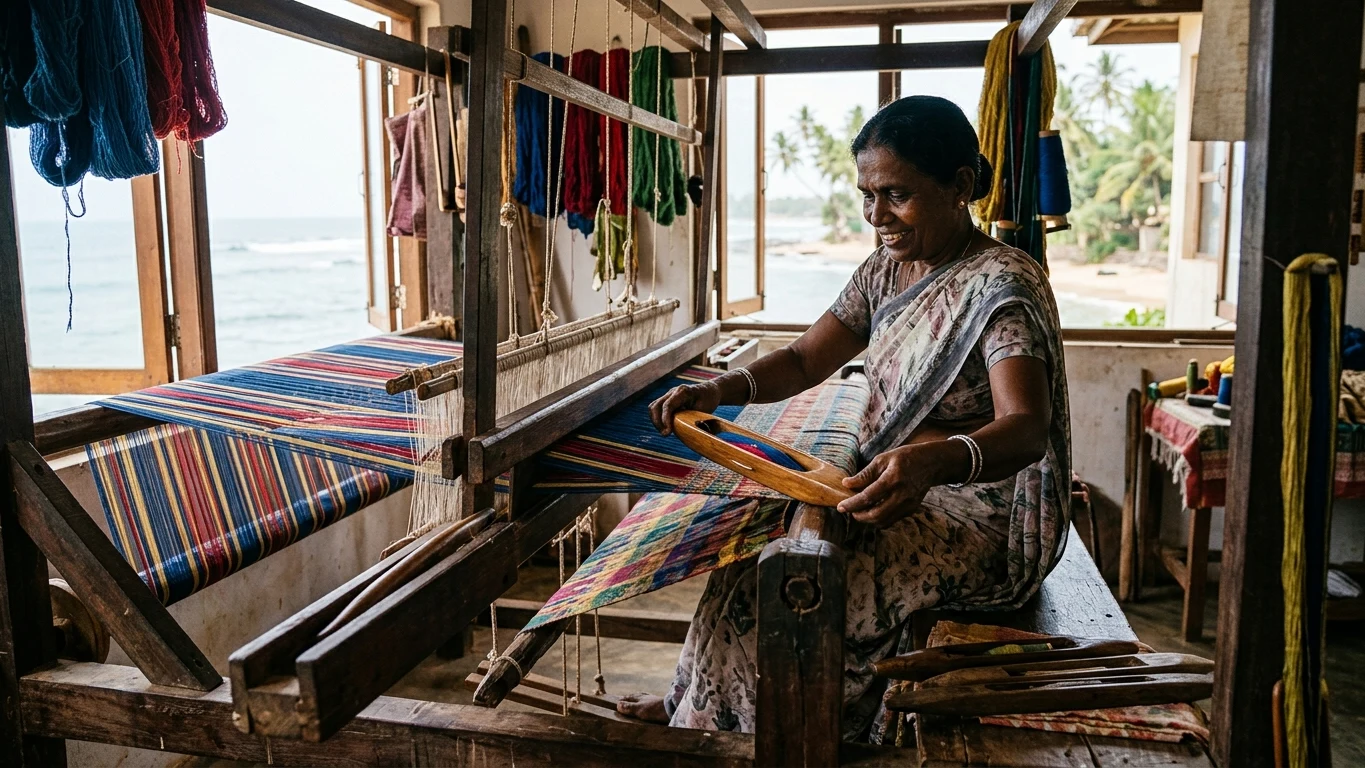
Weavers push foot treadles and throw wooden shuttles across the loom with zero electrical energy.
Big spools of cotton yarn roll onto warping drums under tight tension.
Master weavers guide wooden shuttles to make smooth plain and twill cloth.
Older master weavers train young apprentices in Galle workshops for two years.
More than one thousand small cottage handloom workshops operate near the Galle coast.
Dyeing Techniques, Yarn Preparation, and Pattern Design
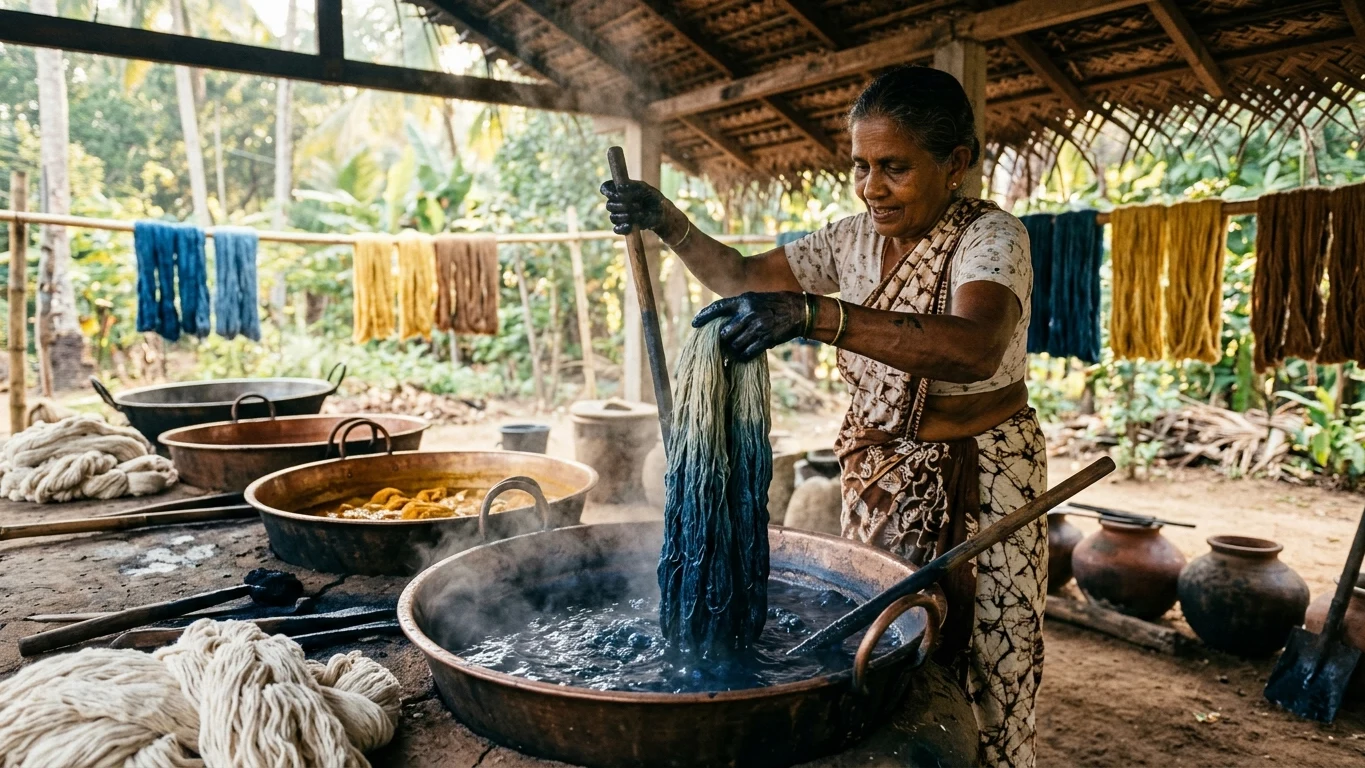
Workers boil cotton yarn in copper pots to make it clean.
Dye workers use plant roots and safe colors to dye yarn.
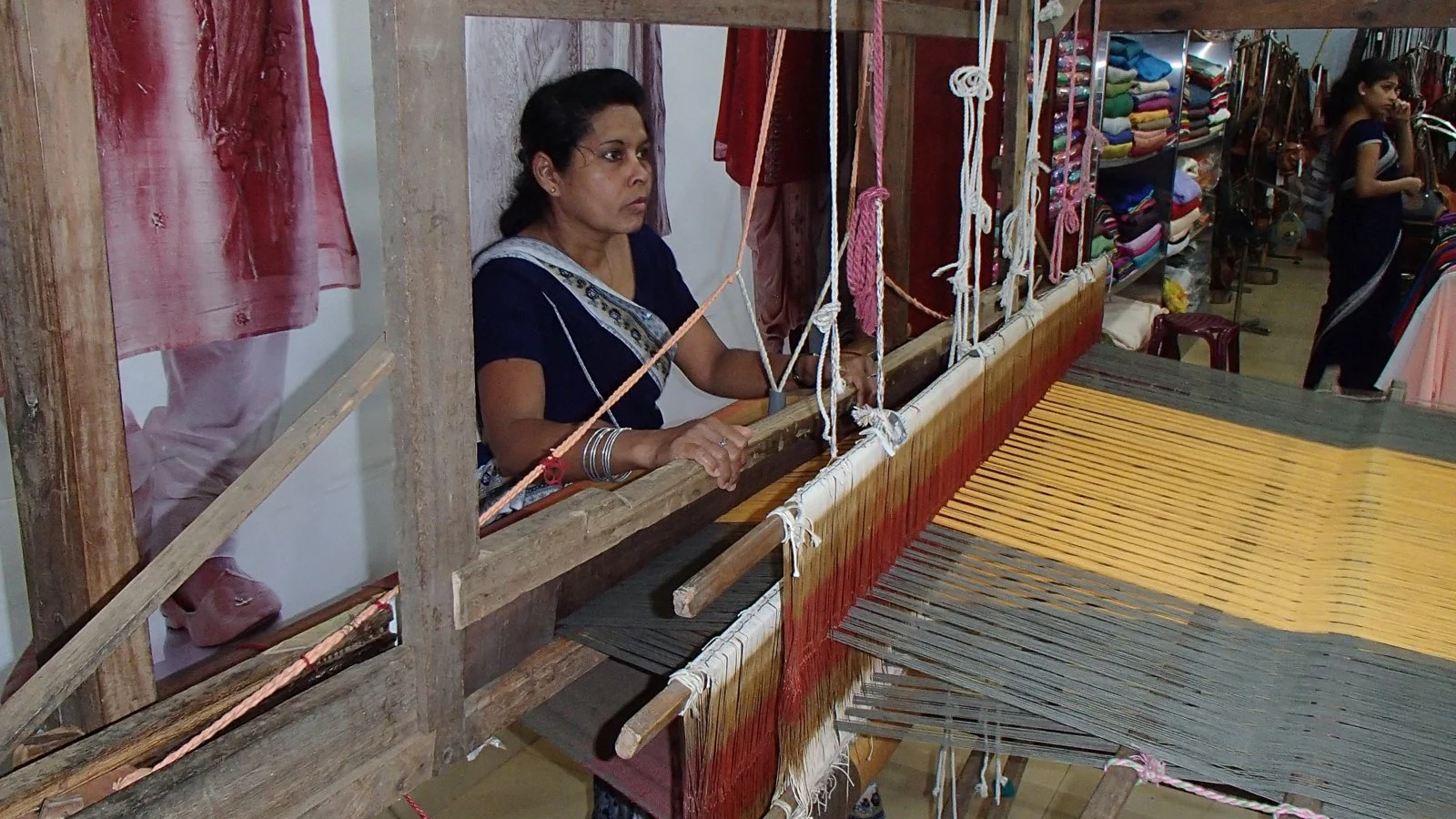
Weavers thread hundreds of colored cotton strings through metal pins.
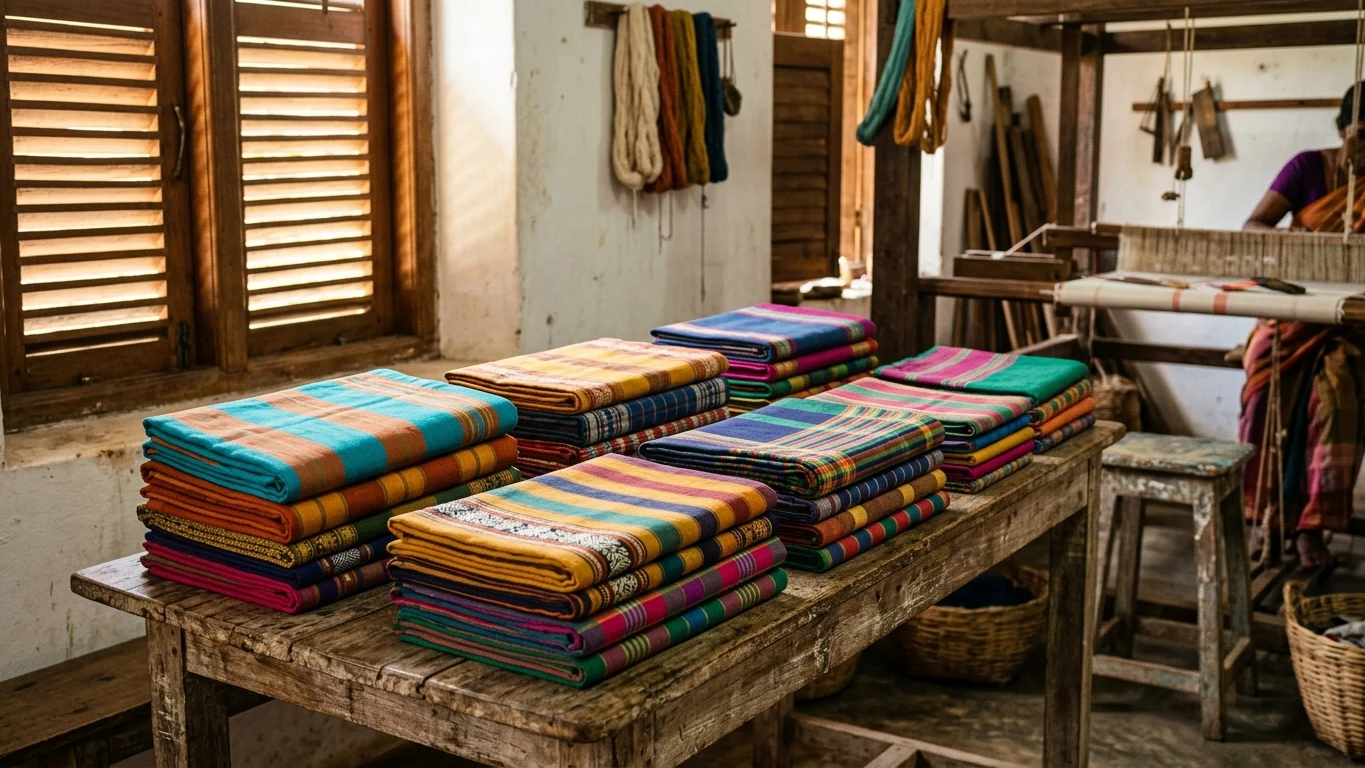
Galle workshops weave bright sarongs with coastal stripe patterns.
Wet dyed yarn hangs on bamboo poles in the sea wind.
Special punch cards on the wooden frame loom help weave neat flower borders.
Cooperative Structures, Women Artisans, and Rural Livelihoods
Primary weaving cooperatives in Galle buy cotton yarn in bulk for village members.
Women make up more than eighty-five percent of all handloom weavers.
The Southern Province government runs training centers with free wooden looms.
Female weavers work from home and deliver finished woven cloth to town centers.
Cooperative health funds help weaving families during rainy days and illness.
Fair piece-rate pay rules give weavers steady money for every metre of cloth.
Export Markets, Sustainable Fashion, and Modern Retail Resurgence
Trade leaders sell ethical handloom textiles to shops in Europe and Japan.
Heritage boutiques inside Galle Fort sell colorful handwoven clothes to world travelers.
Handloom shops follow clean environmental rules with zero harmful chemicals.
Modern Sri Lankan fashion designers work with Galle weavers to make fresh styles.
Weavers sell clothes directly on the internet to earn higher profit margins.
Cultural tours inside Galle Fort workshops bring happy visitors to watch weaving.
A2 · Elementary
Galle Handloom Businesses: Artisan Weaving, Dyeing, and Village Cooperatives
Foot treadles, natural plant dyes, and cooperative credit societies sustain coastal textile micro-enterprises in Sri Lanka.
Traditional Coastal Handloom Workshops and Weaving Heritage
Sri Lanka's handloom textile sector in Galle and the wider Southern Province represents one of the island's oldest surviving cottage craft industries, operating primarily through decentralized family-run workshops and village production centers. Traditional wooden frame looms and sunken pit looms in Galle are powered entirely by manual foot treadles and hand-thrown shuttles, operating with zero electrical energy inputs during fabric weaving. The rhythmic clicking of wooden reeds echoes through coastal hamlets where artisan households transform raw yarn spools into finely woven cotton bolts.
The weaving process begins with high-grade spun cotton and rayon yarn, wound onto rotating warping drums to establish longitudinal warp tension across loom beams. Master weavers in Galle utilize wooden pirns wound with weft yarn, guiding polished timber shuttles across the shed opening to build dense, balanced plain and twill weaves. Intergenerational knowledge transfer remains the core instructional model in Galle workshops, with master artisans training apprentices over two-year periods in loom setup, drafting, and reed denting. Over one thousand small-scale and cottage-level handloom workshops operate across the Galle and Matara coastal belts, preserving indigenous weaving techniques while sustaining local micro-enterprise incomes.
Dyeing Techniques, Yarn Preparation, and Pattern Design
Artisan yarn preparation in Galle involves boiling raw cotton hanks in copper vats to remove natural waxes and impurities during fiber scouring before pigment application. Dye masters in southern weaving centers utilize AZO-free reactive dyes alongside traditional plant extracts including madder root, jackfruit wood, and pomegranate rinds to achieve vibrant, colorfast hues. These non-toxic color baths yield deep sapphire blues, turmeric yellows, and mangrove terracottas that resist tropical sunlight and repetitive laundering.
Multi-colored warp planning requires precise mathematical calculation, winding hundreds of individual thread ends through steel heddles according to detailed graphic drafting sheets. Handloom businesses in Galle produce distinctive coastal geometric designs, curating signature tropical colorways that combine bold striped sarongs, intricate diamond borders, and checks inspired by southern architecture. Post-dyeing skeins are hung on bamboo drying racks under coastal sea breezes, allowing natural air curing and gentle sea breeze aeration that preserves fiber tensile strength and dye brilliance. Furthermore, specialized punch-card dobby attachments installed on traditional frame looms enable weavers to execute complex repeating floral and geometric border patterns without computerized machinery.
Cooperative Structures, Women Artisans, and Rural Livelihoods
Primary handloom cooperative societies across Galle provide decentralized artisans with bulk yarn procurement, credit facilities, and guaranteed minimum purchase prices for finished yardage. By centralizing raw material imports and bargaining collectively, these societies shield cottage producers from volatile cotton market inflation. Women comprise over eighty-five percent of the active artisanal weaving workforce in the Southern Province handloom sector, fostering vital female economic empowerment and independent household income in rural coastal villages.
The Southern Provincial Department of Industrial Development operates specialized textile training centers in Galle, providing subsidized looms, modern design inputs, and skills certification. Flexible home-based production arrangements enable female weavers to balance manual textile manufacturing with domestic responsibilities, receiving yarn spools and delivering finished cloth to central collection centers. Cooperative health funds and micro-credit welfare schemes established by artisan unions protect handloom workers against seasonal income fluctuations and medical emergencies. Under provincial industrial guidelines, piece-rate wage structures ensure weavers receive standardized compensation per linear metre woven, tied to fabric width and pattern intricacy.
Export Markets, Sustainable Fashion, and Modern Retail Resurgence
The Sri Lanka Export Development Board promotes artisanal handloom products internationally as high-value ethical lifestyle textiles, targeting premium design markets in Europe, North America, and Japan. International buyers value the tactile weight and natural breathability of hand-loomed cotton, which contrasts with generic fast-fashion synthetics, fostering a modern commercial resurgence. Contemporary design boutiques and heritage lifestyle stores in Galle Fort showcase artisanal handloom apparel, furnishing fabrics, and soft toys, linking craft producers directly to international cultural travelers.
Handloom micro-enterprises are increasingly adopting international environmental certifications, including OEKO-TEX Standard 100 compliance, verifying zero harmful chemical residues in finished textiles. Leading Sri Lankan design houses collaborate with Galle weaving cooperatives, pairing contemporary minimalist silhouettes with traditional textured handwoven cotton fabrics. Digital marketing channels and direct-to-consumer e-commerce platforms enable southern handloom entrepreneurs to bypass intermediary brokers and capture higher retail profit margins. Moreover, the integration of artisan craft tours within the historic Galle Fort tourism corridor has turned working handloom ateliers into experiential cultural destinations that generate supplemental income for weaving communities.
B1 · Intermediate
Artisan Weaving Cooperatives and Handloom Economics in Galle
An analytical examination of decentralized workshops, yarn scouring, dobby looms, and female workforce empowerment in southern Sri Lanka.
Traditional Coastal Handloom Workshops and Weaving Heritage
Sri Lanka's handloom textile sector in Galle and the wider Southern Province represents one of the island's oldest surviving cottage craft industries, operating primarily through decentralized family-run workshops and village production centers. Traditional wooden frame looms and sunken pit looms in Galle are powered entirely by manual foot treadles and hand-thrown shuttles, operating with zero electrical energy inputs during fabric weaving. The rhythmic clicking of wooden reeds echoes through coastal hamlets where artisan households transform raw yarn spools into finely woven cotton bolts.
The weaving process begins with high-grade spun cotton and rayon yarn, wound onto rotating warping drums to establish longitudinal warp tension across loom beams. Master weavers in Galle utilize wooden pirns wound with weft yarn, guiding polished timber shuttles across the shed opening to build dense, balanced plain and twill weaves. Intergenerational knowledge transfer remains the core instructional model in Galle workshops, with master artisans training apprentices over two-year periods in loom setup, drafting, and reed denting. Over one thousand small-scale and cottage-level handloom workshops operate across the Galle and Matara coastal belts, preserving indigenous weaving techniques while sustaining local micro-enterprise incomes.
Dyeing Techniques, Yarn Preparation, and Pattern Design
Artisan yarn preparation in Galle involves boiling raw cotton hanks in copper vats to remove natural waxes and impurities during fiber scouring before pigment application. Dye masters in southern weaving centers utilize AZO-free reactive dyes alongside traditional plant extracts including madder root, jackfruit wood, and pomegranate rinds to achieve vibrant, colorfast hues. These non-toxic color baths yield deep sapphire blues, turmeric yellows, and mangrove terracottas that resist tropical sunlight and repetitive laundering.
Multi-colored warp planning requires precise mathematical calculation, winding hundreds of individual thread ends through steel heddles according to detailed graphic drafting sheets. Handloom businesses in Galle produce distinctive coastal geometric designs, curating signature tropical colorways that combine bold striped sarongs, intricate diamond borders, and checks inspired by southern architecture. Post-dyeing skeins are hung on bamboo drying racks under coastal sea breezes, allowing natural air curing and gentle sea breeze aeration that preserves fiber tensile strength and dye brilliance. Furthermore, specialized punch-card dobby attachments installed on traditional frame looms enable weavers to execute complex repeating floral and geometric border patterns without computerized machinery.
Cooperative Structures, Women Artisans, and Rural Livelihoods
Primary handloom cooperative societies across Galle provide decentralized artisans with bulk yarn procurement, credit facilities, and guaranteed minimum purchase prices for finished yardage. By centralizing raw material imports and bargaining collectively, these societies shield cottage producers from volatile cotton market inflation. Women comprise over eighty-five percent of the active artisanal weaving workforce in the Southern Province handloom sector, fostering vital female economic empowerment and independent household income in rural coastal villages.
The Southern Provincial Department of Industrial Development operates specialized textile training centers in Galle, providing subsidized looms, modern design inputs, and skills certification. Flexible home-based production arrangements enable female weavers to balance manual textile manufacturing with domestic responsibilities, receiving yarn spools and delivering finished cloth to central collection centers. Cooperative health funds and micro-credit welfare schemes established by artisan unions protect handloom workers against seasonal income fluctuations and medical emergencies. Under provincial industrial guidelines, piece-rate wage structures ensure weavers receive standardized compensation per linear metre woven, tied to fabric width and pattern intricacy.
Export Markets, Sustainable Fashion, and Modern Retail Resurgence
The Sri Lanka Export Development Board promotes artisanal handloom products internationally as high-value ethical lifestyle textiles, targeting premium design markets in Europe, North America, and Japan. International buyers value the tactile weight and natural breathability of hand-loomed cotton, which contrasts with generic fast-fashion synthetics, fostering a modern commercial resurgence. Contemporary design boutiques and heritage lifestyle stores in Galle Fort showcase artisanal handloom apparel, furnishing fabrics, and soft toys, linking craft producers directly to international cultural travelers.
Handloom micro-enterprises are increasingly adopting international environmental certifications, including OEKO-TEX Standard 100 compliance, verifying zero harmful chemical residues in finished textiles. Leading Sri Lankan design houses collaborate with Galle weaving cooperatives, pairing contemporary minimalist silhouettes with traditional textured handwoven cotton fabrics. Digital marketing channels and direct-to-consumer e-commerce platforms enable southern handloom entrepreneurs to bypass intermediary brokers and capture higher retail profit margins. Moreover, the integration of artisan craft tours within the historic Galle Fort tourism corridor has turned working handloom ateliers into experiential cultural destinations that generate supplemental income for weaving communities.
B2 · Upper Intermediate
Coastal Handloom Clusters: Vat Dyeing, Dobby Kinetics, and Ethical Retail
Investigating plant-based reactive dyes, bamboo breeze aeration, piece-rate wage gazettes, and OEKO-TEX eco-certifications in Galle.
Traditional Coastal Handloom Workshops and Weaving Heritage
Sri Lanka's handloom textile sector in Galle and the wider Southern Province represents one of the island's oldest surviving cottage craft industries, operating primarily through decentralized family-run workshops and village production centers. Traditional wooden frame looms and sunken pit looms in Galle are powered entirely by manual foot treadles and hand-thrown shuttles, operating with zero electrical energy inputs during fabric weaving. The rhythmic clicking of wooden reeds echoes through coastal hamlets where artisan households transform raw yarn spools into finely woven cotton bolts.
The weaving process begins with high-grade spun cotton and rayon yarn, wound onto rotating warping drums to establish longitudinal warp tension across loom beams. Master weavers in Galle utilize wooden pirns wound with weft yarn, guiding polished timber shuttles across the shed opening to build dense, balanced plain and twill weaves. Intergenerational knowledge transfer remains the core instructional model in Galle workshops, with master artisans training apprentices over two-year periods in loom setup, drafting, and reed denting. Over one thousand small-scale and cottage-level handloom workshops operate across the Galle and Matara coastal belts, preserving indigenous weaving techniques while sustaining local micro-enterprise incomes.
Dyeing Techniques, Yarn Preparation, and Pattern Design
Artisan yarn preparation in Galle involves boiling raw cotton hanks in copper vats to remove natural waxes and impurities during fiber scouring before pigment application. Dye masters in southern weaving centers utilize AZO-free reactive dyes alongside traditional plant extracts including madder root, jackfruit wood, and pomegranate rinds to achieve vibrant, colorfast hues. These non-toxic color baths yield deep sapphire blues, turmeric yellows, and mangrove terracottas that resist tropical sunlight and repetitive laundering.
Multi-colored warp planning requires precise mathematical calculation, winding hundreds of individual thread ends through steel heddles according to detailed graphic drafting sheets. Handloom businesses in Galle produce distinctive coastal geometric designs, curating signature tropical colorways that combine bold striped sarongs, intricate diamond borders, and checks inspired by southern architecture. Post-dyeing skeins are hung on bamboo drying racks under coastal sea breezes, allowing natural air curing and gentle sea breeze aeration that preserves fiber tensile strength and dye brilliance. Furthermore, specialized punch-card dobby attachments installed on traditional frame looms enable weavers to execute complex repeating floral and geometric border patterns without computerized machinery.
Cooperative Structures, Women Artisans, and Rural Livelihoods
Primary handloom cooperative societies across Galle provide decentralized artisans with bulk yarn procurement, credit facilities, and guaranteed minimum purchase prices for finished yardage. By centralizing raw material imports and bargaining collectively, these societies shield cottage producers from volatile cotton market inflation. Women comprise over eighty-five percent of the active artisanal weaving workforce in the Southern Province handloom sector, fostering vital female economic empowerment and independent household income in rural coastal villages.
The Southern Provincial Department of Industrial Development operates specialized textile training centers in Galle, providing subsidized looms, modern design inputs, and skills certification. Flexible home-based production arrangements enable female weavers to balance manual textile manufacturing with domestic responsibilities, receiving yarn spools and delivering finished cloth to central collection centers. Cooperative health funds and micro-credit welfare schemes established by artisan unions protect handloom workers against seasonal income fluctuations and medical emergencies. Under provincial industrial guidelines, piece-rate wage structures ensure weavers receive standardized compensation per linear metre woven, tied to fabric width and pattern intricacy.
Export Markets, Sustainable Fashion, and Modern Retail Resurgence
The Sri Lanka Export Development Board promotes artisanal handloom products internationally as high-value ethical lifestyle textiles, targeting premium design markets in Europe, North America, and Japan. International buyers value the tactile weight and natural breathability of hand-loomed cotton, which contrasts with generic fast-fashion synthetics, fostering a modern commercial resurgence. Contemporary design boutiques and heritage lifestyle stores in Galle Fort showcase artisanal handloom apparel, furnishing fabrics, and soft toys, linking craft producers directly to international cultural travelers.
Handloom micro-enterprises are increasingly adopting international environmental certifications, including OEKO-TEX Standard 100 compliance, verifying zero harmful chemical residues in finished textiles. Leading Sri Lankan design houses collaborate with Galle weaving cooperatives, pairing contemporary minimalist silhouettes with traditional textured handwoven cotton fabrics. Digital marketing channels and direct-to-consumer e-commerce platforms enable southern handloom entrepreneurs to bypass intermediary brokers and capture higher retail profit margins. Moreover, the integration of artisan craft tours within the historic Galle Fort tourism corridor has turned working handloom ateliers into experiential cultural destinations that generate supplemental income for weaving communities.
C1 · Advanced
Cottage Textile Spatialities, Dobby Looms, and Artisan Cooperatives in Galle
A critical study of decentralized cottage clusters, warp tension mathematics, intergenerational craft pedagogy, and global lifestyle retail.
Traditional Coastal Handloom Workshops and Weaving Heritage
Sri Lanka's handloom textile sector in Galle and the wider Southern Province represents one of the island's oldest surviving cottage craft industries, operating primarily through decentralized family-run workshops and village production centers. Traditional wooden frame looms and sunken pit looms in Galle are powered entirely by manual foot treadles and hand-thrown shuttles, operating with zero electrical energy inputs during fabric weaving. The rhythmic clicking of wooden reeds echoes through coastal hamlets where artisan households transform raw yarn spools into finely woven cotton bolts.
The weaving process begins with high-grade spun cotton and rayon yarn, wound onto rotating warping drums to establish longitudinal warp tension across loom beams. Master weavers in Galle utilize wooden pirns wound with weft yarn, guiding polished timber shuttles across the shed opening to build dense, balanced plain and twill weaves. Intergenerational knowledge transfer remains the core instructional model in Galle workshops, with master artisans training apprentices over two-year periods in loom setup, drafting, and reed denting. Over one thousand small-scale and cottage-level handloom workshops operate across the Galle and Matara coastal belts, preserving indigenous weaving techniques while sustaining local micro-enterprise incomes.
Dyeing Techniques, Yarn Preparation, and Pattern Design
Artisan yarn preparation in Galle involves boiling raw cotton hanks in copper vats to remove natural waxes and impurities during fiber scouring before pigment application. Dye masters in southern weaving centers utilize AZO-free reactive dyes alongside traditional plant extracts including madder root, jackfruit wood, and pomegranate rinds to achieve vibrant, colorfast hues. These non-toxic color baths yield deep sapphire blues, turmeric yellows, and mangrove terracottas that resist tropical sunlight and repetitive laundering.
Multi-colored warp planning requires precise mathematical calculation, winding hundreds of individual thread ends through steel heddles according to detailed graphic drafting sheets. Handloom businesses in Galle produce distinctive coastal geometric designs, curating signature tropical colorways that combine bold striped sarongs, intricate diamond borders, and checks inspired by southern architecture. Post-dyeing skeins are hung on bamboo drying racks under coastal sea breezes, allowing natural air curing and gentle sea breeze aeration that preserves fiber tensile strength and dye brilliance. Furthermore, specialized punch-card dobby attachments installed on traditional frame looms enable weavers to execute complex repeating floral and geometric border patterns without computerized machinery.
Cooperative Structures, Women Artisans, and Rural Livelihoods
Primary handloom cooperative societies across Galle provide decentralized artisans with bulk yarn procurement, credit facilities, and guaranteed minimum purchase prices for finished yardage. By centralizing raw material imports and bargaining collectively, these societies shield cottage producers from volatile cotton market inflation. Women comprise over eighty-five percent of the active artisanal weaving workforce in the Southern Province handloom sector, fostering vital female economic empowerment and independent household income in rural coastal villages.
The Southern Provincial Department of Industrial Development operates specialized textile training centers in Galle, providing subsidized looms, modern design inputs, and skills certification. Flexible home-based production arrangements enable female weavers to balance manual textile manufacturing with domestic responsibilities, receiving yarn spools and delivering finished cloth to central collection centers. Cooperative health funds and micro-credit welfare schemes established by artisan unions protect handloom workers against seasonal income fluctuations and medical emergencies. Under provincial industrial guidelines, piece-rate wage structures ensure weavers receive standardized compensation per linear metre woven, tied to fabric width and pattern intricacy.
Export Markets, Sustainable Fashion, and Modern Retail Resurgence
The Sri Lanka Export Development Board promotes artisanal handloom products internationally as high-value ethical lifestyle textiles, targeting premium design markets in Europe, North America, and Japan. International buyers value the tactile weight and natural breathability of hand-loomed cotton, which contrasts with generic fast-fashion synthetics, fostering a modern commercial resurgence. Contemporary design boutiques and heritage lifestyle stores in Galle Fort showcase artisanal handloom apparel, furnishing fabrics, and soft toys, linking craft producers directly to international cultural travelers.
Handloom micro-enterprises are increasingly adopting international environmental certifications, including OEKO-TEX Standard 100 compliance, verifying zero harmful chemical residues in finished textiles. Leading Sri Lankan design houses collaborate with Galle weaving cooperatives, pairing contemporary minimalist silhouettes with traditional textured handwoven cotton fabrics. Digital marketing channels and direct-to-consumer e-commerce platforms enable southern handloom entrepreneurs to bypass intermediary brokers and capture higher retail profit margins. Moreover, the integration of artisan craft tours within the historic Galle Fort tourism corridor has turned working handloom ateliers into experiential cultural destinations that generate supplemental income for weaving communities.
C2 · Mastery
Artisanal Handloom Economics, Dobby Kinetics, and Heritage Tourism Dynamics in Southern Sri Lanka
A comprehensive analytical monograph on longitudinal warp physics, non-toxic reactive dyeing, female labor empowerment, and direct e-commerce commercialization in Galle.
Traditional Coastal Handloom Workshops and Weaving Heritage
Sri Lanka's handloom textile sector in Galle and the wider Southern Province represents one of the island's oldest surviving cottage craft industries, operating primarily through decentralized family-run workshops and village production centers. Traditional wooden frame looms and sunken pit looms in Galle are powered entirely by manual foot treadles and hand-thrown shuttles, operating with zero electrical energy inputs during fabric weaving. The rhythmic clicking of wooden reeds echoes through coastal hamlets where artisan households transform raw yarn spools into finely woven cotton bolts.
The weaving process begins with high-grade spun cotton and rayon yarn, wound onto rotating warping drums to establish longitudinal warp tension across loom beams. Master weavers in Galle utilize wooden pirns wound with weft yarn, guiding polished timber shuttles across the shed opening to build dense, balanced plain and twill weaves. Intergenerational knowledge transfer remains the core instructional model in Galle workshops, with master artisans training apprentices over two-year periods in loom setup, drafting, and reed denting. Over one thousand small-scale and cottage-level handloom workshops operate across the Galle and Matara coastal belts, preserving indigenous weaving techniques while sustaining local micro-enterprise incomes.
Dyeing Techniques, Yarn Preparation, and Pattern Design
Artisan yarn preparation in Galle involves boiling raw cotton hanks in copper vats to remove natural waxes and impurities during fiber scouring before pigment application. Dye masters in southern weaving centers utilize AZO-free reactive dyes alongside traditional plant extracts including madder root, jackfruit wood, and pomegranate rinds to achieve vibrant, colorfast hues. These non-toxic color baths yield deep sapphire blues, turmeric yellows, and mangrove terracottas that resist tropical sunlight and repetitive laundering.
Multi-colored warp planning requires precise mathematical calculation, winding hundreds of individual thread ends through steel heddles according to detailed graphic drafting sheets. Handloom businesses in Galle produce distinctive coastal geometric designs, curating signature tropical colorways that combine bold striped sarongs, intricate diamond borders, and checks inspired by southern architecture. Post-dyeing skeins are hung on bamboo drying racks under coastal sea breezes, allowing natural air curing and gentle sea breeze aeration that preserves fiber tensile strength and dye brilliance. Furthermore, specialized punch-card dobby attachments installed on traditional frame looms enable weavers to execute complex repeating floral and geometric border patterns without computerized machinery.
Cooperative Structures, Women Artisans, and Rural Livelihoods
Primary handloom cooperative societies across Galle provide decentralized artisans with bulk yarn procurement, credit facilities, and guaranteed minimum purchase prices for finished yardage. By centralizing raw material imports and bargaining collectively, these societies shield cottage producers from volatile cotton market inflation. Women comprise over eighty-five percent of the active artisanal weaving workforce in the Southern Province handloom sector, fostering vital female economic empowerment and independent household income in rural coastal villages.
The Southern Provincial Department of Industrial Development operates specialized textile training centers in Galle, providing subsidized looms, modern design inputs, and skills certification. Flexible home-based production arrangements enable female weavers to balance manual textile manufacturing with domestic responsibilities, receiving yarn spools and delivering finished cloth to central collection centers. Cooperative health funds and micro-credit welfare schemes established by artisan unions protect handloom workers against seasonal income fluctuations and medical emergencies. Under provincial industrial guidelines, piece-rate wage structures ensure weavers receive standardized compensation per linear metre woven, tied to fabric width and pattern intricacy.
Export Markets, Sustainable Fashion, and Modern Retail Resurgence
The Sri Lanka Export Development Board promotes artisanal handloom products internationally as high-value ethical lifestyle textiles, targeting premium design markets in Europe, North America, and Japan. International buyers value the tactile weight and natural breathability of hand-loomed cotton, which contrasts with generic fast-fashion synthetics, fostering a modern commercial resurgence. Contemporary design boutiques and heritage lifestyle stores in Galle Fort showcase artisanal handloom apparel, furnishing fabrics, and soft toys, linking craft producers directly to international cultural travelers.
Handloom micro-enterprises are increasingly adopting international environmental certifications, including OEKO-TEX Standard 100 compliance, verifying zero harmful chemical residues in finished textiles. Leading Sri Lankan design houses collaborate with Galle weaving cooperatives, pairing contemporary minimalist silhouettes with traditional textured handwoven cotton fabrics. Digital marketing channels and direct-to-consumer e-commerce platforms enable southern handloom entrepreneurs to bypass intermediary brokers and capture higher retail profit margins. Moreover, the integration of artisan craft tours within the historic Galle Fort tourism corridor has turned working handloom ateliers into experiential cultural destinations that generate supplemental income for weaving communities.
Check your understanding
Choose how closely you want to revisit the article. You can refer back while answering, and review explanations when you finish.
Quick Quiz A1
Try one question, then create a free account for the full Quick Quiz. Sign Up Free
Answer every question before checking. There is no time limit.
Your results
/ 1 correct (%)
Read the explanations to see how each answer connects to the article.
-
Where do village weavers in Galle make beautiful cotton cloth?
1. Answer:
Quick Quiz A2
Try one question, then create a free account for the full Quick Quiz. Sign Up Free
Answer every question before checking. There is no time limit.
Your results
/ 1 correct (%)
Read the explanations to see how each answer connects to the article.
-
What form of electrical energy is used to power traditional frame and pit looms in Galle during weaving?
1. Answer:
Quick Quiz B1
Try one question, then create a free account for the full Quick Quiz. Sign Up Free
Answer every question before checking. There is no time limit.
Your results
/ 1 correct (%)
Read the explanations to see how each answer connects to the article.
-
What form of electrical energy is used to power traditional frame and pit looms in Galle during weaving?
1. Answer:
Quick Quiz B2
Try one question, then create a free account for the full Quick Quiz. Sign Up Free
Answer every question before checking. There is no time limit.
Your results
/ 1 correct (%)
Read the explanations to see how each answer connects to the article.
-
What form of electrical energy is used to power traditional frame and pit looms in Galle during weaving?
1. Answer:
Quick Quiz C1
Try one question, then create a free account for the full Quick Quiz. Sign Up Free
Answer every question before checking. There is no time limit.
Your results
/ 1 correct (%)
Read the explanations to see how each answer connects to the article.
-
What form of electrical energy is used to power traditional frame and pit looms in Galle during weaving?
1. Answer:
Quick Quiz C2
Try one question, then create a free account for the full Quick Quiz. Sign Up Free
Answer every question before checking. There is no time limit.
Your results
/ 1 correct (%)
Read the explanations to see how each answer connects to the article.
-
What form of electrical energy is used to power traditional frame and pit looms in Galle during weaving?
1. Answer:
