A1 · Beginner
Sri Lanka Economic Numbers: Prices, Jobs, and Recovery
Official national reports show Sri Lanka is growing again as store prices slow down and banks hold more foreign money.
Post-Crisis GDP Trajectories and Macroeconomic Stabilization
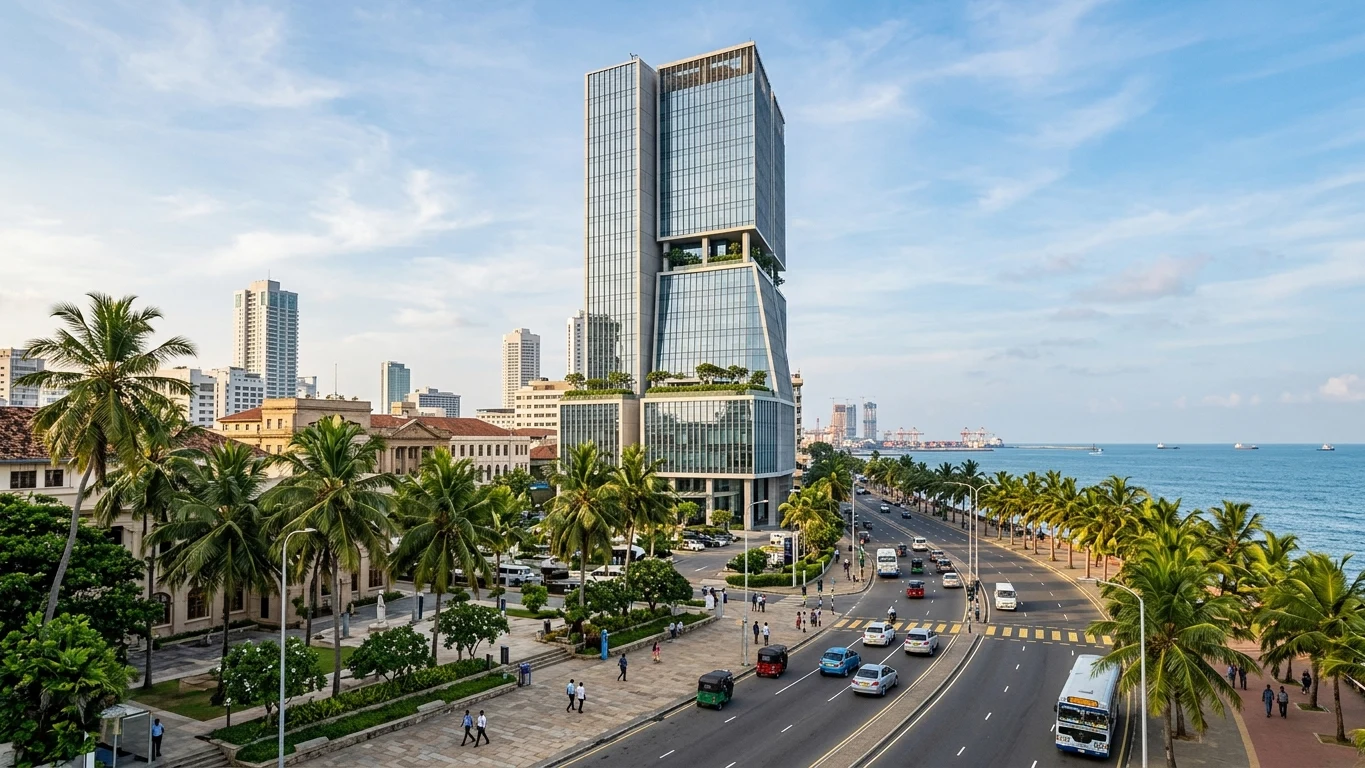
Sri Lanka's real GDP grew past four percent after two hard years.
Official foreign exchange reserves grew past five billion dollars in national banks.
The Sri Lankan rupee grew stronger against the dollar to stabilize food prices.
World lenders gave three billion dollars in loans for structural reform programs.
Industrial manufacturing and garment exports grew into positive expansion again.
Tourism receipts brought more than two billion dollars into island towns.
Inflation Dynamics, Monetary Policy, and Price Indices
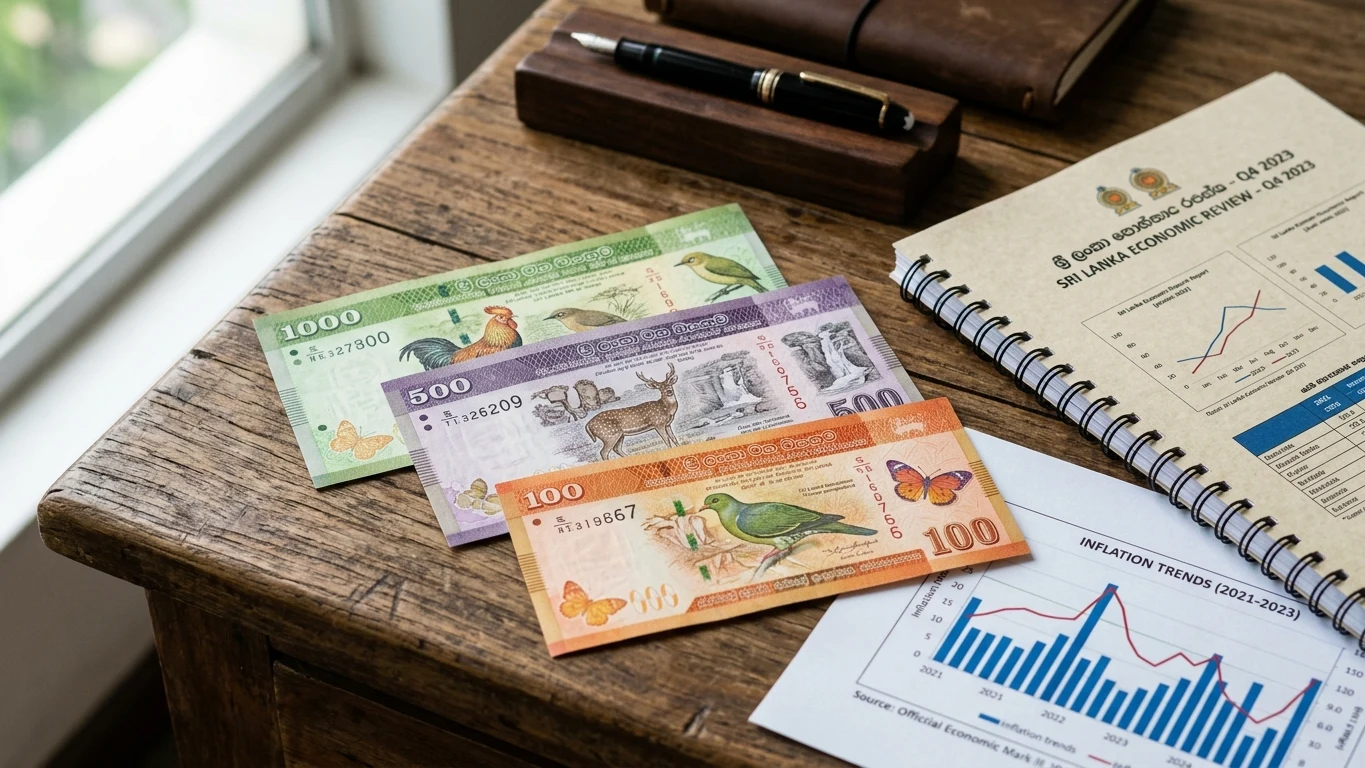
Headline inflation on the Colombo consumer index fell below five percent.
Food inflation dropped from high peaks into negative territory for families.
The Central Bank lowered policy rates by over seven hundred basis points.
Commercial bank lending rates fell to twelve percent to revive credit.
Core inflation stayed inside the safe target band of four to six percent.
National price indices give verifiable proof of disinflation in town shops.

Fiscal Reforms, Tax Revenues, and Debt Restructuring
Government tax revenue collections grew past ten percent of economic output.
The standard Value Added Tax rate was set at eighteen percent in stores.
The primary fiscal balance shifted into a surplus of 0.6 percent.
Leaders signed bilateral debt restructuring agreements for ten billion dollars.
Public debt projections forecast a fall toward ninety-five percent of output.
Sovereign bond terms included principal haircuts and longer loan maturity times.
Poverty Headcount, Labor Markets, and Social Safety Nets
The poverty headcount ratio rose to twenty-five percent after hard years.
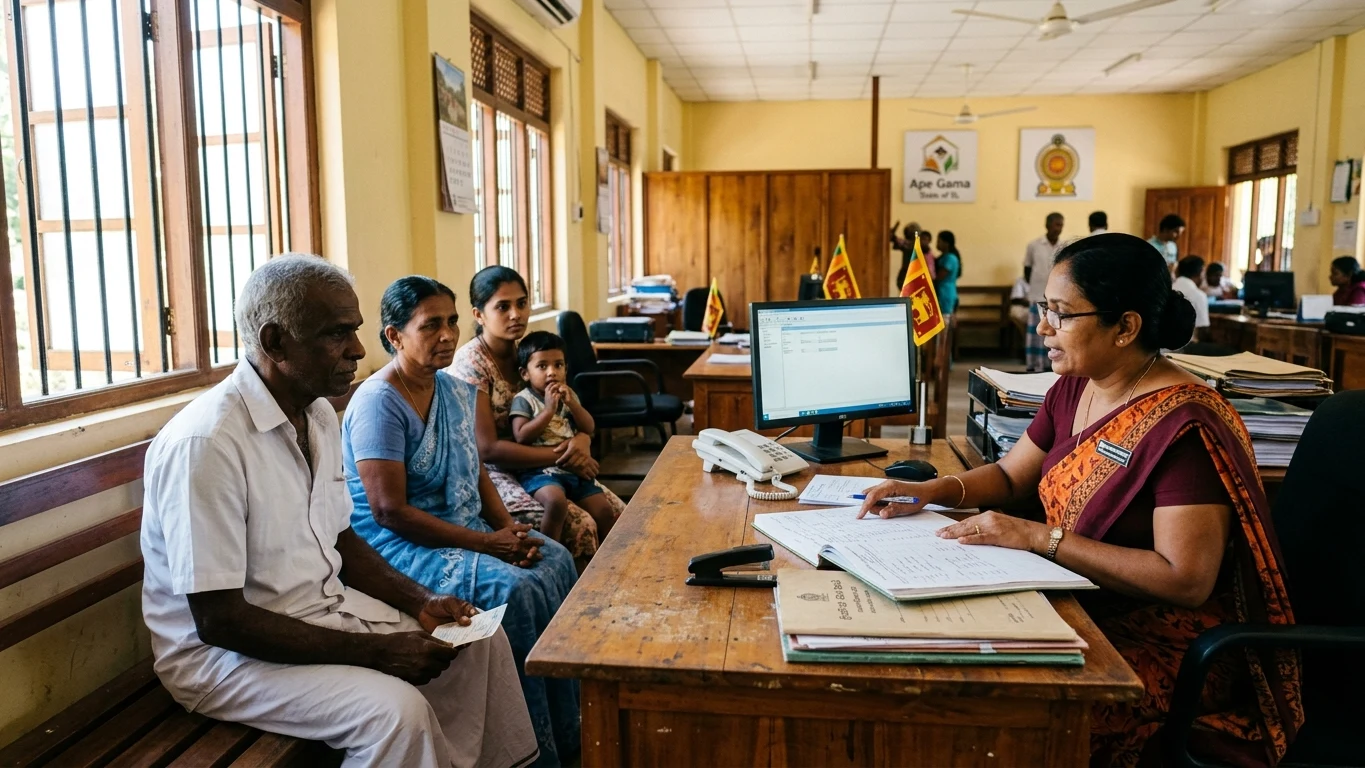
The Aswesuma welfare scheme gives cash to over one point eight million households.
Aswesuma cash transfers go into bank accounts across four vulnerability tiers.
Official unemployment rates stayed near five percent in city labor markets.
Migrant worker remittances sent home exceeded six billion dollars in liquidity.
Targeted social spending protects poor families against energy tariff price hikes.
A2 · Elementary
Sri Lanka Macroeconomic Data Profile: GDP Rebound, Disinflation, and Fiscal Reforms
Real GDP growth, declining inflation, and debt restructuring benchmarks define Sri Lanka's post-crisis recovery trajectory.
Post-Crisis GDP Trajectories and Macroeconomic Stabilization
Following a severe real GDP contraction of 7.8 percent in 2022 and 2.3 percent in 2023, Sri Lanka's economy returned to positive real GDP expansion exceeding 4 percent in the first half of 2024. Official gross foreign exchange reserves recovered from a low of under two billion dollars in mid-2022 to over five billion dollars by mid-2024, supported by tourism earnings and external remittance inflows. The Sri Lankan Rupee appreciated against the US dollar by over ten percent during 2023 and early 2024, stabilizing import prices for fuel, fertilizer, and staple grains, which reinforced early macroeconomic stabilization across wholesale supply chains.
The structural reform program supported by the IMF four-year Extended Fund Facility provided approximately three billion dollars in multilateral financial backing conditional on fiscal consolidation. Industrial manufacturing output, led by garment exports and construction material production, rebounded into positive quarterly expansion after consecutive quarters of sharp supply chain contraction. Furthermore, tourism receipts reached over two billion dollars in the twelve months to June 2024, representing an increase of more than ninety percent year-on-year.
Inflation Dynamics, Monetary Policy, and Price Indices
Headline inflation measured by the Colombo Consumer Price Index decelerated dramatically from a peak of 69.8 percent in September 2022 to under five percent by mid-2024. Food inflation on the CCPI index dropped from a historic peak exceeding 94 percent down to negative deflationary territory in early 2024 as domestic food supply stabilized. The Central Bank of Sri Lanka aggressively lowered its Standing Deposit Facility Rate and Standing Lending Facility Rate within its monetary policy corridor by over seven hundred basis points during monetary easing in 2023 and 2024.
Commercial bank market lending rates decreased from peak levels above twenty-eight percent toward twelve percent, reviving private sector domestic credit aggregates. Core inflation, which excludes volatile food and energy components, stabilized within the Central Bank's target band of four to six percent during late 2023 and 2024. Moreover, national consumer price indices published monthly by the Department of Census and Statistics provide verifiable statistical proof of disinflation across urban and provincial retail markets.
Fiscal Reforms, Tax Revenues, and Debt Restructuring
Government tax revenue collections increased from 7.3 percent of GDP in 2022 to over ten percent of GDP in 2023, driven by comprehensive Value Added Tax and corporate tax reforms. The statutory Value Added Tax rate was standardized at eighteen percent in January 2024, broadening the indirect tax net while eliminating previous exemptions on consumer items. The primary fiscal balance shifted from a chronic multi-year deficit into a primary budget surplus of 0.6 percent of GDP in 2023, meeting structural multilateral benchmarks.
In June 2024, the government finalized bilateral debt restructuring agreements totaling ten billion dollars with the Official Creditor Committee and the Export-Import Bank of China. Public debt-to-GDP ratio projections modeled by the World Bank and IMF forecast a reduction from over 115 percent of GDP in 2022 toward ninety-five percent by 2032 under restructured repayment terms. Additionally, restructuring terms for International Sovereign Bonds included nominal principal haircuts and maturity extensions to ensure long-term public debt sustainability.
Poverty Headcount, Labor Markets, and Social Safety Nets
The World Bank estimated Sri Lanka's multidimensional poverty headcount ratio doubled between 2021 and 2023, reaching approximately twenty-five percent of the population following severe real income erosion. The government launched the targeted Aswesuma social welfare scheme in 2023, replacing the legacy Samurdhi program to deliver direct digital cash transfers to over one point eight million vulnerable households. Monthly Aswesuma welfare cash transfers are disbursed directly into individual beneficiary bank accounts across four vulnerability tiers, minimizing administrative leaks.
Official unemployment rates stabilized between 4.5 and 5.0 percent in 2024, although informal employment and underemployment in rural agricultural areas remained elevated. Worker remittances sent by Sri Lankan expatriates in the Middle East, Europe, and Asia exceeded six billion dollars in 2023, providing critical liquidity to rural household budgets. The World Bank emphasizes that sustained targeted social spending equal to at least 0.6 percent of GDP is mandatory to shield poor families against energy tariff rationalization and living cost increases.
B1 · Intermediate
Macroeconomic Stabilization and Fiscal Consolidation in Sri Lanka
An analytical study of real output rebound, policy interest rate easing, primary budget surpluses, and targeted Aswesuma welfare.
Post-Crisis GDP Trajectories and Macroeconomic Stabilization
Following a severe real GDP contraction of 7.8 percent in 2022 and 2.3 percent in 2023, Sri Lanka's economy returned to positive real GDP expansion exceeding 4 percent in the first half of 2024. Official gross foreign exchange reserves recovered from a low of under two billion dollars in mid-2022 to over five billion dollars by mid-2024, supported by tourism earnings and external remittance inflows. The Sri Lankan Rupee appreciated against the US dollar by over ten percent during 2023 and early 2024, stabilizing import prices for fuel, fertilizer, and staple grains, which reinforced early macroeconomic stabilization across wholesale supply chains.
The structural reform program supported by the IMF four-year Extended Fund Facility provided approximately three billion dollars in multilateral financial backing conditional on fiscal consolidation. Industrial manufacturing output, led by garment exports and construction material production, rebounded into positive quarterly expansion after consecutive quarters of sharp supply chain contraction. Furthermore, tourism receipts reached over two billion dollars in the twelve months to June 2024, representing an increase of more than ninety percent year-on-year.
Inflation Dynamics, Monetary Policy, and Price Indices
Headline inflation measured by the Colombo Consumer Price Index decelerated dramatically from a peak of 69.8 percent in September 2022 to under five percent by mid-2024. Food inflation on the CCPI index dropped from a historic peak exceeding 94 percent down to negative deflationary territory in early 2024 as domestic food supply stabilized. The Central Bank of Sri Lanka aggressively lowered its Standing Deposit Facility Rate and Standing Lending Facility Rate within its monetary policy corridor by over seven hundred basis points during monetary easing in 2023 and 2024.
Commercial bank market lending rates decreased from peak levels above twenty-eight percent toward twelve percent, reviving private sector domestic credit aggregates. Core inflation, which excludes volatile food and energy components, stabilized within the Central Bank's target band of four to six percent during late 2023 and 2024. Moreover, national consumer price indices published monthly by the Department of Census and Statistics provide verifiable statistical proof of disinflation across urban and provincial retail markets.
Fiscal Reforms, Tax Revenues, and Debt Restructuring
Government tax revenue collections increased from 7.3 percent of GDP in 2022 to over ten percent of GDP in 2023, driven by comprehensive Value Added Tax and corporate tax reforms. The statutory Value Added Tax rate was standardized at eighteen percent in January 2024, broadening the indirect tax net while eliminating previous exemptions on consumer items. The primary fiscal balance shifted from a chronic multi-year deficit into a primary budget surplus of 0.6 percent of GDP in 2023, meeting structural multilateral benchmarks.
In June 2024, the government finalized bilateral debt restructuring agreements totaling ten billion dollars with the Official Creditor Committee and the Export-Import Bank of China. Public debt-to-GDP ratio projections modeled by the World Bank and IMF forecast a reduction from over 115 percent of GDP in 2022 toward ninety-five percent by 2032 under restructured repayment terms. Additionally, restructuring terms for International Sovereign Bonds included nominal principal haircuts and maturity extensions to ensure long-term public debt sustainability.
Poverty Headcount, Labor Markets, and Social Safety Nets
The World Bank estimated Sri Lanka's multidimensional poverty headcount ratio doubled between 2021 and 2023, reaching approximately twenty-five percent of the population following severe real income erosion. The government launched the targeted Aswesuma social welfare scheme in 2023, replacing the legacy Samurdhi program to deliver direct digital cash transfers to over one point eight million vulnerable households. Monthly Aswesuma welfare cash transfers are disbursed directly into individual beneficiary bank accounts across four vulnerability tiers, minimizing administrative leaks.
Official unemployment rates stabilized between 4.5 and 5.0 percent in 2024, although informal employment and underemployment in rural agricultural areas remained elevated. Worker remittances sent by Sri Lankan expatriates in the Middle East, Europe, and Asia exceeded six billion dollars in 2023, providing critical liquidity to rural household budgets. The World Bank emphasizes that sustained targeted social spending equal to at least 0.6 percent of GDP is mandatory to shield poor families against energy tariff rationalization and living cost increases.
B2 · Upper Intermediate
Sovereign Debt Restructuring, Monetary Policy Corridors, and Disinflation Dynamics
Investigating bilateral creditor memorandums, corporate tax widening, core inflation stability, and labor market liquidity in Sri Lanka.
Post-Crisis GDP Trajectories and Macroeconomic Stabilization
Following a severe real GDP contraction of 7.8 percent in 2022 and 2.3 percent in 2023, Sri Lanka's economy returned to positive real GDP expansion exceeding 4 percent in the first half of 2024. Official gross foreign exchange reserves recovered from a low of under two billion dollars in mid-2022 to over five billion dollars by mid-2024, supported by tourism earnings and external remittance inflows. The Sri Lankan Rupee appreciated against the US dollar by over ten percent during 2023 and early 2024, stabilizing import prices for fuel, fertilizer, and staple grains, which reinforced early macroeconomic stabilization across wholesale supply chains.
The structural reform program supported by the IMF four-year Extended Fund Facility provided approximately three billion dollars in multilateral financial backing conditional on fiscal consolidation. Industrial manufacturing output, led by garment exports and construction material production, rebounded into positive quarterly expansion after consecutive quarters of sharp supply chain contraction. Furthermore, tourism receipts reached over two billion dollars in the twelve months to June 2024, representing an increase of more than ninety percent year-on-year.
Inflation Dynamics, Monetary Policy, and Price Indices
Headline inflation measured by the Colombo Consumer Price Index decelerated dramatically from a peak of 69.8 percent in September 2022 to under five percent by mid-2024. Food inflation on the CCPI index dropped from a historic peak exceeding 94 percent down to negative deflationary territory in early 2024 as domestic food supply stabilized. The Central Bank of Sri Lanka aggressively lowered its Standing Deposit Facility Rate and Standing Lending Facility Rate within its monetary policy corridor by over seven hundred basis points during monetary easing in 2023 and 2024.
Commercial bank market lending rates decreased from peak levels above twenty-eight percent toward twelve percent, reviving private sector domestic credit aggregates. Core inflation, which excludes volatile food and energy components, stabilized within the Central Bank's target band of four to six percent during late 2023 and 2024. Moreover, national consumer price indices published monthly by the Department of Census and Statistics provide verifiable statistical proof of disinflation across urban and provincial retail markets.
Fiscal Reforms, Tax Revenues, and Debt Restructuring
Government tax revenue collections increased from 7.3 percent of GDP in 2022 to over ten percent of GDP in 2023, driven by comprehensive Value Added Tax and corporate tax reforms. The statutory Value Added Tax rate was standardized at eighteen percent in January 2024, broadening the indirect tax net while eliminating previous exemptions on consumer items. The primary fiscal balance shifted from a chronic multi-year deficit into a primary budget surplus of 0.6 percent of GDP in 2023, meeting structural multilateral benchmarks.
In June 2024, the government finalized bilateral debt restructuring agreements totaling ten billion dollars with the Official Creditor Committee and the Export-Import Bank of China. Public debt-to-GDP ratio projections modeled by the World Bank and IMF forecast a reduction from over 115 percent of GDP in 2022 toward ninety-five percent by 2032 under restructured repayment terms. Additionally, restructuring terms for International Sovereign Bonds included nominal principal haircuts and maturity extensions to ensure long-term public debt sustainability.
Poverty Headcount, Labor Markets, and Social Safety Nets
The World Bank estimated Sri Lanka's multidimensional poverty headcount ratio doubled between 2021 and 2023, reaching approximately twenty-five percent of the population following severe real income erosion. The government launched the targeted Aswesuma social welfare scheme in 2023, replacing the legacy Samurdhi program to deliver direct digital cash transfers to over one point eight million vulnerable households. Monthly Aswesuma welfare cash transfers are disbursed directly into individual beneficiary bank accounts across four vulnerability tiers, minimizing administrative leaks.
Official unemployment rates stabilized between 4.5 and 5.0 percent in 2024, although informal employment and underemployment in rural agricultural areas remained elevated. Worker remittances sent by Sri Lankan expatriates in the Middle East, Europe, and Asia exceeded six billion dollars in 2023, providing critical liquidity to rural household budgets. The World Bank emphasizes that sustained targeted social spending equal to at least 0.6 percent of GDP is mandatory to shield poor families against energy tariff rationalization and living cost increases.
C1 · Advanced
Macroeconomic Trajectories, Debt Restructuring Architectures, and Social Protections in Sri Lanka
A critical examination of post-default output stabilization, CCPI disinflation dynamics, Value Added Tax consolidation, and poverty mitigation.
Post-Crisis GDP Trajectories and Macroeconomic Stabilization
Following a severe real GDP contraction of 7.8 percent in 2022 and 2.3 percent in 2023, Sri Lanka's economy returned to positive real GDP expansion exceeding 4 percent in the first half of 2024. Official gross foreign exchange reserves recovered from a low of under two billion dollars in mid-2022 to over five billion dollars by mid-2024, supported by tourism earnings and external remittance inflows. The Sri Lankan Rupee appreciated against the US dollar by over ten percent during 2023 and early 2024, stabilizing import prices for fuel, fertilizer, and staple grains, which reinforced early macroeconomic stabilization across wholesale supply chains.
The structural reform program supported by the IMF four-year Extended Fund Facility provided approximately three billion dollars in multilateral financial backing conditional on fiscal consolidation. Industrial manufacturing output, led by garment exports and construction material production, rebounded into positive quarterly expansion after consecutive quarters of sharp supply chain contraction. Furthermore, tourism receipts reached over two billion dollars in the twelve months to June 2024, representing an increase of more than ninety percent year-on-year.
Inflation Dynamics, Monetary Policy, and Price Indices
Headline inflation measured by the Colombo Consumer Price Index decelerated dramatically from a peak of 69.8 percent in September 2022 to under five percent by mid-2024. Food inflation on the CCPI index dropped from a historic peak exceeding 94 percent down to negative deflationary territory in early 2024 as domestic food supply stabilized. The Central Bank of Sri Lanka aggressively lowered its Standing Deposit Facility Rate and Standing Lending Facility Rate within its monetary policy corridor by over seven hundred basis points during monetary easing in 2023 and 2024.
Commercial bank market lending rates decreased from peak levels above twenty-eight percent toward twelve percent, reviving private sector domestic credit aggregates. Core inflation, which excludes volatile food and energy components, stabilized within the Central Bank's target band of four to six percent during late 2023 and 2024. Moreover, national consumer price indices published monthly by the Department of Census and Statistics provide verifiable statistical proof of disinflation across urban and provincial retail markets.
Fiscal Reforms, Tax Revenues, and Debt Restructuring
Government tax revenue collections increased from 7.3 percent of GDP in 2022 to over ten percent of GDP in 2023, driven by comprehensive Value Added Tax and corporate tax reforms. The statutory Value Added Tax rate was standardized at eighteen percent in January 2024, broadening the indirect tax net while eliminating previous exemptions on consumer items. The primary fiscal balance shifted from a chronic multi-year deficit into a primary budget surplus of 0.6 percent of GDP in 2023, meeting structural multilateral benchmarks.
In June 2024, the government finalized bilateral debt restructuring agreements totaling ten billion dollars with the Official Creditor Committee and the Export-Import Bank of China. Public debt-to-GDP ratio projections modeled by the World Bank and IMF forecast a reduction from over 115 percent of GDP in 2022 toward ninety-five percent by 2032 under restructured repayment terms. Additionally, restructuring terms for International Sovereign Bonds included nominal principal haircuts and maturity extensions to ensure long-term public debt sustainability.
Poverty Headcount, Labor Markets, and Social Safety Nets
The World Bank estimated Sri Lanka's multidimensional poverty headcount ratio doubled between 2021 and 2023, reaching approximately twenty-five percent of the population following severe real income erosion. The government launched the targeted Aswesuma social welfare scheme in 2023, replacing the legacy Samurdhi program to deliver direct digital cash transfers to over one point eight million vulnerable households. Monthly Aswesuma welfare cash transfers are disbursed directly into individual beneficiary bank accounts across four vulnerability tiers, minimizing administrative leaks.
Official unemployment rates stabilized between 4.5 and 5.0 percent in 2024, although informal employment and underemployment in rural agricultural areas remained elevated. Worker remittances sent by Sri Lankan expatriates in the Middle East, Europe, and Asia exceeded six billion dollars in 2023, providing critical liquidity to rural household budgets. The World Bank emphasizes that sustained targeted social spending equal to at least 0.6 percent of GDP is mandatory to shield poor families against energy tariff rationalization and living cost increases.
C2 · Mastery
Econometric Modeling, Sovereign Debt Kinetics, and Multidimensional Welfare Dynamics in Sri Lanka
A comprehensive analytical monograph on real GDP cyclicality, policy rate transmission mechanisms, public debt sustainability benchmarks, and Aswesuma targeting efficacy.
Post-Crisis GDP Trajectories and Macroeconomic Stabilization
Following a severe real GDP contraction of 7.8 percent in 2022 and 2.3 percent in 2023, Sri Lanka's economy returned to positive real GDP expansion exceeding 4 percent in the first half of 2024. Official gross foreign exchange reserves recovered from a low of under two billion dollars in mid-2022 to over five billion dollars by mid-2024, supported by tourism earnings and external remittance inflows. The Sri Lankan Rupee appreciated against the US dollar by over ten percent during 2023 and early 2024, stabilizing import prices for fuel, fertilizer, and staple grains, which reinforced early macroeconomic stabilization across wholesale supply chains.
The structural reform program supported by the IMF four-year Extended Fund Facility provided approximately three billion dollars in multilateral financial backing conditional on fiscal consolidation. Industrial manufacturing output, led by garment exports and construction material production, rebounded into positive quarterly expansion after consecutive quarters of sharp supply chain contraction. Furthermore, tourism receipts reached over two billion dollars in the twelve months to June 2024, representing an increase of more than ninety percent year-on-year.
Inflation Dynamics, Monetary Policy, and Price Indices
Headline inflation measured by the Colombo Consumer Price Index decelerated dramatically from a peak of 69.8 percent in September 2022 to under five percent by mid-2024. Food inflation on the CCPI index dropped from a historic peak exceeding 94 percent down to negative deflationary territory in early 2024 as domestic food supply stabilized. The Central Bank of Sri Lanka aggressively lowered its Standing Deposit Facility Rate and Standing Lending Facility Rate within its monetary policy corridor by over seven hundred basis points during monetary easing in 2023 and 2024.
Commercial bank market lending rates decreased from peak levels above twenty-eight percent toward twelve percent, reviving private sector domestic credit aggregates. Core inflation, which excludes volatile food and energy components, stabilized within the Central Bank's target band of four to six percent during late 2023 and 2024. Moreover, national consumer price indices published monthly by the Department of Census and Statistics provide verifiable statistical proof of disinflation across urban and provincial retail markets.
Fiscal Reforms, Tax Revenues, and Debt Restructuring
Government tax revenue collections increased from 7.3 percent of GDP in 2022 to over ten percent of GDP in 2023, driven by comprehensive Value Added Tax and corporate tax reforms. The statutory Value Added Tax rate was standardized at eighteen percent in January 2024, broadening the indirect tax net while eliminating previous exemptions on consumer items. The primary fiscal balance shifted from a chronic multi-year deficit into a primary budget surplus of 0.6 percent of GDP in 2023, meeting structural multilateral benchmarks.
In June 2024, the government finalized bilateral debt restructuring agreements totaling ten billion dollars with the Official Creditor Committee and the Export-Import Bank of China. Public debt-to-GDP ratio projections modeled by the World Bank and IMF forecast a reduction from over 115 percent of GDP in 2022 toward ninety-five percent by 2032 under restructured repayment terms. Additionally, restructuring terms for International Sovereign Bonds included nominal principal haircuts and maturity extensions to ensure long-term public debt sustainability.
Poverty Headcount, Labor Markets, and Social Safety Nets
The World Bank estimated Sri Lanka's multidimensional poverty headcount ratio doubled between 2021 and 2023, reaching approximately twenty-five percent of the population following severe real income erosion. The government launched the targeted Aswesuma social welfare scheme in 2023, replacing the legacy Samurdhi program to deliver direct digital cash transfers to over one point eight million vulnerable households. Monthly Aswesuma welfare cash transfers are disbursed directly into individual beneficiary bank accounts across four vulnerability tiers, minimizing administrative leaks.
Official unemployment rates stabilized between 4.5 and 5.0 percent in 2024, although informal employment and underemployment in rural agricultural areas remained elevated. Worker remittances sent by Sri Lankan expatriates in the Middle East, Europe, and Asia exceeded six billion dollars in 2023, providing critical liquidity to rural household budgets. The World Bank emphasizes that sustained targeted social spending equal to at least 0.6 percent of GDP is mandatory to shield poor families against energy tariff rationalization and living cost increases.
Check your understanding
Choose how closely you want to revisit the article. You can refer back while answering, and review explanations when you finish.
Quick Quiz A1
Try one question, then create a free account for the full Quick Quiz. Sign Up Free
Answer every question before checking. There is no time limit.
Your results
/ 1 correct (%)
Read the explanations to see how each answer connects to the article.
-
How much did Sri Lanka's real GDP grow after two hard years?
1. Answer:
Quick Quiz A2
Try one question, then create a free account for the full Quick Quiz. Sign Up Free
Answer every question before checking. There is no time limit.
Your results
/ 1 correct (%)
Read the explanations to see how each answer connects to the article.
-
What rate did Sri Lanka's real GDP expansion exceed during the first half of 2024?
1. Answer:
Quick Quiz B1
Try one question, then create a free account for the full Quick Quiz. Sign Up Free
Answer every question before checking. There is no time limit.
Your results
/ 1 correct (%)
Read the explanations to see how each answer connects to the article.
-
What rate did Sri Lanka's real GDP expansion exceed during the first half of 2024?
1. Answer:
Quick Quiz B2
Try one question, then create a free account for the full Quick Quiz. Sign Up Free
Answer every question before checking. There is no time limit.
Your results
/ 1 correct (%)
Read the explanations to see how each answer connects to the article.
-
What rate did Sri Lanka's real GDP expansion exceed during the first half of 2024?
1. Answer:
Quick Quiz C1
Try one question, then create a free account for the full Quick Quiz. Sign Up Free
Answer every question before checking. There is no time limit.
Your results
/ 1 correct (%)
Read the explanations to see how each answer connects to the article.
-
What rate did Sri Lanka's real GDP expansion exceed during the first half of 2024?
1. Answer:
Quick Quiz C2
Try one question, then create a free account for the full Quick Quiz. Sign Up Free
Answer every question before checking. There is no time limit.
Your results
/ 1 correct (%)
Read the explanations to see how each answer connects to the article.
-
What rate did Sri Lanka's real GDP expansion exceed during the first half of 2024?
1. Answer:
