A1 · Beginner
The Sacred City of Kandy: Temples, Kings, and Mountain Forests
Kandy is an old royal city in Sri Lanka where a famous temple and mountain forest protect ancient traditions.
Monarchical Citadel and Highland Urban Planning
Kandy was an independent royal capital known as Senkadagala. King Vimaladharmasuriya established this highland citadel in 1592.
UNESCO placed the old city on the World Heritage List in 1988 under criteria iv and vi.
Royal planners built the palace and relic temple near steep green mountains. The palace linked royal power directly to the sacred tooth relic.
The Royal Audience Hall has 64 carved timber pillars under an open roof.
Sri Dalada Maligawa and Monastic Ritual Custody
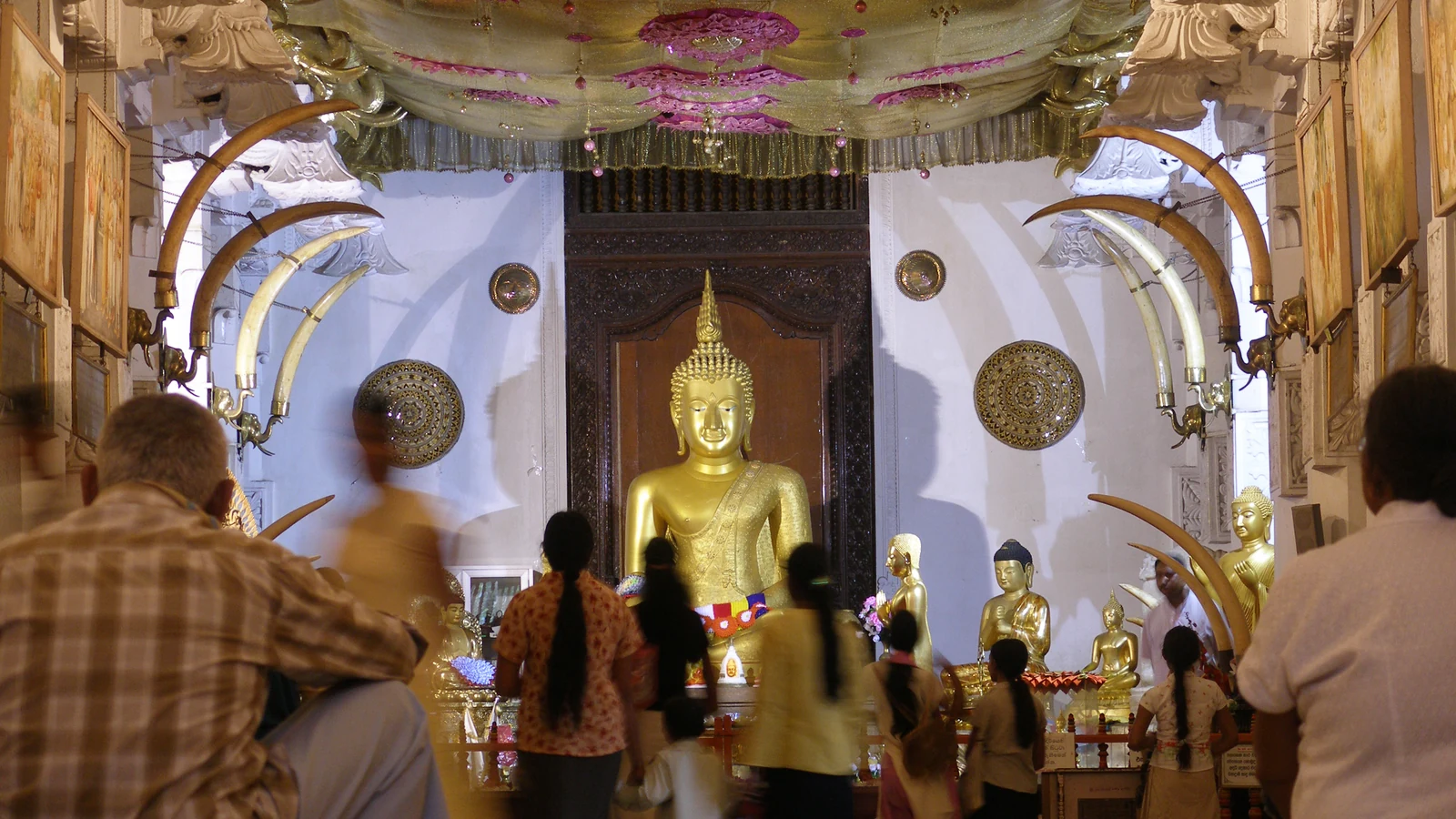
The Sri Dalada Maligawa temple protects the sacred tooth relic of Gautama Buddha.
Two monastic chapters named Malwathu and Asgiriya take turns managing temple duties every year.
An elected custodian called the Diyawadana Nilame directs daily temple affairs and land.
Monks hold three daily Thevava services with music and food offerings at dawn, noon, and twilight.
Devotees bring fresh white lotus flowers and jasmine water with loud hevisi drums.
The tooth relic rests inside seven nested golden caskets decorated with bright gems.
Water Architecture, Cloud Walls, and the Royal Lake
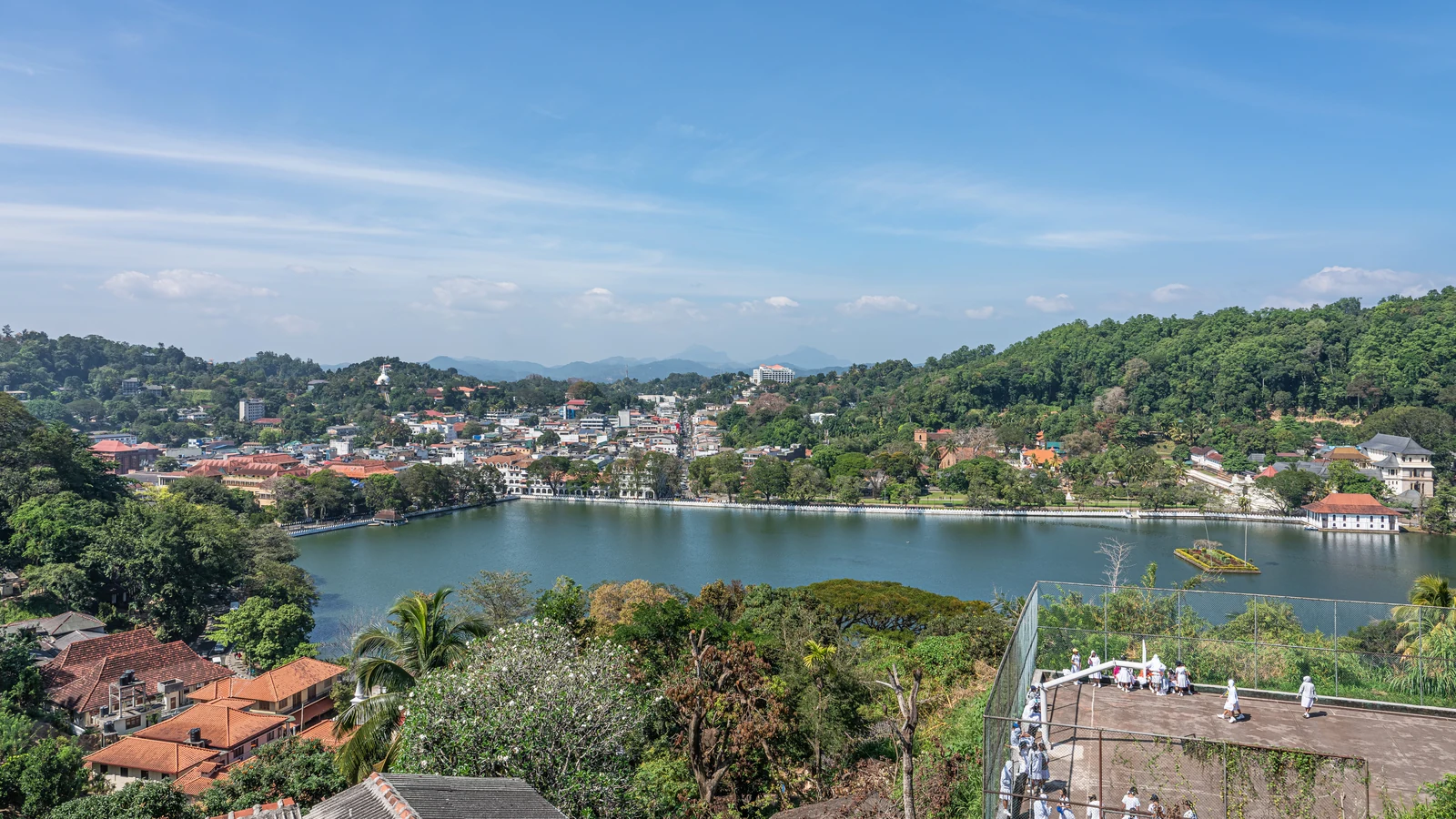
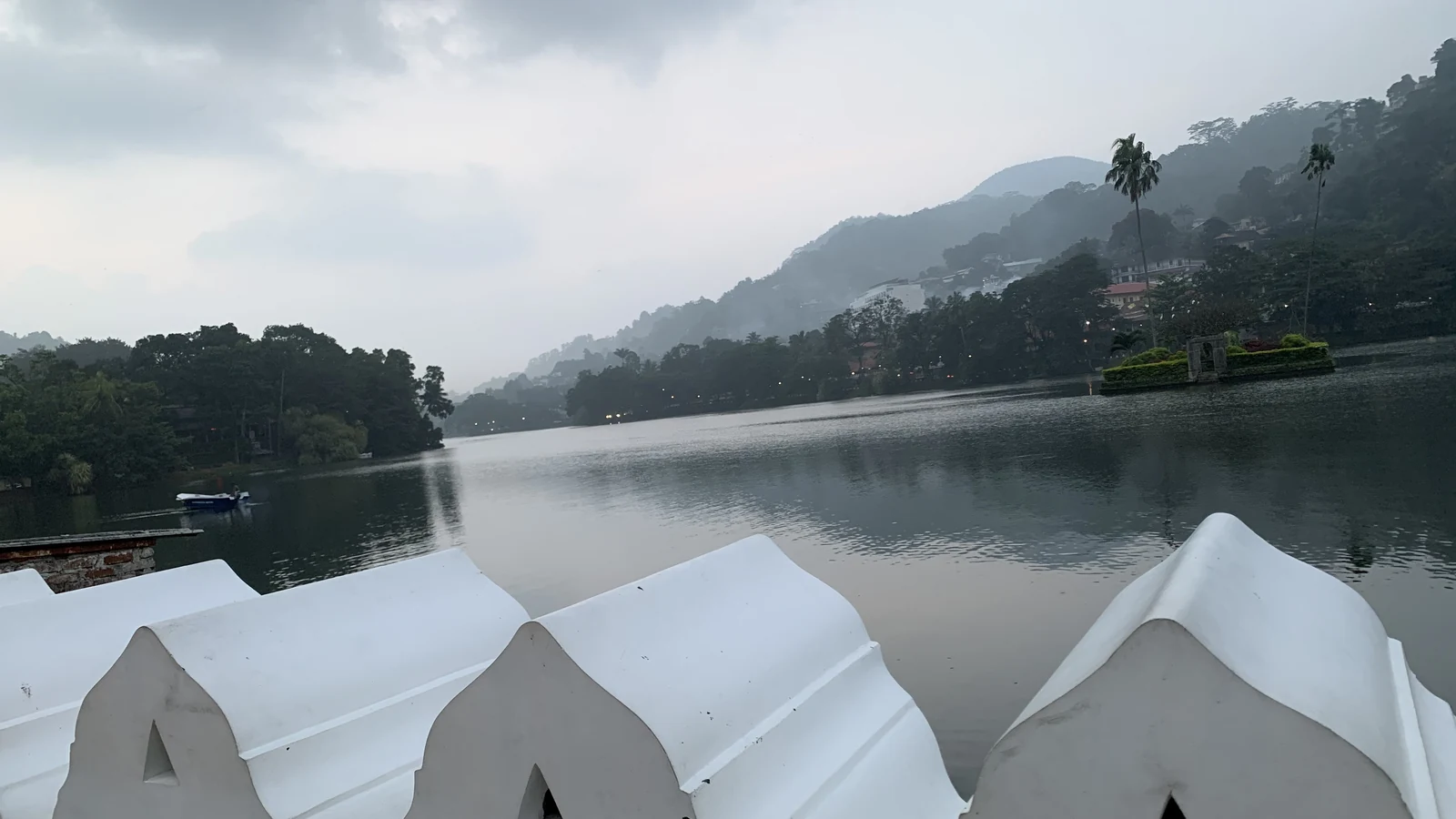
King Sri Vikrama Rajasinha built Kandy Lake in 1807 across muddy lowland fields. People also call this royal water reservoir Kiri Muhuda.
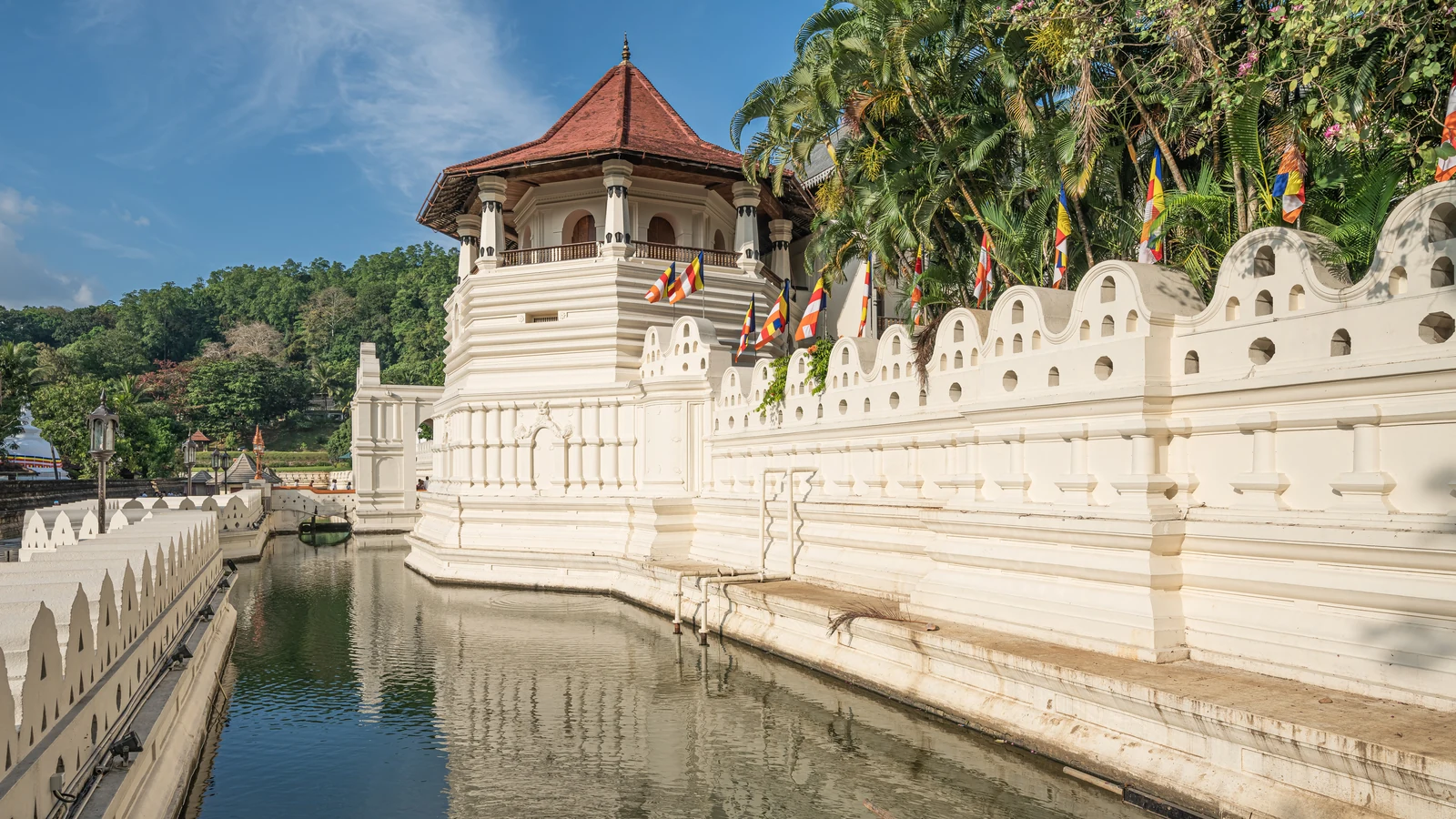
Master architect Devendra Mulachari designed the famous octagonal Paththirippuwa tower.
The white cloud-wall called Walakulu Bamma holds small coconut oil lamps during evening festivals.
A small island pavilion named Diyathilaka Mandapaya sits in the middle of the lake.
The lake catches heavy monsoon rain and cools the city air. Central Cultural Fund teams repair the old stone walls and water channels.
Udawattakele Sanctuary and Watershed Forest Conservation
The Udawattakele Sanctuary is a protected royal forest reserve behind the palace.
Kings once guarded this mountain forest under the name Thahanchi Kele.
The sanctuary protects a 104-hectare evergreen rainforest canopy on the steep hills.
Monks practiced quiet meditation inside rock shelters such as the Senkadagala cave.
The thick forest stops soil erosion and cleans natural streams flowing into the lake.
City rules protect a wide green buffer zone around the mountain slopes.
The living city unites daily temple prayer with modern forest and water conservation.
A2 · Elementary
The Sacred City of Kandy: Royal Citadel, Relic Shrines, and Hill Reservoirs
Highland royal planning, sacred relic custody, and artificial water architecture define Kandy historical sanctuary.
Monarchical Citadel and Highland Urban Planning
Kandy, historically recognized as Senkadagala, served as the royal capital of the independent Kingdom of Kandy from 1592 until British annexation in 1815. In 1592 King Vimaladharmasuriya I established the highland citadel as a secure sanctuary for Buddhist monastic traditions and sovereign rule amidst low-country colonial skirmishes. UNESCO inscribed the Sacred City of Kandy on the World Heritage List in 1988 under cultural criteria (iv) and (vi) in recognition of its exceptional urban ensemble.
Royal urban planning positioned the palace complex, sacred relic temple, and audience hall against the protective backdrop of forested mountains. The palace architecture linked monarchical power directly with the custody and ritual protection of the sacred tooth relic. Within this administrative court, the Royal Audience Hall features master Kandyan carpentry with 64 intricately carved timber pillars supporting an open-air hipped roof.
Sri Dalada Maligawa and Monastic Ritual Custody
The Sri Dalada Maligawa enshrines the sacred left canine tooth relic of Gautama Buddha, venerated as the supreme palladium of Sri Lanka. Custodial and liturgical duties rotate annually between the Mahanayake Theros of the Malwathu and Asgiriya monastic chapters. Simultaneously, an elected lay custodian known as the Diyawadana Nilame administers temple temporalities, land endowments, and ceremonial logistics.
Resident monks conduct three daily Thevava services featuring ceremonial ablutions, food offerings, and ritual music at dawn, noon, and twilight. Devotees present offerings of white lotus blossoms, scented jasmine, and water accompanied by traditional hevisi drum orchestras. The tooth relic is enclosed within seven nested golden stupa-shaped caskets adorned with precious gems inside the inner chamber.
Water Architecture, Cloud Walls, and the Royal Lake
King Sri Vikrama Rajasinha commissioned the artificial reservoir known as Kandy Lake, or Kiri Muhuda, in 1807 across lowland paddy marshes. Master architect Devendra Mulachari designed the iconic octagonal Paththirippuwa tower overlooking the lake for royal addresses. Along the perimeter, the cloud-wall parapet known as Walakulu Bamma incorporates triangular recesses designed to hold traditional coconut oil lamps during festivals.
A central island structure named the Diyathilaka Mandapaya provided a secluded royal bath and contemplation pavilion within the reservoir. Beyond its decorative profile, Kandy Lake operates as an urban hydrological retention basin, buffering regional monsoon deluge and cooling the valley micro-climate. Central Cultural Fund engineers maintain the historic stone embankment walls and sluice systems to mitigate silt buildup and erosion.
Udawattakele Sanctuary and Watershed Forest Conservation
Udawattakele Sanctuary was protected as a restricted royal forest reserve called Thahanchi Kele directly behind the palace complex. The sanctuary preserves a 104-hectare dense evergreen rainforest canopy that stabilizes steep slopes above the urban core. Ancient rock shelters like the Senkadagala cave provided hermitages for Buddhist ascetics practicing meditation in the forest canopy.
The forest watershed prevents hill soil erosion and filters natural stream flows discharging into Kandy Lake and temple bathing channels. Municipal zoning and heritage laws enforce an environmental buffer zone preventing commercial encroachment across surrounding mountain slopes. Today the sacred precinct blends active daily devotional rituals with holistic urban watershed preservation and ecological conservation.
B1 · Intermediate
Monarchical Citadel and Liturgical Custody in the Sacred City of Kandy
An analytical study of Senkadagala kingship, Malwathu and Asgiriya monastic governance, and royal water retention.
Monarchical Citadel and Highland Urban Planning
Kandy, historically recognized as Senkadagala, served as the royal capital of the independent Kingdom of Kandy from 1592 until British annexation in 1815. In 1592 King Vimaladharmasuriya I established the highland citadel as a secure sanctuary for Buddhist monastic traditions and sovereign rule amidst low-country colonial skirmishes. UNESCO inscribed the Sacred City of Kandy on the World Heritage List in 1988 under cultural criteria (iv) and (vi) in recognition of its exceptional urban ensemble.
Royal urban planning positioned the palace complex, sacred relic temple, and audience hall against the protective backdrop of forested mountains. The palace architecture linked monarchical power directly with the custody and ritual protection of the sacred tooth relic. Within this administrative court, the Royal Audience Hall features master Kandyan carpentry with 64 intricately carved timber pillars supporting an open-air hipped roof.
Sri Dalada Maligawa and Monastic Ritual Custody
The Sri Dalada Maligawa enshrines the sacred left canine tooth relic of Gautama Buddha, venerated as the supreme palladium of Sri Lanka. Custodial and liturgical duties rotate annually between the Mahanayake Theros of the Malwathu and Asgiriya monastic chapters. Simultaneously, an elected lay custodian known as the Diyawadana Nilame administers temple temporalities, land endowments, and ceremonial logistics.
Resident monks conduct three daily Thevava services featuring ceremonial ablutions, food offerings, and ritual music at dawn, noon, and twilight. Devotees present offerings of white lotus blossoms, scented jasmine, and water accompanied by traditional hevisi drum orchestras. The tooth relic is enclosed within seven nested golden stupa-shaped caskets adorned with precious gems inside the inner chamber.
Water Architecture, Cloud Walls, and the Royal Lake
King Sri Vikrama Rajasinha commissioned the artificial reservoir known as Kandy Lake, or Kiri Muhuda, in 1807 across lowland paddy marshes. Master architect Devendra Mulachari designed the iconic octagonal Paththirippuwa tower overlooking the lake for royal addresses. Along the perimeter, the cloud-wall parapet known as Walakulu Bamma incorporates triangular recesses designed to hold traditional coconut oil lamps during festivals.
A central island structure named the Diyathilaka Mandapaya provided a secluded royal bath and contemplation pavilion within the reservoir. Beyond its decorative profile, Kandy Lake operates as an urban hydrological retention basin, buffering regional monsoon deluge and cooling the valley micro-climate. Central Cultural Fund engineers maintain the historic stone embankment walls and sluice systems to mitigate silt buildup and erosion.
Udawattakele Sanctuary and Watershed Forest Conservation
Udawattakele Sanctuary was protected as a restricted royal forest reserve called Thahanchi Kele directly behind the palace complex. The sanctuary preserves a 104-hectare dense evergreen rainforest canopy that stabilizes steep slopes above the urban core. Ancient rock shelters like the Senkadagala cave provided hermitages for Buddhist ascetics practicing meditation in the forest canopy.
The forest watershed prevents hill soil erosion and filters natural stream flows discharging into Kandy Lake and temple bathing channels. Municipal zoning and heritage laws enforce an environmental buffer zone preventing commercial encroachment across surrounding mountain slopes. Today the sacred precinct blends active daily devotional rituals with holistic urban watershed preservation and ecological conservation.
B2 · Upper Intermediate
Highland Sovereignty, Monastic Chapters, and Hydraulic Morphology in Kandy
Examining defensive topography, Dalada Maligawa liturgical rotations, and Devendra Mulachari octagonal architecture.
Monarchical Citadel and Highland Urban Planning
Kandy, historically recognized as Senkadagala, served as the royal capital of the independent Kingdom of Kandy from 1592 until British annexation in 1815. In 1592 King Vimaladharmasuriya I established the highland citadel as a secure sanctuary for Buddhist monastic traditions and sovereign rule amidst low-country colonial skirmishes. UNESCO inscribed the Sacred City of Kandy on the World Heritage List in 1988 under cultural criteria (iv) and (vi) in recognition of its exceptional urban ensemble.
Royal urban planning positioned the palace complex, sacred relic temple, and audience hall against the protective backdrop of forested mountains. The palace architecture linked monarchical power directly with the custody and ritual protection of the sacred tooth relic. Within this administrative court, the Royal Audience Hall features master Kandyan carpentry with 64 intricately carved timber pillars supporting an open-air hipped roof.
Sri Dalada Maligawa and Monastic Ritual Custody
The Sri Dalada Maligawa enshrines the sacred left canine tooth relic of Gautama Buddha, venerated as the supreme palladium of Sri Lanka. Custodial and liturgical duties rotate annually between the Mahanayake Theros of the Malwathu and Asgiriya monastic chapters. Simultaneously, an elected lay custodian known as the Diyawadana Nilame administers temple temporalities, land endowments, and ceremonial logistics.
Resident monks conduct three daily Thevava services featuring ceremonial ablutions, food offerings, and ritual music at dawn, noon, and twilight. Devotees present offerings of white lotus blossoms, scented jasmine, and water accompanied by traditional hevisi drum orchestras. The tooth relic is enclosed within seven nested golden stupa-shaped caskets adorned with precious gems inside the inner chamber.
Water Architecture, Cloud Walls, and the Royal Lake
King Sri Vikrama Rajasinha commissioned the artificial reservoir known as Kandy Lake, or Kiri Muhuda, in 1807 across lowland paddy marshes. Master architect Devendra Mulachari designed the iconic octagonal Paththirippuwa tower overlooking the lake for royal addresses. Along the perimeter, the cloud-wall parapet known as Walakulu Bamma incorporates triangular recesses designed to hold traditional coconut oil lamps during festivals.
A central island structure named the Diyathilaka Mandapaya provided a secluded royal bath and contemplation pavilion within the reservoir. Beyond its decorative profile, Kandy Lake operates as an urban hydrological retention basin, buffering regional monsoon deluge and cooling the valley micro-climate. Central Cultural Fund engineers maintain the historic stone embankment walls and sluice systems to mitigate silt buildup and erosion.
Udawattakele Sanctuary and Watershed Forest Conservation
Udawattakele Sanctuary was protected as a restricted royal forest reserve called Thahanchi Kele directly behind the palace complex. The sanctuary preserves a 104-hectare dense evergreen rainforest canopy that stabilizes steep slopes above the urban core. Ancient rock shelters like the Senkadagala cave provided hermitages for Buddhist ascetics practicing meditation in the forest canopy.
The forest watershed prevents hill soil erosion and filters natural stream flows discharging into Kandy Lake and temple bathing channels. Municipal zoning and heritage laws enforce an environmental buffer zone preventing commercial encroachment across surrounding mountain slopes. Today the sacred precinct blends active daily devotional rituals with holistic urban watershed preservation and ecological conservation.
C1 · Advanced
Monarchical Sanctum, Monastic Chapter Temporal Governance, and Watershed Ecology in Kandy
A critical examination of Kandyan royal citadel planning, relic custody diplomacy, and Udawattakele rainforest preservation.
Monarchical Citadel and Highland Urban Planning
Kandy, historically recognized as Senkadagala, served as the royal capital of the independent Kingdom of Kandy from 1592 until British annexation in 1815. In 1592 King Vimaladharmasuriya I established the highland citadel as a secure sanctuary for Buddhist monastic traditions and sovereign rule amidst low-country colonial skirmishes. UNESCO inscribed the Sacred City of Kandy on the World Heritage List in 1988 under cultural criteria (iv) and (vi) in recognition of its exceptional urban ensemble.
Royal urban planning positioned the palace complex, sacred relic temple, and audience hall against the protective backdrop of forested mountains. The palace architecture linked monarchical power directly with the custody and ritual protection of the sacred tooth relic. Within this administrative court, the Royal Audience Hall features master Kandyan carpentry with 64 intricately carved timber pillars supporting an open-air hipped roof.
Sri Dalada Maligawa and Monastic Ritual Custody
The Sri Dalada Maligawa enshrines the sacred left canine tooth relic of Gautama Buddha, venerated as the supreme palladium of Sri Lanka. Custodial and liturgical duties rotate annually between the Mahanayake Theros of the Malwathu and Asgiriya monastic chapters. Simultaneously, an elected lay custodian known as the Diyawadana Nilame administers temple temporalities, land endowments, and ceremonial logistics.
Resident monks conduct three daily Thevava services featuring ceremonial ablutions, food offerings, and ritual music at dawn, noon, and twilight. Devotees present offerings of white lotus blossoms, scented jasmine, and water accompanied by traditional hevisi drum orchestras. The tooth relic is enclosed within seven nested golden stupa-shaped caskets adorned with precious gems inside the inner chamber.
Water Architecture, Cloud Walls, and the Royal Lake
King Sri Vikrama Rajasinha commissioned the artificial reservoir known as Kandy Lake, or Kiri Muhuda, in 1807 across lowland paddy marshes. Master architect Devendra Mulachari designed the iconic octagonal Paththirippuwa tower overlooking the lake for royal addresses. Along the perimeter, the cloud-wall parapet known as Walakulu Bamma incorporates triangular recesses designed to hold traditional coconut oil lamps during festivals.
A central island structure named the Diyathilaka Mandapaya provided a secluded royal bath and contemplation pavilion within the reservoir. Beyond its decorative profile, Kandy Lake operates as an urban hydrological retention basin, buffering regional monsoon deluge and cooling the valley micro-climate. Central Cultural Fund engineers maintain the historic stone embankment walls and sluice systems to mitigate silt buildup and erosion.
Udawattakele Sanctuary and Watershed Forest Conservation
Udawattakele Sanctuary was protected as a restricted royal forest reserve called Thahanchi Kele directly behind the palace complex. The sanctuary preserves a 104-hectare dense evergreen rainforest canopy that stabilizes steep slopes above the urban core. Ancient rock shelters like the Senkadagala cave provided hermitages for Buddhist ascetics practicing meditation in the forest canopy.
The forest watershed prevents hill soil erosion and filters natural stream flows discharging into Kandy Lake and temple bathing channels. Municipal zoning and heritage laws enforce an environmental buffer zone preventing commercial encroachment across surrounding mountain slopes. Today the sacred precinct blends active daily devotional rituals with holistic urban watershed preservation and ecological conservation.
C2 · Mastery
Spatial Sanctity, Dynastic Legitimism, and Socio-Ecological Integration in Senkadagala Kandy
A rigorous investigation of sovereign relic palladium custody, hydraulic urbanism, and upland forest sanctuary conservation.
Monarchical Citadel and Highland Urban Planning
Kandy, historically recognized as Senkadagala, served as the royal capital of the independent Kingdom of Kandy from 1592 until British annexation in 1815. In 1592 King Vimaladharmasuriya I established the highland citadel as a secure sanctuary for Buddhist monastic traditions and sovereign rule amidst low-country colonial skirmishes. UNESCO inscribed the Sacred City of Kandy on the World Heritage List in 1988 under cultural criteria (iv) and (vi) in recognition of its exceptional urban ensemble.
Royal urban planning positioned the palace complex, sacred relic temple, and audience hall against the protective backdrop of forested mountains. The palace architecture linked monarchical power directly with the custody and ritual protection of the sacred tooth relic. Within this administrative court, the Royal Audience Hall features master Kandyan carpentry with 64 intricately carved timber pillars supporting an open-air hipped roof.
Sri Dalada Maligawa and Monastic Ritual Custody
The Sri Dalada Maligawa enshrines the sacred left canine tooth relic of Gautama Buddha, venerated as the supreme palladium of Sri Lanka. Custodial and liturgical duties rotate annually between the Mahanayake Theros of the Malwathu and Asgiriya monastic chapters. Simultaneously, an elected lay custodian known as the Diyawadana Nilame administers temple temporalities, land endowments, and ceremonial logistics.
Resident monks conduct three daily Thevava services featuring ceremonial ablutions, food offerings, and ritual music at dawn, noon, and twilight. Devotees present offerings of white lotus blossoms, scented jasmine, and water accompanied by traditional hevisi drum orchestras. The tooth relic is enclosed within seven nested golden stupa-shaped caskets adorned with precious gems inside the inner chamber.
Water Architecture, Cloud Walls, and the Royal Lake
King Sri Vikrama Rajasinha commissioned the artificial reservoir known as Kandy Lake, or Kiri Muhuda, in 1807 across lowland paddy marshes. Master architect Devendra Mulachari designed the iconic octagonal Paththirippuwa tower overlooking the lake for royal addresses. Along the perimeter, the cloud-wall parapet known as Walakulu Bamma incorporates triangular recesses designed to hold traditional coconut oil lamps during festivals.
A central island structure named the Diyathilaka Mandapaya provided a secluded royal bath and contemplation pavilion within the reservoir. Beyond its decorative profile, Kandy Lake operates as an urban hydrological retention basin, buffering regional monsoon deluge and cooling the valley micro-climate. Central Cultural Fund engineers maintain the historic stone embankment walls and sluice systems to mitigate silt buildup and erosion.
Udawattakele Sanctuary and Watershed Forest Conservation
Udawattakele Sanctuary was protected as a restricted royal forest reserve called Thahanchi Kele directly behind the palace complex. The sanctuary preserves a 104-hectare dense evergreen rainforest canopy that stabilizes steep slopes above the urban core. Ancient rock shelters like the Senkadagala cave provided hermitages for Buddhist ascetics practicing meditation in the forest canopy.
The forest watershed prevents hill soil erosion and filters natural stream flows discharging into Kandy Lake and temple bathing channels. Municipal zoning and heritage laws enforce an environmental buffer zone preventing commercial encroachment across surrounding mountain slopes. Today the sacred precinct blends active daily devotional rituals with holistic urban watershed preservation and ecological conservation.
Check your understanding
Choose how closely you want to revisit the article. You can refer back while answering, and review explanations when you finish.
Quick Quiz A1
Try one question, then create a free account for the full Quick Quiz. Sign Up Free
Answer every question before checking. There is no time limit.
Your results
/ 1 correct (%)
Read the explanations to see how each answer connects to the article.
-
What historical name did the royal capital city have in ancient times?
1. Answer:
Quick Quiz A2
Try one question, then create a free account for the full Quick Quiz. Sign Up Free
Answer every question before checking. There is no time limit.
Your results
/ 1 correct (%)
Read the explanations to see how each answer connects to the article.
-
Under what historical name was Kandy recognized before British annexation?
1. Answer:
Quick Quiz B1
Try one question, then create a free account for the full Quick Quiz. Sign Up Free
Answer every question before checking. There is no time limit.
Your results
/ 1 correct (%)
Read the explanations to see how each answer connects to the article.
-
Under what historical name was Kandy recognized before British annexation?
1. Answer:
Quick Quiz B2
Try one question, then create a free account for the full Quick Quiz. Sign Up Free
Answer every question before checking. There is no time limit.
Your results
/ 1 correct (%)
Read the explanations to see how each answer connects to the article.
-
Under what historical name was Kandy recognized before British annexation?
1. Answer:
Quick Quiz C1
Try one question, then create a free account for the full Quick Quiz. Sign Up Free
Answer every question before checking. There is no time limit.
Your results
/ 1 correct (%)
Read the explanations to see how each answer connects to the article.
-
Under what historical name was Kandy recognized before British annexation?
1. Answer:
Quick Quiz C2
Try one question, then create a free account for the full Quick Quiz. Sign Up Free
Answer every question before checking. There is no time limit.
Your results
/ 1 correct (%)
Read the explanations to see how each answer connects to the article.
-
Under what historical name was Kandy recognized before British annexation?
1. Answer:
