A1 · Beginner
Colombo Commuter Rail: Morning Sea Trains, Big Stations, and Carriage Friends
Tens of thousands of daily riders take early trains along the beach into Colombo Fort station every morning.
The Morning Rush: Coastal Corridors and Suburban Departures
Every weekday morning before dawn, many people take early trains along the sea line to Colombo.
Office workers, teachers, and young students gather on station platforms to find a place to stand.
The famous passenger train runs right next to the beach near crashing ocean waves.
Riders stand near open train doors to feel cool salty winds during the morning ride.
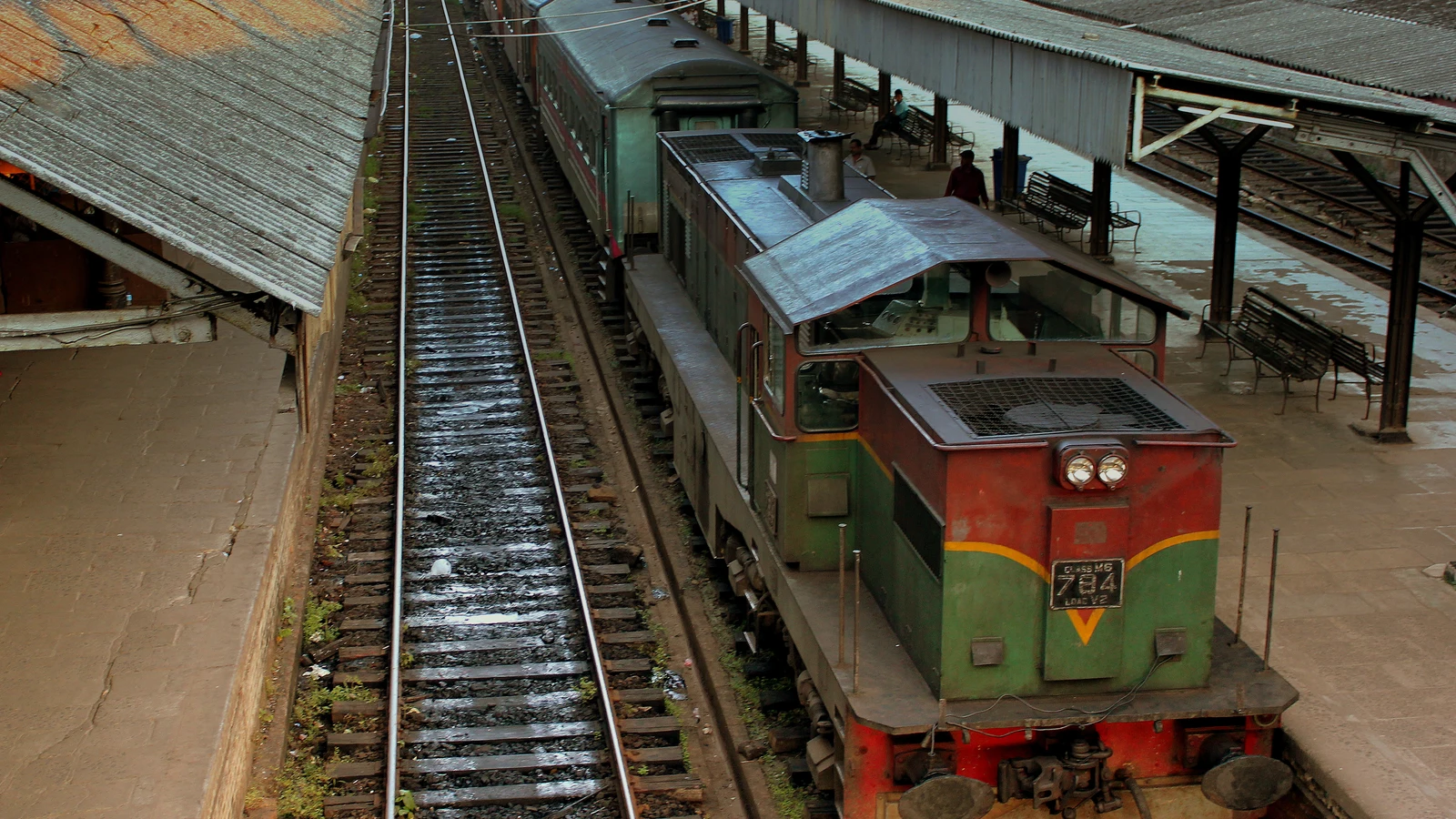
Heavy diesel train engines pull long passenger cars along wide metal train tracks.
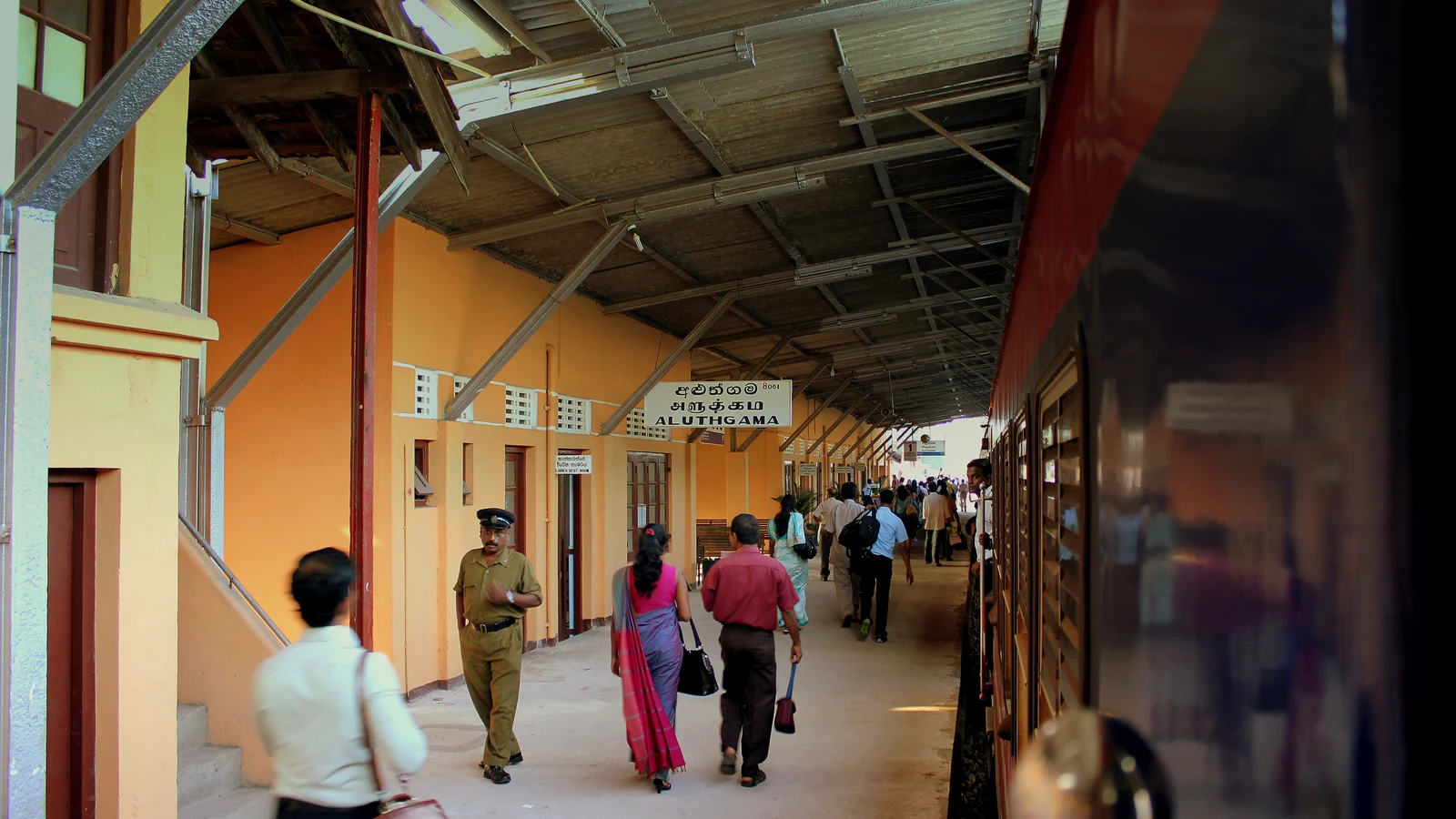
Regular riders show monthly paper tickets to station guards without waiting in ticket lines.
The Nerve Centre: Colombo Fort Terminal and Platform Logistics
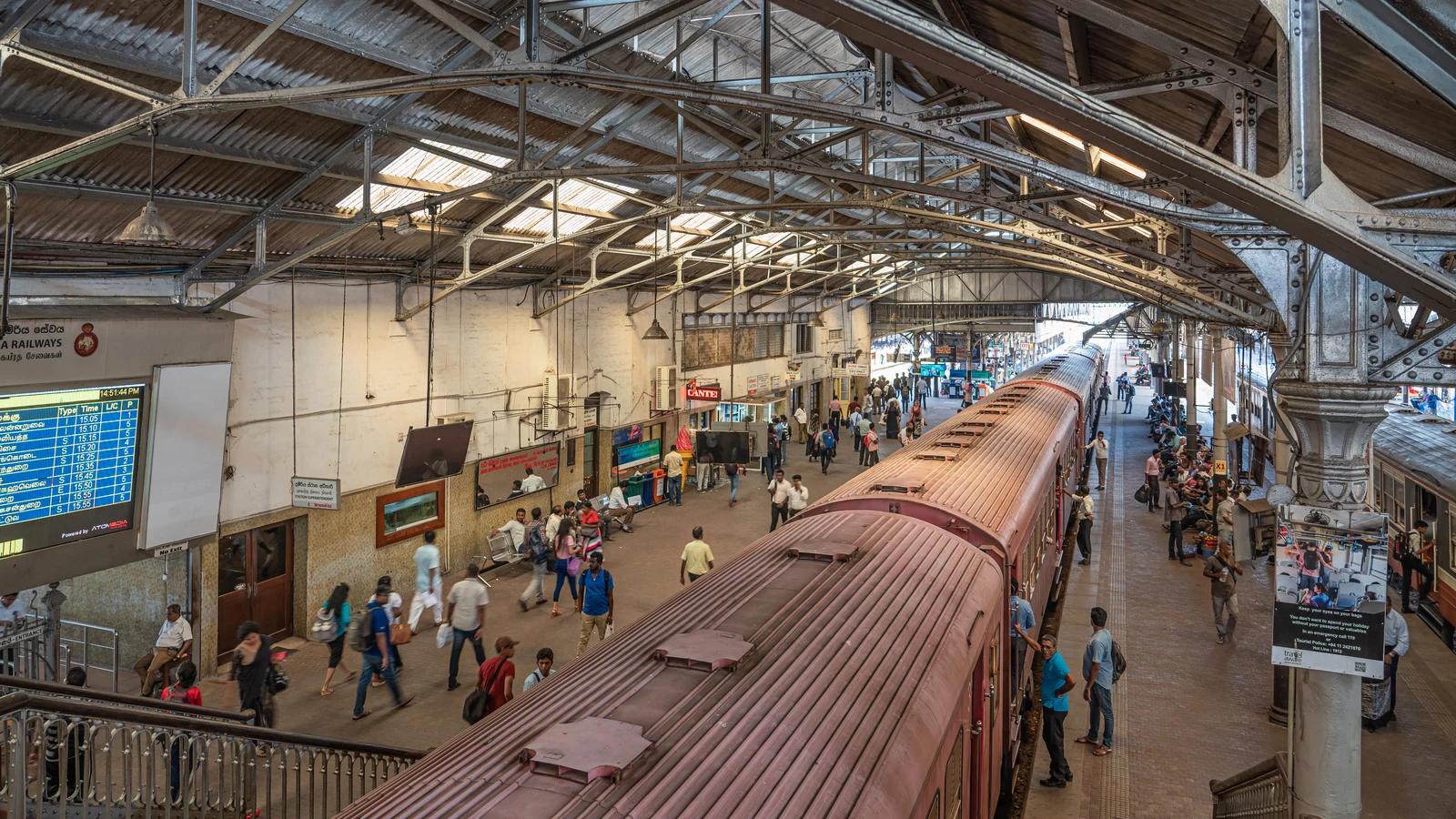
Colombo Fort railway station welcomes more than three hundred trains every single day.
The big red brick station building has ten long platforms joined by high footbridges.
Loudspeakers announce train arrivals clearly in three different languages across the station.
Big wooden boards turn by hand to show train times and station stops to passengers.
Track workers in signal towers pull long iron handles to guide incoming trains safely.
Crowds of riders walk quickly through exit gates toward city markets and bus stops.
Carriage Culture: Daily Social Rhythms and Shared Spaces
Daily train riders become close friends who travel together in the same passenger car.
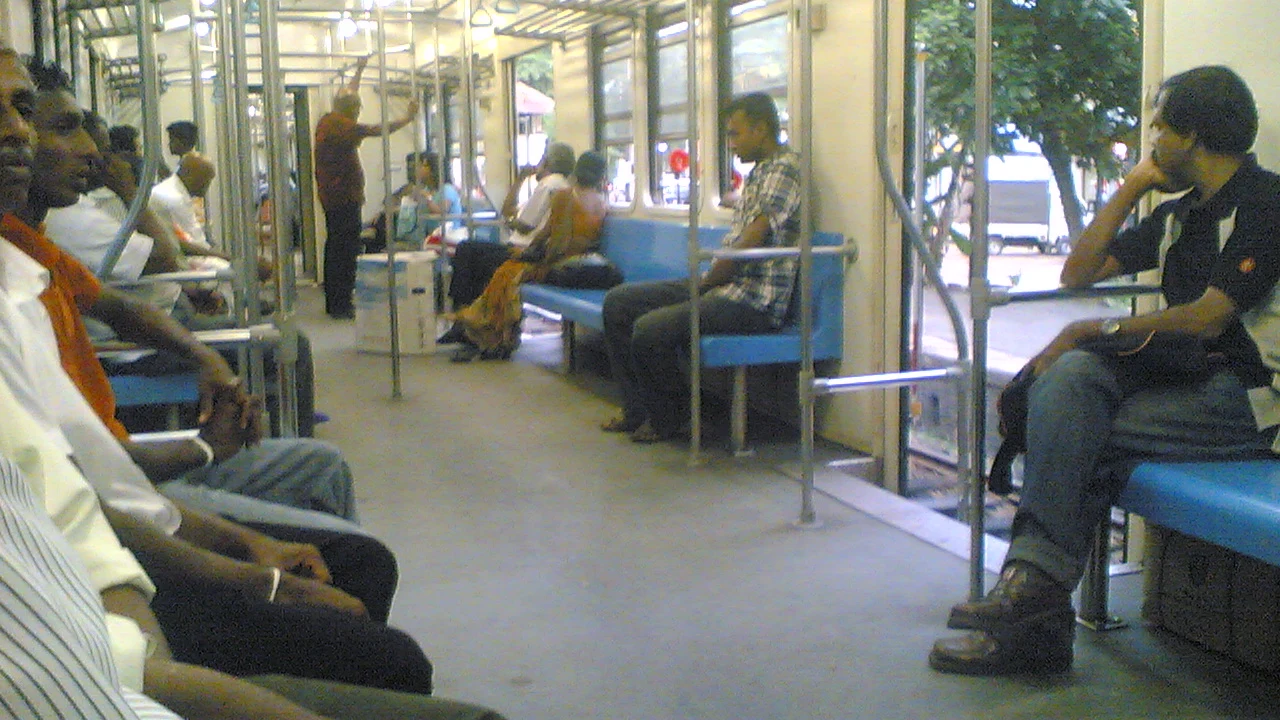
Friends sit together on familiar seats, play friendly cards, and drink warm tea from flasks.
Food sellers walk down narrow train aisles selling fresh peanuts and spicy fried snacks.
Seated passengers hold heavy work bags for standing riders in crowded train cars.
Open windows and ceiling fans bring fresh air inside the warm carriages on hot days.
People from all backgrounds help each other kindly during the long daily train ride.
Track Maintenance, Coastal Resilience, and the Evening Exodus
Salty sea air rusts metal rails quickly, so maintenance workers replace old wooden track ties.
Big stone walls protect coastal train tracks from strong sea waves along the beach.
Work crews walk the tracks with bright lights at night to check every rail joint.
Thousands of tired workers return to Colombo Fort station for the busy evening ride home.
Crowded evening trains leave every ten minutes with riders holding strong door rails.
Trains roll south along the dark ocean as the sun sets over the evening sea.
A2 · Elementary
Colombo Commuter Rail: Coastal Tracks, Fort Terminal, and Shared Carriages
Suburban coastal train runs, Edwardian platforms, and daily passenger subcultures shape life in Sri Lanka capital region.
The Morning Rush: Coastal Corridors and Suburban Departures
Every weekday morning before dawn, tens of thousands of commuters board early trains along the Coastal Line and Main Line heading toward Colombo. Office workers, teachers, and university students gather on platforms at Panadura, Moratuwa, and Ragama to secure morning standing room. The iconic Samudra Devi and Sagarika commuter expresses run directly along the coastal embankment within metres of breaking Indian Ocean surf.
Passengers lean out of open carriage doorways and windows to catch sea spray and cool coastal breezes during the humid morning transit. Commuter trains run on five-foot six-inch broad-gauge tracks powered by rugged diesel locomotives and Chinese-built diesel multiple units. Season ticket holders carry laminated cardboard passes stamped by Sri Lanka Railways, bypassing manual ticket windows each morning.
The Nerve Centre: Colombo Fort Terminal and Platform Logistics
Colombo Fort Railway Station serves as the bustling central terminus where over three hundred suburban and intercity trains arrive each day. The Edwardian-era red brick and stucco station facade opens onto ten long sheltered platforms connected by overhead passenger footbridges. Station announcers broadcast train arrivals, platform assignments, and minor track delays in trilingual Sinhala, Tamil, and English audio feeds.
Mechanical destination boards with manual rotating slats display departure times, route stops, and train classes above the main concourse. Operating staff and switchmen in trackside signal cabins manipulate mechanical interlocking levers and electrical semaphores to guide inbound rakes. Waves of arriving commuters disembark rapidly, crossing turnstiles into the Pettah commercial district and adjoining Bastian Mawatha bus hub.
Carriage Culture: Daily Social Rhythms and Shared Spaces
Decades of shared daily travel have fostered tight-knit commuter subcultures known locally as train friends or peti kattiya. Regular travelers occupy familiar corner seats, organizing informal card games, sharing thermos flasks of hot tea, and debating daily politics. Traveling snack vendors squeeze through crowded aisles selling roasted peanuts, spicy wade fritters, fresh mango slices, and bottled water.
In high-density third-class carriages, seated passengers routinely hold the heavy briefcases and schoolbags of commuters standing in the aisles. Open windows and ceiling fans provide vital natural airflow across carriages during sweltering tropical afternoon and evening commutes. This unscripted social solidarity transcends ethnic and socioeconomic divisions, uniting diverse passengers through shared commuting routines.
Track Maintenance, Coastal Resilience, and the Evening Exodus
Coastal Line tracks face relentless maritime wear from saltwater spray, requiring railway gangs to regularly replace corroded steel fasteners and sleepers. The Coast Conservation Department maintains boulder riprap seawalls along the tracks between Kollupitiya and Dehiwala to prevent marine erosion. Maintenance crews walk the rails at night with torches to inspect track alignment, ballast compaction, and rail joint integrity.
By five in the afternoon, thousands of homeward-bound commuters flood back into Colombo Fort Station for the evening outbound rush. Overloaded evening trains depart at ten-minute intervals, with athletic commuters clinging skilfully to grab rails near open doorways. As dusk settles over the Indian Ocean, the commuter trains roll southward into coastal darkness, concluding another ordinary cycle of metropolitan movement.
B1 · Intermediate
Coastal Corridors, Carriage Subcultures, and Terminal Operations in Colombo
An analytical study of broad-gauge commuter mobility, signal interlocking cabins, and informal passenger solidarity aboard trains.
The Morning Rush: Coastal Corridors and Suburban Departures
Every weekday morning before dawn, tens of thousands of commuters board early trains along the Coastal Line and Main Line heading toward Colombo. Office workers, teachers, and university students gather on platforms at Panadura, Moratuwa, and Ragama to secure morning standing room. The iconic Samudra Devi and Sagarika commuter expresses run directly along the coastal embankment within metres of breaking Indian Ocean surf.
Passengers lean out of open carriage doorways and windows to catch sea spray and cool coastal breezes during the humid morning transit. Commuter trains run on five-foot six-inch broad-gauge tracks powered by rugged diesel locomotives and Chinese-built diesel multiple units. Season ticket holders carry laminated cardboard passes stamped by Sri Lanka Railways, bypassing manual ticket windows each morning.
The Nerve Centre: Colombo Fort Terminal and Platform Logistics
Colombo Fort Railway Station serves as the bustling central terminus where over three hundred suburban and intercity trains arrive each day. The Edwardian-era red brick and stucco station facade opens onto ten long sheltered platforms connected by overhead passenger footbridges. Station announcers broadcast train arrivals, platform assignments, and minor track delays in trilingual Sinhala, Tamil, and English audio feeds.
Mechanical destination boards with manual rotating slats display departure times, route stops, and train classes above the main concourse. Operating staff and switchmen in trackside signal cabins manipulate mechanical interlocking levers and electrical semaphores to guide inbound rakes. Waves of arriving commuters disembark rapidly, crossing turnstiles into the Pettah commercial district and adjoining Bastian Mawatha bus hub.
Carriage Culture: Daily Social Rhythms and Shared Spaces
Decades of shared daily travel have fostered tight-knit commuter subcultures known locally as train friends or peti kattiya. Regular travelers occupy familiar corner seats, organizing informal card games, sharing thermos flasks of hot tea, and debating daily politics. Traveling snack vendors squeeze through crowded aisles selling roasted peanuts, spicy wade fritters, fresh mango slices, and bottled water.
In high-density third-class carriages, seated passengers routinely hold the heavy briefcases and schoolbags of commuters standing in the aisles. Open windows and ceiling fans provide vital natural airflow across carriages during sweltering tropical afternoon and evening commutes. This unscripted social solidarity transcends ethnic and socioeconomic divisions, uniting diverse passengers through shared commuting routines.
Track Maintenance, Coastal Resilience, and the Evening Exodus
Coastal Line tracks face relentless maritime wear from saltwater spray, requiring railway gangs to regularly replace corroded steel fasteners and sleepers. The Coast Conservation Department maintains boulder riprap seawalls along the tracks between Kollupitiya and Dehiwala to prevent marine erosion. Maintenance crews walk the rails at night with torches to inspect track alignment, ballast compaction, and rail joint integrity.
By five in the afternoon, thousands of homeward-bound commuters flood back into Colombo Fort Station for the evening outbound rush. Overloaded evening trains depart at ten-minute intervals, with athletic commuters clinging skilfully to grab rails near open doorways. As dusk settles over the Indian Ocean, the commuter trains roll southward into coastal darkness, concluding another ordinary cycle of metropolitan movement.
B2 · Upper Intermediate
Suburban Mobility, Rail Maritime Corrosion, and Multimodal Integration in Colombo
Investigating coastal embankment engineering, trilingual station signaling systems, and evening peak passenger evacuation flows.
The Morning Rush: Coastal Corridors and Suburban Departures
Every weekday morning before dawn, tens of thousands of commuters board early trains along the Coastal Line and Main Line heading toward Colombo. Office workers, teachers, and university students gather on platforms at Panadura, Moratuwa, and Ragama to secure morning standing room. The iconic Samudra Devi and Sagarika commuter expresses run directly along the coastal embankment within metres of breaking Indian Ocean surf.
Passengers lean out of open carriage doorways and windows to catch sea spray and cool coastal breezes during the humid morning transit. Commuter trains run on five-foot six-inch broad-gauge tracks powered by rugged diesel locomotives and Chinese-built diesel multiple units. Season ticket holders carry laminated cardboard passes stamped by Sri Lanka Railways, bypassing manual ticket windows each morning.
The Nerve Centre: Colombo Fort Terminal and Platform Logistics
Colombo Fort Railway Station serves as the bustling central terminus where over three hundred suburban and intercity trains arrive each day. The Edwardian-era red brick and stucco station facade opens onto ten long sheltered platforms connected by overhead passenger footbridges. Station announcers broadcast train arrivals, platform assignments, and minor track delays in trilingual Sinhala, Tamil, and English audio feeds.
Mechanical destination boards with manual rotating slats display departure times, route stops, and train classes above the main concourse. Operating staff and switchmen in trackside signal cabins manipulate mechanical interlocking levers and electrical semaphores to guide inbound rakes. Waves of arriving commuters disembark rapidly, crossing turnstiles into the Pettah commercial district and adjoining Bastian Mawatha bus hub.
Carriage Culture: Daily Social Rhythms and Shared Spaces
Decades of shared daily travel have fostered tight-knit commuter subcultures known locally as train friends or peti kattiya. Regular travelers occupy familiar corner seats, organizing informal card games, sharing thermos flasks of hot tea, and debating daily politics. Traveling snack vendors squeeze through crowded aisles selling roasted peanuts, spicy wade fritters, fresh mango slices, and bottled water.
In high-density third-class carriages, seated passengers routinely hold the heavy briefcases and schoolbags of commuters standing in the aisles. Open windows and ceiling fans provide vital natural airflow across carriages during sweltering tropical afternoon and evening commutes. This unscripted social solidarity transcends ethnic and socioeconomic divisions, uniting diverse passengers through shared commuting routines.
Track Maintenance, Coastal Resilience, and the Evening Exodus
Coastal Line tracks face relentless maritime wear from saltwater spray, requiring railway gangs to regularly replace corroded steel fasteners and sleepers. The Coast Conservation Department maintains boulder riprap seawalls along the tracks between Kollupitiya and Dehiwala to prevent marine erosion. Maintenance crews walk the rails at night with torches to inspect track alignment, ballast compaction, and rail joint integrity.
By five in the afternoon, thousands of homeward-bound commuters flood back into Colombo Fort Station for the evening outbound rush. Overloaded evening trains depart at ten-minute intervals, with athletic commuters clinging skilfully to grab rails near open doorways. As dusk settles over the Indian Ocean, the commuter trains roll southward into coastal darkness, concluding another ordinary cycle of metropolitan movement.
C1 · Advanced
Mobility Infrastructures, Vernacular Train Cultures, and Shoreline Resilience in Colombo
A critical examination of suburban passenger transit corridors, high-density third-class carriage sociability, and permanent way coastal maintenance.
The Morning Rush: Coastal Corridors and Suburban Departures
Every weekday morning before dawn, tens of thousands of commuters board early trains along the Coastal Line and Main Line heading toward Colombo. Office workers, teachers, and university students gather on platforms at Panadura, Moratuwa, and Ragama to secure morning standing room. The iconic Samudra Devi and Sagarika commuter expresses run directly along the coastal embankment within metres of breaking Indian Ocean surf.
Passengers lean out of open carriage doorways and windows to catch sea spray and cool coastal breezes during the humid morning transit. Commuter trains run on five-foot six-inch broad-gauge tracks powered by rugged diesel locomotives and Chinese-built diesel multiple units. Season ticket holders carry laminated cardboard passes stamped by Sri Lanka Railways, bypassing manual ticket windows each morning.
The Nerve Centre: Colombo Fort Terminal and Platform Logistics
Colombo Fort Railway Station serves as the bustling central terminus where over three hundred suburban and intercity trains arrive each day. The Edwardian-era red brick and stucco station facade opens onto ten long sheltered platforms connected by overhead passenger footbridges. Station announcers broadcast train arrivals, platform assignments, and minor track delays in trilingual Sinhala, Tamil, and English audio feeds.
Mechanical destination boards with manual rotating slats display departure times, route stops, and train classes above the main concourse. Operating staff and switchmen in trackside signal cabins manipulate mechanical interlocking levers and electrical semaphores to guide inbound rakes. Waves of arriving commuters disembark rapidly, crossing turnstiles into the Pettah commercial district and adjoining Bastian Mawatha bus hub.
Carriage Culture: Daily Social Rhythms and Shared Spaces
Decades of shared daily travel have fostered tight-knit commuter subcultures known locally as train friends or peti kattiya. Regular travelers occupy familiar corner seats, organizing informal card games, sharing thermos flasks of hot tea, and debating daily politics. Traveling snack vendors squeeze through crowded aisles selling roasted peanuts, spicy wade fritters, fresh mango slices, and bottled water.
In high-density third-class carriages, seated passengers routinely hold the heavy briefcases and schoolbags of commuters standing in the aisles. Open windows and ceiling fans provide vital natural airflow across carriages during sweltering tropical afternoon and evening commutes. This unscripted social solidarity transcends ethnic and socioeconomic divisions, uniting diverse passengers through shared commuting routines.
Track Maintenance, Coastal Resilience, and the Evening Exodus
Coastal Line tracks face relentless maritime wear from saltwater spray, requiring railway gangs to regularly replace corroded steel fasteners and sleepers. The Coast Conservation Department maintains boulder riprap seawalls along the tracks between Kollupitiya and Dehiwala to prevent marine erosion. Maintenance crews walk the rails at night with torches to inspect track alignment, ballast compaction, and rail joint integrity.
By five in the afternoon, thousands of homeward-bound commuters flood back into Colombo Fort Station for the evening outbound rush. Overloaded evening trains depart at ten-minute intervals, with athletic commuters clinging skilfully to grab rails near open doorways. As dusk settles over the Indian Ocean, the commuter trains roll southward into coastal darkness, concluding another ordinary cycle of metropolitan movement.
C2 · Mastery
Metropolitan Mobilities, Mechanical Signaling Hegemonies, and Maritime Riprap Engineering
A comprehensive analytical monograph on Western Province commuter rail morphology, colonial railway terminal architecture, and unscripted passenger solidarity.
The Morning Rush: Coastal Corridors and Suburban Departures
Every weekday morning before dawn, tens of thousands of commuters board early trains along the Coastal Line and Main Line heading toward Colombo. Office workers, teachers, and university students gather on platforms at Panadura, Moratuwa, and Ragama to secure morning standing room. The iconic Samudra Devi and Sagarika commuter expresses run directly along the coastal embankment within metres of breaking Indian Ocean surf.
Passengers lean out of open carriage doorways and windows to catch sea spray and cool coastal breezes during the humid morning transit. Commuter trains run on five-foot six-inch broad-gauge tracks powered by rugged diesel locomotives and Chinese-built diesel multiple units. Season ticket holders carry laminated cardboard passes stamped by Sri Lanka Railways, bypassing manual ticket windows each morning.
The Nerve Centre: Colombo Fort Terminal and Platform Logistics
Colombo Fort Railway Station serves as the bustling central terminus where over three hundred suburban and intercity trains arrive each day. The Edwardian-era red brick and stucco station facade opens onto ten long sheltered platforms connected by overhead passenger footbridges. Station announcers broadcast train arrivals, platform assignments, and minor track delays in trilingual Sinhala, Tamil, and English audio feeds.
Mechanical destination boards with manual rotating slats display departure times, route stops, and train classes above the main concourse. Operating staff and switchmen in trackside signal cabins manipulate mechanical interlocking levers and electrical semaphores to guide inbound rakes. Waves of arriving commuters disembark rapidly, crossing turnstiles into the Pettah commercial district and adjoining Bastian Mawatha bus hub.
Carriage Culture: Daily Social Rhythms and Shared Spaces
Decades of shared daily travel have fostered tight-knit commuter subcultures known locally as train friends or peti kattiya. Regular travelers occupy familiar corner seats, organizing informal card games, sharing thermos flasks of hot tea, and debating daily politics. Traveling snack vendors squeeze through crowded aisles selling roasted peanuts, spicy wade fritters, fresh mango slices, and bottled water.
In high-density third-class carriages, seated passengers routinely hold the heavy briefcases and schoolbags of commuters standing in the aisles. Open windows and ceiling fans provide vital natural airflow across carriages during sweltering tropical afternoon and evening commutes. This unscripted social solidarity transcends ethnic and socioeconomic divisions, uniting diverse passengers through shared commuting routines.
Track Maintenance, Coastal Resilience, and the Evening Exodus
Coastal Line tracks face relentless maritime wear from saltwater spray, requiring railway gangs to regularly replace corroded steel fasteners and sleepers. The Coast Conservation Department maintains boulder riprap seawalls along the tracks between Kollupitiya and Dehiwala to prevent marine erosion. Maintenance crews walk the rails at night with torches to inspect track alignment, ballast compaction, and rail joint integrity.
By five in the afternoon, thousands of homeward-bound commuters flood back into Colombo Fort Station for the evening outbound rush. Overloaded evening trains depart at ten-minute intervals, with athletic commuters clinging skilfully to grab rails near open doorways. As dusk settles over the Indian Ocean, the commuter trains roll southward into coastal darkness, concluding another ordinary cycle of metropolitan movement.
Check your understanding
Choose how closely you want to revisit the article. You can refer back while answering, and review explanations when you finish.
Quick Quiz A1
Try one question, then create a free account for the full Quick Quiz. Sign Up Free
Answer every question before checking. There is no time limit.
Your results
/ 1 correct (%)
Read the explanations to see how each answer connects to the article.
-
When do many people take early trains along the sea line to Colombo?
1. Answer:
Quick Quiz A2
Try one question, then create a free account for the full Quick Quiz. Sign Up Free
Answer every question before checking. There is no time limit.
Your results
/ 1 correct (%)
Read the explanations to see how each answer connects to the article.
-
When do tens of thousands of commuters board early trains toward Colombo?
1. Answer:
Quick Quiz B1
Try one question, then create a free account for the full Quick Quiz. Sign Up Free
Answer every question before checking. There is no time limit.
Your results
/ 1 correct (%)
Read the explanations to see how each answer connects to the article.
-
When do tens of thousands of commuters board early trains toward Colombo?
1. Answer:
Quick Quiz B2
Try one question, then create a free account for the full Quick Quiz. Sign Up Free
Answer every question before checking. There is no time limit.
Your results
/ 1 correct (%)
Read the explanations to see how each answer connects to the article.
-
When do tens of thousands of commuters board early trains toward Colombo?
1. Answer:
Quick Quiz C1
Try one question, then create a free account for the full Quick Quiz. Sign Up Free
Answer every question before checking. There is no time limit.
Your results
/ 1 correct (%)
Read the explanations to see how each answer connects to the article.
-
When do tens of thousands of commuters board early trains toward Colombo?
1. Answer:
Quick Quiz C2
Try one question, then create a free account for the full Quick Quiz. Sign Up Free
Answer every question before checking. There is no time limit.
Your results
/ 1 correct (%)
Read the explanations to see how each answer connects to the article.
-
When do tens of thousands of commuters board early trains toward Colombo?
1. Answer:
