A1 · Beginner
Colombo Monsoon Routines: Ocean Rain and Daily Life
Heavy rain falls from ocean storm winds across Colombo, shaping daily work, travel, and city life.
Coastal Squalls and Immediate Street Adaptations
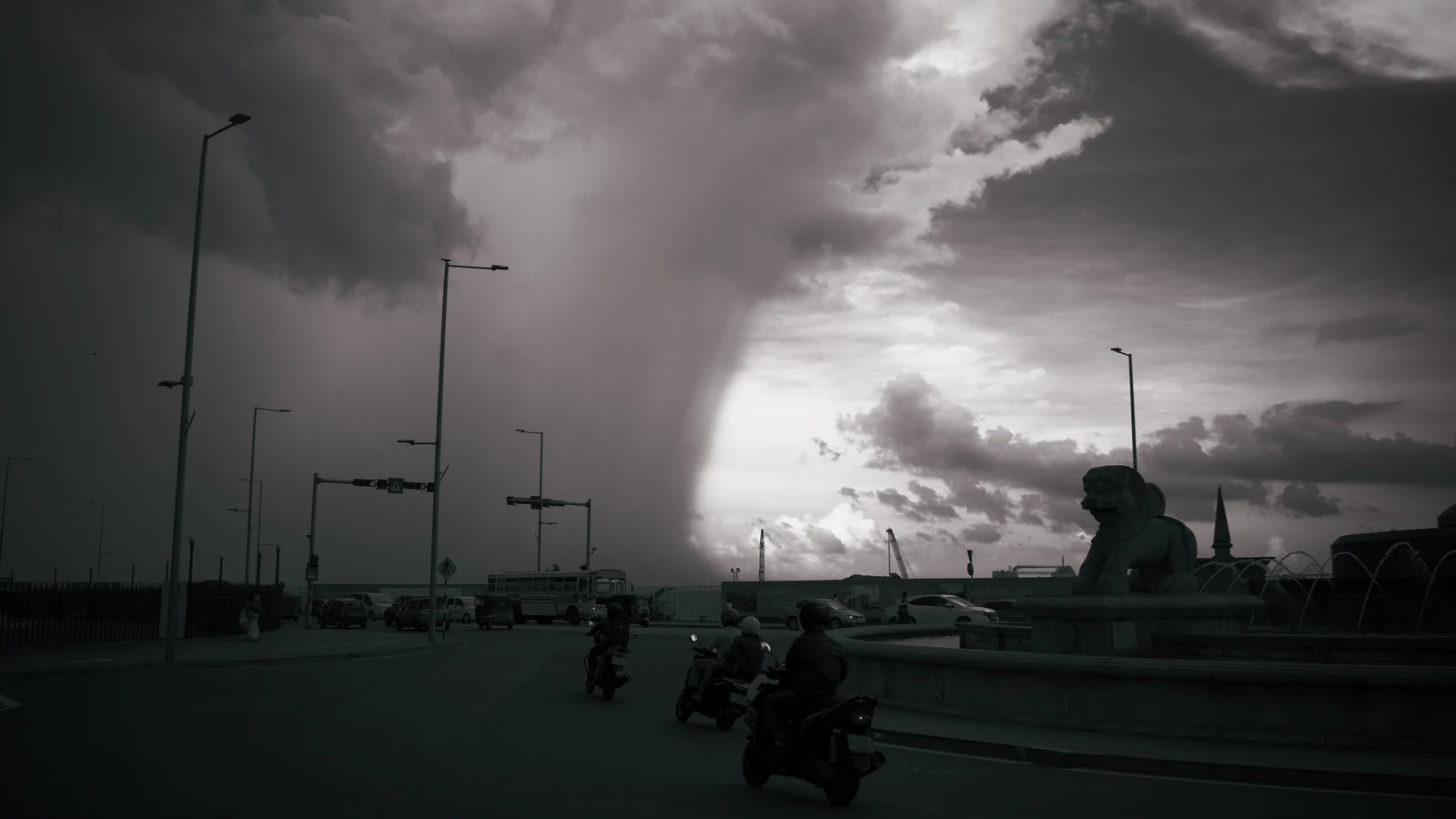
Colombo has two big rainy seasons every year from ocean storm winds.
Warm morning air turns into tall dark clouds over the city by afternoon.
The weather office sends fast alerts to schools, bus drivers, and sea harbor workers.
Heavy rain falls fast, fills street gutters, and makes roads hard to see.
Shop owners in Pettah cover fruit boxes and cloth with big blue covers.
People walk quickly under shop roofs and stone pillars to stay dry.
Commuter Mobility and Weatherproofing Transit
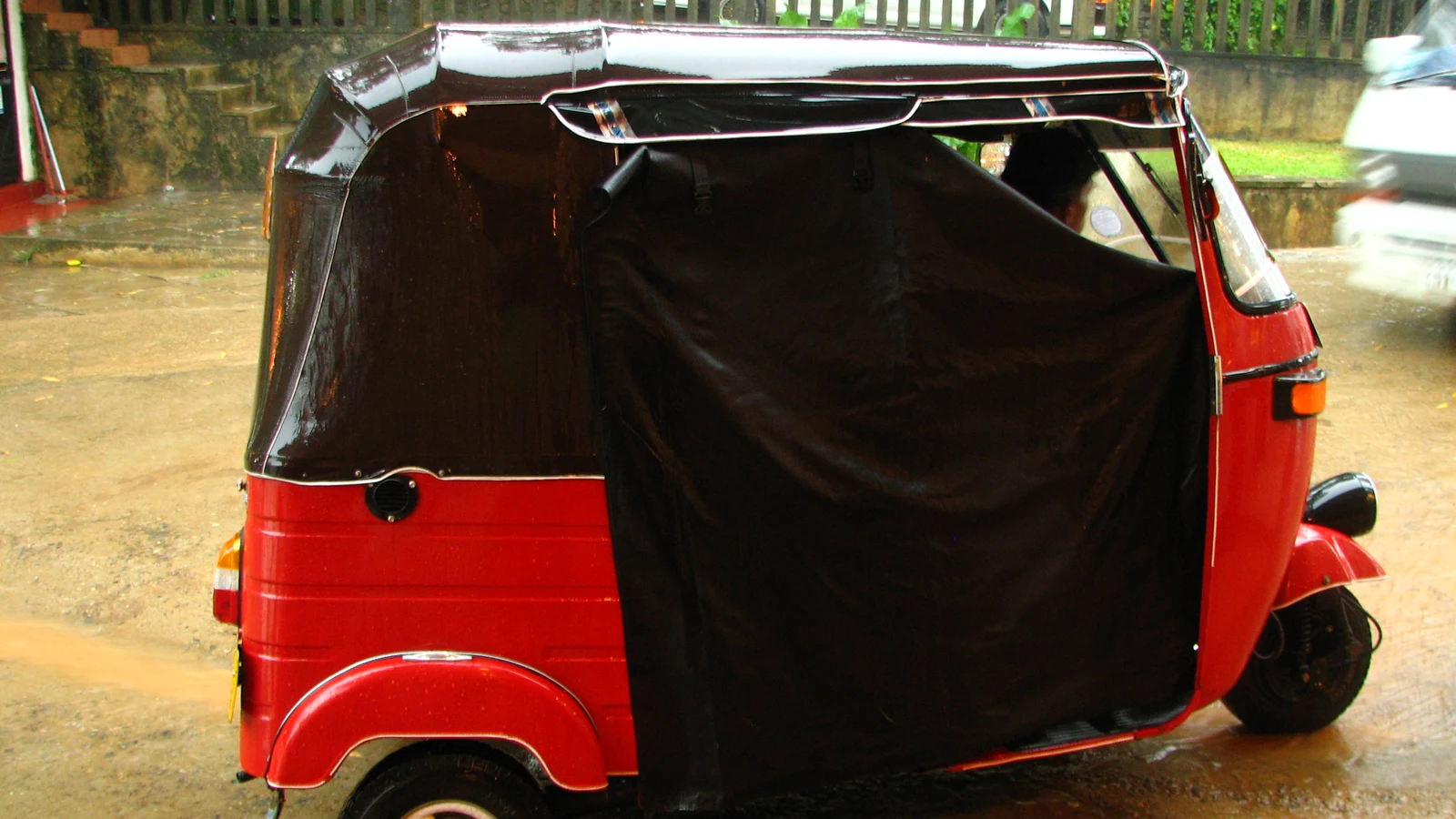
Three-wheeler taxi drivers pull down clear plastic curtains to stop the rain.
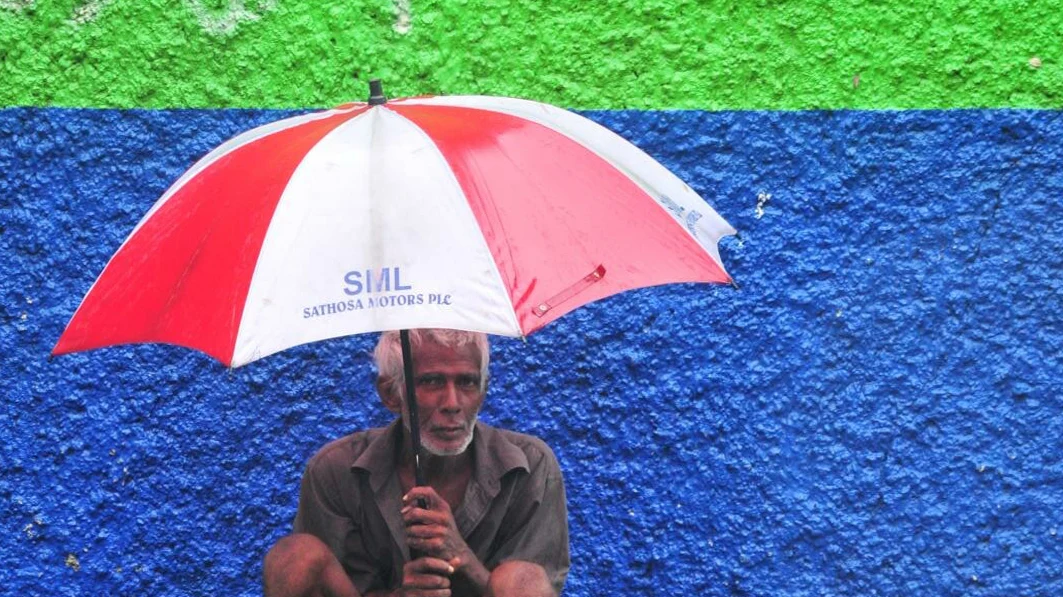
Corner sellers sell small folding umbrellas and light plastic rain coats to walkers.
City workers put on rubber shoes and light sandals to cross wet roads.
Motorbike riders stop under big highway bridges to wait out the storm.
Bus drivers keep wipers moving while wet passengers step inside crowded buses.
Police officers wear bright yellow raincoats to guide cars through deep water.
Canal Hydraulics and Municipal Stormwater Control
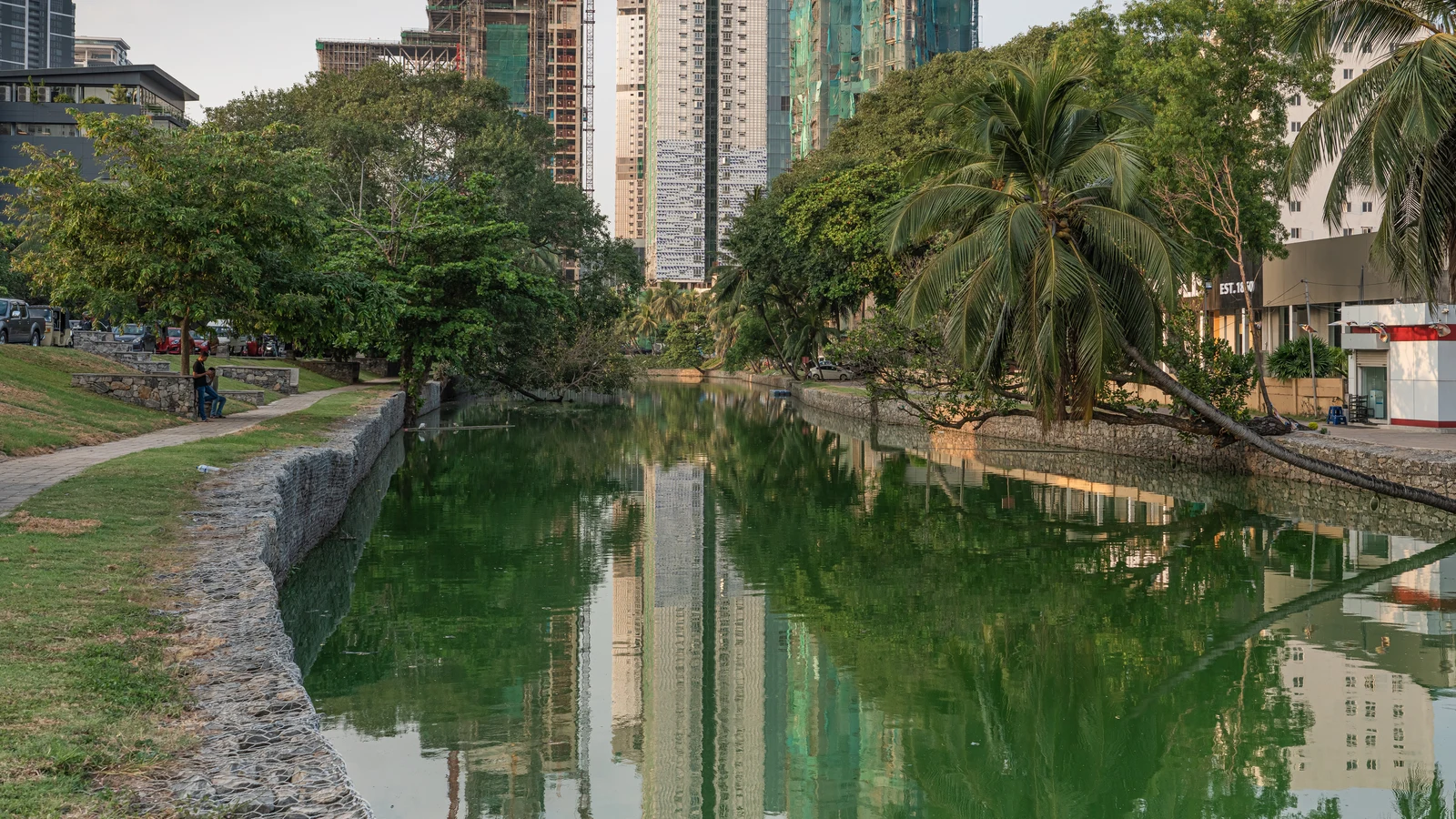
Old water canals built long ago help carry heavy flood water to the sea.
Floating work boats pull out thick green river weeds from city canals.
Large pump stations push thousands of liters of rainwater into ocean waves.
Work trucks clean out dark dirt, sand, and brown leaves from underground pipes.
City wetland parks around Beddagana soak up flood water to protect family homes.
Automatic water meters on the river send height numbers to safety workers.
Post-Storm Resumption and Public Health Routines
Clouds blow away by late afternoon and bright sun shines on Galle Face Green.
Homeowners turn over garden pots and empty cans to stop mosquitoes from breeding.
Health workers visit small houses and spray smoke to stop dangerous fever sickness.
Mothers hang school uniforms on indoor lines under fast room fans to dry.
Street carts cook hot roti bread and pour warm ginger tea for workers.
Living with sudden tropical rains is a normal daily rhythm of life in Colombo.
A2 · Elementary
Colombo Monsoon Routines: Cloudbursts, Street Markets, and Canals
Sudden tropical rainstorms, three-wheeler vinyl curtains, and canal pumping stations shape the capital's daily pace.
Coastal Squalls and Immediate Street Adaptations
Colombo navigates two distinct monsoon seasons each calendar year, experiencing the southwest monsoon between May and September alongside convective thunderstorms during October and November. Humid morning heat over the commercial capital regularly yields to towering cumulus storm clouds rolling off the Indian Ocean by early afternoon. The Department of Meteorology broadcasts color-coded severe weather warnings alerting school administrators, transport dispatchers, and maritime port authorities to impending squall lines.
Within minutes of a coastal squall making landfall, street temperatures drop sharply as torrential rains overwhelm roadside gutters and reduce driver visibility to metres. Street vendors in dense retail districts like Pettah and Kollupitiya quickly cover outdoor fruit crates and textile stalls with heavy blue polyethylene tarpaulins. Pedestrians dart under colonial colonnades, bank porticos, and overhanging shop verandas to wait out the initial thirty-minute cloudburst in relative safety.
Commuter Mobility and Weatherproofing Transit
Motorized urban transit adapts immediately as three-wheeler drivers roll down clear plastic vinyl side curtains and button waterproof flaps to shield passengers from wind-driven rain. Pavement umbrella sellers appear on street corners within minutes of the first raindrops, selling inexpensive folding umbrellas and thin plastic ponchos. Office workers and market shoppers swap formal leather office shoes for rubber sandals or plastic flip-flops when navigating waterlogged pedestrian crossings.
Motorcyclists and scooter riders seek emergency shelter beneath elevated flyovers and concrete highway bridges along Baseline Road and Marine Drive. Private bus crews keep windshield wiper motors running continuously while conductors squeeze wet passengers through misted sliding doors. Traffic police donned in bright yellow reflective rain slickers manually direct vehicle queues through flooded low-lying intersections to sustain vehicular flow.
Canal Hydraulics and Municipal Stormwater Control
The Sri Lanka Land Development Corporation operates a historic network of interconnected Dutch and British canals that drain runoff from Colombo into the sea. Mechanical weed harvesters and dredging barges work year-round along the St. Sebastian, Dematagoda, and Dehiwala canals to clear choking water hyacinth and accumulated debris. Heavy-duty diesel pumping stations at North Lock, St. Sebastian, and Wellawatte pump tens of thousands of litres of stormwater per second into the ocean against high tides.
Municipal gully emptiers and vacuum trucks clear silt, sand, and fallen leaves from underground storm drain culverts before seasonal monsoon peaks arrive. Urban retention basins and restored wetlands around Beddagana and Diyasaru absorb excess floodwaters, protecting dense residential neighborhoods from inundation. Automatic telemetric water level gauges installed along the Kelani River transmit real-time crest data directly to the Disaster Management Centre in Colombo.
Post-Storm Resumption and Public Health Routines
By late afternoon, heavy storm clouds typically clear, leaving wet asphalt shimmering in golden tropical sunset light across Galle Face Green. Householders immediately inspect outdoor gardens, eaves, and discarded containers to overturn standing water and eliminate potential mosquito breeding sites. Public health inspectors conduct door-to-door inspections and smoke-fogging operations in dense urban tenements to prevent seasonal dengue outbreaks.
Families dry damp school uniforms and office attire on indoor clotheslines hung beneath whirring ceiling fans before the night air cools. Roadside food carts reopen for evening trade, serving hot string hoppers, spicy kottu roti, and steaming ginger tea to homeward commuters. This predictable diurnal cycle normalizes the tropical rains, embedding the monsoon rhythm into Colombo's enduring civic culture.
B1 · Intermediate
Hydraulic Networks, Commuter Tactics, and Colombo Monsoon Routines
An analytical examination of severe weather warnings, urban canal dredging, and commuter transit adaptations.
Coastal Squalls and Immediate Street Adaptations
Colombo navigates two distinct monsoon seasons each calendar year, experiencing the southwest monsoon between May and September alongside convective thunderstorms during October and November. Humid morning heat over the commercial capital regularly yields to towering cumulus storm clouds rolling off the Indian Ocean by early afternoon. The Department of Meteorology broadcasts color-coded severe weather warnings alerting school administrators, transport dispatchers, and maritime port authorities to impending squall lines.
Within minutes of a coastal squall making landfall, street temperatures drop sharply as torrential rains overwhelm roadside gutters and reduce driver visibility to metres. Street vendors in dense retail districts like Pettah and Kollupitiya quickly cover outdoor fruit crates and textile stalls with heavy blue polyethylene tarpaulins. Pedestrians dart under colonial colonnades, bank porticos, and overhanging shop verandas to wait out the initial thirty-minute cloudburst in relative safety.
Commuter Mobility and Weatherproofing Transit
Motorized urban transit adapts immediately as three-wheeler drivers roll down clear plastic vinyl side curtains and button waterproof flaps to shield passengers from wind-driven rain. Pavement umbrella sellers appear on street corners within minutes of the first raindrops, selling inexpensive folding umbrellas and thin plastic ponchos. Office workers and market shoppers swap formal leather office shoes for rubber sandals or plastic flip-flops when navigating waterlogged pedestrian crossings.
Motorcyclists and scooter riders seek emergency shelter beneath elevated flyovers and concrete highway bridges along Baseline Road and Marine Drive. Private bus crews keep windshield wiper motors running continuously while conductors squeeze wet passengers through misted sliding doors. Traffic police donned in bright yellow reflective rain slickers manually direct vehicle queues through flooded low-lying intersections to sustain vehicular flow.
Canal Hydraulics and Municipal Stormwater Control
The Sri Lanka Land Development Corporation operates a historic network of interconnected Dutch and British canals that drain runoff from Colombo into the sea. Mechanical weed harvesters and dredging barges work year-round along the St. Sebastian, Dematagoda, and Dehiwala canals to clear choking water hyacinth and accumulated debris. Heavy-duty diesel pumping stations at North Lock, St. Sebastian, and Wellawatte pump tens of thousands of litres of stormwater per second into the ocean against high tides.
Municipal gully emptiers and vacuum trucks clear silt, sand, and fallen leaves from underground storm drain culverts before seasonal monsoon peaks arrive. Urban retention basins and restored wetlands around Beddagana and Diyasaru absorb excess floodwaters, protecting dense residential neighborhoods from inundation. Automatic telemetric water level gauges installed along the Kelani River transmit real-time crest data directly to the Disaster Management Centre in Colombo.
Post-Storm Resumption and Public Health Routines
By late afternoon, heavy storm clouds typically clear, leaving wet asphalt shimmering in golden tropical sunset light across Galle Face Green. Householders immediately inspect outdoor gardens, eaves, and discarded containers to overturn standing water and eliminate potential mosquito breeding sites. Public health inspectors conduct door-to-door inspections and smoke-fogging operations in dense urban tenements to prevent seasonal dengue outbreaks.
Families dry damp school uniforms and office attire on indoor clotheslines hung beneath whirring ceiling fans before the night air cools. Roadside food carts reopen for evening trade, serving hot string hoppers, spicy kottu roti, and steaming ginger tea to homeward commuters. This predictable diurnal cycle normalizes the tropical rains, embedding the monsoon rhythm into Colombo's enduring civic culture.
B2 · Upper Intermediate
Urban Drainage, Sluice Pumping, and Diurnal Monsoon Rhythms
Investigating retention wetland absorption, Kelani River telemetric monitoring, and municipal vector control.
Coastal Squalls and Immediate Street Adaptations
Colombo navigates two distinct monsoon seasons each calendar year, experiencing the southwest monsoon between May and September alongside convective thunderstorms during October and November. Humid morning heat over the commercial capital regularly yields to towering cumulus storm clouds rolling off the Indian Ocean by early afternoon. The Department of Meteorology broadcasts color-coded severe weather warnings alerting school administrators, transport dispatchers, and maritime port authorities to impending squall lines.
Within minutes of a coastal squall making landfall, street temperatures drop sharply as torrential rains overwhelm roadside gutters and reduce driver visibility to metres. Street vendors in dense retail districts like Pettah and Kollupitiya quickly cover outdoor fruit crates and textile stalls with heavy blue polyethylene tarpaulins. Pedestrians dart under colonial colonnades, bank porticos, and overhanging shop verandas to wait out the initial thirty-minute cloudburst in relative safety.
Commuter Mobility and Weatherproofing Transit
Motorized urban transit adapts immediately as three-wheeler drivers roll down clear plastic vinyl side curtains and button waterproof flaps to shield passengers from wind-driven rain. Pavement umbrella sellers appear on street corners within minutes of the first raindrops, selling inexpensive folding umbrellas and thin plastic ponchos. Office workers and market shoppers swap formal leather office shoes for rubber sandals or plastic flip-flops when navigating waterlogged pedestrian crossings.
Motorcyclists and scooter riders seek emergency shelter beneath elevated flyovers and concrete highway bridges along Baseline Road and Marine Drive. Private bus crews keep windshield wiper motors running continuously while conductors squeeze wet passengers through misted sliding doors. Traffic police donned in bright yellow reflective rain slickers manually direct vehicle queues through flooded low-lying intersections to sustain vehicular flow.
Canal Hydraulics and Municipal Stormwater Control
The Sri Lanka Land Development Corporation operates a historic network of interconnected Dutch and British canals that drain runoff from Colombo into the sea. Mechanical weed harvesters and dredging barges work year-round along the St. Sebastian, Dematagoda, and Dehiwala canals to clear choking water hyacinth and accumulated debris. Heavy-duty diesel pumping stations at North Lock, St. Sebastian, and Wellawatte pump tens of thousands of litres of stormwater per second into the ocean against high tides.
Municipal gully emptiers and vacuum trucks clear silt, sand, and fallen leaves from underground storm drain culverts before seasonal monsoon peaks arrive. Urban retention basins and restored wetlands around Beddagana and Diyasaru absorb excess floodwaters, protecting dense residential neighborhoods from inundation. Automatic telemetric water level gauges installed along the Kelani River transmit real-time crest data directly to the Disaster Management Centre in Colombo.
Post-Storm Resumption and Public Health Routines
By late afternoon, heavy storm clouds typically clear, leaving wet asphalt shimmering in golden tropical sunset light across Galle Face Green. Householders immediately inspect outdoor gardens, eaves, and discarded containers to overturn standing water and eliminate potential mosquito breeding sites. Public health inspectors conduct door-to-door inspections and smoke-fogging operations in dense urban tenements to prevent seasonal dengue outbreaks.
Families dry damp school uniforms and office attire on indoor clotheslines hung beneath whirring ceiling fans before the night air cools. Roadside food carts reopen for evening trade, serving hot string hoppers, spicy kottu roti, and steaming ginger tea to homeward commuters. This predictable diurnal cycle normalizes the tropical rains, embedding the monsoon rhythm into Colombo's enduring civic culture.
C1 · Advanced
Urban Meteorology, Hydraulic Infrastructure, and Civic Resilience in Colombo
A critical examination of coastal squall dynamics, historic Dutch-era canal networks, and diurnal civic rhythms in Sri Lanka's metropolis.
Coastal Squalls and Immediate Street Adaptations
Colombo navigates two distinct monsoon seasons each calendar year, experiencing the southwest monsoon between May and September alongside convective thunderstorms during October and November. Humid morning heat over the commercial capital regularly yields to towering cumulus storm clouds rolling off the Indian Ocean by early afternoon. The Department of Meteorology broadcasts color-coded severe weather warnings alerting school administrators, transport dispatchers, and maritime port authorities to impending squall lines.
Within minutes of a coastal squall making landfall, street temperatures drop sharply as torrential rains overwhelm roadside gutters and reduce driver visibility to metres. Street vendors in dense retail districts like Pettah and Kollupitiya quickly cover outdoor fruit crates and textile stalls with heavy blue polyethylene tarpaulins. Pedestrians dart under colonial colonnades, bank porticos, and overhanging shop verandas to wait out the initial thirty-minute cloudburst in relative safety.
Commuter Mobility and Weatherproofing Transit
Motorized urban transit adapts immediately as three-wheeler drivers roll down clear plastic vinyl side curtains and button waterproof flaps to shield passengers from wind-driven rain. Pavement umbrella sellers appear on street corners within minutes of the first raindrops, selling inexpensive folding umbrellas and thin plastic ponchos. Office workers and market shoppers swap formal leather office shoes for rubber sandals or plastic flip-flops when navigating waterlogged pedestrian crossings.
Motorcyclists and scooter riders seek emergency shelter beneath elevated flyovers and concrete highway bridges along Baseline Road and Marine Drive. Private bus crews keep windshield wiper motors running continuously while conductors squeeze wet passengers through misted sliding doors. Traffic police donned in bright yellow reflective rain slickers manually direct vehicle queues through flooded low-lying intersections to sustain vehicular flow.
Canal Hydraulics and Municipal Stormwater Control
The Sri Lanka Land Development Corporation operates a historic network of interconnected Dutch and British canals that drain runoff from Colombo into the sea. Mechanical weed harvesters and dredging barges work year-round along the St. Sebastian, Dematagoda, and Dehiwala canals to clear choking water hyacinth and accumulated debris. Heavy-duty diesel pumping stations at North Lock, St. Sebastian, and Wellawatte pump tens of thousands of litres of stormwater per second into the ocean against high tides.
Municipal gully emptiers and vacuum trucks clear silt, sand, and fallen leaves from underground storm drain culverts before seasonal monsoon peaks arrive. Urban retention basins and restored wetlands around Beddagana and Diyasaru absorb excess floodwaters, protecting dense residential neighborhoods from inundation. Automatic telemetric water level gauges installed along the Kelani River transmit real-time crest data directly to the Disaster Management Centre in Colombo.
Post-Storm Resumption and Public Health Routines
By late afternoon, heavy storm clouds typically clear, leaving wet asphalt shimmering in golden tropical sunset light across Galle Face Green. Householders immediately inspect outdoor gardens, eaves, and discarded containers to overturn standing water and eliminate potential mosquito breeding sites. Public health inspectors conduct door-to-door inspections and smoke-fogging operations in dense urban tenements to prevent seasonal dengue outbreaks.
Families dry damp school uniforms and office attire on indoor clotheslines hung beneath whirring ceiling fans before the night air cools. Roadside food carts reopen for evening trade, serving hot string hoppers, spicy kottu roti, and steaming ginger tea to homeward commuters. This predictable diurnal cycle normalizes the tropical rains, embedding the monsoon rhythm into Colombo's enduring civic culture.
C2 · Mastery
Diurnal Deluges, Hydraulic Hegemonies, and the Semiotics of Monsoon Adaptation in Colombo
A comprehensive analytical monograph on coastal meteorology, mechanical canal maintenance, telemetric flood gauging, and urban public health vigilance.
Coastal Squalls and Immediate Street Adaptations
Colombo navigates two distinct monsoon seasons each calendar year, experiencing the southwest monsoon between May and September alongside convective thunderstorms during October and November. Humid morning heat over the commercial capital regularly yields to towering cumulus storm clouds rolling off the Indian Ocean by early afternoon. The Department of Meteorology broadcasts color-coded severe weather warnings alerting school administrators, transport dispatchers, and maritime port authorities to impending squall lines.
Within minutes of a coastal squall making landfall, street temperatures drop sharply as torrential rains overwhelm roadside gutters and reduce driver visibility to metres. Street vendors in dense retail districts like Pettah and Kollupitiya quickly cover outdoor fruit crates and textile stalls with heavy blue polyethylene tarpaulins. Pedestrians dart under colonial colonnades, bank porticos, and overhanging shop verandas to wait out the initial thirty-minute cloudburst in relative safety.
Commuter Mobility and Weatherproofing Transit
Motorized urban transit adapts immediately as three-wheeler drivers roll down clear plastic vinyl side curtains and button waterproof flaps to shield passengers from wind-driven rain. Pavement umbrella sellers appear on street corners within minutes of the first raindrops, selling inexpensive folding umbrellas and thin plastic ponchos. Office workers and market shoppers swap formal leather office shoes for rubber sandals or plastic flip-flops when navigating waterlogged pedestrian crossings.
Motorcyclists and scooter riders seek emergency shelter beneath elevated flyovers and concrete highway bridges along Baseline Road and Marine Drive. Private bus crews keep windshield wiper motors running continuously while conductors squeeze wet passengers through misted sliding doors. Traffic police donned in bright yellow reflective rain slickers manually direct vehicle queues through flooded low-lying intersections to sustain vehicular flow.
Canal Hydraulics and Municipal Stormwater Control
The Sri Lanka Land Development Corporation operates a historic network of interconnected Dutch and British canals that drain runoff from Colombo into the sea. Mechanical weed harvesters and dredging barges work year-round along the St. Sebastian, Dematagoda, and Dehiwala canals to clear choking water hyacinth and accumulated debris. Heavy-duty diesel pumping stations at North Lock, St. Sebastian, and Wellawatte pump tens of thousands of litres of stormwater per second into the ocean against high tides.
Municipal gully emptiers and vacuum trucks clear silt, sand, and fallen leaves from underground storm drain culverts before seasonal monsoon peaks arrive. Urban retention basins and restored wetlands around Beddagana and Diyasaru absorb excess floodwaters, protecting dense residential neighborhoods from inundation. Automatic telemetric water level gauges installed along the Kelani River transmit real-time crest data directly to the Disaster Management Centre in Colombo.
Post-Storm Resumption and Public Health Routines
By late afternoon, heavy storm clouds typically clear, leaving wet asphalt shimmering in golden tropical sunset light across Galle Face Green. Householders immediately inspect outdoor gardens, eaves, and discarded containers to overturn standing water and eliminate potential mosquito breeding sites. Public health inspectors conduct door-to-door inspections and smoke-fogging operations in dense urban tenements to prevent seasonal dengue outbreaks.
Families dry damp school uniforms and office attire on indoor clotheslines hung beneath whirring ceiling fans before the night air cools. Roadside food carts reopen for evening trade, serving hot string hoppers, spicy kottu roti, and steaming ginger tea to homeward commuters. This predictable diurnal cycle normalizes the tropical rains, embedding the monsoon rhythm into Colombo's enduring civic culture.
Check your understanding
Choose how closely you want to revisit the article. You can refer back while answering, and review explanations when you finish.
Quick Quiz A1
Try one question, then create a free account for the full Quick Quiz. Sign Up Free
Answer every question before checking. There is no time limit.
Your results
/ 1 correct (%)
Read the explanations to see how each answer connects to the article.
-
What weather office sends fast alerts to schools and bus drivers in Colombo?
1. Answer:
Quick Quiz A2
Try one question, then create a free account for the full Quick Quiz. Sign Up Free
Answer every question before checking. There is no time limit.
Your results
/ 1 correct (%)
Read the explanations to see how each answer connects to the article.
-
Which weather agency issues color-coded severe weather warnings in Colombo?
1. Answer:
Quick Quiz B1
Try one question, then create a free account for the full Quick Quiz. Sign Up Free
Answer every question before checking. There is no time limit.
Your results
/ 1 correct (%)
Read the explanations to see how each answer connects to the article.
-
Which weather agency issues color-coded severe weather warnings in Colombo?
1. Answer:
Quick Quiz B2
Try one question, then create a free account for the full Quick Quiz. Sign Up Free
Answer every question before checking. There is no time limit.
Your results
/ 1 correct (%)
Read the explanations to see how each answer connects to the article.
-
Which weather agency issues color-coded severe weather warnings in Colombo?
1. Answer:
Quick Quiz C1
Try one question, then create a free account for the full Quick Quiz. Sign Up Free
Answer every question before checking. There is no time limit.
Your results
/ 1 correct (%)
Read the explanations to see how each answer connects to the article.
-
Which weather agency issues color-coded severe weather warnings in Colombo?
1. Answer:
Quick Quiz C2
Try one question, then create a free account for the full Quick Quiz. Sign Up Free
Answer every question before checking. There is no time limit.
Your results
/ 1 correct (%)
Read the explanations to see how each answer connects to the article.
-
Which weather agency issues color-coded severe weather warnings in Colombo?
1. Answer:
