A1 · Beginner
Sudan Kisra Bread: Rainfed Grains and Family Tables
Sudan grows tall sorghum grain to bake thin sour bread that families share with warm meat stews.
Sorghum Grain Cultivation and Milling
Sudan grows tall sorghum grain on large rain farms.
Workers clean the grain and grind it into fine flour.
Big market mills sell fresh sorghum flour to town families.
Sorghum grain gives good food security during dry weather years.
Stone gristmills grind grain into smooth flour for thin bread.
White grain cultivars make soft flour for light colored flatbread.
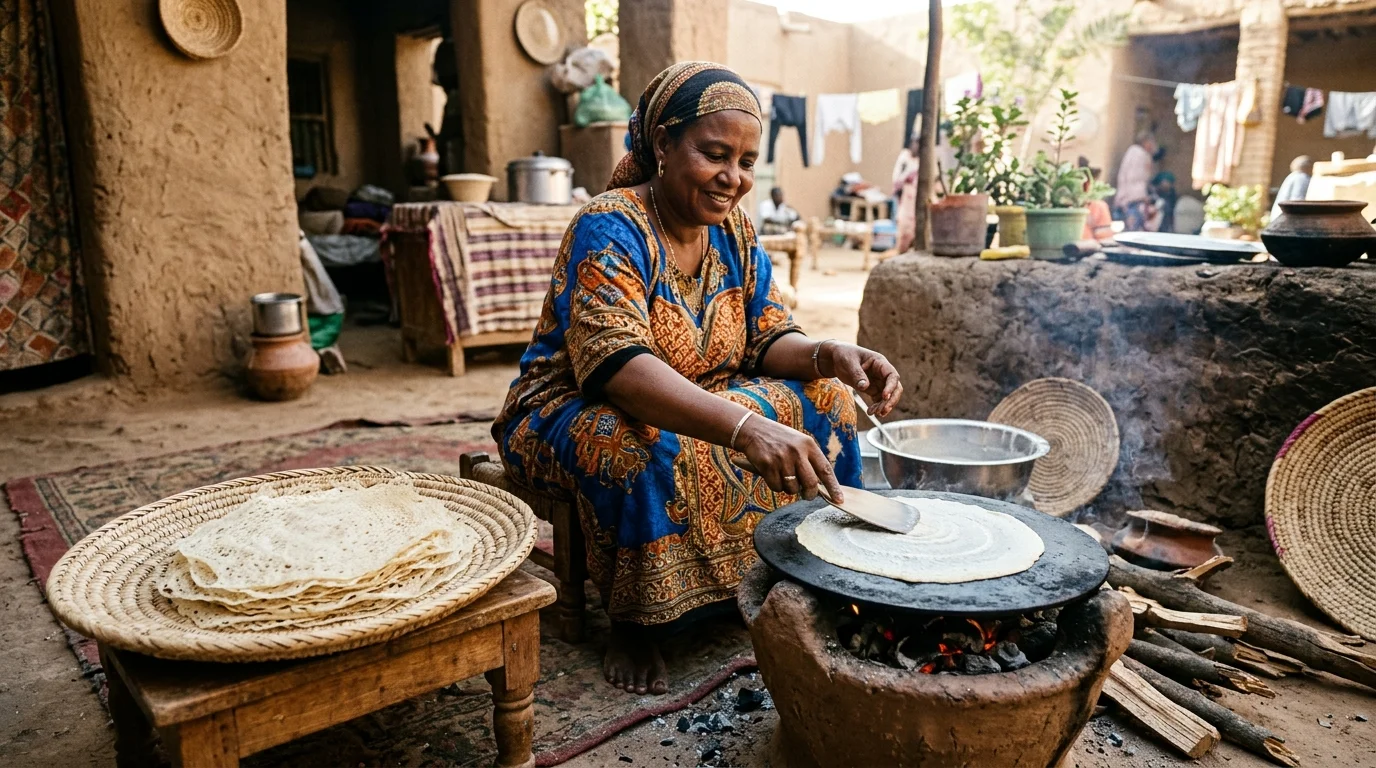
Lactic Acid Fermentation and Batter Chemistry
Bakers mix sorghum flour with warm water in clay pots.
Natural sour dough fermentation takes almost one full day.
Sour dough makes a pleasant tart taste in the bread.
Natural sour batter stays fresh and safe in warm kitchens.
Bakers save some sour starter dough for the next morning.
Sour bread gives healthy iron and good food minerals to people.
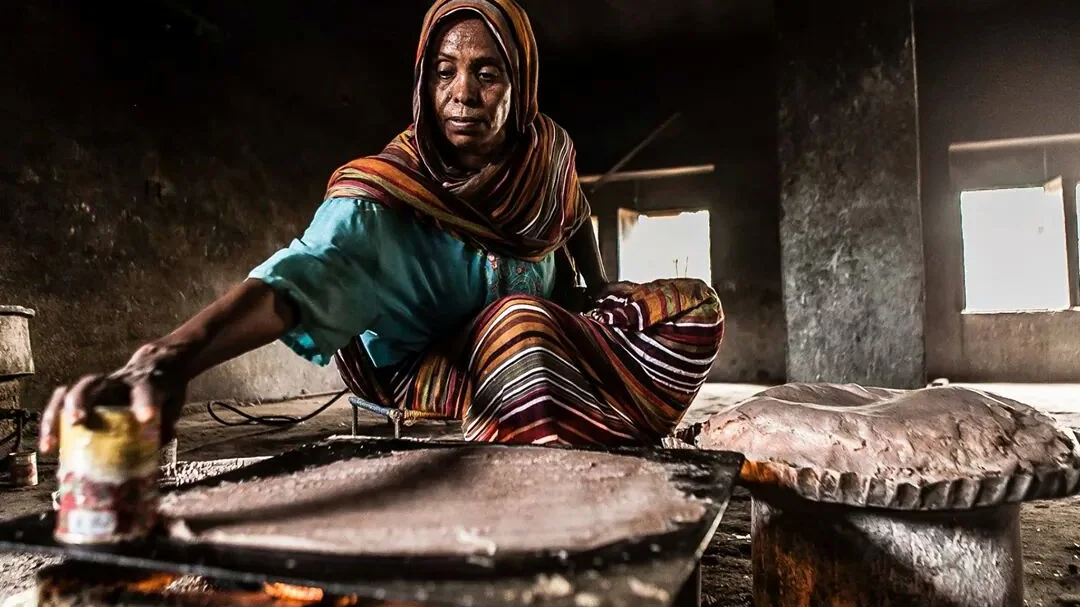
Hearth Craft and Griddle Conduction
Bakers cook bread on a large round steel griddle plate.
A little oil keeps the hot griddle smooth for baking.
Workers spread thin batter across the hot pan with cards.
Hot fire embers bake each thin sheet in one minute.
Skilled hands peel the cooked bread off the hot plate.
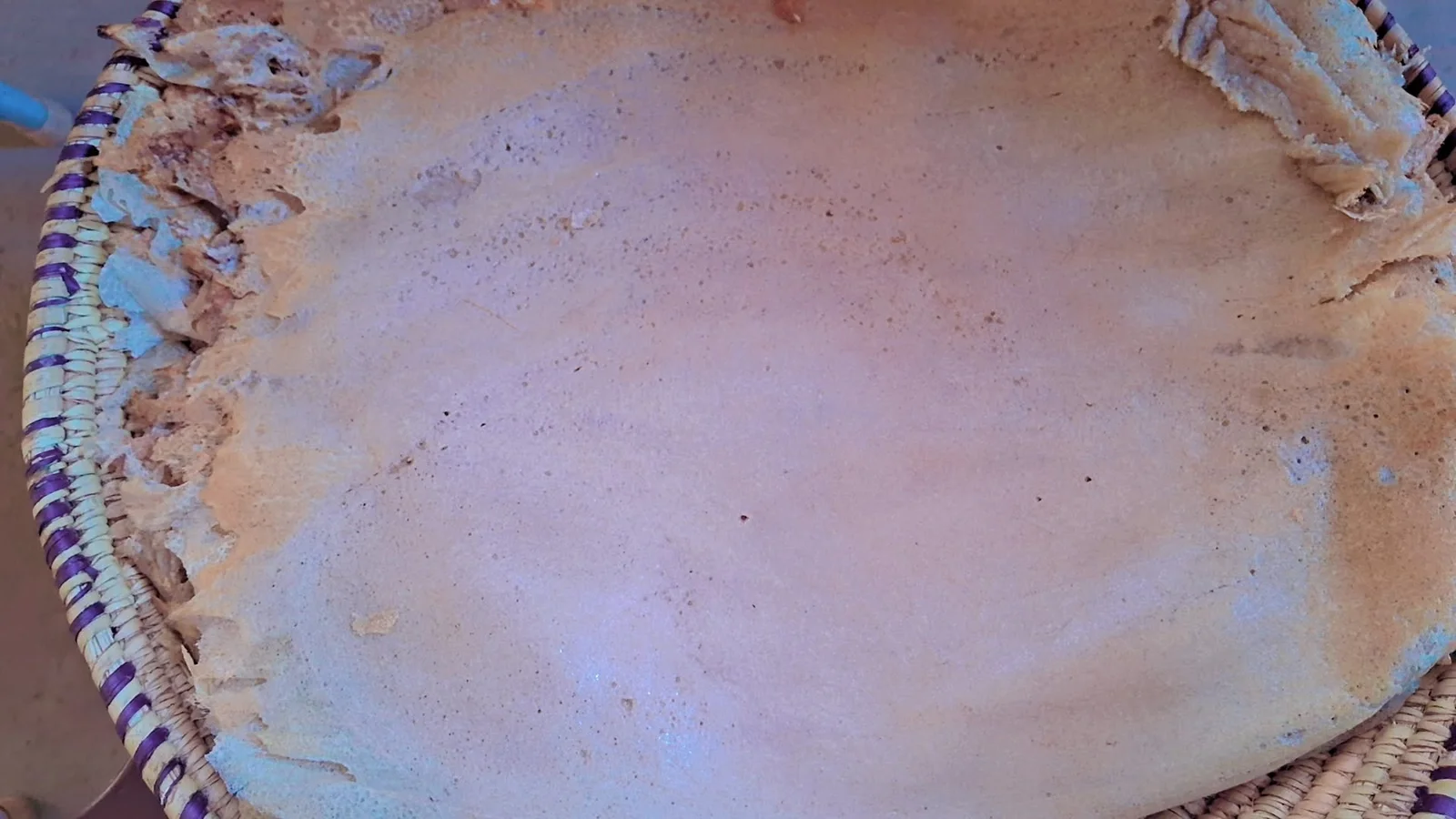
Good fire control makes soft bread with tiny little holes.
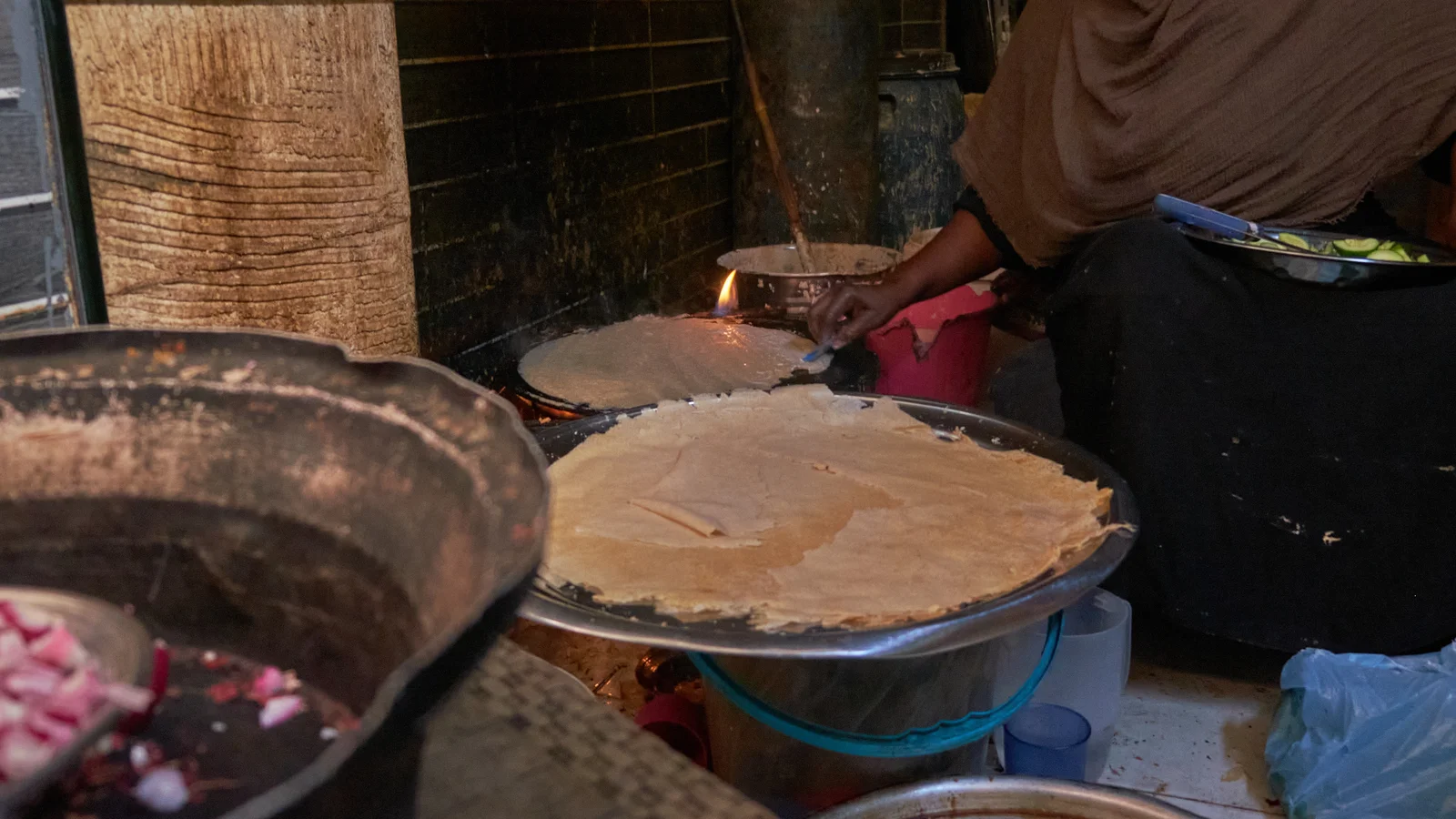
Communal Dining and Regional Stew Traditions
Kisra bread sits on large round metal seeniya dinner trays.
Cooks spoon rich meat and okra stews over folded bread.
Family members tear soft bread pieces to scoop warm stew.
Northern towns like lamb broth and western towns cook okra.
Baking kisra bread is a daily home tradition in Sudan.
Eating from one round plate brings family peace and generous love.
A2 · Elementary
Sudan Kisra Bread: Fermented Grains, Hearth Griddles, and Communal Meals
Across Sudanese homes, thin sheets of fermented sorghum flatbread baked on iron griddles anchor daily communal dining.
Sorghum Grain Cultivation and Milling
Feterita sorghum serves as the primary domestic cereal grain harvested across Sudan's rainfed central plains for kisra flour. Sorghum grain undergoes meticulous winnowing, stone milling, and sifting to produce fine whole-grain flour essential for traditional batter consistency. Millers in Gezira, Gedaref, and Kordofan supply urban and rural markets with specialized sorghum cultivars tailored for sour fermentation.
Sorghum cultivation represents Sudan's most extensive food crop, anchoring household food security against recurring regional droughts. Traditional stone gristmills and modern diesel-powered neighborhood mills grind grain into consistent flour textures required for delicate flatbread. Varietal differences between white feterita and darker sorghum cultivars determine the final color, dough elasticity, and nutritional density of kisra.
Lactic Acid Fermentation and Batter Chemistry
Kisra production begins with spontaneous lactic acid fermentation of sorghum flour mixed with warm water in clay fermentation vessels. Natural microbial flora comprising Lactobacillus strains and wild yeasts ferment the batter over eighteen to twenty-four hours. Controlled fermentation acidifies the batter to a pH below 4.0, developing the signature tart flavor profile of authentic Sudanese bread.
Natural acidification acts as an effective biochemical preservative, preventing foodborne bacterial pathogens from colonizing the batter and keeping it safe. A portion of fermented dough called the khumra starter culture is carefully reserved from each batch to inoculate the subsequent day's fermentation. The sourdough fermentation process breaks down complex grain phytates, substantially increasing human bioavailability of iron and zinc.
Hearth Craft and Griddle Conduction
Baking takes place on a specialized wide circular steel griddle called the saj or doka positioned over an open charcoal hearth with glowing embers. Bakers apply a minute coating of animal fat or sesame oil to season the hot doka surface before each wafer-thin pour. A flexible scraper fashioned from dried palm leaf or plastic card, known as the gargayba, spreads the batter into paper-thin translucent layers across the hot plate.
Intense conductive heat bakes each kisra sheet within thirty to sixty seconds without requiring the bread to be flipped. The baked sheet is gently peeled from the hot griddle surface with dexterous fingertip movements and stacked on woven palm trays. Mastery of hearth ventilation and pan temperature prevents burning while ensuring the characteristic lace-like honeycomb texture.
Communal Dining and Regional Stew Traditions
Kisra flatbread serves as the essential edible utensil and nutritional base for communal Sudanese dining platters known as the seeniya on every family dinner table. Savory stews called mullah, prepared from minced dried beef, jute mallow, pulverized okra, and yogurt, are ladled directly over folded kisra sheets. Diners use torn pieces of kisra to scoop thick sauces and morsels of stew without using metal cutlery or individual plates.
Regional variations feature distinct stew pairings, from northern lamb broth stews to eastern sour milk preparations and western okra blends. Kisra preparation remains an intergenerational culinary tradition performed daily in millions of Sudanese households and neighborhood bakeries. The communal sharing of kisra around a single round platter embodies core Sudanese values of hospitality, generosity, and social cohesion.
B1 · Intermediate
Sorghum Cultivation, Lactic Fermentation, and Hearth Baking in Sudan
An analytical study of rainfed feterita cereal crops, biochemical batter souring, rapid griddle conduction, and shared platter dining.
Sorghum Grain Cultivation and Milling
Feterita sorghum serves as the primary domestic cereal grain harvested across Sudan's rainfed central plains for kisra flour. Sorghum grain undergoes meticulous winnowing, stone milling, and sifting to produce fine whole-grain flour essential for traditional batter consistency. Millers in Gezira, Gedaref, and Kordofan supply urban and rural markets with specialized sorghum cultivars tailored for sour fermentation.
Sorghum cultivation represents Sudan's most extensive food crop, anchoring household food security against recurring regional droughts. Traditional stone gristmills and modern diesel-powered neighborhood mills grind grain into consistent flour textures required for delicate flatbread. Varietal differences between white feterita and darker sorghum cultivars determine the final color, dough elasticity, and nutritional density of kisra.
Lactic Acid Fermentation and Batter Chemistry
Kisra production begins with spontaneous lactic acid fermentation of sorghum flour mixed with warm water in clay fermentation vessels. Natural microbial flora comprising Lactobacillus strains and wild yeasts ferment the batter over eighteen to twenty-four hours. Controlled fermentation acidifies the batter to a pH below 4.0, developing the signature tart flavor profile of authentic Sudanese bread.
Natural acidification acts as an effective biochemical preservative, preventing foodborne bacterial pathogens from colonizing the batter and keeping it safe. A portion of fermented dough called the khumra starter culture is carefully reserved from each batch to inoculate the subsequent day's fermentation. The sourdough fermentation process breaks down complex grain phytates, substantially increasing human bioavailability of iron and zinc.
Hearth Craft and Griddle Conduction
Baking takes place on a specialized wide circular steel griddle called the saj or doka positioned over an open charcoal hearth with glowing embers. Bakers apply a minute coating of animal fat or sesame oil to season the hot doka surface before each wafer-thin pour. A flexible scraper fashioned from dried palm leaf or plastic card, known as the gargayba, spreads the batter into paper-thin translucent layers across the hot plate.
Intense conductive heat bakes each kisra sheet within thirty to sixty seconds without requiring the bread to be flipped. The baked sheet is gently peeled from the hot griddle surface with dexterous fingertip movements and stacked on woven palm trays. Mastery of hearth ventilation and pan temperature prevents burning while ensuring the characteristic lace-like honeycomb texture.
Communal Dining and Regional Stew Traditions
Kisra flatbread serves as the essential edible utensil and nutritional base for communal Sudanese dining platters known as the seeniya on every family dinner table. Savory stews called mullah, prepared from minced dried beef, jute mallow, pulverized okra, and yogurt, are ladled directly over folded kisra sheets. Diners use torn pieces of kisra to scoop thick sauces and morsels of stew without using metal cutlery or individual plates.
Regional variations feature distinct stew pairings, from northern lamb broth stews to eastern sour milk preparations and western okra blends. Kisra preparation remains an intergenerational culinary tradition performed daily in millions of Sudanese households and neighborhood bakeries. The communal sharing of kisra around a single round platter embodies core Sudanese values of hospitality, generosity, and social cohesion.
B2 · Upper Intermediate
Agrarian Resilience, Biochemical Acidification, and Food Heritage in Sudan
Investigating feterita sorghum milling in drought-prone agrarian belts, lactic acid preservation, dexterous doka baking, and seeniya meal solidarity.
Sorghum Grain Cultivation and Milling
Feterita sorghum serves as the primary domestic cereal grain harvested across Sudan's rainfed central plains for kisra flour. Sorghum grain undergoes meticulous winnowing, stone milling, and sifting to produce fine whole-grain flour essential for traditional batter consistency. Millers in Gezira, Gedaref, and Kordofan supply urban and rural markets with specialized sorghum cultivars tailored for sour fermentation.
Sorghum cultivation represents Sudan's most extensive food crop, anchoring household food security against recurring regional droughts. Traditional stone gristmills and modern diesel-powered neighborhood mills grind grain into consistent flour textures required for delicate flatbread. Varietal differences between white feterita and darker sorghum cultivars determine the final color, dough elasticity, and nutritional density of kisra.
Lactic Acid Fermentation and Batter Chemistry
Kisra production begins with spontaneous lactic acid fermentation of sorghum flour mixed with warm water in clay fermentation vessels. Natural microbial flora comprising Lactobacillus strains and wild yeasts ferment the batter over eighteen to twenty-four hours. Controlled fermentation acidifies the batter to a pH below 4.0, developing the signature tart flavor profile of authentic Sudanese bread.
Natural acidification acts as an effective biochemical preservative, preventing foodborne bacterial pathogens from colonizing the batter and keeping it safe. A portion of fermented dough called the khumra starter culture is carefully reserved from each batch to inoculate the subsequent day's fermentation. The sourdough fermentation process breaks down complex grain phytates, substantially increasing human bioavailability of iron and zinc.
Hearth Craft and Griddle Conduction
Baking takes place on a specialized wide circular steel griddle called the saj or doka positioned over an open charcoal hearth with glowing embers. Bakers apply a minute coating of animal fat or sesame oil to season the hot doka surface before each wafer-thin pour. A flexible scraper fashioned from dried palm leaf or plastic card, known as the gargayba, spreads the batter into paper-thin translucent layers across the hot plate.
Intense conductive heat bakes each kisra sheet within thirty to sixty seconds without requiring the bread to be flipped. The baked sheet is gently peeled from the hot griddle surface with dexterous fingertip movements and stacked on woven palm trays. Mastery of hearth ventilation and pan temperature prevents burning while ensuring the characteristic lace-like honeycomb texture.
Communal Dining and Regional Stew Traditions
Kisra flatbread serves as the essential edible utensil and nutritional base for communal Sudanese dining platters known as the seeniya on every family dinner table. Savory stews called mullah, prepared from minced dried beef, jute mallow, pulverized okra, and yogurt, are ladled directly over folded kisra sheets. Diners use torn pieces of kisra to scoop thick sauces and morsels of stew without using metal cutlery or individual plates.
Regional variations feature distinct stew pairings, from northern lamb broth stews to eastern sour milk preparations and western okra blends. Kisra preparation remains an intergenerational culinary tradition performed daily in millions of Sudanese households and neighborhood bakeries. The communal sharing of kisra around a single round platter embodies core Sudanese values of hospitality, generosity, and social cohesion.
C1 · Advanced
Fermentation Ecology, Conductive Hearth Mechanics, and Culinary Geography in Sudan
A critical examination of rainfed sorghum agronomy, spontaneous lactic acidification, artisanal doka pan conduction, and regional mullah traditions.
Sorghum Grain Cultivation and Milling
Feterita sorghum serves as the primary domestic cereal grain harvested across Sudan's rainfed central plains for kisra flour. Sorghum grain undergoes meticulous winnowing, stone milling, and sifting to produce fine whole-grain flour essential for traditional batter consistency. Millers in Gezira, Gedaref, and Kordofan supply urban and rural markets with specialized sorghum cultivars tailored for sour fermentation.
Sorghum cultivation represents Sudan's most extensive food crop, anchoring household food security against recurring regional droughts. Traditional stone gristmills and modern diesel-powered neighborhood mills grind grain into consistent flour textures required for delicate flatbread. Varietal differences between white feterita and darker sorghum cultivars determine the final color, dough elasticity, and nutritional density of kisra.
Lactic Acid Fermentation and Batter Chemistry
Kisra production begins with spontaneous lactic acid fermentation of sorghum flour mixed with warm water in clay fermentation vessels. Natural microbial flora comprising Lactobacillus strains and wild yeasts ferment the batter over eighteen to twenty-four hours. Controlled fermentation acidifies the batter to a pH below 4.0, developing the signature tart flavor profile of authentic Sudanese bread.
Natural acidification acts as an effective biochemical preservative, preventing foodborne bacterial pathogens from colonizing the batter and keeping it safe. A portion of fermented dough called the khumra starter culture is carefully reserved from each batch to inoculate the subsequent day's fermentation. The sourdough fermentation process breaks down complex grain phytates, substantially increasing human bioavailability of iron and zinc.
Hearth Craft and Griddle Conduction
Baking takes place on a specialized wide circular steel griddle called the saj or doka positioned over an open charcoal hearth with glowing embers. Bakers apply a minute coating of animal fat or sesame oil to season the hot doka surface before each wafer-thin pour. A flexible scraper fashioned from dried palm leaf or plastic card, known as the gargayba, spreads the batter into paper-thin translucent layers across the hot plate.
Intense conductive heat bakes each kisra sheet within thirty to sixty seconds without requiring the bread to be flipped. The baked sheet is gently peeled from the hot griddle surface with dexterous fingertip movements and stacked on woven palm trays. Mastery of hearth ventilation and pan temperature prevents burning while ensuring the characteristic lace-like honeycomb texture.
Communal Dining and Regional Stew Traditions
Kisra flatbread serves as the essential edible utensil and nutritional base for communal Sudanese dining platters known as the seeniya on every family dinner table. Savory stews called mullah, prepared from minced dried beef, jute mallow, pulverized okra, and yogurt, are ladled directly over folded kisra sheets. Diners use torn pieces of kisra to scoop thick sauces and morsels of stew without using metal cutlery or individual plates.
Regional variations feature distinct stew pairings, from northern lamb broth stews to eastern sour milk preparations and western okra blends. Kisra preparation remains an intergenerational culinary tradition performed daily in millions of Sudanese households and neighborhood bakeries. The communal sharing of kisra around a single round platter embodies core Sudanese values of hospitality, generosity, and social cohesion.
C2 · Mastery
Cereal Bioavailability, Thermal Hearth Conduction, and Commensal Topographies in Sudan
A comprehensive analytical monograph on phytate enzymatic degradation, interfacial fluid spreading, honeycomb crumb morphology, and communal table cohesion.
Sorghum Grain Cultivation and Milling
Feterita sorghum serves as the primary domestic cereal grain harvested across Sudan's rainfed central plains for kisra flour. Sorghum grain undergoes meticulous winnowing, stone milling, and sifting to produce fine whole-grain flour essential for traditional batter consistency. Millers in Gezira, Gedaref, and Kordofan supply urban and rural markets with specialized sorghum cultivars tailored for sour fermentation.
Sorghum cultivation represents Sudan's most extensive food crop, anchoring household food security against recurring regional droughts. Traditional stone gristmills and modern diesel-powered neighborhood mills grind grain into consistent flour textures required for delicate flatbread. Varietal differences between white feterita and darker sorghum cultivars determine the final color, dough elasticity, and nutritional density of kisra.
Lactic Acid Fermentation and Batter Chemistry
Kisra production begins with spontaneous lactic acid fermentation of sorghum flour mixed with warm water in clay fermentation vessels. Natural microbial flora comprising Lactobacillus strains and wild yeasts ferment the batter over eighteen to twenty-four hours. Controlled fermentation acidifies the batter to a pH below 4.0, developing the signature tart flavor profile of authentic Sudanese bread.
Natural acidification acts as an effective biochemical preservative, preventing foodborne bacterial pathogens from colonizing the batter and keeping it safe. A portion of fermented dough called the khumra starter culture is carefully reserved from each batch to inoculate the subsequent day's fermentation. The sourdough fermentation process breaks down complex grain phytates, substantially increasing human bioavailability of iron and zinc.
Hearth Craft and Griddle Conduction
Baking takes place on a specialized wide circular steel griddle called the saj or doka positioned over an open charcoal hearth with glowing embers. Bakers apply a minute coating of animal fat or sesame oil to season the hot doka surface before each wafer-thin pour. A flexible scraper fashioned from dried palm leaf or plastic card, known as the gargayba, spreads the batter into paper-thin translucent layers across the hot plate.
Intense conductive heat bakes each kisra sheet within thirty to sixty seconds without requiring the bread to be flipped. The baked sheet is gently peeled from the hot griddle surface with dexterous fingertip movements and stacked on woven palm trays. Mastery of hearth ventilation and pan temperature prevents burning while ensuring the characteristic lace-like honeycomb texture.
Communal Dining and Regional Stew Traditions
Kisra flatbread serves as the essential edible utensil and nutritional base for communal Sudanese dining platters known as the seeniya on every family dinner table. Savory stews called mullah, prepared from minced dried beef, jute mallow, pulverized okra, and yogurt, are ladled directly over folded kisra sheets. Diners use torn pieces of kisra to scoop thick sauces and morsels of stew without using metal cutlery or individual plates.
Regional variations feature distinct stew pairings, from northern lamb broth stews to eastern sour milk preparations and western okra blends. Kisra preparation remains an intergenerational culinary tradition performed daily in millions of Sudanese households and neighborhood bakeries. The communal sharing of kisra around a single round platter embodies core Sudanese values of hospitality, generosity, and social cohesion.
Check your understanding
Choose how closely you want to revisit the article. You can refer back while answering, and review explanations when you finish.
Quick Quiz A1
Try one question, then create a free account for the full Quick Quiz. Sign Up Free
Answer every question before checking. There is no time limit.
Your results
/ 1 correct (%)
Read the explanations to see how each answer connects to the article.
-
Where does Sudan grow tall sorghum grain?
1. Answer:
Quick Quiz A2
Try one question, then create a free account for the full Quick Quiz. Sign Up Free
Answer every question before checking. There is no time limit.
Your results
/ 1 correct (%)
Read the explanations to see how each answer connects to the article.
-
What cereal grain serves as the primary crop for kisra flour in Sudan?
1. Answer:
Quick Quiz B1
Try one question, then create a free account for the full Quick Quiz. Sign Up Free
Answer every question before checking. There is no time limit.
Your results
/ 1 correct (%)
Read the explanations to see how each answer connects to the article.
-
What cereal grain serves as the primary crop for kisra flour in Sudan?
1. Answer:
Quick Quiz B2
Try one question, then create a free account for the full Quick Quiz. Sign Up Free
Answer every question before checking. There is no time limit.
Your results
/ 1 correct (%)
Read the explanations to see how each answer connects to the article.
-
What cereal grain serves as the primary crop for kisra flour in Sudan?
1. Answer:
Quick Quiz C1
Try one question, then create a free account for the full Quick Quiz. Sign Up Free
Answer every question before checking. There is no time limit.
Your results
/ 1 correct (%)
Read the explanations to see how each answer connects to the article.
-
What cereal grain serves as the primary crop for kisra flour in Sudan?
1. Answer:
Quick Quiz C2
Try one question, then create a free account for the full Quick Quiz. Sign Up Free
Answer every question before checking. There is no time limit.
Your results
/ 1 correct (%)
Read the explanations to see how each answer connects to the article.
-
What cereal grain serves as the primary crop for kisra flour in Sudan?
1. Answer:
