A1 · Beginner
Omdurman Small Workshops: Artisanal Craftsmanship and Urban Resilience
From busy market lanes and iron forges to clay water jars and guild loans, small workshops drive Omdurman daily economy.
The Commercial Geography and Micro-Enterprise Density of Souq Omdurman
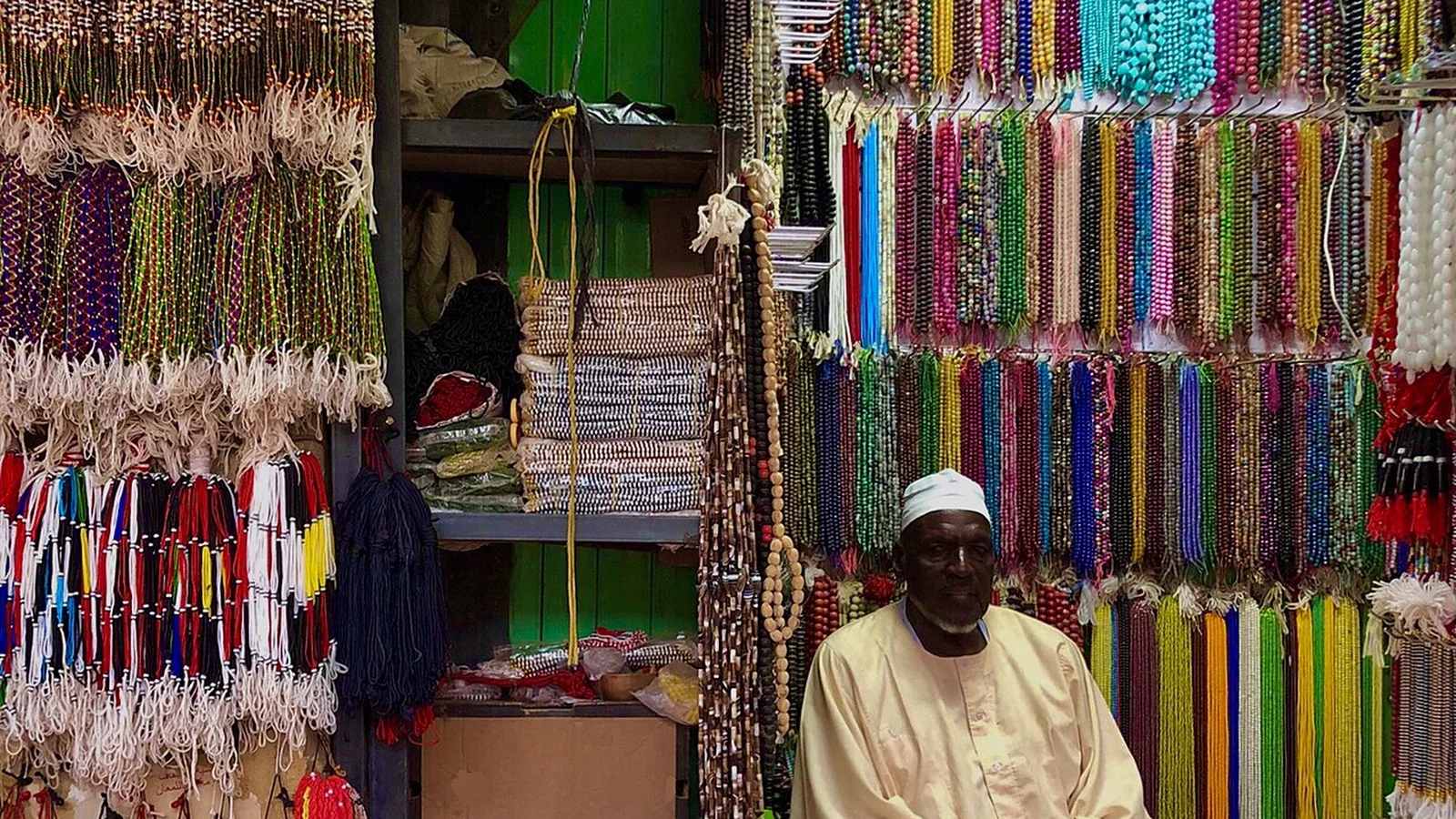
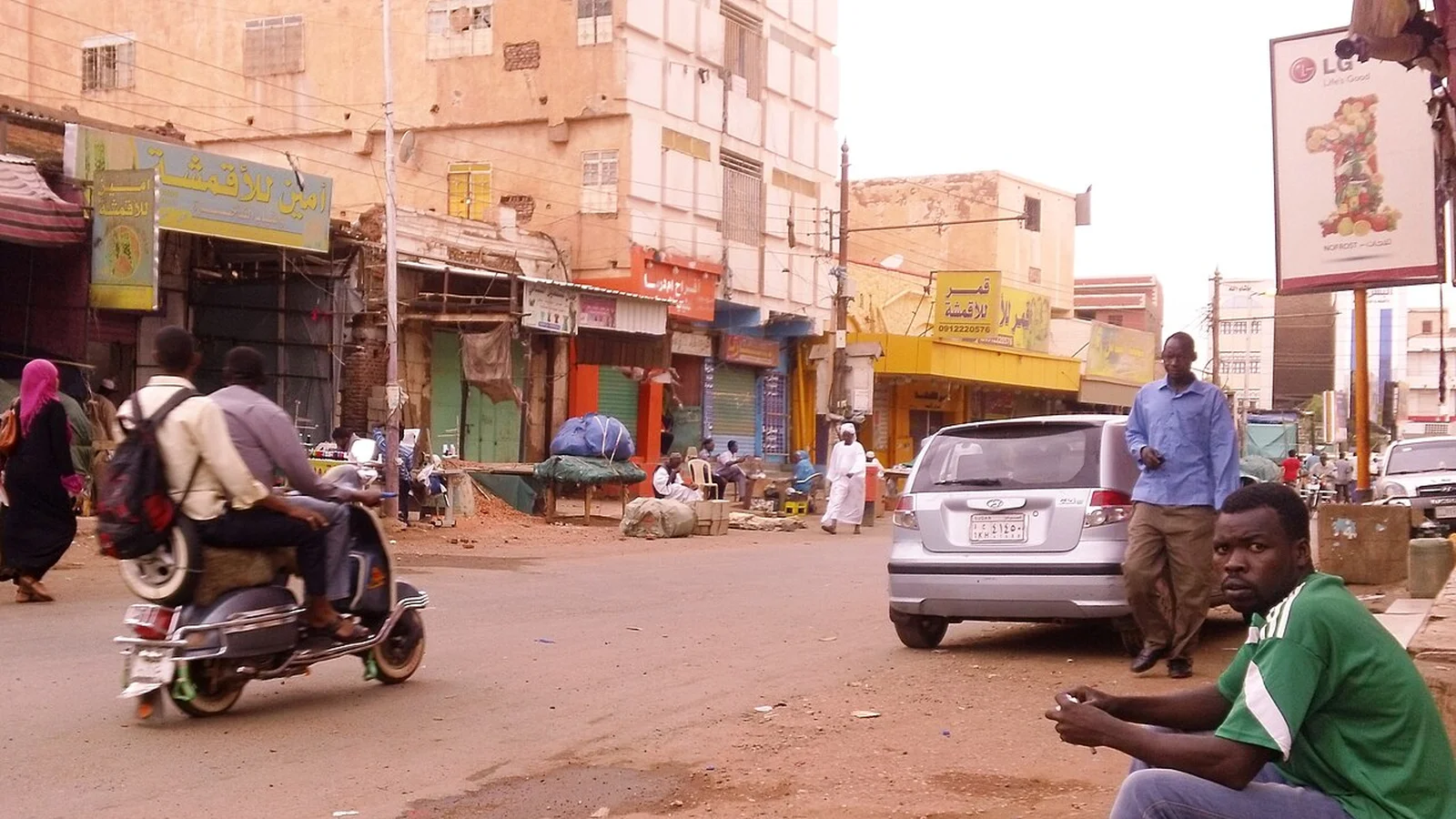
Souq Omdurman is a very large market on the west bank of the Nile River.
Artisans work in small family workshops grouped by craft across busy market lanes.
Official data show that most city workers earn money in small unregistered shops.
Nearby metal smiths share heavy machines and welding tools to save business cash.
Many thousands of shoppers visit market stalls daily to buy useful handmade tools.
Thousands of small workshops keep selling goods when big national factories close down.
Material Craftsmanship, Metal Forging, and Scrap Reclamation
Metal smiths turn old car springs and steel drums into farming tools.
Blacksmiths heat steel over hot charcoal fires to shape farm axes and sickles.
Tinsmiths build small charcoal cooking stoves named kanun from recycled steel sheets.
Handmade farm tools cost much less money than imported factory tools from abroad.
Wood carpenters build traditional beds named angareb using native acacia wood logs.
Urban craft shops recycle most metal trash collected across greater Khartoum city.
Pottery Production, Zeer Water Cooling, and Earthenware Traditions
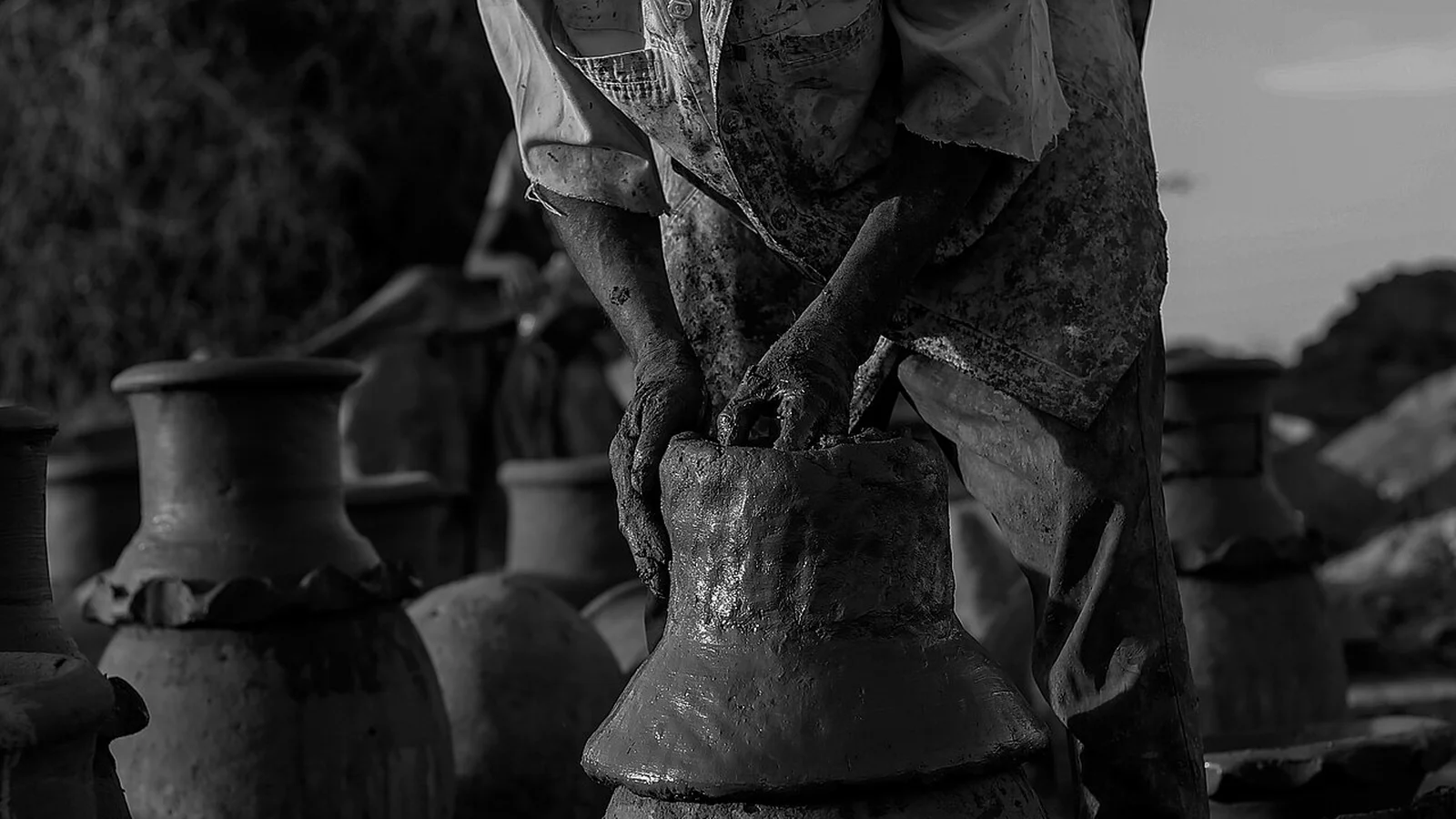
River potters dig brown river silt near the Nile to shape water jars.
Big clay jars called zeer cool drinking water naturally without using electricity.
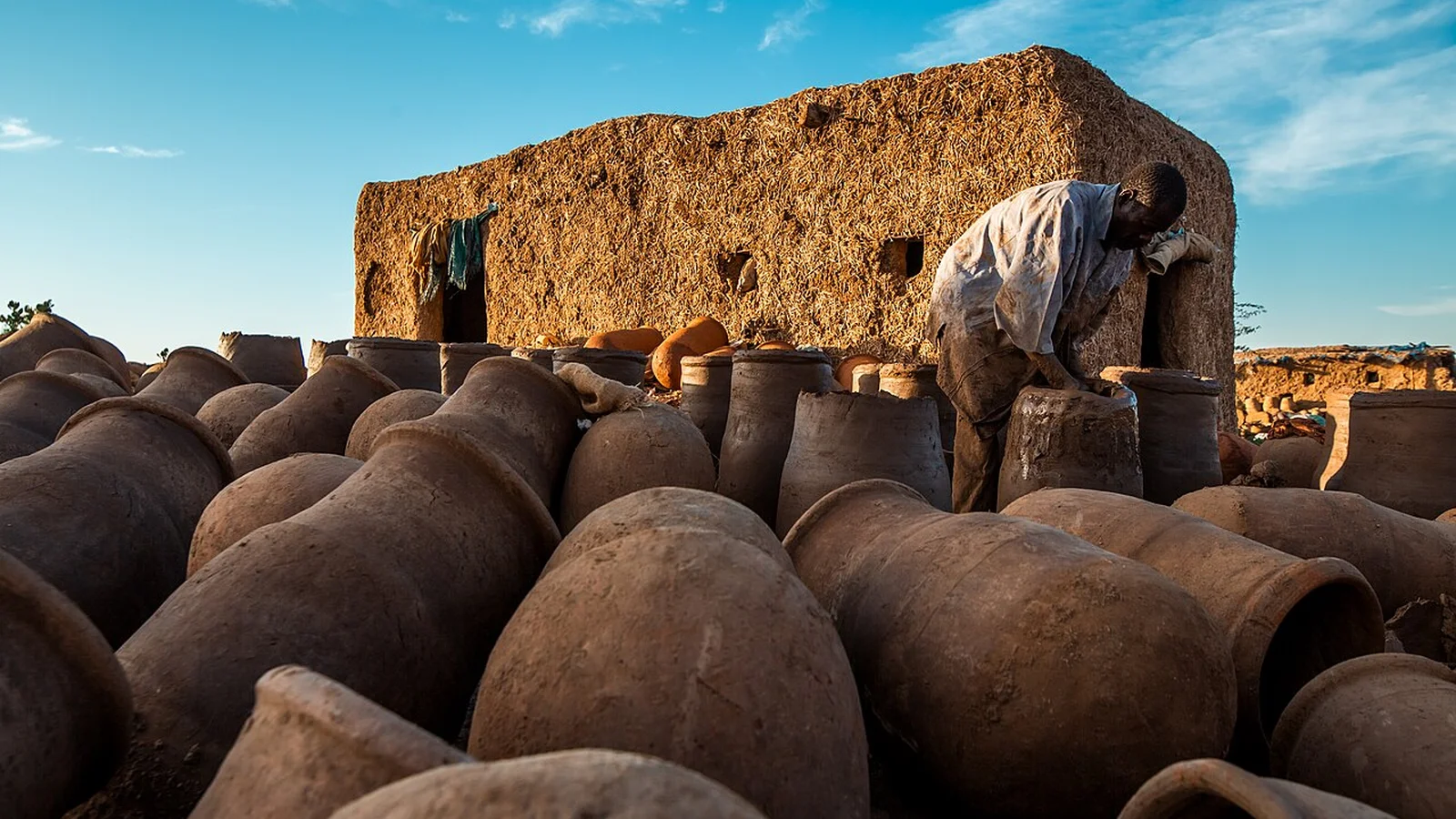
Pottery workers dry clay jars in shaded yards before baking them in kilns.
Millions of families and street water stations drink cool water from clay jars.
Skilled potters cut ancient geometric line patterns into wet clay pot rims.
Donkey carts carry fragile clay pots carefully into market lanes for sale.
Apprenticeship Lineages, Informal Sanduq Credit, and Market Resilience
Young workers learn trade skills from family master craftsmen over several years.
Senior master craftsmen called usta check item quality and guide young shop helpers.
Shop owners pool daily market coins in saving groups named sanduq for loans.
Traders buy wood and iron on credit and pay bills after selling finished goods.
Shopkeepers buy steel bars and timber boards quickly to beat falling paper currency.
Strong family ties and neighborhood guild trust help small shops survive bad times.
A2 · Elementary
Omdurman Small Workshops: Artisanal Craftsmanship, Metalwork, and Earthenware Traditions
Spanning the historic craft quarters of Souq Omdurman, thousands of family workshops recycle scrap steel and shape Nilotic clays into essential everyday goods.
The Commercial Geography and Micro-Enterprise Density of Souq Omdurman
Souq Omdurman represents one of the largest continuous commercial and artisanal marketplace complexes in Sudan, covering dozens of hectares on the western bank of the Nile opposite Khartoum. The marketplace is organized into strictly demarcated sectoral alleys where hundreds of family-owned micro-workshops cluster according to trades such as tinsmithing, leathercraft, carpentry, and textile tailoring. Surveys by the Central Bureau of Statistics record that over sixty percent of non-agricultural employment in urban Omdurman operates within informal and small unregistered enterprise workshops employing fewer than five workers.
Workshop proximity allows artisans to share expensive mechanical capital, including heavy shearing presses, arc welders, and timber lathes, without requiring individual capital purchases. Municipal surveys estimate that high-density alleys in Souq Omdurman channel tens of thousands of shoppers and wholesale intermediaries daily, sustaining continuous cash-based retail velocity. Because production is fragmented across thousands of micro-workshops, the market maintains supply continuity when macro-logistical supply chains or centralized industrial facilities face disruptions.
Material Craftsmanship, Metal Forging, and Scrap Reclamation
Metalworking workshops in Souq Omdurman specialize in repurposing discarded automotive leaf springs, steel drums, and sheet metal into durable agricultural hand tools and domestic implements. Blacksmiths operate hand-cranked or motorized blower charcoal forges to heat salvaged steel, manually hammering hot billets into sickles, hoes, axes, and masonry chisels. Tinsmiths fabricate thousands of portable charcoal cooking stoves known as kanun from salvaged sheet steel, supplying urban households with essential low-cost culinary equipment.
Artisanal hand tools manufactured from reclaimed steel sell at thirty to fifty percent below the cost of imported industrial hardware, offering crucial affordability to rural farmers and urban masons. Carpentry workshops craft traditional wooden angareb bedsteads using locally sourced sunut acacia timber laced with braided leather thongs or heavy polypropylene cords. Field analyses document that artisanal craft alleys recover and re-smelt approximately eighty percent of post-consumer metal scrap generated in Greater Khartoum.
Pottery Production, Zeer Water Cooling, and Earthenware Traditions
Traditional potters along the Nile riverbanks in Omdurman harvest alluvial silt and clay deposits to produce unglazed earthenware vessels with fine structural porosity. Large porous earthenware containers called zeer utilize natural evaporative cooling to chill drinking water by five to ten degrees Celsius below ambient temperatures without electrical energy. Earthenware vessels are dried in shaded curing yards for multiple days before undergoing firing in open-air pits or updraft adobe kilns fueled with dried cattle dung and agricultural chaff.
Surveys indicate that millions of Sudanese households and neighborhood public water charity stations known as sabil rely on zeer jars for daily clean drinking water access. Potters hand-carve geometric incisions and chevron motifs into vessel shoulders prior to firing, continuing decorative ceramic traditions that trace back millennia along the middle Nile. Because fired clay vessels are bulky and brittle, pottery workshops rely on donkey carts and small flatbed pickup trucks for cushioned delivery to Souq Omdurman retail stalls.
Apprenticeship Lineages, Informal Sanduq Credit, and Market Resilience
Technical skills in Omdurman workshops are transmitted primarily through informal kinship apprenticeships where junior learners train under master craftsmen for three to five years without formal schooling fees. Workshop hierarchies are governed by master craftsmen titled usta who oversee work quality, customer disputes, raw material procurement, and apprentice progression within specific trade lanes. Workshop proprietors rely on informal rotating savings and credit associations known as sanduq to pool daily earnings and provide interest-free capital lumps for inventory purchases or workshop repairs.
Artisans operate on mutual trade credit accounts with metal dealers and timber merchants, settling input balances only after finished wares are sold to visiting retail customers. Faced with sharp domestic currency depreciation, workshop owners convert surplus operational cash rapidly into physical steel billets, timber stacks, and hardware inventories to preserve asset value. The dense web of shared ancestry, trade solidarity, and customary guild codes ensures that Souq Omdurman workshops withstand severe economic volatility and supply shortages through collective mutual aid.
B1 · Intermediate
Artisanal Manufacturing, Scrap Recovery, and Informal Guild Networks in Souq Omdurman
An analytical survey of clustered micro-enterprises, scrap metal valorization, evaporative earthenware physics, and kinship apprenticeship systems.
The Commercial Geography and Micro-Enterprise Density of Souq Omdurman
Souq Omdurman represents one of the largest continuous commercial and artisanal marketplace complexes in Sudan, covering dozens of hectares on the western bank of the Nile opposite Khartoum. The marketplace is organized into strictly demarcated sectoral alleys where hundreds of family-owned micro-workshops cluster according to trades such as tinsmithing, leathercraft, carpentry, and textile tailoring. Surveys by the Central Bureau of Statistics record that over sixty percent of non-agricultural employment in urban Omdurman operates within informal and small unregistered enterprise workshops employing fewer than five workers.
Workshop proximity allows artisans to share expensive mechanical capital, including heavy shearing presses, arc welders, and timber lathes, without requiring individual capital purchases. Municipal surveys estimate that high-density alleys in Souq Omdurman channel tens of thousands of shoppers and wholesale intermediaries daily, sustaining continuous cash-based retail velocity. Because production is fragmented across thousands of micro-workshops, the market maintains supply continuity when macro-logistical supply chains or centralized industrial facilities face disruptions.
Material Craftsmanship, Metal Forging, and Scrap Reclamation
Metalworking workshops in Souq Omdurman specialize in repurposing discarded automotive leaf springs, steel drums, and sheet metal into durable agricultural hand tools and domestic implements. Blacksmiths operate hand-cranked or motorized blower charcoal forges to heat salvaged steel, manually hammering hot billets into sickles, hoes, axes, and masonry chisels. Tinsmiths fabricate thousands of portable charcoal cooking stoves known as kanun from salvaged sheet steel, supplying urban households with essential low-cost culinary equipment.
Artisanal hand tools manufactured from reclaimed steel sell at thirty to fifty percent below the cost of imported industrial hardware, offering crucial affordability to rural farmers and urban masons. Carpentry workshops craft traditional wooden angareb bedsteads using locally sourced sunut acacia timber laced with braided leather thongs or heavy polypropylene cords. Field analyses document that artisanal craft alleys recover and re-smelt approximately eighty percent of post-consumer metal scrap generated in Greater Khartoum.
Pottery Production, Zeer Water Cooling, and Earthenware Traditions
Traditional potters along the Nile riverbanks in Omdurman harvest alluvial silt and clay deposits to produce unglazed earthenware vessels with fine structural porosity. Large porous earthenware containers called zeer utilize natural evaporative cooling to chill drinking water by five to ten degrees Celsius below ambient temperatures without electrical energy. Earthenware vessels are dried in shaded curing yards for multiple days before undergoing firing in open-air pits or updraft adobe kilns fueled with dried cattle dung and agricultural chaff.
Surveys indicate that millions of Sudanese households and neighborhood public water charity stations known as sabil rely on zeer jars for daily clean drinking water access. Potters hand-carve geometric incisions and chevron motifs into vessel shoulders prior to firing, continuing decorative ceramic traditions that trace back millennia along the middle Nile. Because fired clay vessels are bulky and brittle, pottery workshops rely on donkey carts and small flatbed pickup trucks for cushioned delivery to Souq Omdurman retail stalls.
Apprenticeship Lineages, Informal Sanduq Credit, and Market Resilience
Technical skills in Omdurman workshops are transmitted primarily through informal kinship apprenticeships where junior learners train under master craftsmen for three to five years without formal schooling fees. Workshop hierarchies are governed by master craftsmen titled usta who oversee work quality, customer disputes, raw material procurement, and apprentice progression within specific trade lanes. Workshop proprietors rely on informal rotating savings and credit associations known as sanduq to pool daily earnings and provide interest-free capital lumps for inventory purchases or workshop repairs.
Artisans operate on mutual trade credit accounts with metal dealers and timber merchants, settling input balances only after finished wares are sold to visiting retail customers. Faced with sharp domestic currency depreciation, workshop owners convert surplus operational cash rapidly into physical steel billets, timber stacks, and hardware inventories to preserve asset value. The dense web of shared ancestry, trade solidarity, and customary guild codes ensures that Souq Omdurman workshops withstand severe economic volatility and supply shortages through collective mutual aid.
B2 · Upper Intermediate
The Micro-Enterprise Economy of Omdurman: Metal Forging, Zeer Ceramics, and Informal Capital
Investigating shared workshop capital, circular scrap recycling rates, evaporative cooling efficiency, and rotating credit associations across urban Sudan.
The Commercial Geography and Micro-Enterprise Density of Souq Omdurman
Souq Omdurman represents one of the largest continuous commercial and artisanal marketplace complexes in Sudan, covering dozens of hectares on the western bank of the Nile opposite Khartoum. The marketplace is organized into strictly demarcated sectoral alleys where hundreds of family-owned micro-workshops cluster according to trades such as tinsmithing, leathercraft, carpentry, and textile tailoring. Surveys by the Central Bureau of Statistics record that over sixty percent of non-agricultural employment in urban Omdurman operates within informal and small unregistered enterprise workshops employing fewer than five workers.
Workshop proximity allows artisans to share expensive mechanical capital, including heavy shearing presses, arc welders, and timber lathes, without requiring individual capital purchases. Municipal surveys estimate that high-density alleys in Souq Omdurman channel tens of thousands of shoppers and wholesale intermediaries daily, sustaining continuous cash-based retail velocity. Because production is fragmented across thousands of micro-workshops, the market maintains supply continuity when macro-logistical supply chains or centralized industrial facilities face disruptions.
Material Craftsmanship, Metal Forging, and Scrap Reclamation
Metalworking workshops in Souq Omdurman specialize in repurposing discarded automotive leaf springs, steel drums, and sheet metal into durable agricultural hand tools and domestic implements. Blacksmiths operate hand-cranked or motorized blower charcoal forges to heat salvaged steel, manually hammering hot billets into sickles, hoes, axes, and masonry chisels. Tinsmiths fabricate thousands of portable charcoal cooking stoves known as kanun from salvaged sheet steel, supplying urban households with essential low-cost culinary equipment.
Artisanal hand tools manufactured from reclaimed steel sell at thirty to fifty percent below the cost of imported industrial hardware, offering crucial affordability to rural farmers and urban masons. Carpentry workshops craft traditional wooden angareb bedsteads using locally sourced sunut acacia timber laced with braided leather thongs or heavy polypropylene cords. Field analyses document that artisanal craft alleys recover and re-smelt approximately eighty percent of post-consumer metal scrap generated in Greater Khartoum.
Pottery Production, Zeer Water Cooling, and Earthenware Traditions
Traditional potters along the Nile riverbanks in Omdurman harvest alluvial silt and clay deposits to produce unglazed earthenware vessels with fine structural porosity. Large porous earthenware containers called zeer utilize natural evaporative cooling to chill drinking water by five to ten degrees Celsius below ambient temperatures without electrical energy. Earthenware vessels are dried in shaded curing yards for multiple days before undergoing firing in open-air pits or updraft adobe kilns fueled with dried cattle dung and agricultural chaff.
Surveys indicate that millions of Sudanese households and neighborhood public water charity stations known as sabil rely on zeer jars for daily clean drinking water access. Potters hand-carve geometric incisions and chevron motifs into vessel shoulders prior to firing, continuing decorative ceramic traditions that trace back millennia along the middle Nile. Because fired clay vessels are bulky and brittle, pottery workshops rely on donkey carts and small flatbed pickup trucks for cushioned delivery to Souq Omdurman retail stalls.
Apprenticeship Lineages, Informal Sanduq Credit, and Market Resilience
Technical skills in Omdurman workshops are transmitted primarily through informal kinship apprenticeships where junior learners train under master craftsmen for three to five years without formal schooling fees. Workshop hierarchies are governed by master craftsmen titled usta who oversee work quality, customer disputes, raw material procurement, and apprentice progression within specific trade lanes. Workshop proprietors rely on informal rotating savings and credit associations known as sanduq to pool daily earnings and provide interest-free capital lumps for inventory purchases or workshop repairs.
Artisans operate on mutual trade credit accounts with metal dealers and timber merchants, settling input balances only after finished wares are sold to visiting retail customers. Faced with sharp domestic currency depreciation, workshop owners convert surplus operational cash rapidly into physical steel billets, timber stacks, and hardware inventories to preserve asset value. The dense web of shared ancestry, trade solidarity, and customary guild codes ensures that Souq Omdurman workshops withstand severe economic volatility and supply shortages through collective mutual aid.
C1 · Advanced
The Political Economy of Omdurman Micro-Enterprises: Craft Guilds, Scarcity, and Resilience
A critical economic investigation into sectoral workshop clustering, post-consumer scrap metallurgy, customary sanduq finance, and monetary hedging.
The Commercial Geography and Micro-Enterprise Density of Souq Omdurman
Souq Omdurman represents one of the largest continuous commercial and artisanal marketplace complexes in Sudan, covering dozens of hectares on the western bank of the Nile opposite Khartoum. The marketplace is organized into strictly demarcated sectoral alleys where hundreds of family-owned micro-workshops cluster according to trades such as tinsmithing, leathercraft, carpentry, and textile tailoring. Surveys by the Central Bureau of Statistics record that over sixty percent of non-agricultural employment in urban Omdurman operates within informal and small unregistered enterprise workshops employing fewer than five workers.
Workshop proximity allows artisans to share expensive mechanical capital, including heavy shearing presses, arc welders, and timber lathes, without requiring individual capital purchases. Municipal surveys estimate that high-density alleys in Souq Omdurman channel tens of thousands of shoppers and wholesale intermediaries daily, sustaining continuous cash-based retail velocity. Because production is fragmented across thousands of micro-workshops, the market maintains supply continuity when macro-logistical supply chains or centralized industrial facilities face disruptions.
Material Craftsmanship, Metal Forging, and Scrap Reclamation
Metalworking workshops in Souq Omdurman specialize in repurposing discarded automotive leaf springs, steel drums, and sheet metal into durable agricultural hand tools and domestic implements. Blacksmiths operate hand-cranked or motorized blower charcoal forges to heat salvaged steel, manually hammering hot billets into sickles, hoes, axes, and masonry chisels. Tinsmiths fabricate thousands of portable charcoal cooking stoves known as kanun from salvaged sheet steel, supplying urban households with essential low-cost culinary equipment.
Artisanal hand tools manufactured from reclaimed steel sell at thirty to fifty percent below the cost of imported industrial hardware, offering crucial affordability to rural farmers and urban masons. Carpentry workshops craft traditional wooden angareb bedsteads using locally sourced sunut acacia timber laced with braided leather thongs or heavy polypropylene cords. Field analyses document that artisanal craft alleys recover and re-smelt approximately eighty percent of post-consumer metal scrap generated in Greater Khartoum.
Pottery Production, Zeer Water Cooling, and Earthenware Traditions
Traditional potters along the Nile riverbanks in Omdurman harvest alluvial silt and clay deposits to produce unglazed earthenware vessels with fine structural porosity. Large porous earthenware containers called zeer utilize natural evaporative cooling to chill drinking water by five to ten degrees Celsius below ambient temperatures without electrical energy. Earthenware vessels are dried in shaded curing yards for multiple days before undergoing firing in open-air pits or updraft adobe kilns fueled with dried cattle dung and agricultural chaff.
Surveys indicate that millions of Sudanese households and neighborhood public water charity stations known as sabil rely on zeer jars for daily clean drinking water access. Potters hand-carve geometric incisions and chevron motifs into vessel shoulders prior to firing, continuing decorative ceramic traditions that trace back millennia along the middle Nile. Because fired clay vessels are bulky and brittle, pottery workshops rely on donkey carts and small flatbed pickup trucks for cushioned delivery to Souq Omdurman retail stalls.
Apprenticeship Lineages, Informal Sanduq Credit, and Market Resilience
Technical skills in Omdurman workshops are transmitted primarily through informal kinship apprenticeships where junior learners train under master craftsmen for three to five years without formal schooling fees. Workshop hierarchies are governed by master craftsmen titled usta who oversee work quality, customer disputes, raw material procurement, and apprentice progression within specific trade lanes. Workshop proprietors rely on informal rotating savings and credit associations known as sanduq to pool daily earnings and provide interest-free capital lumps for inventory purchases or workshop repairs.
Artisans operate on mutual trade credit accounts with metal dealers and timber merchants, settling input balances only after finished wares are sold to visiting retail customers. Faced with sharp domestic currency depreciation, workshop owners convert surplus operational cash rapidly into physical steel billets, timber stacks, and hardware inventories to preserve asset value. The dense web of shared ancestry, trade solidarity, and customary guild codes ensures that Souq Omdurman workshops withstand severe economic volatility and supply shortages through collective mutual aid.
C2 · Mastery
Spatial Agglomeration, Kinship Apprenticeship, and Informal Financial Adaptations in Souq Omdurman
A comprehensive journalistic monograph examining sectoral guild clustering, Nilotic alluvial ceramic traditions, usta hierarchies, and informal economic endurance.
The Commercial Geography and Micro-Enterprise Density of Souq Omdurman
Souq Omdurman represents one of the largest continuous commercial and artisanal marketplace complexes in Sudan, covering dozens of hectares on the western bank of the Nile opposite Khartoum. The marketplace is organized into strictly demarcated sectoral alleys where hundreds of family-owned micro-workshops cluster according to trades such as tinsmithing, leathercraft, carpentry, and textile tailoring. Surveys by the Central Bureau of Statistics record that over sixty percent of non-agricultural employment in urban Omdurman operates within informal and small unregistered enterprise workshops employing fewer than five workers.
Workshop proximity allows artisans to share expensive mechanical capital, including heavy shearing presses, arc welders, and timber lathes, without requiring individual capital purchases. Municipal surveys estimate that high-density alleys in Souq Omdurman channel tens of thousands of shoppers and wholesale intermediaries daily, sustaining continuous cash-based retail velocity. Because production is fragmented across thousands of micro-workshops, the market maintains supply continuity when macro-logistical supply chains or centralized industrial facilities face disruptions.
Material Craftsmanship, Metal Forging, and Scrap Reclamation
Metalworking workshops in Souq Omdurman specialize in repurposing discarded automotive leaf springs, steel drums, and sheet metal into durable agricultural hand tools and domestic implements. Blacksmiths operate hand-cranked or motorized blower charcoal forges to heat salvaged steel, manually hammering hot billets into sickles, hoes, axes, and masonry chisels. Tinsmiths fabricate thousands of portable charcoal cooking stoves known as kanun from salvaged sheet steel, supplying urban households with essential low-cost culinary equipment.
Artisanal hand tools manufactured from reclaimed steel sell at thirty to fifty percent below the cost of imported industrial hardware, offering crucial affordability to rural farmers and urban masons. Carpentry workshops craft traditional wooden angareb bedsteads using locally sourced sunut acacia timber laced with braided leather thongs or heavy polypropylene cords. Field analyses document that artisanal craft alleys recover and re-smelt approximately eighty percent of post-consumer metal scrap generated in Greater Khartoum.
Pottery Production, Zeer Water Cooling, and Earthenware Traditions
Traditional potters along the Nile riverbanks in Omdurman harvest alluvial silt and clay deposits to produce unglazed earthenware vessels with fine structural porosity. Large porous earthenware containers called zeer utilize natural evaporative cooling to chill drinking water by five to ten degrees Celsius below ambient temperatures without electrical energy. Earthenware vessels are dried in shaded curing yards for multiple days before undergoing firing in open-air pits or updraft adobe kilns fueled with dried cattle dung and agricultural chaff.
Surveys indicate that millions of Sudanese households and neighborhood public water charity stations known as sabil rely on zeer jars for daily clean drinking water access. Potters hand-carve geometric incisions and chevron motifs into vessel shoulders prior to firing, continuing decorative ceramic traditions that trace back millennia along the middle Nile. Because fired clay vessels are bulky and brittle, pottery workshops rely on donkey carts and small flatbed pickup trucks for cushioned delivery to Souq Omdurman retail stalls.
Apprenticeship Lineages, Informal Sanduq Credit, and Market Resilience
Technical skills in Omdurman workshops are transmitted primarily through informal kinship apprenticeships where junior learners train under master craftsmen for three to five years without formal schooling fees. Workshop hierarchies are governed by master craftsmen titled usta who oversee work quality, customer disputes, raw material procurement, and apprentice progression within specific trade lanes. Workshop proprietors rely on informal rotating savings and credit associations known as sanduq to pool daily earnings and provide interest-free capital lumps for inventory purchases or workshop repairs.
Artisans operate on mutual trade credit accounts with metal dealers and timber merchants, settling input balances only after finished wares are sold to visiting retail customers. Faced with sharp domestic currency depreciation, workshop owners convert surplus operational cash rapidly into physical steel billets, timber stacks, and hardware inventories to preserve asset value. The dense web of shared ancestry, trade solidarity, and customary guild codes ensures that Souq Omdurman workshops withstand severe economic volatility and supply shortages through collective mutual aid.
Check your understanding
Choose how closely you want to revisit the article. You can refer back while answering, and review explanations when you finish.
Quick Quiz A1
Try one question, then create a free account for the full Quick Quiz. Sign Up Free
Answer every question before checking. There is no time limit.
Your results
/ 1 correct (%)
Read the explanations to see how each answer connects to the article.
-
Where is the large market of Souq Omdurman located in Sudan?
1. Answer:
Quick Quiz A2
Try one question, then create a free account for the full Quick Quiz. Sign Up Free
Answer every question before checking. There is no time limit.
Your results
/ 1 correct (%)
Read the explanations to see how each answer connects to the article.
-
Where is the sprawling commercial marketplace complex of Souq Omdurman located in Sudan?
1. Answer:
Quick Quiz B1
Try one question, then create a free account for the full Quick Quiz. Sign Up Free
Answer every question before checking. There is no time limit.
Your results
/ 1 correct (%)
Read the explanations to see how each answer connects to the article.
-
Where is the sprawling commercial marketplace complex of Souq Omdurman located in Sudan?
1. Answer:
Quick Quiz B2
Try one question, then create a free account for the full Quick Quiz. Sign Up Free
Answer every question before checking. There is no time limit.
Your results
/ 1 correct (%)
Read the explanations to see how each answer connects to the article.
-
Where is the sprawling commercial marketplace complex of Souq Omdurman located in Sudan?
1. Answer:
Quick Quiz C1
Try one question, then create a free account for the full Quick Quiz. Sign Up Free
Answer every question before checking. There is no time limit.
Your results
/ 1 correct (%)
Read the explanations to see how each answer connects to the article.
-
Where is the sprawling commercial marketplace complex of Souq Omdurman located in Sudan?
1. Answer:
Quick Quiz C2
Try one question, then create a free account for the full Quick Quiz. Sign Up Free
Answer every question before checking. There is no time limit.
Your results
/ 1 correct (%)
Read the explanations to see how each answer connects to the article.
-
Where is the sprawling commercial marketplace complex of Souq Omdurman located in Sudan?
1. Answer:
