A1 · Beginner
Maroon Woodcarving: Rainforest Craft, Tools, and Tembe Art
From smooth river paddles and wooden chains carved from single logs to painted house doors and modern art studios, Maroon craft endures.
Historical Origins and Matrilineal Exchange
Maroon woodcarving began in the Suriname forest over two hundred years ago when brave men built new villages along big rivers.
Carving was a special craft where men made beautiful wooden gifts for women and respected family elders.
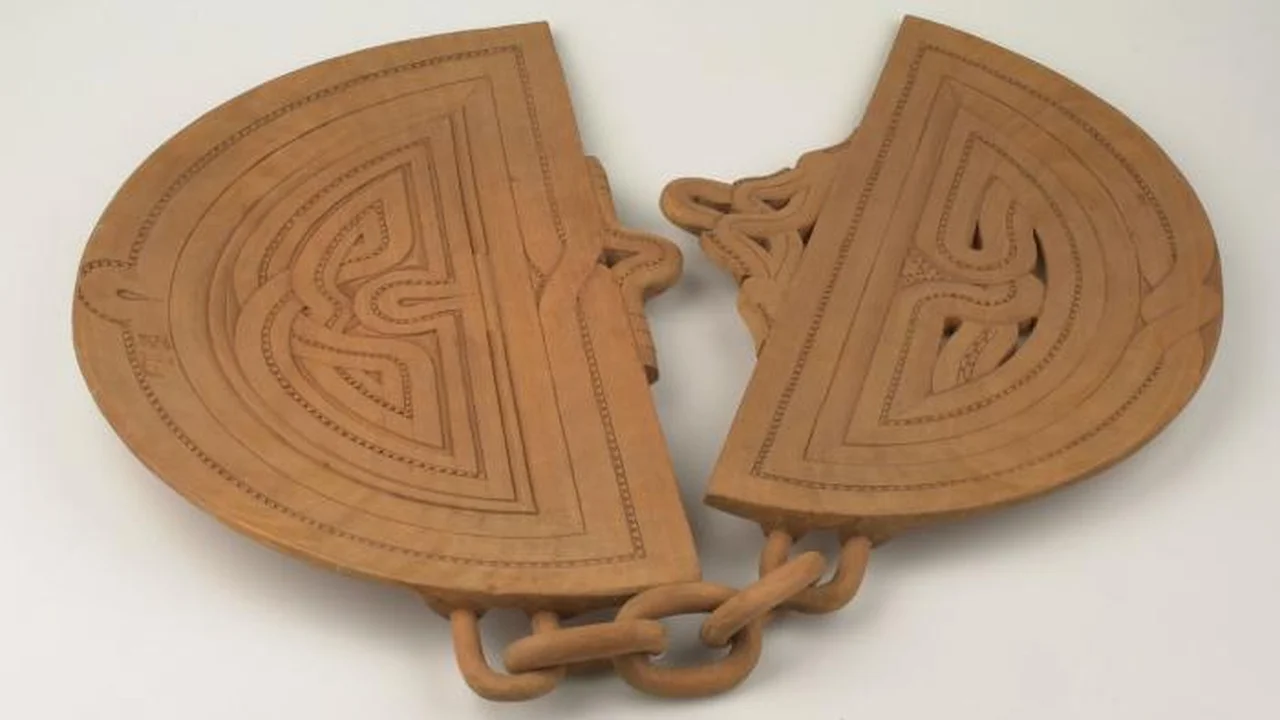
Men carved smooth laundry paddles, wooden folding stools, peanut trays, and hair combs to give as wedding gifts.
Early carvers cut deep lines into wood, and later artists added pierced fretwork patterns and bright painted shapes called Tembe.
Saramaccan carvers along the Suriname River developed unique styles that look different from Aukan carvings on the Marowijne River.
Historic museums in Amsterdam keep old wooden spoons and carved stools showing how African carving traditions grew in Suriname.
Timber Selection and Hand Tool Organology
Forest carvers choose strong native trees like sweet cedar, purpleheart wood, and soft simarouba timber from the dense jungle.
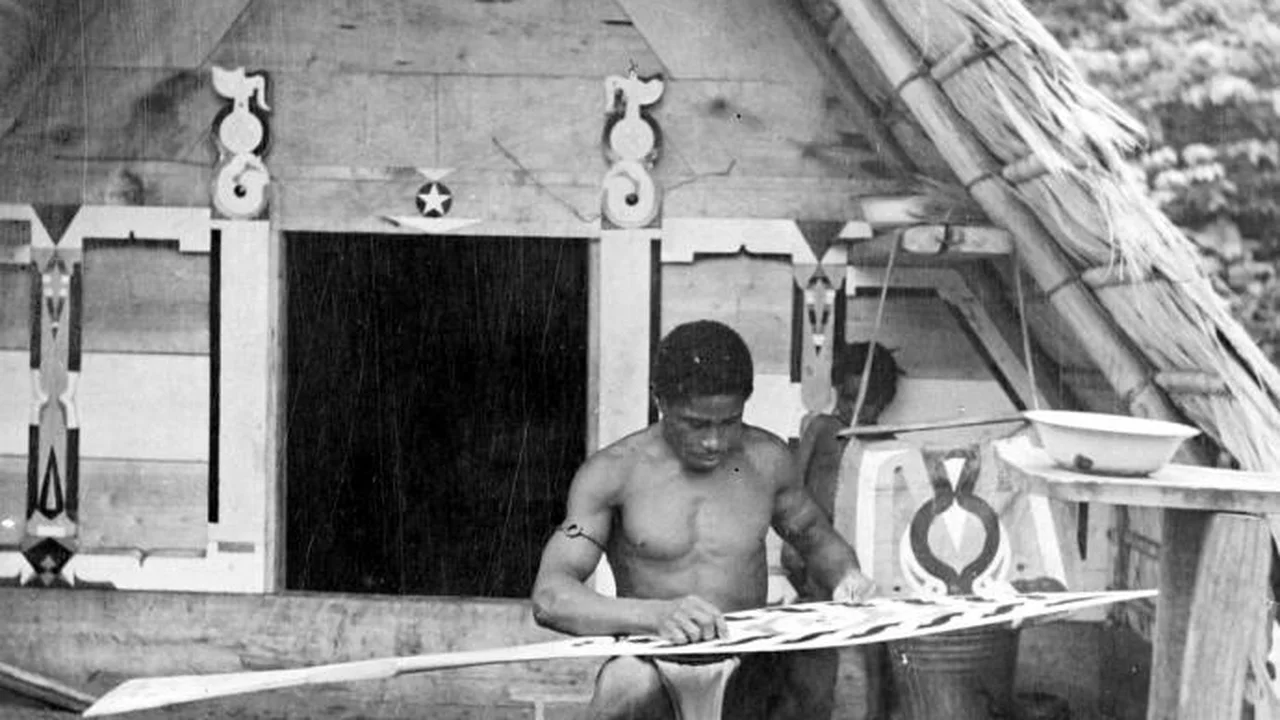
Woodworkers use simple steel hand tools including sharp chisels, hollow gouges, drawknives, and pocket knives sharpened on river stones.
Clever master carvers shape folding benches and moving wooden chains out of one single log without using iron nails or glue.
Carvers mark clean lines directly on the wood with metal compasses and string lines without paper drawings.
Workers polish rough boards using natural sandpaper leaves from forest vines before rubbing warm plant oil into the grain.
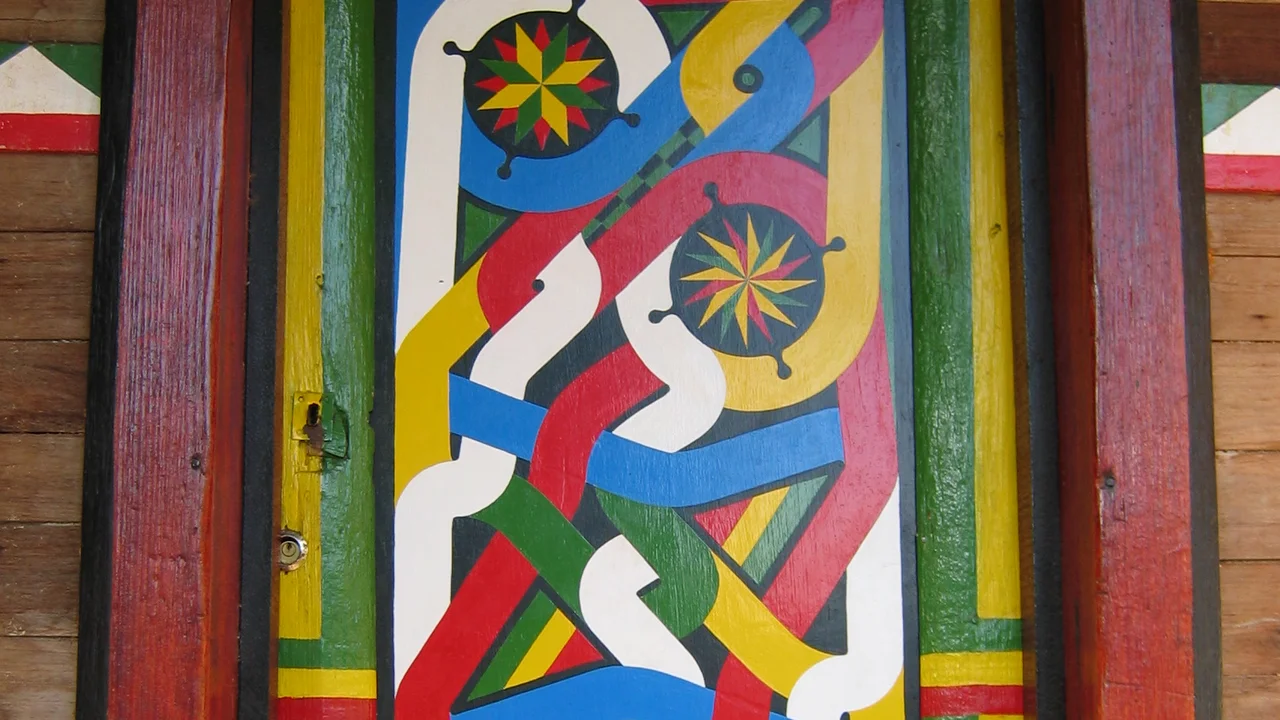
Tembe painters use bright red, yellow, and blue colors over smooth wood to highlight braided ribbon designs and star patterns.
Architectural Monuments and Utilitarian Forms
Artists carve handsome wooden doorframes, window shutters, and rooftop gables for village homes in the interior forest.
River travelers need good wooden boats, so carvers build cedar dugout canoes and carve light paddles with decorated handles.
Village drummers play carved cedar signal drums called apinti to send messages between homes and accompany religious songs.
Carved shapes on wooden house doors carry old proverbs and secret blessings to protect family homes from bad luck.
Small folding stools called bangi have cut legs that show the great skill and village pride of the carver.
Village men work together to build communal council houses called krutu oso using tall carved wooden posts.
Contemporary Cooperatives and Heritage Safeguarding
A difficult civil conflict in the interior forest hurt village life and stopped young men from learning carving skills.
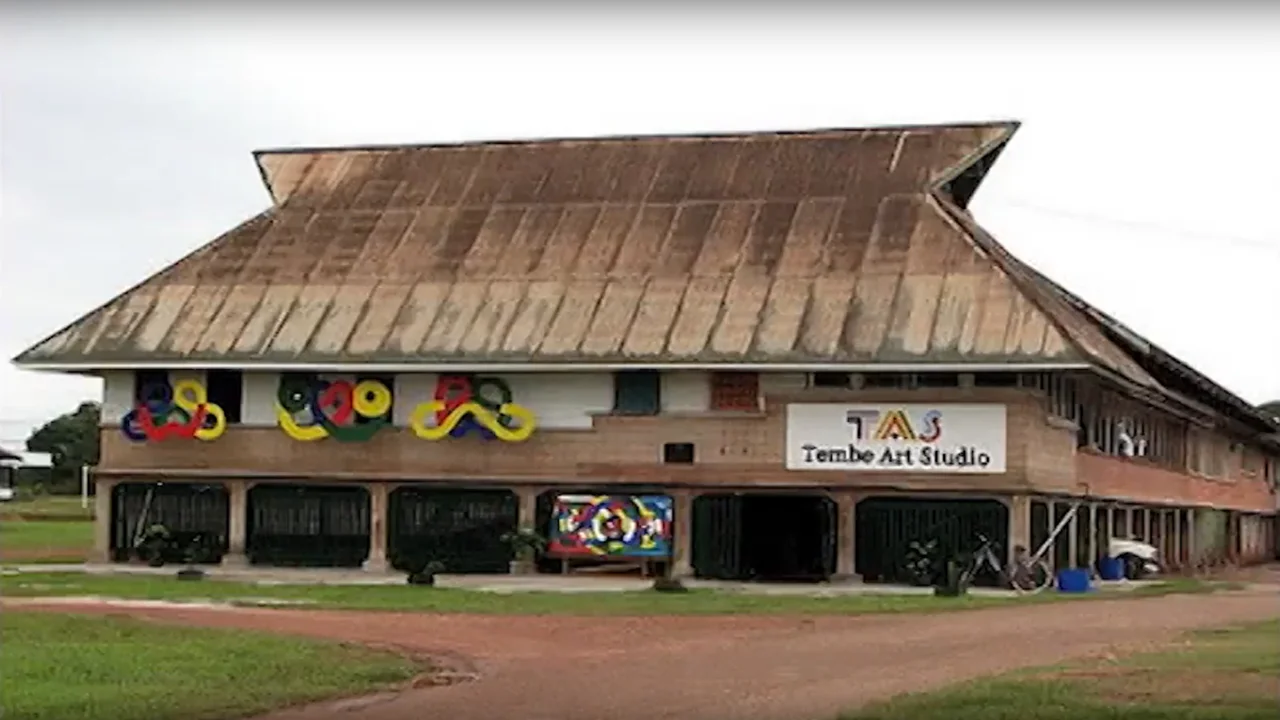
Surinamese artist Marcel Pinas opened the Tembe Art Studio in Moengo to teach young students traditional wood carving.
Village craft guilds carve cedar bowls, hair combs, and small tables to sell in craft shops in Paramaribo.
University teachers and museum experts visit forest elders to write down old woodcarving words and pattern meanings.
Souvenir markets sell miniature wooden paddles and small folding chairs to foreign tourists visiting the country.
Culture leaders in Suriname protect Maroon woodcarving as an important national art treasure for future generations.
A2 · Elementary
Maroon Woodcarving: Rainforest Timbers, Courtship Utensils, and Tembe
Analyzing post-treaty interior craft evolution, monolithic kinetic chains, decorative house doorframes, and contemporary Moengo studios.
Historical Origins and Matrilineal Exchange
Maroon woodcarving developed in the Surinamese rainforest interior following eighteenth-century peace treaties as escaped African maroons established autonomous communities along the upper rivers.
Woodcarving historically functioned as a quintessential male craft domain intertwined with matrilineal courtship customs and marital gift exchange.
Men carved intricate ceremonial items including laundry paddles, folding stools, peanut-grinding boards, and hair combs presented as formal courtship gifts to prospective brides and matrilineal kin.
The decorative visual language evolved through distinct stylistic periods, transitioning from early relief chip carving to pierced fretwork and vibrant polychrome painting known as Tembe.
Distinct stylistic variations distinguish the carving traditions of the Saramaccan along the Suriname River from the Aukan and Aluku along the Cottica and Marowijne rivers.
Museum collections at Wereldmuseum Amsterdam document nineteenth-century carvings that trace the transformation of African ancestral iconography into autonomous Surinamese Maroon aesthetic conventions.
Timber Selection and Hand Tool Organology
Carvers select specific native tropical hardwoods from the interior Guiana rainforest, prioritizing cedar, purpleheart, and fine-grained simarouba for workability and resistance to pests.
The tool kit traditionally relies on minimal hand tools, primarily curved gouges, flat chisels, drawknives, and versatile folding pocket knives honed on river whetstones.
Master carvers create complex kinetic objects, such as folding stools and articulated chains, sculpted from a single continuous piece of timber without metal nails, hinges, or adhesive joints.
Geometric layouts are etched directly onto prepared wood surfaces using compass points, string lines, and freehand incised guidelines without written technical blueprints.
Traditional surface finishing techniques utilize abrasive rough leaves from forest sandpaper vines to polish wood surfaces before applying botanical vegetable oils.
In polychrome Tembe styles, artisans apply natural pigments derived from river clays and mineral earths, now complemented by durable commercial enamel paints highlighting interlocking geometric ribbons.
Architectural Monuments and Utilitarian Forms
Beyond domestic utensils, woodcarving adorns architectural elements of traditional Maroon houses, including carved wooden doorframes, ventilation gables, and lintels.
Riverine transport depends heavily on woodcarving expertise, from shaping sleek cedar dugout canoes to carving ornate personal paddles with openwork handles.
Ceremonial slit drums known as apinti are hollowed from cedar logs and decorated with low-relief geometric carvings to serve as historic communication instruments and ritual percussion.
Protective ancestral iconography and spiritual proverbs are encoded within non-figurative geometric motifs carved into house facades and domestic implements.
Folding ceremonial stools, known as bangi, incorporate interlocking legs and pierced backrests that demonstrate a woodcarver technical prowess and social prestige within the village.
Communal building customs historically mobilized village artisans to collaborate on public meeting halls featuring carved structural support posts.
Contemporary Cooperatives and Heritage Safeguarding
The 1986 to 1992 Surinamese Interior War disrupted riverine crafting communities, displacing artisan families and threatening the transmission of specialized master carving techniques.
Contemporary visual artist Marcel Pinas established the Tembe Art Studio in Moengo to revitalize traditional Maroon arts and provide formal woodcarving apprenticeships for Marowijne youth.
Artisans in interior villages have formed carving cooperatives and craft guilds that retail polished cedar trays, combs, and furniture through craft markets in Paramaribo.
International museums and academic institutions collaborate with Maroon elders to document oral terminologies, endangered carving methods, and symbolic meanings of geometric patterns.
Modern tourist commerce has spurred commercial production of miniaturized paddles, decorative wall panels, and souvenir folding stools, introducing challenges in sustaining authentic handcraft standards.
Suriname Directorate of Culture and UNESCO cultural heritage inventories formally recognize Maroon woodcarving and Tembe craftsmanship as vital pillars of national intangible heritage.
B1 · Intermediate
Maroon Woodcarving: Material Culture, Kinship Exchange, and Tembe Geometry
An ethnographic study exploring matrilineal gift protocols, tropical hardwood organology, vernacular architecture, and urban artisan guilds.
Historical Origins and Matrilineal Exchange
Maroon woodcarving developed in the Surinamese rainforest interior following eighteenth-century peace treaties as escaped African maroons established autonomous communities along the upper rivers.
Woodcarving historically functioned as a quintessential male craft domain intertwined with matrilineal courtship customs and marital gift exchange.
Men carved intricate ceremonial items including laundry paddles, folding stools, peanut-grinding boards, and hair combs presented as formal courtship gifts to prospective brides and matrilineal kin.
The decorative visual language evolved through distinct stylistic periods, transitioning from early relief chip carving to pierced fretwork and vibrant polychrome painting known as Tembe.
Distinct stylistic variations distinguish the carving traditions of the Saramaccan along the Suriname River from the Aukan and Aluku along the Cottica and Marowijne rivers.
Museum collections at Wereldmuseum Amsterdam document nineteenth-century carvings that trace the transformation of African ancestral iconography into autonomous Surinamese Maroon aesthetic conventions.
Timber Selection and Hand Tool Organology
Carvers select specific native tropical hardwoods from the interior Guiana rainforest, prioritizing cedar, purpleheart, and fine-grained simarouba for workability and resistance to pests.
The tool kit traditionally relies on minimal hand tools, primarily curved gouges, flat chisels, drawknives, and versatile folding pocket knives honed on river whetstones.
Master carvers create complex kinetic objects, such as folding stools and articulated chains, sculpted from a single continuous piece of timber without metal nails, hinges, or adhesive joints.
Geometric layouts are etched directly onto prepared wood surfaces using compass points, string lines, and freehand incised guidelines without written technical blueprints.
Traditional surface finishing techniques utilize abrasive rough leaves from forest sandpaper vines to polish wood surfaces before applying botanical vegetable oils.
In polychrome Tembe styles, artisans apply natural pigments derived from river clays and mineral earths, now complemented by durable commercial enamel paints highlighting interlocking geometric ribbons.
Architectural Monuments and Utilitarian Forms
Beyond domestic utensils, woodcarving adorns architectural elements of traditional Maroon houses, including carved wooden doorframes, ventilation gables, and lintels.
Riverine transport depends heavily on woodcarving expertise, from shaping sleek cedar dugout canoes to carving ornate personal paddles with openwork handles.
Ceremonial slit drums known as apinti are hollowed from cedar logs and decorated with low-relief geometric carvings to serve as historic communication instruments and ritual percussion.
Protective ancestral iconography and spiritual proverbs are encoded within non-figurative geometric motifs carved into house facades and domestic implements.
Folding ceremonial stools, known as bangi, incorporate interlocking legs and pierced backrests that demonstrate a woodcarver technical prowess and social prestige within the village.
Communal building customs historically mobilized village artisans to collaborate on public meeting halls featuring carved structural support posts.
Contemporary Cooperatives and Heritage Safeguarding
The 1986 to 1992 Surinamese Interior War disrupted riverine crafting communities, displacing artisan families and threatening the transmission of specialized master carving techniques.
Contemporary visual artist Marcel Pinas established the Tembe Art Studio in Moengo to revitalize traditional Maroon arts and provide formal woodcarving apprenticeships for Marowijne youth.
Artisans in interior villages have formed carving cooperatives and craft guilds that retail polished cedar trays, combs, and furniture through craft markets in Paramaribo.
International museums and academic institutions collaborate with Maroon elders to document oral terminologies, endangered carving methods, and symbolic meanings of geometric patterns.
Modern tourist commerce has spurred commercial production of miniaturized paddles, decorative wall panels, and souvenir folding stools, introducing challenges in sustaining authentic handcraft standards.
Suriname Directorate of Culture and UNESCO cultural heritage inventories formally recognize Maroon woodcarving and Tembe craftsmanship as vital pillars of national intangible heritage.
B2 · Upper Intermediate
Maroon Woodcarving: Forestry Botanicals, Kinetic Joinery, and Transnational Heritage
Investigating regional Saramaccan and Aukan stylistic lineages, monolithic unjointed chains, post-war displacement, and UNESCO safeguarding.
Historical Origins and Matrilineal Exchange
Maroon woodcarving developed in the Surinamese rainforest interior following eighteenth-century peace treaties as escaped African maroons established autonomous communities along the upper rivers.
Woodcarving historically functioned as a quintessential male craft domain intertwined with matrilineal courtship customs and marital gift exchange.
Men carved intricate ceremonial items including laundry paddles, folding stools, peanut-grinding boards, and hair combs presented as formal courtship gifts to prospective brides and matrilineal kin.
The decorative visual language evolved through distinct stylistic periods, transitioning from early relief chip carving to pierced fretwork and vibrant polychrome painting known as Tembe.
Distinct stylistic variations distinguish the carving traditions of the Saramaccan along the Suriname River from the Aukan and Aluku along the Cottica and Marowijne rivers.
Museum collections at Wereldmuseum Amsterdam document nineteenth-century carvings that trace the transformation of African ancestral iconography into autonomous Surinamese Maroon aesthetic conventions.
Timber Selection and Hand Tool Organology
Carvers select specific native tropical hardwoods from the interior Guiana rainforest, prioritizing cedar, purpleheart, and fine-grained simarouba for workability and resistance to pests.
The tool kit traditionally relies on minimal hand tools, primarily curved gouges, flat chisels, drawknives, and versatile folding pocket knives honed on river whetstones.
Master carvers create complex kinetic objects, such as folding stools and articulated chains, sculpted from a single continuous piece of timber without metal nails, hinges, or adhesive joints.
Geometric layouts are etched directly onto prepared wood surfaces using compass points, string lines, and freehand incised guidelines without written technical blueprints.
Traditional surface finishing techniques utilize abrasive rough leaves from forest sandpaper vines to polish wood surfaces before applying botanical vegetable oils.
In polychrome Tembe styles, artisans apply natural pigments derived from river clays and mineral earths, now complemented by durable commercial enamel paints highlighting interlocking geometric ribbons.
Architectural Monuments and Utilitarian Forms
Beyond domestic utensils, woodcarving adorns architectural elements of traditional Maroon houses, including carved wooden doorframes, ventilation gables, and lintels.
Riverine transport depends heavily on woodcarving expertise, from shaping sleek cedar dugout canoes to carving ornate personal paddles with openwork handles.
Ceremonial slit drums known as apinti are hollowed from cedar logs and decorated with low-relief geometric carvings to serve as historic communication instruments and ritual percussion.
Protective ancestral iconography and spiritual proverbs are encoded within non-figurative geometric motifs carved into house facades and domestic implements.
Folding ceremonial stools, known as bangi, incorporate interlocking legs and pierced backrests that demonstrate a woodcarver technical prowess and social prestige within the village.
Communal building customs historically mobilized village artisans to collaborate on public meeting halls featuring carved structural support posts.
Contemporary Cooperatives and Heritage Safeguarding
The 1986 to 1992 Surinamese Interior War disrupted riverine crafting communities, displacing artisan families and threatening the transmission of specialized master carving techniques.
Contemporary visual artist Marcel Pinas established the Tembe Art Studio in Moengo to revitalize traditional Maroon arts and provide formal woodcarving apprenticeships for Marowijne youth.
Artisans in interior villages have formed carving cooperatives and craft guilds that retail polished cedar trays, combs, and furniture through craft markets in Paramaribo.
International museums and academic institutions collaborate with Maroon elders to document oral terminologies, endangered carving methods, and symbolic meanings of geometric patterns.
Modern tourist commerce has spurred commercial production of miniaturized paddles, decorative wall panels, and souvenir folding stools, introducing challenges in sustaining authentic handcraft standards.
Suriname Directorate of Culture and UNESCO cultural heritage inventories formally recognize Maroon woodcarving and Tembe craftsmanship as vital pillars of national intangible heritage.
C1 · Advanced
The Material Culture and Visual Epistemology of Maroon Woodcarving
A critical monograph examining eighteenth-century autonomous craft synthesis, kinetic woodworking organology, protective iconography, and revitalization.
Historical Origins and Matrilineal Exchange
Maroon woodcarving developed in the Surinamese rainforest interior following eighteenth-century peace treaties as escaped African maroons established autonomous communities along the upper rivers.
Woodcarving historically functioned as a quintessential male craft domain intertwined with matrilineal courtship customs and marital gift exchange.
Men carved intricate ceremonial items including laundry paddles, folding stools, peanut-grinding boards, and hair combs presented as formal courtship gifts to prospective brides and matrilineal kin.
The decorative visual language evolved through distinct stylistic periods, transitioning from early relief chip carving to pierced fretwork and vibrant polychrome painting known as Tembe.
Distinct stylistic variations distinguish the carving traditions of the Saramaccan along the Suriname River from the Aukan and Aluku along the Cottica and Marowijne rivers.
Museum collections at Wereldmuseum Amsterdam document nineteenth-century carvings that trace the transformation of African ancestral iconography into autonomous Surinamese Maroon aesthetic conventions.
Timber Selection and Hand Tool Organology
Carvers select specific native tropical hardwoods from the interior Guiana rainforest, prioritizing cedar, purpleheart, and fine-grained simarouba for workability and resistance to pests.
The tool kit traditionally relies on minimal hand tools, primarily curved gouges, flat chisels, drawknives, and versatile folding pocket knives honed on river whetstones.
Master carvers create complex kinetic objects, such as folding stools and articulated chains, sculpted from a single continuous piece of timber without metal nails, hinges, or adhesive joints.
Geometric layouts are etched directly onto prepared wood surfaces using compass points, string lines, and freehand incised guidelines without written technical blueprints.
Traditional surface finishing techniques utilize abrasive rough leaves from forest sandpaper vines to polish wood surfaces before applying botanical vegetable oils.
In polychrome Tembe styles, artisans apply natural pigments derived from river clays and mineral earths, now complemented by durable commercial enamel paints highlighting interlocking geometric ribbons.
Architectural Monuments and Utilitarian Forms
Beyond domestic utensils, woodcarving adorns architectural elements of traditional Maroon houses, including carved wooden doorframes, ventilation gables, and lintels.
Riverine transport depends heavily on woodcarving expertise, from shaping sleek cedar dugout canoes to carving ornate personal paddles with openwork handles.
Ceremonial slit drums known as apinti are hollowed from cedar logs and decorated with low-relief geometric carvings to serve as historic communication instruments and ritual percussion.
Protective ancestral iconography and spiritual proverbs are encoded within non-figurative geometric motifs carved into house facades and domestic implements.
Folding ceremonial stools, known as bangi, incorporate interlocking legs and pierced backrests that demonstrate a woodcarver technical prowess and social prestige within the village.
Communal building customs historically mobilized village artisans to collaborate on public meeting halls featuring carved structural support posts.
Contemporary Cooperatives and Heritage Safeguarding
The 1986 to 1992 Surinamese Interior War disrupted riverine crafting communities, displacing artisan families and threatening the transmission of specialized master carving techniques.
Contemporary visual artist Marcel Pinas established the Tembe Art Studio in Moengo to revitalize traditional Maroon arts and provide formal woodcarving apprenticeships for Marowijne youth.
Artisans in interior villages have formed carving cooperatives and craft guilds that retail polished cedar trays, combs, and furniture through craft markets in Paramaribo.
International museums and academic institutions collaborate with Maroon elders to document oral terminologies, endangered carving methods, and symbolic meanings of geometric patterns.
Modern tourist commerce has spurred commercial production of miniaturized paddles, decorative wall panels, and souvenir folding stools, introducing challenges in sustaining authentic handcraft standards.
Suriname Directorate of Culture and UNESCO cultural heritage inventories formally recognize Maroon woodcarving and Tembe craftsmanship as vital pillars of national intangible heritage.
C2 · Mastery
Maroon Woodcarving: Rainforest Materiality, Matrilineal Exchange, and Living Tembe Heritage
A comprehensive analytical monograph investigating Suriname premier sculptural tradition across historical, technological, architectural, and safeguarding dimensions.
Historical Origins and Matrilineal Exchange
Maroon woodcarving developed in the Surinamese rainforest interior following eighteenth-century peace treaties as escaped African maroons established autonomous communities along the upper rivers.
Woodcarving historically functioned as a quintessential male craft domain intertwined with matrilineal courtship customs and marital gift exchange.
Men carved intricate ceremonial items including laundry paddles, folding stools, peanut-grinding boards, and hair combs presented as formal courtship gifts to prospective brides and matrilineal kin.
The decorative visual language evolved through distinct stylistic periods, transitioning from early relief chip carving to pierced fretwork and vibrant polychrome painting known as Tembe.
Distinct stylistic variations distinguish the carving traditions of the Saramaccan along the Suriname River from the Aukan and Aluku along the Cottica and Marowijne rivers.
Museum collections at Wereldmuseum Amsterdam document nineteenth-century carvings that trace the transformation of African ancestral iconography into autonomous Surinamese Maroon aesthetic conventions.
Timber Selection and Hand Tool Organology
Carvers select specific native tropical hardwoods from the interior Guiana rainforest, prioritizing cedar, purpleheart, and fine-grained simarouba for workability and resistance to pests.
The tool kit traditionally relies on minimal hand tools, primarily curved gouges, flat chisels, drawknives, and versatile folding pocket knives honed on river whetstones.
Master carvers create complex kinetic objects, such as folding stools and articulated chains, sculpted from a single continuous piece of timber without metal nails, hinges, or adhesive joints.
Geometric layouts are etched directly onto prepared wood surfaces using compass points, string lines, and freehand incised guidelines without written technical blueprints.
Traditional surface finishing techniques utilize abrasive rough leaves from forest sandpaper vines to polish wood surfaces before applying botanical vegetable oils.
In polychrome Tembe styles, artisans apply natural pigments derived from river clays and mineral earths, now complemented by durable commercial enamel paints highlighting interlocking geometric ribbons.
Architectural Monuments and Utilitarian Forms
Beyond domestic utensils, woodcarving adorns architectural elements of traditional Maroon houses, including carved wooden doorframes, ventilation gables, and lintels.
Riverine transport depends heavily on woodcarving expertise, from shaping sleek cedar dugout canoes to carving ornate personal paddles with openwork handles.
Ceremonial slit drums known as apinti are hollowed from cedar logs and decorated with low-relief geometric carvings to serve as historic communication instruments and ritual percussion.
Protective ancestral iconography and spiritual proverbs are encoded within non-figurative geometric motifs carved into house facades and domestic implements.
Folding ceremonial stools, known as bangi, incorporate interlocking legs and pierced backrests that demonstrate a woodcarver technical prowess and social prestige within the village.
Communal building customs historically mobilized village artisans to collaborate on public meeting halls featuring carved structural support posts.
Contemporary Cooperatives and Heritage Safeguarding
The 1986 to 1992 Surinamese Interior War disrupted riverine crafting communities, displacing artisan families and threatening the transmission of specialized master carving techniques.
Contemporary visual artist Marcel Pinas established the Tembe Art Studio in Moengo to revitalize traditional Maroon arts and provide formal woodcarving apprenticeships for Marowijne youth.
Artisans in interior villages have formed carving cooperatives and craft guilds that retail polished cedar trays, combs, and furniture through craft markets in Paramaribo.
International museums and academic institutions collaborate with Maroon elders to document oral terminologies, endangered carving methods, and symbolic meanings of geometric patterns.
Modern tourist commerce has spurred commercial production of miniaturized paddles, decorative wall panels, and souvenir folding stools, introducing challenges in sustaining authentic handcraft standards.
Suriname Directorate of Culture and UNESCO cultural heritage inventories formally recognize Maroon woodcarving and Tembe craftsmanship as vital pillars of national intangible heritage.
Check your understanding
Choose how closely you want to revisit the article. You can refer back while answering, and review explanations when you finish.
Quick Quiz A1
Try one question, then create a free account for the full Quick Quiz. Sign Up Free
Answer every question before checking. There is no time limit.
Your results
/ 1 correct (%)
Read the explanations to see how each answer connects to the article.
-
Where did Maroon woodcarving begin over two hundred years ago?
1. Answer:
Quick Quiz A2
Try one question, then create a free account for the full Quick Quiz. Sign Up Free
Answer every question before checking. There is no time limit.
Your results
/ 1 correct (%)
Read the explanations to see how each answer connects to the article.
-
Following which historical events did Maroon woodcarving develop in the rainforest interior?
1. Answer:
Quick Quiz B1
Try one question, then create a free account for the full Quick Quiz. Sign Up Free
Answer every question before checking. There is no time limit.
Your results
/ 1 correct (%)
Read the explanations to see how each answer connects to the article.
-
Following which historical events did Maroon woodcarving develop in the rainforest interior?
1. Answer:
Quick Quiz B2
Try one question, then create a free account for the full Quick Quiz. Sign Up Free
Answer every question before checking. There is no time limit.
Your results
/ 1 correct (%)
Read the explanations to see how each answer connects to the article.
-
Following which historical events did Maroon woodcarving develop in the rainforest interior?
1. Answer:
Quick Quiz C1
Try one question, then create a free account for the full Quick Quiz. Sign Up Free
Answer every question before checking. There is no time limit.
Your results
/ 1 correct (%)
Read the explanations to see how each answer connects to the article.
-
Following which historical events did Maroon woodcarving develop in the rainforest interior?
1. Answer:
Quick Quiz C2
Try one question, then create a free account for the full Quick Quiz. Sign Up Free
Answer every question before checking. There is no time limit.
Your results
/ 1 correct (%)
Read the explanations to see how each answer connects to the article.
-
Following which historical events did Maroon woodcarving develop in the rainforest interior?
1. Answer:
