A1 · Beginner
Pom in Paramaribo: Culinary Heritage, Tuber Agriculture, and Festive Feasting
From Jewish settlers and river farms to hot ovens and big holiday dinners, pom is Suriname beloved celebration dish.
The Cultural Origins and Jewish Creole Synthesis of Pom
Pom is a famous baked festival dish cooked in home ovens across Suriname.
Long ago Jewish settlers and African cooks invented this tasty baked casserole together.
Families serve hot pom as the main meal for Sunday dinners and birthday parties.
National heritage lists name pom cooking as a special tradition uniting all people.
Lunch shops in Paramaribo sell slices of warm pom inside crusty bread rolls.
Old language records show the name pom comes from an early word for potato.
Pomtajer Agronomy, Corm Harvesting, and Biochemical Properties
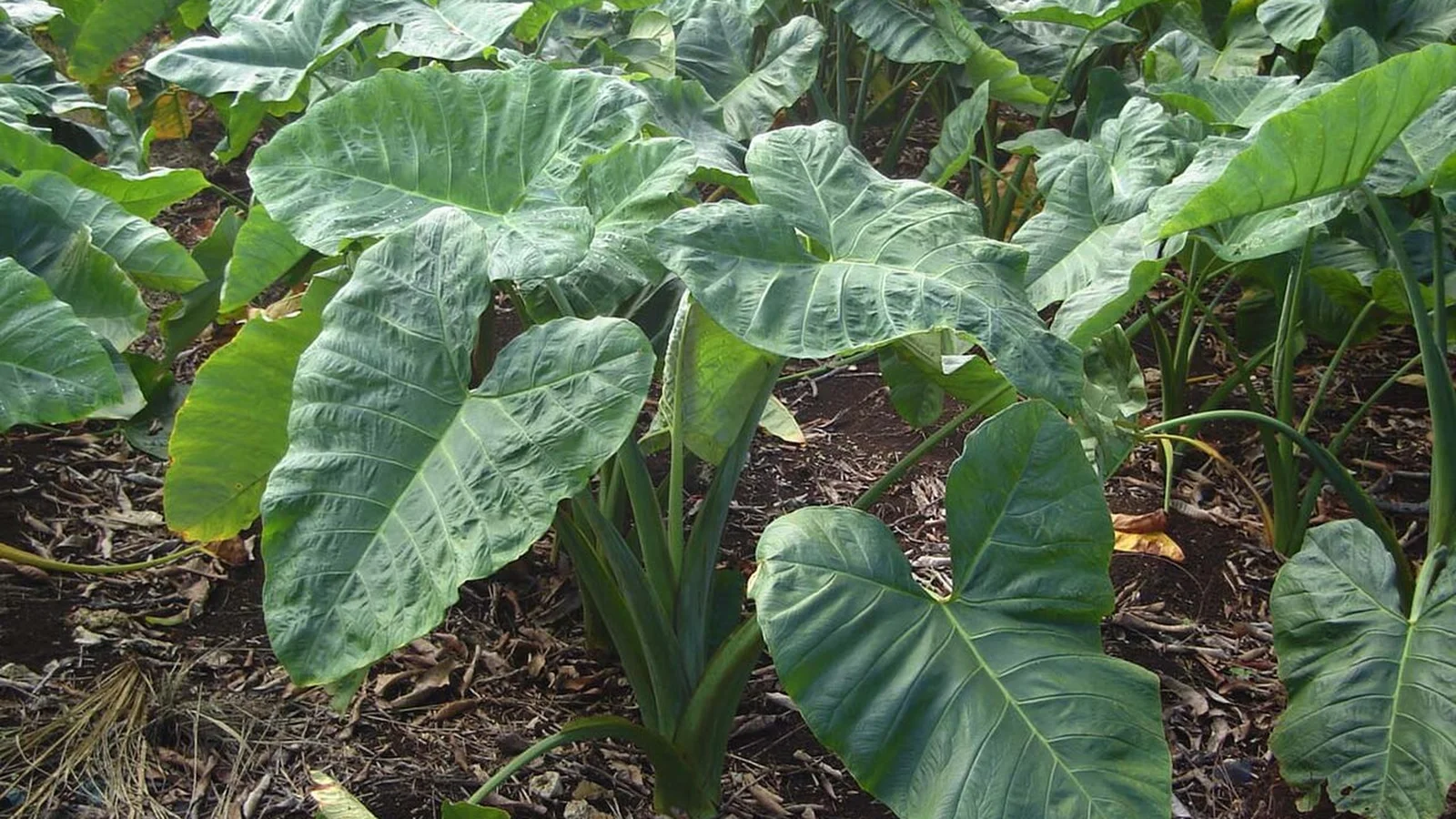
The main plant part used for pom is a brown starchy root called pomtajer.
Small farm families grow tall green tajer plants in warm moist river soils.
Raw roots have tiny sharp crystals that hurt the throat if not cooked well.
Sour orange and fresh lime juice soften the grated root and remove sharp flavors.
Country farms harvest hundreds of tons of fresh roots for city market stalls.
Food workshops pack clean frozen grated root pulp for flights to foreign stores.
Culinary Assembly, Layering Technique, and Baking Chemistry
Home cooks brown tender chicken and salted beef in sweet onions, butter, and spices.
Workers mix grated root pulp with tasty pan gravy, butter, and tangy yellow pickle sauce.
Cooks spread half the root batter in deep baking pans before adding cooked meat.
The heavy baking pan cooks in a hot oven for nearly two full hours.
High baking heat turns the top crust into a shiny golden brown party meal.
Bakers let the hot casserole cool for hours so neat squares can be sliced.

Market Supply Chains, Festive Consumption, and Diaspora Exchange
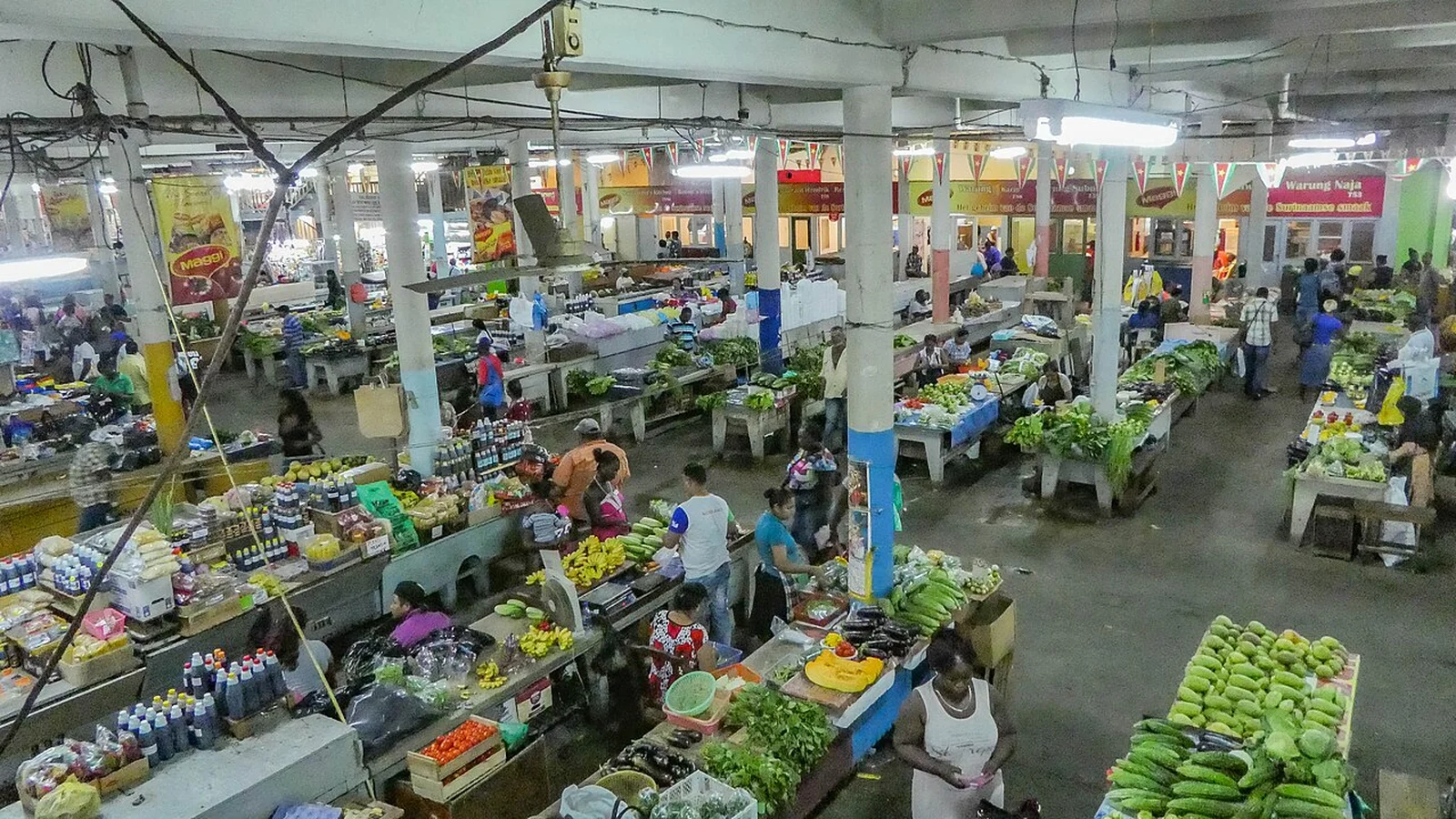
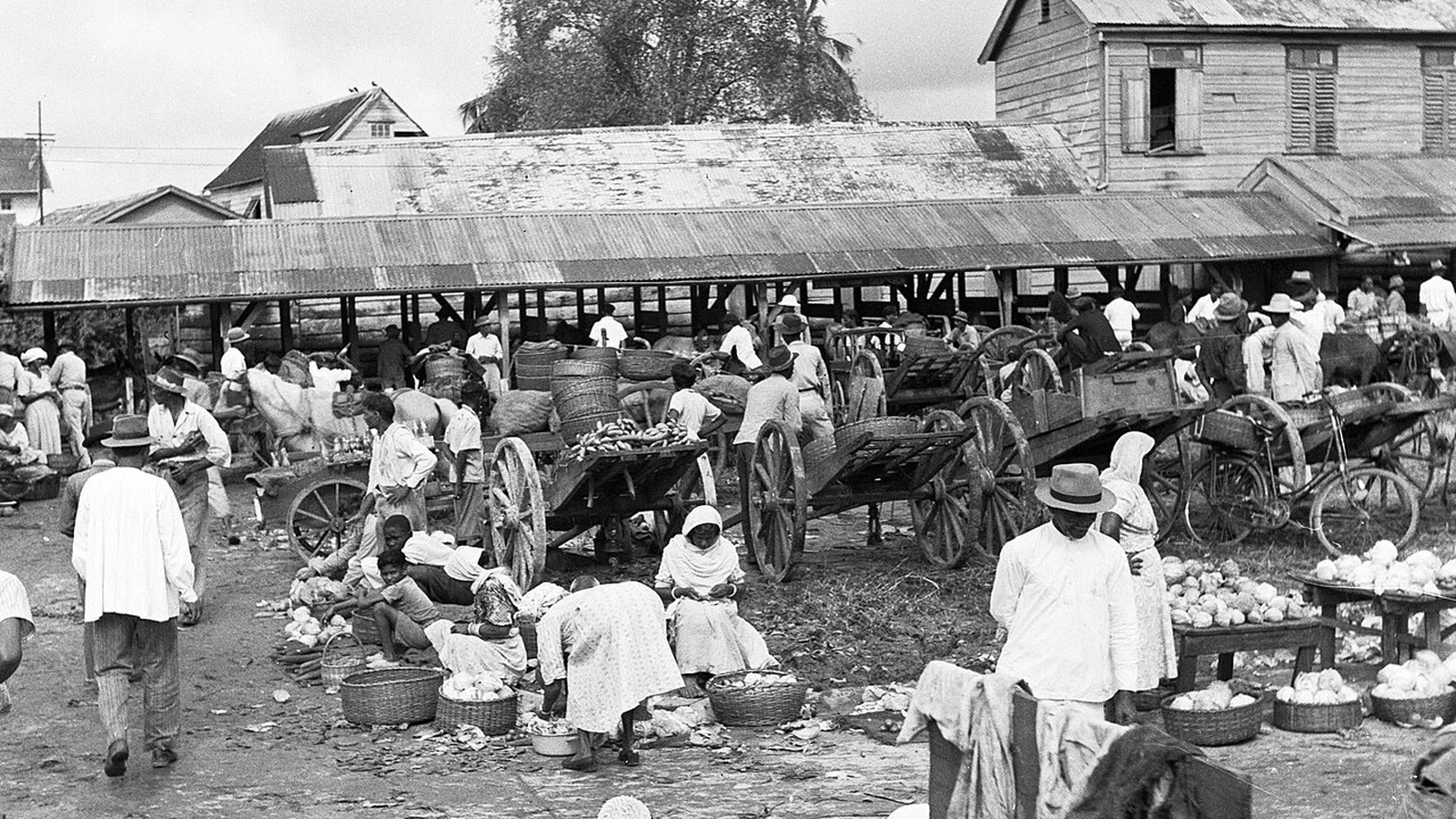
The central market on the riverfront sells heavy bags of freshly dug brown roots.
Market prices for fresh pomtajer rise fast before Christmas and big festive holiday weeks.
Busy family kitchens bake dozens of large metal pans for big neighborhood celebrations.
Cargo airplanes fly frozen root pulp boxes to Surinamese grocery stores in the Netherlands.
Different home recipes add smoked chicken, tasty capers, or sweet fruits to balance acidity.
Eating delicious pom together brings friendly neighbors together across all community groups.
A2 · Elementary
Pom in Paramaribo: Jewish-Creole Origins, Tajer Corms, and Celebratory Cooking
Investigating Creole-Jewish culinary origins, Xanthosoma cultivation, oven baking physics, and festive family feasts across Paramaribo.
The Cultural Origins and Jewish Creole Synthesis of Pom
Pom represents Suriname celebrated festival baked casserole dish, originating from eighteenth-century culinary synthesis between Sephardic Jewish plantation settlers and Afro-Surinamese cooks. Portuguese Jewish settlers adapted traditional European potato kugel casseroles by substituting locally available tropical root crops when imported potatoes proved perishable and costly. The dish became firmly embedded within festive Creole family celebrations, serving as the customary centerpiece for Sunday gatherings, birthday feasts, weddings, and emancipation festivities.
Cultural inventories registered on national intangible heritage lists recognize pom preparation as a living culinary tradition uniting diverse ethnic communities across Paramaribo. In urban street food culture, thinly carved slices of cold or warm pom served on crusty bread rolls known as broodje pom represent a staple takeaway delicacy sold in Paramaribo lunchrooms. Culinary historians document that the name pom derives from the Portuguese Jewish term for potato adapted into Sranan Tongo vernacular speech.
Pomtajer Agronomy, Corm Harvesting, and Biochemical Properties
The primary botanical ingredient in authentic pom is pomtajer, the underground starchy tuberous corm of Xanthosoma sagittifolium, an aroid plant indigenous to tropical South America. Smallholder farmers in the moist coastal plains and riverine districts of Para, Saramacca, and Wanica cultivate tajer under shade canopies with harvest cycles spanning nine to eleven months. Raw tajer corms contain microscopic needle-like calcium oxalate raphide crystals that cause severe throat irritation if consumed uncooked, necessitating thorough grating and prolonged oven baking.
Acidic marinades, traditionally prepared with Seville bitter orange juice or freshly squeezed lime juice, chemically break down acrid oxalate compounds while tenderizing the grated root mass. Agricultural surveys record that smallholder farms harvest hundreds of metric tons of fresh tajer corms annually, supplying municipal wet markets in Paramaribo with unpeeled roots. Food technology processors in Suriname freeze and vacuum-pack pre-grated pomtajer pulp to facilitate domestic convenience and commercial air export to diaspora households in the Netherlands.
Culinary Assembly, Layering Technique, and Baking Chemistry
Traditional pom recipes feature marinated poultry, typically chicken or salted beef, browned in caramelized sugar, butter, onions, tomatoes, nutmeg, and aromatic allspice berries. Cooks thoroughly blend the grated tajer pulp with savory pan juices, melted butter, citrus juice, and sweet-sour piccalilli preserves to achieve a smooth golden-yellow batter. Assembly requires meticulous layering in an earthenware or enameled baking pan, placing half the seasoned grated tajer batter at the base, followed by meat fillings, and capped with remaining batter.
The assembled casserole undergoes sustained baking at moderate oven temperatures between one hundred and seventy and one hundred and ninety degrees Celsius for ninety minutes to two hours. High oven heat gelatinizes root starches and induces Maillard browning, producing a glistening deep golden-brown crust with a moist, succulent citrus-savory interior crumb. Culinary standards prescribe resting the baked casserole for several hours after removal from the oven to allow the starch matrix to set firmly before slicing into clean rectangular portions.
Market Supply Chains, Festive Consumption, and Diaspora Exchange
Paramaribo Centrale Markt on the Waterkant serves as the principal wholesale hub where urban home cooks and commercial caterers negotiate bulk purchases of freshly dug tajer corms. Household expenditure surveys by the General Bureau of Statistics document that retail demand and market prices for raw pomtajer spike significantly prior to Christmas, New Year, and national holidays. Small catering enterprises and neighborhood home kitchens operate high-volume seasonal baking operations, producing dozens of large roasting pans to supply private family banquets.
Transatlantic trade routes transport commercial shipments of frozen Surinamese tajer pulp to specialty ethnic grocery stores in Amsterdam, Rotterdam, and The Hague. Intergenerational recipe variations reflect diverse family traditions, with some households incorporating salted beef, smoked chicken, capers, or sweet preserves to balance citrus acidity. Cultural sociologists observe that sharing pom across social and ethnic boundaries reinforces community solidarity, symbolizing Suriname intricate multicultural identity through shared gastronomy.
B1 · Intermediate
The Culinary Genesis, Agronomy, and Festive Rituals of Surinamese Pom
A detailed examination of Sephardic kugel adaptations, tropical pomtajer harvesting, citrus acid marinades, and transatlantic diaspora trade.
The Cultural Origins and Jewish Creole Synthesis of Pom
Pom represents Suriname celebrated festival baked casserole dish, originating from eighteenth-century culinary synthesis between Sephardic Jewish plantation settlers and Afro-Surinamese cooks. Portuguese Jewish settlers adapted traditional European potato kugel casseroles by substituting locally available tropical root crops when imported potatoes proved perishable and costly. The dish became firmly embedded within festive Creole family celebrations, serving as the customary centerpiece for Sunday gatherings, birthday feasts, weddings, and emancipation festivities.
Cultural inventories registered on national intangible heritage lists recognize pom preparation as a living culinary tradition uniting diverse ethnic communities across Paramaribo. In urban street food culture, thinly carved slices of cold or warm pom served on crusty bread rolls known as broodje pom represent a staple takeaway delicacy sold in Paramaribo lunchrooms. Culinary historians document that the name pom derives from the Portuguese Jewish term for potato adapted into Sranan Tongo vernacular speech.
Pomtajer Agronomy, Corm Harvesting, and Biochemical Properties
The primary botanical ingredient in authentic pom is pomtajer, the underground starchy tuberous corm of Xanthosoma sagittifolium, an aroid plant indigenous to tropical South America. Smallholder farmers in the moist coastal plains and riverine districts of Para, Saramacca, and Wanica cultivate tajer under shade canopies with harvest cycles spanning nine to eleven months. Raw tajer corms contain microscopic needle-like calcium oxalate raphide crystals that cause severe throat irritation if consumed uncooked, necessitating thorough grating and prolonged oven baking.
Acidic marinades, traditionally prepared with Seville bitter orange juice or freshly squeezed lime juice, chemically break down acrid oxalate compounds while tenderizing the grated root mass. Agricultural surveys record that smallholder farms harvest hundreds of metric tons of fresh tajer corms annually, supplying municipal wet markets in Paramaribo with unpeeled roots. Food technology processors in Suriname freeze and vacuum-pack pre-grated pomtajer pulp to facilitate domestic convenience and commercial air export to diaspora households in the Netherlands.
Culinary Assembly, Layering Technique, and Baking Chemistry
Traditional pom recipes feature marinated poultry, typically chicken or salted beef, browned in caramelized sugar, butter, onions, tomatoes, nutmeg, and aromatic allspice berries. Cooks thoroughly blend the grated tajer pulp with savory pan juices, melted butter, citrus juice, and sweet-sour piccalilli preserves to achieve a smooth golden-yellow batter. Assembly requires meticulous layering in an earthenware or enameled baking pan, placing half the seasoned grated tajer batter at the base, followed by meat fillings, and capped with remaining batter.
The assembled casserole undergoes sustained baking at moderate oven temperatures between one hundred and seventy and one hundred and ninety degrees Celsius for ninety minutes to two hours. High oven heat gelatinizes root starches and induces Maillard browning, producing a glistening deep golden-brown crust with a moist, succulent citrus-savory interior crumb. Culinary standards prescribe resting the baked casserole for several hours after removal from the oven to allow the starch matrix to set firmly before slicing into clean rectangular portions.
Market Supply Chains, Festive Consumption, and Diaspora Exchange
Paramaribo Centrale Markt on the Waterkant serves as the principal wholesale hub where urban home cooks and commercial caterers negotiate bulk purchases of freshly dug tajer corms. Household expenditure surveys by the General Bureau of Statistics document that retail demand and market prices for raw pomtajer spike significantly prior to Christmas, New Year, and national holidays. Small catering enterprises and neighborhood home kitchens operate high-volume seasonal baking operations, producing dozens of large roasting pans to supply private family banquets.
Transatlantic trade routes transport commercial shipments of frozen Surinamese tajer pulp to specialty ethnic grocery stores in Amsterdam, Rotterdam, and The Hague. Intergenerational recipe variations reflect diverse family traditions, with some households incorporating salted beef, smoked chicken, capers, or sweet preserves to balance citrus acidity. Cultural sociologists observe that sharing pom across social and ethnic boundaries reinforces community solidarity, symbolizing Suriname intricate multicultural identity through shared gastronomy.
B2 · Upper Intermediate
Pom in Paramaribo: Gastronomic Synthesis, Tuber Biochemistry, and Communal Feasts
Analyzing eighteenth-century recipe evolution, Xanthosoma sagittifolium oxalate reduction, starch gelatinization, and holiday market dynamics.
The Cultural Origins and Jewish Creole Synthesis of Pom
Pom represents Suriname celebrated festival baked casserole dish, originating from eighteenth-century culinary synthesis between Sephardic Jewish plantation settlers and Afro-Surinamese cooks. Portuguese Jewish settlers adapted traditional European potato kugel casseroles by substituting locally available tropical root crops when imported potatoes proved perishable and costly. The dish became firmly embedded within festive Creole family celebrations, serving as the customary centerpiece for Sunday gatherings, birthday feasts, weddings, and emancipation festivities.
Cultural inventories registered on national intangible heritage lists recognize pom preparation as a living culinary tradition uniting diverse ethnic communities across Paramaribo. In urban street food culture, thinly carved slices of cold or warm pom served on crusty bread rolls known as broodje pom represent a staple takeaway delicacy sold in Paramaribo lunchrooms. Culinary historians document that the name pom derives from the Portuguese Jewish term for potato adapted into Sranan Tongo vernacular speech.
Pomtajer Agronomy, Corm Harvesting, and Biochemical Properties
The primary botanical ingredient in authentic pom is pomtajer, the underground starchy tuberous corm of Xanthosoma sagittifolium, an aroid plant indigenous to tropical South America. Smallholder farmers in the moist coastal plains and riverine districts of Para, Saramacca, and Wanica cultivate tajer under shade canopies with harvest cycles spanning nine to eleven months. Raw tajer corms contain microscopic needle-like calcium oxalate raphide crystals that cause severe throat irritation if consumed uncooked, necessitating thorough grating and prolonged oven baking.
Acidic marinades, traditionally prepared with Seville bitter orange juice or freshly squeezed lime juice, chemically break down acrid oxalate compounds while tenderizing the grated root mass. Agricultural surveys record that smallholder farms harvest hundreds of metric tons of fresh tajer corms annually, supplying municipal wet markets in Paramaribo with unpeeled roots. Food technology processors in Suriname freeze and vacuum-pack pre-grated pomtajer pulp to facilitate domestic convenience and commercial air export to diaspora households in the Netherlands.
Culinary Assembly, Layering Technique, and Baking Chemistry
Traditional pom recipes feature marinated poultry, typically chicken or salted beef, browned in caramelized sugar, butter, onions, tomatoes, nutmeg, and aromatic allspice berries. Cooks thoroughly blend the grated tajer pulp with savory pan juices, melted butter, citrus juice, and sweet-sour piccalilli preserves to achieve a smooth golden-yellow batter. Assembly requires meticulous layering in an earthenware or enameled baking pan, placing half the seasoned grated tajer batter at the base, followed by meat fillings, and capped with remaining batter.
The assembled casserole undergoes sustained baking at moderate oven temperatures between one hundred and seventy and one hundred and ninety degrees Celsius for ninety minutes to two hours. High oven heat gelatinizes root starches and induces Maillard browning, producing a glistening deep golden-brown crust with a moist, succulent citrus-savory interior crumb. Culinary standards prescribe resting the baked casserole for several hours after removal from the oven to allow the starch matrix to set firmly before slicing into clean rectangular portions.
Market Supply Chains, Festive Consumption, and Diaspora Exchange
Paramaribo Centrale Markt on the Waterkant serves as the principal wholesale hub where urban home cooks and commercial caterers negotiate bulk purchases of freshly dug tajer corms. Household expenditure surveys by the General Bureau of Statistics document that retail demand and market prices for raw pomtajer spike significantly prior to Christmas, New Year, and national holidays. Small catering enterprises and neighborhood home kitchens operate high-volume seasonal baking operations, producing dozens of large roasting pans to supply private family banquets.
Transatlantic trade routes transport commercial shipments of frozen Surinamese tajer pulp to specialty ethnic grocery stores in Amsterdam, Rotterdam, and The Hague. Intergenerational recipe variations reflect diverse family traditions, with some households incorporating salted beef, smoked chicken, capers, or sweet preserves to balance citrus acidity. Cultural sociologists observe that sharing pom across social and ethnic boundaries reinforces community solidarity, symbolizing Suriname intricate multicultural identity through shared gastronomy.
C1 · Advanced
The Cultural Geography of Pom: Creole-Jewish Synthesis and Agro-Ecological Heritage
A critical gastronomic monograph analyzing Sephardic diaspora substitution, smallholder tajer agronomy, Maillard reactions, and communal solidarity.
The Cultural Origins and Jewish Creole Synthesis of Pom
Pom represents Suriname celebrated festival baked casserole dish, originating from eighteenth-century culinary synthesis between Sephardic Jewish plantation settlers and Afro-Surinamese cooks. Portuguese Jewish settlers adapted traditional European potato kugel casseroles by substituting locally available tropical root crops when imported potatoes proved perishable and costly. The dish became firmly embedded within festive Creole family celebrations, serving as the customary centerpiece for Sunday gatherings, birthday feasts, weddings, and emancipation festivities.
Cultural inventories registered on national intangible heritage lists recognize pom preparation as a living culinary tradition uniting diverse ethnic communities across Paramaribo. In urban street food culture, thinly carved slices of cold or warm pom served on crusty bread rolls known as broodje pom represent a staple takeaway delicacy sold in Paramaribo lunchrooms. Culinary historians document that the name pom derives from the Portuguese Jewish term for potato adapted into Sranan Tongo vernacular speech.
Pomtajer Agronomy, Corm Harvesting, and Biochemical Properties
The primary botanical ingredient in authentic pom is pomtajer, the underground starchy tuberous corm of Xanthosoma sagittifolium, an aroid plant indigenous to tropical South America. Smallholder farmers in the moist coastal plains and riverine districts of Para, Saramacca, and Wanica cultivate tajer under shade canopies with harvest cycles spanning nine to eleven months. Raw tajer corms contain microscopic needle-like calcium oxalate raphide crystals that cause severe throat irritation if consumed uncooked, necessitating thorough grating and prolonged oven baking.
Acidic marinades, traditionally prepared with Seville bitter orange juice or freshly squeezed lime juice, chemically break down acrid oxalate compounds while tenderizing the grated root mass. Agricultural surveys record that smallholder farms harvest hundreds of metric tons of fresh tajer corms annually, supplying municipal wet markets in Paramaribo with unpeeled roots. Food technology processors in Suriname freeze and vacuum-pack pre-grated pomtajer pulp to facilitate domestic convenience and commercial air export to diaspora households in the Netherlands.
Culinary Assembly, Layering Technique, and Baking Chemistry
Traditional pom recipes feature marinated poultry, typically chicken or salted beef, browned in caramelized sugar, butter, onions, tomatoes, nutmeg, and aromatic allspice berries. Cooks thoroughly blend the grated tajer pulp with savory pan juices, melted butter, citrus juice, and sweet-sour piccalilli preserves to achieve a smooth golden-yellow batter. Assembly requires meticulous layering in an earthenware or enameled baking pan, placing half the seasoned grated tajer batter at the base, followed by meat fillings, and capped with remaining batter.
The assembled casserole undergoes sustained baking at moderate oven temperatures between one hundred and seventy and one hundred and ninety degrees Celsius for ninety minutes to two hours. High oven heat gelatinizes root starches and induces Maillard browning, producing a glistening deep golden-brown crust with a moist, succulent citrus-savory interior crumb. Culinary standards prescribe resting the baked casserole for several hours after removal from the oven to allow the starch matrix to set firmly before slicing into clean rectangular portions.
Market Supply Chains, Festive Consumption, and Diaspora Exchange
Paramaribo Centrale Markt on the Waterkant serves as the principal wholesale hub where urban home cooks and commercial caterers negotiate bulk purchases of freshly dug tajer corms. Household expenditure surveys by the General Bureau of Statistics document that retail demand and market prices for raw pomtajer spike significantly prior to Christmas, New Year, and national holidays. Small catering enterprises and neighborhood home kitchens operate high-volume seasonal baking operations, producing dozens of large roasting pans to supply private family banquets.
Transatlantic trade routes transport commercial shipments of frozen Surinamese tajer pulp to specialty ethnic grocery stores in Amsterdam, Rotterdam, and The Hague. Intergenerational recipe variations reflect diverse family traditions, with some households incorporating salted beef, smoked chicken, capers, or sweet preserves to balance citrus acidity. Cultural sociologists observe that sharing pom across social and ethnic boundaries reinforces community solidarity, symbolizing Suriname intricate multicultural identity through shared gastronomy.
C2 · Mastery
Gastronomic Syncretism, Aroid Biochemistry, and Transatlantic Commensality in Suriname
A comprehensive analytical study investigating Pom in Paramaribo across ethnobotanical, culinary chemical, and diaspora economic dimensions.
The Cultural Origins and Jewish Creole Synthesis of Pom
Pom represents Suriname celebrated festival baked casserole dish, originating from eighteenth-century culinary synthesis between Sephardic Jewish plantation settlers and Afro-Surinamese cooks. Portuguese Jewish settlers adapted traditional European potato kugel casseroles by substituting locally available tropical root crops when imported potatoes proved perishable and costly. The dish became firmly embedded within festive Creole family celebrations, serving as the customary centerpiece for Sunday gatherings, birthday feasts, weddings, and emancipation festivities.
Cultural inventories registered on national intangible heritage lists recognize pom preparation as a living culinary tradition uniting diverse ethnic communities across Paramaribo. In urban street food culture, thinly carved slices of cold or warm pom served on crusty bread rolls known as broodje pom represent a staple takeaway delicacy sold in Paramaribo lunchrooms. Culinary historians document that the name pom derives from the Portuguese Jewish term for potato adapted into Sranan Tongo vernacular speech.
Pomtajer Agronomy, Corm Harvesting, and Biochemical Properties
The primary botanical ingredient in authentic pom is pomtajer, the underground starchy tuberous corm of Xanthosoma sagittifolium, an aroid plant indigenous to tropical South America. Smallholder farmers in the moist coastal plains and riverine districts of Para, Saramacca, and Wanica cultivate tajer under shade canopies with harvest cycles spanning nine to eleven months. Raw tajer corms contain microscopic needle-like calcium oxalate raphide crystals that cause severe throat irritation if consumed uncooked, necessitating thorough grating and prolonged oven baking.
Acidic marinades, traditionally prepared with Seville bitter orange juice or freshly squeezed lime juice, chemically break down acrid oxalate compounds while tenderizing the grated root mass. Agricultural surveys record that smallholder farms harvest hundreds of metric tons of fresh tajer corms annually, supplying municipal wet markets in Paramaribo with unpeeled roots. Food technology processors in Suriname freeze and vacuum-pack pre-grated pomtajer pulp to facilitate domestic convenience and commercial air export to diaspora households in the Netherlands.
Culinary Assembly, Layering Technique, and Baking Chemistry
Traditional pom recipes feature marinated poultry, typically chicken or salted beef, browned in caramelized sugar, butter, onions, tomatoes, nutmeg, and aromatic allspice berries. Cooks thoroughly blend the grated tajer pulp with savory pan juices, melted butter, citrus juice, and sweet-sour piccalilli preserves to achieve a smooth golden-yellow batter. Assembly requires meticulous layering in an earthenware or enameled baking pan, placing half the seasoned grated tajer batter at the base, followed by meat fillings, and capped with remaining batter.
The assembled casserole undergoes sustained baking at moderate oven temperatures between one hundred and seventy and one hundred and ninety degrees Celsius for ninety minutes to two hours. High oven heat gelatinizes root starches and induces Maillard browning, producing a glistening deep golden-brown crust with a moist, succulent citrus-savory interior crumb. Culinary standards prescribe resting the baked casserole for several hours after removal from the oven to allow the starch matrix to set firmly before slicing into clean rectangular portions.
Market Supply Chains, Festive Consumption, and Diaspora Exchange
Paramaribo Centrale Markt on the Waterkant serves as the principal wholesale hub where urban home cooks and commercial caterers negotiate bulk purchases of freshly dug tajer corms. Household expenditure surveys by the General Bureau of Statistics document that retail demand and market prices for raw pomtajer spike significantly prior to Christmas, New Year, and national holidays. Small catering enterprises and neighborhood home kitchens operate high-volume seasonal baking operations, producing dozens of large roasting pans to supply private family banquets.
Transatlantic trade routes transport commercial shipments of frozen Surinamese tajer pulp to specialty ethnic grocery stores in Amsterdam, Rotterdam, and The Hague. Intergenerational recipe variations reflect diverse family traditions, with some households incorporating salted beef, smoked chicken, capers, or sweet preserves to balance citrus acidity. Cultural sociologists observe that sharing pom across social and ethnic boundaries reinforces community solidarity, symbolizing Suriname intricate multicultural identity through shared gastronomy.
Check your understanding
Choose how closely you want to revisit the article. You can refer back while answering, and review explanations when you finish.
Quick Quiz A1
Try one question, then create a free account for the full Quick Quiz. Sign Up Free
Answer every question before checking. There is no time limit.
Your results
/ 1 correct (%)
Read the explanations to see how each answer connects to the article.
-
Who invented the baked pom dish together in early Suriname history?
1. Answer:
Quick Quiz A2
Try one question, then create a free account for the full Quick Quiz. Sign Up Free
Answer every question before checking. There is no time limit.
Your results
/ 1 correct (%)
Read the explanations to see how each answer connects to the article.
-
What two historical communities in Suriname fostered the eighteenth-century culinary synthesis that created pom?
1. Answer:
Quick Quiz B1
Try one question, then create a free account for the full Quick Quiz. Sign Up Free
Answer every question before checking. There is no time limit.
Your results
/ 1 correct (%)
Read the explanations to see how each answer connects to the article.
-
What two historical communities in Suriname fostered the eighteenth-century culinary synthesis that created pom?
1. Answer:
Quick Quiz B2
Try one question, then create a free account for the full Quick Quiz. Sign Up Free
Answer every question before checking. There is no time limit.
Your results
/ 1 correct (%)
Read the explanations to see how each answer connects to the article.
-
What two historical communities in Suriname fostered the eighteenth-century culinary synthesis that created pom?
1. Answer:
Quick Quiz C1
Try one question, then create a free account for the full Quick Quiz. Sign Up Free
Answer every question before checking. There is no time limit.
Your results
/ 1 correct (%)
Read the explanations to see how each answer connects to the article.
-
What two historical communities in Suriname fostered the eighteenth-century culinary synthesis that created pom?
1. Answer:
Quick Quiz C2
Try one question, then create a free account for the full Quick Quiz. Sign Up Free
Answer every question before checking. There is no time limit.
Your results
/ 1 correct (%)
Read the explanations to see how each answer connects to the article.
-
What two historical communities in Suriname fostered the eighteenth-century culinary synthesis that created pom?
1. Answer:
