A1 · Beginner
Central Suriname Nature Reserve: Wild Forests and Granite Domes
The Central Suriname Nature Reserve protects vast primary rainforests, granite rocks, monkeys, and wild river rapids in South America.
Geographical Scale and Topographical Relief
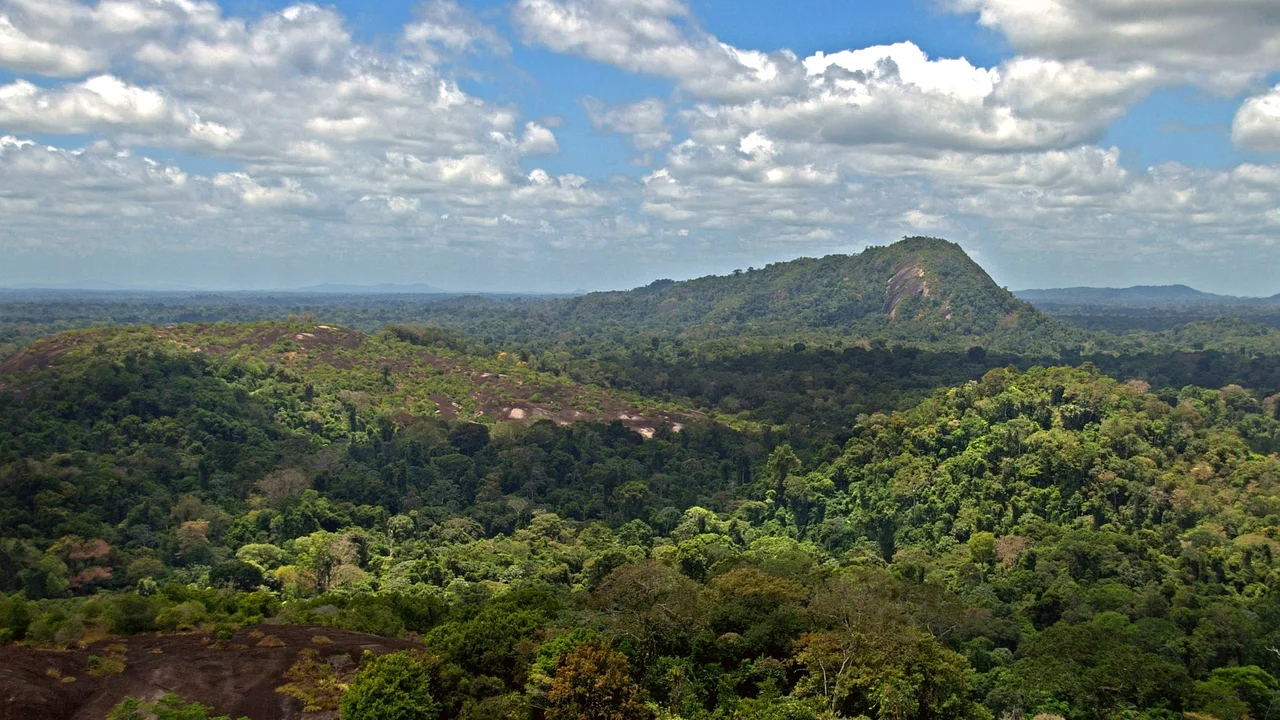
The Central Suriname Nature Reserve protects 1.6 million hectares of unfragmented tropical rainforest.
UNESCO named the reserve a World Heritage site based on natural criteria.
The land sits on the ancient Guiana Shield with granite plateaus and steep escarpments.
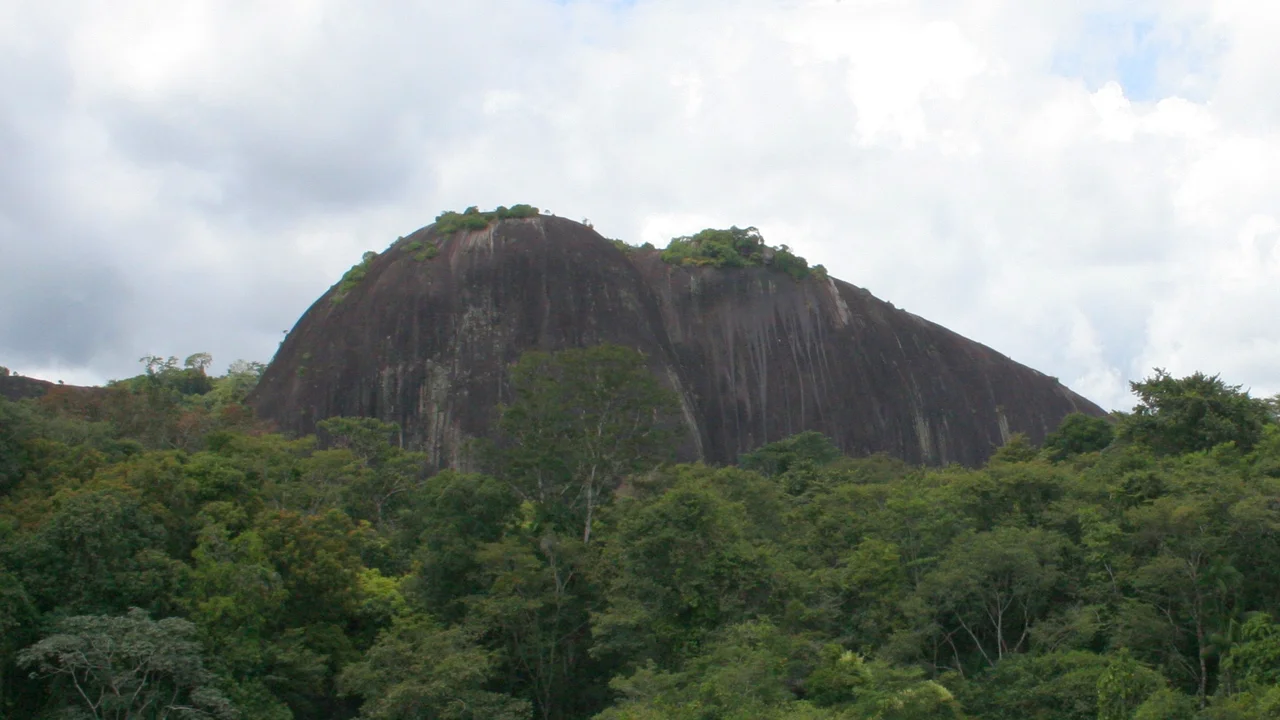
Prominent granite inselbergs rise high above the trees, including the dome of Voltzberg.
The Wilhelmina Mountains traverse the south, culminating at Juliana Top at 1,280 meters.
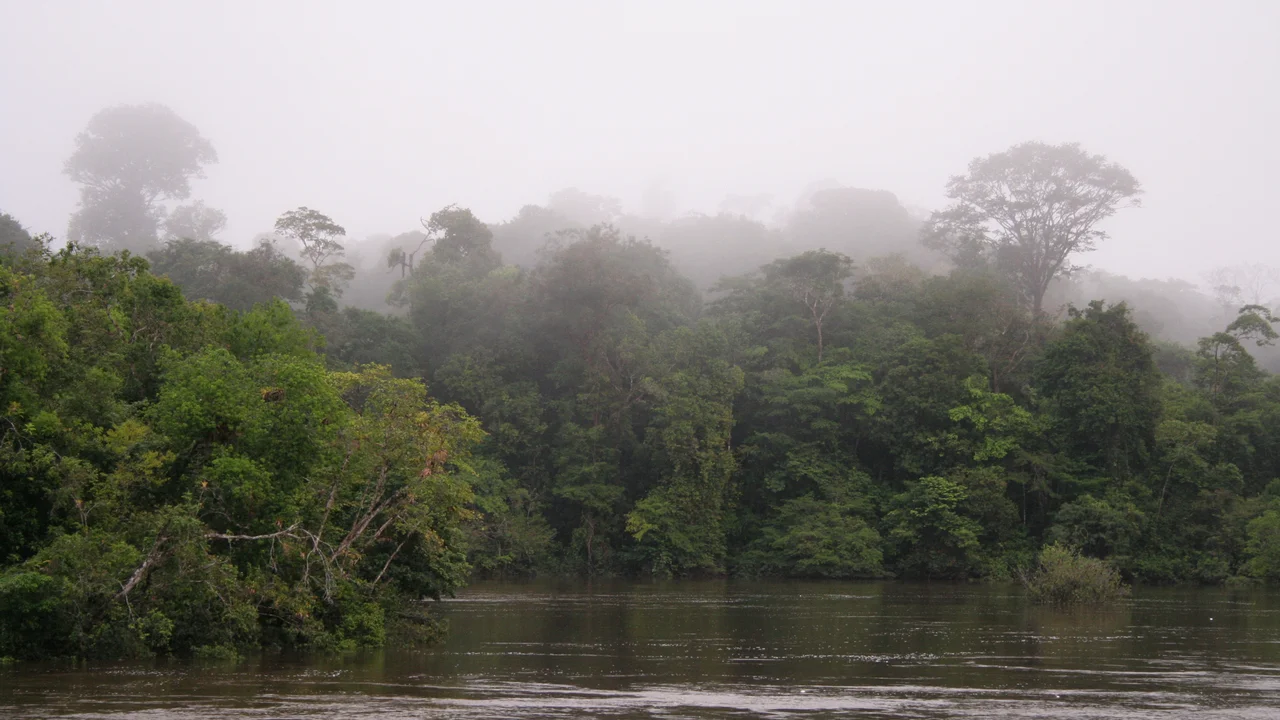
River catchments inside the reserve protect the upper watersheds of the Coppename River.
Biodiversity Fauna and Flora Sanctuaries
Scientists find over four hundred bird species inhabiting the forest strata of the reserve.
Orange Guianan cock-of-the-rock birds gather at breeding leks in the forest understory.
The reserve protects viable groups of eight different primate species, including spider monkeys.
Large predators like jaguars and pumas live safely across the quiet forest valleys.
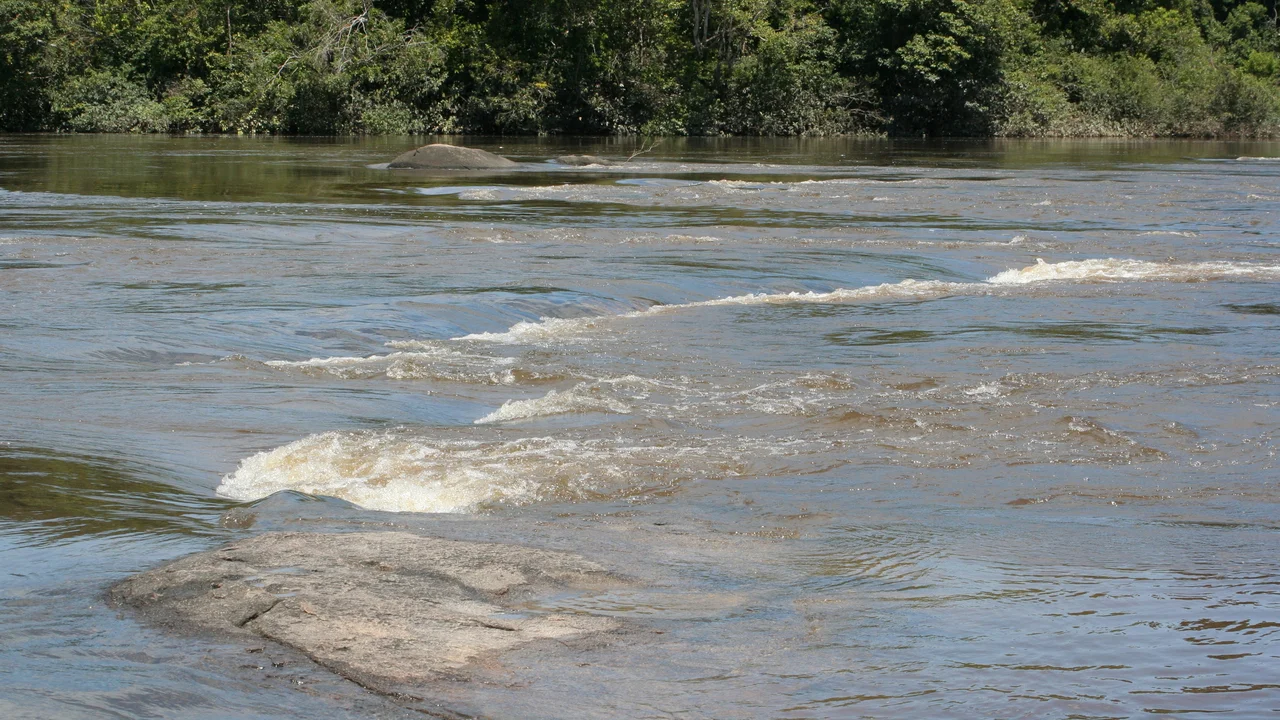
Endangered giant river otters swim and hunt fish in turbulent river rapids.
Thousands of vascular plant species grow here, including greenheart trees and rupicolous orchids.
Conservation Management and Scientific Stations
Forest service officers hold statutory power over reserve demarcation and border security.
The STINASU group manages visitor cabins and ecotourism infrastructure on Foengoe Island.
Conservation groups helped set up a permanent endowment fund for patrol boats.
Park rangers run boat patrols to stop illegal gold prospecting and wildlife poaching.
University biologists study plant phenology and tree growth at the Raleighvallen research station.
Visitors follow guided hiking paths across Foengoe Island to reach the Voltzberg summit.
Ecosystem Services and Global Climate Stability
This protected tropical wilderness allows natural evolutionary changes to continue without human harm.
Natural forest regulation stabilizes river flow and protects downstream villages from flooding.
The vast rainforest sequesters carbon from the air to support global climate mitigation.
Suriname values forest protection over commercial timber exploitation to earn climate funds.
Park managers work with Indigenous and Maroon neighbors in participatory conservation projects.
Protecting this wilderness safeguards a rich biological reservoir for the future.
A2 · Elementary
Central Suriname Nature Reserve: Pristine Wilderness and Guiana Shield Geology
Exploring how ancient granite plateaus, the 245-meter Voltzberg dome, and river catchments maintain biodiversity across central Suriname.
Geographical Scale and Topographical Relief
Established in 1998, the Central Suriname Nature Reserve encompasses 1.6 million hectares of unfragmented tropical rainforest in the nation interior.
In 2000, UNESCO inscribed the sanctuary under natural criteria, acknowledging its intact ecosystems and pristine primary forest canopy.
The reserve covers ancient Precambrian Guiana Shield formations, featuring weathered granite plateaus and steep topographical escarpments.
Several prominent granite inselbergs emerge from the forest floor, including the massive Voltzberg dome rising to 245 meters.
The rugged Wilhelmina Mountains traverse southern reaches of the reserve, culminating at Juliana Top, the highest peak in Suriname at 1,280 meters.
Pristine river catchments protect the upper watersheds of the Coppename, Saramacca, and Lucie rivers, ensuring pure freshwater flows.
Biodiversity Fauna and Flora Sanctuaries
Biological inventories record more than four hundred avian species inhabiting diverse vertical forest strata throughout the reserve.
Granite inselberg margins and humid understory thickets shelter vibrant breeding leks of the bright orange Guianan cock-of-the-rock.
The vast protected territory maintains viable populations of eight distinct primate species, including spider monkeys and red howler monkeys.
Undisturbed river valleys support apex predators such as solitary jaguars and pumas roaming alongside rare giant armadillos.
Along turbulent rapids of the Coppename River, endangered giant river otters hunt fish in clean, protected aquatic habitats.
Botanists catalog over five thousand vascular plant species, ranging from valuable greenheart timber to rare rupicolous orchids on bare granite slopes.
Conservation Management and Scientific Stations
The Nature Conservation Division of the Forestry Service holds primary statutory responsibility for reserve demarcation and boundary patrols.
The foundation STINASU oversees field accommodations and ecotourism infrastructure centered on historic Foengoe Island in the Coppename River.
Conservation International partnered with state authorities to establish a long-term conservation endowment fund securing perpetual operational budgets.
Uniformed rangers conduct motorized river patrols to halt unauthorized gold prospecting and commercial wildlife poaching along remote riverbanks.
University biologists utilize the Raleighvallen field station to conduct long-term research on forest phenology and biological carbon dynamics.
Eco-lodge facilities on Foengoe Island maintain low-impact hiking trails guiding scientific observers toward Raleighvallen falls and the Voltzberg summit.
Ecosystem Services and Global Climate Stability
As one of the largest protected tropical wilderness tracts in South America, the reserve preserves complete natural evolutionary adaptations.
Dense forest cover provides critical hydrological regulation, which stabilizes downstream river flows and prevents catastrophic flooding during wet seasons.
The reserve living forest biomass sequesters massive volumes of carbon, functioning as an essential sink for global climate mitigation.
Suriname uses high-forest climate mechanisms to generate conservation revenues, proving that intact forest preservation surpasses commercial timber exploitation.
Park managers partner with nearby Indigenous and Maroon communities to develop participatory stewardship agreements and environmental training.
Preserving this pristine Guiana Shield tract safeguards a globally irreplaceable biodiversity reservoir for planetary ecological security.
B1 · Intermediate
Central Suriname Nature Reserve: Biodiversity Sanctuaries and River Ecology
An analytical examination of unfragmented rainforest ecosystems, surveying over four hundred bird species, giant otters, and STINASU management.
Geographical Scale and Topographical Relief
Established in 1998, the Central Suriname Nature Reserve encompasses 1.6 million hectares of unfragmented tropical rainforest in the nation interior.
In 2000, UNESCO inscribed the sanctuary under natural criteria, acknowledging its intact ecosystems and pristine primary forest canopy.
The reserve covers ancient Precambrian Guiana Shield formations, featuring weathered granite plateaus and steep topographical escarpments.
Several prominent granite inselbergs emerge from the forest floor, including the massive Voltzberg dome rising to 245 meters.
The rugged Wilhelmina Mountains traverse southern reaches of the reserve, culminating at Juliana Top, the highest peak in Suriname at 1,280 meters.
Pristine river catchments protect the upper watersheds of the Coppename, Saramacca, and Lucie rivers, ensuring pure freshwater flows.
Biodiversity Fauna and Flora Sanctuaries
Biological inventories record more than four hundred avian species inhabiting diverse vertical forest strata throughout the reserve.
Granite inselberg margins and humid understory thickets shelter vibrant breeding leks of the bright orange Guianan cock-of-the-rock.
The vast protected territory maintains viable populations of eight distinct primate species, including spider monkeys and red howler monkeys.
Undisturbed river valleys support apex predators such as solitary jaguars and pumas roaming alongside rare giant armadillos.
Along turbulent rapids of the Coppename River, endangered giant river otters hunt fish in clean, protected aquatic habitats.
Botanists catalog over five thousand vascular plant species, ranging from valuable greenheart timber to rare rupicolous orchids on bare granite slopes.
Conservation Management and Scientific Stations
The Nature Conservation Division of the Forestry Service holds primary statutory responsibility for reserve demarcation and boundary patrols.
The foundation STINASU oversees field accommodations and ecotourism infrastructure centered on historic Foengoe Island in the Coppename River.
Conservation International partnered with state authorities to establish a long-term conservation endowment fund securing perpetual operational budgets.
Uniformed rangers conduct motorized river patrols to halt unauthorized gold prospecting and commercial wildlife poaching along remote riverbanks.
University biologists utilize the Raleighvallen field station to conduct long-term research on forest phenology and biological carbon dynamics.
Eco-lodge facilities on Foengoe Island maintain low-impact hiking trails guiding scientific observers toward Raleighvallen falls and the Voltzberg summit.
Ecosystem Services and Global Climate Stability
As one of the largest protected tropical wilderness tracts in South America, the reserve preserves complete natural evolutionary adaptations.
Dense forest cover provides critical hydrological regulation, which stabilizes downstream river flows and prevents catastrophic flooding during wet seasons.
The reserve living forest biomass sequesters massive volumes of carbon, functioning as an essential sink for global climate mitigation.
Suriname uses high-forest climate mechanisms to generate conservation revenues, proving that intact forest preservation surpasses commercial timber exploitation.
Park managers partner with nearby Indigenous and Maroon communities to develop participatory stewardship agreements and environmental training.
Preserving this pristine Guiana Shield tract safeguards a globally irreplaceable biodiversity reservoir for planetary ecological security.
B2 · Upper Intermediate
Central Suriname Nature Reserve: Guiana Shield Ecology and Rainforest Stewardship
Investigating Precambrian granite escarpments, Juliana Top elevation gradients, Raleighvallen research stations, and global climate mitigation.
Geographical Scale and Topographical Relief
Established in 1998, the Central Suriname Nature Reserve encompasses 1.6 million hectares of unfragmented tropical rainforest in the nation interior.
In 2000, UNESCO inscribed the sanctuary under natural criteria, acknowledging its intact ecosystems and pristine primary forest canopy.
The reserve covers ancient Precambrian Guiana Shield formations, featuring weathered granite plateaus and steep topographical escarpments.
Several prominent granite inselbergs emerge from the forest floor, including the massive Voltzberg dome rising to 245 meters.
The rugged Wilhelmina Mountains traverse southern reaches of the reserve, culminating at Juliana Top, the highest peak in Suriname at 1,280 meters.
Pristine river catchments protect the upper watersheds of the Coppename, Saramacca, and Lucie rivers, ensuring pure freshwater flows.
Biodiversity Fauna and Flora Sanctuaries
Biological inventories record more than four hundred avian species inhabiting diverse vertical forest strata throughout the reserve.
Granite inselberg margins and humid understory thickets shelter vibrant breeding leks of the bright orange Guianan cock-of-the-rock.
The vast protected territory maintains viable populations of eight distinct primate species, including spider monkeys and red howler monkeys.
Undisturbed river valleys support apex predators such as solitary jaguars and pumas roaming alongside rare giant armadillos.
Along turbulent rapids of the Coppename River, endangered giant river otters hunt fish in clean, protected aquatic habitats.
Botanists catalog over five thousand vascular plant species, ranging from valuable greenheart timber to rare rupicolous orchids on bare granite slopes.
Conservation Management and Scientific Stations
The Nature Conservation Division of the Forestry Service holds primary statutory responsibility for reserve demarcation and boundary patrols.
The foundation STINASU oversees field accommodations and ecotourism infrastructure centered on historic Foengoe Island in the Coppename River.
Conservation International partnered with state authorities to establish a long-term conservation endowment fund securing perpetual operational budgets.
Uniformed rangers conduct motorized river patrols to halt unauthorized gold prospecting and commercial wildlife poaching along remote riverbanks.
University biologists utilize the Raleighvallen field station to conduct long-term research on forest phenology and biological carbon dynamics.
Eco-lodge facilities on Foengoe Island maintain low-impact hiking trails guiding scientific observers toward Raleighvallen falls and the Voltzberg summit.
Ecosystem Services and Global Climate Stability
As one of the largest protected tropical wilderness tracts in South America, the reserve preserves complete natural evolutionary adaptations.
Dense forest cover provides critical hydrological regulation, which stabilizes downstream river flows and prevents catastrophic flooding during wet seasons.
The reserve living forest biomass sequesters massive volumes of carbon, functioning as an essential sink for global climate mitigation.
Suriname uses high-forest climate mechanisms to generate conservation revenues, proving that intact forest preservation surpasses commercial timber exploitation.
Park managers partner with nearby Indigenous and Maroon communities to develop participatory stewardship agreements and environmental training.
Preserving this pristine Guiana Shield tract safeguards a globally irreplaceable biodiversity reservoir for planetary ecological security.
C1 · Advanced
The Forest Ecology and Conservation Governance of Central Suriname Nature Reserve
A critical journalistic monograph analyzing Guiana Shield inselberg biogeography, permanent endowment capitalization, and participatory stewardship.
Geographical Scale and Topographical Relief
Established in 1998, the Central Suriname Nature Reserve encompasses 1.6 million hectares of unfragmented tropical rainforest in the nation interior.
In 2000, UNESCO inscribed the sanctuary under natural criteria, acknowledging its intact ecosystems and pristine primary forest canopy.
The reserve covers ancient Precambrian Guiana Shield formations, featuring weathered granite plateaus and steep topographical escarpments.
Several prominent granite inselbergs emerge from the forest floor, including the massive Voltzberg dome rising to 245 meters.
The rugged Wilhelmina Mountains traverse southern reaches of the reserve, culminating at Juliana Top, the highest peak in Suriname at 1,280 meters.
Pristine river catchments protect the upper watersheds of the Coppename, Saramacca, and Lucie rivers, ensuring pure freshwater flows.
Biodiversity Fauna and Flora Sanctuaries
Biological inventories record more than four hundred avian species inhabiting diverse vertical forest strata throughout the reserve.
Granite inselberg margins and humid understory thickets shelter vibrant breeding leks of the bright orange Guianan cock-of-the-rock.
The vast protected territory maintains viable populations of eight distinct primate species, including spider monkeys and red howler monkeys.
Undisturbed river valleys support apex predators such as solitary jaguars and pumas roaming alongside rare giant armadillos.
Along turbulent rapids of the Coppename River, endangered giant river otters hunt fish in clean, protected aquatic habitats.
Botanists catalog over five thousand vascular plant species, ranging from valuable greenheart timber to rare rupicolous orchids on bare granite slopes.
Conservation Management and Scientific Stations
The Nature Conservation Division of the Forestry Service holds primary statutory responsibility for reserve demarcation and boundary patrols.
The foundation STINASU oversees field accommodations and ecotourism infrastructure centered on historic Foengoe Island in the Coppename River.
Conservation International partnered with state authorities to establish a long-term conservation endowment fund securing perpetual operational budgets.
Uniformed rangers conduct motorized river patrols to halt unauthorized gold prospecting and commercial wildlife poaching along remote riverbanks.
University biologists utilize the Raleighvallen field station to conduct long-term research on forest phenology and biological carbon dynamics.
Eco-lodge facilities on Foengoe Island maintain low-impact hiking trails guiding scientific observers toward Raleighvallen falls and the Voltzberg summit.
Ecosystem Services and Global Climate Stability
As one of the largest protected tropical wilderness tracts in South America, the reserve preserves complete natural evolutionary adaptations.
Dense forest cover provides critical hydrological regulation, which stabilizes downstream river flows and prevents catastrophic flooding during wet seasons.
The reserve living forest biomass sequesters massive volumes of carbon, functioning as an essential sink for global climate mitigation.
Suriname uses high-forest climate mechanisms to generate conservation revenues, proving that intact forest preservation surpasses commercial timber exploitation.
Park managers partner with nearby Indigenous and Maroon communities to develop participatory stewardship agreements and environmental training.
Preserving this pristine Guiana Shield tract safeguards a globally irreplaceable biodiversity reservoir for planetary ecological security.
C2 · Mastery
Central Suriname Nature Reserve: Biogeography, Hydrological Resilience, and Climate Finance
A comprehensive analytical study of South America premier unfragmented tropical wilderness, evaluating carbon sink dynamics and biodiversity conservation.
Geographical Scale and Topographical Relief
Established in 1998, the Central Suriname Nature Reserve encompasses 1.6 million hectares of unfragmented tropical rainforest in the nation interior.
In 2000, UNESCO inscribed the sanctuary under natural criteria, acknowledging its intact ecosystems and pristine primary forest canopy.
The reserve covers ancient Precambrian Guiana Shield formations, featuring weathered granite plateaus and steep topographical escarpments.
Several prominent granite inselbergs emerge from the forest floor, including the massive Voltzberg dome rising to 245 meters.
The rugged Wilhelmina Mountains traverse southern reaches of the reserve, culminating at Juliana Top, the highest peak in Suriname at 1,280 meters.
Pristine river catchments protect the upper watersheds of the Coppename, Saramacca, and Lucie rivers, ensuring pure freshwater flows.
Biodiversity Fauna and Flora Sanctuaries
Biological inventories record more than four hundred avian species inhabiting diverse vertical forest strata throughout the reserve.
Granite inselberg margins and humid understory thickets shelter vibrant breeding leks of the bright orange Guianan cock-of-the-rock.
The vast protected territory maintains viable populations of eight distinct primate species, including spider monkeys and red howler monkeys.
Undisturbed river valleys support apex predators such as solitary jaguars and pumas roaming alongside rare giant armadillos.
Along turbulent rapids of the Coppename River, endangered giant river otters hunt fish in clean, protected aquatic habitats.
Botanists catalog over five thousand vascular plant species, ranging from valuable greenheart timber to rare rupicolous orchids on bare granite slopes.
Conservation Management and Scientific Stations
The Nature Conservation Division of the Forestry Service holds primary statutory responsibility for reserve demarcation and boundary patrols.
The foundation STINASU oversees field accommodations and ecotourism infrastructure centered on historic Foengoe Island in the Coppename River.
Conservation International partnered with state authorities to establish a long-term conservation endowment fund securing perpetual operational budgets.
Uniformed rangers conduct motorized river patrols to halt unauthorized gold prospecting and commercial wildlife poaching along remote riverbanks.
University biologists utilize the Raleighvallen field station to conduct long-term research on forest phenology and biological carbon dynamics.
Eco-lodge facilities on Foengoe Island maintain low-impact hiking trails guiding scientific observers toward Raleighvallen falls and the Voltzberg summit.
Ecosystem Services and Global Climate Stability
As one of the largest protected tropical wilderness tracts in South America, the reserve preserves complete natural evolutionary adaptations.
Dense forest cover provides critical hydrological regulation, which stabilizes downstream river flows and prevents catastrophic flooding during wet seasons.
The reserve living forest biomass sequesters massive volumes of carbon, functioning as an essential sink for global climate mitigation.
Suriname uses high-forest climate mechanisms to generate conservation revenues, proving that intact forest preservation surpasses commercial timber exploitation.
Park managers partner with nearby Indigenous and Maroon communities to develop participatory stewardship agreements and environmental training.
Preserving this pristine Guiana Shield tract safeguards a globally irreplaceable biodiversity reservoir for planetary ecological security.
Check your understanding
Choose how closely you want to revisit the article. You can refer back while answering, and review explanations when you finish.
Quick Quiz A1
Try one question, then create a free account for the full Quick Quiz. Sign Up Free
Answer every question before checking. There is no time limit.
Your results
/ 1 correct (%)
Read the explanations to see how each answer connects to the article.
-
How big is the Central Suriname Nature Reserve?
1. Answer:
Quick Quiz A2
Try one question, then create a free account for the full Quick Quiz. Sign Up Free
Answer every question before checking. There is no time limit.
Your results
/ 1 correct (%)
Read the explanations to see how each answer connects to the article.
-
What area of unfragmented tropical rainforest does the Central Suriname Nature Reserve encompass?
1. Answer:
Quick Quiz B1
Try one question, then create a free account for the full Quick Quiz. Sign Up Free
Answer every question before checking. There is no time limit.
Your results
/ 1 correct (%)
Read the explanations to see how each answer connects to the article.
-
What area of unfragmented tropical rainforest does the Central Suriname Nature Reserve encompass?
1. Answer:
Quick Quiz B2
Try one question, then create a free account for the full Quick Quiz. Sign Up Free
Answer every question before checking. There is no time limit.
Your results
/ 1 correct (%)
Read the explanations to see how each answer connects to the article.
-
What area of unfragmented tropical rainforest does the Central Suriname Nature Reserve encompass?
1. Answer:
Quick Quiz C1
Try one question, then create a free account for the full Quick Quiz. Sign Up Free
Answer every question before checking. There is no time limit.
Your results
/ 1 correct (%)
Read the explanations to see how each answer connects to the article.
-
What area of unfragmented tropical rainforest does the Central Suriname Nature Reserve encompass?
1. Answer:
Quick Quiz C2
Try one question, then create a free account for the full Quick Quiz. Sign Up Free
Answer every question before checking. There is no time limit.
Your results
/ 1 correct (%)
Read the explanations to see how each answer connects to the article.
-
What area of unfragmented tropical rainforest does the Central Suriname Nature Reserve encompass?
1. Answer:
