A1 · Beginner
Phagwa in Paramaribo: The Spring Festival of Colors
From white cotton shirts and sweet smelling abir powders to evening bonfires and tasty sweets, families across Suriname celebrate Phagwa together.
Lunar Calendar and Civic Transformation
Phagwa is a happy spring holiday with changing dates based on the moon calendar.
The Government of Suriname made Phagwa a national public holiday in 1970.
The capital city of Paramaribo is the main place for music and colorful games.
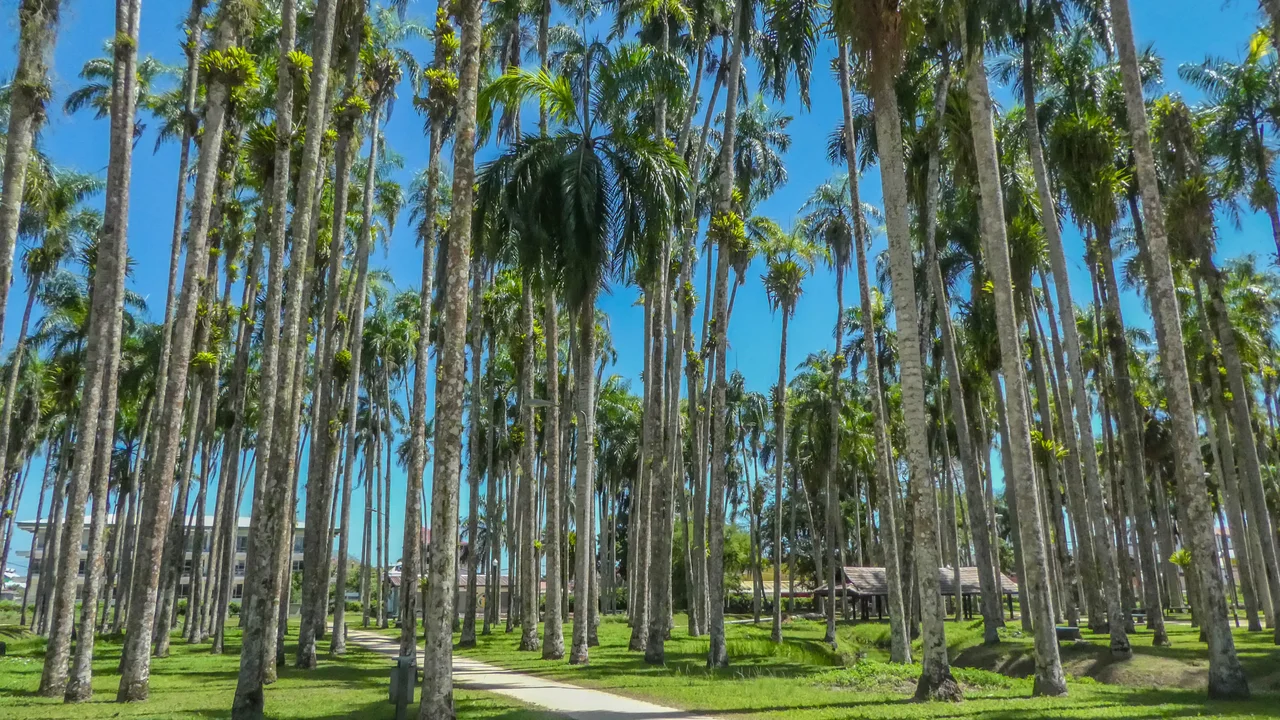
Thousands of families walk together in the Palm Gardens and big city squares.
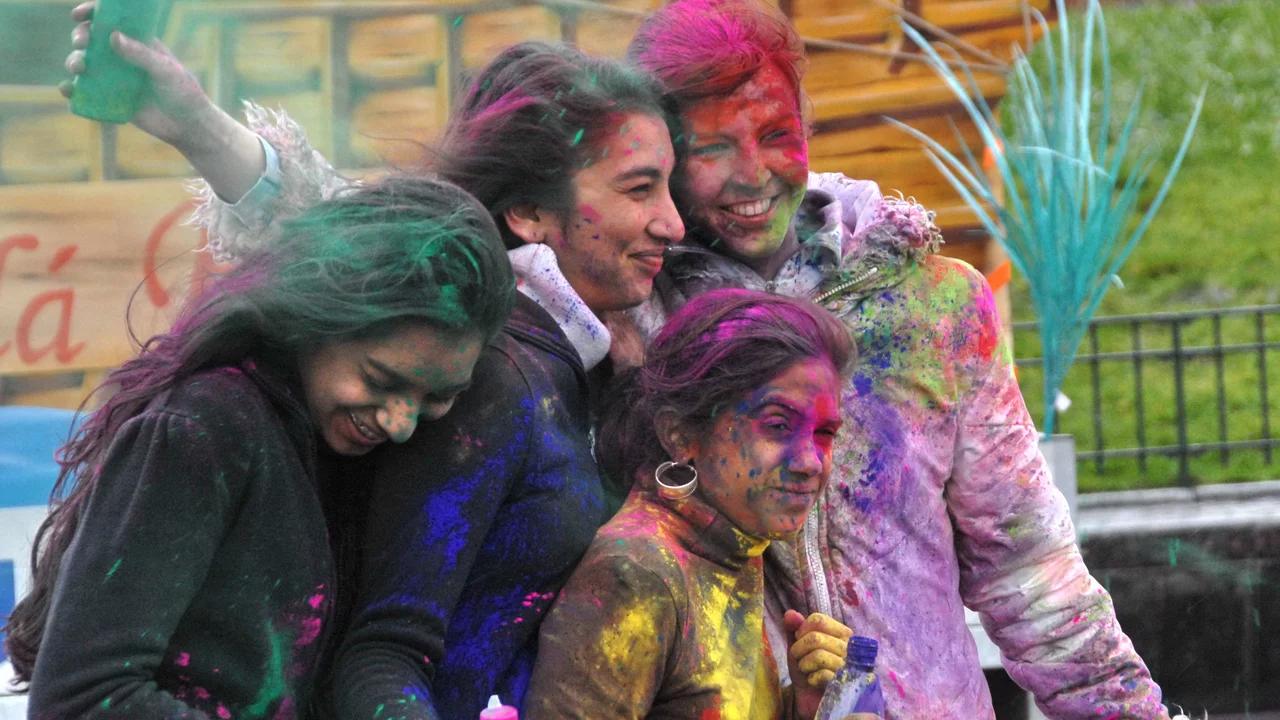
People from all cultural groups in Suriname enjoy celebrating this festival together.
City police close downtown streets to cars so everyone can walk safely.
Indentured Origins and Institutional Coordination
Indian workers brought Phagwa to Suriname on the ship Lalla Rookh in 1873.
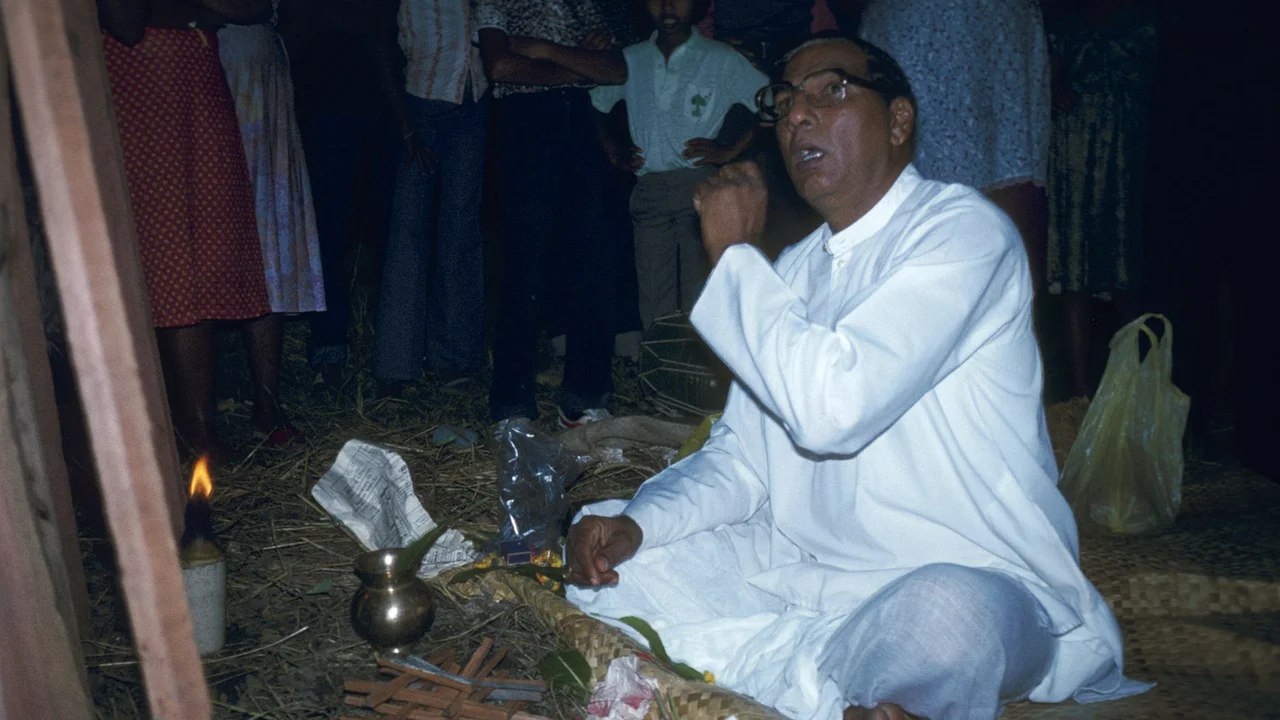
Local Hindu groups organize temple prayers and plan the holiday events.
The big Arya Dewaker temple in Paramaribo is a famous gathering place.
Leaders from different churches and mosques send kind holiday greetings to everyone.
Musicians play traditional Baithak Gana songs with drums and small metal instruments.
Government leaders announce the official holiday date in the national newspaper.
Holita Bonfire and Color Powder Rituals
Families meet at temples on the evening before the festival to light a bonfire.
The bright fire celebrates an ancient story about goodness defeating evil.
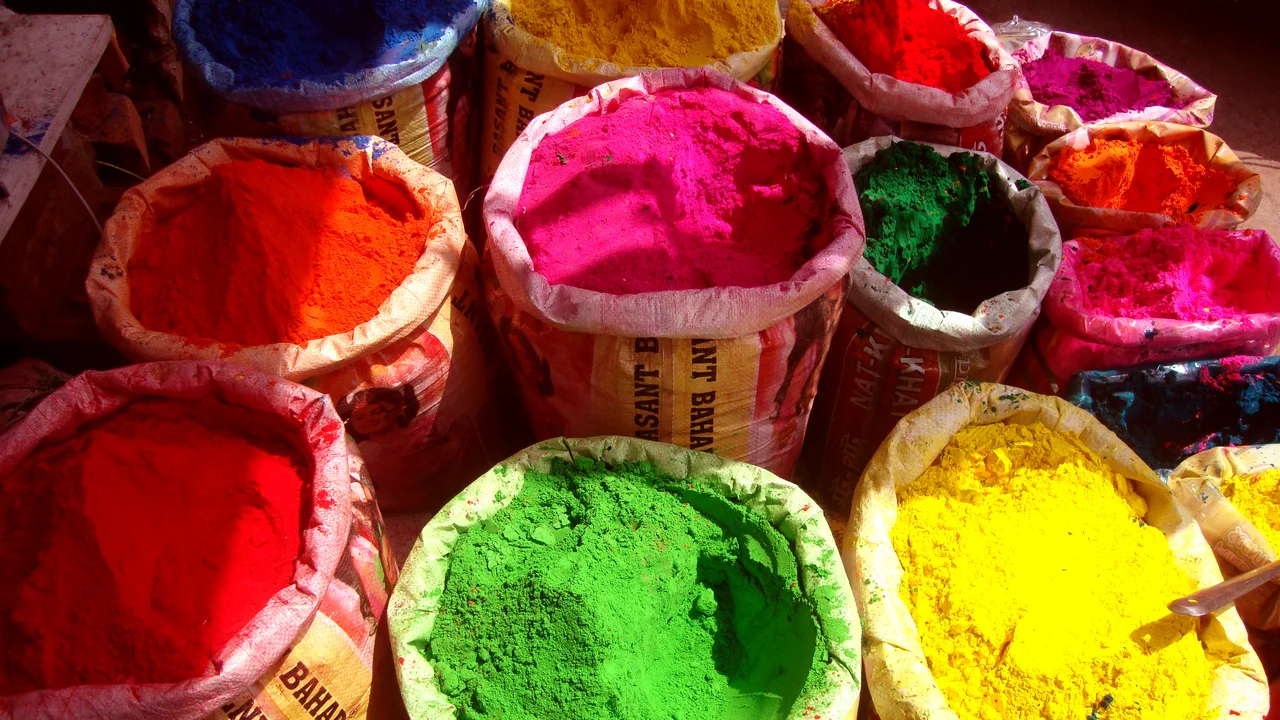
People wear plain white cotton clothes that soon catch bright colorful powders.
Friends throw sweet smelling pink, yellow, and red powders called abir and gulal.
Children use water sprayers to splash perfumed water on each other.
Families share tasty bara pastries, sweet mithai cookies, and blessed prasad food.
Changing Urban Practice and Shared Citizenship
Over many years, small plantation gatherings became big public street parties in Paramaribo.
City guides ask people to use safe plant powders that protect children eyes.
Paramaribo street cleaners wash the streets with water trucks when night falls.
University teachers study and write down traditional songs from rural villages.
This colorful holiday shows how different communities in Suriname live in peace.
Surinamese families in the Netherlands celebrate the spring festival in the same way.
A2 · Elementary
Phagwa in Paramaribo: Spring Observance and Moving Calendar Dates
Every spring, Paramaribo transforms its central streets into colorful pedestrian spaces with Holita bonfires, Baithak Gana music, and fragrant powders.
Lunar Calendar and Civic Transformation
Phagwa, also known as Holi, is an annual spring festival whose celebration date moves each year according to the Hindu lunisolar calendar.
The Government of Suriname officially designated Phagwa as a nationwide statutory public holiday in 1970.
The capital city of Paramaribo functions as the primary civic epicenter for public color play, street assemblies, and cultural musical stages.
Major civic gathering sites include the Palm Gardens and Independence Square, where thousands of residents congregate without motor vehicles.
Although originating within Hindu religious traditions, Phagwa has evolved into a cross-cultural national celebration shared by all ethnic communities.
Municipal traffic authorities close historic center avenues to establish safe walking corridors connecting waterfront parks to neighborhood temples.
Indentured Origins and Institutional Coordination
Phagwa traditions were brought to Suriname by Indian indentured laborers who arrived aboard the transport ship Lalla Rookh beginning in 1873.
Suriname primary Hindu institutions, Sanatan Dharm and Arya Samaj, coordinate religious observances, temple liturgies, and calendar determinations.
The prominent Arya Dewaker temple complex in central Paramaribo serves as an architectural landmark and assembly point for holiday devotion.
National political leaders and delegates from Christian, Muslim, and Jewish congregations deliver official holiday messages emphasizing mutual tolerance.
Folk music ensembles perform traditional Baithak Gana songs featuring harmonium, dholak drum, and metallic dhantal accompaniment.
The Ministry of Home Affairs officially announces the annual holiday date in the national government gazette following astronomical verification.
Holita Bonfire and Color Powder Rituals
On the eve of Phagwa, devotees gather at community temples and open fields to ignite the Holita ritual bonfire after twilight prayers.
The ceremonial bonfire commemorates the mythological narrative of prince Prahlada, symbolizing the destruction of evil and preservation of righteousness.
Celebrants dress in clean white cotton clothing at the start of the holiday to serve as a blank canvas for colorful pigments.
Participants smear and throw scented dry powders known as abir and gulal, covering friends and strangers in rainbow shades.
Children and youth use water sprayers called pichkari to shower celebrants with fragrant perfumed water tinted with natural dyes.
Families share traditional festival treats including spicy savory bara pastries, sweet crumbly mithai, and blessed prasad offerings.
Changing Urban Practice and Shared Citizenship
Over successive generations, Phagwa shifted from secluded plantation barracks into expansive municipal street festivals welcoming everyone.
Municipal guidelines encourage non-toxic plant-based starch powders to protect human skin, respiratory health, and the urban environment.
Paramaribo sanitation departments deploy dedicated street cleaning trucks and washdown crews to rinse powdered thoroughfares after sundown.
Researchers at Anton de Kom University document regional linguistic variations and devotional songs preserved across Hindustani rural settlements.
The celebration stands as a living pluralistic emblem of Surinamese unity, demonstrating how different ethnic traditions blend into shared national life.
Diaspora networks in the Netherlands maintain close cultural links with Paramaribo, celebrating Phagwa with similar musical and culinary transnational traditions.
B1 · Intermediate
Phagwa in Paramaribo: Lunar Calendars, Cultural Integration, and Civic Space
An analytical study of Holi celebrations in Paramaribo, examining lunisolar calculations, statutory holiday status, and multiethnic participation.
Lunar Calendar and Civic Transformation
Phagwa, also known as Holi, is an annual spring festival whose celebration date moves each year according to the Hindu lunisolar calendar.
The Government of Suriname officially designated Phagwa as a nationwide statutory public holiday in 1970.
The capital city of Paramaribo functions as the primary civic epicenter for public color play, street assemblies, and cultural musical stages.
Major civic gathering sites include the Palm Gardens and Independence Square, where thousands of residents congregate without motor vehicles.
Although originating within Hindu religious traditions, Phagwa has evolved into a cross-cultural national celebration shared by all ethnic communities.
Municipal traffic authorities close historic center avenues to establish safe walking corridors connecting waterfront parks to neighborhood temples.
Indentured Origins and Institutional Coordination
Phagwa traditions were brought to Suriname by Indian indentured laborers who arrived aboard the transport ship Lalla Rookh beginning in 1873.
Suriname primary Hindu institutions, Sanatan Dharm and Arya Samaj, coordinate religious observances, temple liturgies, and calendar determinations.
The prominent Arya Dewaker temple complex in central Paramaribo serves as an architectural landmark and assembly point for holiday devotion.
National political leaders and delegates from Christian, Muslim, and Jewish congregations deliver official holiday messages emphasizing mutual tolerance.
Folk music ensembles perform traditional Baithak Gana songs featuring harmonium, dholak drum, and metallic dhantal accompaniment.
The Ministry of Home Affairs officially announces the annual holiday date in the national government gazette following astronomical verification.
Holita Bonfire and Color Powder Rituals
On the eve of Phagwa, devotees gather at community temples and open fields to ignite the Holita ritual bonfire after twilight prayers.
The ceremonial bonfire commemorates the mythological narrative of prince Prahlada, symbolizing the destruction of evil and preservation of righteousness.
Celebrants dress in clean white cotton clothing at the start of the holiday to serve as a blank canvas for colorful pigments.
Participants smear and throw scented dry powders known as abir and gulal, covering friends and strangers in rainbow shades.
Children and youth use water sprayers called pichkari to shower celebrants with fragrant perfumed water tinted with natural dyes.
Families share traditional festival treats including spicy savory bara pastries, sweet crumbly mithai, and blessed prasad offerings.
Changing Urban Practice and Shared Citizenship
Over successive generations, Phagwa shifted from secluded plantation barracks into expansive municipal street festivals welcoming everyone.
Municipal guidelines encourage non-toxic plant-based starch powders to protect human skin, respiratory health, and the urban environment.
Paramaribo sanitation departments deploy dedicated street cleaning trucks and washdown crews to rinse powdered thoroughfares after sundown.
Researchers at Anton de Kom University document regional linguistic variations and devotional songs preserved across Hindustani rural settlements.
The celebration stands as a living pluralistic emblem of Surinamese unity, demonstrating how different ethnic traditions blend into shared national life.
Diaspora networks in the Netherlands maintain close cultural links with Paramaribo, celebrating Phagwa with similar musical and culinary transnational traditions.
B2 · Upper Intermediate
Phagwa in Paramaribo: Indentured Memory, Sacred Bonfires, and Urban Evolution
Investigating the transformation of Phagwa from 1873 plantation compounds into a nationwide civic celebration connecting temples, plazas, and diaspora networks.
Lunar Calendar and Civic Transformation
Phagwa, also known as Holi, is an annual spring festival whose celebration date moves each year according to the Hindu lunisolar calendar.
The Government of Suriname officially designated Phagwa as a nationwide statutory public holiday in 1970.
The capital city of Paramaribo functions as the primary civic epicenter for public color play, street assemblies, and cultural musical stages.
Major civic gathering sites include the Palm Gardens and Independence Square, where thousands of residents congregate without motor vehicles.
Although originating within Hindu religious traditions, Phagwa has evolved into a cross-cultural national celebration shared by all ethnic communities.
Municipal traffic authorities close historic center avenues to establish safe walking corridors connecting waterfront parks to neighborhood temples.
Indentured Origins and Institutional Coordination
Phagwa traditions were brought to Suriname by Indian indentured laborers who arrived aboard the transport ship Lalla Rookh beginning in 1873.
Suriname primary Hindu institutions, Sanatan Dharm and Arya Samaj, coordinate religious observances, temple liturgies, and calendar determinations.
The prominent Arya Dewaker temple complex in central Paramaribo serves as an architectural landmark and assembly point for holiday devotion.
National political leaders and delegates from Christian, Muslim, and Jewish congregations deliver official holiday messages emphasizing mutual tolerance.
Folk music ensembles perform traditional Baithak Gana songs featuring harmonium, dholak drum, and metallic dhantal accompaniment.
The Ministry of Home Affairs officially announces the annual holiday date in the national government gazette following astronomical verification.
Holita Bonfire and Color Powder Rituals
On the eve of Phagwa, devotees gather at community temples and open fields to ignite the Holita ritual bonfire after twilight prayers.
The ceremonial bonfire commemorates the mythological narrative of prince Prahlada, symbolizing the destruction of evil and preservation of righteousness.
Celebrants dress in clean white cotton clothing at the start of the holiday to serve as a blank canvas for colorful pigments.
Participants smear and throw scented dry powders known as abir and gulal, covering friends and strangers in rainbow shades.
Children and youth use water sprayers called pichkari to shower celebrants with fragrant perfumed water tinted with natural dyes.
Families share traditional festival treats including spicy savory bara pastries, sweet crumbly mithai, and blessed prasad offerings.
Changing Urban Practice and Shared Citizenship
Over successive generations, Phagwa shifted from secluded plantation barracks into expansive municipal street festivals welcoming everyone.
Municipal guidelines encourage non-toxic plant-based starch powders to protect human skin, respiratory health, and the urban environment.
Paramaribo sanitation departments deploy dedicated street cleaning trucks and washdown crews to rinse powdered thoroughfares after sundown.
Researchers at Anton de Kom University document regional linguistic variations and devotional songs preserved across Hindustani rural settlements.
The celebration stands as a living pluralistic emblem of Surinamese unity, demonstrating how different ethnic traditions blend into shared national life.
Diaspora networks in the Netherlands maintain close cultural links with Paramaribo, celebrating Phagwa with similar musical and culinary transnational traditions.
C1 · Advanced
The Spatial Semiotics and Transnational Epistemology of Surinamese Phagwa
A critical journalistic monograph analyzing lunisolar calendar mechanics, post-indenture religious retention, ecological powder standards, and pluralistic national identity.
Lunar Calendar and Civic Transformation
Phagwa, also known as Holi, is an annual spring festival whose celebration date moves each year according to the Hindu lunisolar calendar.
The Government of Suriname officially designated Phagwa as a nationwide statutory public holiday in 1970.
The capital city of Paramaribo functions as the primary civic epicenter for public color play, street assemblies, and cultural musical stages.
Major civic gathering sites include the Palm Gardens and Independence Square, where thousands of residents congregate without motor vehicles.
Although originating within Hindu religious traditions, Phagwa has evolved into a cross-cultural national celebration shared by all ethnic communities.
Municipal traffic authorities close historic center avenues to establish safe walking corridors connecting waterfront parks to neighborhood temples.
Indentured Origins and Institutional Coordination
Phagwa traditions were brought to Suriname by Indian indentured laborers who arrived aboard the transport ship Lalla Rookh beginning in 1873.
Suriname primary Hindu institutions, Sanatan Dharm and Arya Samaj, coordinate religious observances, temple liturgies, and calendar determinations.
The prominent Arya Dewaker temple complex in central Paramaribo serves as an architectural landmark and assembly point for holiday devotion.
National political leaders and delegates from Christian, Muslim, and Jewish congregations deliver official holiday messages emphasizing mutual tolerance.
Folk music ensembles perform traditional Baithak Gana songs featuring harmonium, dholak drum, and metallic dhantal accompaniment.
The Ministry of Home Affairs officially announces the annual holiday date in the national government gazette following astronomical verification.
Holita Bonfire and Color Powder Rituals
On the eve of Phagwa, devotees gather at community temples and open fields to ignite the Holita ritual bonfire after twilight prayers.
The ceremonial bonfire commemorates the mythological narrative of prince Prahlada, symbolizing the destruction of evil and preservation of righteousness.
Celebrants dress in clean white cotton clothing at the start of the holiday to serve as a blank canvas for colorful pigments.
Participants smear and throw scented dry powders known as abir and gulal, covering friends and strangers in rainbow shades.
Children and youth use water sprayers called pichkari to shower celebrants with fragrant perfumed water tinted with natural dyes.
Families share traditional festival treats including spicy savory bara pastries, sweet crumbly mithai, and blessed prasad offerings.
Changing Urban Practice and Shared Citizenship
Over successive generations, Phagwa shifted from secluded plantation barracks into expansive municipal street festivals welcoming everyone.
Municipal guidelines encourage non-toxic plant-based starch powders to protect human skin, respiratory health, and the urban environment.
Paramaribo sanitation departments deploy dedicated street cleaning trucks and washdown crews to rinse powdered thoroughfares after sundown.
Researchers at Anton de Kom University document regional linguistic variations and devotional songs preserved across Hindustani rural settlements.
The celebration stands as a living pluralistic emblem of Surinamese unity, demonstrating how different ethnic traditions blend into shared national life.
Diaspora networks in the Netherlands maintain close cultural links with Paramaribo, celebrating Phagwa with similar musical and culinary transnational traditions.
C2 · Mastery
Phagwa in Paramaribo: Calendar Dynamics, Living Rituals, and Pluralistic Citizenship
A comprehensive analytical investigation of Suriname premier spring festival, examining astronomical date setting, Holika Dahan mythology, and municipal spatial management.
Lunar Calendar and Civic Transformation
Phagwa, also known as Holi, is an annual spring festival whose celebration date moves each year according to the Hindu lunisolar calendar.
The Government of Suriname officially designated Phagwa as a nationwide statutory public holiday in 1970.
The capital city of Paramaribo functions as the primary civic epicenter for public color play, street assemblies, and cultural musical stages.
Major civic gathering sites include the Palm Gardens and Independence Square, where thousands of residents congregate without motor vehicles.
Although originating within Hindu religious traditions, Phagwa has evolved into a cross-cultural national celebration shared by all ethnic communities.
Municipal traffic authorities close historic center avenues to establish safe walking corridors connecting waterfront parks to neighborhood temples.
Indentured Origins and Institutional Coordination
Phagwa traditions were brought to Suriname by Indian indentured laborers who arrived aboard the transport ship Lalla Rookh beginning in 1873.
Suriname primary Hindu institutions, Sanatan Dharm and Arya Samaj, coordinate religious observances, temple liturgies, and calendar determinations.
The prominent Arya Dewaker temple complex in central Paramaribo serves as an architectural landmark and assembly point for holiday devotion.
National political leaders and delegates from Christian, Muslim, and Jewish congregations deliver official holiday messages emphasizing mutual tolerance.
Folk music ensembles perform traditional Baithak Gana songs featuring harmonium, dholak drum, and metallic dhantal accompaniment.
The Ministry of Home Affairs officially announces the annual holiday date in the national government gazette following astronomical verification.
Holita Bonfire and Color Powder Rituals
On the eve of Phagwa, devotees gather at community temples and open fields to ignite the Holita ritual bonfire after twilight prayers.
The ceremonial bonfire commemorates the mythological narrative of prince Prahlada, symbolizing the destruction of evil and preservation of righteousness.
Celebrants dress in clean white cotton clothing at the start of the holiday to serve as a blank canvas for colorful pigments.
Participants smear and throw scented dry powders known as abir and gulal, covering friends and strangers in rainbow shades.
Children and youth use water sprayers called pichkari to shower celebrants with fragrant perfumed water tinted with natural dyes.
Families share traditional festival treats including spicy savory bara pastries, sweet crumbly mithai, and blessed prasad offerings.
Changing Urban Practice and Shared Citizenship
Over successive generations, Phagwa shifted from secluded plantation barracks into expansive municipal street festivals welcoming everyone.
Municipal guidelines encourage non-toxic plant-based starch powders to protect human skin, respiratory health, and the urban environment.
Paramaribo sanitation departments deploy dedicated street cleaning trucks and washdown crews to rinse powdered thoroughfares after sundown.
Researchers at Anton de Kom University document regional linguistic variations and devotional songs preserved across Hindustani rural settlements.
The celebration stands as a living pluralistic emblem of Surinamese unity, demonstrating how different ethnic traditions blend into shared national life.
Diaspora networks in the Netherlands maintain close cultural links with Paramaribo, celebrating Phagwa with similar musical and culinary transnational traditions.
Check your understanding
Choose how closely you want to revisit the article. You can refer back while answering, and review explanations when you finish.
Quick Quiz A1
Try one question, then create a free account for the full Quick Quiz. Sign Up Free
Answer every question before checking. There is no time limit.
Your results
/ 1 correct (%)
Read the explanations to see how each answer connects to the article.
-
What kind of happy holiday is Phagwa in Suriname?
1. Answer:
Quick Quiz A2
Try one question, then create a free account for the full Quick Quiz. Sign Up Free
Answer every question before checking. There is no time limit.
Your results
/ 1 correct (%)
Read the explanations to see how each answer connects to the article.
-
According to which calendar does the celebration date of Phagwa move each year?
1. Answer:
Quick Quiz B1
Try one question, then create a free account for the full Quick Quiz. Sign Up Free
Answer every question before checking. There is no time limit.
Your results
/ 1 correct (%)
Read the explanations to see how each answer connects to the article.
-
According to which calendar does the celebration date of Phagwa move each year?
1. Answer:
Quick Quiz B2
Try one question, then create a free account for the full Quick Quiz. Sign Up Free
Answer every question before checking. There is no time limit.
Your results
/ 1 correct (%)
Read the explanations to see how each answer connects to the article.
-
According to which calendar does the celebration date of Phagwa move each year?
1. Answer:
Quick Quiz C1
Try one question, then create a free account for the full Quick Quiz. Sign Up Free
Answer every question before checking. There is no time limit.
Your results
/ 1 correct (%)
Read the explanations to see how each answer connects to the article.
-
According to which calendar does the celebration date of Phagwa move each year?
1. Answer:
Quick Quiz C2
Try one question, then create a free account for the full Quick Quiz. Sign Up Free
Answer every question before checking. There is no time limit.
Your results
/ 1 correct (%)
Read the explanations to see how each answer connects to the article.
-
According to which calendar does the celebration date of Phagwa move each year?
1. Answer:
