A1 · Beginner
Paramaribo Wooden Building Conservation: Heritage Care and Joinery Craft
From heritage protection groups and strong forest hardwoods to master carpenters and clean air spaces, Paramaribo cares for its wooden houses.
Institutional Stewardship and Regulatory Oversight
A special heritage foundation called SGES protects old wooden buildings in Paramaribo.
The foundation collaborates with the national directorate of culture on historic building rules.
An official monument register protects hundreds of old wooden houses across the inner city.
Building owners need mandatory permits and architectural blueprints before repairing old wooden walls.
The Inter-American Development Bank gives loans for an urban rehabilitation program on city landmarks.
Strict zoning laws and buffer areas stop big concrete high-rise towers near wooden houses.
Tropical Hardwood Selection and Material Science
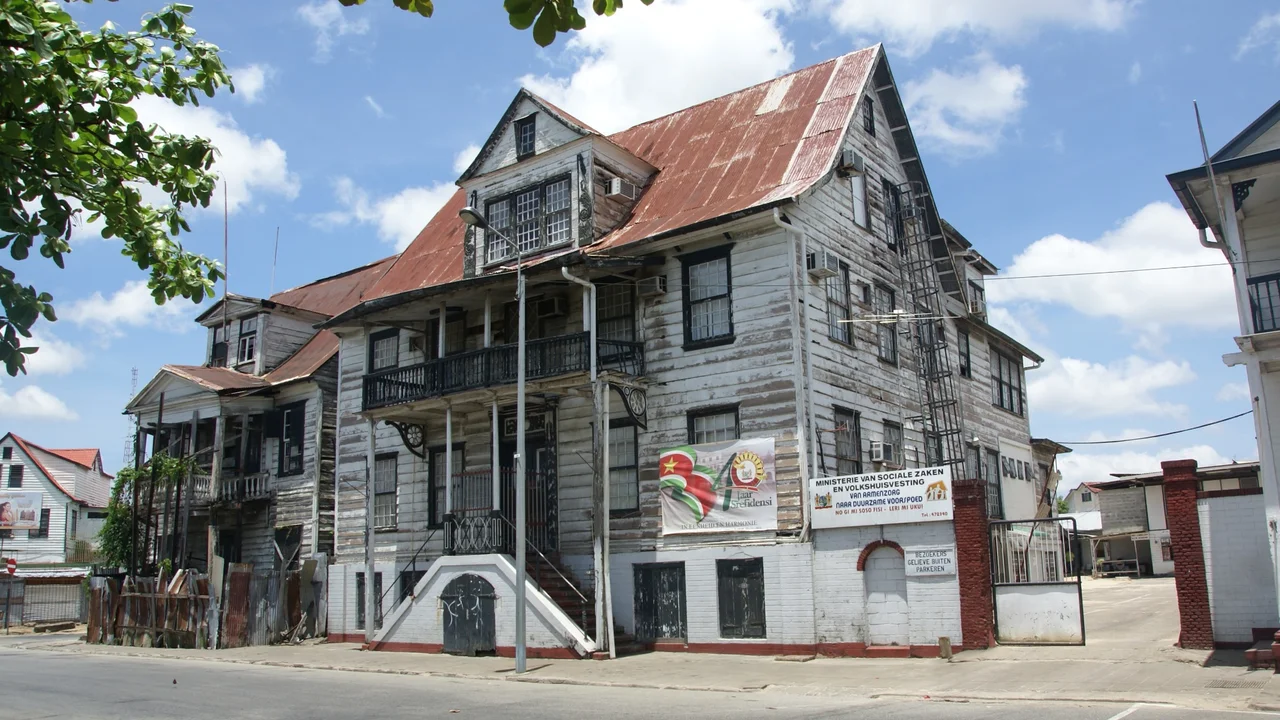
Builders make wooden houses from strong native hardwoods like greenheart, basralokus, and cedar.
Basralokus and greenheart wood have natural strength against subterranean termites, marine pests, and rot.
Heavy foundation sills called onderliggers rest on red-brick pillars above wet soil.
Horizontal clapboard siding called rabatdelen uses overlapping cedar boards to deflect equatorial rainstorms.
Joiners paint wooden boards with breathable linseed-oil paints instead of synthetic latex paints.
Large timber beams dry in covered open-air lumber yards to reach proper equilibrium moisture content.
Artisan Joinery Techniques and Craft Transmission
Carpenters connect heavy beams with mortise-and-tenon joints secured with wooden pegs called toognagels.
Movable louvered shutters called jalousieblinden let in cool wind while shading rooms from heat.
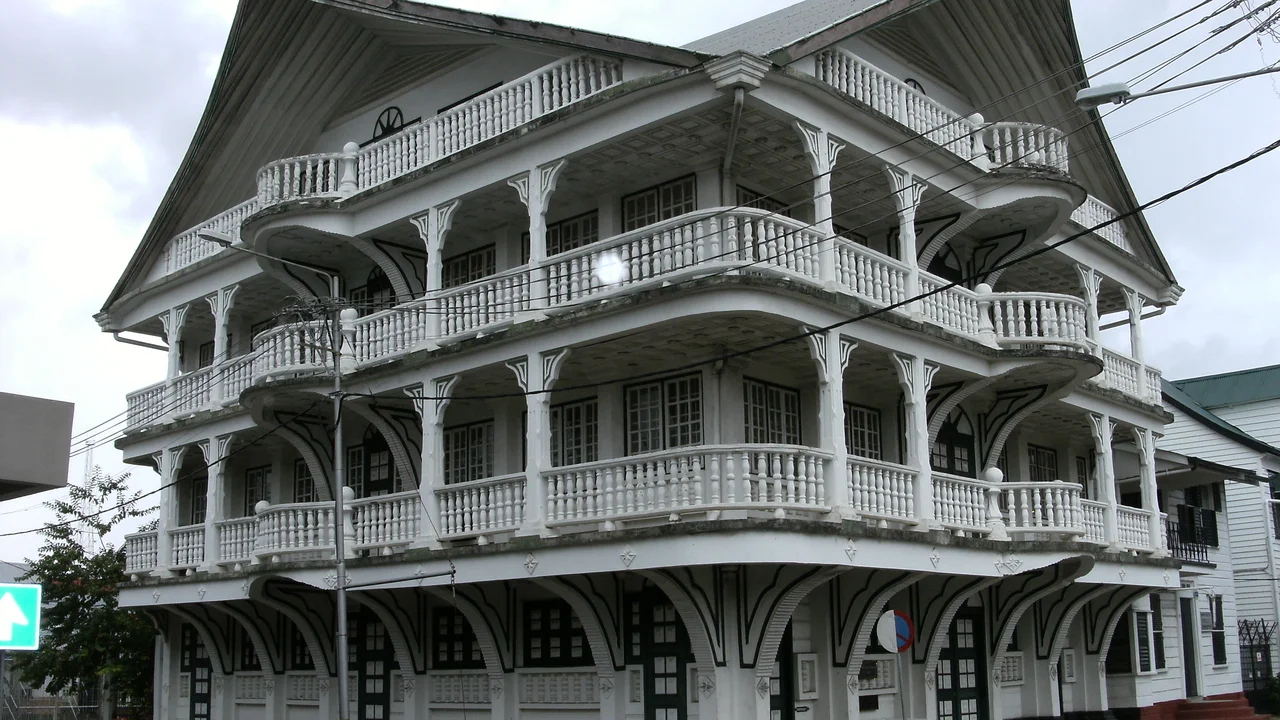
Master carpenters run workshops in Paramaribo to repair ornate fanlights, cornices, and dormers.
Vocational training courses help young apprentices learn traditional joinery and woodwork techniques.
Making curved veranda posts, moldings, and decorative fretwork requires special hand profiling planes.
Reversible conservation rules say workers should splice damaged wooden beams using matching hardwood species.
Environmental Decay Threats and Sustainable Maintenance
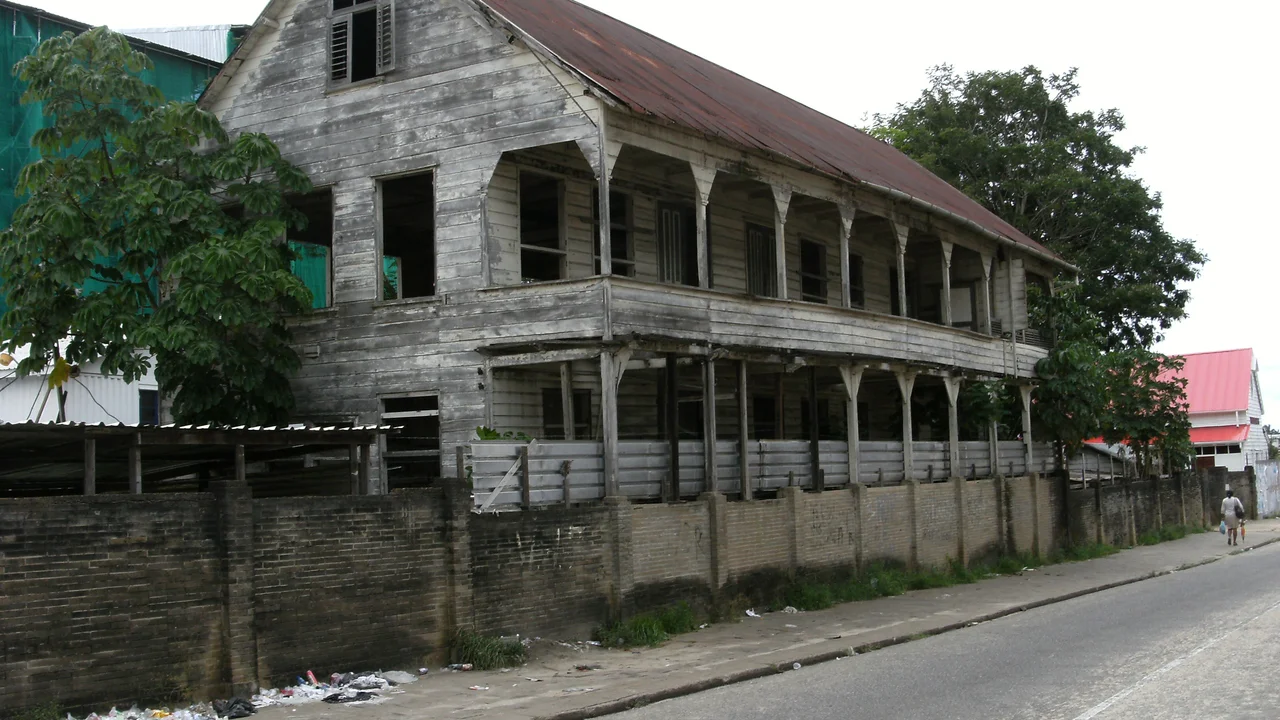
Wet equatorial air, alternating wet-dry seasons, and strong sun heat cause surface checking and paint degradation.
Hungry subterranean termite infestations and white-rot wood fungus cause rapid biological decay and structural collapse.
Open crawlspaces called onderkelders under wooden floors need clean air channels to prevent damp rot.
High market prices for harvested hardwoods and imported linseed oils create heavy burdens for property owners.
Government financial incentive schemes and property tax relief can help low-income homeowners repair old timber.
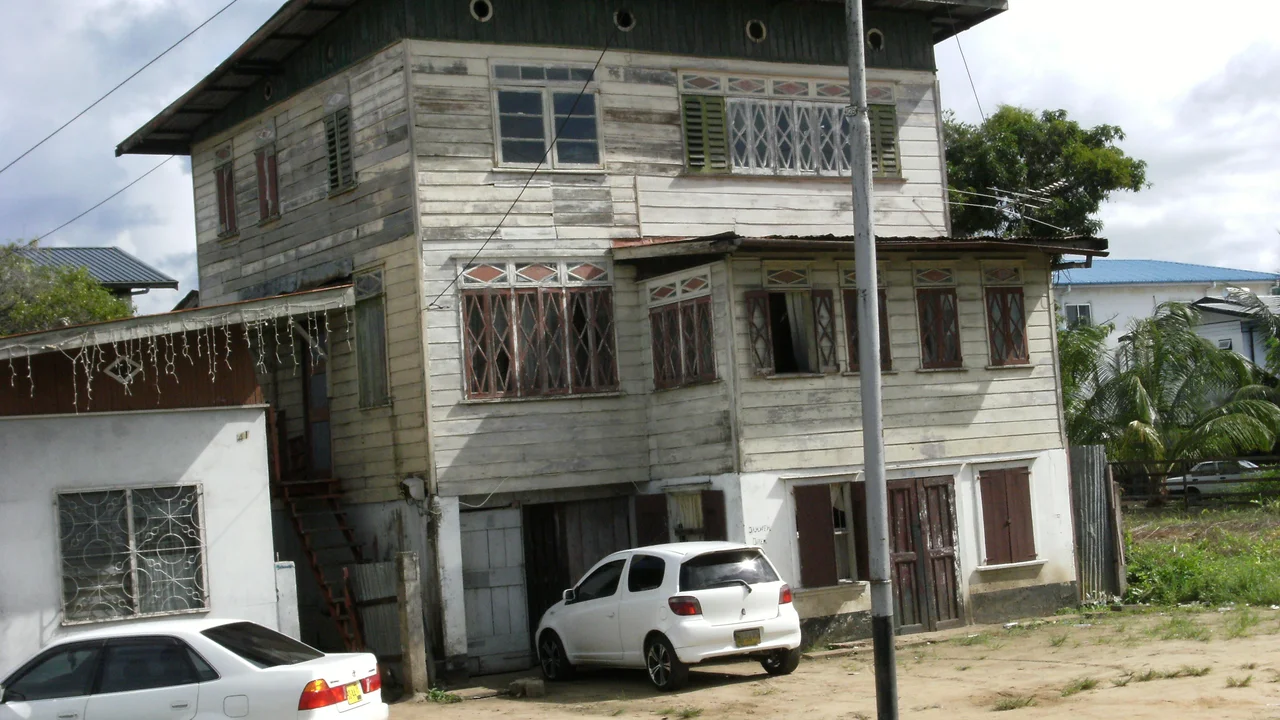
Careful regular cycle maintenance, non-toxic borate treatments, and clean perimeter drainage trenches keep historic houses safe.
A2 · Elementary
Paramaribo Wooden Building Conservation: Hardwoods, Joinery, and Upkeep
Analyzing institutional stewardship, native timber resistance, traditional mortise joinery, and practical maintenance against tropical decay.
Institutional Stewardship and Regulatory Oversight
Stichting Gebouwd Erfgoed Suriname (SGES) serves as the principal technical executive foundation overseeing historic timber monument conservation, providing regulatory oversight and heritage stewardship across the capital.
SGES collaborates closely with the National Monuments Commission and the Directorate of Culture within the Ministry of Education, Science, and Culture to uphold architectural standards.
The official national monument register records and legally protects hundreds of historic wooden structures across Paramaribo inner city, classifying buildings by architectural priority.
Under heritage legislation, mandatory preservation permits require property owners to submit detailed restoration blueprints before executing structural alterations on historic wooden facades.
To address municipal infrastructure deficits, the Inter-American Development Bank co-finances the Paramaribo Urban Rehabilitation Program (PURP) to restore prominent government-owned wooden landmarks.
Municipal zoning regulations enforce strict buffer zone controls to restrict modern concrete high-rise encroachments within the designated wooden heritage perimeter.
Tropical Hardwood Selection and Material Science
Master builders construct traditional residences using dense native tropical hardwoods exhibiting high botanical density, predominantly greenheart, basralokus, and Surinamese cedar sourced from inland rainforest concessions.
Dense basralokus and greenheart timber provide natural resistance to wood-boring marine organisms, subterranean termites, and destructive fungal rot without artificial chemical pressure treatment.
Heavy foundation sills known as onderliggers are fashioned from durable heartwood baulks resting atop red-brick pillars or plinths to isolate the timber framing from ground-level moisture decay.
Exterior clapboard siding known as rabatdelen uses horizontally overlapping cedar or kabbes boards shaped with beveled profiles to deflect heavy equatorial rainstorms.
Traditional joiners apply multiple coats of breathable linseed-oil paints with high vapour permeability rather than impermeable synthetic latex paints to prevent moisture entrapment within the wood grain.
Large structural timber beams are seasoned for several months in covered open-air lumber yards to achieve equilibrium moisture content before installation in building frames.
Artisan Joinery Techniques and Craft Transmission
Historic Paramaribo carpentry relies upon traditional mortise-and-tenon joints secured with durable hardwood pegs known as toognagels rather than corrosive iron spikes.
Louvered window shutters known locally as jalousieblinden are crafted with movable angled timber slats that allow continuous air ventilation while shading interiors from direct solar heat.
Experienced master carpenters maintain dedicated workshops in Paramaribo specializing in restoring delicate semi-circular fanlights, decorative cornices, and ornate roof dormers.
Specialized vocational training programs supported by SGES and international partners train young apprentices in historic woodwork joinery techniques and architectural restoration.
Producing hand-milled timber moldings, profiled veranda posts, and decorative carved fretwork requires specialized profiling planes and dedicated bench tools rarely used in modern construction.
Reversible conservation standards require that original structural timbers be spliced or repaired with matching hardwood species whenever feasible rather than replaced entirely.
Environmental Decay Threats and Sustainable Maintenance
Persistent equatorial humidity, alternating wet-dry seasons, and intense UV solar radiation accelerate timber surface checking and outer paint degradation across the historic quarter.
Aggressive subterranean termite infestations and destructive white-rot wood fungus represent the most acute biological vectors of timber structural collapse in tropical climates.
Elevated open crawlspaces known as onderkelders situated beneath wooden ground floors require continuous clearing of accumulated debris to ensure cross-ventilation and prevent damp rot.
High financial costs for authentic sustainably harvested hardwoods and specialized imported linseed oils create substantial maintenance burdens for private property owners.
Targeted public financial incentive schemes and municipal property tax relief mechanisms have been proposed to assist low-income homeowners with expensive routine timber repairs.
Systematic regular cycle maintenance, periodic non-toxic borate timber treatments, and clean perimeter drainage trenches preserve historic wooden buildings indefinitely.
B1 · Intermediate
Timber Conservation, Vernacular Joinery, and Heritage Stewardship in Paramaribo
An analytical study of regulatory oversight, tropical hardwood durability, master artisan joinery, and environmental decay mitigation.
Institutional Stewardship and Regulatory Oversight
Stichting Gebouwd Erfgoed Suriname (SGES) serves as the principal technical executive foundation overseeing historic timber monument conservation, providing regulatory oversight and heritage stewardship across the capital.
SGES collaborates closely with the National Monuments Commission and the Directorate of Culture within the Ministry of Education, Science, and Culture to uphold architectural standards.
The official national monument register records and legally protects hundreds of historic wooden structures across Paramaribo inner city, classifying buildings by architectural priority.
Under heritage legislation, mandatory preservation permits require property owners to submit detailed restoration blueprints before executing structural alterations on historic wooden facades.
To address municipal infrastructure deficits, the Inter-American Development Bank co-finances the Paramaribo Urban Rehabilitation Program (PURP) to restore prominent government-owned wooden landmarks.
Municipal zoning regulations enforce strict buffer zone controls to restrict modern concrete high-rise encroachments within the designated wooden heritage perimeter.
Tropical Hardwood Selection and Material Science
Master builders construct traditional residences using dense native tropical hardwoods exhibiting high botanical density, predominantly greenheart, basralokus, and Surinamese cedar sourced from inland rainforest concessions.
Dense basralokus and greenheart timber provide natural resistance to wood-boring marine organisms, subterranean termites, and destructive fungal rot without artificial chemical pressure treatment.
Heavy foundation sills known as onderliggers are fashioned from durable heartwood baulks resting atop red-brick pillars or plinths to isolate the timber framing from ground-level moisture decay.
Exterior clapboard siding known as rabatdelen uses horizontally overlapping cedar or kabbes boards shaped with beveled profiles to deflect heavy equatorial rainstorms.
Traditional joiners apply multiple coats of breathable linseed-oil paints with high vapour permeability rather than impermeable synthetic latex paints to prevent moisture entrapment within the wood grain.
Large structural timber beams are seasoned for several months in covered open-air lumber yards to achieve equilibrium moisture content before installation in building frames.
Artisan Joinery Techniques and Craft Transmission
Historic Paramaribo carpentry relies upon traditional mortise-and-tenon joints secured with durable hardwood pegs known as toognagels rather than corrosive iron spikes.
Louvered window shutters known locally as jalousieblinden are crafted with movable angled timber slats that allow continuous air ventilation while shading interiors from direct solar heat.
Experienced master carpenters maintain dedicated workshops in Paramaribo specializing in restoring delicate semi-circular fanlights, decorative cornices, and ornate roof dormers.
Specialized vocational training programs supported by SGES and international partners train young apprentices in historic woodwork joinery techniques and architectural restoration.
Producing hand-milled timber moldings, profiled veranda posts, and decorative carved fretwork requires specialized profiling planes and dedicated bench tools rarely used in modern construction.
Reversible conservation standards require that original structural timbers be spliced or repaired with matching hardwood species whenever feasible rather than replaced entirely.
Environmental Decay Threats and Sustainable Maintenance
Persistent equatorial humidity, alternating wet-dry seasons, and intense UV solar radiation accelerate timber surface checking and outer paint degradation across the historic quarter.
Aggressive subterranean termite infestations and destructive white-rot wood fungus represent the most acute biological vectors of timber structural collapse in tropical climates.
Elevated open crawlspaces known as onderkelders situated beneath wooden ground floors require continuous clearing of accumulated debris to ensure cross-ventilation and prevent damp rot.
High financial costs for authentic sustainably harvested hardwoods and specialized imported linseed oils create substantial maintenance burdens for private property owners.
Targeted public financial incentive schemes and municipal property tax relief mechanisms have been proposed to assist low-income homeowners with expensive routine timber repairs.
Systematic regular cycle maintenance, periodic non-toxic borate timber treatments, and clean perimeter drainage trenches preserve historic wooden buildings indefinitely.
B2 · Upper Intermediate
Paramaribo Wooden Building Conservation: Material Science, Craftsmanship, and Policy
Investigating SGES regulatory frameworks, natural botanical resistance of native timbers, vocational apprentice joinery, and sustainable financing.
Institutional Stewardship and Regulatory Oversight
Stichting Gebouwd Erfgoed Suriname (SGES) serves as the principal technical executive foundation overseeing historic timber monument conservation, providing regulatory oversight and heritage stewardship across the capital.
SGES collaborates closely with the National Monuments Commission and the Directorate of Culture within the Ministry of Education, Science, and Culture to uphold architectural standards.
The official national monument register records and legally protects hundreds of historic wooden structures across Paramaribo inner city, classifying buildings by architectural priority.
Under heritage legislation, mandatory preservation permits require property owners to submit detailed restoration blueprints before executing structural alterations on historic wooden facades.
To address municipal infrastructure deficits, the Inter-American Development Bank co-finances the Paramaribo Urban Rehabilitation Program (PURP) to restore prominent government-owned wooden landmarks.
Municipal zoning regulations enforce strict buffer zone controls to restrict modern concrete high-rise encroachments within the designated wooden heritage perimeter.
Tropical Hardwood Selection and Material Science
Master builders construct traditional residences using dense native tropical hardwoods exhibiting high botanical density, predominantly greenheart, basralokus, and Surinamese cedar sourced from inland rainforest concessions.
Dense basralokus and greenheart timber provide natural resistance to wood-boring marine organisms, subterranean termites, and destructive fungal rot without artificial chemical pressure treatment.
Heavy foundation sills known as onderliggers are fashioned from durable heartwood baulks resting atop red-brick pillars or plinths to isolate the timber framing from ground-level moisture decay.
Exterior clapboard siding known as rabatdelen uses horizontally overlapping cedar or kabbes boards shaped with beveled profiles to deflect heavy equatorial rainstorms.
Traditional joiners apply multiple coats of breathable linseed-oil paints with high vapour permeability rather than impermeable synthetic latex paints to prevent moisture entrapment within the wood grain.
Large structural timber beams are seasoned for several months in covered open-air lumber yards to achieve equilibrium moisture content before installation in building frames.
Artisan Joinery Techniques and Craft Transmission
Historic Paramaribo carpentry relies upon traditional mortise-and-tenon joints secured with durable hardwood pegs known as toognagels rather than corrosive iron spikes.
Louvered window shutters known locally as jalousieblinden are crafted with movable angled timber slats that allow continuous air ventilation while shading interiors from direct solar heat.
Experienced master carpenters maintain dedicated workshops in Paramaribo specializing in restoring delicate semi-circular fanlights, decorative cornices, and ornate roof dormers.
Specialized vocational training programs supported by SGES and international partners train young apprentices in historic woodwork joinery techniques and architectural restoration.
Producing hand-milled timber moldings, profiled veranda posts, and decorative carved fretwork requires specialized profiling planes and dedicated bench tools rarely used in modern construction.
Reversible conservation standards require that original structural timbers be spliced or repaired with matching hardwood species whenever feasible rather than replaced entirely.
Environmental Decay Threats and Sustainable Maintenance
Persistent equatorial humidity, alternating wet-dry seasons, and intense UV solar radiation accelerate timber surface checking and outer paint degradation across the historic quarter.
Aggressive subterranean termite infestations and destructive white-rot wood fungus represent the most acute biological vectors of timber structural collapse in tropical climates.
Elevated open crawlspaces known as onderkelders situated beneath wooden ground floors require continuous clearing of accumulated debris to ensure cross-ventilation and prevent damp rot.
High financial costs for authentic sustainably harvested hardwoods and specialized imported linseed oils create substantial maintenance burdens for private property owners.
Targeted public financial incentive schemes and municipal property tax relief mechanisms have been proposed to assist low-income homeowners with expensive routine timber repairs.
Systematic regular cycle maintenance, periodic non-toxic borate timber treatments, and clean perimeter drainage trenches preserve historic wooden buildings indefinitely.
C1 · Advanced
The Material Science and Conservation Architecture of Historic Paramaribo Timber
A critical investigation examining institutional heritage governance, native hardwood material performance, artisanal joinery transmission, and moisture decay mitigation.
Institutional Stewardship and Regulatory Oversight
Stichting Gebouwd Erfgoed Suriname (SGES) serves as the principal technical executive foundation overseeing historic timber monument conservation, providing regulatory oversight and heritage stewardship across the capital.
SGES collaborates closely with the National Monuments Commission and the Directorate of Culture within the Ministry of Education, Science, and Culture to uphold architectural standards.
The official national monument register records and legally protects hundreds of historic wooden structures across Paramaribo inner city, classifying buildings by architectural priority.
Under heritage legislation, mandatory preservation permits require property owners to submit detailed restoration blueprints before executing structural alterations on historic wooden facades.
To address municipal infrastructure deficits, the Inter-American Development Bank co-finances the Paramaribo Urban Rehabilitation Program (PURP) to restore prominent government-owned wooden landmarks.
Municipal zoning regulations enforce strict buffer zone controls to restrict modern concrete high-rise encroachments within the designated wooden heritage perimeter.
Tropical Hardwood Selection and Material Science
Master builders construct traditional residences using dense native tropical hardwoods exhibiting high botanical density, predominantly greenheart, basralokus, and Surinamese cedar sourced from inland rainforest concessions.
Dense basralokus and greenheart timber provide natural resistance to wood-boring marine organisms, subterranean termites, and destructive fungal rot without artificial chemical pressure treatment.
Heavy foundation sills known as onderliggers are fashioned from durable heartwood baulks resting atop red-brick pillars or plinths to isolate the timber framing from ground-level moisture decay.
Exterior clapboard siding known as rabatdelen uses horizontally overlapping cedar or kabbes boards shaped with beveled profiles to deflect heavy equatorial rainstorms.
Traditional joiners apply multiple coats of breathable linseed-oil paints with high vapour permeability rather than impermeable synthetic latex paints to prevent moisture entrapment within the wood grain.
Large structural timber beams are seasoned for several months in covered open-air lumber yards to achieve equilibrium moisture content before installation in building frames.
Artisan Joinery Techniques and Craft Transmission
Historic Paramaribo carpentry relies upon traditional mortise-and-tenon joints secured with durable hardwood pegs known as toognagels rather than corrosive iron spikes.
Louvered window shutters known locally as jalousieblinden are crafted with movable angled timber slats that allow continuous air ventilation while shading interiors from direct solar heat.
Experienced master carpenters maintain dedicated workshops in Paramaribo specializing in restoring delicate semi-circular fanlights, decorative cornices, and ornate roof dormers.
Specialized vocational training programs supported by SGES and international partners train young apprentices in historic woodwork joinery techniques and architectural restoration.
Producing hand-milled timber moldings, profiled veranda posts, and decorative carved fretwork requires specialized profiling planes and dedicated bench tools rarely used in modern construction.
Reversible conservation standards require that original structural timbers be spliced or repaired with matching hardwood species whenever feasible rather than replaced entirely.
Environmental Decay Threats and Sustainable Maintenance
Persistent equatorial humidity, alternating wet-dry seasons, and intense UV solar radiation accelerate timber surface checking and outer paint degradation across the historic quarter.
Aggressive subterranean termite infestations and destructive white-rot wood fungus represent the most acute biological vectors of timber structural collapse in tropical climates.
Elevated open crawlspaces known as onderkelders situated beneath wooden ground floors require continuous clearing of accumulated debris to ensure cross-ventilation and prevent damp rot.
High financial costs for authentic sustainably harvested hardwoods and specialized imported linseed oils create substantial maintenance burdens for private property owners.
Targeted public financial incentive schemes and municipal property tax relief mechanisms have been proposed to assist low-income homeowners with expensive routine timber repairs.
Systematic regular cycle maintenance, periodic non-toxic borate timber treatments, and clean perimeter drainage trenches preserve historic wooden buildings indefinitely.
C2 · Mastery
Vernacular Materiality, Joinery Craftsmanship, and Heritage Governance in Paramaribo
A comprehensive analytical monograph exploring the structural preservation of Suriname wooden capital across regulatory, dendrological, and artisanal dimensions.
Institutional Stewardship and Regulatory Oversight
Stichting Gebouwd Erfgoed Suriname (SGES) serves as the principal technical executive foundation overseeing historic timber monument conservation, providing regulatory oversight and heritage stewardship across the capital.
SGES collaborates closely with the National Monuments Commission and the Directorate of Culture within the Ministry of Education, Science, and Culture to uphold architectural standards.
The official national monument register records and legally protects hundreds of historic wooden structures across Paramaribo inner city, classifying buildings by architectural priority.
Under heritage legislation, mandatory preservation permits require property owners to submit detailed restoration blueprints before executing structural alterations on historic wooden facades.
To address municipal infrastructure deficits, the Inter-American Development Bank co-finances the Paramaribo Urban Rehabilitation Program (PURP) to restore prominent government-owned wooden landmarks.
Municipal zoning regulations enforce strict buffer zone controls to restrict modern concrete high-rise encroachments within the designated wooden heritage perimeter.
Tropical Hardwood Selection and Material Science
Master builders construct traditional residences using dense native tropical hardwoods exhibiting high botanical density, predominantly greenheart, basralokus, and Surinamese cedar sourced from inland rainforest concessions.
Dense basralokus and greenheart timber provide natural resistance to wood-boring marine organisms, subterranean termites, and destructive fungal rot without artificial chemical pressure treatment.
Heavy foundation sills known as onderliggers are fashioned from durable heartwood baulks resting atop red-brick pillars or plinths to isolate the timber framing from ground-level moisture decay.
Exterior clapboard siding known as rabatdelen uses horizontally overlapping cedar or kabbes boards shaped with beveled profiles to deflect heavy equatorial rainstorms.
Traditional joiners apply multiple coats of breathable linseed-oil paints with high vapour permeability rather than impermeable synthetic latex paints to prevent moisture entrapment within the wood grain.
Large structural timber beams are seasoned for several months in covered open-air lumber yards to achieve equilibrium moisture content before installation in building frames.
Artisan Joinery Techniques and Craft Transmission
Historic Paramaribo carpentry relies upon traditional mortise-and-tenon joints secured with durable hardwood pegs known as toognagels rather than corrosive iron spikes.
Louvered window shutters known locally as jalousieblinden are crafted with movable angled timber slats that allow continuous air ventilation while shading interiors from direct solar heat.
Experienced master carpenters maintain dedicated workshops in Paramaribo specializing in restoring delicate semi-circular fanlights, decorative cornices, and ornate roof dormers.
Specialized vocational training programs supported by SGES and international partners train young apprentices in historic woodwork joinery techniques and architectural restoration.
Producing hand-milled timber moldings, profiled veranda posts, and decorative carved fretwork requires specialized profiling planes and dedicated bench tools rarely used in modern construction.
Reversible conservation standards require that original structural timbers be spliced or repaired with matching hardwood species whenever feasible rather than replaced entirely.
Environmental Decay Threats and Sustainable Maintenance
Persistent equatorial humidity, alternating wet-dry seasons, and intense UV solar radiation accelerate timber surface checking and outer paint degradation across the historic quarter.
Aggressive subterranean termite infestations and destructive white-rot wood fungus represent the most acute biological vectors of timber structural collapse in tropical climates.
Elevated open crawlspaces known as onderkelders situated beneath wooden ground floors require continuous clearing of accumulated debris to ensure cross-ventilation and prevent damp rot.
High financial costs for authentic sustainably harvested hardwoods and specialized imported linseed oils create substantial maintenance burdens for private property owners.
Targeted public financial incentive schemes and municipal property tax relief mechanisms have been proposed to assist low-income homeowners with expensive routine timber repairs.
Systematic regular cycle maintenance, periodic non-toxic borate timber treatments, and clean perimeter drainage trenches preserve historic wooden buildings indefinitely.
Check your understanding
Choose how closely you want to revisit the article. You can refer back while answering, and review explanations when you finish.
Quick Quiz A1
Try one question, then create a free account for the full Quick Quiz. Sign Up Free
Answer every question before checking. There is no time limit.
Your results
/ 1 correct (%)
Read the explanations to see how each answer connects to the article.
-
What special foundation protects old wooden buildings in Paramaribo?
1. Answer:
Quick Quiz A2
Try one question, then create a free account for the full Quick Quiz. Sign Up Free
Answer every question before checking. There is no time limit.
Your results
/ 1 correct (%)
Read the explanations to see how each answer connects to the article.
-
What organization serves as the principal technical executive foundation overseeing historic timber conservation in Paramaribo?
1. Answer:
Quick Quiz B1
Try one question, then create a free account for the full Quick Quiz. Sign Up Free
Answer every question before checking. There is no time limit.
Your results
/ 1 correct (%)
Read the explanations to see how each answer connects to the article.
-
What organization serves as the principal technical executive foundation overseeing historic timber conservation in Paramaribo?
1. Answer:
Quick Quiz B2
Try one question, then create a free account for the full Quick Quiz. Sign Up Free
Answer every question before checking. There is no time limit.
Your results
/ 1 correct (%)
Read the explanations to see how each answer connects to the article.
-
What organization serves as the principal technical executive foundation overseeing historic timber conservation in Paramaribo?
1. Answer:
Quick Quiz C1
Try one question, then create a free account for the full Quick Quiz. Sign Up Free
Answer every question before checking. There is no time limit.
Your results
/ 1 correct (%)
Read the explanations to see how each answer connects to the article.
-
What organization serves as the principal technical executive foundation overseeing historic timber conservation in Paramaribo?
1. Answer:
Quick Quiz C2
Try one question, then create a free account for the full Quick Quiz. Sign Up Free
Answer every question before checking. There is no time limit.
Your results
/ 1 correct (%)
Read the explanations to see how each answer connects to the article.
-
What organization serves as the principal technical executive foundation overseeing historic timber conservation in Paramaribo?
1. Answer:
