A1 · Beginner
Paramaribo Bus Routes: Riding City Buses in Suriname
From early morning trips near the Central Market to lively music and colorful window signs, private minibuses keep Paramaribo moving every day.
Terminal Hubs and Radial Transit Network
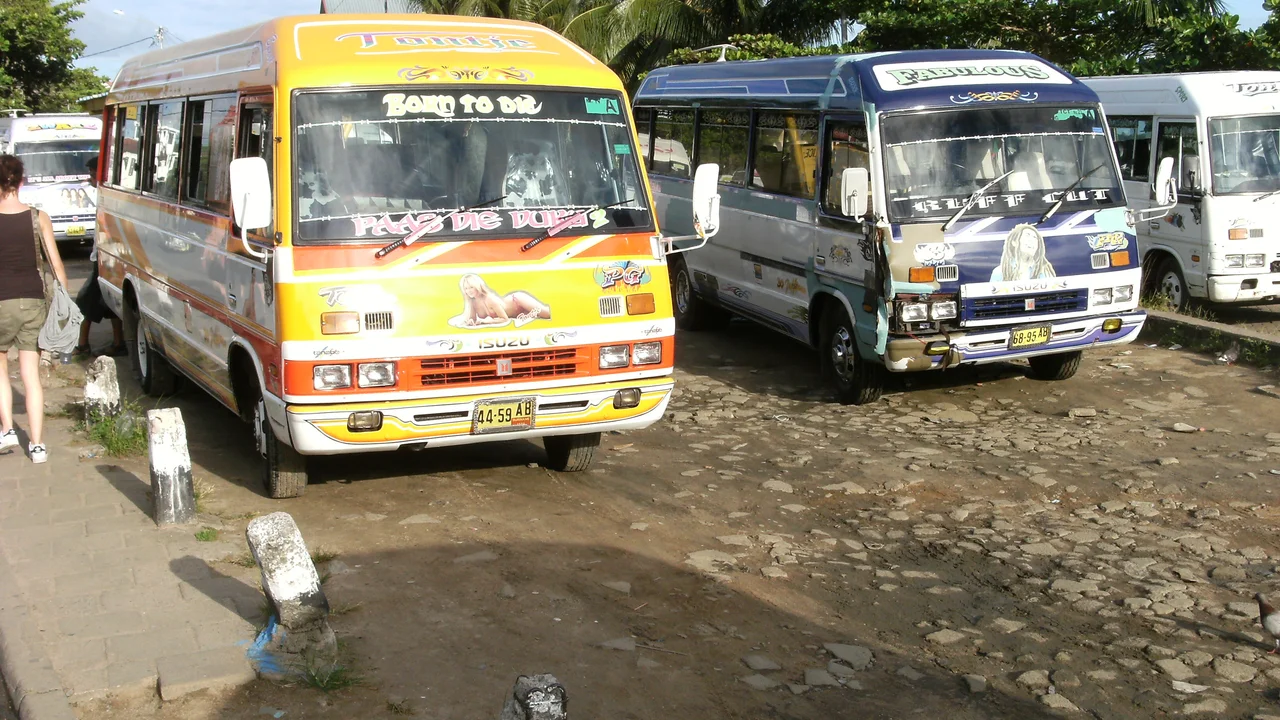
Every day, many people in the city ride licensed private minibuses.
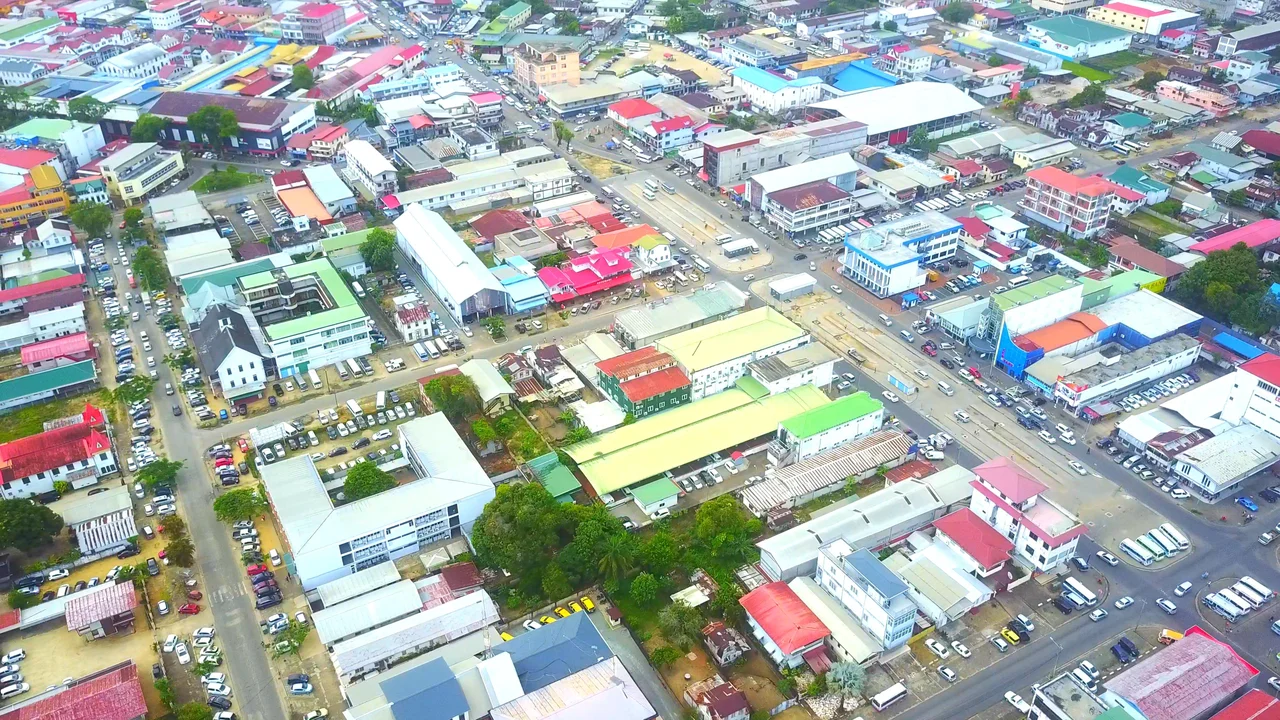
The main bus stations sit near the river at Heiligenweg and the Central Market.
Bus lines run from the historic downtown center to north and south neighborhoods.
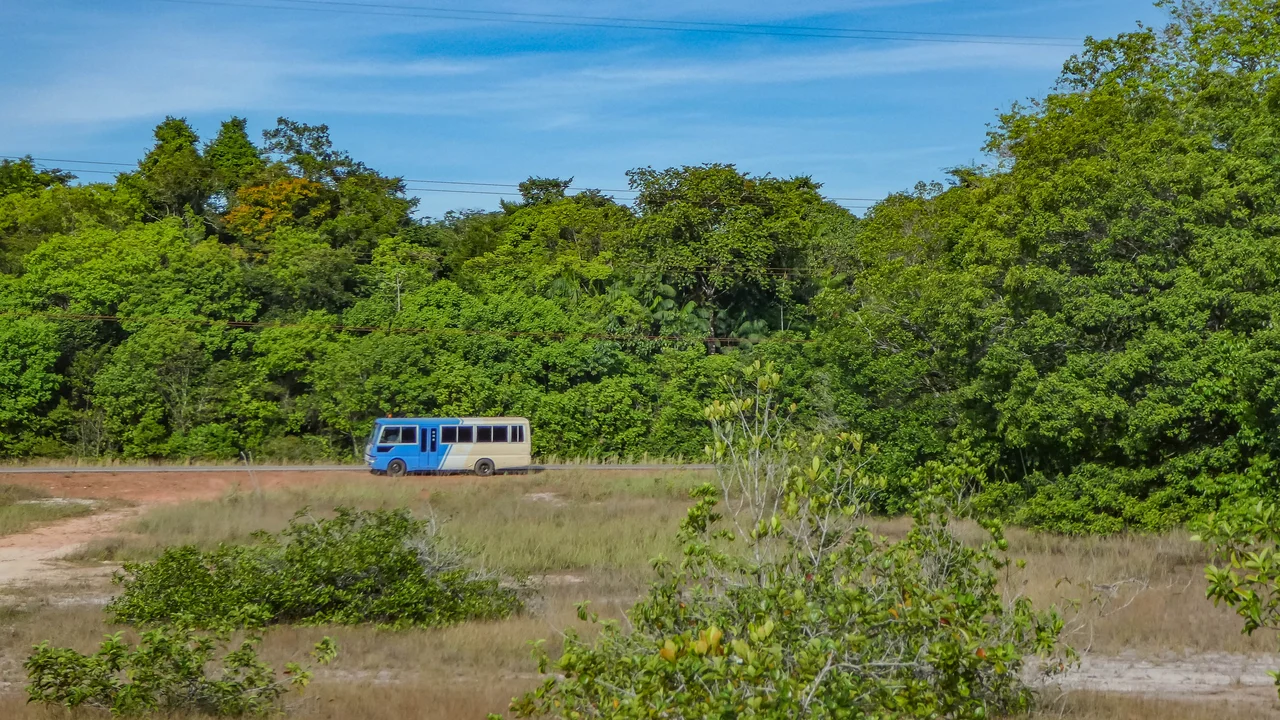
Long bus lines travel along Indira Gandhiweg to the town of Lelydorp.
Buses start running very early before sunrise to transport market traders and students.
The government transport ministry sets official ticket prices for all bus routes.
Operators Conductors and Commuter Demographics
Independent bus owners belong to the Particuliere Lijnbushouders Organisatie union.
Drivers work with conductors who collect cash fares in Surinamese Dollars.
Secondary school pupils ride buses every morning using subsidized transit passes.
Agricultural vendors carry sacks of cassava and plantains to sell at retail market stalls.
Automotive workshops along highway corridors fix bus engines and paint bright signs.
Traffic police conduct inspections along central avenues to make sure buses are safe.
Visual Culture Music and Stopping Rituals
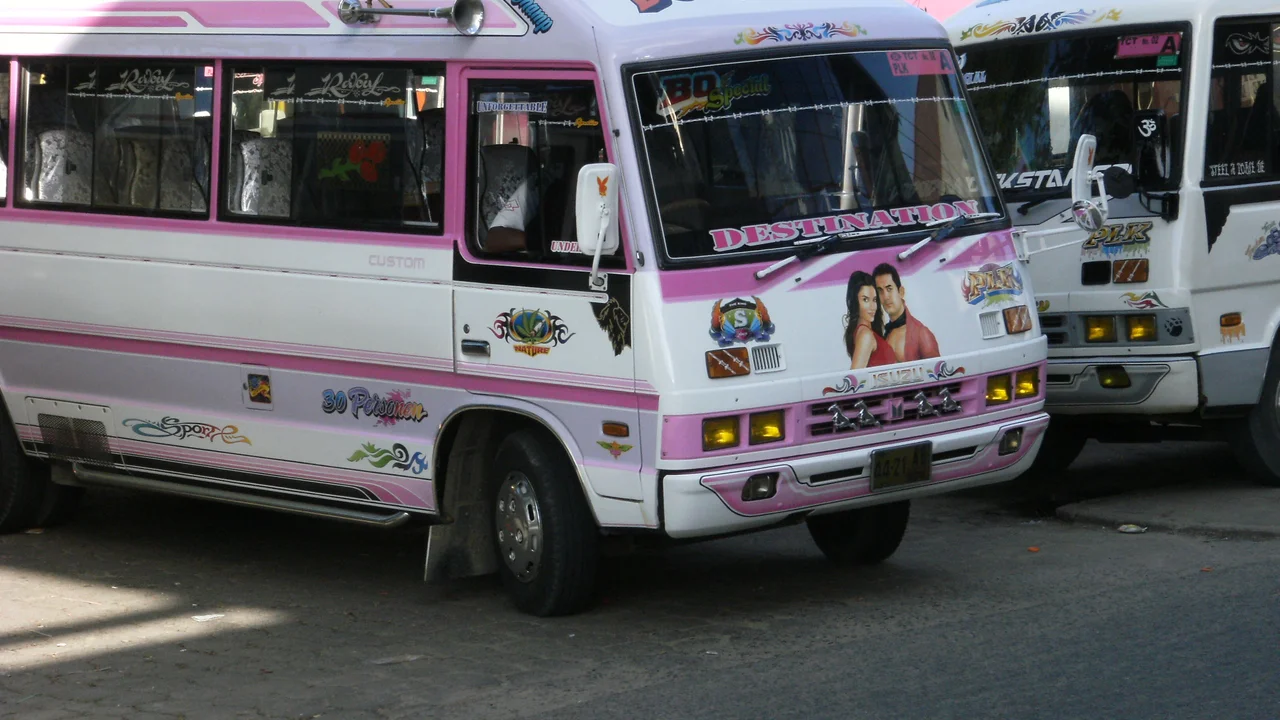
Minibuses are decorated with painted slogans and vinyl lettering on windows.
Drivers play lively Kawina percussion and happy reggae music on customized sound systems.
At terminal staging bays, dispatchers and conductors call out route names to waiting riders.
Passengers signal to alight by tapping metal coins on window bars or pressing buzzers.
A passenger surge occurs in the afternoon when uniformed school pupils fill stations.
Drivers navigate narrow streets near wooden facades, drainage canals, and rain squalls.
Transit Modal Share Subsidies and Daily Mobility
The General Bureau of Statistics shows that private minibuses accommodate most passenger trips.
Transportation planners evaluate proposals to integrate bus lanes and electronic ticketing.
Researchers at Anton de Kom University study traffic congestion near downtown markets.
Minibus sustainability depends on fuel subsidies negotiated between the government and the PLO.
Shared bus rides foster daily interaction among riders of Creole, Hindustani, and Maroon heritage.
These bus routes remain a kinetic symbol of flexible affordable transit in Paramaribo.
A2 · Elementary
Paramaribo Bus Routes: Daily Transit and Suburban Corridors
Every day, thousands of commuters ride privately owned minibuses between historic downtown terminals, Indira Gandhiweg, and outer residential districts.
Terminal Hubs and Radial Transit Network
Daily urban public transportation in Paramaribo is predominantly provided by privately owned minibuses operating on designated licensed routes.
The primary central bus terminals converge along the Suriname River waterfront at Heiligenweg and Dr. Sophie Redmondstraat near the Central Market.
Fixed radial routes fan outward from the historic colonial downtown core to northern districts including Tourtonne and Blauwgrond, and southern suburbs like Latour and Flora.
Suburban bus lines run southward along the major Indira Gandhiweg corridor, linking the capital to the commuter town of Lelydorp in Wanica district.
Bus operations initiate before dawn around five-thirty in the morning to transport market traders, secondary students, and early civil service workers.
The Ministry of Transport, Communication and Tourism establishes statutory fare tariffs and inspects operator compliance across all licensed routes.
Operators Conductors and Commuter Demographics
Independent bus owners and route concession holders are organized through the Particuliere Lijnbushouders Organisatie, which negotiates collective operating conditions.
Individual bus drivers work alongside conductors who collect cash fares denominated in Surinamese Dollars from passengers during boarding.
Secondary school pupils and vocational learners form a core passenger demographic, traveling with government-subsidized transit passes.
Agricultural vendors carry sacks of cassava, greens, and plantains aboard morning buses from peri-urban smallholdings to central retail stalls.
Automotive workshops along commercial highway corridors specialize in mechanical maintenance, decorative chrome fittings, and custom graphic detailing for minibuses.
Traffic police officers conduct periodic roadworthiness inspections along central avenues, checking tire tread, brake fluid, and passenger capacity limits.
Visual Culture Music and Stopping Rituals
Minibuses are decorated with personalized hand-painted slogans, vinyl lettering, and cultural emblems reflecting personal beliefs or pop icons.
Drivers outfit vehicle interiors with customized sound systems playing high-energy Kawina percussion, dancehall reggae, and chutney melodies.
At crowded terminal staging bays, dispatchers and conductors call out route names to guide boarding commuters into waiting vehicles.
Passengers signal their intention to alight by tapping metal coins against window bars, calling out in Sranan Tongo, or pressing buzzer buttons.
A distinct daily passenger surge occurs around one in the afternoon when thousands of uniformed school pupils pour into central terminals.
Drivers navigate narrow historical streets flanked by colonial timber facades, deep drainage canals, and sudden tropical afternoon squalls.
Transit Modal Share Subsidies and Daily Mobility
Statistical reports from the General Bureau of Statistics indicate that private minibuses accommodate over half of all motorized passenger trips in Greater Paramaribo.
Transportation planners evaluate proposals to integrate formal bus lanes and electronic smart-card ticketing into the existing privately run network.
Academic researchers at Anton de Kom University analyze how private route overlap near downtown markets influences peak-hour traffic congestion.
The financial sustainability of minibus operations depends heavily on government fuel subsidies negotiated between the Ministry of Finance and the PLO.
The shared space of the minibus fosters daily cross-cultural interaction among Surinamese citizens of Creole, Hindustani, Javanese, and Maroon heritage.
Paramaribo bus routes remain a kinetic symbol of everyday urban life, providing flexible affordable transit that keeps the capital moving.
B1 · Intermediate
Paramaribo Bus Routes: Urban Geography, PLO Union, and Commuter Mobility
An analytical examination of public transit in Greater Paramaribo, exploring radial routes, cash fare systems, and student travel demographics.
Terminal Hubs and Radial Transit Network
Daily urban public transportation in Paramaribo is predominantly provided by privately owned minibuses operating on designated licensed routes.
The primary central bus terminals converge along the Suriname River waterfront at Heiligenweg and Dr. Sophie Redmondstraat near the Central Market.
Fixed radial routes fan outward from the historic colonial downtown core to northern districts including Tourtonne and Blauwgrond, and southern suburbs like Latour and Flora.
Suburban bus lines run southward along the major Indira Gandhiweg corridor, linking the capital to the commuter town of Lelydorp in Wanica district.
Bus operations initiate before dawn around five-thirty in the morning to transport market traders, secondary students, and early civil service workers.
The Ministry of Transport, Communication and Tourism establishes statutory fare tariffs and inspects operator compliance across all licensed routes.
Operators Conductors and Commuter Demographics
Independent bus owners and route concession holders are organized through the Particuliere Lijnbushouders Organisatie, which negotiates collective operating conditions.
Individual bus drivers work alongside conductors who collect cash fares denominated in Surinamese Dollars from passengers during boarding.
Secondary school pupils and vocational learners form a core passenger demographic, traveling with government-subsidized transit passes.
Agricultural vendors carry sacks of cassava, greens, and plantains aboard morning buses from peri-urban smallholdings to central retail stalls.
Automotive workshops along commercial highway corridors specialize in mechanical maintenance, decorative chrome fittings, and custom graphic detailing for minibuses.
Traffic police officers conduct periodic roadworthiness inspections along central avenues, checking tire tread, brake fluid, and passenger capacity limits.
Visual Culture Music and Stopping Rituals
Minibuses are decorated with personalized hand-painted slogans, vinyl lettering, and cultural emblems reflecting personal beliefs or pop icons.
Drivers outfit vehicle interiors with customized sound systems playing high-energy Kawina percussion, dancehall reggae, and chutney melodies.
At crowded terminal staging bays, dispatchers and conductors call out route names to guide boarding commuters into waiting vehicles.
Passengers signal their intention to alight by tapping metal coins against window bars, calling out in Sranan Tongo, or pressing buzzer buttons.
A distinct daily passenger surge occurs around one in the afternoon when thousands of uniformed school pupils pour into central terminals.
Drivers navigate narrow historical streets flanked by colonial timber facades, deep drainage canals, and sudden tropical afternoon squalls.
Transit Modal Share Subsidies and Daily Mobility
Statistical reports from the General Bureau of Statistics indicate that private minibuses accommodate over half of all motorized passenger trips in Greater Paramaribo.
Transportation planners evaluate proposals to integrate formal bus lanes and electronic smart-card ticketing into the existing privately run network.
Academic researchers at Anton de Kom University analyze how private route overlap near downtown markets influences peak-hour traffic congestion.
The financial sustainability of minibus operations depends heavily on government fuel subsidies negotiated between the Ministry of Finance and the PLO.
The shared space of the minibus fosters daily cross-cultural interaction among Surinamese citizens of Creole, Hindustani, Javanese, and Maroon heritage.
Paramaribo bus routes remain a kinetic symbol of everyday urban life, providing flexible affordable transit that keeps the capital moving.
B2 · Upper Intermediate
Paramaribo Bus Routes: Minibus Culture, Transit Economics, and Street Networks
Investigating the visual styling, Kawina soundscapes, and stopping customs of Paramaribo minibuses alongside fuel subsidies and modal share data.
Terminal Hubs and Radial Transit Network
Daily urban public transportation in Paramaribo is predominantly provided by privately owned minibuses operating on designated licensed routes.
The primary central bus terminals converge along the Suriname River waterfront at Heiligenweg and Dr. Sophie Redmondstraat near the Central Market.
Fixed radial routes fan outward from the historic colonial downtown core to northern districts including Tourtonne and Blauwgrond, and southern suburbs like Latour and Flora.
Suburban bus lines run southward along the major Indira Gandhiweg corridor, linking the capital to the commuter town of Lelydorp in Wanica district.
Bus operations initiate before dawn around five-thirty in the morning to transport market traders, secondary students, and early civil service workers.
The Ministry of Transport, Communication and Tourism establishes statutory fare tariffs and inspects operator compliance across all licensed routes.
Operators Conductors and Commuter Demographics
Independent bus owners and route concession holders are organized through the Particuliere Lijnbushouders Organisatie, which negotiates collective operating conditions.
Individual bus drivers work alongside conductors who collect cash fares denominated in Surinamese Dollars from passengers during boarding.
Secondary school pupils and vocational learners form a core passenger demographic, traveling with government-subsidized transit passes.
Agricultural vendors carry sacks of cassava, greens, and plantains aboard morning buses from peri-urban smallholdings to central retail stalls.
Automotive workshops along commercial highway corridors specialize in mechanical maintenance, decorative chrome fittings, and custom graphic detailing for minibuses.
Traffic police officers conduct periodic roadworthiness inspections along central avenues, checking tire tread, brake fluid, and passenger capacity limits.
Visual Culture Music and Stopping Rituals
Minibuses are decorated with personalized hand-painted slogans, vinyl lettering, and cultural emblems reflecting personal beliefs or pop icons.
Drivers outfit vehicle interiors with customized sound systems playing high-energy Kawina percussion, dancehall reggae, and chutney melodies.
At crowded terminal staging bays, dispatchers and conductors call out route names to guide boarding commuters into waiting vehicles.
Passengers signal their intention to alight by tapping metal coins against window bars, calling out in Sranan Tongo, or pressing buzzer buttons.
A distinct daily passenger surge occurs around one in the afternoon when thousands of uniformed school pupils pour into central terminals.
Drivers navigate narrow historical streets flanked by colonial timber facades, deep drainage canals, and sudden tropical afternoon squalls.
Transit Modal Share Subsidies and Daily Mobility
Statistical reports from the General Bureau of Statistics indicate that private minibuses accommodate over half of all motorized passenger trips in Greater Paramaribo.
Transportation planners evaluate proposals to integrate formal bus lanes and electronic smart-card ticketing into the existing privately run network.
Academic researchers at Anton de Kom University analyze how private route overlap near downtown markets influences peak-hour traffic congestion.
The financial sustainability of minibus operations depends heavily on government fuel subsidies negotiated between the Ministry of Finance and the PLO.
The shared space of the minibus fosters daily cross-cultural interaction among Surinamese citizens of Creole, Hindustani, Javanese, and Maroon heritage.
Paramaribo bus routes remain a kinetic symbol of everyday urban life, providing flexible affordable transit that keeps the capital moving.
C1 · Advanced
The Kinetic Topography and Informal Governance of Paramaribo Bus Routes
A critical journalistic monograph analyzing radial concession networks, collective bargaining, mobile auditory culture, and public transit modernization.
Terminal Hubs and Radial Transit Network
Daily urban public transportation in Paramaribo is predominantly provided by privately owned minibuses operating on designated licensed routes.
The primary central bus terminals converge along the Suriname River waterfront at Heiligenweg and Dr. Sophie Redmondstraat near the Central Market.
Fixed radial routes fan outward from the historic colonial downtown core to northern districts including Tourtonne and Blauwgrond, and southern suburbs like Latour and Flora.
Suburban bus lines run southward along the major Indira Gandhiweg corridor, linking the capital to the commuter town of Lelydorp in Wanica district.
Bus operations initiate before dawn around five-thirty in the morning to transport market traders, secondary students, and early civil service workers.
The Ministry of Transport, Communication and Tourism establishes statutory fare tariffs and inspects operator compliance across all licensed routes.
Operators Conductors and Commuter Demographics
Independent bus owners and route concession holders are organized through the Particuliere Lijnbushouders Organisatie, which negotiates collective operating conditions.
Individual bus drivers work alongside conductors who collect cash fares denominated in Surinamese Dollars from passengers during boarding.
Secondary school pupils and vocational learners form a core passenger demographic, traveling with government-subsidized transit passes.
Agricultural vendors carry sacks of cassava, greens, and plantains aboard morning buses from peri-urban smallholdings to central retail stalls.
Automotive workshops along commercial highway corridors specialize in mechanical maintenance, decorative chrome fittings, and custom graphic detailing for minibuses.
Traffic police officers conduct periodic roadworthiness inspections along central avenues, checking tire tread, brake fluid, and passenger capacity limits.
Visual Culture Music and Stopping Rituals
Minibuses are decorated with personalized hand-painted slogans, vinyl lettering, and cultural emblems reflecting personal beliefs or pop icons.
Drivers outfit vehicle interiors with customized sound systems playing high-energy Kawina percussion, dancehall reggae, and chutney melodies.
At crowded terminal staging bays, dispatchers and conductors call out route names to guide boarding commuters into waiting vehicles.
Passengers signal their intention to alight by tapping metal coins against window bars, calling out in Sranan Tongo, or pressing buzzer buttons.
A distinct daily passenger surge occurs around one in the afternoon when thousands of uniformed school pupils pour into central terminals.
Drivers navigate narrow historical streets flanked by colonial timber facades, deep drainage canals, and sudden tropical afternoon squalls.
Transit Modal Share Subsidies and Daily Mobility
Statistical reports from the General Bureau of Statistics indicate that private minibuses accommodate over half of all motorized passenger trips in Greater Paramaribo.
Transportation planners evaluate proposals to integrate formal bus lanes and electronic smart-card ticketing into the existing privately run network.
Academic researchers at Anton de Kom University analyze how private route overlap near downtown markets influences peak-hour traffic congestion.
The financial sustainability of minibus operations depends heavily on government fuel subsidies negotiated between the Ministry of Finance and the PLO.
The shared space of the minibus fosters daily cross-cultural interaction among Surinamese citizens of Creole, Hindustani, Javanese, and Maroon heritage.
Paramaribo bus routes remain a kinetic symbol of everyday urban life, providing flexible affordable transit that keeps the capital moving.
C2 · Mastery
Paramaribo Bus Routes: Urban Mobility, Cultural Aesthetics, and Social Geography
A comprehensive analytical study of Suriname principal public transit system, examining concession economics, modal dominance, and everyday multiethnic interaction.
Terminal Hubs and Radial Transit Network
Daily urban public transportation in Paramaribo is predominantly provided by privately owned minibuses operating on designated licensed routes.
The primary central bus terminals converge along the Suriname River waterfront at Heiligenweg and Dr. Sophie Redmondstraat near the Central Market.
Fixed radial routes fan outward from the historic colonial downtown core to northern districts including Tourtonne and Blauwgrond, and southern suburbs like Latour and Flora.
Suburban bus lines run southward along the major Indira Gandhiweg corridor, linking the capital to the commuter town of Lelydorp in Wanica district.
Bus operations initiate before dawn around five-thirty in the morning to transport market traders, secondary students, and early civil service workers.
The Ministry of Transport, Communication and Tourism establishes statutory fare tariffs and inspects operator compliance across all licensed routes.
Operators Conductors and Commuter Demographics
Independent bus owners and route concession holders are organized through the Particuliere Lijnbushouders Organisatie, which negotiates collective operating conditions.
Individual bus drivers work alongside conductors who collect cash fares denominated in Surinamese Dollars from passengers during boarding.
Secondary school pupils and vocational learners form a core passenger demographic, traveling with government-subsidized transit passes.
Agricultural vendors carry sacks of cassava, greens, and plantains aboard morning buses from peri-urban smallholdings to central retail stalls.
Automotive workshops along commercial highway corridors specialize in mechanical maintenance, decorative chrome fittings, and custom graphic detailing for minibuses.
Traffic police officers conduct periodic roadworthiness inspections along central avenues, checking tire tread, brake fluid, and passenger capacity limits.
Visual Culture Music and Stopping Rituals
Minibuses are decorated with personalized hand-painted slogans, vinyl lettering, and cultural emblems reflecting personal beliefs or pop icons.
Drivers outfit vehicle interiors with customized sound systems playing high-energy Kawina percussion, dancehall reggae, and chutney melodies.
At crowded terminal staging bays, dispatchers and conductors call out route names to guide boarding commuters into waiting vehicles.
Passengers signal their intention to alight by tapping metal coins against window bars, calling out in Sranan Tongo, or pressing buzzer buttons.
A distinct daily passenger surge occurs around one in the afternoon when thousands of uniformed school pupils pour into central terminals.
Drivers navigate narrow historical streets flanked by colonial timber facades, deep drainage canals, and sudden tropical afternoon squalls.
Transit Modal Share Subsidies and Daily Mobility
Statistical reports from the General Bureau of Statistics indicate that private minibuses accommodate over half of all motorized passenger trips in Greater Paramaribo.
Transportation planners evaluate proposals to integrate formal bus lanes and electronic smart-card ticketing into the existing privately run network.
Academic researchers at Anton de Kom University analyze how private route overlap near downtown markets influences peak-hour traffic congestion.
The financial sustainability of minibus operations depends heavily on government fuel subsidies negotiated between the Ministry of Finance and the PLO.
The shared space of the minibus fosters daily cross-cultural interaction among Surinamese citizens of Creole, Hindustani, Javanese, and Maroon heritage.
Paramaribo bus routes remain a kinetic symbol of everyday urban life, providing flexible affordable transit that keeps the capital moving.
Check your understanding
Choose how closely you want to revisit the article. You can refer back while answering, and review explanations when you finish.
Quick Quiz A1
Try one question, then create a free account for the full Quick Quiz. Sign Up Free
Answer every question before checking. There is no time limit.
Your results
/ 1 correct (%)
Read the explanations to see how each answer connects to the article.
-
What kind of buses do many people in Paramaribo ride every day?
1. Answer:
Quick Quiz A2
Try one question, then create a free account for the full Quick Quiz. Sign Up Free
Answer every question before checking. There is no time limit.
Your results
/ 1 correct (%)
Read the explanations to see how each answer connects to the article.
-
What type of vehicle predominantly provides daily urban public transit in Paramaribo?
1. Answer:
Quick Quiz B1
Try one question, then create a free account for the full Quick Quiz. Sign Up Free
Answer every question before checking. There is no time limit.
Your results
/ 1 correct (%)
Read the explanations to see how each answer connects to the article.
-
What type of vehicle predominantly provides daily urban public transit in Paramaribo?
1. Answer:
Quick Quiz B2
Try one question, then create a free account for the full Quick Quiz. Sign Up Free
Answer every question before checking. There is no time limit.
Your results
/ 1 correct (%)
Read the explanations to see how each answer connects to the article.
-
What type of vehicle predominantly provides daily urban public transit in Paramaribo?
1. Answer:
Quick Quiz C1
Try one question, then create a free account for the full Quick Quiz. Sign Up Free
Answer every question before checking. There is no time limit.
Your results
/ 1 correct (%)
Read the explanations to see how each answer connects to the article.
-
What type of vehicle predominantly provides daily urban public transit in Paramaribo?
1. Answer:
Quick Quiz C2
Try one question, then create a free account for the full Quick Quiz. Sign Up Free
Answer every question before checking. There is no time limit.
Your results
/ 1 correct (%)
Read the explanations to see how each answer connects to the article.
-
What type of vehicle predominantly provides daily urban public transit in Paramaribo?
1. Answer:
