A1 · Beginner
Sranan Tongo and Dutch in Paramaribo Public Life: Daily Languages in Suriname
From street market conversations and radio broadcasts to classrooms and official notices, Dutch and Sranan Tongo connect people across Paramaribo every day.
Dutch Statutory Role and Market Creole
Suriname is a Dutch-speaking sovereign nation where leaders hold parliamentary debate in Dutch.
Most citizens also speak Sranan Tongo, a creole lingua franca enriched with Portuguese words.
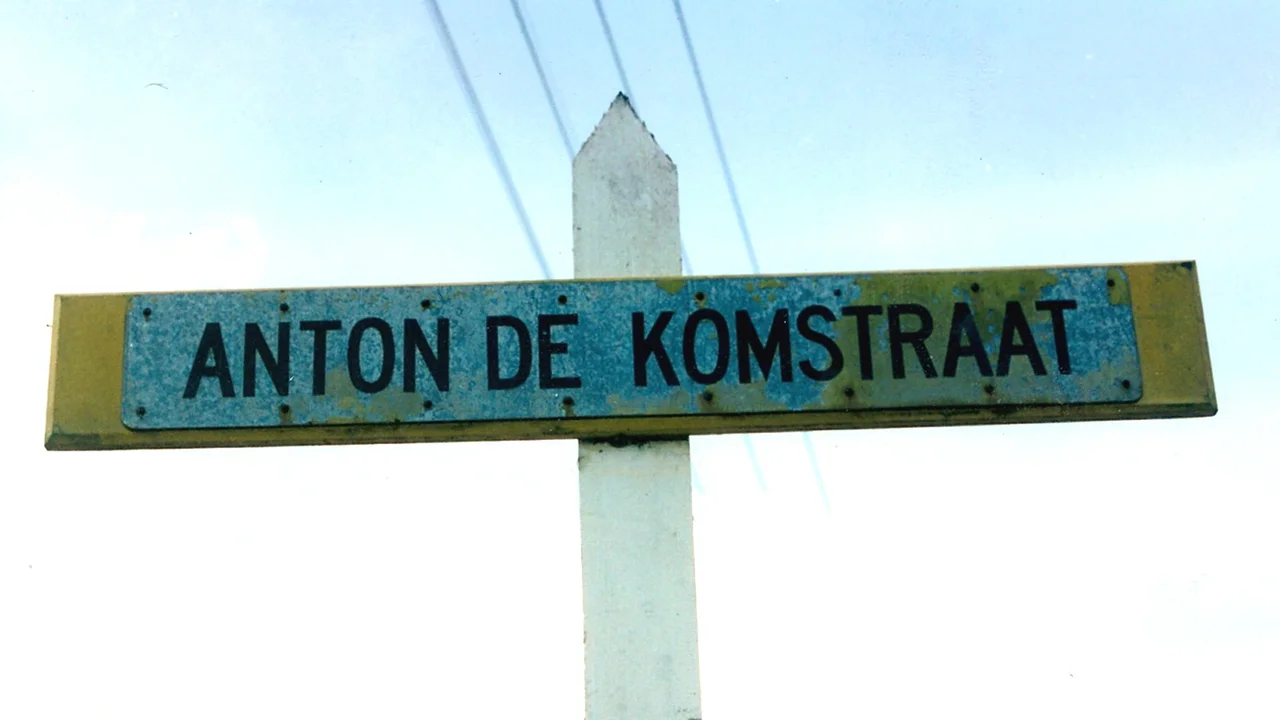
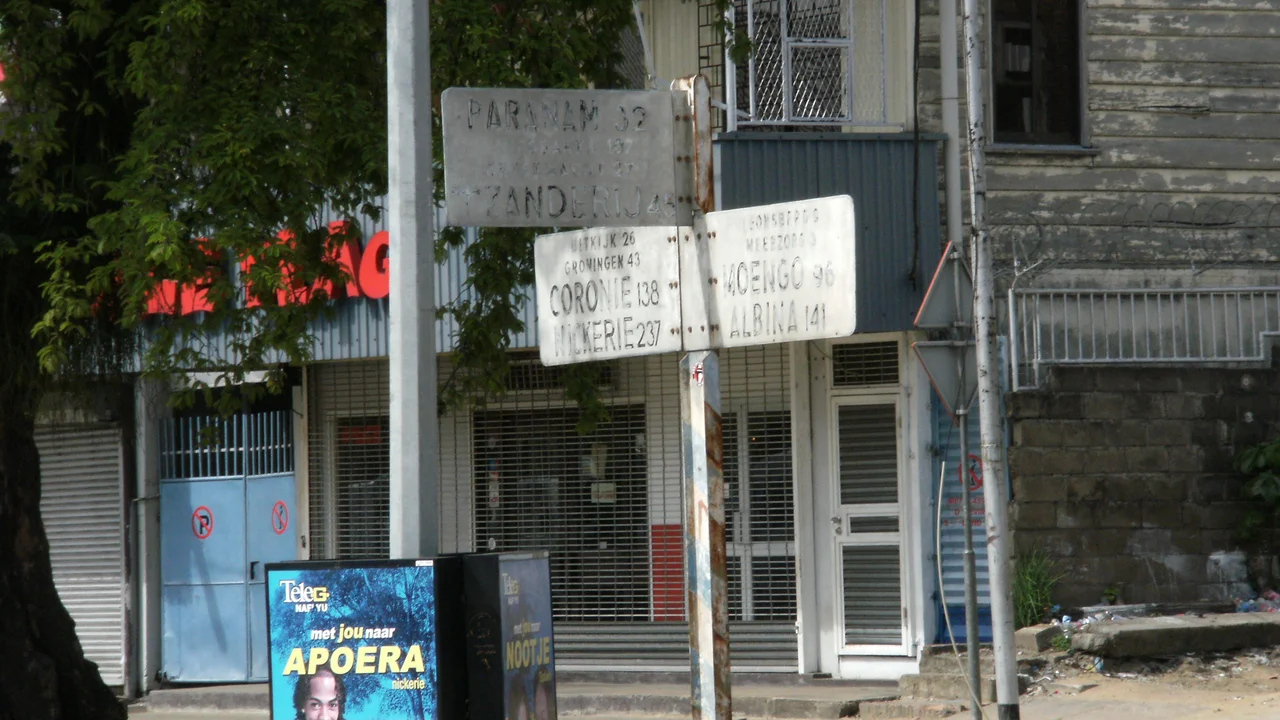
Visitors see official Dutch municipal street signs and ministerial directories in the capital.
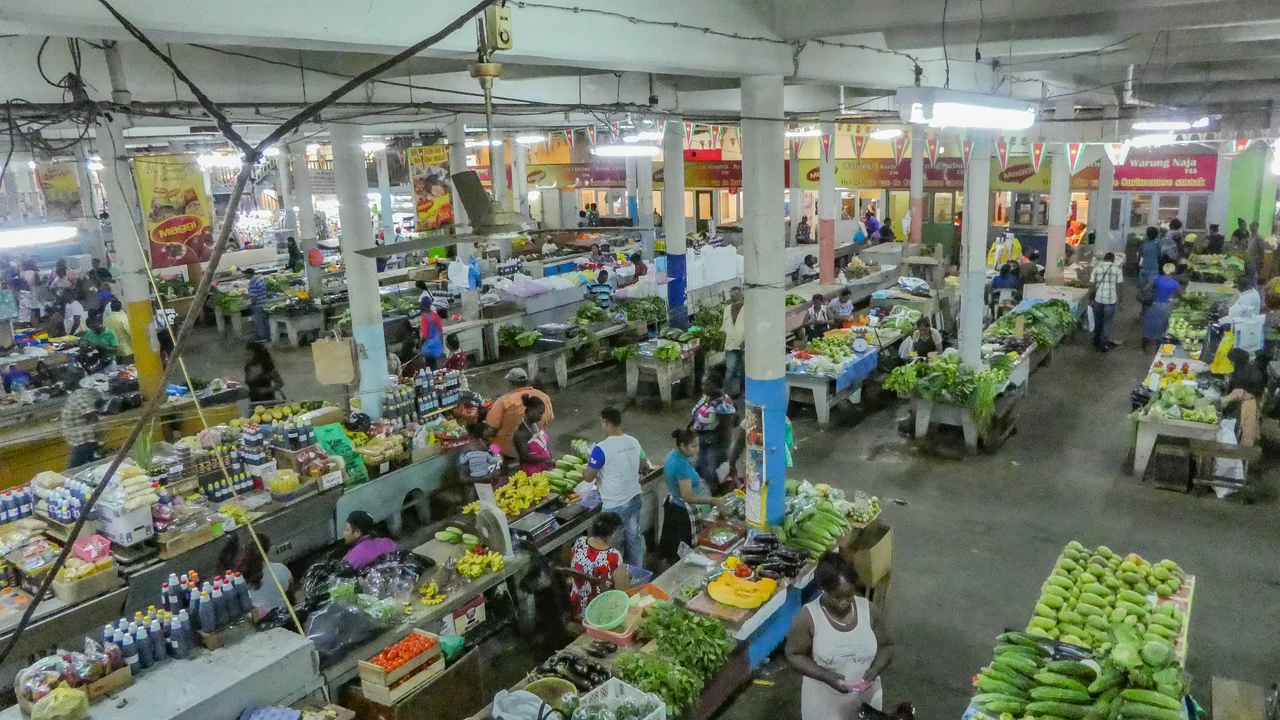
At the open-air Central Market on Waterkant, shoppers negotiate prices in spoken creole.
Experts study this societal diglossia where public administration and informal daily life use different tongues.
City life also coexists with ancestral languages like Sarnami Hindustani and Javanese.
Educational Institutions and Print Media
Scholars at Anton de Kom University document urban bilingualism and changing language prestige across generations.
The Ministry of Education works with the Nederlandse Taalunie after joining as an associate member in 2004.
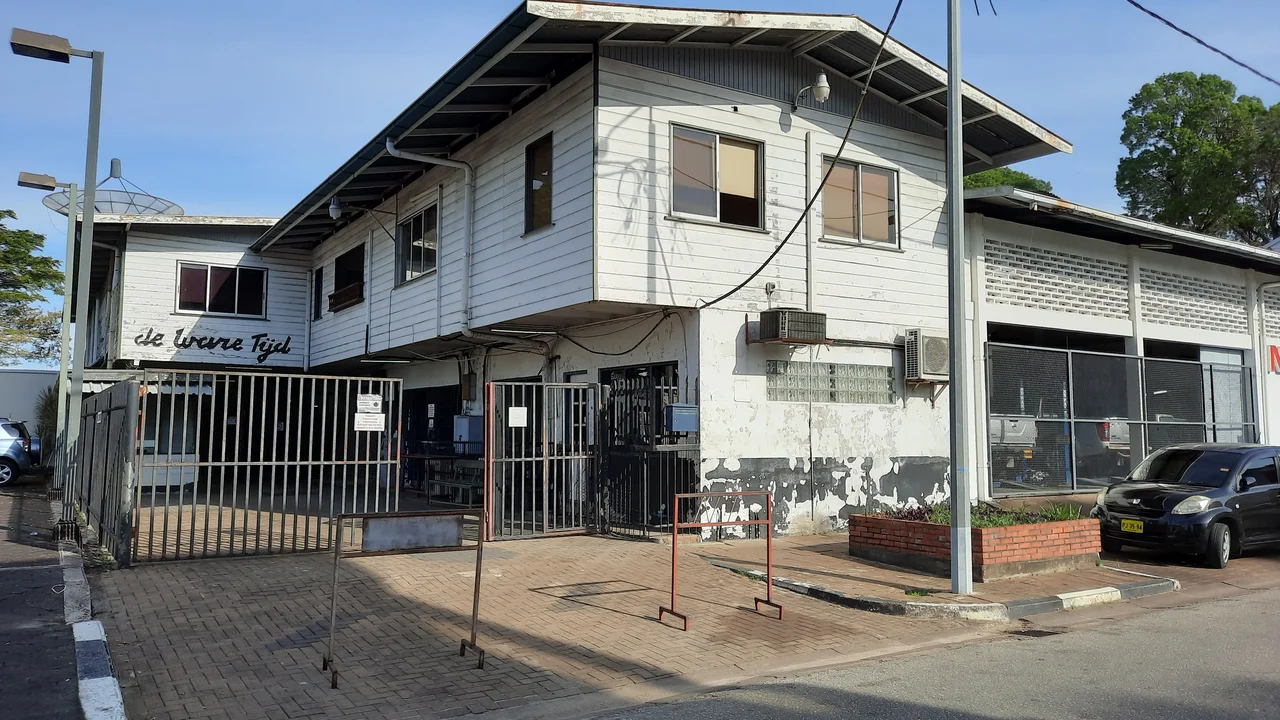
Newspapers like De Ware Tijd write investigative stories in Dutch while sharing cultural idioms.
Literary pioneers like the poet Trefossa wrote rich poetry in Sranan Tongo.
Broadcasters on Radio SRS switch between Dutch news reports and spontaneous listener dialogues.
Municipal clerks and interpreters help residents by translating legal terminology into conversational phrases.
Code-Switching Proverbs and Expressive Arts
People use conversational code-switching, moving from Dutch to Sranan Tongo for humor and emphasis.
In 1986, the government passed an orthography resolution with standardized spelling conventions.
Lawmakers in the National Assembly give statutory speeches in Dutch but quote traditional proverbs called odo.
Pupils study Dutch lessons in primary schools and revert to creole during playground recess.
Musicians write Kaseko and Kawina songs with creole lyrics for popular public celebrations.
Local speech has developed distinct phonological traits known collectively as Surinaams-Nederlands.
Demographic Prevalence and Transatlantic Links
Statistics from the General Bureau of Statistics confirm that eighty percent of urban households speak Dutch.
Educators study proposals for bilingual early childhood instruction to assist young pupils.
Daily contact creates reciprocal borrowing, sharing cooking words and technical terms between tongues.
Suriname joins the Nederlandse Taalunie to help set international spelling norms and lexicographical projects.
Dual linguistic competence provides a strong civic bridge that connects diverse ethnic groups.
Transatlantic diaspora families living in Amsterdam and Rotterdam maintain active cultural dialogue with Paramaribo.
A2 · Elementary
Sranan Tongo and Dutch in Paramaribo Public Life: Everyday Bilingualism in Suriname
Exploring how official Dutch governance and spoken Sranan Tongo coexist across market stalls, school playgrounds, media broadcasts, and neighborhood conversations.
Dutch Statutory Role and Market Creole
Suriname stands as the only Dutch-speaking sovereign nation in South America, preserving Dutch as the statutory language of parliamentary governance, judicial rulings, and civic debate.
Alongside this formal structure, Sranan Tongo functions as a vibrant nationwide lingua franca, created as an English-based creole enriched by Portuguese, Dutch, and West African syntax.
A walk through historic Paramaribo displays Dutch across blue street plaques, ministerial directories, postal signs, and official gazettes.
In open-air commercial areas such as the riverside Central Market, commerce operates predominantly in spoken Sranan Tongo as shoppers negotiate prices for fresh fish and cassava.
Linguists describe this urban balance as an enduring pattern of societal diglossia, dividing formal civic administration from intimate everyday speech.
Beyond this primary duality, urban life coexists with several ancestral tongues, including Sarnami Hindustani, Javanese, and diverse Maroon vernaculars.
Educational Institutions and Print Media
Linguists at Anton de Kom University document urban bilingualism across generations, recording shifts in social prestige between colonial and modern spoken codes.
The national government collaborates with the Nederlandse Taalunie, which Suriname joined as an associate member during formal ceremonies in 2004.
Paramaribo print publications such as De Ware Tijd lead investigative journalism in Dutch while incorporating expressive creole sayings into cultural reportage.
Literary pioneers like the celebrated poet Trefossa demonstrated that Sranan Tongo possessed refined metaphorical range suitable for published national literature.
Radio presenters across stations like Radio SRS move between formal Dutch news and spontaneous conversations with call-in listeners.
Municipal clerks and legal interpreters frequently help citizens navigate formal paperwork by translating complex Dutch administrative terminology into conversational phrasing.
Code-Switching Proverbs and Expressive Arts
Conversational code-switching occurs across Paramaribo streets, where speakers begin sentences in Dutch and pivot into Sranan Tongo for humor or emotional emphasis.
To stabilize written communication, national authorities introduced an official orthography resolution in 1986 that fixed standardized spelling conventions for creole texts.
Statutory debates in the National Assembly proceed in Dutch, yet lawmakers routinely quote ancestral proverbs known as odo to connect with the public.
Inside city classrooms, formal lessons follow standard Dutch curricula, but energetic pupils instantly revert to Sranan Tongo once the outdoor bell signals morning recess.
Celebrated Kaseko and Kawina musical performances feature creole lyrics, anchoring oral heritage in street festivities, dancehalls, and national holidays.
Over decades of daily bilingual interaction, local Dutch has evolved distinct phonological traits and idioms, giving rise to recognized Surinaams-Nederlands.
Demographic Prevalence and Transatlantic Links
Official demographic statistics from the General Bureau of Statistics show that over eighty percent of urban households speak Dutch alongside Sranan Tongo.
Academic specialists and educators evaluate innovative proposals for bilingual early education to support young learners whose mother tongue is Sranan Tongo.
Decades of intimate contact have spurred continuous reciprocal borrowing, introducing creole culinary terms into Dutch and administrative vocabulary into Sranan Tongo.
Active participation in the Nederlandse Taalunie ensures that Surinamese educators help establish international spelling norms and joint lexicographical projects.
Widespread dual linguistic competence functions as an essential civic bridge, uniting multicultural neighborhoods across daily civic routines.
Close family ties link Paramaribo with the overseas Surinamese diaspora in Amsterdam and Rotterdam, sustaining vibrant linguistic exchange across the Atlantic.
B1 · Intermediate
Sranan Tongo and Dutch in Paramaribo Public Life: Societal Diglossia and Urban Media
An analytical examination of public language dynamics in Paramaribo, assessing institutional Dutch administration, street creole commerce, and De Ware Tijd reporting.
Dutch Statutory Role and Market Creole
Suriname stands as the only Dutch-speaking sovereign nation in South America, preserving Dutch as the statutory language of parliamentary governance, judicial rulings, and civic debate.
Alongside this formal structure, Sranan Tongo functions as a vibrant nationwide lingua franca, created as an English-based creole enriched by Portuguese, Dutch, and West African syntax.
A walk through historic Paramaribo displays Dutch across blue street plaques, ministerial directories, postal signs, and official gazettes.
In open-air commercial areas such as the riverside Central Market, commerce operates predominantly in spoken Sranan Tongo as shoppers negotiate prices for fresh fish and cassava.
Linguists describe this urban balance as an enduring pattern of societal diglossia, dividing formal civic administration from intimate everyday speech.
Beyond this primary duality, urban life coexists with several ancestral tongues, including Sarnami Hindustani, Javanese, and diverse Maroon vernaculars.
Educational Institutions and Print Media
Linguists at Anton de Kom University document urban bilingualism across generations, recording shifts in social prestige between colonial and modern spoken codes.
The national government collaborates with the Nederlandse Taalunie, which Suriname joined as an associate member during formal ceremonies in 2004.
Paramaribo print publications such as De Ware Tijd lead investigative journalism in Dutch while incorporating expressive creole sayings into cultural reportage.
Literary pioneers like the celebrated poet Trefossa demonstrated that Sranan Tongo possessed refined metaphorical range suitable for published national literature.
Radio presenters across stations like Radio SRS move between formal Dutch news and spontaneous conversations with call-in listeners.
Municipal clerks and legal interpreters frequently help citizens navigate formal paperwork by translating complex Dutch administrative terminology into conversational phrasing.
Code-Switching Proverbs and Expressive Arts
Conversational code-switching occurs across Paramaribo streets, where speakers begin sentences in Dutch and pivot into Sranan Tongo for humor or emotional emphasis.
To stabilize written communication, national authorities introduced an official orthography resolution in 1986 that fixed standardized spelling conventions for creole texts.
Statutory debates in the National Assembly proceed in Dutch, yet lawmakers routinely quote ancestral proverbs known as odo to connect with the public.
Inside city classrooms, formal lessons follow standard Dutch curricula, but energetic pupils instantly revert to Sranan Tongo once the outdoor bell signals morning recess.
Celebrated Kaseko and Kawina musical performances feature creole lyrics, anchoring oral heritage in street festivities, dancehalls, and national holidays.
Over decades of daily bilingual interaction, local Dutch has evolved distinct phonological traits and idioms, giving rise to recognized Surinaams-Nederlands.
Demographic Prevalence and Transatlantic Links
Official demographic statistics from the General Bureau of Statistics show that over eighty percent of urban households speak Dutch alongside Sranan Tongo.
Academic specialists and educators evaluate innovative proposals for bilingual early education to support young learners whose mother tongue is Sranan Tongo.
Decades of intimate contact have spurred continuous reciprocal borrowing, introducing creole culinary terms into Dutch and administrative vocabulary into Sranan Tongo.
Active participation in the Nederlandse Taalunie ensures that Surinamese educators help establish international spelling norms and joint lexicographical projects.
Widespread dual linguistic competence functions as an essential civic bridge, uniting multicultural neighborhoods across daily civic routines.
Close family ties link Paramaribo with the overseas Surinamese diaspora in Amsterdam and Rotterdam, sustaining vibrant linguistic exchange across the Atlantic.
B2 · Upper Intermediate
Sranan Tongo and Dutch in Paramaribo Public Life: Code-Switching and Surinaams-Nederlands
Investigating conversational code-switching, the 1986 orthography resolution, parliamentary proverbs, and the evolution of localized Dutch syntax.
Dutch Statutory Role and Market Creole
Suriname stands as the only Dutch-speaking sovereign nation in South America, preserving Dutch as the statutory language of parliamentary governance, judicial rulings, and civic debate.
Alongside this formal structure, Sranan Tongo functions as a vibrant nationwide lingua franca, created as an English-based creole enriched by Portuguese, Dutch, and West African syntax.
A walk through historic Paramaribo displays Dutch across blue street plaques, ministerial directories, postal signs, and official gazettes.
In open-air commercial areas such as the riverside Central Market, commerce operates predominantly in spoken Sranan Tongo as shoppers negotiate prices for fresh fish and cassava.
Linguists describe this urban balance as an enduring pattern of societal diglossia, dividing formal civic administration from intimate everyday speech.
Beyond this primary duality, urban life coexists with several ancestral tongues, including Sarnami Hindustani, Javanese, and diverse Maroon vernaculars.
Educational Institutions and Print Media
Linguists at Anton de Kom University document urban bilingualism across generations, recording shifts in social prestige between colonial and modern spoken codes.
The national government collaborates with the Nederlandse Taalunie, which Suriname joined as an associate member during formal ceremonies in 2004.
Paramaribo print publications such as De Ware Tijd lead investigative journalism in Dutch while incorporating expressive creole sayings into cultural reportage.
Literary pioneers like the celebrated poet Trefossa demonstrated that Sranan Tongo possessed refined metaphorical range suitable for published national literature.
Radio presenters across stations like Radio SRS move between formal Dutch news and spontaneous conversations with call-in listeners.
Municipal clerks and legal interpreters frequently help citizens navigate formal paperwork by translating complex Dutch administrative terminology into conversational phrasing.
Code-Switching Proverbs and Expressive Arts
Conversational code-switching occurs across Paramaribo streets, where speakers begin sentences in Dutch and pivot into Sranan Tongo for humor or emotional emphasis.
To stabilize written communication, national authorities introduced an official orthography resolution in 1986 that fixed standardized spelling conventions for creole texts.
Statutory debates in the National Assembly proceed in Dutch, yet lawmakers routinely quote ancestral proverbs known as odo to connect with the public.
Inside city classrooms, formal lessons follow standard Dutch curricula, but energetic pupils instantly revert to Sranan Tongo once the outdoor bell signals morning recess.
Celebrated Kaseko and Kawina musical performances feature creole lyrics, anchoring oral heritage in street festivities, dancehalls, and national holidays.
Over decades of daily bilingual interaction, local Dutch has evolved distinct phonological traits and idioms, giving rise to recognized Surinaams-Nederlands.
Demographic Prevalence and Transatlantic Links
Official demographic statistics from the General Bureau of Statistics show that over eighty percent of urban households speak Dutch alongside Sranan Tongo.
Academic specialists and educators evaluate innovative proposals for bilingual early education to support young learners whose mother tongue is Sranan Tongo.
Decades of intimate contact have spurred continuous reciprocal borrowing, introducing creole culinary terms into Dutch and administrative vocabulary into Sranan Tongo.
Active participation in the Nederlandse Taalunie ensures that Surinamese educators help establish international spelling norms and joint lexicographical projects.
Widespread dual linguistic competence functions as an essential civic bridge, uniting multicultural neighborhoods across daily civic routines.
Close family ties link Paramaribo with the overseas Surinamese diaspora in Amsterdam and Rotterdam, sustaining vibrant linguistic exchange across the Atlantic.
C1 · Advanced
The Sociolinguistic Ecology of Sranan Tongo and Dutch in Paramaribo Public Life
A critical journalistic monograph analyzing statutory diglossia, the Nederlandse Taalunie partnership, expressive literary traditions, and reciprocal lexical borrowing.
Dutch Statutory Role and Market Creole
Suriname stands as the only Dutch-speaking sovereign nation in South America, preserving Dutch as the statutory language of parliamentary governance, judicial rulings, and civic debate.
Alongside this formal structure, Sranan Tongo functions as a vibrant nationwide lingua franca, created as an English-based creole enriched by Portuguese, Dutch, and West African syntax.
A walk through historic Paramaribo displays Dutch across blue street plaques, ministerial directories, postal signs, and official gazettes.
In open-air commercial areas such as the riverside Central Market, commerce operates predominantly in spoken Sranan Tongo as shoppers negotiate prices for fresh fish and cassava.
Linguists describe this urban balance as an enduring pattern of societal diglossia, dividing formal civic administration from intimate everyday speech.
Beyond this primary duality, urban life coexists with several ancestral tongues, including Sarnami Hindustani, Javanese, and diverse Maroon vernaculars.
Educational Institutions and Print Media
Linguists at Anton de Kom University document urban bilingualism across generations, recording shifts in social prestige between colonial and modern spoken codes.
The national government collaborates with the Nederlandse Taalunie, which Suriname joined as an associate member during formal ceremonies in 2004.
Paramaribo print publications such as De Ware Tijd lead investigative journalism in Dutch while incorporating expressive creole sayings into cultural reportage.
Literary pioneers like the celebrated poet Trefossa demonstrated that Sranan Tongo possessed refined metaphorical range suitable for published national literature.
Radio presenters across stations like Radio SRS move between formal Dutch news and spontaneous conversations with call-in listeners.
Municipal clerks and legal interpreters frequently help citizens navigate formal paperwork by translating complex Dutch administrative terminology into conversational phrasing.
Code-Switching Proverbs and Expressive Arts
Conversational code-switching occurs across Paramaribo streets, where speakers begin sentences in Dutch and pivot into Sranan Tongo for humor or emotional emphasis.
To stabilize written communication, national authorities introduced an official orthography resolution in 1986 that fixed standardized spelling conventions for creole texts.
Statutory debates in the National Assembly proceed in Dutch, yet lawmakers routinely quote ancestral proverbs known as odo to connect with the public.
Inside city classrooms, formal lessons follow standard Dutch curricula, but energetic pupils instantly revert to Sranan Tongo once the outdoor bell signals morning recess.
Celebrated Kaseko and Kawina musical performances feature creole lyrics, anchoring oral heritage in street festivities, dancehalls, and national holidays.
Over decades of daily bilingual interaction, local Dutch has evolved distinct phonological traits and idioms, giving rise to recognized Surinaams-Nederlands.
Demographic Prevalence and Transatlantic Links
Official demographic statistics from the General Bureau of Statistics show that over eighty percent of urban households speak Dutch alongside Sranan Tongo.
Academic specialists and educators evaluate innovative proposals for bilingual early education to support young learners whose mother tongue is Sranan Tongo.
Decades of intimate contact have spurred continuous reciprocal borrowing, introducing creole culinary terms into Dutch and administrative vocabulary into Sranan Tongo.
Active participation in the Nederlandse Taalunie ensures that Surinamese educators help establish international spelling norms and joint lexicographical projects.
Widespread dual linguistic competence functions as an essential civic bridge, uniting multicultural neighborhoods across daily civic routines.
Close family ties link Paramaribo with the overseas Surinamese diaspora in Amsterdam and Rotterdam, sustaining vibrant linguistic exchange across the Atlantic.
C2 · Mastery
Sranan Tongo and Dutch in Paramaribo Public Life: Language Contact, Policy, and Identity
A comprehensive analytical study of Suriname bilingual public sphere, examining constitutional Dutch status, Sranan Tongo literature, and transatlantic diaspora dialogue.
Dutch Statutory Role and Market Creole
Suriname stands as the only Dutch-speaking sovereign nation in South America, preserving Dutch as the statutory language of parliamentary governance, judicial rulings, and civic debate.
Alongside this formal structure, Sranan Tongo functions as a vibrant nationwide lingua franca, created as an English-based creole enriched by Portuguese, Dutch, and West African syntax.
A walk through historic Paramaribo displays Dutch across blue street plaques, ministerial directories, postal signs, and official gazettes.
In open-air commercial areas such as the riverside Central Market, commerce operates predominantly in spoken Sranan Tongo as shoppers negotiate prices for fresh fish and cassava.
Linguists describe this urban balance as an enduring pattern of societal diglossia, dividing formal civic administration from intimate everyday speech.
Beyond this primary duality, urban life coexists with several ancestral tongues, including Sarnami Hindustani, Javanese, and diverse Maroon vernaculars.
Educational Institutions and Print Media
Linguists at Anton de Kom University document urban bilingualism across generations, recording shifts in social prestige between colonial and modern spoken codes.
The national government collaborates with the Nederlandse Taalunie, which Suriname joined as an associate member during formal ceremonies in 2004.
Paramaribo print publications such as De Ware Tijd lead investigative journalism in Dutch while incorporating expressive creole sayings into cultural reportage.
Literary pioneers like the celebrated poet Trefossa demonstrated that Sranan Tongo possessed refined metaphorical range suitable for published national literature.
Radio presenters across stations like Radio SRS move between formal Dutch news and spontaneous conversations with call-in listeners.
Municipal clerks and legal interpreters frequently help citizens navigate formal paperwork by translating complex Dutch administrative terminology into conversational phrasing.
Code-Switching Proverbs and Expressive Arts
Conversational code-switching occurs across Paramaribo streets, where speakers begin sentences in Dutch and pivot into Sranan Tongo for humor or emotional emphasis.
To stabilize written communication, national authorities introduced an official orthography resolution in 1986 that fixed standardized spelling conventions for creole texts.
Statutory debates in the National Assembly proceed in Dutch, yet lawmakers routinely quote ancestral proverbs known as odo to connect with the public.
Inside city classrooms, formal lessons follow standard Dutch curricula, but energetic pupils instantly revert to Sranan Tongo once the outdoor bell signals morning recess.
Celebrated Kaseko and Kawina musical performances feature creole lyrics, anchoring oral heritage in street festivities, dancehalls, and national holidays.
Over decades of daily bilingual interaction, local Dutch has evolved distinct phonological traits and idioms, giving rise to recognized Surinaams-Nederlands.
Demographic Prevalence and Transatlantic Links
Official demographic statistics from the General Bureau of Statistics show that over eighty percent of urban households speak Dutch alongside Sranan Tongo.
Academic specialists and educators evaluate innovative proposals for bilingual early education to support young learners whose mother tongue is Sranan Tongo.
Decades of intimate contact have spurred continuous reciprocal borrowing, introducing creole culinary terms into Dutch and administrative vocabulary into Sranan Tongo.
Active participation in the Nederlandse Taalunie ensures that Surinamese educators help establish international spelling norms and joint lexicographical projects.
Widespread dual linguistic competence functions as an essential civic bridge, uniting multicultural neighborhoods across daily civic routines.
Close family ties link Paramaribo with the overseas Surinamese diaspora in Amsterdam and Rotterdam, sustaining vibrant linguistic exchange across the Atlantic.
Check your understanding
Choose how closely you want to revisit the article. You can refer back while answering, and review explanations when you finish.
Quick Quiz A1
Try one question, then create a free account for the full Quick Quiz. Sign Up Free
Answer every question before checking. There is no time limit.
Your results
/ 1 correct (%)
Read the explanations to see how each answer connects to the article.
-
What kind of nation is Suriname in South America?
1. Answer:
Quick Quiz A2
Try one question, then create a free account for the full Quick Quiz. Sign Up Free
Answer every question before checking. There is no time limit.
Your results
/ 1 correct (%)
Read the explanations to see how each answer connects to the article.
-
What status does Suriname hold as a Dutch-speaking sovereign nation in South America?
1. Answer:
Quick Quiz B1
Try one question, then create a free account for the full Quick Quiz. Sign Up Free
Answer every question before checking. There is no time limit.
Your results
/ 1 correct (%)
Read the explanations to see how each answer connects to the article.
-
What status does Suriname hold as a Dutch-speaking sovereign nation in South America?
1. Answer:
Quick Quiz B2
Try one question, then create a free account for the full Quick Quiz. Sign Up Free
Answer every question before checking. There is no time limit.
Your results
/ 1 correct (%)
Read the explanations to see how each answer connects to the article.
-
What status does Suriname hold as a Dutch-speaking sovereign nation in South America?
1. Answer:
Quick Quiz C1
Try one question, then create a free account for the full Quick Quiz. Sign Up Free
Answer every question before checking. There is no time limit.
Your results
/ 1 correct (%)
Read the explanations to see how each answer connects to the article.
-
What status does Suriname hold as a Dutch-speaking sovereign nation in South America?
1. Answer:
Quick Quiz C2
Try one question, then create a free account for the full Quick Quiz. Sign Up Free
Answer every question before checking. There is no time limit.
Your results
/ 1 correct (%)
Read the explanations to see how each answer connects to the article.
-
What status does Suriname hold as a Dutch-speaking sovereign nation in South America?
1. Answer:
