A1 · Beginner
Fäbod Summer Farms: Cows, Woods, and Mountain Cheese in Sweden
Swedish fäbod summer farms move cows and goats to forest pastures every summer to make long-lasting butter and delicious cheese.
Seasonal Transhumance and Pasture Movement
Swedish fäbod summer farming moves cows, goats, and sheep from home villages to forest pastures every June.
UNESCO inscribed summer farming in Sweden and Norway on the official heritage list in December 2024.
Herders lead farm animals along forest paths to mountain clearings in Dalarna, Jämtland, and Härjedalen.
Moving herds to the woods saves village hayfields for winter food while animals eat summer grass.
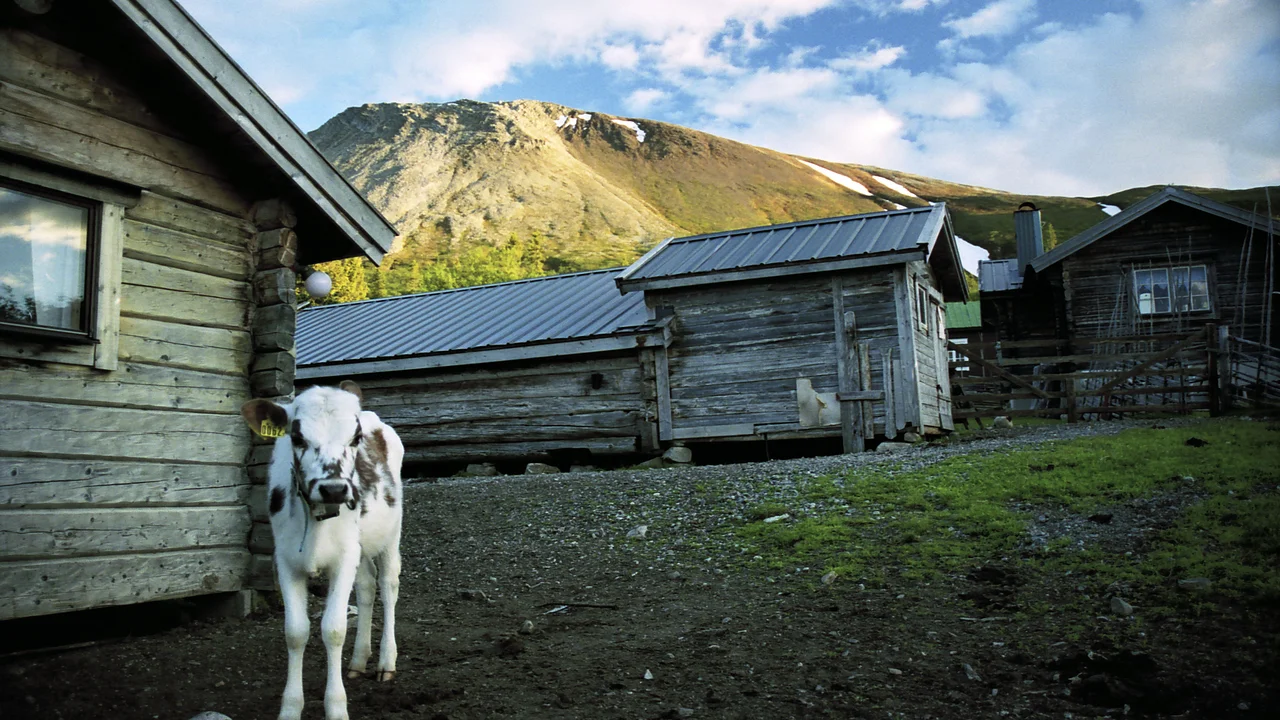
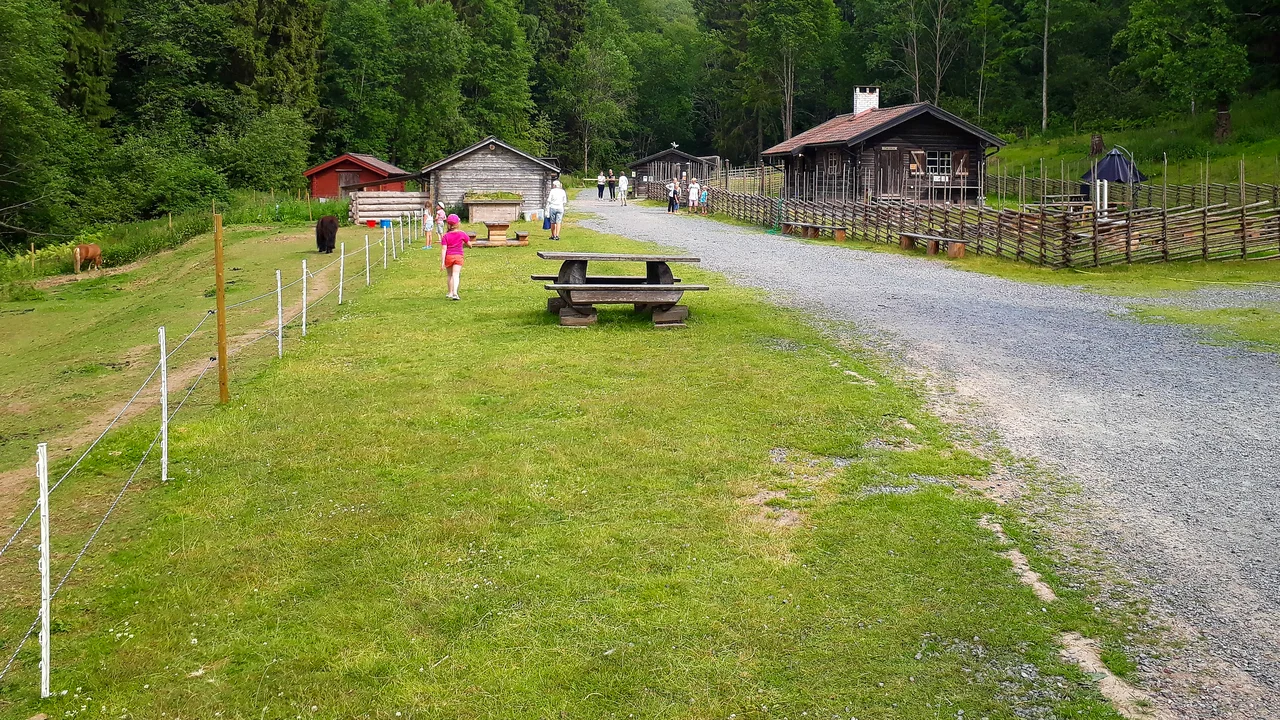
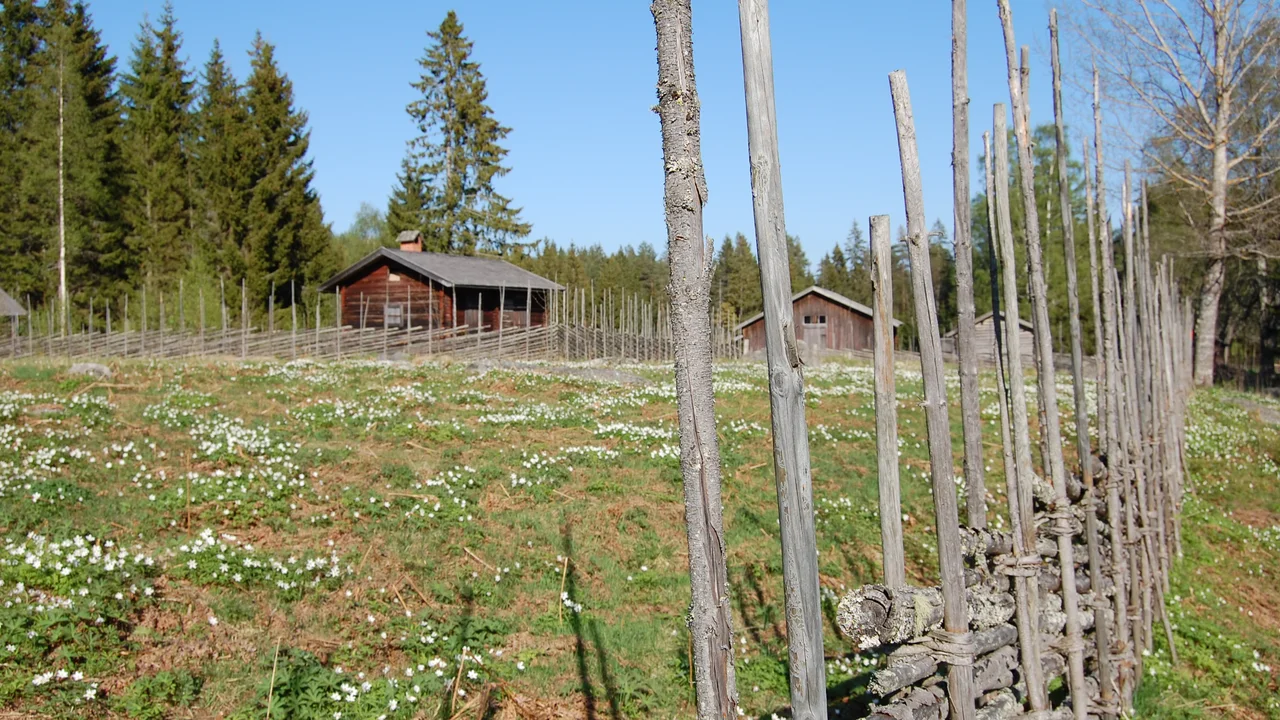
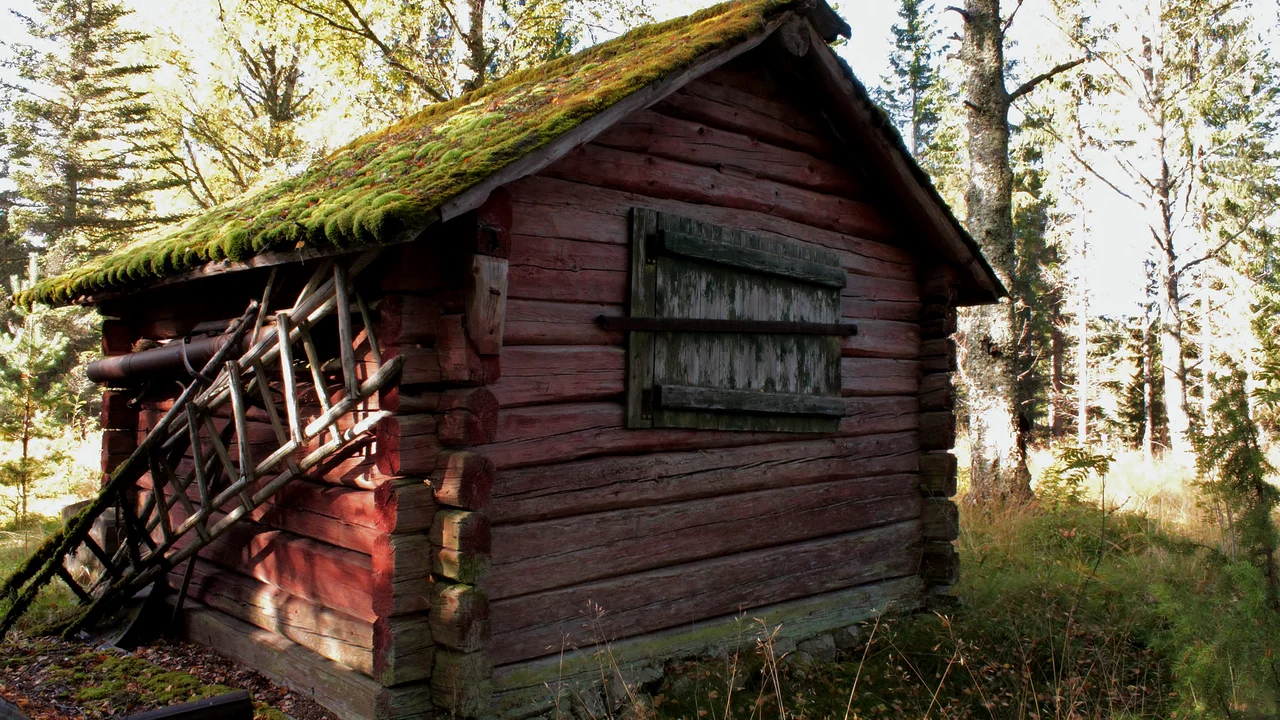
Traditional summer farm hamlets have red timber cabins and roundpole fences built from split spruce rails.
Farmers keep animals grazing on open forest meadows to prevent wild trees from covering historic fields.
Artisan Dairy Craft and Fermentation Preservation
Summer dairy craft turns fresh raw milk into long-lasting butter and firm farmhouse cheese.
Farm women churn fresh sour cream in tall wooden barrels to make salted butter for winter storage.
Cheesemakers warm milk curd in copper pots over wood fires to press hard mountain cheeses on spruce planks.
Sweet whey boils for hours over hot embers to create brown sweet cheese called mesost.
Thick sour long-milk called långmjölk grows naturally using special forest plant leaves and milk cultures.
Cold earth cellars and cool spring water boxes keep milk jugs fresh in the summer warmth.
Social Organization and Pastoral Vocal Traditions
Young women known as fäbodjäntor lived on summer farms to milk herds and make fine dairy foods.
Women called cows across quiet valleys using high vocal songs and herding cries called kulning.
High singing calls work as signals to guide farm herds and talk across faraway mountain hills.
Daily summer farm work ran from early morning to dark with milking, cleaning tubs, and tending fires.
Village farm groups shared pasture rights and cared for communal grazing lands through local rules.
Historical museum stories show that summer dairy women held great independence and deep knowledge of nature.
Biodiversity Conservation and Culinary Renaissance
Summer cattle grazing keeps forest meadows open and protects rare flowers like mountain arnica and wild gentian.
Rare Swedish mountain cows and Dalarna sheep thrive by eating sweet forest grass and wild shrubs.
Government farm agencies give conservation funds to active summer farms to keep old pastures clear of trees.
New cooking projects bring traditional fäbod cheeses and butter to modern city restaurants and food markets.
Historic summer farms welcome summer guests to see traditional butter making and wooden cabin crafts.
Supporting working fäbod farms keeps old pastoral skills and Nordic culinary heritage alive for new generations.
A2 · Elementary
Fäbod Summer Farms: Nordic Transhumance and Heritage Cheeses
Exploring how seasonal forest grazing, wooden churns, and open meadow conservation sustain traditional Swedish summer farms.
Seasonal Transhumance and Pasture Movement
Swedish fäbod summer farming represents a traditional pastoral system moving livestock from village homesteads to forest pastures each June.
In December 2024, UNESCO inscribed summer farming in Sweden and Norway on the Representative List of Intangible Cultural Heritage.
Herders drive cattle, goats, and sheep along designated forest trails toward remote subalpine clearings in Dalarna, Jämtland, and Härjedalen.
Seasonal transhumance preserves scarce valley hayfields for winter fodder while utilizing high-latitude forest meadows during brief summer months.
Traditional fäbod hamlets feature timber stuga log cabins, boiling huts, and roundpole gärdsgård fencing built from split spruce rails.
Modern practitioners maintain rotational grazing across semi-natural pastures, preventing forest encroachment on historic botanical clearings.
Artisan Dairy Craft and Fermentation Preservation
Summer farm dairy craft centers on transforming daily raw milk yields into shelf-stable butter and rennet-curd farmhouse cheeses.
Milkmaids churn fresh sour cream in upright wooden dash churns to produce salted butter stored in firkins for winter trade.
Farmhouse cheesemakers heat curd in copper cauldrons over wood fires to press hard mountain fäbodost cheeses aged on spruce planks.
Remaining sweet whey undergoes hours of simmering over low embers to crystallize milk sugars into brown caramelized mesost cheese.
Traditional long-milk or långmjölk relies on spontaneous ropy fermentation cultivated using butterwort leaves or ancestral bacterial strains.
Subterranean earthen milk cellars and spring-fed cooling boxes maintain cool ambient temperatures to preserve daily dairy vessels.
Social Organization and Pastoral Vocal Traditions
Historically, young women known as fäbodjäntor managed summer farms independently, overseeing dairy processing and livestock welfare.
Female herders practiced kulning, a high-pitched non-verbal vocal calling technique that echoes across forested valleys to summon grazing herds.
Kulning vocalizations function both as practical herding signals and long-distance communication across isolated mountain hamlets.
Summer farm labor followed rigorous dawn-to-dusk daily routines of milking, skimming cream, scrubbing wooden vessels, and tending hearth fires.
Cooperative grazing rights and communal pasture stewardship were regulated through traditional village assemblies and customary pasture bylaws.
Archival oral histories collected by the Nordic Museum document the economic autonomy and practical botanical knowledge of historic milkmaids.
Biodiversity Conservation and Culinary Renaissance
Centuries of continuous summer grazing sustain high botanical diversity, supporting rare grassland herbs like arnica montana and field gentian.
Native endangered livestock breeds including Swedish mountain cattle and Dalarna sheep thrive on varied forest browse and alpine scrub.
The Swedish Board of Agriculture provides targeted agri-environmental payments to active fäbod farms to maintain open grazing landscapes.
Artisanal culinary revival programs connect contemporary summer farm dairies with specialized Nordic restaurants and regional food markets.
Educational associations and living history summer farms welcome summer visitors to observe live butter churning and timber conservation craft.
Safeguarding active fäbod operations ensures the continuous transmission of pastoral ecological knowledge and regional culinary traditions.
B1 · Intermediate
Fäbod Summer Farms: Pastoral Heritage, Dairy Craft, and Kulning
An analytical examination of Nordic seasonal pastoralism, reviewing wood-fired cheese making, whey crystallization, and female herder autonomy.
Seasonal Transhumance and Pasture Movement
Swedish fäbod summer farming represents a traditional pastoral system moving livestock from village homesteads to forest pastures each June.
In December 2024, UNESCO inscribed summer farming in Sweden and Norway on the Representative List of Intangible Cultural Heritage.
Herders drive cattle, goats, and sheep along designated forest trails toward remote subalpine clearings in Dalarna, Jämtland, and Härjedalen.
Seasonal transhumance preserves scarce valley hayfields for winter fodder while utilizing high-latitude forest meadows during brief summer months.
Traditional fäbod hamlets feature timber stuga log cabins, boiling huts, and roundpole gärdsgård fencing built from split spruce rails.
Modern practitioners maintain rotational grazing across semi-natural pastures, preventing forest encroachment on historic botanical clearings.
Artisan Dairy Craft and Fermentation Preservation
Summer farm dairy craft centers on transforming daily raw milk yields into shelf-stable butter and rennet-curd farmhouse cheeses.
Milkmaids churn fresh sour cream in upright wooden dash churns to produce salted butter stored in firkins for winter trade.
Farmhouse cheesemakers heat curd in copper cauldrons over wood fires to press hard mountain fäbodost cheeses aged on spruce planks.
Remaining sweet whey undergoes hours of simmering over low embers to crystallize milk sugars into brown caramelized mesost cheese.
Traditional long-milk or långmjölk relies on spontaneous ropy fermentation cultivated using butterwort leaves or ancestral bacterial strains.
Subterranean earthen milk cellars and spring-fed cooling boxes maintain cool ambient temperatures to preserve daily dairy vessels.
Social Organization and Pastoral Vocal Traditions
Historically, young women known as fäbodjäntor managed summer farms independently, overseeing dairy processing and livestock welfare.
Female herders practiced kulning, a high-pitched non-verbal vocal calling technique that echoes across forested valleys to summon grazing herds.
Kulning vocalizations function both as practical herding signals and long-distance communication across isolated mountain hamlets.
Summer farm labor followed rigorous dawn-to-dusk daily routines of milking, skimming cream, scrubbing wooden vessels, and tending hearth fires.
Cooperative grazing rights and communal pasture stewardship were regulated through traditional village assemblies and customary pasture bylaws.
Archival oral histories collected by the Nordic Museum document the economic autonomy and practical botanical knowledge of historic milkmaids.
Biodiversity Conservation and Culinary Renaissance
Centuries of continuous summer grazing sustain high botanical diversity, supporting rare grassland herbs like arnica montana and field gentian.
Native endangered livestock breeds including Swedish mountain cattle and Dalarna sheep thrive on varied forest browse and alpine scrub.
The Swedish Board of Agriculture provides targeted agri-environmental payments to active fäbod farms to maintain open grazing landscapes.
Artisanal culinary revival programs connect contemporary summer farm dairies with specialized Nordic restaurants and regional food markets.
Educational associations and living history summer farms welcome summer visitors to observe live butter churning and timber conservation craft.
Safeguarding active fäbod operations ensures the continuous transmission of pastoral ecological knowledge and regional culinary traditions.
B2 · Upper Intermediate
Fäbod Summer Farms: Transhumance Ecology and Intangible Heritage
Investigating UNESCO-inscribed summer farming, subalpine botanical biodiversity, artisanal food networks, and semi-natural grassland preservation.
Seasonal Transhumance and Pasture Movement
Swedish fäbod summer farming represents a traditional pastoral system moving livestock from village homesteads to forest pastures each June.
In December 2024, UNESCO inscribed summer farming in Sweden and Norway on the Representative List of Intangible Cultural Heritage.
Herders drive cattle, goats, and sheep along designated forest trails toward remote subalpine clearings in Dalarna, Jämtland, and Härjedalen.
Seasonal transhumance preserves scarce valley hayfields for winter fodder while utilizing high-latitude forest meadows during brief summer months.
Traditional fäbod hamlets feature timber stuga log cabins, boiling huts, and roundpole gärdsgård fencing built from split spruce rails.
Modern practitioners maintain rotational grazing across semi-natural pastures, preventing forest encroachment on historic botanical clearings.
Artisan Dairy Craft and Fermentation Preservation
Summer farm dairy craft centers on transforming daily raw milk yields into shelf-stable butter and rennet-curd farmhouse cheeses.
Milkmaids churn fresh sour cream in upright wooden dash churns to produce salted butter stored in firkins for winter trade.
Farmhouse cheesemakers heat curd in copper cauldrons over wood fires to press hard mountain fäbodost cheeses aged on spruce planks.
Remaining sweet whey undergoes hours of simmering over low embers to crystallize milk sugars into brown caramelized mesost cheese.
Traditional long-milk or långmjölk relies on spontaneous ropy fermentation cultivated using butterwort leaves or ancestral bacterial strains.
Subterranean earthen milk cellars and spring-fed cooling boxes maintain cool ambient temperatures to preserve daily dairy vessels.
Social Organization and Pastoral Vocal Traditions
Historically, young women known as fäbodjäntor managed summer farms independently, overseeing dairy processing and livestock welfare.
Female herders practiced kulning, a high-pitched non-verbal vocal calling technique that echoes across forested valleys to summon grazing herds.
Kulning vocalizations function both as practical herding signals and long-distance communication across isolated mountain hamlets.
Summer farm labor followed rigorous dawn-to-dusk daily routines of milking, skimming cream, scrubbing wooden vessels, and tending hearth fires.
Cooperative grazing rights and communal pasture stewardship were regulated through traditional village assemblies and customary pasture bylaws.
Archival oral histories collected by the Nordic Museum document the economic autonomy and practical botanical knowledge of historic milkmaids.
Biodiversity Conservation and Culinary Renaissance
Centuries of continuous summer grazing sustain high botanical diversity, supporting rare grassland herbs like arnica montana and field gentian.
Native endangered livestock breeds including Swedish mountain cattle and Dalarna sheep thrive on varied forest browse and alpine scrub.
The Swedish Board of Agriculture provides targeted agri-environmental payments to active fäbod farms to maintain open grazing landscapes.
Artisanal culinary revival programs connect contemporary summer farm dairies with specialized Nordic restaurants and regional food markets.
Educational associations and living history summer farms welcome summer visitors to observe live butter churning and timber conservation craft.
Safeguarding active fäbod operations ensures the continuous transmission of pastoral ecological knowledge and regional culinary traditions.
C1 · Advanced
The Pastoral Ecology and Dairy Microhistory of Swedish Fäbod Farming
A critical journalistic monograph analyzing boreal forest transhumance, spontaneous ropy fermentation, kulning acoustics, and customary commons governance.
Seasonal Transhumance and Pasture Movement
Swedish fäbod summer farming represents a traditional pastoral system moving livestock from village homesteads to forest pastures each June.
In December 2024, UNESCO inscribed summer farming in Sweden and Norway on the Representative List of Intangible Cultural Heritage.
Herders drive cattle, goats, and sheep along designated forest trails toward remote subalpine clearings in Dalarna, Jämtland, and Härjedalen.
Seasonal transhumance preserves scarce valley hayfields for winter fodder while utilizing high-latitude forest meadows during brief summer months.
Traditional fäbod hamlets feature timber stuga log cabins, boiling huts, and roundpole gärdsgård fencing built from split spruce rails.
Modern practitioners maintain rotational grazing across semi-natural pastures, preventing forest encroachment on historic botanical clearings.
Artisan Dairy Craft and Fermentation Preservation
Summer farm dairy craft centers on transforming daily raw milk yields into shelf-stable butter and rennet-curd farmhouse cheeses.
Milkmaids churn fresh sour cream in upright wooden dash churns to produce salted butter stored in firkins for winter trade.
Farmhouse cheesemakers heat curd in copper cauldrons over wood fires to press hard mountain fäbodost cheeses aged on spruce planks.
Remaining sweet whey undergoes hours of simmering over low embers to crystallize milk sugars into brown caramelized mesost cheese.
Traditional long-milk or långmjölk relies on spontaneous ropy fermentation cultivated using butterwort leaves or ancestral bacterial strains.
Subterranean earthen milk cellars and spring-fed cooling boxes maintain cool ambient temperatures to preserve daily dairy vessels.
Social Organization and Pastoral Vocal Traditions
Historically, young women known as fäbodjäntor managed summer farms independently, overseeing dairy processing and livestock welfare.
Female herders practiced kulning, a high-pitched non-verbal vocal calling technique that echoes across forested valleys to summon grazing herds.
Kulning vocalizations function both as practical herding signals and long-distance communication across isolated mountain hamlets.
Summer farm labor followed rigorous dawn-to-dusk daily routines of milking, skimming cream, scrubbing wooden vessels, and tending hearth fires.
Cooperative grazing rights and communal pasture stewardship were regulated through traditional village assemblies and customary pasture bylaws.
Archival oral histories collected by the Nordic Museum document the economic autonomy and practical botanical knowledge of historic milkmaids.
Biodiversity Conservation and Culinary Renaissance
Centuries of continuous summer grazing sustain high botanical diversity, supporting rare grassland herbs like arnica montana and field gentian.
Native endangered livestock breeds including Swedish mountain cattle and Dalarna sheep thrive on varied forest browse and alpine scrub.
The Swedish Board of Agriculture provides targeted agri-environmental payments to active fäbod farms to maintain open grazing landscapes.
Artisanal culinary revival programs connect contemporary summer farm dairies with specialized Nordic restaurants and regional food markets.
Educational associations and living history summer farms welcome summer visitors to observe live butter churning and timber conservation craft.
Safeguarding active fäbod operations ensures the continuous transmission of pastoral ecological knowledge and regional culinary traditions.
C2 · Mastery
Fäbod Summer Farms: Agrarian Commons, Dairy Preservation, and Subalpine Biogeography
A comprehensive analytical study of Nordic summer pastoralism, evaluating UNESCO heritage safeguarding, semi-natural grassland ecology, and artisanal food revival.
Seasonal Transhumance and Pasture Movement
Swedish fäbod summer farming represents a traditional pastoral system moving livestock from village homesteads to forest pastures each June.
In December 2024, UNESCO inscribed summer farming in Sweden and Norway on the Representative List of Intangible Cultural Heritage.
Herders drive cattle, goats, and sheep along designated forest trails toward remote subalpine clearings in Dalarna, Jämtland, and Härjedalen.
Seasonal transhumance preserves scarce valley hayfields for winter fodder while utilizing high-latitude forest meadows during brief summer months.
Traditional fäbod hamlets feature timber stuga log cabins, boiling huts, and roundpole gärdsgård fencing built from split spruce rails.
Modern practitioners maintain rotational grazing across semi-natural pastures, preventing forest encroachment on historic botanical clearings.
Artisan Dairy Craft and Fermentation Preservation
Summer farm dairy craft centers on transforming daily raw milk yields into shelf-stable butter and rennet-curd farmhouse cheeses.
Milkmaids churn fresh sour cream in upright wooden dash churns to produce salted butter stored in firkins for winter trade.
Farmhouse cheesemakers heat curd in copper cauldrons over wood fires to press hard mountain fäbodost cheeses aged on spruce planks.
Remaining sweet whey undergoes hours of simmering over low embers to crystallize milk sugars into brown caramelized mesost cheese.
Traditional long-milk or långmjölk relies on spontaneous ropy fermentation cultivated using butterwort leaves or ancestral bacterial strains.
Subterranean earthen milk cellars and spring-fed cooling boxes maintain cool ambient temperatures to preserve daily dairy vessels.
Social Organization and Pastoral Vocal Traditions
Historically, young women known as fäbodjäntor managed summer farms independently, overseeing dairy processing and livestock welfare.
Female herders practiced kulning, a high-pitched non-verbal vocal calling technique that echoes across forested valleys to summon grazing herds.
Kulning vocalizations function both as practical herding signals and long-distance communication across isolated mountain hamlets.
Summer farm labor followed rigorous dawn-to-dusk daily routines of milking, skimming cream, scrubbing wooden vessels, and tending hearth fires.
Cooperative grazing rights and communal pasture stewardship were regulated through traditional village assemblies and customary pasture bylaws.
Archival oral histories collected by the Nordic Museum document the economic autonomy and practical botanical knowledge of historic milkmaids.
Biodiversity Conservation and Culinary Renaissance
Centuries of continuous summer grazing sustain high botanical diversity, supporting rare grassland herbs like arnica montana and field gentian.
Native endangered livestock breeds including Swedish mountain cattle and Dalarna sheep thrive on varied forest browse and alpine scrub.
The Swedish Board of Agriculture provides targeted agri-environmental payments to active fäbod farms to maintain open grazing landscapes.
Artisanal culinary revival programs connect contemporary summer farm dairies with specialized Nordic restaurants and regional food markets.
Educational associations and living history summer farms welcome summer visitors to observe live butter churning and timber conservation craft.
Safeguarding active fäbod operations ensures the continuous transmission of pastoral ecological knowledge and regional culinary traditions.
Check your understanding
Choose how closely you want to revisit the article. You can refer back while answering, and review explanations when you finish.
Quick Quiz A1
Try one question, then create a free account for the full Quick Quiz. Sign Up Free
Answer every question before checking. There is no time limit.
Your results
/ 1 correct (%)
Read the explanations to see how each answer connects to the article.
-
Where do Swedish summer farm herders move their animals every June?
1. Answer:
Quick Quiz A2
Try one question, then create a free account for the full Quick Quiz. Sign Up Free
Answer every question before checking. There is no time limit.
Your results
/ 1 correct (%)
Read the explanations to see how each answer connects to the article.
-
What traditional seasonal movement characterizes Swedish fäbod summer farming?
1. Answer:
Quick Quiz B1
Try one question, then create a free account for the full Quick Quiz. Sign Up Free
Answer every question before checking. There is no time limit.
Your results
/ 1 correct (%)
Read the explanations to see how each answer connects to the article.
-
What traditional seasonal movement characterizes Swedish fäbod summer farming?
1. Answer:
Quick Quiz B2
Try one question, then create a free account for the full Quick Quiz. Sign Up Free
Answer every question before checking. There is no time limit.
Your results
/ 1 correct (%)
Read the explanations to see how each answer connects to the article.
-
What traditional seasonal movement characterizes Swedish fäbod summer farming?
1. Answer:
Quick Quiz C1
Try one question, then create a free account for the full Quick Quiz. Sign Up Free
Answer every question before checking. There is no time limit.
Your results
/ 1 correct (%)
Read the explanations to see how each answer connects to the article.
-
What traditional seasonal movement characterizes Swedish fäbod summer farming?
1. Answer:
Quick Quiz C2
Try one question, then create a free account for the full Quick Quiz. Sign Up Free
Answer every question before checking. There is no time limit.
Your results
/ 1 correct (%)
Read the explanations to see how each answer connects to the article.
-
What traditional seasonal movement characterizes Swedish fäbod summer farming?
1. Answer:
