A1 · Beginner
Feskekôrka Market Hall: Fish, Boats, and Food in Gothenburg
Feskekôrka in Gothenburg is a famous wooden market hall where fishermen sell fresh seafood and cooks make delicious shrimp sandwiches.
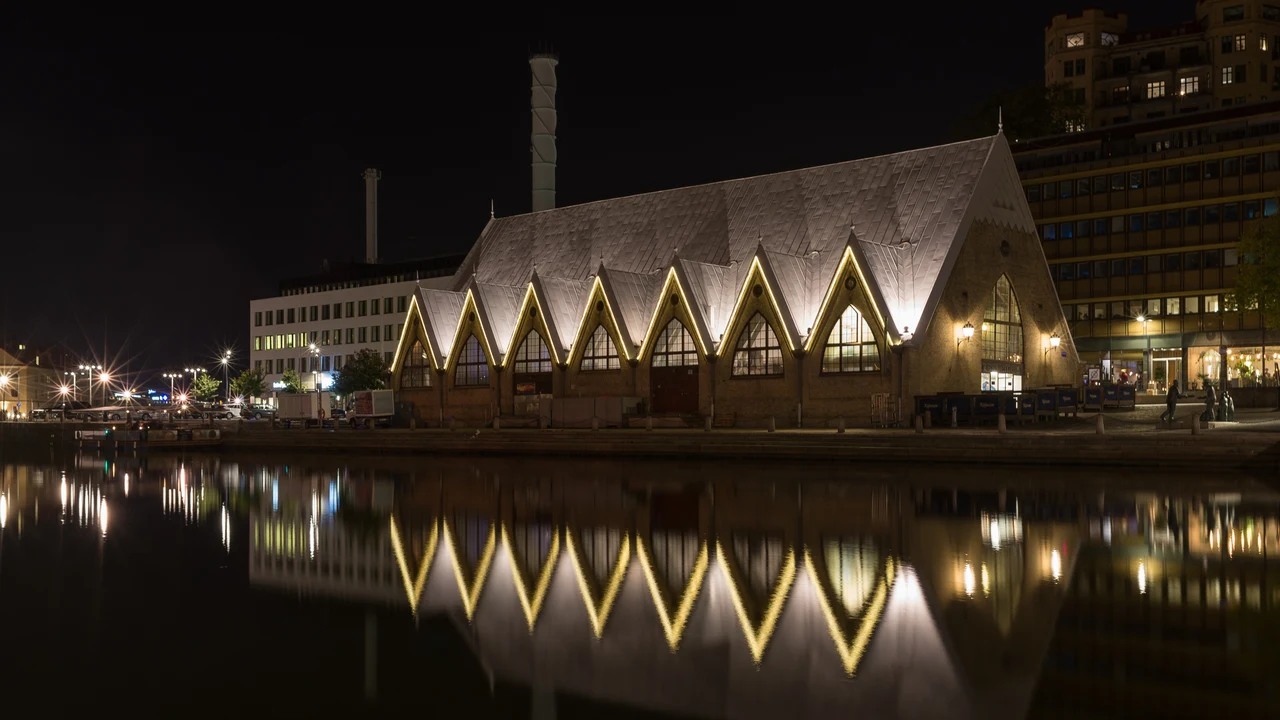
Architectural Heritage and Canal Siting
Architect Victor von Gegerfelt planned Feskekôrka as a big fish hall, opening for business on 1 November 1874.
Gegerfelt looked at old wooden churches in Norway to design the wooden building.
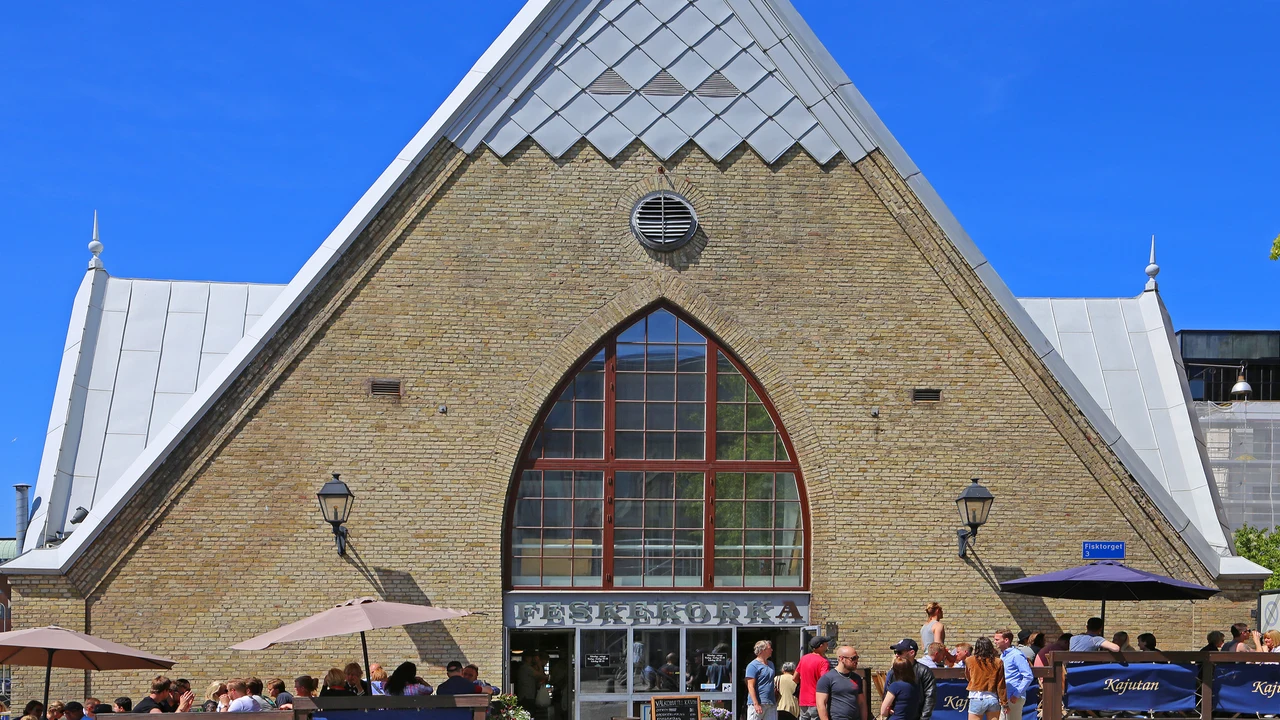
The market hall had no center pillars inside because big curved wooden beams supported the high roof.
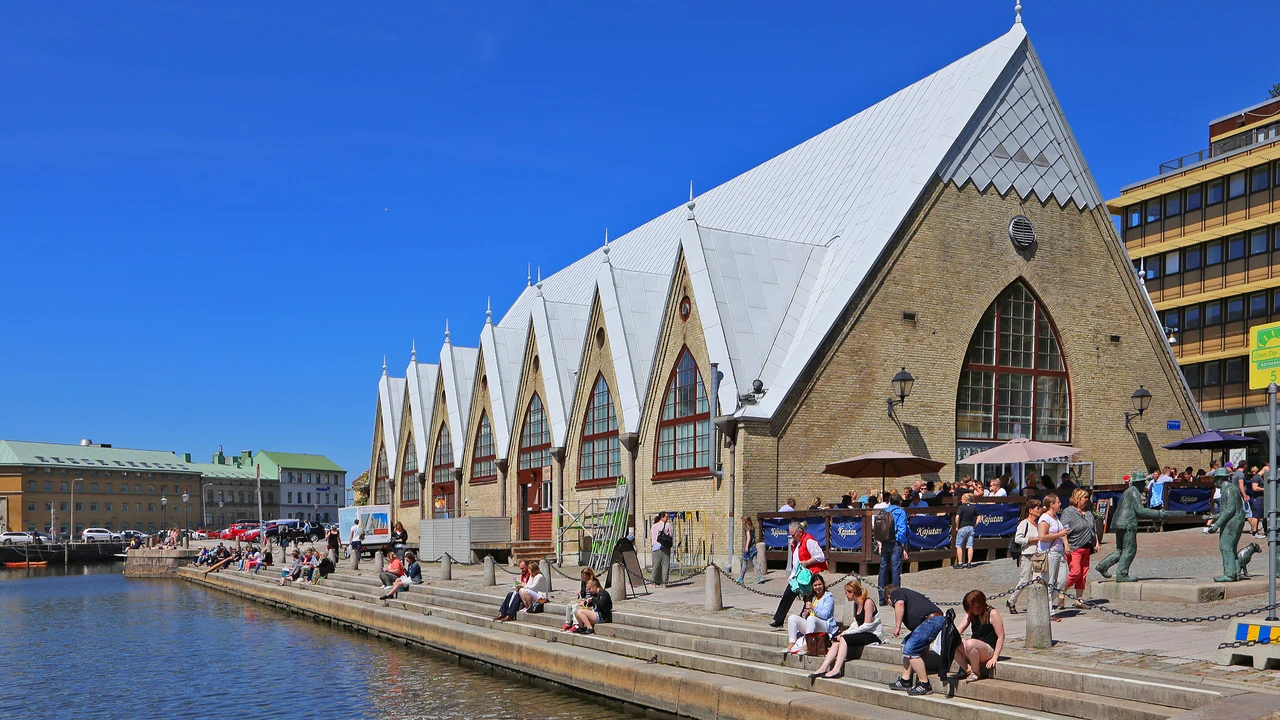
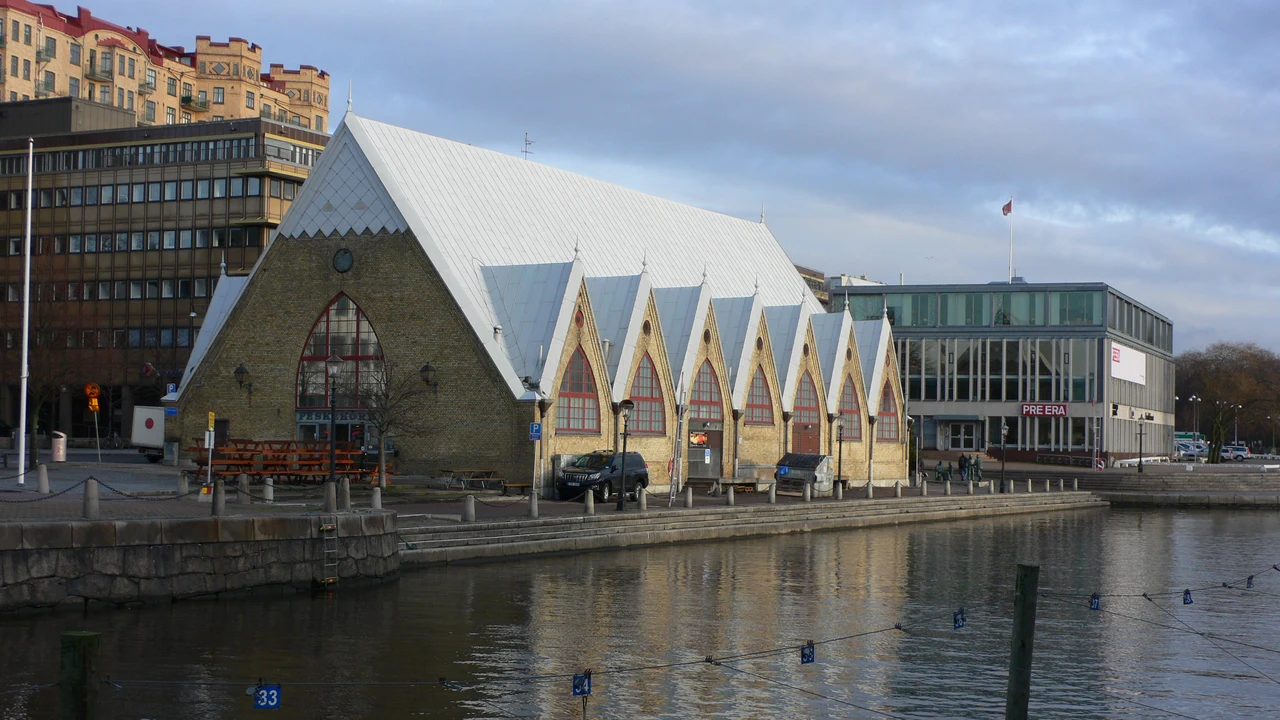
Fishing boats and canal barges docked right outside along the canal wall to unload fresh fish.
Gothenburg people called the building Feskekôrka because its pointed windows looked like a church.
Sweden named the fish hall a protected historic building to save its wooden design.
Seafood Supply Chains and Daily Auctions
Local fishermen from rocky coastal islands brought fresh cod, haddock, and mackerel to the hall.
The city held daily fish auctions inside the hall until the auctions moved in 1910.
Large catches of North Sea herring helped Gothenburg grow into a major seaport for seafood trade.
City market officers checked daily fish sales and made sure weighing scales were correct.
Special sailing boats carried live lobsters and pink shrimp in sea water tanks.
Trains and canal boats moved fresh and salted fish from Gothenburg to towns across Sweden.
Fishmonger Craft and Culinary Traditions
Generations of family fishmongers worked at wooden stalls cutting, cleaning, and selling seafood.
Market workers used wood smoke to cure fresh salmon and small Baltic sprats.
Cooks made sweet cured gravlax using fresh salmon, salt, sugar, and green dill herbs.
The famous Swedish shrimp sandwich made with peeled shrimp and eggs became a favorite city meal.
Market stalls sold warm fish soups, baked fish puddings, and jars of pickled herring.
Fishmongers followed seasonal rules to sell winter cod, spring herring, and summer mackerel.
Restoration Engineering and Contemporary Revival
The city building agency Higab repaired the old wooden market hall between 2020 and 2024.
Skilled carpenters repaired the wooden roof arches to protect original nineteenth-century timbers.
Engineers added modern cooling pipes and fresh air systems beneath the floor.
Building experts checked the stone canal walls to ensure the hall stayed safe and dry.
The market reopened in 2024 with fresh fish stalls, new seafood bistros, and visitor tables.
Today Feskekôrka connects old coastal fishing life with modern care for ocean waters.
A2 · Elementary
Feskekôrka Market Hall: Gothenburg Historic Fish Cathedral
Exploring the wooden architecture, canal quayside docks, and fresh North Sea seafood commerce that define Gothenburg iconic Feskekôrka.
Architectural Heritage and Canal Siting
Architect Victor von Gegerfelt designed Feskekôrka as an indoor fish hall, opening to commerce on 1 November 1874.
Gegerfelt drew structural inspiration from Norwegian stave churches and wooden Gothic basilicas.
The building was engineered without interior support pillars, utilizing high timber roof arches to create an unobstructed central auction floor.
Sited along Rosenlundskanalen, the market hall allowed fishing boats and barges to moor directly alongside quayside loading docks.
Gothenburg residents quickly popularized the dialect name Feskekôrka due to the building pointed arched windows and church-like silhouette.
The County Administrative Board designated Feskekôrka a state-protected listed building (byggnadsminne) under the Cultural Environment Act.
Seafood Supply Chains and Daily Auctions
Coastal skerry fishermen from the Bohuslän archipelago supplied fresh landings of North Sea cod, haddock, and mackerel to the market hall.
Gothenburg official fish auctions were conducted inside the hall from 1874 until operations relocated to the modern fishing harbor in 1910.
The North Sea herring boom enriched municipal maritime merchants and established Gothenburg as Scandinavia leading seafood distribution gateway.
Daily wholesale transactions were recorded by municipal market overseers who inspected fish freshness and regulated weighing scales.
Specialized coastal smacks transported live crustaceans including European lobster and deepwater pink shrimp in circulating seawater wells.
Rail and canal networks transported cured and fresh fish inland from Gothenburg to urban markets across central Sweden.
Fishmonger Craft and Culinary Traditions
Generations of family fishmongers operated dedicated stalls inside the hall, developing specialized filleting, deboning, and curing skills.
Cold-smoking and hot-smoking facilities supplied cured Atlantic salmon and smoked Baltic sprats to municipal households.
Traditional Swedish gravlax cured with salt, sugar, dill, and crushed white peppercorns formed a core retail specialty.
West Coast peeled shrimp sandwich (räksmörgås) served on rye bread with mayonnaise and hard-boiled eggs became a defining Gothenburg culinary staple.
Delicatessen stalls introduced prepared fish soups, fish puddings (fiskpudding), and pickled herring assortments for urban consumers.
Fishmonger guilds maintained strict seasonal codes for procuring winter cod, spring herring, autumn lobster, and summer mackerel.
Restoration Engineering and Contemporary Revival
Municipal property agency Higab initiated a major structural restoration between 2020 and 2024 to preserve aging timber foundations.
Heritage carpenters painstakingly reinforced timber trusses while preserving original nineteenth-century woodwork and pointed arch profiles.
Engineers installed modernized subfloor refrigeration systems and ventilation infrastructure to meet contemporary food safety standards.
Archaeological and conservation assessments verified that historic masonry footings along the canal wall remained structurally sound.
The market hall reopened in 2024 featuring traditional fishmonger stalls alongside contemporary seafood bistros and educational dining spaces.
Feskekôrka functions as an active civic nexus bridging historic Bohuslän fishing traditions with sustainable marine stewardship.
B1 · Intermediate
Feskekôrka Market Hall: Maritime Commerce, Fishmongers, and Canal Logistics
An analytical examination of Gothenburg fish hall, reviewing Victor von Gegerfelt timber engineering, Bohuslän landings, and gravlax traditions.
Architectural Heritage and Canal Siting
Architect Victor von Gegerfelt designed Feskekôrka as an indoor fish hall, opening to commerce on 1 November 1874.
Gegerfelt drew structural inspiration from Norwegian stave churches and wooden Gothic basilicas.
The building was engineered without interior support pillars, utilizing high timber roof arches to create an unobstructed central auction floor.
Sited along Rosenlundskanalen, the market hall allowed fishing boats and barges to moor directly alongside quayside loading docks.
Gothenburg residents quickly popularized the dialect name Feskekôrka due to the building pointed arched windows and church-like silhouette.
The County Administrative Board designated Feskekôrka a state-protected listed building (byggnadsminne) under the Cultural Environment Act.
Seafood Supply Chains and Daily Auctions
Coastal skerry fishermen from the Bohuslän archipelago supplied fresh landings of North Sea cod, haddock, and mackerel to the market hall.
Gothenburg official fish auctions were conducted inside the hall from 1874 until operations relocated to the modern fishing harbor in 1910.
The North Sea herring boom enriched municipal maritime merchants and established Gothenburg as Scandinavia leading seafood distribution gateway.
Daily wholesale transactions were recorded by municipal market overseers who inspected fish freshness and regulated weighing scales.
Specialized coastal smacks transported live crustaceans including European lobster and deepwater pink shrimp in circulating seawater wells.
Rail and canal networks transported cured and fresh fish inland from Gothenburg to urban markets across central Sweden.
Fishmonger Craft and Culinary Traditions
Generations of family fishmongers operated dedicated stalls inside the hall, developing specialized filleting, deboning, and curing skills.
Cold-smoking and hot-smoking facilities supplied cured Atlantic salmon and smoked Baltic sprats to municipal households.
Traditional Swedish gravlax cured with salt, sugar, dill, and crushed white peppercorns formed a core retail specialty.
West Coast peeled shrimp sandwich (räksmörgås) served on rye bread with mayonnaise and hard-boiled eggs became a defining Gothenburg culinary staple.
Delicatessen stalls introduced prepared fish soups, fish puddings (fiskpudding), and pickled herring assortments for urban consumers.
Fishmonger guilds maintained strict seasonal codes for procuring winter cod, spring herring, autumn lobster, and summer mackerel.
Restoration Engineering and Contemporary Revival
Municipal property agency Higab initiated a major structural restoration between 2020 and 2024 to preserve aging timber foundations.
Heritage carpenters painstakingly reinforced timber trusses while preserving original nineteenth-century woodwork and pointed arch profiles.
Engineers installed modernized subfloor refrigeration systems and ventilation infrastructure to meet contemporary food safety standards.
Archaeological and conservation assessments verified that historic masonry footings along the canal wall remained structurally sound.
The market hall reopened in 2024 featuring traditional fishmonger stalls alongside contemporary seafood bistros and educational dining spaces.
Feskekôrka functions as an active civic nexus bridging historic Bohuslän fishing traditions with sustainable marine stewardship.
B2 · Upper Intermediate
Feskekôrka Market Hall: Architectural Innovation and Seafood Distribution Networks
Investigating Gothic stave-church roof trusses, nineteenth-century herring booms, specialized smack wells, and comprehensive heritage restoration.
Architectural Heritage and Canal Siting
Architect Victor von Gegerfelt designed Feskekôrka as an indoor fish hall, opening to commerce on 1 November 1874.
Gegerfelt drew structural inspiration from Norwegian stave churches and wooden Gothic basilicas.
The building was engineered without interior support pillars, utilizing high timber roof arches to create an unobstructed central auction floor.
Sited along Rosenlundskanalen, the market hall allowed fishing boats and barges to moor directly alongside quayside loading docks.
Gothenburg residents quickly popularized the dialect name Feskekôrka due to the building pointed arched windows and church-like silhouette.
The County Administrative Board designated Feskekôrka a state-protected listed building (byggnadsminne) under the Cultural Environment Act.
Seafood Supply Chains and Daily Auctions
Coastal skerry fishermen from the Bohuslän archipelago supplied fresh landings of North Sea cod, haddock, and mackerel to the market hall.
Gothenburg official fish auctions were conducted inside the hall from 1874 until operations relocated to the modern fishing harbor in 1910.
The North Sea herring boom enriched municipal maritime merchants and established Gothenburg as Scandinavia leading seafood distribution gateway.
Daily wholesale transactions were recorded by municipal market overseers who inspected fish freshness and regulated weighing scales.
Specialized coastal smacks transported live crustaceans including European lobster and deepwater pink shrimp in circulating seawater wells.
Rail and canal networks transported cured and fresh fish inland from Gothenburg to urban markets across central Sweden.
Fishmonger Craft and Culinary Traditions
Generations of family fishmongers operated dedicated stalls inside the hall, developing specialized filleting, deboning, and curing skills.
Cold-smoking and hot-smoking facilities supplied cured Atlantic salmon and smoked Baltic sprats to municipal households.
Traditional Swedish gravlax cured with salt, sugar, dill, and crushed white peppercorns formed a core retail specialty.
West Coast peeled shrimp sandwich (räksmörgås) served on rye bread with mayonnaise and hard-boiled eggs became a defining Gothenburg culinary staple.
Delicatessen stalls introduced prepared fish soups, fish puddings (fiskpudding), and pickled herring assortments for urban consumers.
Fishmonger guilds maintained strict seasonal codes for procuring winter cod, spring herring, autumn lobster, and summer mackerel.
Restoration Engineering and Contemporary Revival
Municipal property agency Higab initiated a major structural restoration between 2020 and 2024 to preserve aging timber foundations.
Heritage carpenters painstakingly reinforced timber trusses while preserving original nineteenth-century woodwork and pointed arch profiles.
Engineers installed modernized subfloor refrigeration systems and ventilation infrastructure to meet contemporary food safety standards.
Archaeological and conservation assessments verified that historic masonry footings along the canal wall remained structurally sound.
The market hall reopened in 2024 featuring traditional fishmonger stalls alongside contemporary seafood bistros and educational dining spaces.
Feskekôrka functions as an active civic nexus bridging historic Bohuslän fishing traditions with sustainable marine stewardship.
C1 · Advanced
The Architectural and Commercial Ecology of Gothenburg Feskekôrka
A critical journalistic monograph analyzing Gegerfelt pillarless timber basilica, wholesale seafood auction logistics, and contemporary culinary revitalization.
Architectural Heritage and Canal Siting
Architect Victor von Gegerfelt designed Feskekôrka as an indoor fish hall, opening to commerce on 1 November 1874.
Gegerfelt drew structural inspiration from Norwegian stave churches and wooden Gothic basilicas.
The building was engineered without interior support pillars, utilizing high timber roof arches to create an unobstructed central auction floor.
Sited along Rosenlundskanalen, the market hall allowed fishing boats and barges to moor directly alongside quayside loading docks.
Gothenburg residents quickly popularized the dialect name Feskekôrka due to the building pointed arched windows and church-like silhouette.
The County Administrative Board designated Feskekôrka a state-protected listed building (byggnadsminne) under the Cultural Environment Act.
Seafood Supply Chains and Daily Auctions
Coastal skerry fishermen from the Bohuslän archipelago supplied fresh landings of North Sea cod, haddock, and mackerel to the market hall.
Gothenburg official fish auctions were conducted inside the hall from 1874 until operations relocated to the modern fishing harbor in 1910.
The North Sea herring boom enriched municipal maritime merchants and established Gothenburg as Scandinavia leading seafood distribution gateway.
Daily wholesale transactions were recorded by municipal market overseers who inspected fish freshness and regulated weighing scales.
Specialized coastal smacks transported live crustaceans including European lobster and deepwater pink shrimp in circulating seawater wells.
Rail and canal networks transported cured and fresh fish inland from Gothenburg to urban markets across central Sweden.
Fishmonger Craft and Culinary Traditions
Generations of family fishmongers operated dedicated stalls inside the hall, developing specialized filleting, deboning, and curing skills.
Cold-smoking and hot-smoking facilities supplied cured Atlantic salmon and smoked Baltic sprats to municipal households.
Traditional Swedish gravlax cured with salt, sugar, dill, and crushed white peppercorns formed a core retail specialty.
West Coast peeled shrimp sandwich (räksmörgås) served on rye bread with mayonnaise and hard-boiled eggs became a defining Gothenburg culinary staple.
Delicatessen stalls introduced prepared fish soups, fish puddings (fiskpudding), and pickled herring assortments for urban consumers.
Fishmonger guilds maintained strict seasonal codes for procuring winter cod, spring herring, autumn lobster, and summer mackerel.
Restoration Engineering and Contemporary Revival
Municipal property agency Higab initiated a major structural restoration between 2020 and 2024 to preserve aging timber foundations.
Heritage carpenters painstakingly reinforced timber trusses while preserving original nineteenth-century woodwork and pointed arch profiles.
Engineers installed modernized subfloor refrigeration systems and ventilation infrastructure to meet contemporary food safety standards.
Archaeological and conservation assessments verified that historic masonry footings along the canal wall remained structurally sound.
The market hall reopened in 2024 featuring traditional fishmonger stalls alongside contemporary seafood bistros and educational dining spaces.
Feskekôrka functions as an active civic nexus bridging historic Bohuslän fishing traditions with sustainable marine stewardship.
C2 · Mastery
Feskekôrka: Maritime Heritage, Urban Foodways, and Structural Conservation in Western Sweden
A comprehensive analytical study of Gothenburg premier fish market hall, evaluating nineteenth-century maritime commerce, guild traditions, and modern stewardship.
Architectural Heritage and Canal Siting
Architect Victor von Gegerfelt designed Feskekôrka as an indoor fish hall, opening to commerce on 1 November 1874.
Gegerfelt drew structural inspiration from Norwegian stave churches and wooden Gothic basilicas.
The building was engineered without interior support pillars, utilizing high timber roof arches to create an unobstructed central auction floor.
Sited along Rosenlundskanalen, the market hall allowed fishing boats and barges to moor directly alongside quayside loading docks.
Gothenburg residents quickly popularized the dialect name Feskekôrka due to the building pointed arched windows and church-like silhouette.
The County Administrative Board designated Feskekôrka a state-protected listed building (byggnadsminne) under the Cultural Environment Act.
Seafood Supply Chains and Daily Auctions
Coastal skerry fishermen from the Bohuslän archipelago supplied fresh landings of North Sea cod, haddock, and mackerel to the market hall.
Gothenburg official fish auctions were conducted inside the hall from 1874 until operations relocated to the modern fishing harbor in 1910.
The North Sea herring boom enriched municipal maritime merchants and established Gothenburg as Scandinavia leading seafood distribution gateway.
Daily wholesale transactions were recorded by municipal market overseers who inspected fish freshness and regulated weighing scales.
Specialized coastal smacks transported live crustaceans including European lobster and deepwater pink shrimp in circulating seawater wells.
Rail and canal networks transported cured and fresh fish inland from Gothenburg to urban markets across central Sweden.
Fishmonger Craft and Culinary Traditions
Generations of family fishmongers operated dedicated stalls inside the hall, developing specialized filleting, deboning, and curing skills.
Cold-smoking and hot-smoking facilities supplied cured Atlantic salmon and smoked Baltic sprats to municipal households.
Traditional Swedish gravlax cured with salt, sugar, dill, and crushed white peppercorns formed a core retail specialty.
West Coast peeled shrimp sandwich (räksmörgås) served on rye bread with mayonnaise and hard-boiled eggs became a defining Gothenburg culinary staple.
Delicatessen stalls introduced prepared fish soups, fish puddings (fiskpudding), and pickled herring assortments for urban consumers.
Fishmonger guilds maintained strict seasonal codes for procuring winter cod, spring herring, autumn lobster, and summer mackerel.
Restoration Engineering and Contemporary Revival
Municipal property agency Higab initiated a major structural restoration between 2020 and 2024 to preserve aging timber foundations.
Heritage carpenters painstakingly reinforced timber trusses while preserving original nineteenth-century woodwork and pointed arch profiles.
Engineers installed modernized subfloor refrigeration systems and ventilation infrastructure to meet contemporary food safety standards.
Archaeological and conservation assessments verified that historic masonry footings along the canal wall remained structurally sound.
The market hall reopened in 2024 featuring traditional fishmonger stalls alongside contemporary seafood bistros and educational dining spaces.
Feskekôrka functions as an active civic nexus bridging historic Bohuslän fishing traditions with sustainable marine stewardship.
Check your understanding
Choose how closely you want to revisit the article. You can refer back while answering, and review explanations when you finish.
Quick Quiz A1
Try one question, then create a free account for the full Quick Quiz. Sign Up Free
Answer every question before checking. There is no time limit.
Your results
/ 1 correct (%)
Read the explanations to see how each answer connects to the article.
-
Who planned Feskekôrka as a big fish hall?
1. Answer:
Quick Quiz A2
Try one question, then create a free account for the full Quick Quiz. Sign Up Free
Answer every question before checking. There is no time limit.
Your results
/ 1 correct (%)
Read the explanations to see how each answer connects to the article.
-
Who designed Feskekôrka as an indoor fish hall?
1. Answer:
Quick Quiz B1
Try one question, then create a free account for the full Quick Quiz. Sign Up Free
Answer every question before checking. There is no time limit.
Your results
/ 1 correct (%)
Read the explanations to see how each answer connects to the article.
-
Who designed Feskekôrka as an indoor fish hall?
1. Answer:
Quick Quiz B2
Try one question, then create a free account for the full Quick Quiz. Sign Up Free
Answer every question before checking. There is no time limit.
Your results
/ 1 correct (%)
Read the explanations to see how each answer connects to the article.
-
Who designed Feskekôrka as an indoor fish hall?
1. Answer:
Quick Quiz C1
Try one question, then create a free account for the full Quick Quiz. Sign Up Free
Answer every question before checking. There is no time limit.
Your results
/ 1 correct (%)
Read the explanations to see how each answer connects to the article.
-
Who designed Feskekôrka as an indoor fish hall?
1. Answer:
Quick Quiz C2
Try one question, then create a free account for the full Quick Quiz. Sign Up Free
Answer every question before checking. There is no time limit.
Your results
/ 1 correct (%)
Read the explanations to see how each answer connects to the article.
-
Who designed Feskekôrka as an indoor fish hall?
1. Answer:
