A1 · Beginner
Falun Copper Mine: The Big Mine and Red Houses of Sweden
The Great Copper Mountain in Falun is an ancient mine where Swedish workers dug copper, built clever machines, and made famous red paint for wooden houses.
Millennium of Mining and the Great Pit Collapse
Old digging tools and carbon tests show people mined copper in Falun over one thousand years ago.
During the seventeenth century, the Great Copper Mountain produced most of the copper used in Europe.
Money earned from selling Falun copper helped the Swedish king build cities, castles, and a powerful army.
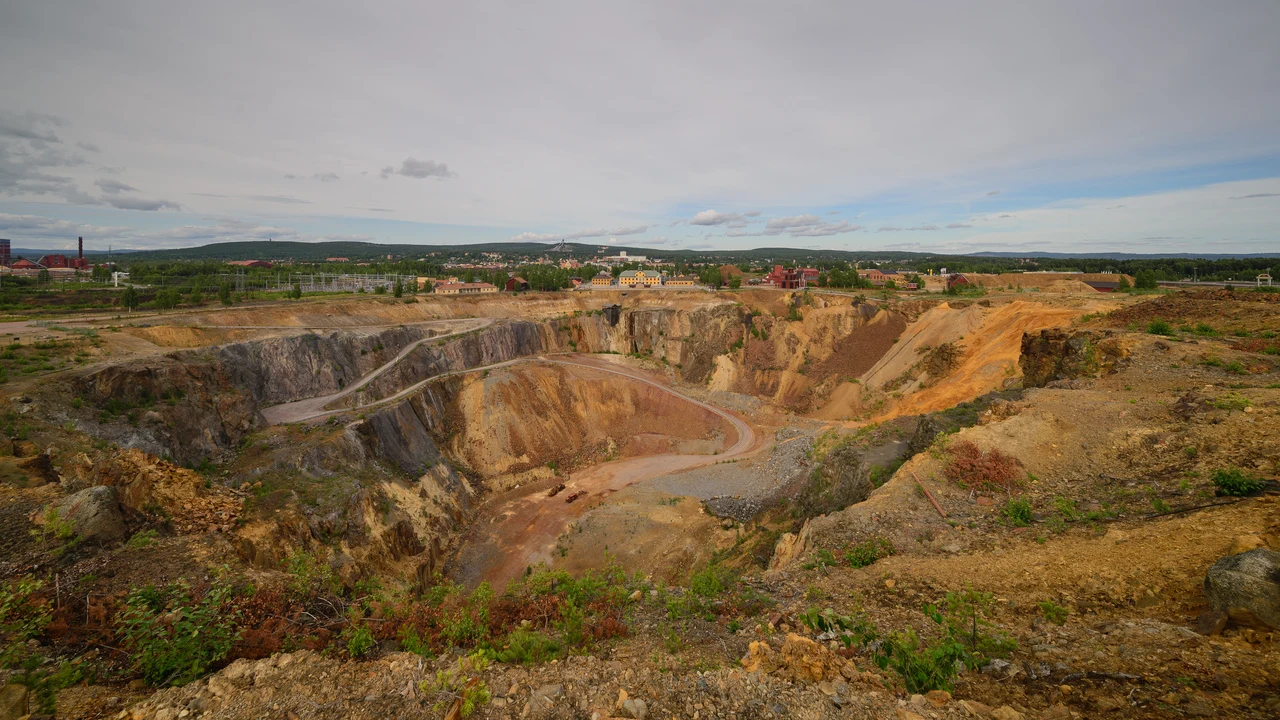
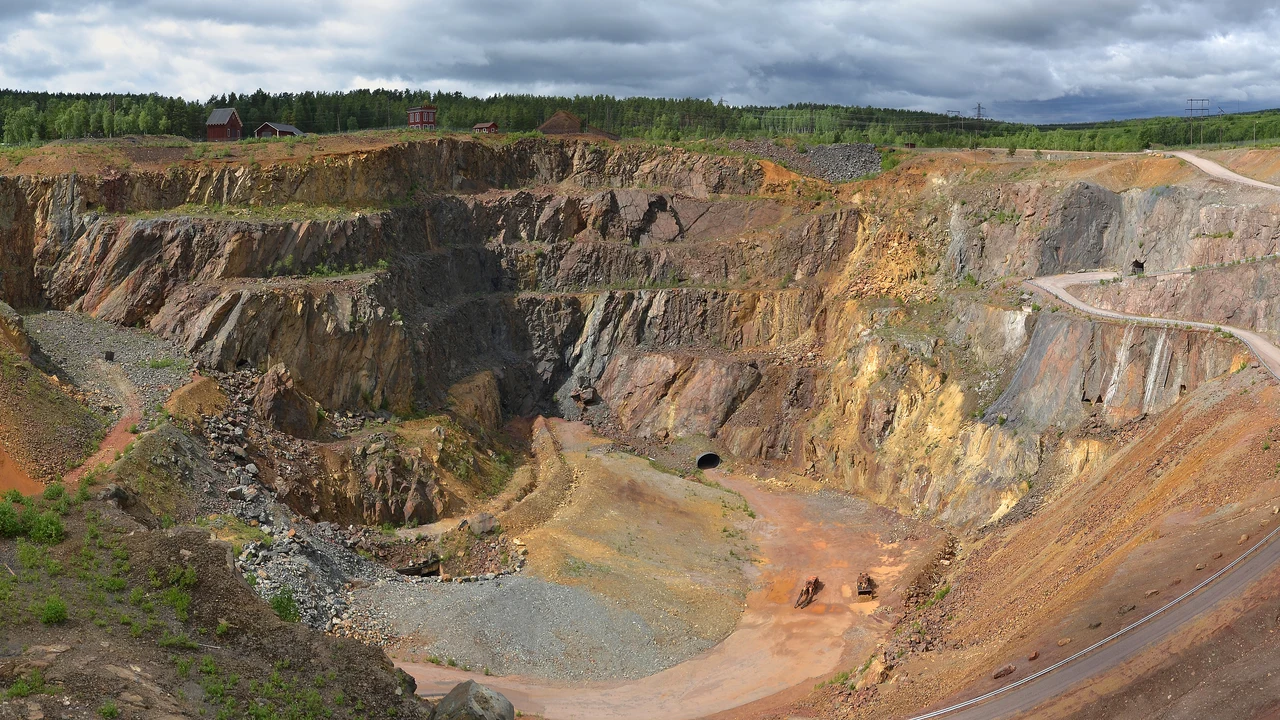
On Midsummer Eve in 1687, deep underground mine tunnels caved in and created a giant open hole.
Because miners were celebrating the midsummer holiday above ground, nobody was hurt in the giant collapse.
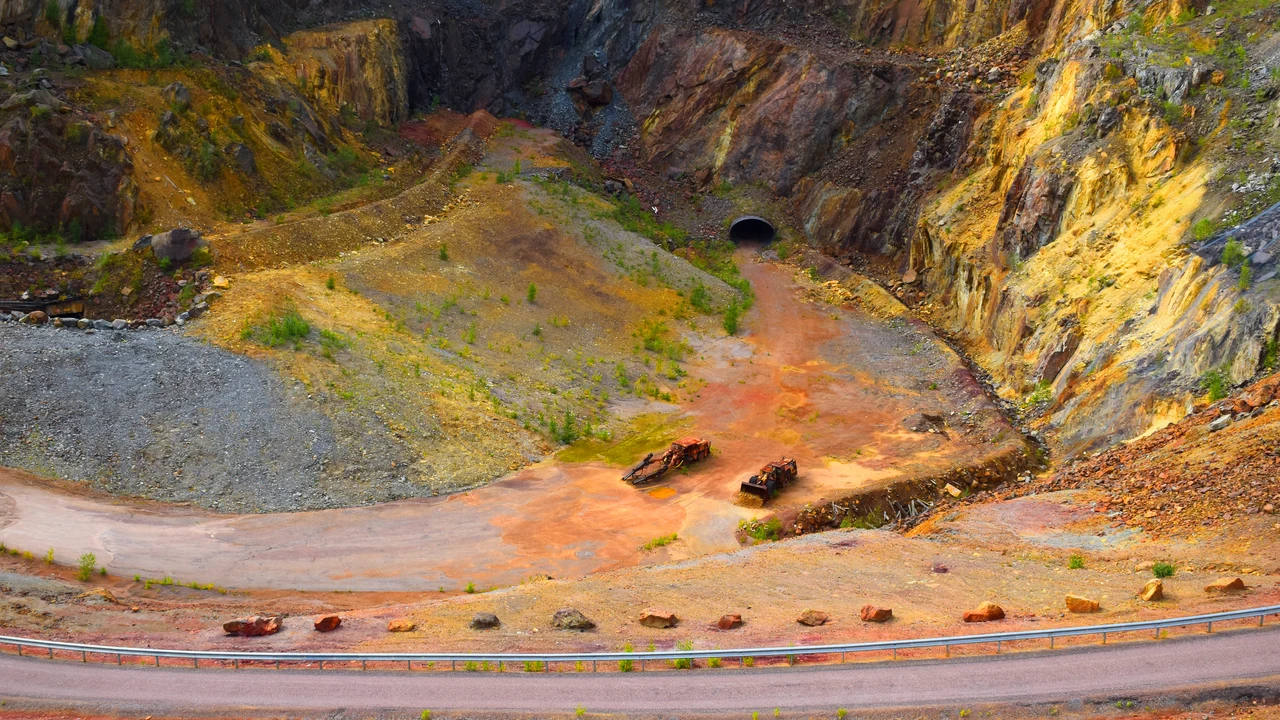
Today the big open pit called Stora Stöten is one hundred meters deep and four hundred meters wide.
Bergsmän Organization and Corporate Pioneering
In 1288, King Magnus gave an official royal letter dividing mine ownership among master miners called bergsmän.
This royal letter made the Falun mine one of the very oldest shareholding companies in the world.
The master miners melted copper rock in hot wood furnaces under strict royal production rules.
The Swedish royal government collected tax payments made in heavy bars of refined pure copper.
Sweden made giant copper coins called plate money that weighed many kilograms to back early paper banknotes.
Skilled German miners moved to Falun and taught Swedish workers new words and advanced digging skills.
Engineering Innovations and Water Mechanisms
Inventor Christopher Polhem built clever wooden machines moved by waterwheels to pull heavy rock out of deep shafts.
Long moving wooden poles pushed mechanical power across fields and hills to pump water out of deep tunnels.
Engineers built large water ponds and wooden flumes across Dalarna to turn waterwheels day and night.
Miners burned large stacks of wood against underground rock walls to crack stone before gunpowder was used.
Deep mine shafts like the Creutz shaft used strong pine wood frames and water-powered winding drums.
Old underground mine maps drawn long ago show where tunnels ran deep inside the dark mountain.
Falu Red Pigment and the World Heritage Landscape
Old mine stones containing iron and copper gave workers mineral powder to mix famous red paint.
Red paint from Falun protected wooden cottages from rain and cold, making red houses famous across Sweden.
Workers stopped digging copper at the Falun mine in December 1992 after working for over one thousand years.
UNESCO named the Falun copper mine a World Heritage site in 2001 to protect its historic landscape.
Visitors can walk through dark tunnels, see tall timber towers, and visit old wooden miners homes in Elsborg.
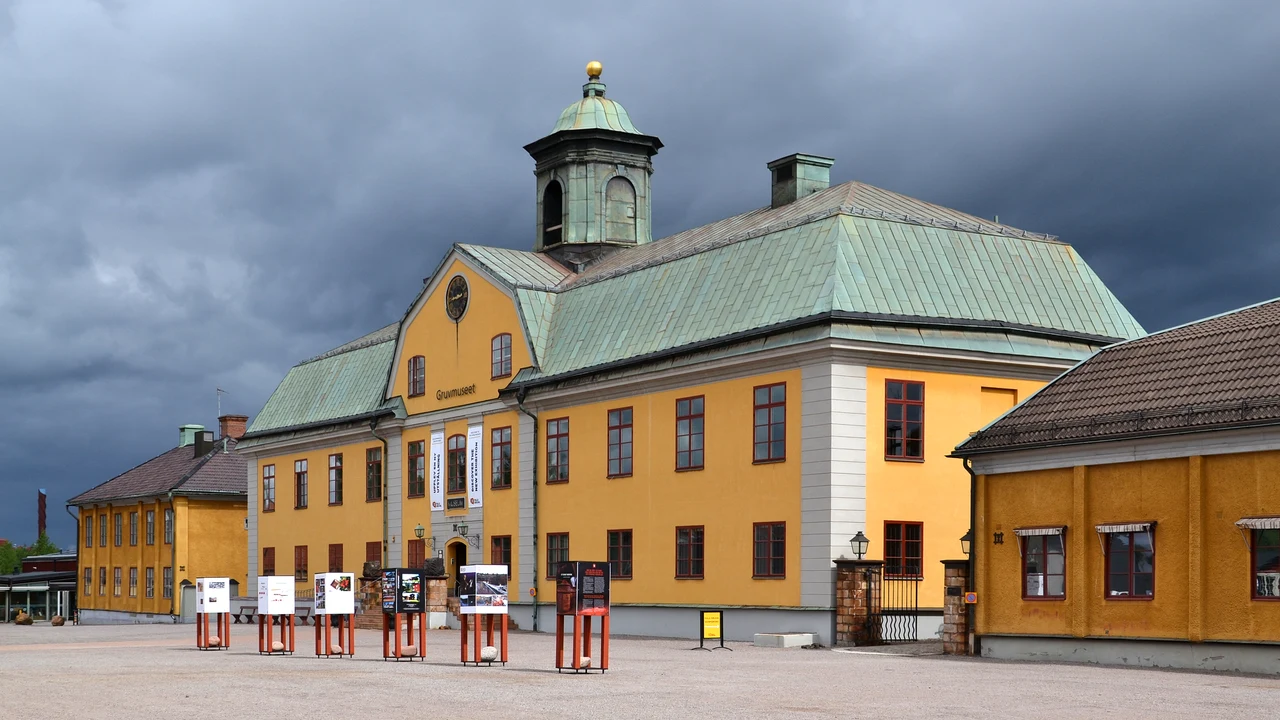
Today the historic copper mine is an open museum that teaches people about old mining craft and metals.
A2 · Elementary
Falun Copper Mine: Stora Kopparberget and the Great Pit
Exploring the subterranean tunnels, 1687 Stora Stöten chasm, and early industrial water mechanisms that powered Sweden historic copper mountain.
Millennium of Mining and the Great Pit Collapse
Archeological and radiocarbon records confirm that copper extraction at Falun began around the eighth century before the Viking Age.
Known as Stora Kopparberget (Great Copper Mountain), the mine supplied roughly two-thirds of Europe copper demand during the seventeenth century.
The copper revenues generated at Falun directly financed the military expansion and administrative apparatus of the seventeenth-century Swedish Empire.
On Midsummer Eve in 1687, extensive subterranean gallery collapses caused the ground to cave in, forming the giant open crater of Stora Stöten.
Because the catastrophic collapse took place on a midsummer festival holiday when all miners were above ground, zero fatalities occurred.
Today the Stora Stöten chasm measures roughly one hundred meters deep and over four hundred meters across.
Bergsmän Organization and Corporate Pioneering
In 1288, King Magnus Ladulås granted a royal charter formalizing mining shares among free master miners known as bergsmän.
This 1288 charter established Stora Kopparberg as one of the oldest chartered shareholding corporate enterprises in recorded global history.
The bergsmän operated their own blast furnaces and roasters, smelting copper ore under strict municipal and royal production quotas.
The Crown regulated the copper trade through the Board of Mines (Bergskollegium), imposing sovereign taxes paid in refined copper ingots.
Copper plate money (plåtmynt), among the heaviest coins in monetary history, was minted from Falun copper to back Swedish paper bank currency.
International labor migration brought German master miners whose specialized metallurgical terminology and technical guilds shaped Swedish mining law.
Engineering Innovations and Water Mechanisms
Inventor Christopher Polhem designed revolutionary mechanical hoisting apparatuses powered by waterwheels to haul heavy copper ore out of deep shafts.
Polhem stånggång (reciprocating wooden rod transmission system) conveyed mechanical power over several kilometers of uneven terrain to drive mine drainage pumps.
Massive water storage ponds and timber flume networks were engineered across Dalarna to supply continuous hydraulic power to mine wheel pits.
Fire-setting techniques utilized vast quantities of cordwood stacked against underground rock faces to crack dense ore veins before the advent of gunpowder.
Deep vertical shafts, including the Creutz shaft, were timbered with heavy pine frames and serviced by water-powered iron hoist drums.
Underground mine surveyor maps drawn in the seventeenth and eighteenth centuries represent pioneering masterworks of Swedish cartography and technical surveying.
Falu Red Pigment and the World Heritage Landscape
Weathered copper mine tailings rich in iron ochre, silicic acid, and zinc sulfate yielded the raw pigment for authentic Falu red paint (Falu rödfärg).
Originally manufactured to simulate prestigious red brick masonry on elite buildings, Falu red paint became the ubiquitous protective coating for Swedish wooden cottages nationwide.
The active mining operations at Falun permanently ceased on 8 December 1992 after more than a millennium of continuous industrial production.
UNESCO inscribed the Mining Area of the Great Copper Mountain in Falun on the World Heritage List in 2001.
The preserved industrial heritage zone encompasses underground tunnels, timber headframes, smelting sites, and historic wooden miners districts like Elsborg.
Today the Falun mine operates as an educational museum and active research center exploring historical metallurgy and industrial heritage preservation.
B1 · Intermediate
Falun Copper Mountain: Corporate Charters, Mining Guilds, and Falu Red
An analytical study of Dalarna copper mining, documenting the 1288 bergsmän shareholding charter, copper plate currency, and ochre pigment manufacturing.
Millennium of Mining and the Great Pit Collapse
Archeological and radiocarbon records confirm that copper extraction at Falun began around the eighth century before the Viking Age.
Known as Stora Kopparberget (Great Copper Mountain), the mine supplied roughly two-thirds of Europe copper demand during the seventeenth century.
The copper revenues generated at Falun directly financed the military expansion and administrative apparatus of the seventeenth-century Swedish Empire.
On Midsummer Eve in 1687, extensive subterranean gallery collapses caused the ground to cave in, forming the giant open crater of Stora Stöten.
Because the catastrophic collapse took place on a midsummer festival holiday when all miners were above ground, zero fatalities occurred.
Today the Stora Stöten chasm measures roughly one hundred meters deep and over four hundred meters across.
Bergsmän Organization and Corporate Pioneering
In 1288, King Magnus Ladulås granted a royal charter formalizing mining shares among free master miners known as bergsmän.
This 1288 charter established Stora Kopparberg as one of the oldest chartered shareholding corporate enterprises in recorded global history.
The bergsmän operated their own blast furnaces and roasters, smelting copper ore under strict municipal and royal production quotas.
The Crown regulated the copper trade through the Board of Mines (Bergskollegium), imposing sovereign taxes paid in refined copper ingots.
Copper plate money (plåtmynt), among the heaviest coins in monetary history, was minted from Falun copper to back Swedish paper bank currency.
International labor migration brought German master miners whose specialized metallurgical terminology and technical guilds shaped Swedish mining law.
Engineering Innovations and Water Mechanisms
Inventor Christopher Polhem designed revolutionary mechanical hoisting apparatuses powered by waterwheels to haul heavy copper ore out of deep shafts.
Polhem stånggång (reciprocating wooden rod transmission system) conveyed mechanical power over several kilometers of uneven terrain to drive mine drainage pumps.
Massive water storage ponds and timber flume networks were engineered across Dalarna to supply continuous hydraulic power to mine wheel pits.
Fire-setting techniques utilized vast quantities of cordwood stacked against underground rock faces to crack dense ore veins before the advent of gunpowder.
Deep vertical shafts, including the Creutz shaft, were timbered with heavy pine frames and serviced by water-powered iron hoist drums.
Underground mine surveyor maps drawn in the seventeenth and eighteenth centuries represent pioneering masterworks of Swedish cartography and technical surveying.
Falu Red Pigment and the World Heritage Landscape
Weathered copper mine tailings rich in iron ochre, silicic acid, and zinc sulfate yielded the raw pigment for authentic Falu red paint (Falu rödfärg).
Originally manufactured to simulate prestigious red brick masonry on elite buildings, Falu red paint became the ubiquitous protective coating for Swedish wooden cottages nationwide.
The active mining operations at Falun permanently ceased on 8 December 1992 after more than a millennium of continuous industrial production.
UNESCO inscribed the Mining Area of the Great Copper Mountain in Falun on the World Heritage List in 2001.
The preserved industrial heritage zone encompasses underground tunnels, timber headframes, smelting sites, and historic wooden miners districts like Elsborg.
Today the Falun mine operates as an educational museum and active research center exploring historical metallurgy and industrial heritage preservation.
B2 · Upper Intermediate
Mining Area of the Great Copper Mountain: Industrial Ingenuity and Heritage Ecology
Investigating Christopher Polhem hydraulic hoisting innovations, stånggång power linkages, seventeenth-century imperial revenues, and UNESCO conservation.
Millennium of Mining and the Great Pit Collapse
Archeological and radiocarbon records confirm that copper extraction at Falun began around the eighth century before the Viking Age.
Known as Stora Kopparberget (Great Copper Mountain), the mine supplied roughly two-thirds of Europe copper demand during the seventeenth century.
The copper revenues generated at Falun directly financed the military expansion and administrative apparatus of the seventeenth-century Swedish Empire.
On Midsummer Eve in 1687, extensive subterranean gallery collapses caused the ground to cave in, forming the giant open crater of Stora Stöten.
Because the catastrophic collapse took place on a midsummer festival holiday when all miners were above ground, zero fatalities occurred.
Today the Stora Stöten chasm measures roughly one hundred meters deep and over four hundred meters across.
Bergsmän Organization and Corporate Pioneering
In 1288, King Magnus Ladulås granted a royal charter formalizing mining shares among free master miners known as bergsmän.
This 1288 charter established Stora Kopparberg as one of the oldest chartered shareholding corporate enterprises in recorded global history.
The bergsmän operated their own blast furnaces and roasters, smelting copper ore under strict municipal and royal production quotas.
The Crown regulated the copper trade through the Board of Mines (Bergskollegium), imposing sovereign taxes paid in refined copper ingots.
Copper plate money (plåtmynt), among the heaviest coins in monetary history, was minted from Falun copper to back Swedish paper bank currency.
International labor migration brought German master miners whose specialized metallurgical terminology and technical guilds shaped Swedish mining law.
Engineering Innovations and Water Mechanisms
Inventor Christopher Polhem designed revolutionary mechanical hoisting apparatuses powered by waterwheels to haul heavy copper ore out of deep shafts.
Polhem stånggång (reciprocating wooden rod transmission system) conveyed mechanical power over several kilometers of uneven terrain to drive mine drainage pumps.
Massive water storage ponds and timber flume networks were engineered across Dalarna to supply continuous hydraulic power to mine wheel pits.
Fire-setting techniques utilized vast quantities of cordwood stacked against underground rock faces to crack dense ore veins before the advent of gunpowder.
Deep vertical shafts, including the Creutz shaft, were timbered with heavy pine frames and serviced by water-powered iron hoist drums.
Underground mine surveyor maps drawn in the seventeenth and eighteenth centuries represent pioneering masterworks of Swedish cartography and technical surveying.
Falu Red Pigment and the World Heritage Landscape
Weathered copper mine tailings rich in iron ochre, silicic acid, and zinc sulfate yielded the raw pigment for authentic Falu red paint (Falu rödfärg).
Originally manufactured to simulate prestigious red brick masonry on elite buildings, Falu red paint became the ubiquitous protective coating for Swedish wooden cottages nationwide.
The active mining operations at Falun permanently ceased on 8 December 1992 after more than a millennium of continuous industrial production.
UNESCO inscribed the Mining Area of the Great Copper Mountain in Falun on the World Heritage List in 2001.
The preserved industrial heritage zone encompasses underground tunnels, timber headframes, smelting sites, and historic wooden miners districts like Elsborg.
Today the Falun mine operates as an educational museum and active research center exploring historical metallurgy and industrial heritage preservation.
C1 · Advanced
The Industrial Microhistory and Corporate Origins of Stora Kopparberget
A critical journalistic monograph examining pre-Viking metallurgical origins, the catastrophic 1687 subterranean collapse, and early modern financial statecraft.
Millennium of Mining and the Great Pit Collapse
Archeological and radiocarbon records confirm that copper extraction at Falun began around the eighth century before the Viking Age.
Known as Stora Kopparberget (Great Copper Mountain), the mine supplied roughly two-thirds of Europe copper demand during the seventeenth century.
The copper revenues generated at Falun directly financed the military expansion and administrative apparatus of the seventeenth-century Swedish Empire.
On Midsummer Eve in 1687, extensive subterranean gallery collapses caused the ground to cave in, forming the giant open crater of Stora Stöten.
Because the catastrophic collapse took place on a midsummer festival holiday when all miners were above ground, zero fatalities occurred.
Today the Stora Stöten chasm measures roughly one hundred meters deep and over four hundred meters across.
Bergsmän Organization and Corporate Pioneering
In 1288, King Magnus Ladulås granted a royal charter formalizing mining shares among free master miners known as bergsmän.
This 1288 charter established Stora Kopparberg as one of the oldest chartered shareholding corporate enterprises in recorded global history.
The bergsmän operated their own blast furnaces and roasters, smelting copper ore under strict municipal and royal production quotas.
The Crown regulated the copper trade through the Board of Mines (Bergskollegium), imposing sovereign taxes paid in refined copper ingots.
Copper plate money (plåtmynt), among the heaviest coins in monetary history, was minted from Falun copper to back Swedish paper bank currency.
International labor migration brought German master miners whose specialized metallurgical terminology and technical guilds shaped Swedish mining law.
Engineering Innovations and Water Mechanisms
Inventor Christopher Polhem designed revolutionary mechanical hoisting apparatuses powered by waterwheels to haul heavy copper ore out of deep shafts.
Polhem stånggång (reciprocating wooden rod transmission system) conveyed mechanical power over several kilometers of uneven terrain to drive mine drainage pumps.
Massive water storage ponds and timber flume networks were engineered across Dalarna to supply continuous hydraulic power to mine wheel pits.
Fire-setting techniques utilized vast quantities of cordwood stacked against underground rock faces to crack dense ore veins before the advent of gunpowder.
Deep vertical shafts, including the Creutz shaft, were timbered with heavy pine frames and serviced by water-powered iron hoist drums.
Underground mine surveyor maps drawn in the seventeenth and eighteenth centuries represent pioneering masterworks of Swedish cartography and technical surveying.
Falu Red Pigment and the World Heritage Landscape
Weathered copper mine tailings rich in iron ochre, silicic acid, and zinc sulfate yielded the raw pigment for authentic Falu red paint (Falu rödfärg).
Originally manufactured to simulate prestigious red brick masonry on elite buildings, Falu red paint became the ubiquitous protective coating for Swedish wooden cottages nationwide.
The active mining operations at Falun permanently ceased on 8 December 1992 after more than a millennium of continuous industrial production.
UNESCO inscribed the Mining Area of the Great Copper Mountain in Falun on the World Heritage List in 2001.
The preserved industrial heritage zone encompasses underground tunnels, timber headframes, smelting sites, and historic wooden miners districts like Elsborg.
Today the Falun mine operates as an educational museum and active research center exploring historical metallurgy and industrial heritage preservation.
C2 · Mastery
The Great Copper Mountain at Falun: Industrial Landscapes, Pyrometallurgy, and Corporate Heritage
A comprehensive analytical study evaluating medieval chartered shareholding, water-powered reciprocating transmissions, and the enduring spatial legacy of Falu red.
Millennium of Mining and the Great Pit Collapse
Archeological and radiocarbon records confirm that copper extraction at Falun began around the eighth century before the Viking Age.
Known as Stora Kopparberget (Great Copper Mountain), the mine supplied roughly two-thirds of Europe copper demand during the seventeenth century.
The copper revenues generated at Falun directly financed the military expansion and administrative apparatus of the seventeenth-century Swedish Empire.
On Midsummer Eve in 1687, extensive subterranean gallery collapses caused the ground to cave in, forming the giant open crater of Stora Stöten.
Because the catastrophic collapse took place on a midsummer festival holiday when all miners were above ground, zero fatalities occurred.
Today the Stora Stöten chasm measures roughly one hundred meters deep and over four hundred meters across.
Bergsmän Organization and Corporate Pioneering
In 1288, King Magnus Ladulås granted a royal charter formalizing mining shares among free master miners known as bergsmän.
This 1288 charter established Stora Kopparberg as one of the oldest chartered shareholding corporate enterprises in recorded global history.
The bergsmän operated their own blast furnaces and roasters, smelting copper ore under strict municipal and royal production quotas.
The Crown regulated the copper trade through the Board of Mines (Bergskollegium), imposing sovereign taxes paid in refined copper ingots.
Copper plate money (plåtmynt), among the heaviest coins in monetary history, was minted from Falun copper to back Swedish paper bank currency.
International labor migration brought German master miners whose specialized metallurgical terminology and technical guilds shaped Swedish mining law.
Engineering Innovations and Water Mechanisms
Inventor Christopher Polhem designed revolutionary mechanical hoisting apparatuses powered by waterwheels to haul heavy copper ore out of deep shafts.
Polhem stånggång (reciprocating wooden rod transmission system) conveyed mechanical power over several kilometers of uneven terrain to drive mine drainage pumps.
Massive water storage ponds and timber flume networks were engineered across Dalarna to supply continuous hydraulic power to mine wheel pits.
Fire-setting techniques utilized vast quantities of cordwood stacked against underground rock faces to crack dense ore veins before the advent of gunpowder.
Deep vertical shafts, including the Creutz shaft, were timbered with heavy pine frames and serviced by water-powered iron hoist drums.
Underground mine surveyor maps drawn in the seventeenth and eighteenth centuries represent pioneering masterworks of Swedish cartography and technical surveying.
Falu Red Pigment and the World Heritage Landscape
Weathered copper mine tailings rich in iron ochre, silicic acid, and zinc sulfate yielded the raw pigment for authentic Falu red paint (Falu rödfärg).
Originally manufactured to simulate prestigious red brick masonry on elite buildings, Falu red paint became the ubiquitous protective coating for Swedish wooden cottages nationwide.
The active mining operations at Falun permanently ceased on 8 December 1992 after more than a millennium of continuous industrial production.
UNESCO inscribed the Mining Area of the Great Copper Mountain in Falun on the World Heritage List in 2001.
The preserved industrial heritage zone encompasses underground tunnels, timber headframes, smelting sites, and historic wooden miners districts like Elsborg.
Today the Falun mine operates as an educational museum and active research center exploring historical metallurgy and industrial heritage preservation.
Check your understanding
Choose how closely you want to revisit the article. You can refer back while answering, and review explanations when you finish.
Quick Quiz A1
Try one question, then create a free account for the full Quick Quiz. Sign Up Free
Answer every question before checking. There is no time limit.
Your results
/ 1 correct (%)
Read the explanations to see how each answer connects to the article.
-
How long ago did people begin mining copper in Falun?
1. Answer:
Quick Quiz A2
Try one question, then create a free account for the full Quick Quiz. Sign Up Free
Answer every question before checking. There is no time limit.
Your results
/ 1 correct (%)
Read the explanations to see how each answer connects to the article.
-
When did copper extraction at Falun begin according to radiocarbon records?
1. Answer:
Quick Quiz B1
Try one question, then create a free account for the full Quick Quiz. Sign Up Free
Answer every question before checking. There is no time limit.
Your results
/ 1 correct (%)
Read the explanations to see how each answer connects to the article.
-
When did copper extraction at Falun begin according to radiocarbon records?
1. Answer:
Quick Quiz B2
Try one question, then create a free account for the full Quick Quiz. Sign Up Free
Answer every question before checking. There is no time limit.
Your results
/ 1 correct (%)
Read the explanations to see how each answer connects to the article.
-
When did copper extraction at Falun begin according to radiocarbon records?
1. Answer:
Quick Quiz C1
Try one question, then create a free account for the full Quick Quiz. Sign Up Free
Answer every question before checking. There is no time limit.
Your results
/ 1 correct (%)
Read the explanations to see how each answer connects to the article.
-
When did copper extraction at Falun begin according to radiocarbon records?
1. Answer:
Quick Quiz C2
Try one question, then create a free account for the full Quick Quiz. Sign Up Free
Answer every question before checking. There is no time limit.
Your results
/ 1 correct (%)
Read the explanations to see how each answer connects to the article.
-
When did copper extraction at Falun begin according to radiocarbon records?
1. Answer:
