A1 · Beginner
Göta Canal: Water Locks, Lakes, and Boats Across Sweden
The Göta Canal is a long water route connecting lakes and seas across Sweden with fifty-eight water locks and historic passenger ships.
Conception, Surveying, and Geopolitical Vision
Swedish leader Baltzar von Platen planned the Göta Canal to connect two seas across Sweden.
In 1808, Scottish engineer Thomas Telford visited Sweden to help design the long water route.
King Charles XIII approved the canal project in 1810 to begin digging the waterway.
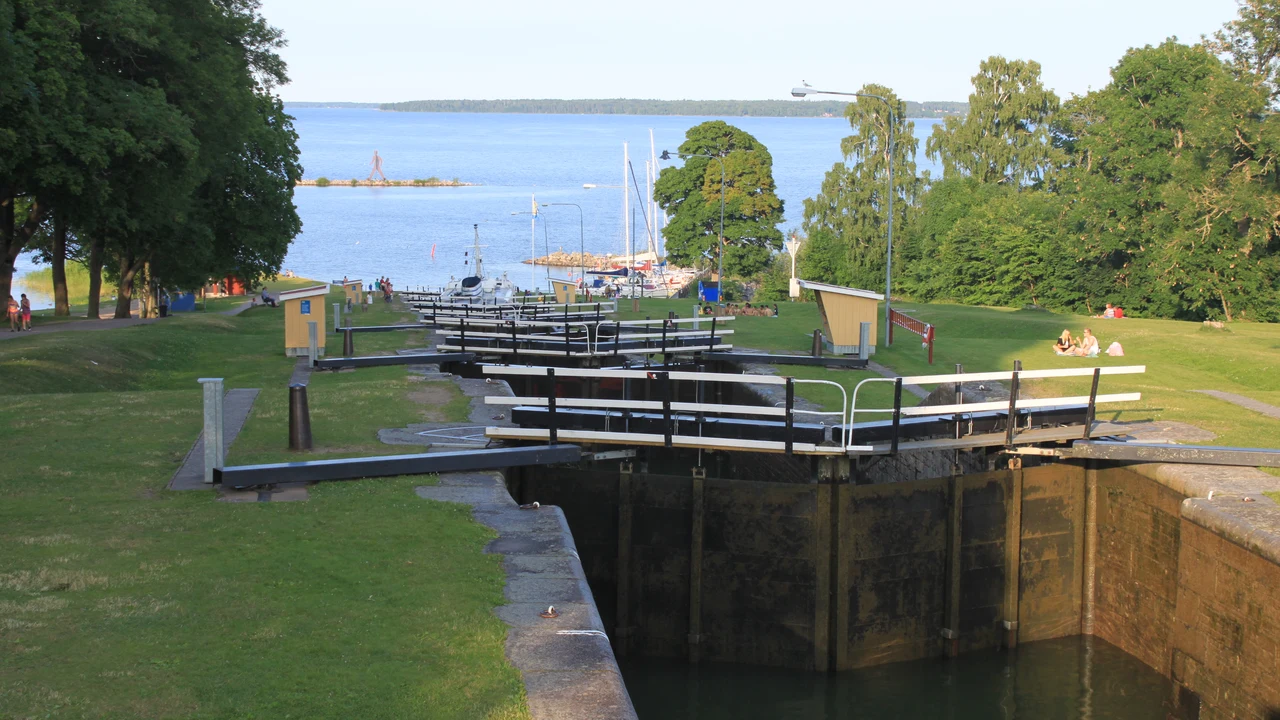
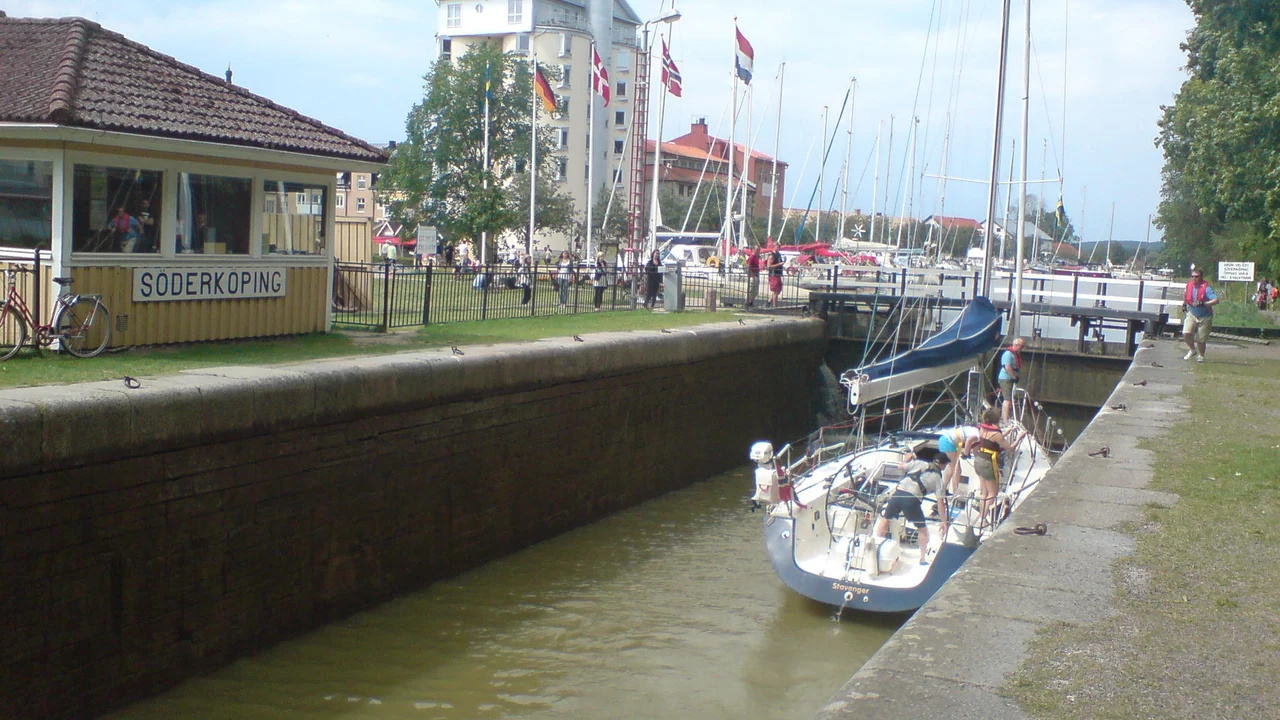
The water route runs 190 kilometers from Gothenburg on the west coast to Söderköping in the east.
Workers dug 87 kilometers of man-made channels to link large natural lakes together.
Lake Vättern sits high in the middle of the route, over ninety meters above the ocean.
Military Labor, Excavation, and Motala Verkstad
Tens of thousands of soldiers worked for years digging the canal with hand shovels.
Workers moved millions of wagonloads of dirt and cracked hard rocks using heavy pickaxes.
In 1822, Platen built a factory in Motala to make iron canal gates and steam digging boats.
The Motala factory taught Swedish workers how to build big modern machines and engines.
Early steam dredging boats cleaned deep rocks from the bottom of the water channels.
The western part of the canal between the big lakes opened for boats in 1822.
Hydraulic Staircases, Locks, and Navigation Engineering
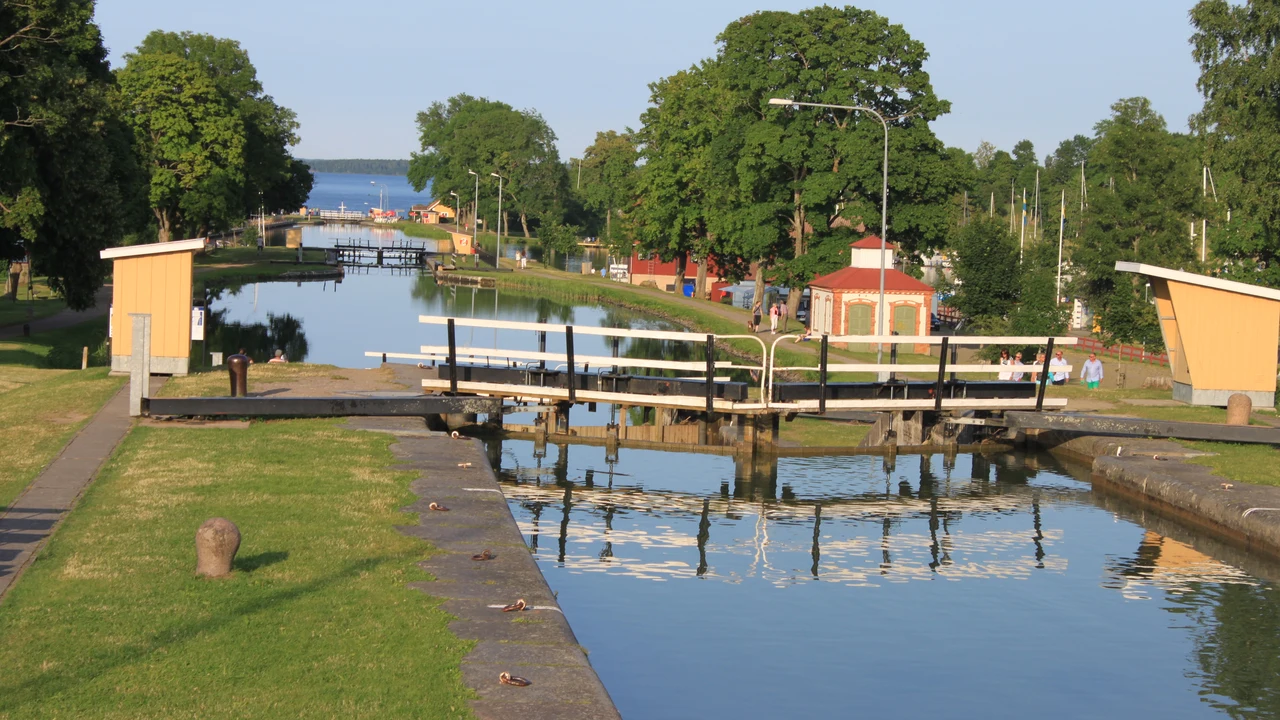
The canal has 58 water locks that lift and lower boats across the hills.
At Berg, a famous flight of seven water locks steps down eighteen meters into Lake Roxen.
Masons cut strong granite stones to build deep lock walls that hold heavy water.
Lock keepers turned heavy wooden handles to open large oak and iron gates.
Water bridges called aqueducts carried the canal over small rivers in the countryside.
Sweden celebrated the completion of the entire canal route on 26 September 1832.
Commercial Transformation, Preservation, and Tourism
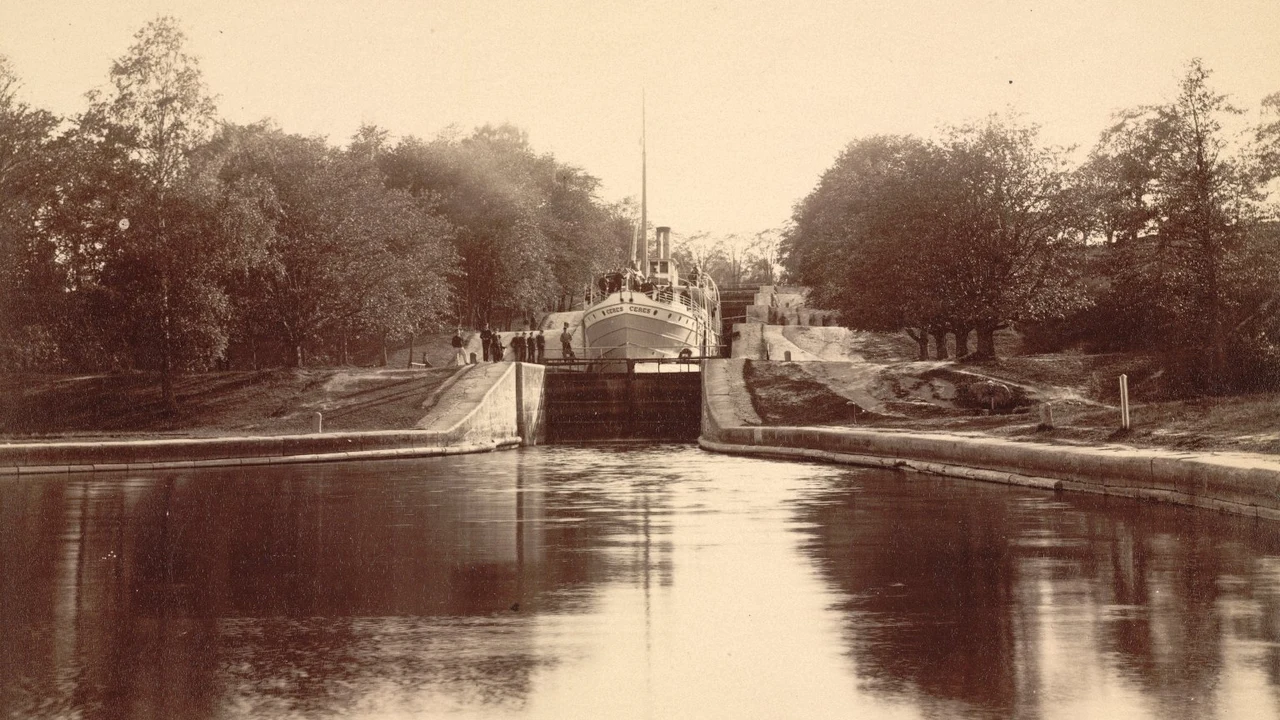
When trains carried freight later on, passenger steamships kept traveling along the canal.
Old white passenger boats like MS Juno began carrying holiday travelers along the waterway in 1874.
Sweden protects the entire canal as a national historic monument to save its engineering history.
Workers repair the stone walls, wooden gates, and walking paths beside the water every year.
Computer systems check water levels across lakes to keep the canal safe for boats and nature.
Today boaters, cyclists, and visitors from around the world travel along Sweden famous blue ribbon.
A2 · Elementary
Göta Canal: Sweden Historic Blue Ribbon Waterway
Exploring the 190-kilometer canal route, manual soldier excavations, and Thomas Telford engineering that united the North Sea and Baltic Sea.
Conception, Surveying, and Geopolitical Vision
Naval officer and statesman Baltzar von Platen championed the Göta Canal project to bypass Danish Sound Dues and link Sweden coasts.
In 1808, renowned Scottish civil engineer Thomas Telford surveyed the canal alignment and drafted the master engineering specifications.
King Charles XIII approved the canal charter in 1810, establishing AB Göta kanalbolag to oversee private and state financing.
The planned inland waterway spanned 190 kilometers between Gothenburg on the North Sea and Söderköping on the Baltic Sea.
The engineering design incorporated 87 kilometers of manually excavated artificial canal channels linking large natural lakes.
Lake Vättern serves as the canal summit reservoir, situated approximately 91.8 meters above sea level.
Military Labor, Excavation, and Motala Verkstad
Approximately 58,000 Swedish soldiers and Russian prisoners of war provided seven million effective days of manual excavation labor.
Laborers excavated roughly eight million cubic meters of earth and blasted granite bedrocks using manual pickaxes, shovels, and wheelbarrows.
In 1822, Baltzar von Platen founded Motala Verkstad along the canal banks to manufacture lock gates, iron sluice mechanisms, and steam dredgers.
Motala Verkstad introduced modern British machine tools to Sweden, becoming the foundational cradle of the Swedish mechanical engineering industry.
Early imported steam-driven dredging machines were deployed along the canal channel to clear submerged boulders and deepen navigation cuts.
The western section of the canal between Lake Vänern and Lake Vättern officially opened to maritime traffic in 1822.
Hydraulic Staircases, Locks, and Navigation Engineering
The completed Göta Canal encompasses 58 navigation locks designed to overcome cumulative vertical elevation changes.
The famous Carl Johan lock flight at Berg comprises a continuous staircase of seven linked lock chambers descending 18.8 meters into Lake Roxen.
Granite ashlar masonry was quarried and dressed locally to line lock chambers and withstand tremendous hydrostatic water pressures.
Massive oak and cast-iron lock gates were operated using balanced timber balance beams and hand-cranked rack-and-pinion sluice valves.
Aqueducts and culverts were engineered across river valleys like Ljungsbro to carry the elevated canal channel safely over natural streams.
The entire canal was inaugurated on 26 September 1832 when the eastern section to Mem on the Baltic Sea was completed.
Commercial Transformation, Preservation, and Tourism
Although coastal railways eclipsed commercial freight transport by the late nineteenth century, passenger steamers maintained vital transit links.
Classic white-hulled passenger vessels like MS Juno, launched in 1874, established the canal as Sweden premier leisure waterway.
The National Heritage Board designated the Göta Canal a state-protected listed monument (byggnadsminne) under the Cultural Environment Act.
AB Göta kanalbolag conducts ongoing restoration of historic granite quays, wooden lock gates, and canal towpaths.
Modern water management systems monitor water discharge across connecting catchments to maintain safe navigation depths and environmental flows.
Known as Sweden Blue Ribbon (Sveriges blå band), the canal attracts international boaters, cyclists, and heritage travelers every summer.
B1 · Intermediate
Göta Canal: Civil Engineering, Motala Verkstad, and Inland Navigation
An analytical examination of Baltzar von Platen inland navigation corridor, reviewing early mechanical engineering, lock flights, and passenger steamers.
Conception, Surveying, and Geopolitical Vision
Naval officer and statesman Baltzar von Platen championed the Göta Canal project to bypass Danish Sound Dues and link Sweden coasts.
In 1808, renowned Scottish civil engineer Thomas Telford surveyed the canal alignment and drafted the master engineering specifications.
King Charles XIII approved the canal charter in 1810, establishing AB Göta kanalbolag to oversee private and state financing.
The planned inland waterway spanned 190 kilometers between Gothenburg on the North Sea and Söderköping on the Baltic Sea.
The engineering design incorporated 87 kilometers of manually excavated artificial canal channels linking large natural lakes.
Lake Vättern serves as the canal summit reservoir, situated approximately 91.8 meters above sea level.
Military Labor, Excavation, and Motala Verkstad
Approximately 58,000 Swedish soldiers and Russian prisoners of war provided seven million effective days of manual excavation labor.
Laborers excavated roughly eight million cubic meters of earth and blasted granite bedrocks using manual pickaxes, shovels, and wheelbarrows.
In 1822, Baltzar von Platen founded Motala Verkstad along the canal banks to manufacture lock gates, iron sluice mechanisms, and steam dredgers.
Motala Verkstad introduced modern British machine tools to Sweden, becoming the foundational cradle of the Swedish mechanical engineering industry.
Early imported steam-driven dredging machines were deployed along the canal channel to clear submerged boulders and deepen navigation cuts.
The western section of the canal between Lake Vänern and Lake Vättern officially opened to maritime traffic in 1822.
Hydraulic Staircases, Locks, and Navigation Engineering
The completed Göta Canal encompasses 58 navigation locks designed to overcome cumulative vertical elevation changes.
The famous Carl Johan lock flight at Berg comprises a continuous staircase of seven linked lock chambers descending 18.8 meters into Lake Roxen.
Granite ashlar masonry was quarried and dressed locally to line lock chambers and withstand tremendous hydrostatic water pressures.
Massive oak and cast-iron lock gates were operated using balanced timber balance beams and hand-cranked rack-and-pinion sluice valves.
Aqueducts and culverts were engineered across river valleys like Ljungsbro to carry the elevated canal channel safely over natural streams.
The entire canal was inaugurated on 26 September 1832 when the eastern section to Mem on the Baltic Sea was completed.
Commercial Transformation, Preservation, and Tourism
Although coastal railways eclipsed commercial freight transport by the late nineteenth century, passenger steamers maintained vital transit links.
Classic white-hulled passenger vessels like MS Juno, launched in 1874, established the canal as Sweden premier leisure waterway.
The National Heritage Board designated the Göta Canal a state-protected listed monument (byggnadsminne) under the Cultural Environment Act.
AB Göta kanalbolag conducts ongoing restoration of historic granite quays, wooden lock gates, and canal towpaths.
Modern water management systems monitor water discharge across connecting catchments to maintain safe navigation depths and environmental flows.
Known as Sweden Blue Ribbon (Sveriges blå band), the canal attracts international boaters, cyclists, and heritage travelers every summer.
B2 · Upper Intermediate
Göta Canal: Geopolitics, Hydraulic Infrastructure, and Industrial Heritage
Investigating Sound Dues evasion, Carl Johan lock staircases at Berg, Motala steam dredging technologies, and listed monument conservation.
Conception, Surveying, and Geopolitical Vision
Naval officer and statesman Baltzar von Platen championed the Göta Canal project to bypass Danish Sound Dues and link Sweden coasts.
In 1808, renowned Scottish civil engineer Thomas Telford surveyed the canal alignment and drafted the master engineering specifications.
King Charles XIII approved the canal charter in 1810, establishing AB Göta kanalbolag to oversee private and state financing.
The planned inland waterway spanned 190 kilometers between Gothenburg on the North Sea and Söderköping on the Baltic Sea.
The engineering design incorporated 87 kilometers of manually excavated artificial canal channels linking large natural lakes.
Lake Vättern serves as the canal summit reservoir, situated approximately 91.8 meters above sea level.
Military Labor, Excavation, and Motala Verkstad
Approximately 58,000 Swedish soldiers and Russian prisoners of war provided seven million effective days of manual excavation labor.
Laborers excavated roughly eight million cubic meters of earth and blasted granite bedrocks using manual pickaxes, shovels, and wheelbarrows.
In 1822, Baltzar von Platen founded Motala Verkstad along the canal banks to manufacture lock gates, iron sluice mechanisms, and steam dredgers.
Motala Verkstad introduced modern British machine tools to Sweden, becoming the foundational cradle of the Swedish mechanical engineering industry.
Early imported steam-driven dredging machines were deployed along the canal channel to clear submerged boulders and deepen navigation cuts.
The western section of the canal between Lake Vänern and Lake Vättern officially opened to maritime traffic in 1822.
Hydraulic Staircases, Locks, and Navigation Engineering
The completed Göta Canal encompasses 58 navigation locks designed to overcome cumulative vertical elevation changes.
The famous Carl Johan lock flight at Berg comprises a continuous staircase of seven linked lock chambers descending 18.8 meters into Lake Roxen.
Granite ashlar masonry was quarried and dressed locally to line lock chambers and withstand tremendous hydrostatic water pressures.
Massive oak and cast-iron lock gates were operated using balanced timber balance beams and hand-cranked rack-and-pinion sluice valves.
Aqueducts and culverts were engineered across river valleys like Ljungsbro to carry the elevated canal channel safely over natural streams.
The entire canal was inaugurated on 26 September 1832 when the eastern section to Mem on the Baltic Sea was completed.
Commercial Transformation, Preservation, and Tourism
Although coastal railways eclipsed commercial freight transport by the late nineteenth century, passenger steamers maintained vital transit links.
Classic white-hulled passenger vessels like MS Juno, launched in 1874, established the canal as Sweden premier leisure waterway.
The National Heritage Board designated the Göta Canal a state-protected listed monument (byggnadsminne) under the Cultural Environment Act.
AB Göta kanalbolag conducts ongoing restoration of historic granite quays, wooden lock gates, and canal towpaths.
Modern water management systems monitor water discharge across connecting catchments to maintain safe navigation depths and environmental flows.
Known as Sweden Blue Ribbon (Sveriges blå band), the canal attracts international boaters, cyclists, and heritage travelers every summer.
C1 · Advanced
The Civil Engineering and Geopolitical History of the Göta Canal
A critical journalistic monograph analyzing Telford hydraulic surveying, Napoleonic-era military mobilization, Motala manufacturing, and catchment hydrology.
Conception, Surveying, and Geopolitical Vision
Naval officer and statesman Baltzar von Platen championed the Göta Canal project to bypass Danish Sound Dues and link Sweden coasts.
In 1808, renowned Scottish civil engineer Thomas Telford surveyed the canal alignment and drafted the master engineering specifications.
King Charles XIII approved the canal charter in 1810, establishing AB Göta kanalbolag to oversee private and state financing.
The planned inland waterway spanned 190 kilometers between Gothenburg on the North Sea and Söderköping on the Baltic Sea.
The engineering design incorporated 87 kilometers of manually excavated artificial canal channels linking large natural lakes.
Lake Vättern serves as the canal summit reservoir, situated approximately 91.8 meters above sea level.
Military Labor, Excavation, and Motala Verkstad
Approximately 58,000 Swedish soldiers and Russian prisoners of war provided seven million effective days of manual excavation labor.
Laborers excavated roughly eight million cubic meters of earth and blasted granite bedrocks using manual pickaxes, shovels, and wheelbarrows.
In 1822, Baltzar von Platen founded Motala Verkstad along the canal banks to manufacture lock gates, iron sluice mechanisms, and steam dredgers.
Motala Verkstad introduced modern British machine tools to Sweden, becoming the foundational cradle of the Swedish mechanical engineering industry.
Early imported steam-driven dredging machines were deployed along the canal channel to clear submerged boulders and deepen navigation cuts.
The western section of the canal between Lake Vänern and Lake Vättern officially opened to maritime traffic in 1822.
Hydraulic Staircases, Locks, and Navigation Engineering
The completed Göta Canal encompasses 58 navigation locks designed to overcome cumulative vertical elevation changes.
The famous Carl Johan lock flight at Berg comprises a continuous staircase of seven linked lock chambers descending 18.8 meters into Lake Roxen.
Granite ashlar masonry was quarried and dressed locally to line lock chambers and withstand tremendous hydrostatic water pressures.
Massive oak and cast-iron lock gates were operated using balanced timber balance beams and hand-cranked rack-and-pinion sluice valves.
Aqueducts and culverts were engineered across river valleys like Ljungsbro to carry the elevated canal channel safely over natural streams.
The entire canal was inaugurated on 26 September 1832 when the eastern section to Mem on the Baltic Sea was completed.
Commercial Transformation, Preservation, and Tourism
Although coastal railways eclipsed commercial freight transport by the late nineteenth century, passenger steamers maintained vital transit links.
Classic white-hulled passenger vessels like MS Juno, launched in 1874, established the canal as Sweden premier leisure waterway.
The National Heritage Board designated the Göta Canal a state-protected listed monument (byggnadsminne) under the Cultural Environment Act.
AB Göta kanalbolag conducts ongoing restoration of historic granite quays, wooden lock gates, and canal towpaths.
Modern water management systems monitor water discharge across connecting catchments to maintain safe navigation depths and environmental flows.
Known as Sweden Blue Ribbon (Sveriges blå band), the canal attracts international boaters, cyclists, and heritage travelers every summer.
C2 · Mastery
The Göta Canal: Hydrostatic Engineering, Industrial Genesis, and National Monument Conservation
A comprehensive analytical study evaluating nineteenth-century lock masonry, steam mechanization, corporate transport evolution, and Blue Ribbon leisure stewardship.
Conception, Surveying, and Geopolitical Vision
Naval officer and statesman Baltzar von Platen championed the Göta Canal project to bypass Danish Sound Dues and link Sweden coasts.
In 1808, renowned Scottish civil engineer Thomas Telford surveyed the canal alignment and drafted the master engineering specifications.
King Charles XIII approved the canal charter in 1810, establishing AB Göta kanalbolag to oversee private and state financing.
The planned inland waterway spanned 190 kilometers between Gothenburg on the North Sea and Söderköping on the Baltic Sea.
The engineering design incorporated 87 kilometers of manually excavated artificial canal channels linking large natural lakes.
Lake Vättern serves as the canal summit reservoir, situated approximately 91.8 meters above sea level.
Military Labor, Excavation, and Motala Verkstad
Approximately 58,000 Swedish soldiers and Russian prisoners of war provided seven million effective days of manual excavation labor.
Laborers excavated roughly eight million cubic meters of earth and blasted granite bedrocks using manual pickaxes, shovels, and wheelbarrows.
In 1822, Baltzar von Platen founded Motala Verkstad along the canal banks to manufacture lock gates, iron sluice mechanisms, and steam dredgers.
Motala Verkstad introduced modern British machine tools to Sweden, becoming the foundational cradle of the Swedish mechanical engineering industry.
Early imported steam-driven dredging machines were deployed along the canal channel to clear submerged boulders and deepen navigation cuts.
The western section of the canal between Lake Vänern and Lake Vättern officially opened to maritime traffic in 1822.
Hydraulic Staircases, Locks, and Navigation Engineering
The completed Göta Canal encompasses 58 navigation locks designed to overcome cumulative vertical elevation changes.
The famous Carl Johan lock flight at Berg comprises a continuous staircase of seven linked lock chambers descending 18.8 meters into Lake Roxen.
Granite ashlar masonry was quarried and dressed locally to line lock chambers and withstand tremendous hydrostatic water pressures.
Massive oak and cast-iron lock gates were operated using balanced timber balance beams and hand-cranked rack-and-pinion sluice valves.
Aqueducts and culverts were engineered across river valleys like Ljungsbro to carry the elevated canal channel safely over natural streams.
The entire canal was inaugurated on 26 September 1832 when the eastern section to Mem on the Baltic Sea was completed.
Commercial Transformation, Preservation, and Tourism
Although coastal railways eclipsed commercial freight transport by the late nineteenth century, passenger steamers maintained vital transit links.
Classic white-hulled passenger vessels like MS Juno, launched in 1874, established the canal as Sweden premier leisure waterway.
The National Heritage Board designated the Göta Canal a state-protected listed monument (byggnadsminne) under the Cultural Environment Act.
AB Göta kanalbolag conducts ongoing restoration of historic granite quays, wooden lock gates, and canal towpaths.
Modern water management systems monitor water discharge across connecting catchments to maintain safe navigation depths and environmental flows.
Known as Sweden Blue Ribbon (Sveriges blå band), the canal attracts international boaters, cyclists, and heritage travelers every summer.
Check your understanding
Choose how closely you want to revisit the article. You can refer back while answering, and review explanations when you finish.
Quick Quiz A1
Try one question, then create a free account for the full Quick Quiz. Sign Up Free
Answer every question before checking. There is no time limit.
Your results
/ 1 correct (%)
Read the explanations to see how each answer connects to the article.
-
Who planned the Göta Canal to connect two seas across Sweden?
1. Answer:
Quick Quiz A2
Try one question, then create a free account for the full Quick Quiz. Sign Up Free
Answer every question before checking. There is no time limit.
Your results
/ 1 correct (%)
Read the explanations to see how each answer connects to the article.
-
Who championed the Göta Canal project to link Sweden coasts?
1. Answer:
Quick Quiz B1
Try one question, then create a free account for the full Quick Quiz. Sign Up Free
Answer every question before checking. There is no time limit.
Your results
/ 1 correct (%)
Read the explanations to see how each answer connects to the article.
-
Who championed the Göta Canal project to link Sweden coasts?
1. Answer:
Quick Quiz B2
Try one question, then create a free account for the full Quick Quiz. Sign Up Free
Answer every question before checking. There is no time limit.
Your results
/ 1 correct (%)
Read the explanations to see how each answer connects to the article.
-
Who championed the Göta Canal project to link Sweden coasts?
1. Answer:
Quick Quiz C1
Try one question, then create a free account for the full Quick Quiz. Sign Up Free
Answer every question before checking. There is no time limit.
Your results
/ 1 correct (%)
Read the explanations to see how each answer connects to the article.
-
Who championed the Göta Canal project to link Sweden coasts?
1. Answer:
Quick Quiz C2
Try one question, then create a free account for the full Quick Quiz. Sign Up Free
Answer every question before checking. There is no time limit.
Your results
/ 1 correct (%)
Read the explanations to see how each answer connects to the article.
-
Who championed the Göta Canal project to link Sweden coasts?
1. Answer:
