China: The World's Big Factory
China is a very big country. It has many factories. These factories make many things for the world. People work hard in the factories to produce goods.
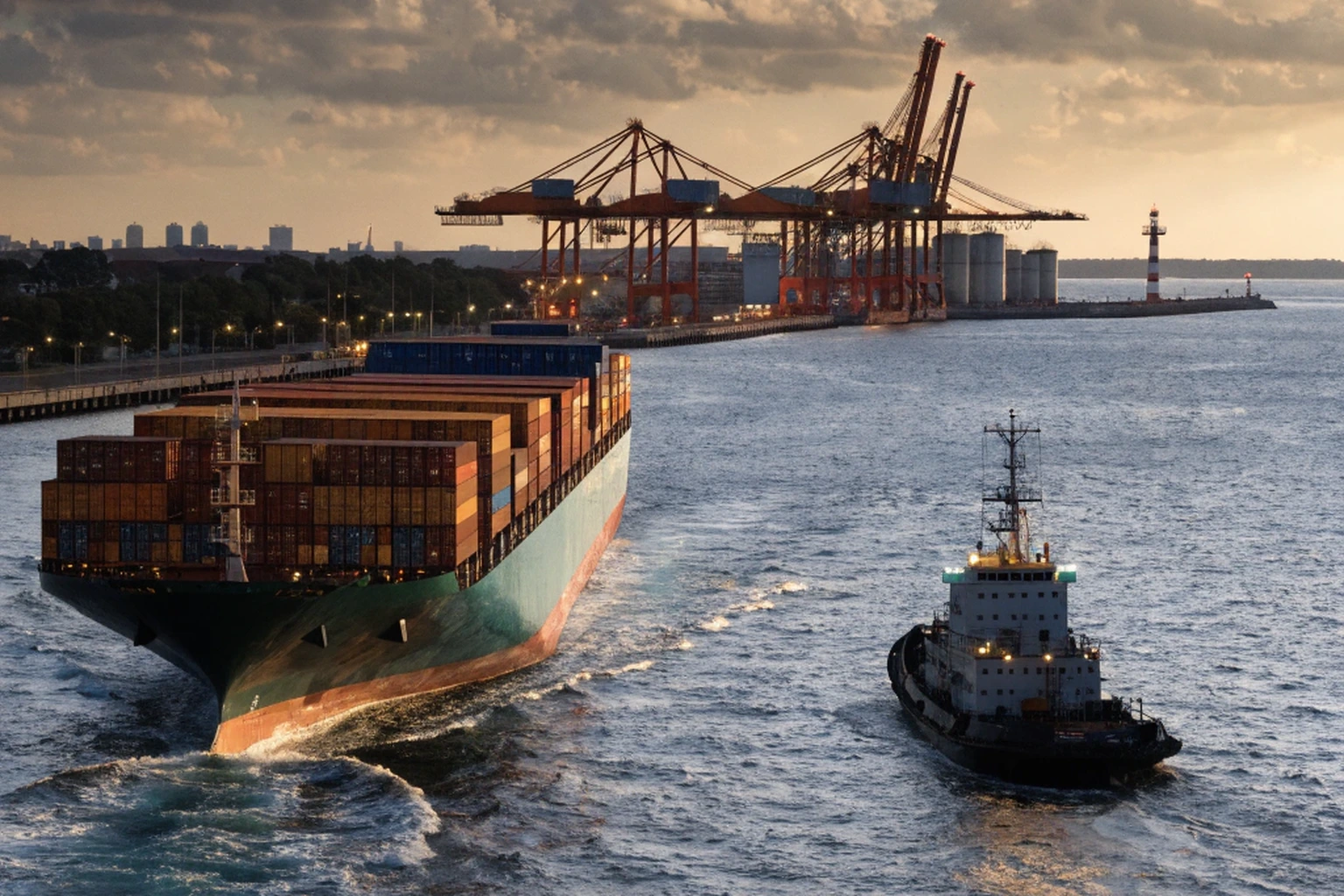
They make phones and computers. They make clothes and toys for children. The factories send all these things to many countries. Ships and planes carry the goods across the world.
Today, many factories in China are very modern. They use new technology to make new, high-tech things. China is a big factory for the whole world, making both simple and advanced products.
Grammar Spotlight
Pattern: Simple Present Tense
"They make phones and computers."
We use the simple present tense to talk about facts or things that are generally true. To make it, we use the base form of the verb (make, have, go).
Pattern: Plural Nouns with -s
"The factories send all these things to many countries."
To talk about more than one thing, we usually add '-s' to the end of a noun. For example, one 'factory' becomes many 'factories'.
Test Your Understanding
10 questions · A1 Beginner · 1 free preview
Test what you learned from this article. Answer all questions to earn XP!
What does China have a lot of?
Want to finish the quiz?
9 more questions are waiting for you. Sign up free to unlock the full quiz and earn XP!
Sign Up FreeAlready have an account? Sign In
Question Breakdown
What does China have a lot of?
Your answer:
Correct answer: Factories
Factories in China only make clothes and toys.
Your answer:
Correct answer: False
What does 'modern' mean?
Your answer:
Correct answer: New
China is a very big _____.
Your answer:
Correct answer: country
From Fishing Villages to High-Tech Factories
Forty years ago, China was a very different place. Most people lived in the countryside and worked on small farms. Then, in 1978, the government started a new plan called 'Reform and Opening-up.' They wanted to make and sell things to the rest of the world. Small fishing villages like Shenzhen changed very quickly. They became huge, modern cities with many busy factories.
At first, these factories made simple and cheap things. Workers made clothes, shoes, and toys for people in other countries. But today, manufacturing in China is changing. The factories are more advanced than before. Now, companies in China make high-tech products like smartphones, computers, and electric cars. They use smart robots and computers to help them work faster and better.
The workers are also more skilled today. They know how to use complex technology. China is not just making cheap goods anymore. It is becoming a famous center for innovation and high-tech business. This change is very important for the country's economy.
Grammar Spotlight
Pattern: Past Simple Tense
"Small fishing villages like Shenzhen changed very quickly."
We use the past simple to talk about finished actions in the past. Regular verbs often end in '-ed' (like 'changed'), while irregular verbs change form (like 'became').
Pattern: Comparatives
"The factories are more advanced than before."
We use comparatives to compare two things. For long adjectives like 'advanced', we use 'more' before the word. For short adjectives, we usually add '-er'.
Test Your Understanding
11 questions · A2 Elementary · 1 free preview
Test what you learned from this article. Answer all questions to earn XP!
What did most people in China do forty years ago?
Want to finish the quiz?
10 more questions are waiting for you. Sign up free to unlock the full quiz and earn XP!
Sign Up FreeAlready have an account? Sign In
Question Breakdown
What did most people in China do forty years ago?
Your answer:
Correct answer: They worked on small farms
Shenzhen was always a huge, modern city.
Your answer:
Correct answer: False
What does 'cheap' mean?
Your answer:
Correct answer: Costing little money
Workers made clothes, shoes, and _____.
Your answer:
Correct answer: toys
What kind of products does China make today?
Your answer:
Correct answer: High-tech products
China: The World's Factory and Beyond
For over forty years, China has been known as the "World's Factory." This incredible journey began in 1978 when the country started a policy called "Reform and Opening-up." Before this time, the economy was very different, but the new policy allowed China to trade with other nations. Special Economic Zones were created in places like Shenzhen and Dongguan. In the past, Shenzhen was just a small fishing village. However, it has transformed into a massive modern metropolis with millions of people.
In the early years, the growth was driven by the manufacturing of simple products. Factories produced clothes, shoes, and basic electronics. These goods were exported to countries all over the world. International companies chose China because there was a large population of workers who were ready to work for lower wages. Consequently, cities along the coast grew rapidly, and the standard of living improved for many families.
Recently, a significant shift has occurred. China is no longer just assembling parts for foreign companies. Instead, it has become a leader in high technology. Today, sophisticated factories use robots and artificial intelligence to build electric vehicles, smartphones, and green energy equipment. This change is necessary because the cost of labor has increased. Therefore, the focus has moved from quantity to quality.
The government has invested heavily in infrastructure to support this new direction. High-speed trains now connect major industrial hubs, which makes transportation fast and efficient. Universities are also training millions of engineers every year. Although some challenges remain, China's evolution from simple assembly lines to high-tech innovation centers is impressive. It serves as a powerful example of economic development in the modern world.
Grammar Spotlight
Pattern: Present Perfect
"However, it has transformed into a massive modern metropolis."
We use the present perfect (has/have + past participle) to describe a change that started in the past and is still relevant or true today.
Pattern: Passive Voice
"In the early years, the growth was driven by the manufacturing of simple products."
The passive voice is used here because the focus is on the 'growth' (the object), not on what caused it. It is formed using 'was/were' + past participle.
Test Your Understanding
11 questions · B1 Intermediate · 1 free preview
Test what you learned from this article. Answer all questions to earn XP!
What was Shenzhen before it became a major city?
Want to finish the quiz?
10 more questions are waiting for you. Sign up free to unlock the full quiz and earn XP!
Sign Up FreeAlready have an account? Sign In
Question Breakdown
What was Shenzhen before it became a major city?
Your answer:
Correct answer: A fishing village
China only produces simple items like clothes and toys today.
Your answer:
Correct answer: False
What does 'efficient' mean?
Your answer:
Correct answer: Working well without wasting time
The government has invested heavily in _______ to support the new direction.
Your answer:
Correct answer: infrastructure
Why did international companies originally move production to China?
Your answer:
Correct answer: To lower labor costs
China's Industrial Evolution: Beyond the Assembly Line
For more than forty years, the manufacturing sector has served as the bedrock of China’s economic miracle. Following the pivotal 'Reform and Opening-up' policy initiated in 1978, the country capitalized on its vast labor pool and accessible coastal locations to earn the title of the 'World's Factory.' Initially, this unprecedented growth was driven by the production of low-end consumer goods, textiles, and basic electronics. During this period, Special Economic Zones (SEZs) were established in places like Shenzhen and Dongguan. These areas, which were historically small fishing villages, were rapidly transformed into sprawling industrial metropolises, attracting investment from every corner of the globe.
However, the economic landscape has changed significantly in recent years. As China’s economy has matured, domestic wages have increased, making the old model of cheap labor less sustainable. Recognizing this trend, policymakers and business leaders have orchestrated a strategic shift. The objective is to move up the value chain, transitioning from simple assembly tasks to sophisticated design and high-tech manufacturing. This transformation is not merely about producing more goods, but about creating products that require higher levels of technical expertise and innovation.
Currently, China is aggressively pursuing leadership in cutting-edge industries. The country has become a dominant force in the production of electric vehicles (EVs), lithium-ion batteries, and solar panels. For instance, Chinese companies are now at the forefront of green technology, exporting energy solutions worldwide. Furthermore, the integration of artificial intelligence and robotics into factories has revolutionized production lines. Automation is becoming the new standard, allowing for greater precision and efficiency than ever before.
Another critical factor in this evolution is the massive investment in infrastructure. China has built an extensive network of high-speed railways, bridges, and automated ports that facilitate the smooth movement of goods. This logistical capability ensures that raw materials can reach factories quickly and finished products can be shipped to global markets without delay. Such developments demonstrate that the nation’s strength lies not just in its factories, but in the comprehensive ecosystem that supports them.
Despite these impressive achievements, the path ahead contains obstacles. Global trade tensions and the need for stricter environmental protections present ongoing challenges. Nevertheless, the resilience of the Chinese manufacturing sector is evident. By prioritizing quality over quantity and innovation over imitation, China is redefining its role in the global economy. The journey from the dusty assembly lines of the 1980s to the pristine, high-tech hubs of today serves as a testament to the nation's enduring industrial ambition.
Grammar Spotlight
Pattern: Passive Voice (Past)
"Initially, this unprecedented growth was driven by the production of low-end consumer goods."
The passive voice 'was driven' is used here because the focus is on the growth (the receiver of the action) rather than what caused it. This is common in formal and academic writing to maintain objectivity.
Pattern: Relative Clauses
"These areas, which were historically small fishing villages, were rapidly transformed into sprawling industrial metropolises."
The clause starting with 'which' gives extra information about 'These areas'. It adds detail without needing a separate sentence, improving the flow of the text.
Pattern: Present Perfect Tense
"The country has become a dominant force in the production of electric vehicles."
The present perfect 'has become' connects a past action (starting to produce EVs) with the present result (being a dominant force now). It emphasizes the current status resulting from past development.
Test Your Understanding
11 questions · B2 Upper Intermediate · 1 free preview
Test what you learned from this article. Answer all questions to earn XP!
What was the primary driver of China's initial industrial growth?
Want to finish the quiz?
10 more questions are waiting for you. Sign up free to unlock the full quiz and earn XP!
Sign Up FreeAlready have an account? Sign In
Question Breakdown
What was the primary driver of China's initial industrial growth?
Your answer:
Correct answer: Low-cost labor and consumer goods
Shenzhen was originally a large industrial city before the 1978 reforms.
Your answer:
Correct answer: False
Which word means 'the basic physical structures needed for a society, like roads and bridges'?
Your answer:
Correct answer: Infrastructure
China is transitioning from simple assembly to _____ high-tech manufacturing.
Your answer:
Correct answer: sophisticated
According to the article, why is the 'cheap labor' model no longer sustainable?
Your answer:
Correct answer: Wages have increased as the economy matured
The Industrial Metamorphosis: China’s Evolution from Assembly Lines to High-Tech Hubs
The metamorphosis of China’s industrial landscape from a rudimentary assembly line to a sophisticated nexus of high-tech innovation represents one of the most significant economic shifts of the modern era. What began as a desperate bid for modernization following the 1978 Reform and Opening-up policy has culminated in a global hegemony that defies simple categorization. No longer is the nation merely the 'World’s Factory,' churning out low-cost trinkets; rather, it has become a vanguard of the fourth industrial revolution, challenging established western paradigms of production.
Central to this transformation was the strategic establishment of Special Economic Zones (SEZs). Little did the early planners realize that fishing villages like Shenzhen would burgeon into sprawling megalopolises within a few decades. Through the systematic liberalization of trade and the strategic courting of foreign investment, China leveraged its demographic dividend to construct an infrastructure of unparalleled scale. However, the reliance on labor-intensive manufacturing was always intended as a transitional phase. It is the 'Made in China 2025' initiative that serves as the definitive blueprint for the current shift toward high-value-added production. By prioritizing sectors such as aerospace, robotics, and green energy, the state aims to transcend the 'middle-income trap' and achieve technological sovereignty.
The integration of artificial intelligence and automation into the manufacturing process underscores a broader commitment to self-reliance. Scarcely had the global economy recognized China's dominance in textiles when the nation pivoted toward the production of electric vehicles and semiconductors. This transition involves a complex recalibration of supply chains and a heightened focus on domestic consumption. The sheer ubiquity of Chinese-made components in global high-tech products today is a testament to this successful orchestration of industrial policy.
Yet, this ascent is not without its detractors or structural difficulties. Geopolitical tensions and the subsequent discourse surrounding the 'decoupling' of global supply chains have necessitated a nuanced response from Chinese policymakers. Furthermore, the transition toward a high-tech hub requires a highly skilled workforce, putting pressure on the educational system to adapt. The resilience of the manufacturing apparatus remains formidable, but the challenges of an aging population and rising labor costs loom large. Ultimately, the story of Chinese manufacturing is one of constant reinvention, moving beyond the assembly line toward a future defined by digital intelligence and sustainable innovation.
Grammar Spotlight
Pattern: Negative Inversion
"No longer is the nation merely the 'World’s Factory,' churning out low-cost trinkets."
Inversion is used here to emphasize the change in status. When a negative adverbial like 'No longer' starts a sentence, the auxiliary verb moves before the subject.
Pattern: Cleft Sentence
"It is the 'Made in China 2025' initiative that serves as the definitive blueprint for the current shift."
Cleft sentences are used to focus on specific information. By using 'It is... that...', the writer highlights the specific initiative responsible for the change.
Pattern: Nominalization
"The integration of artificial intelligence and automation into the manufacturing process underscores a broader commitment to self-reliance."
Nominalization turns verbs into nouns ('integrate' to 'integration'). This creates a more formal, academic tone suitable for C1 level analysis.
Test Your Understanding
12 questions · C1 Advanced · 1 free preview
Test what you learned from this article. Answer all questions to earn XP!
According to the article, what was the primary driver of China's initial economic growth post-1978?
Want to finish the quiz?
11 more questions are waiting for you. Sign up free to unlock the full quiz and earn XP!
Sign Up FreeAlready have an account? Sign In
Question Breakdown
According to the article, what was the primary driver of China's initial economic growth post-1978?
Your answer:
Correct answer: Strategic establishment of Special Economic Zones and labor-intensive manufacturing
The article suggests that China's reliance on low-end manufacturing was always meant to be a permanent economic strategy.
Your answer:
Correct answer: False
What does 'hegemony' mean in the context of the text?
Your answer:
Correct answer: Leadership or dominance over others
The 'Made in China 2025' initiative aims to help the country achieve technological _____.
Your answer:
Correct answer: sovereignty
What does the term 'middle-income trap' refer to in the context of the article?
Your answer:
Correct answer: A stage where a country struggles to transition from low-value to high-value production
The text mentions that geopolitical tensions have led to discussions about 'decoupling' supply chains.
Your answer:
Correct answer: True
The Metamorphosis of a Titan: Deconstructing China’s Industrial Ascendancy and the High-Tech Paradigm Shift
The economic trajectory of China since the late twentieth century presents a formidable case study in rapid industrialization and subsequent technological sophistication. Were one to examine the landscape of the late 1970s, the notion that a predominantly agrarian society could, within a mere four decades, emerge as the vanguard of global manufacturing would have seemed bordering on the hyperbolic. Yet, following the seminal 'Reform and Opening-up' policy of 1978, the nation embarked upon a metamorphosis that would fundamentally alter the global economic order. Initially, this bedrock of growth was predicated upon the mobilization of a vast labor pool, which, coupled with the strategic implementation of Special Economic Zones (SEZs) in coastal regions like Shenzhen and Dongguan, served as a catalyst for an unprecedented influx of foreign direct investment. These regions, once humble fishing villages, were rapidly transformed into sprawling industrial metropolises, providing the world with an inexhaustible supply of low-end consumer goods and textiles.
Paradoxically, the very success of the 'World's Factory' model eventually necessitated its own obsolescence. As wages incrementally rose and the demographic dividend began to wane, the propensity for labor-intensive assembly lines to sustain double-digit GDP growth diminished. Consequently, a strategic recalibration became imperative for the nation’s continued prosperity. This shift was not merely a reactive measure to external market pressures but a deliberate move toward a new paradigm of high-value manufacturing. The burgeoning tech hubs of the Pearl River Delta transitioned from being mere assembly points for foreign-designed components to becoming nascent epicenters of indigenous innovation. It is imperative that the state maintain this momentum to navigate the complexities of the 'middle-income trap,' a challenge that has historically stymied many developing economies attempting to reach high-income status.
The contemporary industrial landscape is increasingly characterized by a drive toward 'Intelligent Manufacturing.' This involves the seamless integration of the Internet of Things (IoT), artificial intelligence, and advanced robotics into the very fabric of the production process. Seldom has a nation pivoted so decisively from manual labor to high-tech hegemony in such a condensed timeframe. This transition is encapsulated in the 'Made in China 2025' initiative, which seeks to upgrade the manufacturing base by focusing on high-tech fields such as aerospace, electric vehicles, and biopharmaceuticals. While some international critics argue that such state-led industrial policies distort global markets, others contend that they are a necessary response to the exigencies of the fourth industrial revolution and the global race for technological supremacy.
Furthermore, the geographical distribution of manufacturing is undergoing a profound transformation. While the coastal provinces remain dominant, there is an increasing push to relocate industrial capacity to the interior provinces, where costs remain lower and regional development is desperately needed. This internal migration of industry is complemented by the 'Belt and Road Initiative,' which aims to enhance connectivity and trade across Eurasia. This multifaceted approach suggests that China’s role in the global supply chain is not diminishing but rather evolving into a more complex and indispensable node. The synergy between traditional manufacturing prowess and cutting-edge digital infrastructure has created a resilient ecosystem that few other nations can replicate.
In conclusion, the journey from assembly lines to high-tech hubs is a testament to the efficacy of long-term strategic planning and the inherent adaptability of the Chinese economic engine. Whether this trajectory can be sustained amidst escalating geopolitical tensions and domestic demographic shifts remains a subject of intense academic debate. Nevertheless, the metamorphosis of China from a nascent industrial player to a global high-tech behemoth provides invaluable insights into the dynamics of modern economic development. Should the current trend of innovation continue, the global manufacturing paradigm will undoubtedly remain centered around this Eastern powerhouse for the foreseeable future.
Grammar Spotlight
Pattern: Inverted Conditional (Subjunctive)
"Were one to examine the landscape of the late 1970s, the notion that a predominantly agrarian society could... emerge as the vanguard of global manufacturing would have seemed bordering on the hyperbolic."
This structure replaces 'If one were to examine...' by inverting the verb and subject. It is used in formal, academic writing to express a hypothetical situation in the present or future.
Pattern: Negative Inversion
"Seldom has a nation pivoted so decisively from manual labor to high-tech hegemony in such a condensed timeframe."
When a negative adverbial like 'seldom' or 'rarely' starts a sentence, the auxiliary verb comes before the subject. This adds rhetorical emphasis to the rarity of the event.
Pattern: Mandative Subjunctive
"It is imperative that the state maintain this momentum to navigate the complexities of the 'middle-income trap'."
After adjectives of necessity or importance (imperative, essential, vital), the following verb 'maintain' is in the base form regardless of the subject. This is a hallmark of high-level formal English.
Test Your Understanding
12 questions · C2 Mastery · 1 free preview
Test what you learned from this article. Answer all questions to earn XP!
What was the primary factor that enabled China's initial growth as the 'World's Factory'?
Want to finish the quiz?
11 more questions are waiting for you. Sign up free to unlock the full quiz and earn XP!
Sign Up FreeAlready have an account? Sign In
Question Breakdown
What was the primary factor that enabled China's initial growth as the 'World's Factory'?
Your answer:
Correct answer: The mobilization of a vast labor pool and strategic SEZs
The article suggests that rising wages were a reason for China to move away from low-end assembly.
Your answer:
Correct answer: True
What does 'nascent' mean in the context of the article?
Your answer:
Correct answer: Just beginning to develop
The 'Reform and Opening-up' policy served as the _____ of growth for the Chinese economic miracle.
Your answer:
Correct answer: bedrock
Which initiative is specifically mentioned as a framework for upgrading the manufacturing base?
Your answer:
Correct answer: Made in China 2025
Special Economic Zones were primarily located in the interior provinces during the 1980s.
Your answer:
Correct answer: False
