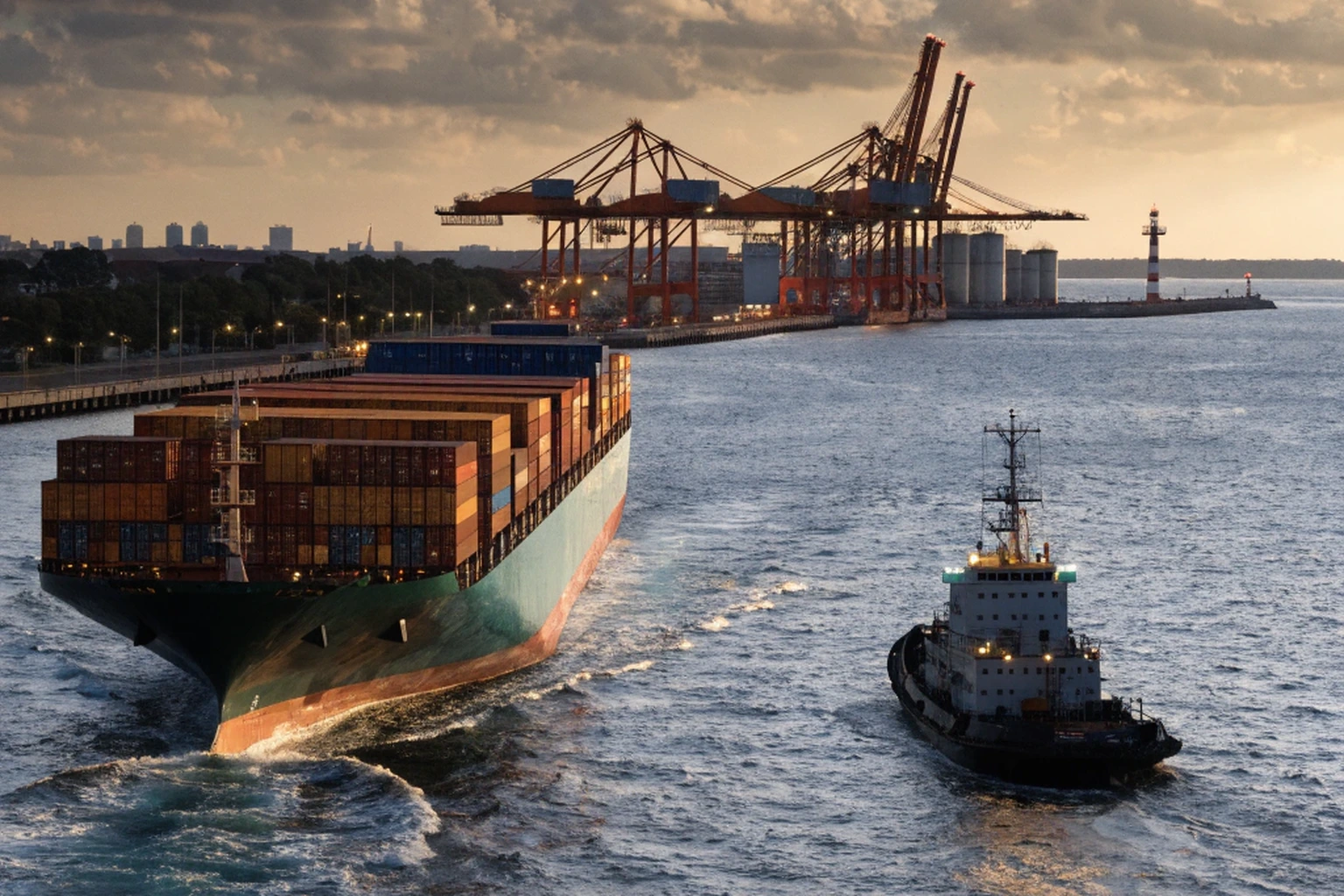
China: The World's Big Factory
China is a very big country. It has many factories. These factories make many things for the world. People work hard in the factories to produce goods.
They make phones and computers. They make clothes and toys for children. The factories send all these things to many countries. Ships and planes carry the goods across the world.
Today, many factories in China are very modern. They use new technology to make new, high-tech things. China is a big factory for the whole world, making both simple and advanced products.
文法スポットライト
パターン: Simple Present Tense
"They make phones and computers."
We use the simple present tense to talk about facts or things that are generally true. To make it, we use the base form of the verb (make, have, go).
パターン: Plural Nouns with -s
"The factories send all these things to many countries."
To talk about more than one thing, we usually add '-s' to the end of a noun. For example, one 'factory' becomes many 'factories'.
理解度をチェック
10 問 · A1 初級 · 無料プレビュー 1回
この記事で学んだことをテストしよう。全問正解してXPを獲得!
What does China have a lot of?
問題の内訳
What does China have a lot of?
あなたの回答:
正解: Factories
Factories in China only make clothes and toys.
あなたの回答:
正解: 間違い
What does 'modern' mean?
あなたの回答:
正解: New
China is a very big _____.
あなたの回答:
正解: country
From Fishing Villages to High-Tech Factories
Forty years ago, China was a very different place. Most people lived in the countryside and worked on small farms. Then, in 1978, the government started a new plan called 'Reform and Opening-up.' They wanted to make and sell things to the rest of the world. Small fishing villages like Shenzhen changed very quickly. They became huge, modern cities with many busy factories.
At first, these factories made simple and cheap things. Workers made clothes, shoes, and toys for people in other countries. But today, manufacturing in China is changing. The factories are more advanced than before. Now, companies in China make high-tech products like smartphones, computers, and electric cars. They use smart robots and computers to help them work faster and better.
The workers are also more skilled today. They know how to use complex technology. China is not just making cheap goods anymore. It is becoming a famous center for innovation and high-tech business. This change is very important for the country's economy.
文法スポットライト
パターン: 過去形 (Past Simple Tense)
"Small fishing villages like Shenzhen changed very quickly."
過去に終わった動作について話すときに過去形を使います。規則動詞は「-ed」で終わることが多く(例:「changed」)、不規則動詞は形が変わります(例:「became」)。
パターン: 比較級 (Comparatives)
"The factories are more advanced than before."
2つのものを比べるときに比較級を使います。「advanced」のような長い形容詞の場合は、単語の前に「more」を付けます。短い形容詞の場合は、通常「-er」を付けます。
理解度をチェック
11 問 · A2 初級 · 無料プレビュー 1回
この記事で学んだことをテストしよう。全問正解してXPを獲得!
40年前、中国のほとんどの人々は何をしていましたか?
問題の内訳
40年前、中国のほとんどの人々は何をしていましたか?
あなたの回答:
正解: 小さな農場で働いていた
深センはずっと巨大で現代的な都市でした。
あなたの回答:
正解: 間違い
「cheap」はどういう意味ですか?
あなたの回答:
正解: お金があまりかからない
労働者は服、靴、そして_____を作りました。
あなたの回答:
正解: toys
今日、中国はどのような製品を作っていますか?
あなたの回答:
正解: ハイテク製品
China: The World's Factory and Beyond
For over forty years, China has been known as the "World's Factory." This incredible journey began in 1978 when the country started a policy called "Reform and Opening-up." Before this time, the economy was very different, but the new policy allowed China to trade with other nations. Special Economic Zones were created in places like Shenzhen and Dongguan. In the past, Shenzhen was just a small fishing village. However, it has transformed into a massive modern metropolis with millions of people.
In the early years, the growth was driven by the manufacturing of simple products. Factories produced clothes, shoes, and basic electronics. These goods were exported to countries all over the world. International companies chose China because there was a large population of workers who were ready to work for lower wages. Consequently, cities along the coast grew rapidly, and the standard of living improved for many families.
Recently, a significant shift has occurred. China is no longer just assembling parts for foreign companies. Instead, it has become a leader in high technology. Today, sophisticated factories use robots and artificial intelligence to build electric vehicles, smartphones, and green energy equipment. This change is necessary because the cost of labor has increased. Therefore, the focus has moved from quantity to quality.
The government has invested heavily in infrastructure to support this new direction. High-speed trains now connect major industrial hubs, which makes transportation fast and efficient. Universities are also training millions of engineers every year. Although some challenges remain, China's evolution from simple assembly lines to high-tech innovation centers is impressive. It serves as a powerful example of economic development in the modern world.
文法スポットライト
パターン: 現在完了形
"However, it has transformed into a massive modern metropolis."
過去に始まり、現在も関連がある、あるいは現在も事実であるような「変化」を説明する際に、現在完了形(has/have + 過去分詞)を使います。
パターン: 受動態(受け身)
"In the early years, the growth was driven by the manufacturing of simple products."
ここでは、何が原因かではなく「成長(growth)」(目的語)に焦点を当てているため、受動態が使われています。「was/were + 過去分詞」で構成されます。
理解度をチェック
11 問 · B1 中級 · 無料プレビュー 1回
この記事で学んだことをテストしよう。全問正解してXPを獲得!
大都市になる前、深セン(Shenzhen)は何でしたか?
問題の内訳
大都市になる前、深セン(Shenzhen)は何でしたか?
あなたの回答:
正解: 漁村
今日の中国は、衣類や玩具のような単純な製品のみを生産している。
あなたの回答:
正解: 間違い
「efficient」はどういう意味ですか?
あなたの回答:
正解: 時間を無駄にせずうまく機能すること
政府は新しい方向性を支援するために、_______ に多額 of 投資を行ってきました。
あなたの回答:
正解: infrastructure
なぜ国際的な企業は、もともと中国に生産拠点を移したのですか?
あなたの回答:
正解: 労働コストを下げるため
China's Industrial Evolution: Beyond the Assembly Line
For more than forty years, the manufacturing sector has served as the bedrock of China’s economic miracle. Following the pivotal 'Reform and Opening-up' policy initiated in 1978, the country capitalized on its vast labor pool and accessible coastal locations to earn the title of the 'World's Factory.' Initially, this unprecedented growth was driven by the production of low-end consumer goods, textiles, and basic electronics. During this period, Special Economic Zones (SEZs) were established in places like Shenzhen and Dongguan. These areas, which were historically small fishing villages, were rapidly transformed into sprawling industrial metropolises, attracting investment from every corner of the globe.
However, the economic landscape has changed significantly in recent years. As China’s economy has matured, domestic wages have increased, making the old model of cheap labor less sustainable. Recognizing this trend, policymakers and business leaders have orchestrated a strategic shift. The objective is to move up the value chain, transitioning from simple assembly tasks to sophisticated design and high-tech manufacturing. This transformation is not merely about producing more goods, but about creating products that require higher levels of technical expertise and innovation.
Currently, China is aggressively pursuing leadership in cutting-edge industries. The country has become a dominant force in the production of electric vehicles (EVs), lithium-ion batteries, and solar panels. For instance, Chinese companies are now at the forefront of green technology, exporting energy solutions worldwide. Furthermore, the integration of artificial intelligence and robotics into factories has revolutionized production lines. Automation is becoming the new standard, allowing for greater precision and efficiency than ever before.
Another critical factor in this evolution is the massive investment in infrastructure. China has built an extensive network of high-speed railways, bridges, and automated ports that facilitate the smooth movement of goods. This logistical capability ensures that raw materials can reach factories quickly and finished products can be shipped to global markets without delay. Such developments demonstrate that the nation’s strength lies not just in its factories, but in the comprehensive ecosystem that supports them.
Despite these impressive achievements, the path ahead contains obstacles. Global trade tensions and the need for stricter environmental protections present ongoing challenges. Nevertheless, the resilience of the Chinese manufacturing sector is evident. By prioritizing quality over quantity and innovation over imitation, China is redefining its role in the global economy. The journey from the dusty assembly lines of the 1980s to the pristine, high-tech hubs of today serves as a testament to the nation's enduring industrial ambition.
文法スポットライト
パターン: Passive Voice (Past)
"Initially, this unprecedented growth was driven by the production of low-end consumer goods."
The passive voice 'was driven' is used here because the focus is on the growth (the receiver of the action) rather than what caused it. This is common in formal and academic writing to maintain objectivity.
パターン: Relative Clauses
"These areas, which were historically small fishing villages, were rapidly transformed into sprawling industrial metropolises."
The clause starting with 'which' gives extra information about 'These areas'. It adds detail without needing a separate sentence, improving the flow of the text.
パターン: Present Perfect Tense
"The country has become a dominant force in the production of electric vehicles."
The present perfect 'has become' connects a past action (starting to produce EVs) with the present result (being a dominant force now). It emphasizes the current status resulting from past development.
理解度をチェック
11 問 · B2 中上級 · 無料プレビュー 1回
この記事で学んだことをテストしよう。全問正解してXPを獲得!
What was the primary driver of China's initial industrial growth?
問題の内訳
What was the primary driver of China's initial industrial growth?
あなたの回答:
正解: Low-cost labor and consumer goods
Shenzhen was originally a large industrial city before the 1978 reforms.
あなたの回答:
正解: 間違い
Which word means 'the basic physical structures needed for a society, like roads and bridges'?
あなたの回答:
正解: Infrastructure
China is transitioning from simple assembly to _____ high-tech manufacturing.
あなたの回答:
正解: sophisticated
According to the article, why is the 'cheap labor' model no longer sustainable?
あなたの回答:
正解: Wages have increased as the economy matured
The Industrial Metamorphosis: China’s Evolution from Assembly Lines to High-Tech Hubs
The metamorphosis of China’s industrial landscape from a rudimentary assembly line to a sophisticated nexus of high-tech innovation represents one of the most significant economic shifts of the modern era. What began as a desperate bid for modernization following the 1978 Reform and Opening-up policy has culminated in a global hegemony that defies simple categorization. No longer is the nation merely the 'World’s Factory,' churning out low-cost trinkets; rather, it has become a vanguard of the fourth industrial revolution, challenging established western paradigms of production.
Central to this transformation was the strategic establishment of Special Economic Zones (SEZs). Little did the early planners realize that fishing villages like Shenzhen would burgeon into sprawling megalopolises within a few decades. Through the systematic liberalization of trade and the strategic courting of foreign investment, China leveraged its demographic dividend to construct an infrastructure of unparalleled scale. However, the reliance on labor-intensive manufacturing was always intended as a transitional phase. It is the 'Made in China 2025' initiative that serves as the definitive blueprint for the current shift toward high-value-added production. By prioritizing sectors such as aerospace, robotics, and green energy, the state aims to transcend the 'middle-income trap' and achieve technological sovereignty.
The integration of artificial intelligence and automation into the manufacturing process underscores a broader commitment to self-reliance. Scarcely had the global economy recognized China's dominance in textiles when the nation pivoted toward the production of electric vehicles and semiconductors. This transition involves a complex recalibration of supply chains and a heightened focus on domestic consumption. The sheer ubiquity of Chinese-made components in global high-tech products today is a testament to this successful orchestration of industrial policy.
Yet, this ascent is not without its detractors or structural difficulties. Geopolitical tensions and the subsequent discourse surrounding the 'decoupling' of global supply chains have necessitated a nuanced response from Chinese policymakers. Furthermore, the transition toward a high-tech hub requires a highly skilled workforce, putting pressure on the educational system to adapt. The resilience of the manufacturing apparatus remains formidable, but the challenges of an aging population and rising labor costs loom large. Ultimately, the story of Chinese manufacturing is one of constant reinvention, moving beyond the assembly line toward a future defined by digital intelligence and sustainable innovation.
文法スポットライト
パターン: Negative Inversion
"No longer is the nation merely the 'World’s Factory,' churning out low-cost trinkets."
Inversion is used here to emphasize the change in status. When a negative adverbial like 'No longer' starts a sentence, the auxiliary verb moves before the subject.
パターン: Cleft Sentence
"It is the 'Made in China 2025' initiative that serves as the definitive blueprint for the current shift."
Cleft sentences are used to focus on specific information. By using 'It is... that...', the writer highlights the specific initiative responsible for the change.
パターン: Nominalization
"The integration of artificial intelligence and automation into the manufacturing process underscores a broader commitment to self-reliance."
Nominalization turns verbs into nouns ('integrate' to 'integration'). This creates a more formal, academic tone suitable for C1 level analysis.
理解度をチェック
12 問 · C1 上級 · 無料プレビュー 1回
この記事で学んだことをテストしよう。全問正解してXPを獲得!
According to the article, what was the primary driver of China's initial economic growth post-1978?
問題の内訳
According to the article, what was the primary driver of China's initial economic growth post-1978?
あなたの回答:
正解: Strategic establishment of Special Economic Zones and labor-intensive manufacturing
The article suggests that China's reliance on low-end manufacturing was always meant to be a permanent economic strategy.
あなたの回答:
正解: 間違い
What does 'hegemony' mean in the context of the text?
あなたの回答:
正解: Leadership or dominance over others
The 'Made in China 2025' initiative aims to help the country achieve technological _____.
あなたの回答:
正解: sovereignty
What does the term 'middle-income trap' refer to in the context of the article?
あなたの回答:
正解: A stage where a country struggles to transition from low-value to high-value production
The text mentions that geopolitical tensions have led to discussions about 'decoupling' supply chains.
あなたの回答:
正解: 正しい
製造大国たる中国:組立工場からハイテク中枢への変貌
中国経済の驚異的な発展は、過去40年以上にわたり製造業をその礎石としてきた。1978年の「改革開放」政策の始動以来、中国は膨大な労働力と戦略的な沿岸部立地を最大限に活用し、「世界の工場」としての地位を確立したのである。この政策転換は、単なる経済成長に留まらず、社会構造や人々の生活様式にまで深く根差した変革をもたらしたと言っても過言ではない。
初期段階の成長は、主に低価格帯の消費財、繊維製品、そして電子機器の組立といった分野によって牽引された。深圳や東莞といった経済特区は、かつての漁村から広大な工業都市へと劇的な変貌を遂げたのである。この時期、中国製品は「安かろう悪かろう」というイメージを払拭しきれなかったものの、その圧倒的な生産能力とコスト競争力は世界のサプライチェーンに不可欠な存在となった。グローバル企業の多くが生産拠点を中国に移転した結果、世界の製造業地図は塗り替えられ、中国はまさにその中心を担うこととなった。
しかしながら、単なる「世界の工場」としての役割は、労働コストの上昇、環境問題の深刻化、そして技術的な付加価値の低さといった課題に直面せざるを得なかった。持続可能な発展を模索する中で、中国政府は産業構造の高度化とイノベーションの推進を国家戦略の柱と位置づけるに至る。この転換期において、単なる模倣から自主開発への移行が喫緊の課題として浮上し、国家レベルでの大規模な投資と政策支援が展開されることとなった。
「中国製造2025」に象徴されるように、中国は製造業の重心をハイテク分野へと大胆にシフトさせている。人工知能(AI)、ロボット工学、新エネルギー車(EV)、宇宙航空といった先端技術領域への巨額な投資は、もはや後進国の追随策とは言い難い。むしろ、これらの分野において、中国は世界をリードする技術革新のハブとなりつつあると言っても過言ではない。国内外からの優秀な人材の誘致、研究開発への惜しみない資金投入、そして巨大な国内市場が、この変革を強力に後押ししている。
この変革は、単に中国国内の産業構造に留まらず、世界の経済秩序に多大な影響を及ぼしている。かつて欧米諸国が主導した技術革新のサイクルに、中国が独自のイニシアチブを発揮する時代が到来したのである。サプライチェーンの強靭化、知的財産権の保護、そして国際的な技術標準の策定といった側面において、中国の存在感は無視し得ないものとなっている。その技術力と生産能力は、地政学的な駆け引きにおいても重要なカードとなりつつあると言えよう。
現状を鑑みるに、この華々しい変貌の裏には、依然として解決すべき課題が山積している。米中間の技術覇権争い、国内における地域間格差の是正、そして高齢化社会への対応といった社会経済的な問題は、中国の持続的な成長を左右する要因となるだろう。しかし、その変革への飽くなき意欲と国家主導の強力な推進力は、世界の製造業の未来図を描く上で、最も重要な要素の一つであることに疑いの余地はない。中国が今後どのような戦略でこれらの課題に対処し、真の「製造強国」としての地位を確立していくのか、その動向は世界が固唾を飲んで見守るところであろう。
文法スポットライト
パターン: 〜ざるを得ない
"単なる「世界の工場」としての役割は、労働コストの上昇、環境問題の深刻化、そして技術的な付加価値の低さといった課題に直面せざるを得なかった。"
動詞の未然形に「ざる」を付け、さらに「を得ない」を続けることで、「〜しないわけにはいかない」「〜するしかない」という、避けることのできない状況や義務を表します。非常に強い必然性や強制のニュアンスを含みます。
パターン: 〜と言っても過言ではない
"これらの分野において、中国は世界をリードする技術革新のハブとなりつつあると言っても過言ではない。"
ある事柄を表現する際に、それが大げさな言い方ではない、むしろ事実であると強調する際に用います。後続の文が先行する文の内容を補強する形で使われることが多く、客観的な評価を示すのに適しています。
パターン: 〜を鑑みるに
"現状を鑑みるに、この華々しい変貌の裏には、依然として解決すべき課題が山積している。"
「〜を鑑みる」は「〜を考慮に入れる」「〜をよく考える」という意味の硬い表現です。これに「に」を続けることで、「〜を考慮すると」「〜に照らし合わせると」という理由や判断の根拠を示す際に用いられます。特に、客観的な事実や状況に基づいて何かを述べるときに適しています。
理解度をチェック
12 問 · C2 マスター · 無料プレビュー 1回
この記事で学んだことをテストしよう。全問正解してXPを獲得!
中国が「世界の工場」としての地位を確立した主な要因として、記事中で最初に挙げられているものは何ですか?
問題の内訳
中国が「世界の工場」としての地位を確立した主な要因として、記事中で最初に挙げられているものは何ですか?
あなたの回答:
正解: 膨大な労働力と戦略的な沿岸部立地
中国の初期の成長は、主に高技術製品の開発と生産によって牽引された。
あなたの回答:
正解: 間違い
「喫緊」という言葉の最も適切な意味は何ですか?
あなたの回答:
正解: 非常に差し迫っていて、緊急性が高いこと
「世界の工場」としての役割は、労働コストの上昇、環境問題の深刻化、そして技術的な付加価値の_____といった課題に直面せざるを得なかった。
あなたの回答:
正解: 低さ
「中国製造2025」は、中国の製造業がどのような方向へ進むことを目指していると記事で述べられていますか?
あなたの回答:
正解: ハイテク分野への重心のシフト
中国の製造業の変革は、中国国内の産業構造にのみ影響を及ぼし、世界の経済秩序にはほとんど影響がない。
あなたの回答:
正解: 間違い

