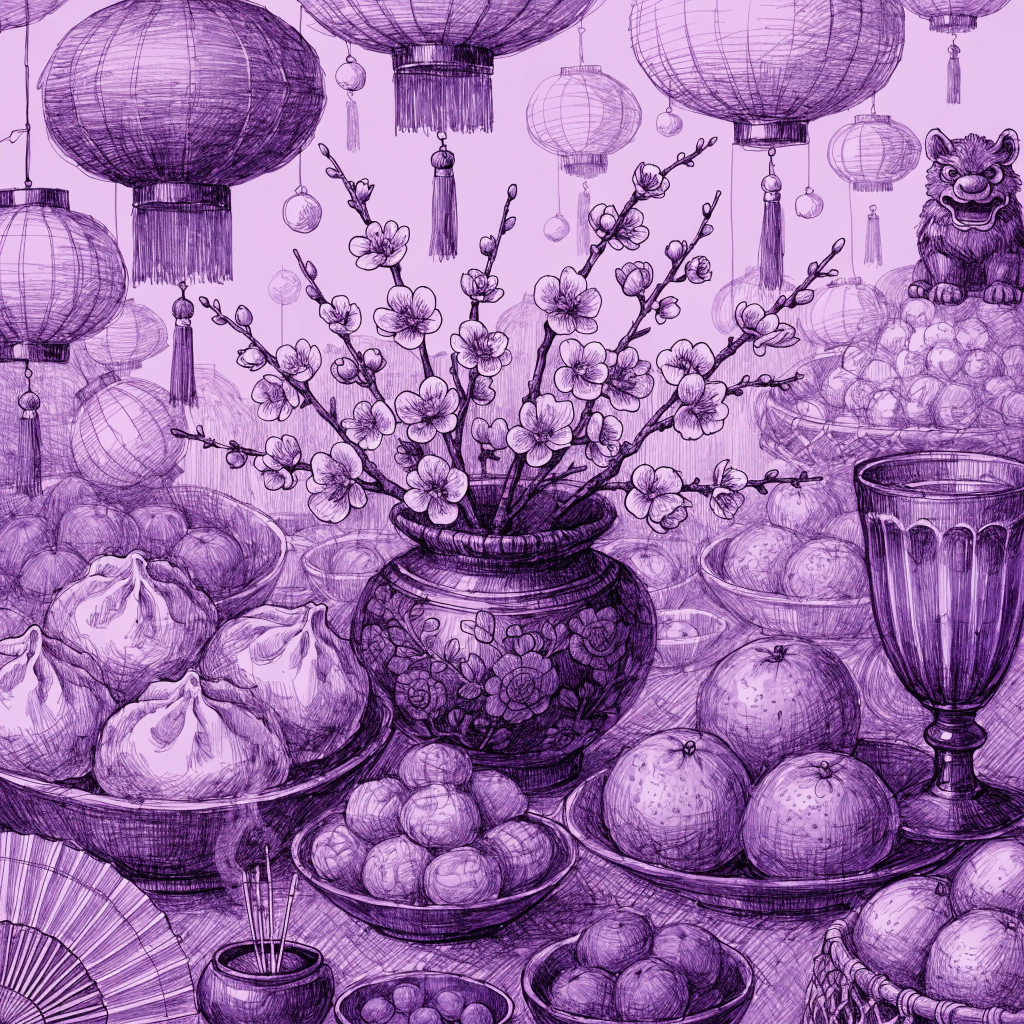
The Spring Festival in China
Spring Festival is a very big holiday in China. People also call it Chinese New Year. It is in January or February. Families come together and eat a big dinner. They eat fish and dumplings.
Children like this holiday. They get red envelopes with money. People wear red clothes because red is a lucky color. There are beautiful fireworks in the sky. They make a loud noise. Everyone says 'Happy New Year' to their friends. It is a very happy time.
Grammar Spotlight
Pattern: Present Simple 'To Be'
"Spring Festival is a very big holiday in China."
We use 'is' and 'are' to describe people, places, and things. 'Is' is for singular subjects like 'Spring Festival'.
Pattern: Present Simple for Traditions
"Families come together and eat a big dinner."
We use the present simple to talk about things that happen every year. Use the base form of the verb for plural subjects like 'Families'.
Test Your Understanding
10 questions · A1 Beginner · 1 free preview
Test what you learned from this article. Answer all questions to earn XP!
When is the Spring Festival?
Want to finish the quiz?
9 more questions are waiting for you. Sign up free to unlock the full quiz and earn XP!
Sign Up FreeAlready have an account? Sign In
Question Breakdown
When is the Spring Festival?
Your answer:
Correct answer: In January or February
Red is a lucky color in China.
Your answer:
Correct answer: True
What does 'lucky' mean?
Your answer:
Correct answer: Having good things happen
People wear red _____ because red is a lucky color.
Your answer:
Correct answer: clothes
The Magic of the Spring Festival
Spring Festival is the most important holiday in China. It is also called Chinese New Year. This festival marks the start of the lunar year. It is a very happy time for families to be together. In the past, people told a story about a scary monster called Nian. The monster was afraid of the color red and loud noises. Because of this, people today use red decorations and loud fireworks. They paste red paper with poems on their doors. Food is very important during the festival. Families have a big dinner on the first night. They eat fish and dumplings because these foods bring good luck. Dumplings are more popular in the north of China than in the south. Children love this holiday because they receive red envelopes. These envelopes have money inside. The Spring Festival is longer than other holidays because it lasts for fifteen days. It ends with the beautiful Lantern Festival. Everyone feels excited and hopeful for the new year.
Grammar Spotlight
Pattern: Comparatives
"The Spring Festival is longer than other holidays because it lasts for fifteen days."
We use comparatives to compare two things. For short adjectives like 'long', we add '-er' and use 'than' after the word.
Pattern: Past Simple (was/were)
"The monster was afraid of the color red and loud noises."
We use 'was' to talk about states or feelings in the past for singular subjects like 'he', 'she', 'it', or names.
Test Your Understanding
11 questions · A2 Elementary · 1 free preview
Test what you learned from this article. Answer all questions to earn XP!
How long does the Spring Festival last?
Want to finish the quiz?
10 more questions are waiting for you. Sign up free to unlock the full quiz and earn XP!
Sign Up FreeAlready have an account? Sign In
Question Breakdown
How long does the Spring Festival last?
Your answer:
Correct answer: Fifteen days
The monster Nian liked the color red.
Your answer:
Correct answer: False
What are 'dumplings'?
Your answer:
Correct answer: A type of food
Children receive red _____ with money inside.
Your answer:
Correct answer: envelopes
Where are dumplings more popular?
Your answer:
Correct answer: In the north of China
Celebrating the Spring Festival in China
The Spring Festival, which is also known as the Lunar New Year, is the most important holiday in China. For centuries, this festival has been celebrated by millions of people who travel across the country to visit their families. Although the public holiday lasts for one week, the traditional celebrations continue for fifteen days.
The origins of the festival are linked to ancient legends. According to mythology, there was a scary beast called Nian that attacked villages. People discovered that the creature was afraid of loud noises and the color red. Consequently, red decorations are pasted on doors today to protect the home. These decorations often include poetic couplets which express good wishes for the future.
Family traditions have always been the heart of the festival. On New Year's Eve, a special reunion dinner is prepared for all family members. During this meal, many traditional dishes are served, such as dumplings and fish. Children are often given red envelopes that contain money. This gift is believed to bring good luck and prosperity for the coming year.
In recent years, modern traditions have also emerged to join the ancient ones. For example, many families now watch a famous gala on television while they enjoy their midnight snacks. Technology has changed things too, as people now send digital red envelopes through their smartphones. The celebrations finally end with the colorful Lantern Festival, where beautiful lights are displayed in the streets and parks. The Spring Festival remains a special time when the old year is forgotten and a new beginning is welcomed with hope and joy.
Grammar Spotlight
Pattern: Relative Clauses
"The Spring Festival, which is also known as the Lunar New Year, is the most important holiday in China."
A relative clause gives more information about a noun. In this case, 'which is also known as the Lunar New Year' provides extra details about the Spring Festival.
Pattern: Passive Voice
"During this meal, many traditional dishes are served, such as dumplings and fish."
The passive voice is used when the action is more important than the person doing it. It is formed using the verb 'to be' and the past participle of the main verb.
Test Your Understanding
11 questions · B1 Intermediate · 1 free preview
Test what you learned from this article. Answer all questions to earn XP!
How long do the traditional celebrations of the Spring Festival last?
Want to finish the quiz?
10 more questions are waiting for you. Sign up free to unlock the full quiz and earn XP!
Sign Up FreeAlready have an account? Sign In
Question Breakdown
How long do the traditional celebrations of the Spring Festival last?
Your answer:
Correct answer: Fifteen days
The beast Nian was afraid of the color red and loud noises.
Your answer:
Correct answer: True
What does 'prosperity' mean?
Your answer:
Correct answer: Success and wealth
Children are often given red _____ that contain money.
Your answer:
Correct answer: envelopes
What event marks the end of the Spring Festival celebrations?
Your answer:
Correct answer: The Lantern Festival
The Evolution and Cultural Significance of the Spring Festival
The Spring Festival, widely recognized as Chinese New Year, represents the pinnacle of the Chinese cultural calendar. While the public holiday officially lasts for seven days, the traditional celebrations span a full fifteen-day period, culminating in the Lantern Festival. This temporal alignment is dictated by the lunar calendar, meaning the date shifts annually within the Gregorian system. For many, it is not merely a break from labor but a profound communal experience that reinforces familial bonds and national identity.
Historically, the festival’s origins are steeped in mythology, most notably the legend of the Nian. According to folklore, this predatory beast feared the color red and loud noises. Consequently, the holiday is defined by vibrant red decorations, including poetic couplets pasted on doorways and the rhythmic explosion of firecrackers. These customs were originally intended to ward off evil spirits, yet they have evolved into symbols of joy and prosperity. In spite of modern urbanization, these intricate rituals remain deeply embedded in the collective consciousness of the population.
In the weeks leading up to the festival, China experiences an unprecedented phenomenon known as 'Chunyun' or the Spring Festival travel rush. This massive migration is often cited as the largest annual human movement on Earth. Millions of urban workers return to their ancestral villages, driven by a sense of duty and nostalgia. This period highlights the sociological tension between rapid economic development and the compulsory nature of traditional family gatherings. If the transport infrastructure had not been modernized so rapidly, this scale of movement would be virtually impossible to manage.
Furthermore, the celebration has undergone significant transformations in the digital age. While the 'reunion dinner' remains the cornerstone of the event, many families now incorporate modern technology, such as sending digital 'red envelopes' via smartphones. This fusion of ancient custom and contemporary convenience illustrates how culture adapts to technological progress without losing its core essence. Ultimately, the Spring Festival serves as a bridge between the past and the future, offering a fascinating insight into the values of harmony and renewal.
Grammar Spotlight
Pattern: Passive Voice (Present Simple)
"This temporal alignment is dictated by the lunar calendar."
The passive voice is used here to focus on the 'alignment' rather than the 'calendar'. It is formed using 'is/are' plus the past participle.
Pattern: Third Conditional
"If the transport infrastructure had not been modernized so rapidly, this scale of movement would be virtually impossible to manage."
This is used to imagine a different past. It uses 'if + past perfect' and 'would have + past participle' (or 'would be' for a present result of a past change).
Pattern: Relative Clauses with 'which'
"China experiences an unprecedented phenomenon known as 'Chunyun' or the Spring Festival travel rush, which is often cited as the largest annual human movement on Earth."
This non-defining relative clause provides extra information about 'Chunyun'. It is separated by a comma and uses the relative pronoun 'which'.
Test Your Understanding
11 questions · B2 Upper Intermediate · 1 free preview
Test what you learned from this article. Answer all questions to earn XP!
How long do the traditional celebrations of the Spring Festival last?
Want to finish the quiz?
10 more questions are waiting for you. Sign up free to unlock the full quiz and earn XP!
Sign Up FreeAlready have an account? Sign In
Question Breakdown
How long do the traditional celebrations of the Spring Festival last?
Your answer:
Correct answer: Fifteen days
The legend of the Nian suggests the beast was attracted to the color red.
Your answer:
Correct answer: False
What does 'prosperity' mean?
Your answer:
Correct answer: The state of being successful and flourishing
The Spring Festival represents the _____ of the Chinese cultural calendar.
Your answer:
Correct answer: pinnacle
What is 'Chunyun'?
Your answer:
Correct answer: A massive annual travel rush
The Resonance of Renewal: A Critical Analysis of the Spring Festival in Modern China
The orchestration of the world’s largest annual human migration, known as the 'Chunyun', serves as a poignant testament to the enduring gravity of the Spring Festival in the Chinese psyche. While contemporary discourse often reduces the Lunar New Year to a spectacle of crimson aesthetics and pyrotechnic displays, its essence remains rooted in a complex socio-cultural architecture that predates the modern nation-state. Central to the festival's narrative is the myth of the Nian—a predatory beast whose aversion to the color red and cacophonous sounds birthed the traditions we observe today. However, to view these customs merely as superstitious relics is to overlook their role in fostering communal cohesion. Indeed, it is through the meticulous adherence to these rituals that the Chinese diaspora maintains a tangible link to its ancestral heritage, transcending geographical boundaries.
Not only does the festival facilitate a collective pause in the relentless machinery of global commerce, but it also underscores the paramount importance of filial piety. In the domestic sphere, the 'reunion dinner' acts as a sacred forum where familial hierarchies are reaffirmed and intergenerational bonds are tightened. Yet, this traditionalism is increasingly being recalibrated by the digital age. The ubiquity of 'e-hongbao'—digital red envelopes—illustrates how technology, far from eroding tradition, has provided a new medium for its expression. Furthermore, the commercialization of the Spring Festival presents a nuanced paradox. Critics argue that the commodification of the holiday threatens its spiritual integrity, transforming a period of reflection into a consumerist frenzy. Conversely, proponents suggest that this economic vitality ensures the festival's relevance in a modern society, allowing traditional motifs to permeate contemporary lifestyle products.
Rarely has a cultural event managed to synthesize such disparate elements as ancient folklore, high-speed rail logistics, and digital finance. The sheer scale of the festivities necessitates a level of planning that challenges even the most sophisticated administrative systems. It is the profound sense of 'homecoming' that dictates the flow of people and resources, proving that despite the rapid urbanization of China, the ancestral village remains the emotional epicenter for millions. Ultimately, the Spring Festival is not merely a temporal marker on the lunar calendar; it is a profound manifestation of cultural resilience and the persistent human yearning for renewal. It provides a window into the Chinese soul, revealing a society that is simultaneously looking backward at its storied past and forward toward a technologically-driven future. This synthesis of the old and the new is what grants the Spring Festival its unique, enduring power.
Grammar Spotlight
Pattern: Negative Inversion
"Not only does the festival facilitate a collective pause in the relentless machinery of global commerce, but it also underscores the paramount importance of filial piety."
When starting a sentence with a negative or restrictive adverbial like 'Not only', the auxiliary verb comes before the subject. This structure is used for emphasis and is common in formal C1 writing.
Pattern: Cleft Sentence
"It is through the meticulous adherence to these rituals that the Chinese diaspora maintains a tangible link to its ancestral heritage."
A cleft sentence uses 'It is/was... that' to focus on a specific part of the sentence (in this case, the method of maintaining links). It helps highlight the most important information.
Pattern: Nominalization
"The orchestration of the world’s largest annual human migration serves as a poignant testament."
Nominalization involves turning verbs (orchestrate) into nouns (orchestration). This makes the text sound more academic and allows for complex ideas to be the subject of a sentence.
Test Your Understanding
12 questions · C1 Advanced · 1 free preview
Test what you learned from this article. Answer all questions to earn XP!
What is the author's primary argument regarding the myth of the Nian?
Want to finish the quiz?
11 more questions are waiting for you. Sign up free to unlock the full quiz and earn XP!
Sign Up FreeAlready have an account? Sign In
Question Breakdown
What is the author's primary argument regarding the myth of the Nian?
Your answer:
Correct answer: It serves as a foundational element for communal cohesion.
The author suggests that digital red envelopes (e-hongbao) are destroying traditional values.
Your answer:
Correct answer: False
What does 'commodification' mean in the context of the article?
Your answer:
Correct answer: Treating a cultural event as a product to be sold.
The 'reunion dinner' acts as a _____ forum where familial hierarchies are reaffirmed.
Your answer:
Correct answer: sacred
What does 'Chunyun' refer to in the text?
Your answer:
Correct answer: The largest annual human migration in the world.
The article claims that urbanization has shifted the emotional epicenter away from ancestral villages.
Your answer:
Correct answer: False
The Palimpsest of the Lunar New Year: Myth, Ritual, and Economic Metamorphosis
The Spring Festival, or Chunjie, represents a profound confluence of primordial mythology and contemporary socio-economic dynamism. To view it merely as a hiatus from the rigors of labor would be to overlook its role as a palimpsest of Chinese identity, where ancient traditions are layered beneath the veneer of modern life. Historically, the festival’s genesis is inextricably linked to the legend of the Nian—an atavistic beast whose aversion to the color red and cacophonous sounds dictated the aesthetic parameters of the celebration. Yet, beneath the surface of firecrackers and crimson couplets lies a more nuanced narrative of agricultural cycles and eschatological hope. In the contemporary epoch, the festival has mutated into a phenomenon of staggering logistical complexity, most notably manifested in the 'Chunyun' or Spring Festival Travel Rush. This mass migration, frequently cited as the largest human movement on the planet, serves as a poignant synecdoche for the tensions between rural origins and urban aspirations. Were the infrastructure of the nation to falter during this critical fortnight, the resulting social friction would be palpable. It is through this lens that we must analyze the festival: not as a static relic of the past, but as a living organism that adapts to the vicissitudes of late capitalism.
Moreover, the ritual of the 'reunion dinner' underscores the centrality of commensality in maintaining social cohesion. Not only does the act of sharing a meal reaffirm familial hierarchies, but it also serves as a bulwark against the atomization of modern society. Traditional practices are meticulously observed lest the ancestral spirits be offended by a perceived lack of filial piety, yet these traditions now coexist with the digital ubiquity of 'red envelopes' sent via mobile applications. This juxtaposition suggests that while the medium of cultural transmission has evolved, the underlying desire for auspicious beginnings remains constant. Furthermore, the economic impact of the festival is nothing short of gargantuan. The surge in domestic consumption during this period acts as a vital stimulus, yet it also exposes the ephemeral nature of the holiday's commercialized aspects. There is a burgeoning discourse regarding the 'hollowing out' of traditional values in favor of conspicuous consumption. Scholarly observation suggests that the festival may be undergoing a process of secularization, whereby the spiritual and mythological elements are increasingly eclipsed by the pursuit of material prosperity.
Linguistic diversity also plays a pivotal role in the festival's manifestation across the vast geographical expanse of China. While the Mandarin 'Xin Nian Kuai Le' is the standard greeting, the myriad dialects spoken from Harbin to Hainan imbue the celebration with local textures. This linguistic pluralism reflects a broader cultural mosaic that resists total homogenization. Furthermore, recent years have seen the emergence of environmental consciousness, leading to the prohibition of firecrackers in metropolitan centers. This policy shift, while ostensibly pragmatic, has sparked debates over the preservation of 'Nian Wei'—the distinctive atmosphere of the New Year. It raises the question of whether a tradition can retain its essence when its most visceral, auditory components are excised for the sake of ecological sustainability. Notwithstanding these shifts, the symbolic resonance of the Lantern Festival, which marks the conclusion of the festivities, provides a moment of reflective transcendence. The illumination of the night sky serves as a metaphor for the collective hope of a populace navigating the uncertainties of the future. In conclusion, the Spring Festival remains an essential prism through which the complexities of Chinese society can be viewed. It is a time when the primordial and the postmodern converge, creating a cultural tapestry that is as resilient as it is intricate. One might even argue that the festival’s enduring relevance lies in its ability to reconcile these disparate elements into a coherent, albeit evolving, national narrative.
Grammar Spotlight
Pattern: Inverted Conditional (Second/Third Conditional)
"Were the infrastructure of the nation to falter during this critical fortnight, the resulting social friction would be palpable."
This structure uses 'Were' + subject + to-infinitive to express a hypothetical situation in a formal tone. It replaces 'If the infrastructure were to falter'.
Pattern: Negative Inversion
"Not only does the act of sharing a meal reaffirm familial hierarchies, but it also serves as a bulwark against the atomization of modern society."
When starting a sentence with 'Not only', the auxiliary verb ('does') comes before the subject ('the act') to create emphasis.
Pattern: Subjunctive with 'Lest'
"Traditional practices are meticulously observed lest the ancestral spirits be offended by a perceived lack of filial piety."
The word 'lest' is followed by a base form verb ('be') to express a negative purpose or fear that something might happen.
Test Your Understanding
12 questions · C2 Mastery · 1 free preview
Test what you learned from this article. Answer all questions to earn XP!
What does the author imply about the 'Chunyun' travel rush?
Want to finish the quiz?
11 more questions are waiting for you. Sign up free to unlock the full quiz and earn XP!
Sign Up FreeAlready have an account? Sign In
Question Breakdown
What does the author imply about the 'Chunyun' travel rush?
Your answer:
Correct answer: It represents the tension between urban dreams and rural roots.
The author argues that the Spring Festival has remained completely unchanged since ancient times.
Your answer:
Correct answer: False
Which word describes the act of eating together to strengthen social ties?
Your answer:
Correct answer: Commensality
The author describes the festival as a _____, implying it has layers of history visible beneath the modern surface.
Your answer:
Correct answer: palimpsest
According to the text, what is a potential downside of the festival's commercialization?
Your answer:
Correct answer: The hollowing out of traditional values.
The prohibition of firecrackers in cities is discussed as a conflict between tradition and environmental pragmatism.
Your answer:
Correct answer: True
