The Dragon Boat Festival
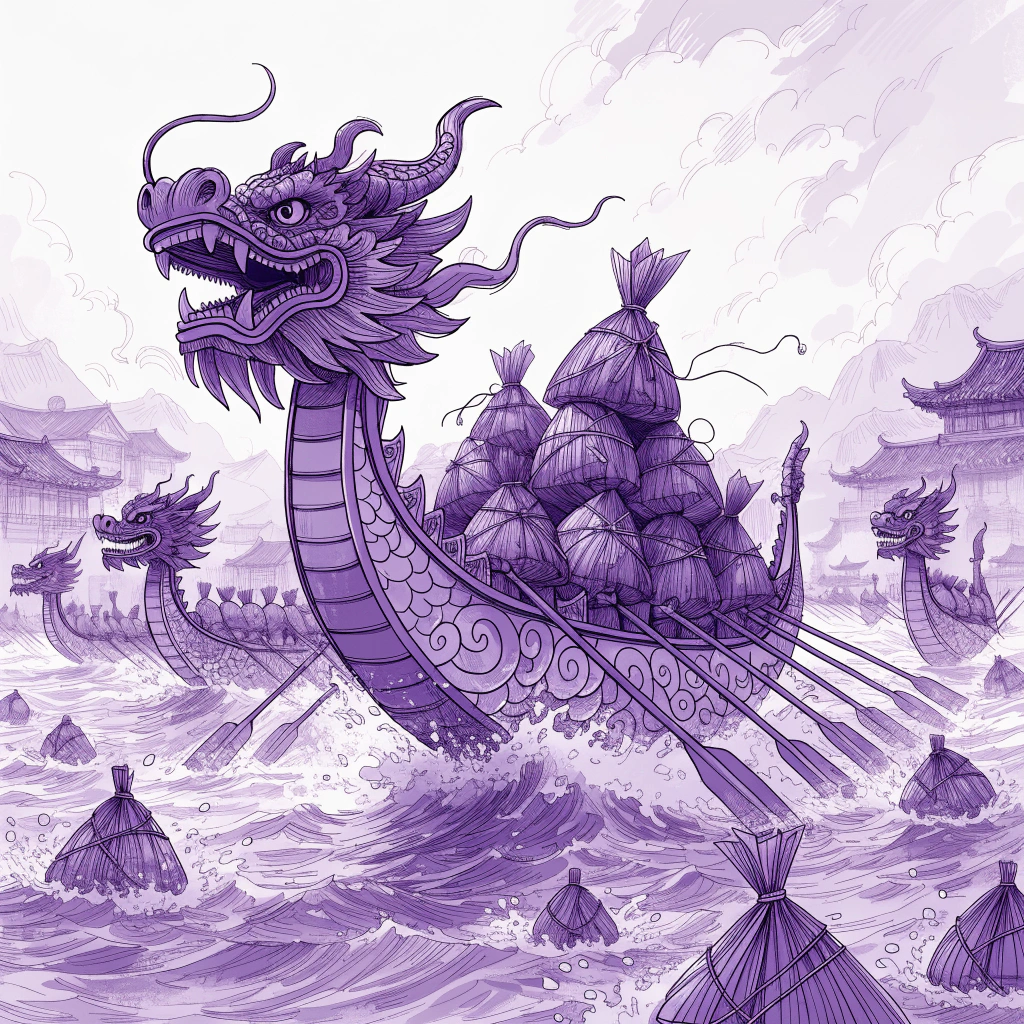
The Dragon Boat Festival is a big holiday in China. It is in June or May. People watch dragon boat races. The boats are long and colorful. They have dragon heads. Many people row the boats together. They listen to a loud drum.
People eat special food. It is called Zongzi. It is rice in green leaves. It tastes good. The festival is about a famous man. His name is Qu Yuan. He was a poet. Families spend time together on this day. It is a very happy festival.
Grammar Spotlight
Pattern: Present Simple: The Verb 'To Be'
"The Dragon Boat Festival is a big holiday in China."
We use 'is' for singular nouns to describe facts or states. It connects the subject to a description.
Pattern: Present Simple: Action Verbs
"People watch dragon boat races."
We use the base form of the verb (watch) for plural subjects (people) to talk about regular activities.
Test Your Understanding
10 questions · A1 Beginner · 1 free preview
Test what you learned from this article. Answer all questions to earn XP!
What do people watch during the festival?
Want to finish the quiz?
9 more questions are waiting for you. Sign up free to unlock the full quiz and earn XP!
Sign Up FreeAlready have an account? Sign In
Question Breakdown
What do people watch during the festival?
Your answer:
Correct answer: Dragon boat races
The boats have dragon heads.
Your answer:
Correct answer: True
What does 'boat' mean?
Your answer:
Correct answer: A vehicle for water
The festival is in June or _____.
Your answer:
Correct answer: May
The Dragon Boat Festival in China
The Dragon Boat Festival is a very old and famous holiday in China. People celebrate it on the fifth day of the fifth month in the lunar calendar. It is a colorful and exciting day for many families.
The most exciting part is the boat races. Teams of people sit in long boats. These boats look like dragons because they have colorful heads and tails. One person hits a drum, and the others paddle fast. The races are faster and louder than normal boat trips.
This festival started because of a man called Qu Yuan. He was a great poet and worked for the government a long time ago. He was very patriotic, but he was also sad. He jumped into the Miluo River. People loved him, so they threw rice into the water. They wanted to feed the fish so the fish did not eat Qu Yuan.
Today, people eat zongzi. These are sticky rice balls with meat or beans inside. They are delicious! Families get together because they want to remember their history and have fun.
Grammar Spotlight
Pattern: Past Simple
"He jumped into the Miluo River."
We use the past simple to talk about finished actions in the past. For regular verbs like 'jump', we add '-ed' to the end.
Pattern: Comparatives
"The races are faster and louder than normal boat trips."
We use comparatives to compare two things. For short adjectives, we add '-er' and use the word 'than'.
Test Your Understanding
11 questions · A2 Elementary · 1 free preview
Test what you learned from this article. Answer all questions to earn XP!
When do people celebrate the Dragon Boat Festival?
Want to finish the quiz?
10 more questions are waiting for you. Sign up free to unlock the full quiz and earn XP!
Sign Up FreeAlready have an account? Sign In
Question Breakdown
When do people celebrate the Dragon Boat Festival?
Your answer:
Correct answer: On the fifth day of the fifth month
The boats in the race look like dragons.
Your answer:
Correct answer: True
What is a 'poet'?
Your answer:
Correct answer: A person who writes poems
Today, people eat _____, which are sticky rice balls.
Your answer:
Correct answer: zongzi
Why did people throw rice into the river?
Your answer:
Correct answer: To feed the fish
The Dragon Boat Festival: A Tradition of Speed and Spirit
The Dragon Boat Festival, which is also known as Duanwu Jie, is one of the most exciting cultural events in China. It is celebrated on the fifth day of the fifth lunar month. For many years, people have gathered near rivers to watch spectacular boat races and eat traditional food.
The festival’s most famous origin story commemorates Qu Yuan, a patriotic poet who lived during the Warring States period. When Qu Yuan died in the Miluo River, local people were very sad. They paddled their boats out to save him, but they were too late. To protect his body from fish, they threw rice into the water. This is why zongzi, which are sticky rice dumplings wrapped in bamboo leaves, are eaten today.
The most exciting part of the festival is the dragon boat racing. These long, narrow boats are decorated with ornate dragon heads and tails. Each boat is filled with a team of paddlers who move together to the rhythmic beat of a drum. The drummer, who sits at the front, helps the team stay in time. These races are organized to show strength and teamwork.
In recent years, dragon boat racing has become a popular international sport. However, the traditional meaning of the festival is still respected. It is a time when families come together to remember their history and enjoy the lively atmosphere. Whether you are watching the races or tasting the delicious zongzi, the Dragon Boat Festival offers a unique look into Chinese culture.
Grammar Spotlight
Pattern: Relative Clauses with 'Who' and 'Which'
"The festival’s most famous origin story commemorates Qu Yuan, a patriotic poet who lived during the Warring States period."
Relative clauses provide extra information about a noun. We use 'who' for people and 'which' for things to make sentences more descriptive and complex.
Pattern: Passive Voice
"These long, narrow boats are decorated with ornate dragon heads and tails."
The passive voice is used when the action or the object is more important than who is doing the action. It is formed using the verb 'to be' and the past participle.
Test Your Understanding
11 questions · B1 Intermediate · 1 free preview
Test what you learned from this article. Answer all questions to earn XP!
When is the Dragon Boat Festival celebrated?
Want to finish the quiz?
10 more questions are waiting for you. Sign up free to unlock the full quiz and earn XP!
Sign Up FreeAlready have an account? Sign In
Question Breakdown
When is the Dragon Boat Festival celebrated?
Your answer:
Correct answer: On the fifth day of the fifth lunar month
Qu Yuan was a famous athlete who won many boat races.
Your answer:
Correct answer: False
What does 'ornate' mean?
Your answer:
Correct answer: Highly decorated
The drummer sits at the _____ of the boat to help the team stay in time.
Your answer:
Correct answer: front
Why did people originally throw rice into the river?
Your answer:
Correct answer: To protect Qu Yuan's body from fish
The Cultural Resonance of the Dragon Boat Festival
The Dragon Boat Festival, also known as Duanwu Jie, stands as one of China’s most vibrant and culturally significant annual events. Celebrated on the fifth day of the fifth month of the lunar calendar, it is a high-energy spectacle that transcends mere entertainment. While the festival is widely recognized for its thrilling boat races, its roots are deeply embedded in ancient history and moral philosophy. This event serves as a platform for communities to reflect on their history while engaging in traditions that have been preserved for centuries.
The festival’s most enduring legend commemorates Qu Yuan, a patriotic poet and minister of the State of Chu during the Warring States period. Known for his unwavering integrity, Qu Yuan sought to protect his country against the expansion of rival states. However, after being exiled by his own government due to political corruption, he eventually drowned himself in the Miluo River as a final act of protest. Legend has it that local villagers, who had admired his wisdom, rushed out in boats to save him. When they could not find his body, they threw bundles of rice into the water to prevent fish from feeding on him. This act evolved into the modern tradition of consuming zongzi, a sticky rice delicacy wrapped in bamboo leaves.
Today, the dragon boat races serve as the festival's centerpiece. Teams of paddlers navigate long, narrow vessels decorated with ornate dragon heads and tails, moving in perfect synchronization to the rhythmic beat of a drum. These races are not merely athletic competitions; they symbolize the collective effort required to overcome adversity. The drumming provides a pulse that helps unify the team, reflecting the importance of social harmony in Chinese culture.
In a contemporary context, the Dragon Boat Festival has retained its relevance by bridging the gap between historical heritage and modern cultural identity. It is a time when families gather to enjoy traditional foods and reflect on the virtues of loyalty and sacrifice. Despite the rapid urbanization of China, the festival continues to flourish, illustrating how ancient customs can adapt to the 21st century. By participating in these festivities, people do not just celebrate a holiday; they reinforce a sense of belonging to a shared history. The enduring significance of Duanwu Jie lies in its ability to blend mourning with celebration, and individual virtue with community spirit.
Grammar Spotlight
Pattern: Passive Voice
"While the festival is widely recognized for its thrilling boat races, its roots are deeply embedded in ancient history."
The passive voice is used here to focus on the festival and its roots rather than who recognizes or embeds them. It is formed using the verb 'to be' plus the past participle.
Pattern: Past Perfect Tense
"Legend has it that local villagers, who had admired his wisdom, rushed out in boats to save him."
The past perfect 'had admired' indicates an action that happened before the villagers rushed out. It establishes a sequence of events in the past.
Pattern: Defining and Non-defining Relative Clauses
"Legend has it that local villagers, who had admired his wisdom, rushed out in boats to save him."
The clause 'who had admired his wisdom' provides additional information about the villagers. In this case, it is a non-defining clause separated by commas.
Test Your Understanding
11 questions · B2 Upper Intermediate · 1 free preview
Test what you learned from this article. Answer all questions to earn XP!
Why did the villagers originally throw rice into the river according to the legend?
Want to finish the quiz?
10 more questions are waiting for you. Sign up free to unlock the full quiz and earn XP!
Sign Up FreeAlready have an account? Sign In
Question Breakdown
Why did the villagers originally throw rice into the river according to the legend?
Your answer:
Correct answer: To prevent fish from eating the body of Qu Yuan.
Qu Yuan was a minister who was exiled because of political corruption in his government.
Your answer:
Correct answer: True
Which word describes the quality of having strong moral principles?
Your answer:
Correct answer: Integrity
The paddlers move in perfect synchronization to the _____ beat of a drum.
Your answer:
Correct answer: rhythmic
What is the primary purpose of the drum during the dragon boat races?
Your answer:
Correct answer: To help unify the team and provide a pulse for paddling.
The Dichotomy of Duanwu: Ritualistic Resilience and the Modernization of Myth
Seldom does a cultural phenomenon resonate with such historical gravity as the Dragon Boat Festival, known in Mandarin as Duanwu Jie. Occurring on the fifth day of the fifth lunar month, this event is far more than a mere spectacle of aquatic prowess; it is a profound exploration of cultural identity and the enduring power of myth. The festival's origins are inextricably linked to the tragic figure of Qu Yuan, a poet and minister whose martyrdom in the Miluo River remains a quintessential symbol of patriotic integrity. His protest against political corruption led to his self-immolation—an act that prompted local villagers to race their boats and scatter sticky rice to prevent fish from desecrating his remains. The canonization of Qu Yuan serves as a moral compass for the nation, yet the festival also incorporates ancient idiosyncrasies rooted in the warding off of pestilence.
Historically, the fifth lunar month was perceived as an ominous period fraught with disease and misfortune. Consequently, the use of calamus and wormwood, alongside the consumption of realgar wine, underscores a systemic attempt to navigate the ephemeral nature of health and safety. It is the rhythmic synchronization of the paddlers that serves as the festival's most visceral manifestation of collective tenacity. These races are not merely athletic competitions; they are symbolic enactments of the community's drive to rescue the venerated poet, bridging the gap between historical lamentation and modern-day athletic rigor. The physical exertion required to propel these dragon-headed vessels is a testament to the community's desire to preserve a legacy that predates the modern state.
However, the contemporary landscape of Duanwu Jie presents a nuanced dichotomy. On one hand, the festival has been recognized by UNESCO as an Intangible Cultural Heritage of Humanity, a status that facilitates the preservation of its traditional elements. On the other hand, the commodification of the festival—manifested in the mass production of zongzi and the commercial sponsorship of races—threatens to dilute its spiritual essence. Critics argue that the evocation of Qu Yuan’s sacrifice is often overshadowed by the lure of tourism and consumerism. Nevertheless, the festival remains a vital conduit for cultural transmission. The commodification of the festival remains a point of scholarly debate, yet the underlying themes of loyalty and community continue to thrive. Ultimately, the Dragon Boat Festival stands as a resilient bridge between the ancient and the modern, proving that even in a rapidly globalizing world, the resonance of ancient narratives can still command the attention of the masses.
Grammar Spotlight
Pattern: Negative Inversion
"Seldom does a cultural phenomenon resonate with such historical gravity as the Dragon Boat Festival."
Inversion is used after negative or restrictive adverbs like 'seldom' to add emphasis. The auxiliary verb comes before the subject.
Pattern: Cleft Sentences
"It is the rhythmic synchronization of the paddlers that serves as the festival's most visceral manifestation of collective tenacity."
Cleft sentences use 'It is... that' to focus on a specific part of the information, highlighting the cause or the subject of the action.
Pattern: Nominalisation
"The commodification of the festival remains a point of scholarly debate."
Nominalisation involves turning verbs or adjectives into nouns (e.g., 'commodify' to 'commodification'). It makes writing more formal and objective.
Test Your Understanding
12 questions · C1 Advanced · 1 free preview
Test what you learned from this article. Answer all questions to earn XP!
What is the primary historical reason for racing boats according to the myth?
Want to finish the quiz?
11 more questions are waiting for you. Sign up free to unlock the full quiz and earn XP!
Sign Up FreeAlready have an account? Sign In
Question Breakdown
What is the primary historical reason for racing boats according to the myth?
Your answer:
Correct answer: To rescue Qu Yuan and scare away fish
The fifth lunar month was historically considered a period of good luck and health.
Your answer:
Correct answer: False
What does the word 'ephemeral' imply about health in the text?
Your answer:
Correct answer: It is fleeting and easily lost
The status granted by UNESCO helps in the _____ of traditional elements.
Your answer:
Correct answer: preservation
Which of the following describes the author's view on the commodification of the festival?
Your answer:
Correct answer: It presents a complex conflict between tradition and profit.
The Dragon Boat Festival is recognized as an Intangible Cultural Heritage of Humanity.
Your answer:
Correct answer: True
The Axiology of Commemoration: Deconstructing the Socio-Cultural Fabric of the Duanwu Festival
The Dragon Boat Festival, or Duanwu Jie, stands not merely as a vibrant tableau of maritime prowess but as a profound manifestation of the collective Chinese psyche. Celebrated on the fifth day of the fifth lunar month, it is an occasion where the ephemeral nature of the present meets the enduring weight of antiquity. Were one to scrutinize the historical veracity of the Qu Yuan narrative, the line between hagiography and history would likely blur; however, the ontological significance of the festival remains undisputed. Qu Yuan, a venerated poet and minister of the State of Chu, epitomizes the tragic tension between individual integrity and political allegiance. His eventual suicide in the Miluo River, a desperate protest against the encroaching corruption of the Warring States period, catalyzed a tradition that has transcended millennia.
Seldom does a cultural event manage to encapsulate such a diverse array of philosophical tenets while maintaining its popular appeal. The dragon boat races themselves are a masterclass in the synergy of collective agency. It is through the rhythmic synchronization of the paddlers, driven by the percussive heartbeat of the drum, that the community reaffirms its collective identity. This is not merely a sport; it is a ritualistic recreation of the frantic search for Qu Yuan’s body, a physical embodiment of the desire to rescue virtue from the depths of despair. The boats, adorned with ornate dragon heads, serve as symbolic vessels that navigate the paradoxical intersection of tragedy and celebration.
Beyond the aquatic spectacles, the festival’s culinary and medicinal traditions provide a window into ancient Chinese cosmology. The consumption of zongzi—glutinous rice parcels wrapped in bamboo leaves—serves as a symbolic gesture of sustenance for the departed soul, while also highlighting the regional idiosyncrasies of Chinese gastronomy. Historically, these rituals served an apotropaic function, intended to ward off the 'five poisonous creatures' and the pestilence associated with the burgeoning heat of midsummer. The use of calamus and mugwort, hung over doorways, reflects a proto-scientific attempt to mitigate the concomitant risks of disease during the transition of seasons.
In the contemporary era, the Duanwu Festival has had to navigate the complexities of globalization and the commodification of heritage. While some critics argue that the festival's spiritual core is being eroded by commercial interests, others suggest that its inclusion in UNESCO's Representative List of the Intangible Cultural Heritage of Humanity has provided a necessary framework for preservation. The challenge for modern society is to synthesize these ancient ideals of Confucian meritocracy and patriotic devotion with the exigencies of a post-industrial world. As the drumbeat echoes across modern skylines, it reminds us that the quest for moral rectitude, as exemplified by Qu Yuan, remains a perennial pursuit, regardless of the technological milieu. Ultimately, the Dragon Boat Festival is a testament to the resilience of cultural memory, proving that even in the face of radical change, the human need for ritual and remembrance remains an immutable constant.
Grammar Spotlight
Pattern: Inverted Conditional (Subjunctive)
"Were one to scrutinize the historical veracity of the Qu Yuan narrative, the line between hagiography and history would likely blur."
The 'were' is used at the beginning of the sentence to replace 'if' in a formal, hypothetical second conditional structure. This emphasizes the speculative nature of the analysis.
Pattern: Negative Inversion
"Seldom does a cultural event manage to encapsulate such a diverse array of philosophical tenets."
When a sentence starts with a negative or restrictive adverb like 'seldom', the auxiliary verb comes before the subject. This is used for rhetorical emphasis in formal writing.
Pattern: Cleft Sentence
"It is through the rhythmic synchronization of the paddlers that the community reaffirms its collective identity."
The 'It is... that...' structure is used to focus on a specific part of the sentence (the means of synchronization) to highlight its importance in the broader context.
Test Your Understanding
12 questions · C2 Mastery · 1 free preview
Test what you learned from this article. Answer all questions to earn XP!
What does the author suggest about the historical accuracy of Qu Yuan's story?
Want to finish the quiz?
11 more questions are waiting for you. Sign up free to unlock the full quiz and earn XP!
Sign Up FreeAlready have an account? Sign In
Question Breakdown
What does the author suggest about the historical accuracy of Qu Yuan's story?
Your answer:
Correct answer: It is secondary to the festival's existential and cultural importance.
The author views the dragon boat races as purely a competitive sporting event.
Your answer:
Correct answer: False
Which word describes something that is intended to ward off evil?
Your answer:
Correct answer: Apotropaic
The festival is a profound manifestation of the collective Chinese ____.
Your answer:
Correct answer: psyche
What role does the drum play in the dragon boat races according to the text?
Your answer:
Correct answer: It acts as a symbolic heartbeat that drives collective action.
The use of calamus and mugwort was historically a proto-scientific method to prevent disease.
Your answer:
Correct answer: True
