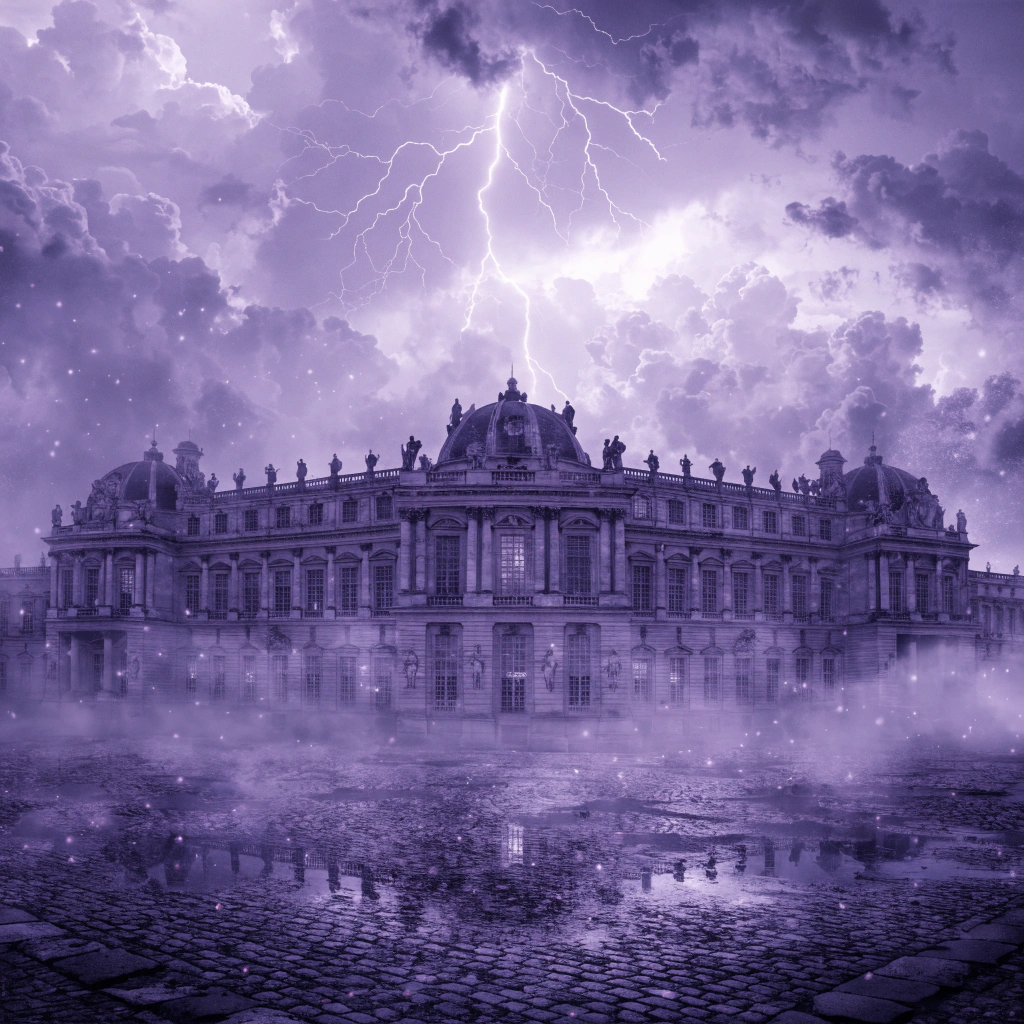
The Beautiful Palace of Versailles
The Palace of Versailles is a very big house in France. It is near Paris. Today, it is a famous museum. Many people visit it every year.
The palace has many beautiful rooms. One room is the Hall of Mirrors. It has many big mirrors and gold decorations. Outside, there are large gardens. There are many flowers and fountains.
King Louis XIV is a famous king from the past. He lived in this palace. He loved art and beautiful things. The palace is very old, but it is still very pretty. It is a special place in France.
Grammar Spotlight
Pattern: Present Simple 'To Be'
"The Palace of Versailles is a very big house in France."
We use 'is' for singular subjects like 'it' or 'the palace'. It describes a fact or a state.
Pattern: There is / There are
"There are many flowers and fountains."
We use 'There are' for plural objects (more than one). It shows that something exists in a place.
Test Your Understanding
10 questions · A1 Beginner · 1 free preview
Test what you learned from this article. Answer all questions to earn XP!
Where is the Palace of Versailles?
Want to finish the quiz?
9 more questions are waiting for you. Sign up free to unlock the full quiz and earn XP!
Sign Up FreeAlready have an account? Sign In
Question Breakdown
Where is the Palace of Versailles?
Your answer:
Correct answer: Near Paris
The palace is a small house.
Your answer:
Correct answer: False
What is a museum?
Your answer:
Correct answer: A place with old or interesting things
The palace has many beautiful _____.
Your answer:
Correct answer: rooms
The Amazing Palace of Versailles
The Palace of Versailles is one of the most famous buildings in France. It is located near Paris. Many years ago, it was only a small hunting lodge for King Louis XIII. However, his son, Louis XIV, decided to change it. He was called the 'Sun King' and he wanted the most beautiful palace in the world.
In 1661, the king hired the best architects and artists. They worked for many years to build the palace. It has more than 2,000 windows and many expensive rooms. One of the most popular rooms is the Hall of Mirrors. It is larger and brighter than the other rooms because it has many mirrors and gold decorations.
Outside the palace, the gardens are very big and green. There are many beautiful fountains and statues of famous people. Louis XIV spent a lot of money on these gardens because he loved nature. Today, millions of tourists visit Versailles every year. They walk through the halls and take photos of the amazing history.
Grammar Spotlight
Pattern: Past Simple
"In 1661, the king hired the best architects and artists."
We use the past simple to talk about finished actions in the past. For regular verbs, we usually add -ed to the end of the verb.
Pattern: Comparatives
"It is larger and brighter than the other rooms because it has many mirrors."
We use comparatives to compare two things. For short adjectives, we add -er to the adjective and use the word 'than'.
Test Your Understanding
11 questions · A2 Elementary · 1 free preview
Test what you learned from this article. Answer all questions to earn XP!
Who wanted to change the hunting lodge into a beautiful palace?
Want to finish the quiz?
10 more questions are waiting for you. Sign up free to unlock the full quiz and earn XP!
Sign Up FreeAlready have an account? Sign In
Question Breakdown
Who wanted to change the hunting lodge into a beautiful palace?
Your answer:
Correct answer: Louis XIV
The Palace of Versailles is located in the center of Paris.
Your answer:
Correct answer: False
What does the word 'expensive' mean?
Your answer:
Correct answer: Costing a lot of money
One of the most popular rooms in the palace is the Hall of _____.
Your answer:
Correct answer: Mirrors
Why did the king spend a lot of money on the gardens?
Your answer:
Correct answer: Because he loved nature
The Grandeur of the Palace of Versailles
The Palace of Versailles is one of the most famous monuments in France. It has become a symbol of the absolute power of the French monarchy. Originally, it was a simple hunting lodge that belonged to King Louis XIII. However, his son, Louis XIV, decided to transform it into the most opulent palace in Europe.
Louis XIV, who was known as the 'Sun King', moved the royal court to Versailles in 1682. He wanted a place where he could control his nobles and show off his great wealth. The palace was designed by talented architects like Louis Le Vau and Jules Hardouin-Mansart. Inside, the most impressive room is the Hall of Mirrors. This long gallery features seventeen huge arches that are covered with mirrors. In the past, these mirrors were very expensive and difficult to make.
The gardens of Versailles are also incredible. They were created by André Le Nôtre, who spent many years organizing the trees, fountains, and statues. These gardens have been carefully maintained for centuries. Today, the palace is no longer a royal home. It has been turned into a museum where visitors can learn about French history.
Millions of tourists have visited this beautiful site since it opened to the public. It is a place where history and art come together. Even though the French Revolution changed the country forever, the Palace of Versailles remains a magnificent reminder of the past. It stands as a testament to the artists and workers who built it.
Grammar Spotlight
Pattern: Passive Voice (Past Simple)
"The palace was designed by talented architects like Louis Le Vau."
The passive voice is used when the action is more important than the person doing it. It is formed using 'was/were' followed by the past participle of the verb.
Pattern: Non-defining Relative Clauses
"Louis XIV, who was known as the 'Sun King', moved the royal court to Versailles."
This pattern adds extra information about a person or thing. It uses commas and the relative pronoun 'who' or 'which' to separate the extra detail from the main sentence.
Test Your Understanding
11 questions · B1 Intermediate · 1 free preview
Test what you learned from this article. Answer all questions to earn XP!
Who was responsible for turning the hunting lodge into a grand palace?
Want to finish the quiz?
10 more questions are waiting for you. Sign up free to unlock the full quiz and earn XP!
Sign Up FreeAlready have an account? Sign In
Question Breakdown
Who was responsible for turning the hunting lodge into a grand palace?
Your answer:
Correct answer: Louis XIV
The Hall of Mirrors contains seventeen arches covered with mirrors.
Your answer:
Correct answer: True
What does 'monarchy' mean?
Your answer:
Correct answer: A system of government ruled by a king
Today, the palace has been _____ into a museum.
Your answer:
Correct answer: turned
Why did Louis XIV want a grand palace?
Your answer:
Correct answer: To control his nobles and show his wealth
The Architectural Legacy of Versailles: Power and Grandeur
The Palace of Versailles, situated just outside Paris, remains one of the most prominent symbols of absolute monarchy in European history. What started as a modest hunting lodge under Louis XIII was radically transformed by his son, Louis XIV, also known as the 'Sun King.' His ambition was not merely to construct a residence, but to establish a physical manifestation of his supreme authority. Consequently, the palace became a stage where the arts, politics, and power converged in an unprecedented display of opulence.
The architectural centerpiece of the palace is undoubtedly the Hall of Mirrors. Designed by Jules Hardouin-Mansart, this gallery features seventeen mirror-clad arches that reflect the windows overlooking the gardens. At the time, mirrors were exceptionally expensive luxury items, and by showcasing them on such a massive scale, Louis XIV was demonstrating France's industrial and economic superiority. Furthermore, the hall served as a setting for significant historical events, emphasizing its role beyond simple aesthetics.
The gardens of Versailles are equally impressive, representing the pinnacle of the French formal garden style. Designed by the landscaper André Le Nôtre, the gardens were meticulously planned to impose order on nature. This control over the landscape was a deliberate metaphor for the King’s ability to govern his people. Grand fountains, intricate statues, and vast canals were constructed, requiring sophisticated engineering feats that were ahead of their time. Even today, visitors are struck by the symmetry and precision of the layout.
Life within the palace walls was governed by a complex system of etiquette. Louis XIV strategically required the French nobility to reside at Versailles for certain periods of the year. By doing so, he effectively neutralized potential rivals by keeping them occupied with courtly rituals and social competition. This centralization of power ensured that the aristocracy remained dependent on the King’s favor, thereby preventing the civil unrest that had plagued earlier reigns.
In conclusion, Versailles is far more than an architectural masterpiece; it is a testament to the political strategy of the 17th century. While the French Revolution eventually brought an end to the monarchy, the palace survived as a museum of French history. It continues to fascinate millions of visitors annually, offering a glimpse into a world where art and architecture were the ultimate tools of political propaganda.
Grammar Spotlight
Pattern: Passive Voice for Historical Context
"What started as a modest hunting lodge under Louis XIII was radically transformed by his son, Louis XIV."
The passive voice (was + past participle) is used here to focus on the palace (the object) rather than the person performing the action. This is common in formal and historical writing.
Pattern: Relative Clauses with 'That'
"This gallery features seventeen mirror-clad arches that reflect the windows overlooking the gardens."
The relative clause 'that reflect...' provides essential information about the arches. This structure allows for more complex descriptions within a single sentence.
Pattern: Gerunds as a Means of Action
"By doing so, he effectively neutralized potential rivals by keeping them occupied with courtly rituals."
The preposition 'by' followed by the gerund (-ing form) explains the method or means by which the King achieved his goal of controlling the nobility.
Test Your Understanding
11 questions · B2 Upper Intermediate · 1 free preview
Test what you learned from this article. Answer all questions to earn XP!
What was the economic significance of the Hall of Mirrors when it was built?
Want to finish the quiz?
10 more questions are waiting for you. Sign up free to unlock the full quiz and earn XP!
Sign Up FreeAlready have an account? Sign In
Question Breakdown
What was the economic significance of the Hall of Mirrors when it was built?
Your answer:
Correct answer: It demonstrated France's industrial and economic superiority.
The gardens of Versailles were designed to look as wild and natural as possible.
Your answer:
Correct answer: False
What does 'opulence' mean in the context of the article?
Your answer:
Correct answer: Great wealth and luxuriousness
Louis XIV used complex etiquette to _____ his political rivals.
Your answer:
Correct answer: neutralize
Which king was responsible for transforming the hunting lodge into a grand palace?
Your answer:
Correct answer: Louis XIV
Versailles: The Architectural Manifestation of Absolute Hegemony
Never before had a monarch so brazenly leveraged architecture as a tool of political subjugation. The Palace of Versailles, originally a modest hunting lodge under Louis XIII, underwent a radical metamorphosis that reflected the Sun King’s insatiable appetite for power. Louis XIV’s vision was not merely to construct a residence, but to engineer a theater of statecraft where every gilded corridor and manicured hedge served to reinforce the divine right of kings. The systematic centralization of the French aristocracy within the palace walls served to strip the nobility of their regional influence, effectively reducing once-mighty dukes to mere courtiers competing for the King's favor.
Architecturally, the palace is a masterclass in Baroque opulence. Under the guidance of Louis Le Vau and Jules Hardouin-Mansart, the structure expanded into a sprawling monument of limestone and gold leaf. Seldom has the interplay between light and power been more evident than in the Hall of Mirrors. By reflecting the sun’s rays across seventeen massive arches, the gallery was designed to project an image of solar brilliance, casting the King as the literal center of the universe. This ostentatious display was further enhanced by Charles Le Brun’s ceiling paintings, which depicted Louis XIV’s military triumphs with mythological grandeur.
Beyond the stone walls, the gardens designed by André Le Nôtre represented a different kind of dominance. It was through the meticulous geometry of the gardens that Louis XIV signaled his mastery over nature itself. The taming of wild landscapes into symmetrical patterns and the redirection of water into elaborate fountains were metaphors for the King’s ability to impose order upon a chaotic world. However, this aesthetic perfection came at a staggering fiscal price. The continuous expansion of Versailles placed an immense burden on the French treasury, a decision that many historians view as a precursor to the socio-economic unrest of the following century.
While the palace remains a vanguard of French cultural heritage, its legacy is undeniably nuanced. It stands as a testament to the heights of human craftsmanship and artistic collaboration, yet it also serves as a cautionary tale regarding the perils of unchecked ego. The exorbitant costs and the isolation of the ruling class within this golden cage arguably exacerbated the divide between the monarchy and the masses. Consequently, the very walls intended to protect the crown’s dignity eventually became the symbol of its detachment, fueling the fires of the Revolution that would ultimately dismantle the absolute monarchy Versailles was built to celebrate.
Grammar Spotlight
Pattern: Negative Inversion
"Never before had a monarch so brazenly leveraged architecture as a tool of political subjugation."
When a sentence starts with a negative adverbial like 'Never before', the auxiliary verb comes before the subject. This is used in formal English to add emphasis and dramatic effect.
Pattern: Nominalisation
"The systematic centralization of the French aristocracy within the palace walls served to strip the nobility of their regional influence."
This involves turning verbs or adjectives into nouns (e.g., 'centralization' instead of 'centralizing'). It makes writing more concise, formal, and objective, which is characteristic of C1 level academic prose.
Pattern: Cleft Sentences
"It was through the meticulous geometry of the gardens that Louis XIV signaled his mastery over nature itself."
Cleft sentences use the structure 'It is/was... that...' to focus on a specific piece of information. Here, it emphasizes the 'meticulous geometry' as the specific means of signaling mastery.
Test Your Understanding
12 questions · C1 Advanced · 1 free preview
Test what you learned from this article. Answer all questions to earn XP!
What was the primary political motive behind moving the nobility to Versailles?
Want to finish the quiz?
11 more questions are waiting for you. Sign up free to unlock the full quiz and earn XP!
Sign Up FreeAlready have an account? Sign In
Question Breakdown
What was the primary political motive behind moving the nobility to Versailles?
Your answer:
Correct answer: To centralize power and reduce their regional influence
The Palace of Versailles was originally built as a grand royal residence by Louis XIV.
Your answer:
Correct answer: False
Which word describes a display intended to impress or attract notice in a pretentious way?
Your answer:
Correct answer: Ostentatious
The Hall of _____ was designed to project an image of solar brilliance.
Your answer:
Correct answer: Mirrors
According to the article, what was the fiscal impact of Versailles?
Your answer:
Correct answer: It placed an immense burden on the national treasury
The gardens of Versailles were intended to serve as a metaphor for the King's control over nature and order.
Your answer:
Correct answer: True
The Apotheosis of Absolute Power: A Socio-Political Deconstruction of Versailles
Seldom has a structure so perfectly encapsulated the hubris of absolute monarchy as the Palace of Versailles. To the uninitiated, it may appear as a mere monument to opulence, yet for the scholar of the Ancien Régime, it represents a codified instrument of political hegemony. Originally a modest hunting lodge under Louis XIII, the site underwent a metamorphosis beginning in 1661 that would redefine the European architectural landscape. Louis XIV, the 'Sun King,' did not merely seek a residence; he sought an architectural manifestation of his divine right to rule. Lest the observer should mistake its grandeur for mere aesthetic indulgence, it must be understood that every gilded molding and manicured hedge was designed to facilitate the total subjugation of the French nobility. By mandating that the aristocracy reside within the palace walls, Louis XIV effectively neutralized potential rebellion, replacing feudal independence with a culture of performative sycophancy. The juxtaposition of the Hall of Mirrors against the rigid geometry of the gardens, designed by André Le Nôtre, serves as a quintessential expression of human dominion over both nature and the state. Were it not for the Sun King's iron will and the audacity of architects like Louis Le Vau and Jules Hardouin-Mansart, the palace might have remained a vestige of a simpler, less centralized era. The sheer scale of the project was an exercise in artistic hegemony, employing Charles Le Brun to oversee a decorative program that equated the King with Apollo, the Greek god of the sun. This deliberate myth-making ensured that the King's presence was felt even in his absence. However, one might argue that this very centralization sowed the seeds of the monarchy’s eventual demise. The ephemeral whims of the court, detached from the burgeoning struggles of the Parisian populace, created a socio-political vacuum. While Versailles stood as the pinnacle of Baroque achievement, its isolation from the common man rendered it a gilded cage. To study Versailles is to study the tension between the permanence of stone and the fragility of absolute power. It remains a testament to an era where art was not merely for appreciation, but a weapon of statecraft, meticulously crafted to project an image of invincibility that would, centuries later, crumble under the weight of revolution.
Grammar Spotlight
Pattern: Negative Inversion
"Seldom has a structure so perfectly encapsulated the hubris of absolute monarchy as the Palace of Versailles."
Inversion is used for rhetorical emphasis. When a negative or limiting adverb like 'seldom' begins a sentence, the auxiliary verb is placed before the subject.
Pattern: Negative Subjunctive with 'Lest'
"Lest the observer should mistake its grandeur for mere aesthetic indulgence, it must be understood..."
The word 'lest' is used to express a fear that something might happen. It is often followed by 'should' or the base form of the verb in formal C2 prose.
Pattern: Mixed Conditional (Hypothetical Past)
"Were it not for the Sun King's iron will... the palace might have remained a vestige of a simpler, less centralized era."
This uses 'Were it not for' to describe a hypothetical condition in the past or present that prevents a different outcome. It is a highly formal alternative to 'If it weren't for'.
Test Your Understanding
12 questions · C2 Mastery · 1 free preview
Test what you learned from this article. Answer all questions to earn XP!
What was the primary political purpose of forcing the nobility to live at Versailles?
Want to finish the quiz?
11 more questions are waiting for you. Sign up free to unlock the full quiz and earn XP!
Sign Up FreeAlready have an account? Sign In
Question Breakdown
What was the primary political purpose of forcing the nobility to live at Versailles?
Your answer:
Correct answer: To neutralize potential rebellion through constant surveillance
The author suggests that the isolation of Versailles contributed to the monarchy's eventual downfall.
Your answer:
Correct answer: True
Which word describes the highest point or culmination of a concept?
Your answer:
Correct answer: Apotheosis
The palace was not just a home, but a _____ instrument of political power.
Your answer:
Correct answer: codified
According to the text, what does the 'juxtaposition' of the gardens and the Hall of Mirrors represent?
Your answer:
Correct answer: Human dominion over nature and the state
Louis XIV was the first king to build on the site of Versailles.
Your answer:
Correct answer: False
