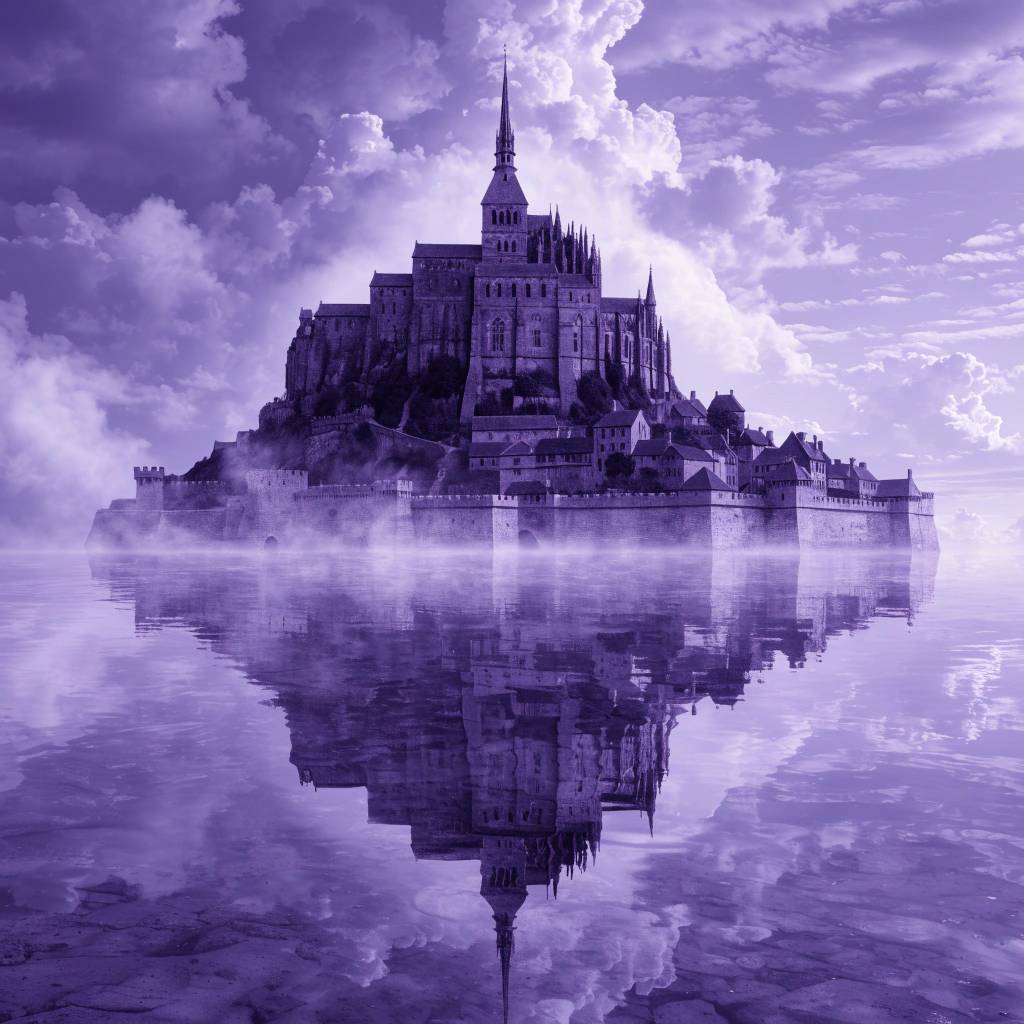
The Famous Island of Mont Saint-Michel
Mont Saint-Michel is a famous island in France. It is in Normandy. The island is very small and rocky. There is a big church on top of the island. It is very old and beautiful.
Many people visit this place every year. They walk across the sand to reach the island. Sometimes the water is high. Then, the island is in the sea. Sometimes the water is low. Then, you can see the sand.
The island is like a castle. It has small streets and small shops. It is a very special place in France.
Grammar Spotlight
Pattern: Present Simple 'be'
"The island is very small and rocky."
We use 'is' with singular nouns like 'island' to describe facts. It tells us about the size or quality of something.
Pattern: Present Simple (Action Verbs)
"Many people visit this place every year."
We use the base form of the verb for plural subjects like 'people'. This pattern describes things that happen regularly.
Test Your Understanding
10 questions · A1 Beginner · 1 free preview
Test what you learned from this article. Answer all questions to earn XP!
Where is Mont Saint-Michel?
Want to finish the quiz?
9 more questions are waiting for you. Sign up free to unlock the full quiz and earn XP!
Sign Up FreeAlready have an account? Sign In
Question Breakdown
Where is Mont Saint-Michel?
Your answer:
Correct answer: In France
There is a big church on top of the island.
Your answer:
Correct answer: True
What does 'famous' mean?
Your answer:
Correct answer: Known by many people
When the water is high, the island is in the _____.
Your answer:
Correct answer: sea
The Magic Island: Mont Saint-Michel
Mont Saint-Michel is a very famous island in France. It is located between Normandy and Brittany. This place is special because it is a rocky island in the middle of the sea. Many years ago, it was a church, then a fortress, and even a prison.
The history of the island is very old. In the year 708, Bishop Aubert had a dream. In his dream, the Archangel Michael told him to build a church on the rock. People started to build it, and it became a popular place for travelers.
Today, Mont Saint-Michel is more popular than in the past. Millions of people visit it every year. The water around the island is very interesting. When the tide is high, the island is surrounded by water. When the tide is low, you can see the sand. Walking to the island is exciting, but you must be careful because the water moves fast. It is one of the most beautiful places in the world.
Grammar Spotlight
Pattern: Past Simple
"In the year 708, Bishop Aubert had a dream."
We use the past simple to talk about things that happened and finished in the past. Regular verbs end in -ed, but 'had' is the irregular past of 'have'.
Pattern: Comparatives
"Today, Mont Saint-Michel is more popular than in the past."
We use 'more' + adjective + 'than' to compare two things or times. We use 'more' because 'popular' is a long adjective with three syllables.
Test Your Understanding
11 questions · A2 Elementary · 1 free preview
Test what you learned from this article. Answer all questions to earn XP!
Where is Mont Saint-Michel located?
Want to finish the quiz?
10 more questions are waiting for you. Sign up free to unlock the full quiz and earn XP!
Sign Up FreeAlready have an account? Sign In
Question Breakdown
Where is Mont Saint-Michel located?
Your answer:
Correct answer: In France, between Normandy and Brittany
In the past, the island was used as a prison.
Your answer:
Correct answer: True
What does 'build' mean?
Your answer:
Correct answer: To make something by putting parts together
The water around the island is very _____.
Your answer:
Correct answer: interesting
Who told Bishop Aubert to build the church?
Your answer:
Correct answer: Archangel Michael
The Magic of Mont Saint-Michel: A French Masterpiece
Mont Saint-Michel is a magical island located in Normandy, France. It is famous for its beautiful abbey which stands high on a rocky hill. For centuries, this place has attracted people from all over the world. It is not just a church; it is also a symbol of French history.
The story of the island began in 708 AD. According to legend, the Archangel Michael appeared in a dream to a bishop named Aubert. He was told to build a sanctuary on the rock. Since then, the island has been used for many different purposes. During the Middle Ages, it was a popular site for a religious pilgrimage. Later, it was used as a prison, but today it is a UNESCO World Heritage site.
The island is surrounded by very strong tides. When the tide is high, the water completely surrounds the rock, making it look like it is floating in the sea. In the past, the crossing was dangerous for travelers who wanted to reach the gates. However, a new bridge has been built recently to make the journey safer for everyone.
The buildings on the island are arranged in a specific order. At the bottom, there are houses for fishermen and shops. Above them are the great halls, and at the very top is the abbey itself. This layout represents the social order of the Middle Ages. Inside the walls, visitors can find narrow streets with small restaurants and souvenir stores.
The abbey, which was constructed over many years, shows amazing medieval architecture. Millions of people have traveled to see this masterpiece. If you visit, you will feel like you have stepped back in time. It remains one of the most iconic places in Europe.
Grammar Spotlight
Pattern: Present Perfect
"For centuries, this place has attracted people from all over the world."
The present perfect (have/has + past participle) is used for actions that started in the past and continue to the present. It is also used for life experiences where the exact time is not important.
Pattern: Passive Voice (Past Simple)
"Later, it was used as a prison..."
The passive voice is used when the person or thing receiving the action is more important than the one doing it. It is formed with 'was/were' and the past participle.
Test Your Understanding
11 questions · B1 Intermediate · 1 free preview
Test what you learned from this article. Answer all questions to earn XP!
Where is Mont Saint-Michel located?
Want to finish the quiz?
10 more questions are waiting for you. Sign up free to unlock the full quiz and earn XP!
Sign Up FreeAlready have an account? Sign In
Question Breakdown
Where is Mont Saint-Michel located?
Your answer:
Correct answer: Normandy
The island was originally built as a prison in 708 AD.
Your answer:
Correct answer: False
What does 'tide' mean?
Your answer:
Correct answer: The regular rise and fall of the sea
The abbey, which was _____ over many years, shows amazing medieval architecture.
Your answer:
Correct answer: constructed
Who appeared in Bishop Aubert's dream?
Your answer:
Correct answer: The Archangel Michael
The Architectural Marvel of Mont Saint-Michel: A Journey Through Time
Perched dramatically on a granite islet off the coast of Normandy, Mont Saint-Michel stands as a testament to medieval ingenuity and spiritual devotion. For centuries, this architectural marvel has captivated travelers, having evolved from a humble sanctuary into a formidable fortress and a renowned place of pilgrimage. The site's history is said to have begun in 708 AD, when Bishop Aubert of Avranches claimed that the Archangel Michael appeared to him in a vision, commanding the construction of a holy site on the rock. Since then, the mount has undergone numerous transformations, reflecting the turbulent history of France itself.
The abbey’s unique silhouette, which dominates the surrounding horizon, follows a hierarchical structure. At the summit, the abbey and its church represent the spiritual realm, while the housing and stores below represent the worldly needs of the village. During the Hundred Years' War, the mount’s strategic position and massive walls allowed it to remain unconquered by the English, solidifying its reputation as an impregnable fortress. However, its function shifted drastically following the French Revolution, when the abbey was converted into a prison. It was not until the late 19th century that a major restoration project was initiated to return the site to its former glory.
One of the most striking features of Mont Saint-Michel is the natural phenomenon of the tides. The bay experiences some of the highest tides in Europe, which can rise and fall by as much as 14 meters. Historically, these tides provided a natural defense against invaders, as the islet would become completely cut off from the mainland twice a day. Today, a modern bridge allows visitors to access the mount safely, yet the sight of the water rushing across the sandbanks remains an imposing spectacle. If the medieval architects had not accounted for these harsh conditions, the structure would likely have succumbed to the sea centuries ago.
Currently, Mont Saint-Michel is recognized as a UNESCO World Heritage site, attracting millions of tourists annually. While the influx of visitors presents challenges for preservation, the enduring appeal of the site is undeniable. It remains a powerful symbol of French national identity and a masterpiece of Gothic architecture. Visitors who explore the narrow, winding streets of the village must acknowledge the immense labor required to build such a structure in such an isolated location. It is a place where history, nature, and myth converge in a truly unique way.
Grammar Spotlight
Pattern: Non-defining Relative Clauses
"The abbey’s unique silhouette, which dominates the surrounding horizon, follows a hierarchical structure."
Used to provide extra information about a noun. It is separated by commas and the sentence remains grammatically correct even if the clause is removed.
Pattern: Third Conditional
"If the medieval architects had not accounted for these harsh conditions, the structure would likely have succumbed to the sea centuries ago."
Used to talk about a hypothetical situation in the past and its imaginary result. It uses 'if + past perfect' and 'would have + past participle'.
Pattern: Passive Voice with Modal Verbs
"The site's history is said to have begun in 708 AD..."
This structure is often used in formal writing to report beliefs or claims. It avoids naming a specific subject and focuses on the action or state.
Test Your Understanding
11 questions · B2 Upper Intermediate · 1 free preview
Test what you learned from this article. Answer all questions to earn XP!
What was the original reason for building on the rock according to legend?
Want to finish the quiz?
10 more questions are waiting for you. Sign up free to unlock the full quiz and earn XP!
Sign Up FreeAlready have an account? Sign In
Question Breakdown
What was the original reason for building on the rock according to legend?
Your answer:
Correct answer: A vision of the Archangel Michael
The islet of Mont Saint-Michel was successfully captured by the English during the Hundred Years' War.
Your answer:
Correct answer: False
Which word describes a very small island?
Your answer:
Correct answer: Islet
The abbey was converted into a _____ following the French Revolution.
Your answer:
Correct answer: prison
What is the primary natural defense of Mont Saint-Michel mentioned in the text?
Your answer:
Correct answer: The high tides of the bay
The Ethereal Sentinel: Navigating the Historical and Environmental Paradoxes of Mont Saint-Michel
Rising majestically from the swirling mists of the Couesnon River's estuary, Mont Saint-Michel stands as a profound testament to the enduring power of human aspiration and architectural mastery. This granite outcrop, situated on the fluid boundary between Normandy and Brittany, is far more than a mere tourist destination; it is a complex palimpsest of European history. Seldom has the interplay between human ingenuity and the raw power of nature been so starkly illustrated as in this UNESCO World Heritage site, where the rhythmic pulse of the Atlantic tides dictates the very flow of life. To behold the Mount at high tide is to witness a structure that seems to float between the terrestrial and the celestial, a visual manifestation of the medieval desire to bridge the gap between man and the divine.
The genesis of this Benedictine abbey is shrouded in both myth and religious fervor. It was the visionary Bishop Aubert of Avranches who, in 708 AD, allegedly received the celestial command from the Archangel Michael to establish a sanctuary upon the rock. What followed was a centuries-long endeavor of construction, resulting in a vertical hierarchy that mirrored the medieval social order: God at the summit, followed by the abbey, the noble halls, and finally the commoners' dwellings at the base. The juxtaposition of Romanesque and Gothic styles within the 'Merveille'—the central monastic complex—demonstrates a remarkable synthesis of aesthetic evolution and structural resilience. This architectural layering serves as a physical record of the shifting priorities of the French state and the Catholic Church over a millennium.
However, the site’s history is not solely defined by spiritual devotion. During the Hundred Years' War, the Mount’s strategic location and impregnable defenses allowed it to withstand repeated English sieges, solidifying its status as a symbol of French national identity. Conversely, the subsequent transformation of the site into a state prison during the French Revolution marked a period of secularization and decline. Often referred to as the 'Bastille of the Sea,' the Mount housed thousands of political prisoners before the eventual restoration efforts of the 19th century reclaimed its architectural dignity. This transition from a place of prayer to a place of punishment highlights the site's versatility as a vessel for various national ideologies.
In the contemporary era, the primary challenge lies in the precarious balance between preservation and accessibility. The accumulation of silt, exacerbated by the construction of a permanent causeway in 1879, threatened to permanently reconnect the islet to the mainland, thus stripping it of its maritime character. It was only through a massive hydraulic engineering project, completed in 2014, that the tidal flows were restored. This restoration involved the removal of the old causeway and the introduction of a light bridge, ensuring that the silhouette of the Mount remains ephemeral during high tide. Today, the influx of millions of visitors poses a new set of existential questions regarding the commodification of heritage. How can such a fragile ecosystem and historical monument withstand the pressures of mass tourism without compromising its sanctity? Ultimately, Mont Saint-Michel remains a poignant reminder of our desire to reach toward the heavens while remaining anchored to the shifting sands of time.
Grammar Spotlight
Pattern: Inversion
"Seldom has the interplay between human ingenuity and the raw power of nature been so starkly illustrated as in this UNESCO World Heritage site."
Inversion is used here by placing a negative adverbial ('Seldom') at the start of the sentence for emphasis. This requires the auxiliary verb ('has') to come before the subject ('the interplay').
Pattern: Cleft Sentences
"It was the visionary Bishop Aubert of Avranches who, in 708 AD, allegedly received the celestial command..."
This 'It + be + subject + relative clause' structure focuses the reader's attention on the specific person (Bishop Aubert) responsible for the action.
Pattern: Nominalisation
"The subsequent transformation of the site into a state prison during the French Revolution marked a period of secularization and decline."
Instead of using verbs (e.g., 'The site was transformed'), the writer uses nouns ('transformation', 'secularization'). This creates a more formal, academic tone typical of C1 level writing.
Test Your Understanding
12 questions · C1 Advanced · 1 free preview
Test what you learned from this article. Answer all questions to earn XP!
What was the original purpose of Mont Saint-Michel according to the text?
Want to finish the quiz?
11 more questions are waiting for you. Sign up free to unlock the full quiz and earn XP!
Sign Up FreeAlready have an account? Sign In
Question Breakdown
What was the original purpose of Mont Saint-Michel according to the text?
Your answer:
Correct answer: A religious sanctuary established by Bishop Aubert
The construction of a causeway in 1879 helped preserve the island's maritime identity.
Your answer:
Correct answer: False
Which word describes something that is 'impossible to capture or break into'?
Your answer:
Correct answer: Impregnable
The 2014 engineering project aimed to restore the _____ flows that define the site.
Your answer:
Correct answer: tidal
How does the author describe the 'Merveille'?
Your answer:
Correct answer: As a synthesis of Romanesque and Gothic architectural styles
The text suggests that mass tourism may be compromising the sanctity of the site.
Your answer:
Correct answer: True
The Ethereal Bastion: A Philosophical and Architectural Inquiry into Mont Saint-Michel
Perched upon the precipice of the Normandy-Brittany border, Mont Saint-Michel stands not merely as a relic of medieval engineering but as a profound testament to the human impulse to transcend the terrestrial. This tidal island, shrouded in the shifting mists of the Couesnon River’s estuary, offers a masterclass in the liminality between the secular and the divine. Were one to contemplate the islet’s silhouette against the crepuscular sky, one might perceive it as an ephemeral mirage, yet its granite foundations have withstood the relentless vicissitudes of both tide and time for over a millennium.
The genesis of this ecclesiastical marvel is steeped in hagiographical lore. It is contended that in 708 AD, Bishop Aubert of Avranches was visited in a dream by the Archangel Michael, who commanded the construction of a sanctuary upon the then-named Mont Tombe. While skeptics might dismiss such origins as mere mythopoeia, the subsequent emergence of the site as a preeminent center of pilgrimage suggests a potency that transcends simple folklore. The abbey’s architectural synthesis—a confluence of Romanesque austerity and Gothic verticality—serves as a physical manifestation of the ecclesiastical hierarchy, culminating in the gilded statue of Saint Michael, poised as if to strike the dragon of the mundane.
Architecturally, the structure is a labyrinthine achievement, particularly the section known as 'La Merveille' (The Marvel). Built in the 13th century, this Gothic masterpiece comprises three levels that reflect the social stratification of the era: the lowest for the poor, the middle for the nobility, and the highest for the monks. Seldom has a structure so effectively mirrored the spiritual aspirations of its inhabitants through its very masonry. The weight of the stone is seemingly defied by the soaring buttresses, an ostensible paradox where the subterranean strength of the rock supports an ethereal ascent toward the heavens.
However, the mount’s history is not solely defined by its sanctity. Its indomitable nature led to its deployment as a fortress during the Hundred Years' War, successfully resisting English incursions that laid waste to the surrounding region. Conversely, in the post-revolutionary era, the site suffered a period of ignominy when it was repurposed as a prison—a 'Bastille of the Seas.' It is imperative that the modern observer acknowledge the site’s dual identity as both a sanctuary and a carceral space, for this juxtaposition highlights the fluidity of human institutions.
In the contemporary epoch, Mont Saint-Michel faces a new set of challenges, primarily the siltation of its bay and the overwhelming influx of global tourism. While hydraulic projects have successfully restored the maritime character of the mount, the tension between preservation and accessibility remains palpable. Does the transformation of a site of quietude into a spectacle of mass consumption diminish its inherent sacrality? One might argue that the mount remains resilient; despite the cacophony of the crowds, the rhythmic pulse of the tides continues to isolate the rock, reclaiming it twice daily from the grasp of the mainland. Ultimately, Mont Saint-Michel endures as a symbol of the enduring human quest for the sublime, a stone-wrought bridge between the shifting sands of the earth and the immutable reaches of the sky.
Grammar Spotlight
Pattern: Inverted Conditional (Second/Third)
"Were one to contemplate the islet’s silhouette against the crepuscular sky, one might perceive it as an ephemeral mirage."
This formal structure replaces 'If' with the inverted verb 'were' to discuss a hypothetical situation. It is common in academic or literary C2 English to provide a more sophisticated tone.
Pattern: Negative Inversion
"Seldom has a structure so effectively mirrored the spiritual aspirations of its inhabitants through its very masonry."
When a negative or restrictive adverb (like 'seldom', 'never', 'hardly') starts a sentence, the subject and auxiliary verb are inverted. This emphasizes the rarity or intensity of the statement.
Pattern: The Subjunctive Mood
"It is imperative that the modern observer acknowledge the site’s dual identity as both a sanctuary and a carceral space."
The subjunctive is used after certain 'trigger' verbs or adjectives (like 'imperative', 'suggest', 'demand'). Note that 'acknowledge' does not take an 's' even though 'observer' is singular.
Test Your Understanding
12 questions · C2 Mastery · 1 free preview
Test what you learned from this article. Answer all questions to earn XP!
What does the author suggest by using the term 'liminality' in the first paragraph?
Want to finish the quiz?
11 more questions are waiting for you. Sign up free to unlock the full quiz and earn XP!
Sign Up FreeAlready have an account? Sign In
Question Breakdown
What does the author suggest by using the term 'liminality' in the first paragraph?
Your answer:
Correct answer: The site exists on the boundary between the physical and spiritual worlds.
The author believes that the hagiographical origins of the mount are objectively verifiable historical facts.
Your answer:
Correct answer: False
Which word is synonymous with 'vicissitudes' as used in the text?
Your answer:
Correct answer: Fluctuations
The author notes that the mount served as a 'Bastille of the Seas,' indicating its period of ____.
Your answer:
Correct answer: ignominy
What is the 'ostensible paradox' mentioned regarding the architecture of 'La Merveille'?
Your answer:
Correct answer: That heavy stone is used to create a sense of weightless ascent.
The text suggests that modern hydraulic projects have failed to address the siltation of the bay.
Your answer:
Correct answer: False
