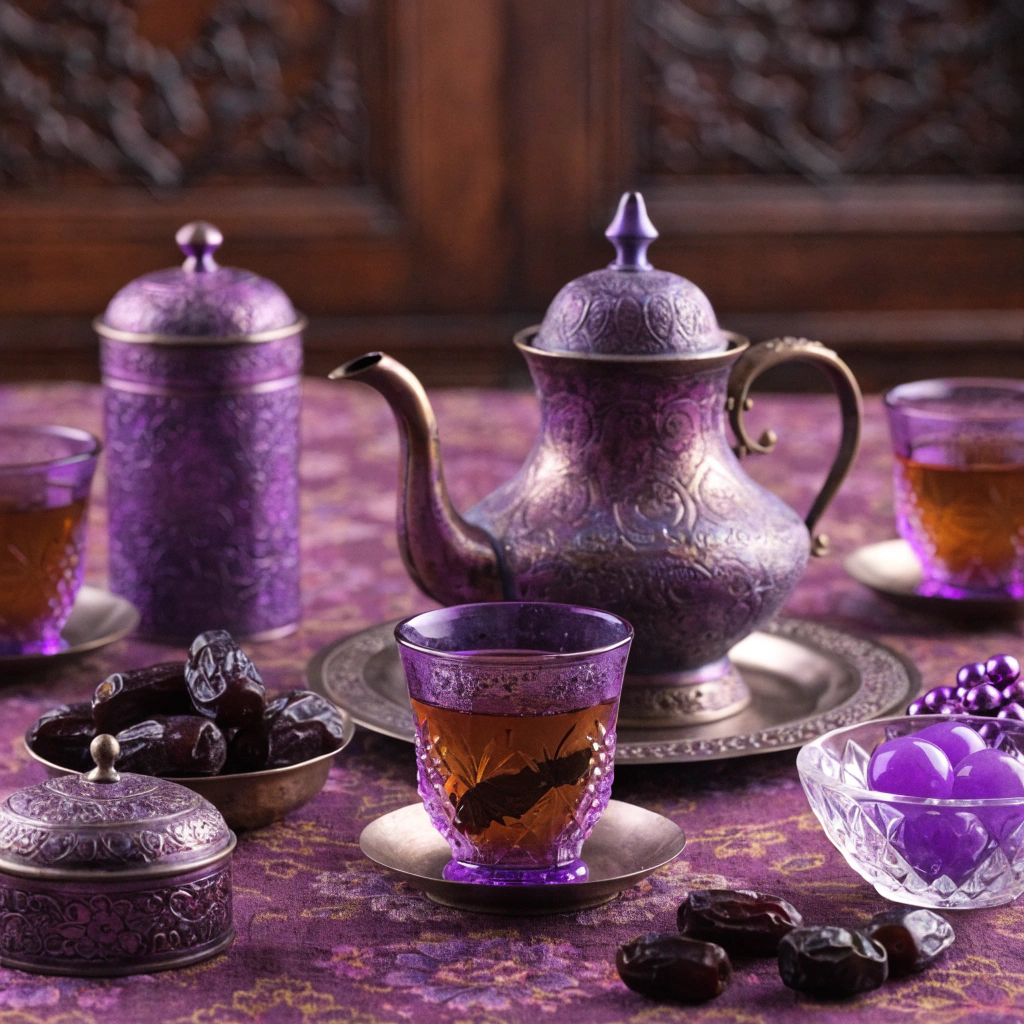
Polite Manners in Iran
Iran has a special tradition. It is called Taarof. It is about being very polite. Iranian people are very kind and hospitable.
In Taarof, people offer food or gifts many times. When a friend offers tea, you say "no" first. This is polite. Then, the friend asks again. Finally, you say "yes".
Taarof is common in shops too. A shopkeeper says the fruit is free. But it is not really free. You must pay. Taarof makes people feel good. It is an important part of life in Iran.
Grammar Spotlight
Pattern: Present Simple (to be)
"Iranian people are very kind and hospitable."
We use 'am', 'is', or 'are' to describe people or things. Here, 'people' is plural, so we use 'are'.
Pattern: Modal Verb: Must
"You must pay."
We use 'must' to talk about rules or things that are necessary. It is followed by a base verb.
Test Your Understanding
10 questions · A1 Beginner · 1 free preview
Test what you learned from this article. Answer all questions to earn XP!
What is the name of the special tradition in Iran?
Want to finish the quiz?
9 more questions are waiting for you. Sign up free to unlock the full quiz and earn XP!
Sign Up FreeAlready have an account? Sign In
Question Breakdown
What is the name of the special tradition in Iran?
Your answer:
Correct answer: Taarof
In Taarof, you should say 'yes' the very first time someone offers tea.
Your answer:
Correct answer: False
What does 'gift' mean?
Your answer:
Correct answer: Something you give to someone
Taarof is an _____ part of life in Iran.
Your answer:
Correct answer: important
Taarof: The Special Rules of Iranian Manners
When you visit Iran, you will see a special tradition. People call it 'Taarof.' It is a way of being polite and showing respect to others. Iranians use Taarof with their family, friends, and even people they do not know. It is more important than just saying 'please' or 'thank you.'
For example, when you want to pay for something at a shop, the shopkeeper might say, 'It is free.' However, it is not actually free! In Iran, it is polite to say 'no' first. You must offer to pay again. Usually, you offer three times before the person accepts. This makes the conversation more friendly.
Taarof is older than many other traditions. It helps people feel equal and happy. It is more difficult for tourists than for local people because the rules are complex. But if you learn a little Taarof, your trip to Iran will be better.
Grammar Spotlight
Pattern: Comparatives
"Taarof is older than many other traditions."
We use comparatives to compare two things. For short adjectives, add '-er' and the word 'than'. For long adjectives like 'difficult', we use 'more' before the adjective.
Pattern: Basic Connectors (because)
"It is more difficult for tourists than for local people because the rules are complex."
The word 'because' is a connector used to give a reason. It joins two parts of a sentence to explain why something happens.
Test Your Understanding
11 questions · A2 Elementary · 1 free preview
Test what you learned from this article. Answer all questions to earn XP!
What is the main purpose of Taarof?
Want to finish the quiz?
10 more questions are waiting for you. Sign up free to unlock the full quiz and earn XP!
Sign Up FreeAlready have an account? Sign In
Question Breakdown
What is the main purpose of Taarof?
Your answer:
Correct answer: To show respect and politeness
If a shopkeeper says 'it is free,' you should immediately walk away without paying.
Your answer:
Correct answer: False
What does 'complex' mean?
Your answer:
Correct answer: Not simple; having many parts
Usually, you offer _____ times before the person accepts.
Your answer:
Correct answer: three
Who do Iranians use Taarof with?
Your answer:
Correct answer: Family, friends, and strangers
Taarof: The Secret Language of Iranian Politeness
Have you ever been to a country where a shopkeeper refuses to take your money? This is a common experience in Iran, and it is part of a complex system of etiquette called Taarof. Taarof is a traditional behavior that has been practiced by Iranians for a very long time. It is a way of showing respect and hospitality to others while appearing humble.
The main idea of Taarof is to put the other person’s needs before your own. For example, if you are in a taxi, the driver might tell you that the ride is free. However, he does not actually mean it! He is simply being polite. This social rule is used in many situations, such as when people are offered food or when they are invited to someone’s home.
For visitors, this can be quite confusing. Most words in Taarof should not be taken literally. If someone offers you a gift, it is expected that you refuse it at least two or three times before finally accepting. This performance is seen as a social lubricant which helps to maintain harmony in society.
In recent years, many books have been written about this fascinating custom. It is a beautiful part of Persian culture that emphasizes the importance of friendship and generosity. Even though it might seem strange at first, it is a skill that can be learned with practice. Understanding Taarof is the key to making real connections in Iran.
Grammar Spotlight
Pattern: Present Perfect
"Taarof is a traditional behavior that has been practiced by Iranians for a very long time."
The present perfect (have/has + past participle) is used here to describe an action that started in the past and continues to the present day.
Pattern: Passive Voice
"In recent years, many books have been written about this fascinating custom."
The passive voice is used when the focus is on the action (writing books) rather than who did the action. It is formed with the verb 'to be' and a past participle.
Test Your Understanding
11 questions · B1 Intermediate · 1 free preview
Test what you learned from this article. Answer all questions to earn XP!
Why might an Iranian taxi driver say the ride is free?
Want to finish the quiz?
10 more questions are waiting for you. Sign up free to unlock the full quiz and earn XP!
Sign Up FreeAlready have an account? Sign In
Question Breakdown
Why might an Iranian taxi driver say the ride is free?
Your answer:
Correct answer: He is practicing Taarof to be polite
In Taarof, you should accept a gift the very first time it is offered.
Your answer:
Correct answer: False
What does it mean to be 'humble'?
Your answer:
Correct answer: To show respect by not acting superior
Taarof is a way of showing _____ and hospitality to others.
Your answer:
Correct answer: respect
What is Taarof described as in the text?
Your answer:
Correct answer: A social lubricant
Taarof: Navigating the Sophisticated Art of Persian Etiquette
In the heart of Iranian culture lies a sophisticated social code known as Taarof. Unlike Western notions of straightforward communication, Taarof involves an intricate dance of humility and mutual respect. It is often described as a system of 'ritualized politeness' that governs everything from high-level business negotiations to casual family dinners. To the uninitiated observer, these interactions might appear overly formal or even insincere; however, for Iranians, they represent a fundamental way of acknowledging the dignity of others.
One of the most striking features of Taarof is the practice of self-deprecation. When offered a compliment or a gift, an individual is expected to minimize their own importance while simultaneously elevating the status of their counterpart. For instance, a shopkeeper might initially refuse payment for an item, insisting that it is 'worthless' compared to the customer’s presence. While this gesture is rarely meant to be taken literally, it serves as a crucial social lubricant, smoothing over potential conflicts and fostering a sense of community. This cultural phenomenon ensures that social hierarchies are respected without appearing arrogant.
Navigating the complexities of Taarof can be particularly challenging for foreigners who have been raised in cultures that prioritize efficiency and directness. Since the words spoken do not always reflect the speaker's true intentions, one must learn to distinguish between a genuine offer and a polite formality. Typically, an offer should be declined at least twice before being accepted on the third attempt. If the host persists after several refusals, the offer is likely sincere. This ritualized negotiation ensures that neither party feels burdened or exploited, maintaining a delicate balance of social debt and gratitude.
The origins of Taarof are deeply rooted in Persian history, reflecting a society that has historically valued eloquence, poetry, and indirectness. By prioritizing the comfort of others over one's own needs, Iranians demonstrate a profound commitment to hospitality, which is considered a sacred duty. Although the fast-paced nature of modern life has introduced more direct forms of communication in urban centers, Taarof remains a defining characteristic of the Iranian identity. Ultimately, Taarof functions as a psychological framework that emphasizes the collective over the individual. Understanding this art is about appreciating a culture that views every social interaction as an opportunity to show grace, generosity, and profound respect.
Grammar Spotlight
Pattern: Passive Voice
"It is often described as a system of 'ritualized politeness' that governs everything..."
The passive voice is used here to focus on the concept of Taarof rather than who is doing the describing. It is formed using 'to be' + past participle.
Pattern: Present Perfect
"The origins of Taarof are deeply rooted in Persian history, reflecting a society that has historically valued eloquence..."
The present perfect ('has valued') describes an action or state that began in the past and continues to be relevant or true in the present.
Pattern: Participle Clauses
"By prioritizing the comfort of others over one's own needs, Iranians demonstrate a profound commitment..."
The present participle ('prioritizing') is used after a preposition to show the method or means by which the main action is achieved.
Test Your Understanding
11 questions · B2 Upper Intermediate · 1 free preview
Test what you learned from this article. Answer all questions to earn XP!
What is the primary function of Taarof according to the article?
Want to finish the quiz?
10 more questions are waiting for you. Sign up free to unlock the full quiz and earn XP!
Sign Up FreeAlready have an account? Sign In
Question Breakdown
What is the primary function of Taarof according to the article?
Your answer:
Correct answer: To act as a social lubricant and foster community
A shopkeeper who refuses payment is always being literal and does not want money.
Your answer:
Correct answer: False
Which word describes someone who lacks experience or knowledge in a specific area?
Your answer:
Correct answer: Uninitiated
The origins of Taarof are deeply _____ in Persian history.
Your answer:
Correct answer: rooted
How many times should an offer usually be declined before it is accepted?
Your answer:
Correct answer: At least twice
The Labyrinth of Taarof: Deciphering the Nuances of Iranian Social Rituals
Seldom do visitors grasp the underlying mechanics of Taarof upon their first encounter with it. To the uninitiated, this intricate system of etiquette might appear as a series of polite but hollow gestures; however, it represents a cornerstone of Iranian identity. Taarof is a labyrinthine social protocol that dictates everything from the way one accepts a cup of tea to the manner in which financial transactions are negotiated. At its heart lies the principle of self-deprecation, a sophisticated performance where individuals habitually downplay their own importance while elevating the status of their interlocutor. This manifestation of humility is not intended to deceive, but rather to establish a reciprocal framework of mutual respect.
It is through this elaborate performance that social harmony is maintained within the community. The ubiquity of Taarof means that it permeates every facet of daily life, from the domestic sphere to high-stakes political diplomacy. For instance, when a guest is offered food, the ingrained response is to refuse multiple times, even if one is famished. The host, in turn, must insist with equal fervor. This linguistic dance continues until a consensus is reached, ensuring that neither party appears greedy or inhospitable. Such interactions serve as a social lubricant, smoothing over potential conflicts and reinforcing communal bonds.
However, the complexity of Taarof presents a paradox for those accustomed to more direct communication styles. While it aims to foster connection, the indirectness of the language can sometimes obfuscate a person's true intentions. A shopkeeper might insist that an item is 'worthless' and refuse payment, yet this is rarely a literal offer of a free gift. Instead, it is a ritualistic acknowledgement of the customer's value. To navigate this successfully, one must possess a keen eye for nuance, distinguishing between a genuine invitation and a polite formality. The manifestation of these cultural traits is deeply rooted in Persian history, reflecting a legacy of courtly elegance and the need for survival in a historically turbulent region.
Ultimately, Taarof is not merely about being 'nice.' It is a profound reflection of the Iranian psyche, emphasizing the collective over the individual. By prioritizing the comfort and dignity of others, Iranians use Taarof to weave a resilient social fabric. While the modern world moves toward efficiency and bluntness, the persistence of these rituals highlights the enduring power of tradition in shaping human interaction. Understanding Taarof is therefore essential for anyone seeking to engage meaningfully with the rich tapestry of Iranian culture.
Grammar Spotlight
Pattern: Negative Inversion
"Seldom do visitors grasp the underlying mechanics of Taarof upon their first encounter with it."
Inversion is used after negative or restrictive adverbs (like 'seldom', 'rarely', 'never') at the start of a sentence for emphasis. The auxiliary verb 'do' comes before the subject 'visitors'.
Pattern: Cleft Sentences
"It is through this elaborate performance that social harmony is maintained within the community."
An 'It + is/was + [emphasized part] + that' structure is used to focus on a specific piece of information. Here, it emphasizes the method ('through this elaborate performance') by which harmony is achieved.
Pattern: Nominalization
"The manifestation of these cultural traits is deeply rooted in Persian history."
Nominalization involves turning verbs or adjectives into nouns (e.g., 'manifest' to 'manifestation'). This is a hallmark of C1 academic writing to create a more formal and objective tone.
Test Your Understanding
12 questions · C1 Advanced · 1 free preview
Test what you learned from this article. Answer all questions to earn XP!
What is the primary psychological driver behind the practice of Taarof?
Want to finish the quiz?
11 more questions are waiting for you. Sign up free to unlock the full quiz and earn XP!
Sign Up FreeAlready have an account? Sign In
Question Breakdown
What is the primary psychological driver behind the practice of Taarof?
Your answer:
Correct answer: The principle of self-deprecation and elevating others
Taarof is exclusively practiced during formal business meetings.
Your answer:
Correct answer: False
What does 'obfuscate' mean in the context of the article?
Your answer:
Correct answer: To make something difficult to understand
The indirectness of Taarof presents a _____ for those used to direct communication.
Your answer:
Correct answer: paradox
Why might a shopkeeper tell a customer that an item is 'worthless'?
Your answer:
Correct answer: As a ritualistic acknowledgement of the customer's value
In Taarof, it is considered polite to accept an offer of food immediately.
Your answer:
Correct answer: False
The Labyrinthine Elegance of Taarof: Deciphering the Iranian Social Contract
To the uninitiated observer, the Iranian practice of Taarof might appear as a labyrinthine exercise in perfunctory obsequiousness, a performative dance of politeness that seems to defy the pragmatism of the modern era. Yet, were one to peel back the layers of this multifaceted social construct, a sophisticated system of ritualized humility and altruism would be revealed. Taarof is far more than a mere collection of etiquette rules; it is an inextricable thread woven into the very fabric of the Persian cultural tapestry, demanding from its participants a nuanced mastery of social hierarchy and interpersonal dynamics. At its core, Taarof functions as a performance of 'shekasteh-nafsi'—literally the 'breaking of the self.' Through this linguistic and behavioral framework, an individual intentionally downplays their own status or needs while simultaneously elevating those of the interlocutor. This is not necessarily born of a desire to deceive, but rather from a profound cultural imperative to prioritize the comfort and honor of the other. Seldom does a linguistic phenomenon carry such weight in the daily negotiation of power and respect. By offering a seat, a meal, or even a business transaction for free, the practitioner creates a space where mutual respect is codified through a series of scripted refusals and insistences.
The complexity of Taarof lies in its inherent ambiguity. To an outsider, the veracity of an offer is often difficult to gauge. Should a merchant insist that a purchase is 'pishkesh'—a gift—the customer is expected to recognize this as a perfunctory gesture rather than a literal invitation to take the goods for free. It is here that the concept of 'social lubricant' becomes most apparent. Taarof allows for the smoothing over of potential social friction, providing a buffer against the bluntness of direct requests or refusals. It is through this indirectness that Iranian society maintains a sense of harmony, even when underlying tensions or power imbalances exist. However, the reliance on such obfuscation is not without its challenges, particularly in the context of intercultural communication. In an increasingly globalized and egalitarian world, the idiosyncratic nature of Taarof can lead to significant misunderstandings. Western observers, often conditioned to value literalism and directness, may find the circular nature of Taarof frustrating or even disingenuous. Yet, to dismiss Taarof as mere insincerity would be to overlook its psychological depth. It serves as a mechanism for preserving 'aberu' (face or honor), ensuring that neither party is shamed by a direct rejection or an overt display of greed. Furthermore, the practice of Taarof is deeply rooted in the historical evolution of Persian courtly culture, where linguistic precision and poetic elegance were hallmarks of the elite. Today, while the forms may have evolved, the underlying ethos remains remarkably resilient. Even in the fast-paced urban environments of contemporary Iran, the ritual of Taarof persists as a vital marker of identity and cultural continuity. It is a testament to the fact that human interaction is rarely just about the exchange of information; it is about the constant recalibration of our relationships within a shared moral and aesthetic framework.
Grammar Spotlight
Pattern: Subjunctive Conditional Inversion
"Yet, were one to peel back the layers of this multifaceted social construct, a sophisticated system of ritualized humility and altruism would be revealed."
This structure replaces 'if' with an inverted word order (were + subject). It is used in formal or academic English to discuss hypothetical situations or to add a scholarly tone to the prose.
Pattern: Negative Inversion
"Seldom does a linguistic phenomenon carry such weight in the daily negotiation of power and respect."
When a sentence begins with a restrictive adverb like 'seldom', the subject and auxiliary verb are inverted. This is a common rhetorical device in C2-level writing to emphasize the rarity or importance of a statement.
Pattern: It-Cleft Sentences
"It is through this indirectness that Iranian society maintains a sense of harmony."
Cleft sentences are used to focus on a specific part of the information (the 'indirectness'). It follows the structure 'It is/was + [emphasized element] + that/who clause'.
Test Your Understanding
12 questions · C2 Mastery · 1 free preview
Test what you learned from this article. Answer all questions to earn XP!
What does the author suggest is the primary function of Taarof in Iranian society?
Want to finish the quiz?
11 more questions are waiting for you. Sign up free to unlock the full quiz and earn XP!
Sign Up FreeAlready have an account? Sign In
Question Breakdown
What does the author suggest is the primary function of Taarof in Iranian society?
Your answer:
Correct answer: To serve as a social lubricant that maintains harmony
Western observers typically find the indirect nature of Taarof easy to navigate due to their own cultural literalism.
Your answer:
Correct answer: False
Which word describes the act of making something intentionally unclear?
Your answer:
Correct answer: Obfuscation
The complexity of Taarof lies in its inherent _____, making offers difficult to gauge.
Your answer:
Correct answer: ambiguity
What is the literal meaning of 'shekasteh-nafsi'?
Your answer:
Correct answer: The breaking of the self
Taarof is described as having historical roots in Persian courtly culture.
Your answer:
Correct answer: True
