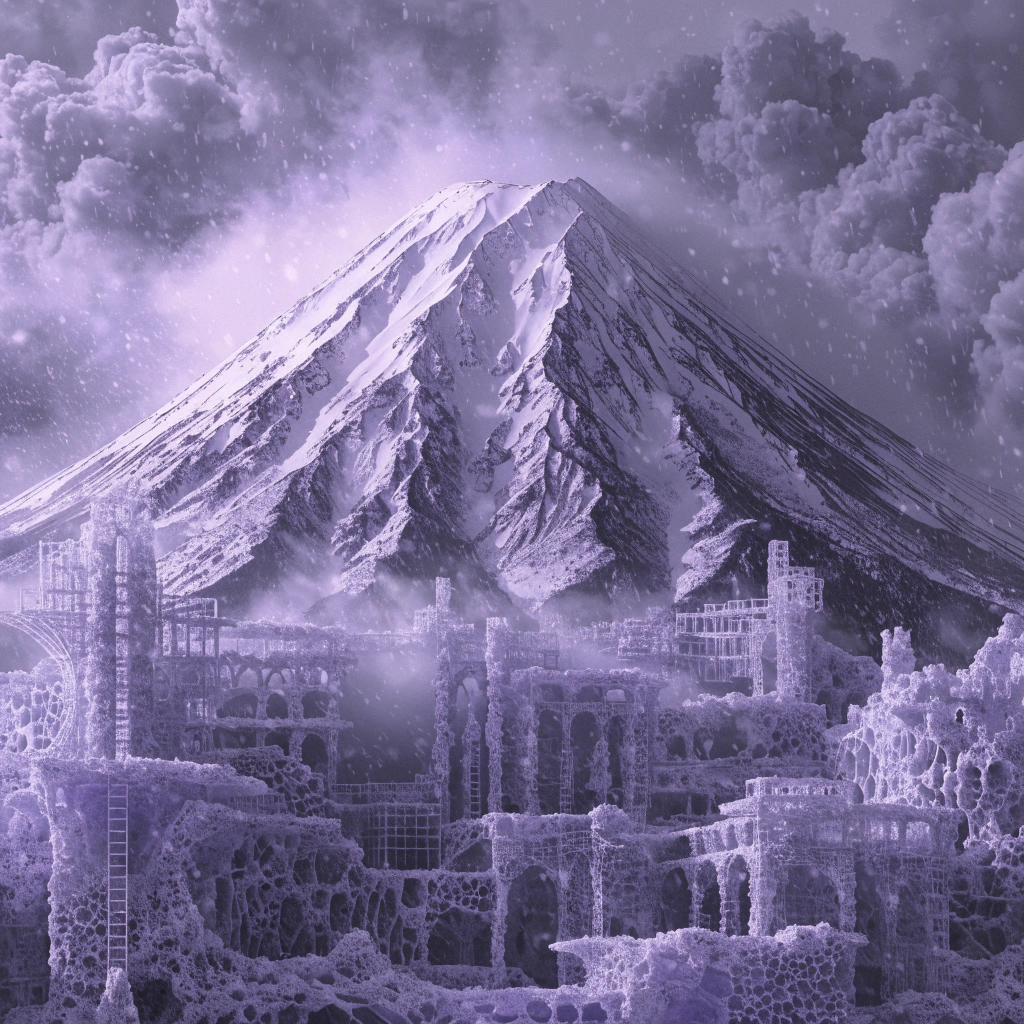
The Beautiful Mount Fuji
Mount Fuji is a very high mountain in Japan. It is very beautiful. Many people visit this mountain every year. It is 3,776 meters tall.
The mountain is a volcano. It is very old. In winter, there is white snow on the top. It looks like a picture.
Mount Fuji is a special place for people in Japan. Artists paint many pictures of it. You can see the mountain from Tokyo on a clear day.
Grammar Spotlight
Pattern: Present Simple 'Be'
"Mount Fuji is a very high mountain."
We use 'is' for singular subjects like Mount Fuji. It describes a permanent fact or state.
Pattern: Modal Verb 'Can'
"You can see the mountain from Tokyo."
We use 'can' followed by a base verb to show possibility. It does not change based on the subject.
Test Your Understanding
10 questions · A1 Beginner · 1 free preview
Test what you learned from this article. Answer all questions to earn XP!
Where is Mount Fuji?
Want to finish the quiz?
9 more questions are waiting for you. Sign up free to unlock the full quiz and earn XP!
Sign Up FreeAlready have an account? Sign In
Question Breakdown
Where is Mount Fuji?
Your answer:
Correct answer: Japan
Mount Fuji is a volcano.
Your answer:
Correct answer: True
What does 'picture' mean?
Your answer:
Correct answer: A painting or drawing
Mount Fuji is a very high _____.
Your answer:
Correct answer: mountain
Mount Fuji: The Spirit of Japan
Mount Fuji is the most famous mountain in Japan. It is very tall and beautiful. It is 3,776 meters high. People call it 'Fujisan' in Japanese. It is a volcano, but it is quiet now. The mountain is almost a perfect circle at the bottom.
For many years, people in Japan thought the mountain was sacred. They believed a goddess lived there. Because it is special, many artists painted it. The most famous artist was Katsushika Hokusai. He made thirty-six different pictures of the mountain. One picture is very famous because it shows a big wave and the mountain behind it.
Today, many tourists visit Mount Fuji. Some people climb to the top in the summer. It is more difficult than a normal walk, but the view is amazing. You can see the sun rise over the clouds. It is a symbol of Japan and people love it very much.
Grammar Spotlight
Pattern: Comparatives (more + adjective + than)
"It is more difficult than a normal walk, but the view is amazing."
We use 'more' with long adjectives (2+ syllables) to compare two things. Always include 'than' after the adjective to mention the second thing.
Pattern: Connectors (because)
"One picture is very famous because it shows a big wave and the mountain behind it."
We use 'because' to give a reason for something. It connects a result with its cause in the same sentence.
Test Your Understanding
11 questions · A2 Elementary · 1 free preview
Test what you learned from this article. Answer all questions to earn XP!
How high is Mount Fuji?
Want to finish the quiz?
10 more questions are waiting for you. Sign up free to unlock the full quiz and earn XP!
Sign Up FreeAlready have an account? Sign In
Question Breakdown
How high is Mount Fuji?
Your answer:
Correct answer: 3,776 meters
Mount Fuji is currently a very active volcano.
Your answer:
Correct answer: False
What does 'sacred' mean?
Your answer:
Correct answer: Holy and special for religion
The famous artist Hokusai made thirty-six _____ of the mountain.
Your answer:
Correct answer: pictures
When do people usually climb to the top of the mountain?
Your answer:
Correct answer: In the summer
Mount Fuji: The Sacred Heart of Japan
Mount Fuji is the most famous landmark in Japan. Standing at 3,776 meters tall, this beautiful mountain is actually a stratovolcano that has a perfectly symmetrical shape. It is located on Honshu Island and can even be seen from Tokyo on clear days. For many people, it is more than just a mountain; it is a sacred place that represents the heart of the country.
For centuries, Mount Fuji has been worshipped by many people. It is believed to be the home of a Shinto goddess called Konohanasakuya-hime. Because of its spiritual importance, many pilgrims have climbed to the top to show their respect. This tradition continues today, as thousands of hikers visit the mountain during the summer months to see the sunrise from the peak.
The mountain has also inspired many famous artists throughout history. Katsushika Hokusai, who was a legendary artist, created a famous series of woodblock prints called 'Thirty-six Views of Mount Fuji'. These artworks have been shown in museums around the world and have helped people everywhere recognize the mountain's unique silhouette.
Mount Fuji was added to the UNESCO World Heritage list in 2013 because of its cultural value. Although it is still an active volcano, it has not erupted since 1707. Today, it is protected so that future generations can enjoy its beauty. Whether you are a climber or just someone who enjoys looking at the view, Mount Fuji remains an unforgettable part of the Japanese landscape.
Grammar Spotlight
Pattern: Present Perfect Passive
"For centuries, Mount Fuji has been worshipped by many people."
This pattern is used to talk about an action that started in the past and continues or has relevance now, where the focus is on the object. It is formed using 'has/have been' + past participle.
Pattern: Relative Clauses
"Katsushika Hokusai, who was a legendary artist, created a famous series of prints."
A relative clause provides more information about a person or thing. Here, 'who was a legendary artist' gives extra detail about Hokusai.
Test Your Understanding
11 questions · B1 Intermediate · 1 free preview
Test what you learned from this article. Answer all questions to earn XP!
What kind of geological feature is Mount Fuji?
Want to finish the quiz?
10 more questions are waiting for you. Sign up free to unlock the full quiz and earn XP!
Sign Up FreeAlready have an account? Sign In
Question Breakdown
What kind of geological feature is Mount Fuji?
Your answer:
Correct answer: A stratovolcano
Mount Fuji is the highest mountain in Japan.
Your answer:
Correct answer: True
What does 'sacred' mean?
Your answer:
Correct answer: Holy or religious
Mount Fuji has not _____ since 1707.
Your answer:
Correct answer: erupted
Who created the 'Thirty-six Views of Mount Fuji'?
Your answer:
Correct answer: Katsushika Hokusai
Mount Fuji: The Spiritual and Cultural Peak of Japan
Mount Fuji, locally known as Fujisan, is far more than a mere geological landmark; it represents the very essence of Japanese identity. Standing at a majestic 3,776 meters, this symmetrical stratovolcano has been a focal point of admiration for centuries. While its snow-capped peak is instantly recognizable worldwide, the mountain's significance extends deep into the spiritual and artistic fabric of the nation. For many, it is not just a mountain, but a symbol of resilience and eternal beauty.
Historically, Mount Fuji has been revered as a sacred site. For practitioners of Shintoism, it is believed to be the dwelling place of the deity Konohanasakuya-hime. Consequently, thousands of pilgrims have ascended its slopes over the generations, seeking spiritual purification. This tradition continues today, although the modern climber is just as likely to be a tourist as a devotee. Despite the physical challenges of the ascent, the experience remains a rite of passage for many, offering a unique connection between the earthly and the divine.
The mountain's aesthetic perfection has also left an indelible mark on global culture. Perhaps the most famous representation is Katsushika Hokusai’s series, 'Thirty-six Views of Mount Fuji', which includes the iconic 'Great Wave off Kanagawa'. These woodblock prints captured the mountain from various perspectives, distances, and seasons, significantly influencing Western Impressionist artists like Vincent van Gogh. Through these works, Fuji became a symbol of the sublime—a blend of breathtaking beauty and the awe-inspiring power of the natural world. This artistic legacy ensures that the mountain's image is recognized even by those who have never set foot in Japan.
In 2013, UNESCO officially recognized Mount Fuji as a World Heritage site, specifically noting its status as a "sacred place and source of artistic inspiration." However, this prestigious title brings with it a set of significant responsibilities and modern challenges. The massive influx of seasonal hikers during the summer months has led to growing concerns regarding environmental degradation, including erosion and waste management issues. Consequently, local authorities have had to implement various sustainable measures, such as climbing fees and stricter regulations, to ensure that the ecological integrity and spiritual atmosphere of the mountain are preserved for future generations.
Ultimately, Mount Fuji serves as a reminder of the delicate balance between nature and human civilization. It remains a testament to how a natural feature can shape the history, religion, and art of an entire people. Whether viewed from a distance in Tokyo or experienced firsthand on its rugged trails, Fujisan continues to command respect and wonder.
Grammar Spotlight
Pattern: Present Perfect Passive
"Mount Fuji has been revered as a sacred site."
This pattern is used to describe an action that began in the past and continues to be true, focusing on the object rather than the subject. It is formed using 'has/have + been + past participle'.
Pattern: Concessive Clause with 'Despite'
"Despite the physical challenges of the ascent, the experience remains a rite of passage for many."
Used to show contrast or unexpected results. 'Despite' is followed by a noun or a gerund, highlighting that the challenges do not stop the experience from being significant.
Pattern: Participle Phrases for Additional Information
"In 2013, UNESCO recognized Mount Fuji as a World Heritage site, specifically noting its status as a sacred place..."
Present participle phrases (-ing) can be used to add detail to a main clause. Here, 'specifically noting' explains the reason or provides further context for the UNESCO recognition.
Test Your Understanding
11 questions · B2 Upper Intermediate · 1 free preview
Test what you learned from this article. Answer all questions to earn XP!
Why did UNESCO grant Mount Fuji World Heritage status?
Want to finish the quiz?
10 more questions are waiting for you. Sign up free to unlock the full quiz and earn XP!
Sign Up FreeAlready have an account? Sign In
Question Breakdown
Why did UNESCO grant Mount Fuji World Heritage status?
Your answer:
Correct answer: Because it is a sacred place and a source of artistic inspiration
Mount Fuji is considered the home of a Shinto deity.
Your answer:
Correct answer: True
Which word describes something of such grandeur that it inspires awe?
Your answer:
Correct answer: Sublime
The volcano is famous for its perfectly _____ shape.
Your answer:
Correct answer: symmetrical
How did Hokusai's work affect the Western world?
Your answer:
Correct answer: It significantly influenced Western Impressionist artists
The Ethereal Sovereign: Re-evaluating the Cultural and Geological Significance of Mount Fuji
Rising with a symmetry that borders on the divine, Mount Fuji—or Fujisan—serves as more than a mere topographical landmark; it is the very quintessence of Japanese identity. Standing at a staggering 3,776 meters, this dormant stratovolcano has long transcended its geological origins to become a stratified symbol of spiritual purity and artistic inspiration. Rarely does a geographical feature command such universal reverence across both secular and spiritual domains, yet Fuji manages this feat with an effortless, snow-capped grace that has captivated observers for millennia. Its silhouette, instantly recognizable worldwide, is a testament to the mountain's role as a sovereign entity in the Japanese landscape.
Historically, the mountain was perceived not as a physical challenge to be conquered, but as a sacred site to be venerated from afar. It is the spiritual resonance of the mountain that fostered the development of Shugendo, a syncretic faith combining mountain worship with Buddhist and Shinto practices. Pilgrims would ascend the slopes not for sport, but as a rite of purification, seeking proximity to the deity Konohanasakuya-hime. This religious fervor eventually permeated the arts, most notably during the Edo period. Katsushika Hokusai’s 'Thirty-six Views of Mount Fuji' exemplifies the juxtaposition of the mountain’s eternal stillness against the ephemeral nature of human existence. In these woodblock prints, the mountain remains a constant, silent witness to the bustling lives of commoners and the changing seasons alike.
However, the contemporary era has brought about a complex transformation in how the mountain is engaged with. The commodification of the climbing experience has led to significant ecological degradation, as thousands of tourists flock to the summit during the brief summer window. This surge in popularity has necessitated a re-evaluation of the mountain’s management, leading to its designation as a UNESCO World Heritage site in 2013—not as a natural site, but as a cultural one. This distinction is crucial; it acknowledges that Fuji’s value lies in its inspiration of art and religious tradition rather than its unique biodiversity alone.
Furthermore, the resilience of the local ecosystem is being tested by the sheer volume of human traffic. It is the interplay between preservation and accessibility that currently dominates local discourse. While the economic benefits of tourism are undeniable, the degradation of the trails and the accumulation of waste present a stark contrast to the mountain's image of pristine sanctity. The preservation of the mountain's sanctity requires a nuanced approach that balances the democratic right to access nature with the moral obligation to protect a global icon. Ultimately, Mount Fuji remains a pinnacle of Japanese heritage, a site where the geological, the spiritual, and the environmental converge in a delicate, ongoing negotiation.
Grammar Spotlight
Pattern: Inversion with Negative Adverbials
"Rarely does a geographical feature command such universal reverence across both secular and spiritual domains."
Inversion is used here to emphasize the rarity of the situation. When starting a sentence with a negative or restrictive adverb like 'rarely', the auxiliary verb comes before the subject.
Pattern: Cleft Sentences for Emphasis
"It is the spiritual resonance of the mountain that fostered the development of Shugendo."
A cleft sentence (It + be + subject + relative clause) is used to focus on a specific piece of information. It highlights 'spiritual resonance' as the primary cause rather than any other factor.
Pattern: Nominalisation
"The preservation of the mountain's sanctity requires a nuanced approach."
Nominalisation turns verbs (preserve) into nouns (preservation). This creates a more formal, academic tone and allows for more complex ideas to be discussed as abstract concepts.
Test Your Understanding
12 questions · C1 Advanced · 1 free preview
Test what you learned from this article. Answer all questions to earn XP!
What is the primary reason Mount Fuji was designated a UNESCO World Heritage site?
Want to finish the quiz?
11 more questions are waiting for you. Sign up free to unlock the full quiz and earn XP!
Sign Up FreeAlready have an account? Sign In
Question Breakdown
What is the primary reason Mount Fuji was designated a UNESCO World Heritage site?
Your answer:
Correct answer: Its cultural and artistic significance
Historically, climbing Mount Fuji was primarily seen as a competitive sport.
Your answer:
Correct answer: False
What does 'ephemeral' mean in the context of human existence?
Your answer:
Correct answer: Short-lived and fleeting
The mountain's _____ is instantly recognizable worldwide as a symbol of Japan.
Your answer:
Correct answer: silhouette
Which artist is mentioned for capturing the mountain's stillness?
Your answer:
Correct answer: Katsushika Hokusai
The article suggests that the economic benefits of tourism currently outweigh all environmental concerns.
Your answer:
Correct answer: False
The Ontological and Aesthetic Significance of Mount Fuji: A Stratovolcano’s Cultural Hegemony
Mount Fuji, or Fujisan, stands as the quintessential silhouette of the Japanese archipelago, soaring to a majestic elevation of 3,776 meters. Yet, to describe it merely as a geological marvel would be to overlook its profound ontological status within the Japanese psyche. This perfectly symmetrical stratovolcano is not merely a topographical feature; it is a cornerstone of spiritual and cultural life, a silent witness to the ebb and flow of history. Were one to traverse the rugged terrain surrounding its base, one would encounter a landscape where the boundary between the terrestrial and the divine appears remarkably porous. For centuries, the mountain has been venerated as a sacred site, believed to be the dwelling place of the Shinto deity Konohanasakuya-hime. This spiritual hegemony has dictated the rhythms of pilgrimage and the evolution of Japanese religious practice, rendering the mountain an active participant in the nation's metaphysical narrative.
The aesthetic manifestation of Mount Fuji in art is perhaps most notably encapsulated in Katsushika Hokusai’s 'Thirty-six Views of Mount Fuji.' These ukiyo-e prints do not merely depict a mountain; they explore the transience of human existence against the immutable backdrop of nature. This thematic preoccupation with the ephemeral—often referred to in Japanese aesthetics as 'mono no aware'—is central to understanding why Fuji resonates so deeply. Seldom has a geological formation occupied such a central role in the artistic canon of a civilization. The mountain’s symmetry serves as a visual metaphor for balance and purity, qualities that are highly prized in Japanese cultural paradigms. To the extent that art reflects the soul of a people, Fuji is the mirror through which Japan views its own identity, balancing the volatile power of a volcano with the serene stillness of its snow-capped peak.
However, the contemporary era brings with it a host of anthropogenic challenges that threaten the integrity of this UNESCO World Heritage site. The paradox of its popularity lies in the fact that its very accessibility has led to overtourism and environmental degradation. It is imperative that the authorities implement robust mitigation strategies to preserve the ecological balance of the region. Lest the sanctity of the site be compromised by the sheer volume of visitors, stringent regulations regarding waste management and trail access have been proposed. There is a scholarly consensus that without such intervention, the physical and spiritual aura of the mountain could be irreparably tarnished. The tension between the desire for public engagement and the necessity for conservation reflects a broader global discourse on the stewardship of natural wonders.
In conclusion, Mount Fuji is a synthesis of the physical and the metaphysical. It is a stratovolcano that erupts with cultural meaning, a silhouette that outlines the aspirations of a nation, and a sacred space that demands our utmost respect. Notwithstanding the pressures of modernity, it remains a symbol of resilience and beauty. As we contemplate its presence, we are reminded of our own place within the vast tapestry of nature, a realization that is both humbling and enlightening. The enduring legacy of Fujisan is not found in its height alone, but in the profound silence it commands from those who stand in its shadow, reflecting on the intersection of time, art, and the divine.
Grammar Spotlight
Pattern: Inverted Conditional
"Were one to traverse the rugged terrain surrounding its base, one would encounter a landscape where the boundary between the terrestrial and the divine appears remarkably porous."
This is a formal alternative to 'If one were to traverse...'. It uses inversion of the subject and the verb 'were' to express a hypothetical situation in the present or future.
Pattern: Negative Inversion
"Seldom has a geological formation occupied such a central role in the artistic canon of a civilization."
When a sentence begins with a negative adverb like 'seldom', 'never', or 'rarely', the subject and the auxiliary verb are inverted for rhetorical emphasis.
Pattern: Negative Purpose Clause with 'Lest'
"Lest the sanctity of the site be compromised by the sheer volume of visitors, stringent regulations regarding waste management and trail access have been proposed."
The conjunction 'lest' is used to express a negative purpose or to prevent something undesirable. It is followed by a verb in the subjunctive mood (be).
Test Your Understanding
12 questions · C2 Mastery · 1 free preview
Test what you learned from this article. Answer all questions to earn XP!
According to the article, what does the symmetry of Mount Fuji symbolize in Japanese culture?
Want to finish the quiz?
11 more questions are waiting for you. Sign up free to unlock the full quiz and earn XP!
Sign Up FreeAlready have an account? Sign In
Question Breakdown
According to the article, what does the symmetry of Mount Fuji symbolize in Japanese culture?
Your answer:
Correct answer: Balance and purity
The author suggests that Mount Fuji's significance is limited strictly to its geological properties.
Your answer:
Correct answer: False
Which word describes something that is lasting for a very short time?
Your answer:
Correct answer: Ephemeral
The authorities must implement robust _____ strategies to preserve the ecological balance.
Your answer:
Correct answer: mitigation
What paradox is mentioned regarding Mount Fuji's popularity?
Your answer:
Correct answer: Its accessibility leads to its environmental degradation.
The deity Konohanasakuya-hime is associated with Mount Fuji in Shinto belief.
Your answer:
Correct answer: True
