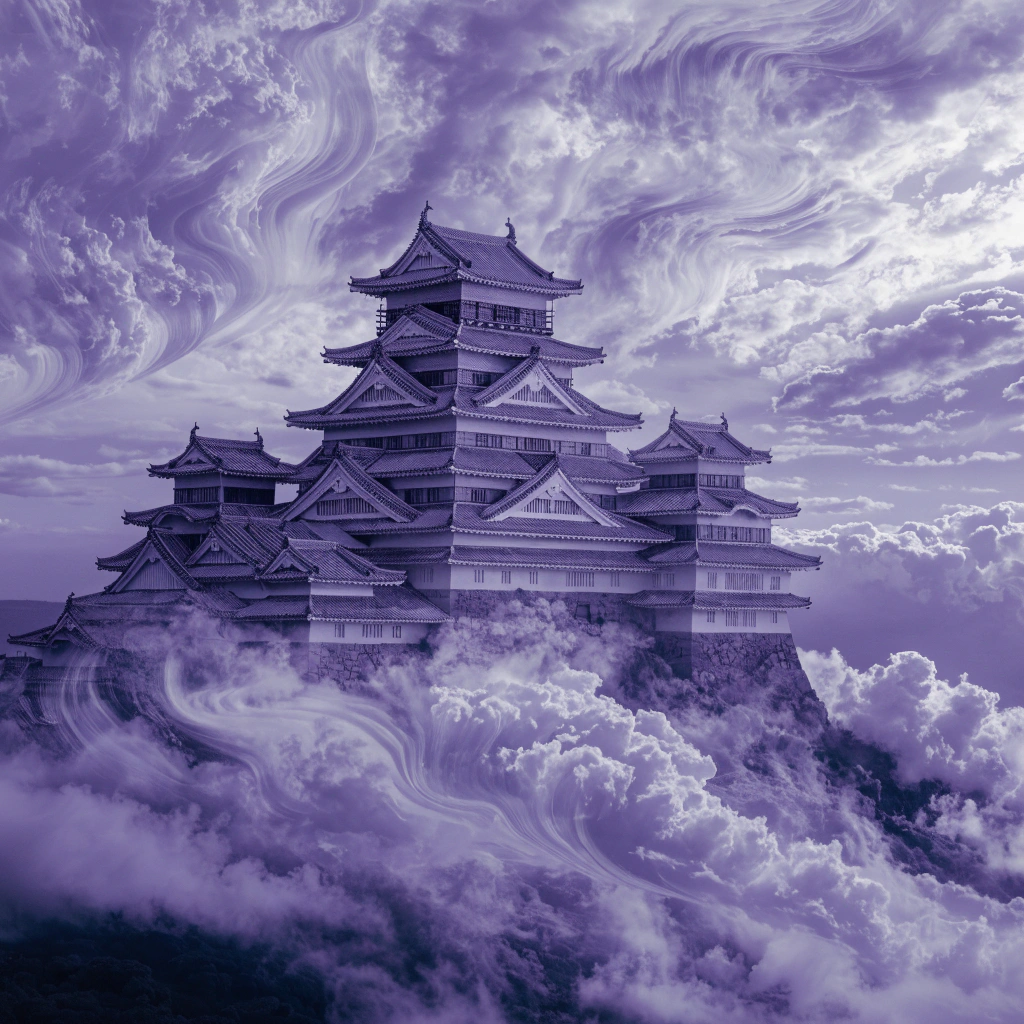
The White Castle of Japan
Himeji Castle is a famous building in Japan. It is in Hyogo. The castle is very old and beautiful. It is white. People call it the "White Heron Castle" because it looks like a bird.
The castle is very big. It has eighty-three buildings. It is strong and safe. There are many stairs inside. You can walk around the rooms and see the history.
Many people visit the castle every year. It is a special place for tourists. You can see the castle from far away. It is an amazing landmark in Japan.
Grammar Spotlight
Pattern: Present Simple 'To Be'
"It is white."
We use 'is' with singular subjects like 'it' or 'the castle'. It is used to describe facts and colors.
Pattern: There is / There are
"There are many stairs inside."
We use 'there are' to say that more than one thing exists. It is followed by a plural noun like 'stairs'.
Test Your Understanding
10 questions · A1 Beginner · 1 free preview
Test what you learned from this article. Answer all questions to earn XP!
Where is Himeji Castle?
Want to finish the quiz?
9 more questions are waiting for you. Sign up free to unlock the full quiz and earn XP!
Sign Up FreeAlready have an account? Sign In
Question Breakdown
Where is Himeji Castle?
Your answer:
Correct answer: Japan
The castle is black.
Your answer:
Correct answer: False
What does 'visit' mean?
Your answer:
Correct answer: To go to see a place
The castle is very _____.
Your answer:
Correct answer: white
The White Heron: Japan's Most Beautiful Castle
Himeji Castle is a very famous place in Japan. It is in Hyogo Prefecture. People call it the 'White Heron Castle' because it is beautiful and white. It looks like a big bird flying in the sky.
This castle is older than many other buildings in Japan. It was built in the 17th century. Most castles in Japan were destroyed by fires or wars, but Himeji Castle stayed safe. Today, there are 83 buildings in the castle area. It is one of the most important historical places in the country.
The castle has many clever walls and gates. These were built to stop enemies in the past. It was difficult to enter the castle because the paths were like a maze. Now, many tourists visit the castle every year. They walk through the gardens and climb the stairs to the top. From there, the view of the city is wonderful. It is a great place to learn about Japanese history.
Grammar Spotlight
Pattern: Comparative Adjectives
"This castle is older than many other buildings in Japan."
We use 'older than' to compare two things. For short adjectives, we add '-er' to the end and use the word 'than' after it.
Pattern: Past Simple (Passive)
"It was built in the 17th century."
We use 'was/were' + the past participle to talk about things that happened to an object in the past. We use this when the person who did the action is not the main focus.
Test Your Understanding
11 questions · A2 Elementary · 1 free preview
Test what you learned from this article. Answer all questions to earn XP!
Why is the castle called the 'White Heron Castle'?
Want to finish the quiz?
10 more questions are waiting for you. Sign up free to unlock the full quiz and earn XP!
Sign Up FreeAlready have an account? Sign In
Question Breakdown
Why is the castle called the 'White Heron Castle'?
Your answer:
Correct answer: Because it is white and looks like a bird
Himeji Castle was destroyed by a fire.
Your answer:
Correct answer: False
What does 'maze' mean?
Your answer:
Correct answer: A difficult path that is easy to get lost in
It looks like a big _____ flying in the sky.
Your answer:
Correct answer: bird
How many buildings are in the castle area today?
Your answer:
Correct answer: 83
The White Heron: Japan's Most Beautiful Castle
Himeji Castle, which is located in the Hyogo Prefecture of Japan, has been admired for centuries as a masterpiece of architecture. It is often called the 'White Heron Castle' because its brilliant white walls look like a bird spreading its wings. This beautiful site is widely considered the finest surviving example of early 17th-century Japanese design.
Many Japanese castles have been destroyed by fire or war, but Himeji Castle remains remarkably intact. It is a complex of 83 buildings that provide an authentic window into the past. Because it was never damaged during modernization, visitors can see exactly how soldiers lived and worked hundreds of years ago. The castle has been protected by the government and was the first site in Japan to be registered by UNESCO.
The castle was built with clever defensive features. The paths that lead to the main tower are like a maze, which was designed to confuse enemies. If an army tried to attack, they would find themselves trapped in narrow passages. Today, these paths are enjoyed by tourists who want to experience the history of the samurai.
Recently, many parts of the castle have been restored to keep them in perfect condition. It has become one of the most popular destinations for people who travel to Japan. Whether you are interested in history or just want to see a beautiful building, Himeji Castle is a place that should not be missed.
Grammar Spotlight
Pattern: Relative Clauses
"Himeji Castle, which is located in the Hyogo Prefecture of Japan, has been admired for centuries."
Relative clauses provide extra information about a noun. Non-defining clauses use 'which' or 'who' and are separated by commas.
Pattern: Passive Voice (Present Perfect)
"Recently, many parts of the castle have been restored to keep them in perfect condition."
The passive voice focuses on the action rather than who did it. Form it using 'have/has been' + past participle.
Test Your Understanding
11 questions · B1 Intermediate · 1 free preview
Test what you learned from this article. Answer all questions to earn XP!
Why is Himeji Castle called the 'White Heron Castle'?
Want to finish the quiz?
10 more questions are waiting for you. Sign up free to unlock the full quiz and earn XP!
Sign Up FreeAlready have an account? Sign In
Question Breakdown
Why is Himeji Castle called the 'White Heron Castle'?
Your answer:
Correct answer: Its white walls look like a bird's wings
Himeji Castle was completely destroyed during modernization.
Your answer:
Correct answer: False
What does 'intact' mean in the context of the article?
Your answer:
Correct answer: Not damaged
The castle was built with clever _____ features to protect it from enemies.
Your answer:
Correct answer: defensive
What was the purpose of the maze-like paths?
Your answer:
Correct answer: To confuse attacking enemies
The White Heron: Architecture and Resilience of Himeji Castle
Himeji Castle, situated in the Hyogo Prefecture, is widely regarded as the pinnacle of early 17th-century Japanese architecture. Known affectionately as the 'White Heron Castle' due to its brilliant white exterior and soaring rooflines, it stands as a testament to the ingenuity of the feudal era. While many contemporary structures across Japan were lost to fire, conflict, or the rapid modernization of the Meiji period, Himeji has remained remarkably intact. This survival offers a rare and authentic window into the defensive strategies and social hierarchies of the past.
The castle's layout is far more than an aesthetic masterpiece; it was meticulously designed as a sophisticated defensive complex. Comprising 83 buildings, the fortress features a labyrinthine path leading to the main keep. This layout was intentionally devised to confuse invading forces, who would find themselves trapped in dead ends while being exposed to projectiles from above. Small openings in the walls allowed defenders to drop stones or fire weapons without revealing their positions. Consequently, the castle was considered practically impregnable, as any frontal assault would have been met with overwhelming force from hidden vantages.
From an architectural perspective, the castle displays an elegant balance between functionality and beauty. The brilliant white plaster, which covers the wooden structures, is actually fire-resistant, providing a vital layer of protection against the incendiary weapons of the time. The soaring wing-like rooflines demonstrate a high level of craftsmanship, illustrating the prowess of the artisans who constructed it. It is this unique combination of defensive utility and visual splendor that led to its designation as one of Japan's first UNESCO World Heritage sites in 1993.
Despite the passage of centuries and the significant threats posed by the Second World War, Himeji Castle has been meticulously preserved. Extensive restoration projects have been undertaken periodically to ensure the structural integrity of the massive timber frames. These efforts involve traditional techniques passed down through generations, ensuring that the castle remains as it appeared four centuries ago. Visitors today can appreciate the authentic atmosphere of the site, reflecting upon how traditional techniques have been maintained against the odds. Ultimately, the castle serves as a powerful symbol of cultural identity, reminding us of a time when architectural prowess was essential for survival and prestige.
Grammar Spotlight
Pattern: Passive Voice (Present Perfect)
"Extensive restoration projects have been undertaken periodically to ensure the structural integrity of the massive timber frames."
The present perfect passive (have/has + been + past participle) is used here to focus on the action and its current result rather than who performed the restoration.
Pattern: Non-defining Relative Clause
"The brilliant white plaster, which covers the wooden structures, is actually fire-resistant..."
This pattern uses 'which' to add extra, non-essential information about a noun. It is separated from the main clause by commas.
Pattern: Participle Phrases for Description
"Comprising 83 buildings, the fortress features a labyrinthine path leading to the main keep."
The present participle phrase ('Comprising...') acts as an adjective to provide background information about the subject (the fortress) in a concise, academic way.
Test Your Understanding
11 questions · B2 Upper Intermediate · 1 free preview
Test what you learned from this article. Answer all questions to earn XP!
Why is Himeji Castle nicknamed the 'White Heron Castle'?
Want to finish the quiz?
10 more questions are waiting for you. Sign up free to unlock the full quiz and earn XP!
Sign Up FreeAlready have an account? Sign In
Question Breakdown
Why is Himeji Castle nicknamed the 'White Heron Castle'?
Your answer:
Correct answer: Because of its white color and wing-like rooflines
Himeji Castle was completely destroyed during the modernization of the Meiji period.
Your answer:
Correct answer: False
What does 'impregnable' mean in the context of the article?
Your answer:
Correct answer: Impossible to capture or break into
The castle's layout was intentionally _____ to confuse invading forces.
Your answer:
Correct answer: devised
What is the practical purpose of the white plaster according to the text?
Your answer:
Correct answer: To provide resistance against fire
The White Heron’s Resilience: An Architectural Analysis of Himeji Castle
Standing as a peerless testament to feudal ingenuity, Himeji Castle dominates the skyline of Hyogo Prefecture with an ethereal grace. Often referred to as Shirasagi-jo, or the White Heron Castle, this architectural marvel transcends mere fortification, embodying the pinnacle of early 17th-century Japanese design. Not only does its aesthetic brilliance captivate the onlooker, but its structural integrity also offers a profound narrative of survival amidst the turbulent vicissitudes of Japanese history. The castle’s silhouette, characterized by its soaring wing-like rooflines, evokes the imagery of a heron in flight, reflecting the sophisticated cultural milieu of the early Edo period, where the martial and the refined were inextricably linked.
It is the meticulously plastered white earthen walls that define the castle’s visual identity, serving both a decorative and a pragmatic function by providing fire resistance. Such was the sophistication of its builders that every curve of the gables and every placement of the 'ishi-otoshi' (stone-drop windows) was calculated for maximum defensive efficacy. Never before had the synthesis of beauty and brutality been so seamlessly integrated into a single edifice. The structural integrity of the 'Daitenshu' (main keep) is a marvel of pre-modern engineering, supported by massive wooden pillars that have withstood centuries of seismic activity.
The labyrinthine approach to the main keep represents a masterclass in psychological warfare. Should an invading force breach the outer perimeters, they would find themselves ensnared in a web of narrow, winding paths designed to disorient and expose. The strategic placement of gates and walls ensured that attackers were perpetually under the scrutiny of defenders, turning the ascent into a gauntlet of attrition. The sheer complexity of these defensive stratagems underscores the precarious nature of power during the Sengoku and early Edo periods.
What makes Himeji Castle truly exceptional, however, is its remarkable state of preservation. While many of its contemporaries succumbed to the ravages of fire, the iconoclasm of the Meiji Restoration, or the aerial bombardments of World War II, Himeji emerged virtually unscathed. This fortuitous survival allows for an authentic exploration of the 83 buildings that comprise the complex. The preservation of such a vast wooden structure requires a continuous commitment to traditional craftsmanship, ensuring that the legacy of the White Heron remains untarnished for future generations. Ultimately, Himeji Castle remains an enduring symbol of Japan's ability to harmonize the ephemeral nature of life with the permanence of architectural stone and timber.
Grammar Spotlight
Pattern: Inversion with negative/restrictive adverbs
"Not only does its aesthetic brilliance captivate the onlooker, but its structural integrity also offers a profound narrative of survival."
When starting a sentence with 'Not only', the auxiliary verb comes before the subject. This is used in formal writing to emphasize the range or intensity of the characteristics being described.
Pattern: Cleft Sentences
"It is the meticulously plastered white earthen walls that define the castle’s visual identity."
Cleft sentences use 'It is/was... that' to focus on a specific piece of information. Here, it emphasizes that the walls, specifically, are the defining feature of the identity.
Pattern: Nominalisation
"The preservation of such a vast wooden structure requires a continuous commitment to traditional craftsmanship."
Nominalisation involves turning verbs (preserve) into nouns (preservation) to create a more formal, academic tone typical of C1 level writing. It allows the writer to focus on concepts rather than actions.
Test Your Understanding
12 questions · C1 Advanced · 1 free preview
Test what you learned from this article. Answer all questions to earn XP!
What dual purpose do the white walls of Himeji Castle serve?
Want to finish the quiz?
11 more questions are waiting for you. Sign up free to unlock the full quiz and earn XP!
Sign Up FreeAlready have an account? Sign In
Question Breakdown
What dual purpose do the white walls of Himeji Castle serve?
Your answer:
Correct answer: Aesthetic decoration and fire resistance
Himeji Castle was largely reconstructed with concrete after World War II.
Your answer:
Correct answer: False
Which word describes a situation that is 'dangerously likely to fall or collapse'?
Your answer:
Correct answer: Precarious
The castle is a peerless testament to feudal _____, dominating the skyline of Hyogo.
Your answer:
Correct answer: ingenuity
How does the author describe the 'labyrinthine approach' to the keep?
Your answer:
Correct answer: A masterclass in psychological warfare
The castle's nickname, 'Shirasagi-jo', translates to 'The White Heron Castle'.
Your answer:
Correct answer: True
The Architectural Lexicon of Himeji: A Synthesis of Form and Fortification
To behold Himeji Castle is to witness a profound synthesis of martial pragmatism and aesthetic sublimity. Often referred to as Shirasagi-jo, or the White Heron Castle, this sprawling complex in Hyogo Prefecture serves as a quintessential exemplar of early 17th-century Japanese feudal architecture. Were one to scrutinize the interplay between its stark white plaster walls and its soaring, wing-like rooflines, one might perceive a deliberate attempt to reconcile the brutal necessities of defense with a transcendental beauty that belies its bellicose purpose. Unlike many of its contemporaries, which succumbed to the ravages of internecine warfare or the modernization of the Meiji era, Himeji remains remarkably intact, a palimpsest of Japan's transition from a collection of warring states to a unified, centralized bureaucracy.
The structural integrity of the castle is not merely a matter of fortuitous survival; it is the result of ingenious engineering designed to thwart the most sophisticated sieges of the era. The labyrinthine layout of the grounds, characterized by winding paths and cul-de-sacs, was engineered to disorient invaders, funneling them into kill zones where they would be vulnerable to projectiles from the donjon’s loopholes. This strategic complexity highlights a fundamental paradox: the castle is an impregnable bastion that nonetheless exudes an air of weightless elegance. One might posit that the white plaster—applied primarily for fireproofing—serves a dual function, transforming a heavy, defensive monolith into a visual metaphor for the evanescent heron.
Furthermore, the castle’s preservation through the 19th and 20th centuries provides a compelling case study in cultural heritage. During the Meiji Restoration, when many castles were dismantled as anachronistic relics of the Shogunate, Himeji was spared due to the intervention of military officers who recognized its intrinsic value. Even the firebombing of Himeji city during World War II, which reduced much of the surrounding urban fabric to ash, miraculously left the castle unscathed—a singular event often attributed to a combination of meteorological luck and the castle’s own formidable presence.
In analyzing the site, scholars often focus on the 'Daitenshu,' or the great keep, which stands as the apex of the complex. The keep is not a single entity but a sophisticated arrangement of interconnected towers, each serving a specific stratagem of defense and visibility. The use of massive wooden pillars, some of which are single trunks of cypress, underscores the immense resources and labor mobilized by the Ikeda clan to assert their dominance. It is within these timber frames that the history of the Edo period is most tangibly felt.
Ultimately, Himeji Castle transcends its role as a military fortification. It has become a symbol of national identity and a touchstone for architectural discourse. It challenges the observer to consider how power is articulated through space and how beauty can be weaponized as a psychological deterrent. As a UNESCO World Heritage site, it continues to invite rigorous academic inquiry, demanding that we look beyond the surface of its white walls to understand the complex social and political hierarchies that birthed such a magnificent anachronism. Whether viewed as a relic of a bygone era or a living monument to human ingenuity, Himeji remains an indispensable chapter in the global history of architecture.
Grammar Spotlight
Pattern: Subjunctive Inversion for Hypothetical Conditionals
"Were one to scrutinize the interplay between its stark white plaster walls and its soaring, wing-like rooflines, one might perceive a deliberate attempt..."
In formal English, 'were' can be placed at the beginning of a sentence to replace 'if'. This inversion creates a more academic and hypothetical tone, typical of C2 writing.
Pattern: Negative Inversion for Emphasis
"Not only does the castle represent a pinnacle of military engineering, but it also embodies..."
When a sentence starts with a negative or restrictive phrase like 'Not only', the subject and auxiliary verb are inverted. This is used to add rhetorical weight and sophistication to a statement.
Pattern: The Use of Academic Hedging
"One might posit that the white plaster—applied primarily for fireproofing—serves a dual function."
Hedging involves using verbs like 'posit', 'suggest', or 'argue' alongside modals like 'might' or 'could'. It is essential in scholarly writing to avoid over-generalization and to acknowledge alternative interpretations.
Test Your Understanding
12 questions · C2 Mastery · 1 free preview
Test what you learned from this article. Answer all questions to earn XP!
What is the primary reason the article suggests for the castle's 'White Heron' nickname?
Want to finish the quiz?
11 more questions are waiting for you. Sign up free to unlock the full quiz and earn XP!
Sign Up FreeAlready have an account? Sign In
Question Breakdown
What is the primary reason the article suggests for the castle's 'White Heron' nickname?
Your answer:
Correct answer: The visual effect of its white walls and wing-like rooflines.
The article states that Himeji Castle was primarily spared during the Meiji Restoration due to its strategic military importance for modern warfare.
Your answer:
Correct answer: False
What does 'palimpsest' mean in the context of the article?
Your answer:
Correct answer: Something that bears traces of its earlier forms despite changes.
The labyrinthine layout was specifically designed to _____ invaders into kill zones.
Your answer:
Correct answer: funnel
According to the text, what paradoxical function did the white plaster serve?
Your answer:
Correct answer: It provided fireproofing while creating an aesthetic of weightlessness.
Himeji Castle survived World War II despite the surrounding city being heavily bombed.
Your answer:
Correct answer: True
