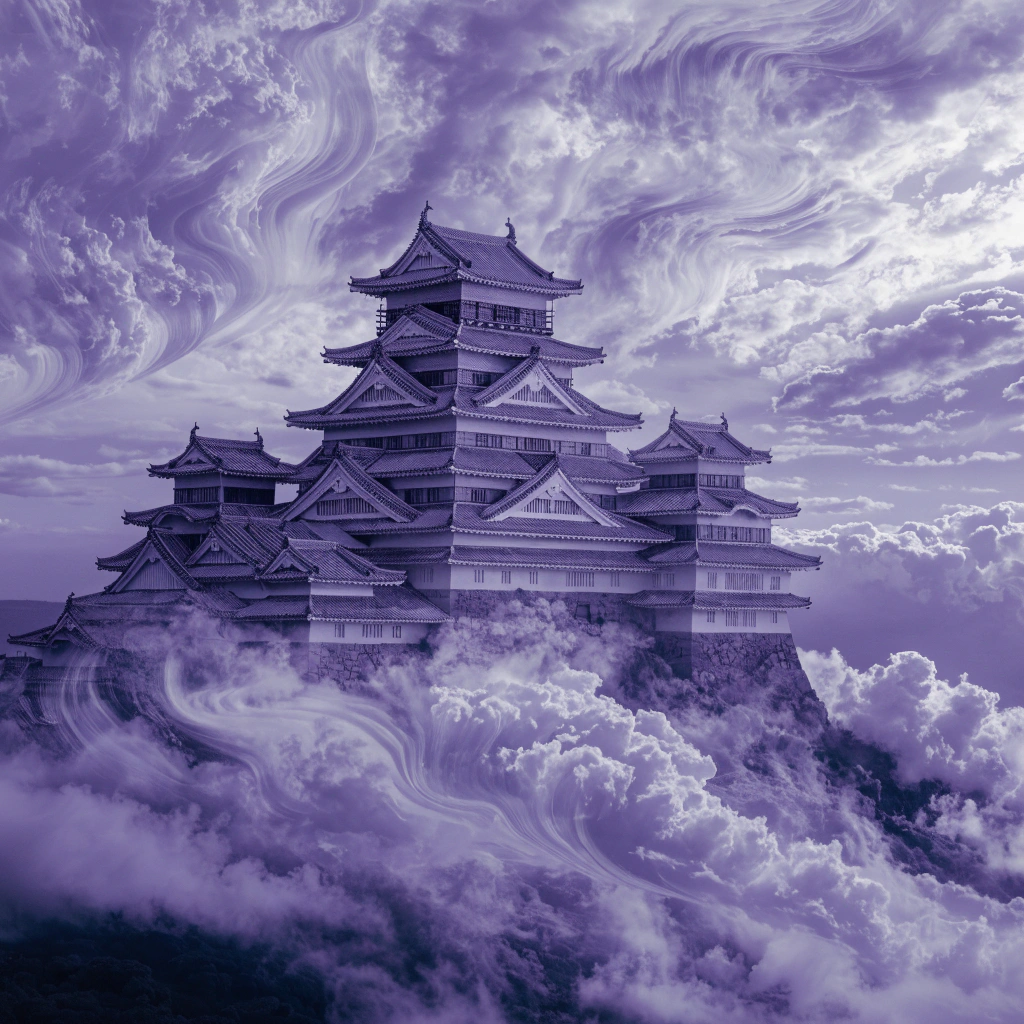
The White Castle of Japan
Himeji Castle is a famous building in Japan. It is in Hyogo. The castle is very old and beautiful. It is white. People call it the "White Heron Castle" because it looks like a bird.
The castle is very big. It has eighty-three buildings. It is strong and safe. There are many stairs inside. You can walk around the rooms and see the history.
Many people visit the castle every year. It is a special place for tourists. You can see the castle from far away. It is an amazing landmark in Japan.
Gramática destacada
Patrón: Present Simple 'To Be'
"It is white."
We use 'is' with singular subjects like 'it' or 'the castle'. It is used to describe facts and colors.
Patrón: There is / There are
"There are many stairs inside."
We use 'there are' to say that more than one thing exists. It is followed by a plural noun like 'stairs'.
Pon a prueba tu comprensión
10 preguntas · A1 Principiante · 1 vista previa gratis
Pon a prueba lo que aprendiste en este artículo. ¡Responde todas las preguntas para ganar XP!
Where is Himeji Castle?
¿Quieres terminar el quiz?
9 preguntas más te esperan. ¡Regístrate gratis para desbloquear el quiz completo y ganar XP!
Regístrate gratis¿Ya tienes cuenta? Acceder
Desglose de preguntas
Where is Himeji Castle?
Tu respuesta:
Respuesta correcta: Japan
The castle is black.
Tu respuesta:
Respuesta correcta: Falso
What does 'visit' mean?
Tu respuesta:
Respuesta correcta: To go to see a place
The castle is very _____.
Tu respuesta:
Respuesta correcta: white
The White Heron: Japan's Most Beautiful Castle
Himeji Castle is a very famous place in Japan. It is in Hyogo Prefecture. People call it the 'White Heron Castle' because it is beautiful and white. It looks like a big bird flying in the sky.
This castle is older than many other buildings in Japan. It was built in the 17th century. Most castles in Japan were destroyed by fires or wars, but Himeji Castle stayed safe. Today, there are 83 buildings in the castle area. It is one of the most important historical places in the country.
The castle has many clever walls and gates. These were built to stop enemies in the past. It was difficult to enter the castle because the paths were like a maze. Now, many tourists visit the castle every year. They walk through the gardens and climb the stairs to the top. From there, the view of the city is wonderful. It is a great place to learn about Japanese history.
Gramática destacada
Patrón: Comparative Adjectives
"This castle is older than many other buildings in Japan."
We use 'older than' to compare two things. For short adjectives, we add '-er' to the end and use the word 'than' after it.
Patrón: Past Simple (Passive)
"It was built in the 17th century."
We use 'was/were' + the past participle to talk about things that happened to an object in the past. We use this when the person who did the action is not the main focus.
Pon a prueba tu comprensión
11 preguntas · A2 Básico · 1 vista previa gratis
Pon a prueba lo que aprendiste en este artículo. ¡Responde todas las preguntas para ganar XP!
Why is the castle called the 'White Heron Castle'?
¿Quieres terminar el quiz?
10 preguntas más te esperan. ¡Regístrate gratis para desbloquear el quiz completo y ganar XP!
Regístrate gratis¿Ya tienes cuenta? Acceder
Desglose de preguntas
Why is the castle called the 'White Heron Castle'?
Tu respuesta:
Respuesta correcta: Because it is white and looks like a bird
Himeji Castle was destroyed by a fire.
Tu respuesta:
Respuesta correcta: Falso
What does 'maze' mean?
Tu respuesta:
Respuesta correcta: A difficult path that is easy to get lost in
It looks like a big _____ flying in the sky.
Tu respuesta:
Respuesta correcta: bird
How many buildings are in the castle area today?
Tu respuesta:
Respuesta correcta: 83
The White Heron: Japan's Most Beautiful Castle
Himeji Castle, which is located in the Hyogo Prefecture of Japan, has been admired for centuries as a masterpiece of architecture. It is often called the 'White Heron Castle' because its brilliant white walls look like a bird spreading its wings. This beautiful site is widely considered the finest surviving example of early 17th-century Japanese design.
Many Japanese castles have been destroyed by fire or war, but Himeji Castle remains remarkably intact. It is a complex of 83 buildings that provide an authentic window into the past. Because it was never damaged during modernization, visitors can see exactly how soldiers lived and worked hundreds of years ago. The castle has been protected by the government and was the first site in Japan to be registered by UNESCO.
The castle was built with clever defensive features. The paths that lead to the main tower are like a maze, which was designed to confuse enemies. If an army tried to attack, they would find themselves trapped in narrow passages. Today, these paths are enjoyed by tourists who want to experience the history of the samurai.
Recently, many parts of the castle have been restored to keep them in perfect condition. It has become one of the most popular destinations for people who travel to Japan. Whether you are interested in history or just want to see a beautiful building, Himeji Castle is a place that should not be missed.
Gramática destacada
Patrón: Relative Clauses
"Himeji Castle, which is located in the Hyogo Prefecture of Japan, has been admired for centuries."
Relative clauses provide extra information about a noun. Non-defining clauses use 'which' or 'who' and are separated by commas.
Patrón: Passive Voice (Present Perfect)
"Recently, many parts of the castle have been restored to keep them in perfect condition."
The passive voice focuses on the action rather than who did it. Form it using 'have/has been' + past participle.
Pon a prueba tu comprensión
11 preguntas · B1 Intermedio · 1 vista previa gratis
Pon a prueba lo que aprendiste en este artículo. ¡Responde todas las preguntas para ganar XP!
Why is Himeji Castle called the 'White Heron Castle'?
¿Quieres terminar el quiz?
10 preguntas más te esperan. ¡Regístrate gratis para desbloquear el quiz completo y ganar XP!
Regístrate gratis¿Ya tienes cuenta? Acceder
Desglose de preguntas
Why is Himeji Castle called the 'White Heron Castle'?
Tu respuesta:
Respuesta correcta: Its white walls look like a bird's wings
Himeji Castle was completely destroyed during modernization.
Tu respuesta:
Respuesta correcta: Falso
What does 'intact' mean in the context of the article?
Tu respuesta:
Respuesta correcta: Not damaged
The castle was built with clever _____ features to protect it from enemies.
Tu respuesta:
Respuesta correcta: defensive
What was the purpose of the maze-like paths?
Tu respuesta:
Respuesta correcta: To confuse attacking enemies
The White Heron: Architecture and Resilience of Himeji Castle
Himeji Castle, situated in the Hyogo Prefecture, is widely regarded as the pinnacle of early 17th-century Japanese architecture. Known affectionately as the 'White Heron Castle' due to its brilliant white exterior and soaring rooflines, it stands as a testament to the ingenuity of the feudal era. While many contemporary structures across Japan were lost to fire, conflict, or the rapid modernization of the Meiji period, Himeji has remained remarkably intact. This survival offers a rare and authentic window into the defensive strategies and social hierarchies of the past.
The castle's layout is far more than an aesthetic masterpiece; it was meticulously designed as a sophisticated defensive complex. Comprising 83 buildings, the fortress features a labyrinthine path leading to the main keep. This layout was intentionally devised to confuse invading forces, who would find themselves trapped in dead ends while being exposed to projectiles from above. Small openings in the walls allowed defenders to drop stones or fire weapons without revealing their positions. Consequently, the castle was considered practically impregnable, as any frontal assault would have been met with overwhelming force from hidden vantages.
From an architectural perspective, the castle displays an elegant balance between functionality and beauty. The brilliant white plaster, which covers the wooden structures, is actually fire-resistant, providing a vital layer of protection against the incendiary weapons of the time. The soaring wing-like rooflines demonstrate a high level of craftsmanship, illustrating the prowess of the artisans who constructed it. It is this unique combination of defensive utility and visual splendor that led to its designation as one of Japan's first UNESCO World Heritage sites in 1993.
Despite the passage of centuries and the significant threats posed by the Second World War, Himeji Castle has been meticulously preserved. Extensive restoration projects have been undertaken periodically to ensure the structural integrity of the massive timber frames. These efforts involve traditional techniques passed down through generations, ensuring that the castle remains as it appeared four centuries ago. Visitors today can appreciate the authentic atmosphere of the site, reflecting upon how traditional techniques have been maintained against the odds. Ultimately, the castle serves as a powerful symbol of cultural identity, reminding us of a time when architectural prowess was essential for survival and prestige.
Gramática destacada
Patrón: Passive Voice (Present Perfect)
"Extensive restoration projects have been undertaken periodically to ensure the structural integrity of the massive timber frames."
The present perfect passive (have/has + been + past participle) is used here to focus on the action and its current result rather than who performed the restoration.
Patrón: Non-defining Relative Clause
"The brilliant white plaster, which covers the wooden structures, is actually fire-resistant..."
This pattern uses 'which' to add extra, non-essential information about a noun. It is separated from the main clause by commas.
Patrón: Participle Phrases for Description
"Comprising 83 buildings, the fortress features a labyrinthine path leading to the main keep."
The present participle phrase ('Comprising...') acts as an adjective to provide background information about the subject (the fortress) in a concise, academic way.
Pon a prueba tu comprensión
11 preguntas · B2 Intermedio alto · 1 vista previa gratis
Pon a prueba lo que aprendiste en este artículo. ¡Responde todas las preguntas para ganar XP!
Why is Himeji Castle nicknamed the 'White Heron Castle'?
¿Quieres terminar el quiz?
10 preguntas más te esperan. ¡Regístrate gratis para desbloquear el quiz completo y ganar XP!
Regístrate gratis¿Ya tienes cuenta? Acceder
Desglose de preguntas
Why is Himeji Castle nicknamed the 'White Heron Castle'?
Tu respuesta:
Respuesta correcta: Because of its white color and wing-like rooflines
Himeji Castle was completely destroyed during the modernization of the Meiji period.
Tu respuesta:
Respuesta correcta: Falso
What does 'impregnable' mean in the context of the article?
Tu respuesta:
Respuesta correcta: Impossible to capture or break into
The castle's layout was intentionally _____ to confuse invading forces.
Tu respuesta:
Respuesta correcta: devised
What is the practical purpose of the white plaster according to the text?
Tu respuesta:
Respuesta correcta: To provide resistance against fire
El Castillo de Himeji: El baluarte inmaculado de la arquitectura feudal japonesa
Situado majestuosamente en la prefectura de Hyogo, el Castillo de Himeji no es meramente una reliquia del pasado, sino un testimonio fehaciente de la maestría técnica y estética del periodo Edo. Conocido popularmente como 'Shirasagi-jo' o el Castillo de la Garza Blanca, su silueta se alza con una elegancia que desafía la naturaleza intrínsecamente bélica de su origen. Es precisamente su impecable blancura, lograda mediante un sofisticado recubrimiento de yeso blanco, lo que le confiere esa apariencia etérea de ave en pleno vuelo. Sin embargo, tras esta fachada de serenidad se esconde un entramado defensivo de una complejidad sin parangón en el archipiélago nipón.
Bajo la égida de la arquitectura militar del siglo XVII, Himeji fue concebido como una fortaleza inexpugnable. A diferencia de otros baluartes que sucumbieron ante los incendios o los estragos de la modernización durante la Restauración Meiji, este complejo ha logrado preservar 83 edificios originales. La disposición del castillo no responde a un capricho ornamental, sino a una lógica de asedio meticulosa. Los senderos que conducen a la torre principal o 'tenshu' están diseñados como un laberinto en espiral, plagado de callejones sin salida y puertas angostas, cuya finalidad era desorientar y emboscar a las tropas invasoras. No solo destaca la ingeniería de sus murallas, sino también la sutil integración de las aspilleras, desde las cuales los defensores podían hostigar al enemigo con flechas o armas de fuego sin quedar expuestos.
Resulta imperativo analizar la pervivencia del castillo a través de los avatares históricos. Ni los bombardeos de la Segunda Guerra Mundial ni los terremotos recurrentes de la región han logrado mellar su estructura de madera. Esta resiliencia se debe, en gran medida, a la flexibilidad de su armazón y a las constantes labores de restauración que han respetado escrupulosamente las técnicas tradicionales. La reciente Gran Restauración de la Era Heisei ha devuelto al castillo su esplendor original, reafirmando su estatus como el primer sitio de Japón en ser declarado Patrimonio de la Humanidad por la UNESCO.
En última instancia, el Castillo de Himeji trasciende su función original para convertirse en un símbolo de la identidad cultural japonesa. Representa la armonía entre la funcionalidad militar y la belleza plástica, un equilibrio donde la robustez de la piedra y la calidez de la madera convergen. Su contemplación invita a una reflexión profunda sobre la transitoriedad y la permanencia, recordándonos que incluso en los periodos de mayor conflicto, el ser humano es capaz de engendrar obras de una belleza imperecedera. Huelga decir que Himeji sigue siendo el espejo en el que se mira la historia de Japón, un vestigio fidedigno de una era de samuráis y shogunes que se niega a desvanecerse en el olvido.
Gramática destacada
Patrón: Estructuras enfáticas (Cleft sentences)
"Es precisamente su impecable blancura [...] lo que le confiere esa apariencia etérea."
Se utiliza el verbo 'ser' junto con un pronombre relativo ('lo que') para focalizar la atención en un elemento específico de la oración, resaltando su importancia.
Patrón: Inversión del sujeto
"No solo destaca la ingeniería de sus murallas, sino también la sutil integración de las aspilleras."
Al utilizar estructuras correlativas negativas como 'No solo...', el sujeto suele colocarse después del verbo para enfatizar la acción y elevar el registro literario.
Patrón: Nominalización para cohesión textual
"Su contemplación invita a una reflexión profunda sobre la transitoriedad y la permanencia."
Uso de sustantivos abstractos derivados de verbos (contemplación, transitoriedad) para resumir ideas complejas y dotar al texto de un carácter más analítico y académico.
Pon a prueba tu comprensión
12 preguntas · C1 Avanzado · 1 vista previa gratis
Pon a prueba lo que aprendiste en este artículo. ¡Responde todas las preguntas para ganar XP!
¿Por qué se conoce al castillo como 'Shirasagi-jo'?
¿Quieres terminar el quiz?
11 preguntas más te esperan. ¡Regístrate gratis para desbloquear el quiz completo y ganar XP!
Regístrate gratis¿Ya tienes cuenta? Acceder
Desglose de preguntas
¿Por qué se conoce al castillo como 'Shirasagi-jo'?
Tu respuesta:
Respuesta correcta: Por su color blanco y su silueta que recuerda a una garza.
El diseño del castillo priorizaba la estética ornamental sobre la funcionalidad defensiva.
Tu respuesta:
Respuesta correcta: Falso
¿Qué significa que una fortaleza sea 'inexpugnable'?
Tu respuesta:
Respuesta correcta: Que es imposible de conquistar por la fuerza.
El diseño laberíntico de los senderos buscaba _____ a los posibles invasores.
Tu respuesta:
Respuesta correcta: desorientar
¿Qué factor contribuyó significativamente a la resiliencia estructural del castillo?
Tu respuesta:
Respuesta correcta: La flexibilidad de su armazón de madera frente a sismos.
Himeji fue el primer sitio japonés en ser reconocido por la UNESCO como Patrimonio de la Humanidad.
Tu respuesta:
Respuesta correcta: Verdadero
The Architectural Lexicon of Himeji: A Synthesis of Form and Fortification
To behold Himeji Castle is to witness a profound synthesis of martial pragmatism and aesthetic sublimity. Often referred to as Shirasagi-jo, or the White Heron Castle, this sprawling complex in Hyogo Prefecture serves as a quintessential exemplar of early 17th-century Japanese feudal architecture. Were one to scrutinize the interplay between its stark white plaster walls and its soaring, wing-like rooflines, one might perceive a deliberate attempt to reconcile the brutal necessities of defense with a transcendental beauty that belies its bellicose purpose. Unlike many of its contemporaries, which succumbed to the ravages of internecine warfare or the modernization of the Meiji era, Himeji remains remarkably intact, a palimpsest of Japan's transition from a collection of warring states to a unified, centralized bureaucracy.
The structural integrity of the castle is not merely a matter of fortuitous survival; it is the result of ingenious engineering designed to thwart the most sophisticated sieges of the era. The labyrinthine layout of the grounds, characterized by winding paths and cul-de-sacs, was engineered to disorient invaders, funneling them into kill zones where they would be vulnerable to projectiles from the donjon’s loopholes. This strategic complexity highlights a fundamental paradox: the castle is an impregnable bastion that nonetheless exudes an air of weightless elegance. One might posit that the white plaster—applied primarily for fireproofing—serves a dual function, transforming a heavy, defensive monolith into a visual metaphor for the evanescent heron.
Furthermore, the castle’s preservation through the 19th and 20th centuries provides a compelling case study in cultural heritage. During the Meiji Restoration, when many castles were dismantled as anachronistic relics of the Shogunate, Himeji was spared due to the intervention of military officers who recognized its intrinsic value. Even the firebombing of Himeji city during World War II, which reduced much of the surrounding urban fabric to ash, miraculously left the castle unscathed—a singular event often attributed to a combination of meteorological luck and the castle’s own formidable presence.
In analyzing the site, scholars often focus on the 'Daitenshu,' or the great keep, which stands as the apex of the complex. The keep is not a single entity but a sophisticated arrangement of interconnected towers, each serving a specific stratagem of defense and visibility. The use of massive wooden pillars, some of which are single trunks of cypress, underscores the immense resources and labor mobilized by the Ikeda clan to assert their dominance. It is within these timber frames that the history of the Edo period is most tangibly felt.
Ultimately, Himeji Castle transcends its role as a military fortification. It has become a symbol of national identity and a touchstone for architectural discourse. It challenges the observer to consider how power is articulated through space and how beauty can be weaponized as a psychological deterrent. As a UNESCO World Heritage site, it continues to invite rigorous academic inquiry, demanding that we look beyond the surface of its white walls to understand the complex social and political hierarchies that birthed such a magnificent anachronism. Whether viewed as a relic of a bygone era or a living monument to human ingenuity, Himeji remains an indispensable chapter in the global history of architecture.
Gramática destacada
Patrón: Subjunctive Inversion for Hypothetical Conditionals
"Were one to scrutinize the interplay between its stark white plaster walls and its soaring, wing-like rooflines, one might perceive a deliberate attempt..."
In formal English, 'were' can be placed at the beginning of a sentence to replace 'if'. This inversion creates a more academic and hypothetical tone, typical of C2 writing.
Patrón: Negative Inversion for Emphasis
"Not only does the castle represent a pinnacle of military engineering, but it also embodies..."
When a sentence starts with a negative or restrictive phrase like 'Not only', the subject and auxiliary verb are inverted. This is used to add rhetorical weight and sophistication to a statement.
Patrón: The Use of Academic Hedging
"One might posit that the white plaster—applied primarily for fireproofing—serves a dual function."
Hedging involves using verbs like 'posit', 'suggest', or 'argue' alongside modals like 'might' or 'could'. It is essential in scholarly writing to avoid over-generalization and to acknowledge alternative interpretations.
Pon a prueba tu comprensión
12 preguntas · C2 Dominio · 1 vista previa gratis
Pon a prueba lo que aprendiste en este artículo. ¡Responde todas las preguntas para ganar XP!
What is the primary reason the article suggests for the castle's 'White Heron' nickname?
¿Quieres terminar el quiz?
11 preguntas más te esperan. ¡Regístrate gratis para desbloquear el quiz completo y ganar XP!
Regístrate gratis¿Ya tienes cuenta? Acceder
Desglose de preguntas
What is the primary reason the article suggests for the castle's 'White Heron' nickname?
Tu respuesta:
Respuesta correcta: The visual effect of its white walls and wing-like rooflines.
The article states that Himeji Castle was primarily spared during the Meiji Restoration due to its strategic military importance for modern warfare.
Tu respuesta:
Respuesta correcta: Falso
What does 'palimpsest' mean in the context of the article?
Tu respuesta:
Respuesta correcta: Something that bears traces of its earlier forms despite changes.
The labyrinthine layout was specifically designed to _____ invaders into kill zones.
Tu respuesta:
Respuesta correcta: funnel
According to the text, what paradoxical function did the white plaster serve?
Tu respuesta:
Respuesta correcta: It provided fireproofing while creating an aesthetic of weightlessness.
Himeji Castle survived World War II despite the surrounding city being heavily bombed.
Tu respuesta:
Respuesta correcta: Verdadero

