A Beautiful Village in Japan
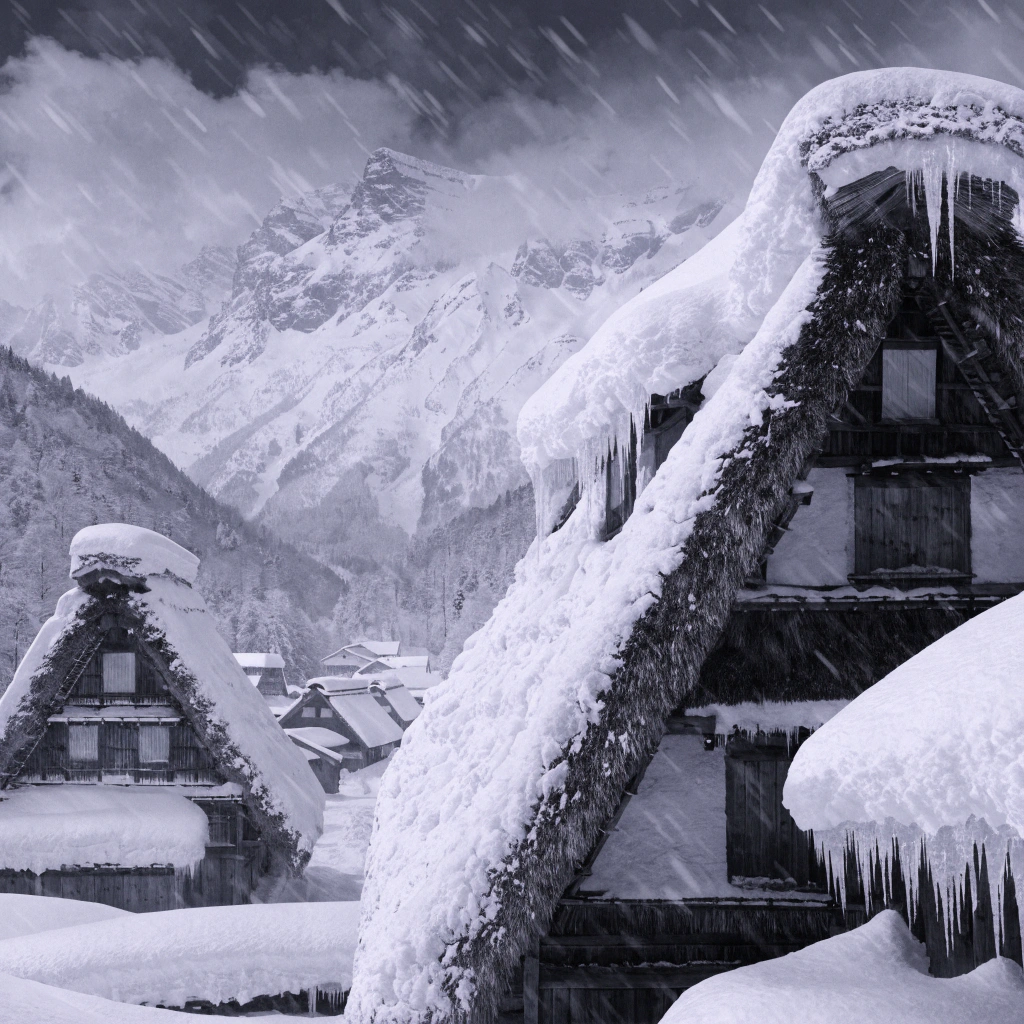
Shirakawa-go is a very small village in Japan. It is high in the mountains. This place is famous because it is very old. Many people visit it every year. The houses in the village are very special. They have big, tall roofs made of grass. These roofs look like hands in prayer. They are strong for the heavy snow in winter. Some houses are more than 250 years old. You can walk inside the farmhouses. The village is quiet and peaceful. It is a beautiful place to see.
Gramática destacada
Patrón: Present Simple of 'To Be'
"Shirakawa-go is a very small village in Japan."
We use 'is' for singular subjects to describe facts or states. It connects the subject to a description.
Patrón: Adjectives Before Nouns
"It is a beautiful place to see."
In English, we put the describing word (adjective) before the thing (noun). For example, 'beautiful' comes before 'place'.
Pon a prueba tu comprensión
10 preguntas · A1 Principiante · 1 vista previa gratis
Pon a prueba lo que aprendiste en este artículo. ¡Responde todas las preguntas para ganar XP!
Where is the village of Shirakawa-go?
¿Quieres terminar el quiz?
9 preguntas más te esperan. ¡Regístrate gratis para desbloquear el quiz completo y ganar XP!
Regístrate gratis¿Ya tienes cuenta? Acceder
Desglose de preguntas
Where is the village of Shirakawa-go?
Tu respuesta:
Respuesta correcta: In Japan
The houses in the village are new.
Tu respuesta:
Respuesta correcta: Falso
What does 'peaceful' mean?
Tu respuesta:
Respuesta correcta: Quiet and calm
The village is high in the _____.
Tu respuesta:
Respuesta correcta: mountains
Shirakawa-go: Un Pueblo Especial en Japón
Shirakawa-go es un pueblo muy bonito en Japón. Está en la región de Gifu, en una zona de montañas. Muchas personas visitan Shirakawa-go cada año porque es un lugar único. Es famoso por sus casas antiguas, que tienen un estilo especial llamado 'gassho-zukuri'.
Estas casas son muy interesantes. Algunas tienen más de 250 años. Sus techos son muy grandes y empinados, y parecen dos manos juntas, como si estuvieran rezando. Este diseño es muy útil porque en esta región nieva mucho en invierno. Los techos empinados ayudan a que la nieve no se acumule y no dañe las casas.
En 1995, Shirakawa-go fue declarado Patrimonio de la Humanidad por la UNESCO. Esto significa que es un sitio muy importante para la cultura y la historia del mundo. El pueblo es más que un lugar para vivir; es un museo vivo de la arquitectura tradicional japonesa.
Gramática destacada
Patrón: Pretérito Indefinido (Pasado Simple)
"En 1995, Shirakawa-go fue declarado Patrimonio de la Humanidad por la UNESCO."
Usamos el pretérito indefinido para hablar de acciones o eventos que empezaron y terminaron en un momento específico del pasado. Aquí, 'fue declarado' nos dice cuándo Shirakawa-go recibió este título.
Patrón: Comparativos (más... que)
"El pueblo es más que un lugar para vivir; es un museo vivo de la arquitectura tradicional japonesa."
Usamos 'más + adjetivo/sustantivo + que' para comparar dos cosas y decir que una tiene una cualidad en mayor grado que la otra. En este caso, el pueblo es 'más' que un simple lugar para vivir.
Pon a prueba tu comprensión
11 preguntas · A2 Básico · 1 vista previa gratis
Pon a prueba lo que aprendiste en este artículo. ¡Responde todas las preguntas para ganar XP!
¿Dónde está el pueblo de Shirakawa-go?
¿Quieres terminar el quiz?
10 preguntas más te esperan. ¡Regístrate gratis para desbloquear el quiz completo y ganar XP!
Regístrate gratis¿Ya tienes cuenta? Acceder
Desglose de preguntas
¿Dónde está el pueblo de Shirakawa-go?
Tu respuesta:
Respuesta correcta: En Japón
Las casas de Shirakawa-go tienen techos planos.
Tu respuesta:
Respuesta correcta: Falso
¿Qué significa 'pueblo'?
Tu respuesta:
Respuesta correcta: Un lugar pequeño donde vive gente
En Shirakawa-go, los _______ son muy grandes y empinados.
Tu respuesta:
Respuesta correcta: techos
¿Por qué los techos de las casas son empinados?
Tu respuesta:
Respuesta correcta: Para que la nieve no se acumule
Shirakawa-go: The Village of Prayer Hands
Deep in the mountains of Gifu Prefecture, you can find a village that looks like a scene from a fairy tale. This place is called Shirakawa-go, and it has been a UNESCO World Heritage site since 1995. It is famous for its traditional farmhouses, which are called 'gassho-zukuri'.
The name 'gassho-zukuri' means 'constructed like hands in prayer'. This refers to the steep, triangular roofs that are designed to withstand the heavy snow in this region. During the winter, the village is covered in deep, white snow, and the houses must be very strong. These roofs are made from straw, and they are built without using any nails. Instead, the villagers use ropes to hold the wooden beams together.
For hundreds of years, the people of Shirakawa-go have lived in harmony with nature. Because the village was isolated for a long time, the locals developed a unique culture. They have maintained these beautiful buildings through a tradition called 'yui'. This is a system where the whole community works together to replace the thatched roofs. It is a difficult job that requires many people to help.
Today, some of these farmhouses have been turned into museums or guest houses. Visitors who stay overnight can experience the traditional way of life. They can sit by the open fire and eat local food that has been prepared by the hosts. Shirakawa-go is a place where history has been preserved perfectly, offering a peaceful escape from the busy modern world.
Gramática destacada
Patrón: Passive Voice
"This place is called Shirakawa-go, and it has been a UNESCO World Heritage site since 1995."
The passive voice is used here because the focus is on the village itself, not on who named it or who designated it. It is formed using the verb 'to be' and the past participle.
Patrón: Relative Clauses
"It is famous for its traditional farmhouses, which are called 'gassho-zukuri'."
The relative pronoun 'which' introduces extra information about the farmhouses. This helps connect ideas into longer, more complex sentences typical of B1 English.
Pon a prueba tu comprensión
11 preguntas · B1 Intermedio · 1 vista previa gratis
Pon a prueba lo que aprendiste en este artículo. ¡Responde todas las preguntas para ganar XP!
Why are the roofs in Shirakawa-go built with a steep, triangular shape?
¿Quieres terminar el quiz?
10 preguntas más te esperan. ¡Regístrate gratis para desbloquear el quiz completo y ganar XP!
Regístrate gratis¿Ya tienes cuenta? Acceder
Desglose de preguntas
Why are the roofs in Shirakawa-go built with a steep, triangular shape?
Tu respuesta:
Respuesta correcta: To withstand the heavy snow in the region
The villagers use metal nails to hold the wooden beams of the houses together.
Tu respuesta:
Respuesta correcta: Falso
What does 'isolated' mean in the context of the article?
Tu respuesta:
Respuesta correcta: Far away from other places and people
Shirakawa-go has been a UNESCO World Heritage _____ since 1995.
Tu respuesta:
Respuesta correcta: site
What is 'yui'?
Tu respuesta:
Respuesta correcta: A system where the community works together
The Architectural Resilience of Shirakawa-go: A Living Testament to Tradition
Tucked away in the mountainous Shogawa River valley of Gifu Prefecture, Shirakawa-go represents a remarkable fusion of human ingenuity and natural adaptation. This remote village, which was once largely inaccessible during the winter months, is world-renowned for its unique 'gassho-zukuri' farmhouses. These structures, some of which have stood for over two centuries, serve as a poignant reminder of a traditional lifestyle that has mostly vanished from modern Japan. Despite the challenges of the 21st century, the village remains a UNESCO World Heritage site, preserved as a symbol of cultural endurance.
The defining feature of these dwellings is their steep, thatched roofs, which are said to resemble hands pressed together in prayer. This design is not merely aesthetic; rather, it is a practical necessity born out of the region’s harsh climate. Given that the area experiences some of the heaviest snowfall in the world, the roofs must be constructed at a sharp angle to prevent the weight of the snow from crushing the buildings. Furthermore, the roofs are built without the use of nails, instead utilizing intricate wooden joints and ropes that allow the building to sway slightly during earthquakes, adding to its structural resilience.
Historically, the internal layout of these massive farmhouses was dictated by the local economy. The upper floors were primarily utilized for the cultivation of silkworms. This industry flourished because the heat rising from the ground floor—where families lived and maintained a constant fire in an open hearth—provided the ideal temperature for the larvae. Consequently, the architecture reflects a sophisticated understanding of thermodynamics and resource management. The community spirit, known as 'Yui', remains essential to this day, as the entire village collaborates to re-thatch a single roof, a labor-intensive process that requires dozens of workers.
While Shirakawa-go has transitioned from an isolated agricultural community into a global tourist destination, it faces the ongoing challenge of balancing commercial success with authentic preservation. The influx of tourists has undoubtedly boosted the local economy; however, it has also placed a strain on the delicate infrastructure. Efforts are being made to ensure that the village remains a living community rather than a mere open-air museum. By maintaining these ancient traditions, the residents of Shirakawa-go continue to honor their ancestors while successfully adapting to the demands of the modern era.
Gramática destacada
Patrón: Participle Phrases for Providing Context
"Tucked away in the mountainous Shogawa River valley, Shirakawa-go represents a remarkable fusion..."
The past participle 'Tucked' begins a phrase that describes the subject 'Shirakawa-go'. This is a concise way to provide background information or setting at the start of a sentence.
Patrón: Relative Clauses with 'of which'
"These structures, some of which have stood for over two centuries, serve as a poignant reminder..."
This formal structure uses a quantifier (some) followed by 'of which' to provide additional information about a preceding noun (structures). It is common in academic or formal descriptive writing.
Patrón: Present Continuous Passive
"Efforts are being made to ensure that the village remains a living community..."
The structure 'are being made' focuses on the ongoing action rather than the person performing it. It is used to describe current trends, projects, or institutional actions.
Pon a prueba tu comprensión
11 preguntas · B2 Intermedio alto · 1 vista previa gratis
Pon a prueba lo que aprendiste en este artículo. ¡Responde todas las preguntas para ganar XP!
What is the primary practical reason for the steep angle of the 'gassho-zukuri' roofs?
¿Quieres terminar el quiz?
10 preguntas más te esperan. ¡Regístrate gratis para desbloquear el quiz completo y ganar XP!
Regístrate gratis¿Ya tienes cuenta? Acceder
Desglose de preguntas
What is the primary practical reason for the steep angle of the 'gassho-zukuri' roofs?
Tu respuesta:
Respuesta correcta: To prevent heavy snow from damaging the structure
The farmhouses are constructed using metal nails to withstand earthquakes.
Tu respuesta:
Respuesta correcta: Falso
Which word describes the ability of the buildings to withstand pressure or return to their original state?
Tu respuesta:
Respuesta correcta: Resilience
The village is protected as a _____ World Heritage site.
Tu respuesta:
Respuesta correcta: UNESCO
What does the term 'Yui' refer to in the context of the article?
Tu respuesta:
Respuesta correcta: The communal spirit of helping each other
Shirakawa-go: Un Santuario Arquitectónico Resguardado por la Nieve Eterna
Enclavado en el remoto y montañoso valle del río Shogawa, en la prefectura de Gifu, Japón, se halla Shirakawa-go, una aldea cuya esencia parece haberse congelado en el tiempo. Declarado Patrimonio de la Humanidad por la UNESCO, este lugar es mundialmente reconocido por sus singulares granjas de estilo 'gassho-zukuri', algunas de las cuales superan los 250 años de antigüedad. No es una mera coincidencia que su nombre se traduzca como 'construido como manos en oración', una alusión directa a la forma triangular y empinada de sus tejados de paja, diseñados magistralmente para soportar las inverosímiles acumulaciones de nieve que caracterizan la región.
Fue precisamente la necesidad de adaptación a un entorno geográfico tan hostil lo que propició el desarrollo de esta arquitectura vernácula. La inclinación extrema de los tejados, que alcanza hasta los 60 grados, no solo facilita el deslizamiento natural de la nieve, impidiendo su acumulación excesiva y el consiguiente colapso estructural, sino que también crea amplios espacios en el ático. Estos espacios, a menudo de hasta cuatro o cinco niveles, eran tradicionalmente empleados para la sericultura, la cría de gusanos de seda, una actividad económica fundamental que prosperó en la región y que requería de grandes áreas ventiladas y a resguardo. La ingenuidad de los constructores de antaño es patente en cada viga y cada amarre, realizados sin el uso de clavos, sino mediante un complejo sistema de cuerdas de cáñamo y madera, lo que confiere a las estructuras una flexibilidad asombrosa y una resistencia excepcional ante los rigores climáticos.
Lo que verdaderamente distingue a Shirakawa-go de otras maravillas rurales es la pervivencia de su comunidad y la cohesión en torno a la preservación de su legado. La conservación de estas edificaciones no es tarea menor; requiere del esfuerzo colectivo de los aldeanos, quienes participan en un ritual de reemplazo de los tejados de paja que se realiza cada varias décadas. Este evento comunitario, conocido como 'yui', refuerza los lazos sociales y garantiza que la tradición constructiva se transmita de generación en generación, asegurando la continuidad de un patrimonio vivo.
La experiencia de visitar Shirakawa-go es inmersiva. Caminar por sus senderos entre estas imponentes estructuras es retroceder en el tiempo, un testimonio palpable de la armonía entre el ser humano y la naturaleza. Más allá de su indudable atractivo turístico, Shirakawa-go representa un modelo de sostenibilidad y resiliencia. Es la crónica de cómo una cultura, lejos de sucumbir a las inclemencias del tiempo, logró forjar una identidad arquitectónica única, convirtiendo una adversidad en una ventaja distintiva. La lección que nos ofrece Shirakawa-go, en un mundo en constante búsqueda de soluciones sostenibles, es inestimable: la sabiduría ancestral, cuando se conjuga con la voluntad colectiva, tiene el poder de perdurar y de inspirar a las futuras generaciones a valorar la riqueza de la adaptación y la herencia cultural.
Gramática destacada
Patrón: Oraciones hendidas (Cleft sentences)
"Fue precisamente la necesidad de adaptación a un entorno geográfico tan hostil lo que propició el desarrollo de esta arquitectura vernácula."
Las oraciones hendidas se utilizan para enfatizar una parte de la oración, separándola del resto. La estructura común es 'Ser + elemento enfatizado + lo que/quien + resto de la oración'. Permiten dirigir la atención del lector hacia la información más relevante.
Patrón: Nominalización
"La conservación de estas edificaciones no es tarea menor; requiere del esfuerzo colectivo de los aldeanos..."
La nominalización consiste en transformar verbos o adjetivos en sustantivos, a menudo para lograr un estilo más formal, conciso y abstracto. En este caso, 'conservar' se convierte en 'conservación', lo que le da un carácter más general y conceptual a la frase.
Patrón: Inversión del orden sintáctico
"Enclavado en el remoto y montañoso valle del río Shogawa, en la prefectura de Gifu, Japón, se halla Shirakawa-go..."
La inversión del orden sintáctico (sujeto-verbo-complemento) es una característica del español C1 que añade elegancia y énfasis. Al colocar el complemento circunstancial o el participio al inicio, se destaca la ubicación o la condición antes de introducir el sujeto y el verbo, creando una apertura más descriptiva.
Pon a prueba tu comprensión
12 preguntas · C1 Avanzado · 1 vista previa gratis
Pon a prueba lo que aprendiste en este artículo. ¡Responde todas las preguntas para ganar XP!
¿Cuál es la principal razón detrás del diseño de los tejados 'gassho-zukuri'?
¿Quieres terminar el quiz?
11 preguntas más te esperan. ¡Regístrate gratis para desbloquear el quiz completo y ganar XP!
Regístrate gratis¿Ya tienes cuenta? Acceder
Desglose de preguntas
¿Cuál es la principal razón detrás del diseño de los tejados 'gassho-zukuri'?
Tu respuesta:
Respuesta correcta: Para resistir las fuertes nevadas y crear espacio para la sericultura.
Todas las granjas de Shirakawa-go tienen más de 300 años de antigüedad.
Tu respuesta:
Respuesta correcta: Falso
¿Qué significa la palabra 'enclavado' en el contexto del artículo?
Tu respuesta:
Respuesta correcta: Ubicado en un lugar recóndito
La ____ de los constructores de antaño es evidente en cada detalle de las casas.
Tu respuesta:
Respuesta correcta: ingenuidad
¿Qué actividad económica era fundamental y requería los amplios áticos de las casas 'gassho-zukuri'?
Tu respuesta:
Respuesta correcta: La sericultura, cría de gusanos de seda.
El ritual 'yui' es un evento comunitario que ayuda a preservar la tradición constructiva de los tejados.
Tu respuesta:
Respuesta correcta: Verdadero
Architectural Resilience and the Socio-Cultural Paradigm of Shirakawa-go
Nestled within the undulating topography of the Shogawa River valley, the settlement of Shirakawa-go stands as a formidable bastion of Japanese tradition. This UNESCO World Heritage site, characterized by its idiosyncratic 'gassho-zukuri' farmhouses, offers a profound meditation on the symbiotic relationship between human habitation and the unforgiving elements of the natural world. Seldom does one encounter a landscape so profoundly evocative of a bygone era, where the socio-cultural fabric is woven inextricably with the threads of architectural necessity. To the casual observer, the village may appear frozen in a state of perpetual serenity; however, beneath this pastoral facade lies a history of rigorous adaptation and communal resilience.
The quintessential feature of these dwellings is their steep, thatched roofs, which resemble hands clasped in prayer—a gesture known as 'gassho.' This design is not merely an aesthetic choice but a sophisticated vernacular response to the region's arduous winters. Were the roofs to be less acute in their pitch, the staggering weight of the snowfall—often exceeding several meters in depth—would surely compromise the structural integrity of the entire edifice. The construction of these roofs is a paradigm of vernacular engineering, utilizing no metallic fasteners but rather a complex system of rope and wooden beams. This flexibility allows the structure to withstand both the crushing weight of winter snow and the seismic activity inherent to the Japanese archipelago.
Furthermore, the internal spatial organization of these farmhouses reflects a highly specialized socio-economic history. Traditionally, the upper floors were utilized for sericulture—the raising of silkworms—a practice that benefited from the heat rising from the hearth on the ground floor. This subterranean warmth, coupled with the insulating properties of the thick thatch, created a microclimate suitable for both human habitation and industrial production. It is this multifaceted utility that distinguishes the gassho-zukuri from other forms of traditional Japanese architecture, positioning it as a unique synthesis of domesticity and industry.
The preservation of Shirakawa-go is not merely a matter of material upkeep; it is inextricably linked to the concept of 'Yui,' a communal ethos of mutual assistance. Meticulously repairing a single roof is an ephemeral victory against the ravages of time, requiring the collective labor of the entire village. Every few decades, the thatch must be entirely replaced, a task that would be insurmountable for a single household. It is this very communal effort that underscores the fragility of such a heritage. As the younger generation increasingly migrates to urban centers in search of modern amenities, the traditional knowledge required for such labor-intensive upkeep becomes increasingly precarious. One might argue that the survival of the village depends less on the durability of the thatch and more on the continuity of the social bonds that facilitate its replacement.
Scholars and preservationists often posit that Shirakawa-go represents a living laboratory for the 'satoyama' concept—the harmonious coexistence of human communities and nature. However, the juxtaposition of modernity and tradition creates a palpable tension. While the influx of global tourism provides a necessary financial impetus for the restoration of these ancient structures, it simultaneously threatens to dilute the authenticity of the village’s lived experience. There is a risk that the village may devolve into a curated spectacle, a hollowed-out version of its former self, designed primarily for the consumption of the 'tourist gaze.' The challenge, therefore, lies in maintaining a delicate equilibrium between economic viability and the preservation of a functional, authentic community.
In conclusion, Shirakawa-go serves as a poignant reminder of the ingenuity inherent in vernacular architecture. It challenges the contemporary observer to consider how the built environment can reflect a profound respect for local ecology while fostering a resilient socio-cultural identity. To walk through its mist-shrouded lanes is to step into a world where every beam and every wisp of thatch tells a story of endurance, cooperation, and an unwavering commitment to the preservation of the past. It is an architectural testament to the fact that, even in an ever-accelerating globalized world, there remains a place for the slow, the communal, and the meticulously crafted.
Gramática destacada
Patrón: Negative Inversion
"Seldom does one encounter a landscape so profoundly evocative of a bygone era, where the socio-cultural fabric is woven inextricably with the threads of architectural necessity."
When a negative adverbial like 'seldom' starts a sentence, the auxiliary verb and subject are inverted for rhetorical emphasis. This is common in academic and formal prose to heighten the tone.
Patrón: Second Conditional (Subjunctive)
"Were the roofs to be less acute in their pitch, the staggering weight of the snowfall—often exceeding several meters in depth—would surely compromise the structural integrity of the entire edifice."
The 'Were [subject] to [verb]' structure is a formal alternative to 'If the roofs were...'. It expresses a hypothetical situation in a sophisticated, scholarly manner.
Patrón: Cleft Sentence for Emphasis
"It is this multifaceted utility that distinguishes the gassho-zukuri from other forms of traditional Japanese architecture, positioning it as a unique synthesis of domesticity and industry."
A cleft sentence (It is... that...) focuses the reader's attention on a specific element of the sentence—in this case, the 'multifaceted utility'—to highlight its importance.
Pon a prueba tu comprensión
12 preguntas · C2 Dominio · 1 vista previa gratis
Pon a prueba lo que aprendiste en este artículo. ¡Responde todas las preguntas para ganar XP!
What is the primary functional reason for the steep pitch of the gassho-zukuri roofs?
¿Quieres terminar el quiz?
11 preguntas más te esperan. ¡Regístrate gratis para desbloquear el quiz completo y ganar XP!
Regístrate gratis¿Ya tienes cuenta? Acceder
Desglose de preguntas
What is the primary functional reason for the steep pitch of the gassho-zukuri roofs?
Tu respuesta:
Respuesta correcta: To prevent the collapse of the structure under the weight of heavy snow.
The construction of the farmhouses relies heavily on metal nails to withstand seismic activity.
Tu respuesta:
Respuesta correcta: Falso
Which word best describes a relationship that is mutually beneficial to all parties involved?
Tu respuesta:
Respuesta correcta: Symbiotic
The village is described as a _____ of Japanese tradition, defending it against the pressures of the modern world.
Tu respuesta:
Respuesta correcta: bastion
What does the concept of 'Yui' refer to in the context of the article?
Tu respuesta:
Respuesta correcta: A communal system of mutual labor and assistance.
The article suggests that global tourism is purely beneficial for the preservation of Shirakawa-go's authenticity.
Tu respuesta:
Respuesta correcta: Falso

