Kinkaku-ji: El Templo Dorado de Kyoto
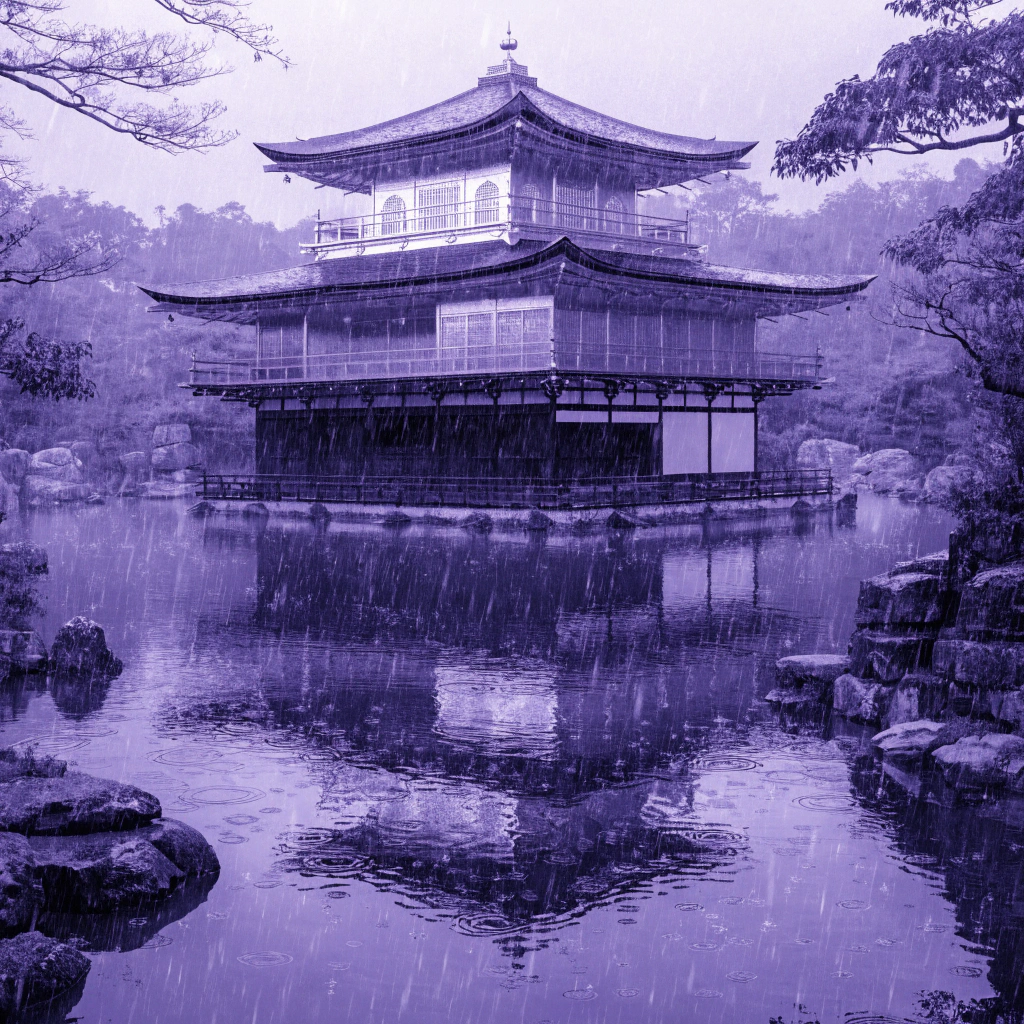
Kinkaku-ji es un templo muy bonito en Japón. Está en la ciudad de Kyoto. Este templo es famoso por su color dorado. Es un color muy especial. El templo tiene tres pisos y brilla mucho bajo el sol.
Kinkaku-ji significa 'Pabellón Dorado'. Hay un lago grande frente al templo. El lago se llama 'Kyoko-chi' y es como un espejo. El templo se refleja en el agua. Alrededor del templo hay muchos árboles verdes. Es un lugar tranquilo y muchas personas lo visitan cada año. Es un sitio muy importante en Japón.
Gramática destacada
Patrón: El verbo 'Ser'
"Kinkaku-ji es un templo muy bonito en Japón."
El verbo 'ser' se usa para identificar o describir cosas de forma permanente. Por ejemplo, para decir qué es algo o de dónde es.
Patrón: Preposiciones de lugar ('en', 'frente a', 'alrededor de')
"Está en la ciudad de Kyoto. Hay un lago grande frente al templo. Alrededor del templo hay muchos árboles verdes."
Las preposiciones 'en', 'frente a' y 'alrededor de' se usan para indicar la posición de un objeto o lugar. 'En' significa 'in' o 'on', 'frente a' significa 'in front of', y 'alrededor de' significa 'around'.
Pon a prueba tu comprensión
10 preguntas · A1 Principiante · 1 vista previa gratis
Pon a prueba lo que aprendiste en este artículo. ¡Responde todas las preguntas para ganar XP!
¿De qué color es famoso el templo Kinkaku-ji?
¿Quieres terminar el quiz?
9 preguntas más te esperan. ¡Regístrate gratis para desbloquear el quiz completo y ganar XP!
Regístrate gratis¿Ya tienes cuenta? Acceder
Desglose de preguntas
¿De qué color es famoso el templo Kinkaku-ji?
Tu respuesta:
Respuesta correcta: Dorado
El templo Kinkaku-ji está en la ciudad de Tokio.
Tu respuesta:
Respuesta correcta: Falso
¿Qué significa 'lago'?
Tu respuesta:
Respuesta correcta: Una gran cantidad de agua rodeada de tierra
El templo _____ mucho bajo el sol.
Tu respuesta:
Respuesta correcta: brilla
The Beautiful Golden Pavilion of Japan
Kinkaku-ji is a very famous Zen Buddhist temple in Kyoto, Japan. Many people call it the Golden Pavilion because the top two floors are covered in real gold leaf. It is one of the most popular buildings in the country. Long ago, the building was a home for a powerful leader. Later, it became a Zen temple.
The temple is special because it stands next to a large lake. This lake is called the Mirror Pond. On a sunny day, you can see the reflection of the golden building in the water. The gold makes the temple look brighter than the trees around it.
The garden around Kinkaku-ji is also very beautiful and peaceful. There are many small islands and stones in the pond. This design is very traditional and old. Visitors like to walk on the paths and take photos of the scenery. Kinkaku-ji is older than many modern buildings in Kyoto, but it still looks new. It is a wonderful place to visit because you can learn about history and enjoy nature.
Gramática destacada
Patrón: Comparatives
"The gold makes the temple look brighter than the trees around it."
We use 'adjective + er + than' to compare two things. For example, 'brighter than' compares the light of the temple to the light of the trees.
Patrón: Past Simple
"Later, it became a Zen temple."
We use the past simple to talk about finished actions in the past. 'Became' is the irregular past form of the verb 'become'.
Pon a prueba tu comprensión
11 preguntas · A2 Básico · 1 vista previa gratis
Pon a prueba lo que aprendiste en este artículo. ¡Responde todas las preguntas para ganar XP!
Why is the temple called the Golden Pavilion?
¿Quieres terminar el quiz?
10 preguntas más te esperan. ¡Regístrate gratis para desbloquear el quiz completo y ganar XP!
Regístrate gratis¿Ya tienes cuenta? Acceder
Desglose de preguntas
Why is the temple called the Golden Pavilion?
Tu respuesta:
Respuesta correcta: Because the top floors have real gold on them
The building was always a Zen temple from the beginning.
Tu respuesta:
Respuesta correcta: Falso
What does 'scenery' mean?
Tu respuesta:
Respuesta correcta: The natural view you see around you
You can see the _____ of the temple in the Mirror Pond.
Tu respuesta:
Respuesta correcta: reflection
Where is Kinkaku-ji located?
Tu respuesta:
Respuesta correcta: Kyoto
The Golden Pavilion: Kyoto's Shimmering Masterpiece
Kinkaku-ji, which is also known as the Golden Pavilion, is one of the most famous landmarks in Kyoto, Japan. This Zen Buddhist temple has been visited by millions of tourists who want to see its incredible beauty. The building is unique because its top two floors are completely covered in pure gold leaf. When the sun shines, the temple glows brightly and creates a stunning reflection in the Mirror Pond that surrounds it.
The history of Kinkaku-ji is very interesting. It was originally built in the 14th century as a retirement villa for a powerful leader named Ashikaga Yoshimitsu. After he died, the building was converted into a Zen temple according to his wishes. Unfortunately, the pavilion has been destroyed by fire several times throughout history. The most recent incident happened in 1950 when a young monk set fire to the structure. However, it was rebuilt in 1955, and the gold leaf was replaced to make it look even more magnificent than before.
The garden around the temple is also a masterpiece of Japanese design. It features many small islands and stones that represent stories from Buddhist literature. Visitors are not allowed to enter the pavilion itself, but they can walk along the paths to enjoy the view from different angles. This site has been recognized as a UNESCO World Heritage site because of its cultural importance.
Today, Kinkaku-ji remains a symbol of Kyoto's rich history. It is a place where nature and architecture are perfectly balanced. Whether you visit in the snowy winter or the colorful autumn, the Golden Pavilion is a sight that will never be forgotten by those who see it.
Gramática destacada
Patrón: Relative Clauses
"Kinkaku-ji, which is also known as the Golden Pavilion, is one of the most famous landmarks in Kyoto."
Relative clauses start with words like 'which' or 'who' to give more information about a noun. In this sentence, the clause provides an alternative name for the subject.
Patrón: Passive Voice
"After he died, the building was converted into a Zen temple according to his wishes."
The passive voice is formed with 'be' + past participle. It is used here because the action of converting the building is more important than who exactly did it.
Pon a prueba tu comprensión
11 preguntas · B1 Intermedio · 1 vista previa gratis
Pon a prueba lo que aprendiste en este artículo. ¡Responde todas las preguntas para ganar XP!
What covers the top two floors of the pavilion?
¿Quieres terminar el quiz?
10 preguntas más te esperan. ¡Regístrate gratis para desbloquear el quiz completo y ganar XP!
Regístrate gratis¿Ya tienes cuenta? Acceder
Desglose de preguntas
What covers the top two floors of the pavilion?
Tu respuesta:
Respuesta correcta: Pure gold leaf
Tourists are permitted to go inside the Golden Pavilion.
Tu respuesta:
Respuesta correcta: Falso
What does the word 'masterpiece' mean?
Tu respuesta:
Respuesta correcta: A work of outstanding artistry
The pavilion has been _____ by fire several times throughout history.
Tu respuesta:
Respuesta correcta: destroyed
When was the pavilion rebuilt after the 1950 fire?
Tu respuesta:
Respuesta correcta: 1955
The Golden Pavilion: An Analysis of Japan’s Architectural Masterpiece
Kinkaku-ji, officially designated as Rokuon-ji, stands as a breathtaking testament to the Muromachi period's architectural ingenuity. Located in the heart of Kyoto, this Zen Buddhist temple is widely regarded as the pinnacle of Japanese garden design. While many traditional religious sites in Japan emphasize a sense of austerity and minimalism, Kinkaku-ji presents a striking contrast through its extravagant exterior. The top two stories are entirely covered in pure gold leaf, a feature that serves not merely as a display of material wealth but also as a profound spiritual metaphor. This radiant glow is intended to symbolize a purification of one’s thoughts, reflecting the 'Pure Land' of the Buddha.
The architectural composition of the pavilion is unique, as each floor represents a distinct style. The ground floor, built in the Shinden style, evokes the elegance of 11th-century imperial aristocracy. In contrast, the second floor follows the Bukke style used in samurai residences, while the uppermost floor is designed in the Chinese Zen Hall style. This fusion of diverse aesthetics creates a harmonious structure that transcends historical boundaries. Furthermore, the pavilion is topped with a bronze phoenix, further emphasizing its themes of rebirth and spiritual elevation.
One cannot fully appreciate the pavilion without acknowledging Kyoko-chi, or the Mirror Pond. The surrounding garden was meticulously designed to harmonize with the structure, utilizing the concept of 'borrowed scenery.' As the golden reflection dances upon the water’s surface, the boundary between the man-made pavilion and the natural world appears to dissolve. This integration reflects the fundamental Zen philosophy of finding balance within the universe. Had it not been for the meticulous restoration efforts in the mid-20th century, this delicate balance would have been lost to history.
Historically, the site has endured significant transformations and hardships. Originally functioning as a retirement villa for the Shogun Ashikaga Yoshimitsu, it was converted into a Zen temple following his death in 1408. However, the structure we witness today is a reconstruction from 1955. This rebuilding was necessitated by a tragic incident in 1950, when a young monk set the temple ablaze, an event that shocked the nation. Ultimately, Kinkaku-ji remains an enduring icon of Japanese culture. It invites the spectator to evaluate the complex intersection of religious devotion and aesthetic brilliance.
Gramática destacada
Patrón: Passive Voice with Reporting Verbs
"Kinkaku-ji, officially designated as Rokuon-ji, stands as a breathtaking testament..."
This pattern is used to provide formal information about a subject's status or name. It is common in academic writing to establish facts without focusing on the person performing the action.
Patrón: Inverted Third Conditional
"Had it not been for the meticulous restoration efforts in the mid-20th century, this delicate balance would have been lost to history."
This formal structure replaces 'If it had not been for'. It is used to discuss hypothetical past situations and their consequences, adding a sophisticated tone to the analysis.
Patrón: Present Perfect for Historical Continuity
"Historically, the site has endured significant transformations and hardships."
The present perfect (has endured) connects past events to the present. It implies that the effects of these transformations are still relevant to the current state of the temple.
Pon a prueba tu comprensión
11 preguntas · B2 Intermedio alto · 1 vista previa gratis
Pon a prueba lo que aprendiste en este artículo. ¡Responde todas las preguntas para ganar XP!
What does the gold leaf on the top two stories primarily symbolize?
¿Quieres terminar el quiz?
10 preguntas más te esperan. ¡Regístrate gratis para desbloquear el quiz completo y ganar XP!
Regístrate gratis¿Ya tienes cuenta? Acceder
Desglose de preguntas
What does the gold leaf on the top two stories primarily symbolize?
Tu respuesta:
Respuesta correcta: The purification of thoughts
The current structure of Kinkaku-ji is the original building from the 14th century.
Tu respuesta:
Respuesta correcta: Falso
What does 'aesthetic' mean in the context of the article?
Tu respuesta:
Respuesta correcta: A set of principles concerned with nature and beauty
The temple was set _____ in 1950 by a young monk.
Tu respuesta:
Respuesta correcta: ablaze
Which architectural style is used for the ground floor of the pavilion?
Tu respuesta:
Respuesta correcta: Shinden style
The Gilded Paradox: Aesthetic Transcendence and Materiality at Kinkaku-ji
Rarely has a structure so perfectly encapsulated the dialectical tension between the ephemeral and the eternal as Kinkaku-ji, the Golden Pavilion of Kyoto. Originally conceived as a retirement villa for Shogun Ashikaga Yoshimitsu, the site underwent a sophisticated transformation into a Zen Buddhist temple following his death in 1408. Today, it stands not merely as a relic of the Muromachi period’s cultural zenith, but as a profound philosophical meditation on the nature of beauty and its inevitable transience.
The architectural brilliance of the pavilion lies in its eclectic synthesis of disparate styles, which somehow achieve a singular harmony. It is the seamless integration of Shinden-zukuri, Bukke-zukuri, and the Zen style that grants the building its unique aesthetic resonance. The ground floor, known as the Chamber of Dharma Waters (Hosui-in), evokes the understated elegance of the Heian aristocracy through its unpainted wood and white plaster. In stark contrast, the upper stories are swathed in pure gold leaf, a choice that might appear ostentatious to the uninitiated were it not for the deep spiritual symbolism intended. This gilding is not a mere display of temporal wealth; rather, it represents a physical incarnation of the Buddhist Pure Land, reflecting a profound yearning for spiritual transcendence amidst the chaotic suffering of the material world.
The meticulous preservation of the garden’s equilibrium further enhances the pavilion’s sublimity. Situated precariously yet elegantly on the edge of Kyoko-chi, or the Mirror Pond, the structure’s reflection creates a visual symmetry that blurs the boundary between physical reality and its shimmering, liquid double. Within this meticulously curated landscape, every rock and pine tree has been positioned with specific intentionality, adhering to the principles of borrowed scenery (shakkun) to incorporate the distant, verdant hills into the temple’s immediate vista. The result is an environment where human artifice and natural beauty are indistinguishable.
However, the history of Kinkaku-ji is marred by a dark, transformative tragedy. In 1950, a young novice monk set the pavilion ablaze, an act that served as the thematic focal point for Yukio Mishima’s literary masterpiece, 'The Temple of the Golden Pavilion.' The arsonist’s pathological obsession with the temple’s absolute beauty led him to believe that only through its total destruction could its perfection be immortalized and preserved from the slow ravages of time. It was this paradoxical relationship between preservation and annihilation that forever cemented Kinkaku-ji’s status in the Japanese collective psyche.
What remains today is a meticulous reconstruction, completed in 1955, which remains faithful to the original design while perhaps exceeding it in sheer brilliance. Modern critics often debate whether the contemporary abundance of gold leaf—thicker than the original—detracts from the Zen philosophy of wabi-sabi, which finds beauty in imperfection and modesty. Yet, it is precisely this juxtaposition of Zen austerity and golden opulence that invites visitors to contemplate the intricate complexities of human aspiration. In the final analysis, Kinkaku-ji remains an enduring symbol of Kyoto—a place where the divine and the terrestrial achieve a fleeting, yet breathtaking, harmony.
Gramática destacada
Patrón: Inversion with Negative Adverbials
"Rarely has a structure so perfectly encapsulated the dialectical tension between the ephemeral and the eternal as Kinkaku-ji."
When a sentence starts with a negative or restrictive adverbial like 'rarely', the auxiliary verb comes before the subject. This is used in formal writing to add emphasis or dramatic effect.
Patrón: Cleft Sentences for Emphasis
"It is the seamless integration of Shinden-zukuri, Bukke-zukuri, and the Zen style that grants the building its unique aesthetic resonance."
Cleft sentences use the structure 'It is/was + [emphasized part] + that/who' to focus the reader's attention on a specific piece of information. Here, it emphasizes the specific combination of styles.
Patrón: Nominalization
"The meticulous preservation of the garden’s equilibrium further enhances the pavilion’s sublimity."
Nominalization involves turning verbs (preserve) or adjectives (sublime) into nouns. This creates a more academic, objective tone by focusing on abstract concepts and states rather than actions.
Pon a prueba tu comprensión
12 preguntas · C1 Avanzado · 1 vista previa gratis
Pon a prueba lo que aprendiste en este artículo. ¡Responde todas las preguntas para ganar XP!
What was the original function of the site before it became a Zen temple?
¿Quieres terminar el quiz?
11 preguntas más te esperan. ¡Regístrate gratis para desbloquear el quiz completo y ganar XP!
Regístrate gratis¿Ya tienes cuenta? Acceder
Desglose de preguntas
What was the original function of the site before it became a Zen temple?
Tu respuesta:
Respuesta correcta: A retirement villa for a Shogun
The current pavilion is the original structure built in the 14th century.
Tu respuesta:
Respuesta correcta: Falso
What does 'sublimity' mean in the context of the article?
Tu respuesta:
Respuesta correcta: Greatness and overwhelming beauty
The architectural brilliance of the pavilion lies in its eclectic _____ of disparate styles.
Tu respuesta:
Respuesta correcta: synthesis
According to the text, why did the monk set the temple on fire in 1950?
Tu respuesta:
Respuesta correcta: Out of an obsession to preserve its beauty through destruction
The concept of 'shakkun' involves incorporating distant scenery into the garden design.
Tu respuesta:
Respuesta correcta: Verdadero
The Gilded Paradox: An Analytical Discourse on Kinkaku-ji’s Aesthetic Transcendence
To the uninitiated observer, Kinkaku-ji, or the Golden Pavilion, might appear as a mere exercise in architectural ostentation. Yet, for the discerning scholar of Japanese culture, this Zen Buddhist temple in Kyoto represents a profound juxtaposition of worldly splendor and spiritual austerity. Originally commissioned in 1397 as a retirement villa for Shogun Ashikaga Yoshimitsu, the site was subsequently converted into a Zen temple of the Rinzai sect, fulfilling his testamentary wishes. Rarely has a structure so effectively bridged the chasm between worldly opulence and spiritual detachment, creating a visual narrative that continues to reverberate through the centuries.
The pavilion’s architecture is a masterclass in stylistic synthesis, comprising three distinct levels that embody disparate philosophical traditions. The ground floor, rendered in the Shinden style of 11th-century imperial aristocracy, emphasizes a connection with the natural world through its open-pillared design. The second story, adhering to the Bukke style of the samurai class, serves as a transitional space, while the topmost floor is designed in the traditional Zen style. Were one to gaze upon the pavilion during the 'golden hour,' the distinction between the physical structure and its reflection would seem to dissolve, rendering the building evanescent and almost ethereal. This effect is achieved through the meticulous application of pure gold leaf to the upper two stories—a choice that, while ostensibly contradictory to Zen principles of simplicity, symbolizes a purification from negative thoughts and a transcendence of the material realm.
Central to the site’s allure is the Kyoko-chi, or Mirror Pond, which functions as the cornerstone of the garden's shakkei, or 'borrowed scenery.' The pond is not merely a decorative element but an integral component of the meditative experience. It is widely contended that the pavilion’s reconstruction, while physically precise, serves as a testament to the enduring nature of aesthetic ideals over the fragility of physical matter. This notion was catastrophically tested in 1950, when a young novice monk set the temple ablaze, an act of nihilistic destruction that Yukio Mishima would later immortalize in his psychological novel, 'The Temple of the Golden Pavilion.' Mishima’s narrative explores the paradoxical relationship between beauty and destruction, suggesting that the pavilion’s perfection was so overwhelming that it necessitated its own annihilation to remain truly eternal in the mind's eye.
The current structure, meticulously rebuilt in 1955 and further refurbished in the late 1980s, remains inextricably linked to the concept of mujo, or impermanence. Despite its shimmering facade, Kinkaku-ji invites the viewer to contemplate the ephemeral nature of all things. The gold does not merely shine; it reflects the surrounding forest and the shifting sky, ensuring that the pavilion is never the same from one moment to the next. In this sense, the temple is not a static monument but a living meditation on the sublimity of the present moment. For the contemporary pilgrim, the Golden Pavilion stands as a beacon of cultural resilience, a site where the history of the Muromachi period meets the timeless aspirations of the human spirit. It remains a poignant reminder that even the most solid structures are, in the grand tapestry of time, as fleeting as a reflection on the water’s surface.
Gramática destacada
Patrón: Inversion with Negative Adverbials
"Rarely has a structure so effectively bridged the chasm between worldly opulence and spiritual detachment."
When using negative or restrictive adverbs like 'rarely' at the start of a sentence for emphasis, the subject and auxiliary verb are inverted. This creates a more formal and dramatic tone typical of C2 academic writing.
Patrón: Second Conditional with 'Were' (Subjunctive)
"Were one to gaze upon the pavilion during the 'golden hour,' the distinction between the physical structure and its reflection would seem to dissolve."
Using 'were' + subject + 'to' + infinitive is a formal way to express a hypothetical situation in the present or future. It replaces 'If one were to gaze...' and is common in scholarly prose.
Patrón: Hedging with Passive Structures
"It is widely contended that the pavilion’s reconstruction, while physically precise, serves as a testament to the enduring nature of aesthetic ideals."
Using 'It is [verb-ed] that' allows the author to present an opinion or theory without attributing it to a specific person, maintaining an objective and cautious (hedged) academic tone.
Pon a prueba tu comprensión
12 preguntas · C2 Dominio · 1 vista previa gratis
Pon a prueba lo que aprendiste en este artículo. ¡Responde todas las preguntas para ganar XP!
What does the author suggest is the primary paradox of Kinkaku-ji?
¿Quieres terminar el quiz?
11 preguntas más te esperan. ¡Regístrate gratis para desbloquear el quiz completo y ganar XP!
Regístrate gratis¿Ya tienes cuenta? Acceder
Desglose de preguntas
What does the author suggest is the primary paradox of Kinkaku-ji?
Tu respuesta:
Respuesta correcta: The use of gold leaf alongside Zen Buddhist principles of simplicity.
The ground floor of the pavilion is covered in gold leaf.
Tu respuesta:
Respuesta correcta: Falso
Which word describes something that is 'quickly fading or disappearing'?
Tu respuesta:
Respuesta correcta: Evanescent
The pavilion's garden utilizes the concept of _____, or 'borrowed scenery'.
Tu respuesta:
Respuesta correcta: shakkei
How did Yukio Mishima interpret the destruction of the temple in 1950?
Tu respuesta:
Respuesta correcta: As a necessary act to make its beauty eternal in the mind.
The pavilion was originally designed as a Zen temple from its inception.
Tu respuesta:
Respuesta correcta: Falso

