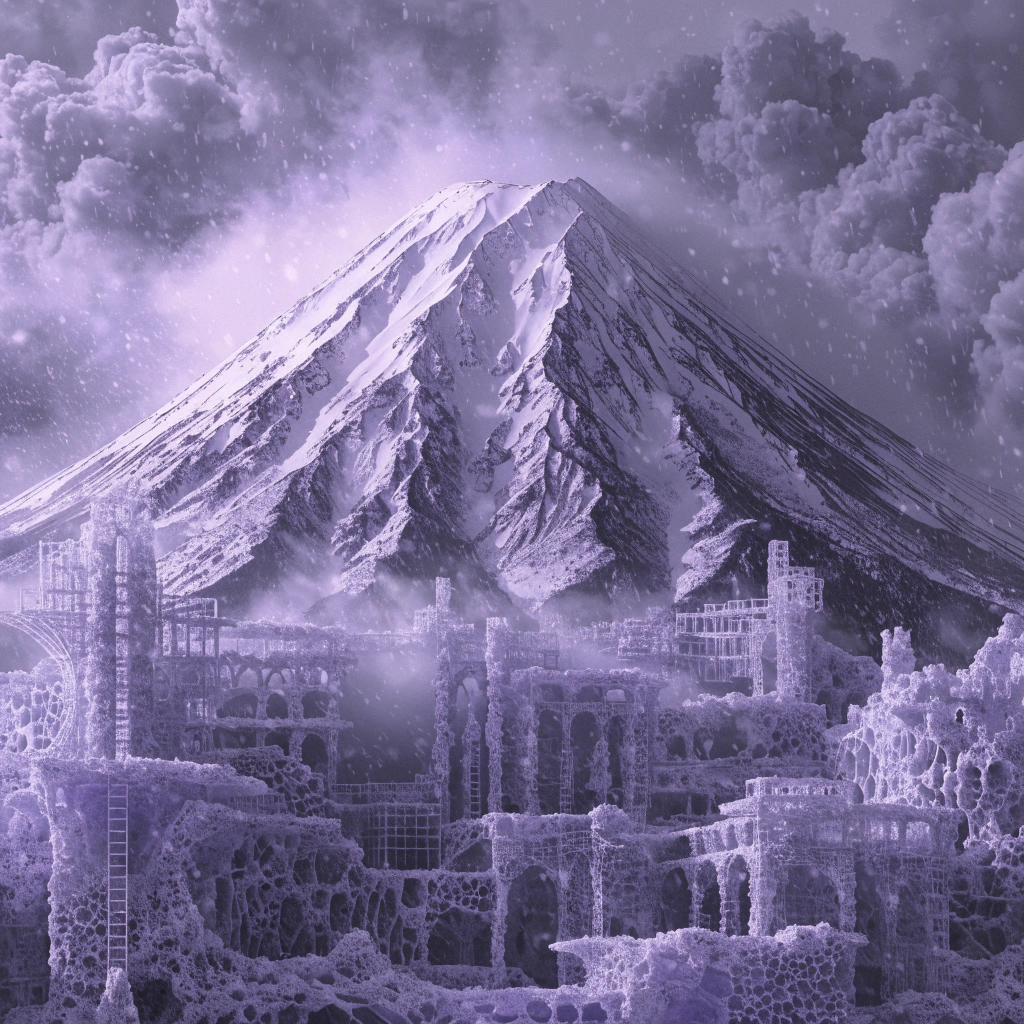
El Monte Fuji: Una Montaña Especial en Japón
El Monte Fuji está en Japón. Es una montaña muy famosa. Es la montaña más alta de Japón. Mide 3.776 metros de altura.
El Monte Fuji es muy bonito. Es un volcán grande. Es muy importante para Japón. Muchas personas piensan que es una montaña sagrada. Es un lugar especial para la cultura japonesa.
Esta montaña inspira a los artistas. Hay muchas pinturas y fotos del Monte Fuji. Es un símbolo muy conocido de Japón en todo el mundo.
Gramática destacada
Patrón: El verbo "Ser" (To Be)
"El Monte Fuji es una montaña muy famosa."
Usamos "ser" para hablar de características permanentes o la identidad de algo o alguien. Por ejemplo, para decir qué es o cómo es algo, o de dónde es.
Patrón: La expresión "Hay" (There is / There are)
"Hay muchas pinturas y fotos del Monte Fuji."
Usamos "hay" para indicar que algo existe o que hay una cantidad de algo. Es una forma impersonal del verbo "haber" y se usa para singular y plural.
Pon a prueba tu comprensión
10 preguntas · A1 Principiante · 1 vista previa gratis
Pon a prueba lo que aprendiste en este artículo. ¡Responde todas las preguntas para ganar XP!
¿Dónde está el Monte Fuji?
¿Quieres terminar el quiz?
9 preguntas más te esperan. ¡Regístrate gratis para desbloquear el quiz completo y ganar XP!
Regístrate gratis¿Ya tienes cuenta? Acceder
Desglose de preguntas
¿Dónde está el Monte Fuji?
Tu respuesta:
Respuesta correcta: En Japón
¿El Monte Fuji es una montaña pequeña?
Tu respuesta:
Respuesta correcta: Falso
¿Qué significa "sagrada"?
Tu respuesta:
Respuesta correcta: Algo muy importante para la religión o la cultura.
El Monte Fuji es un ______ grande.
Tu respuesta:
Respuesta correcta: volcán
El Monte Fuji: Un Símbolo de Japón
El Monte Fuji es una montaña muy famosa en Japón. Es la montaña más alta del país, con 3.776 metros de altura. Su forma es muy bonita y simétrica, como un cono perfecto. Muchas personas en el mundo conocen el Monte Fuji porque es un símbolo muy importante de Japón.
Para los japoneses, el Monte Fuji no es solo una montaña grande. Es un lugar muy importante y sagrado. Desde hace muchos siglos, la gente adoró esta montaña. Ellos creían que una diosa, llamada Konohanasakuya-hime, vivía en ella. Por eso, el Fuji tiene un gran valor cultural y espiritual para Japón.
Esta montaña inspiró a muchos artistas y escritores. Por ejemplo, el famoso pintor Hokusai hizo muchas obras de arte sobre el Monte Fuji. Su serie de grabados 'Treinta y seis vistas del Monte Fuji' es muy conocida en todo el mundo. Hoy, muchas personas visitan la región para ver el Monte Fuji y disfrutar de su belleza natural.
Gramática destacada
Patrón: El Pretérito Indefinido (Pasado Simple)
"Desde hace muchos siglos, la gente **adoró** esta montaña."
Usamos el pretérito indefinido para hablar de acciones que empezaron y terminaron en un momento específico del pasado. Por ejemplo, 'adoró' significa que la acción de adorar ya finalizó. Es útil para contar historias o eventos pasados.
Patrón: Comparativos (Superlativo)
"Es la montaña **más alta** del país."
El superlativo se usa para decir que algo tiene una cualidad en su grado máximo, comparado con otros. Se forma con 'el/la/los/las + más + adjetivo + de'. En este caso, 'más alta' significa que ninguna otra montaña es tan alta como el Monte Fuji.
Pon a prueba tu comprensión
11 preguntas · A2 Básico · 1 vista previa gratis
Pon a prueba lo que aprendiste en este artículo. ¡Responde todas las preguntas para ganar XP!
¿Cuántos metros de altura tiene el Monte Fuji?
¿Quieres terminar el quiz?
10 preguntas más te esperan. ¡Regístrate gratis para desbloquear el quiz completo y ganar XP!
Regístrate gratis¿Ya tienes cuenta? Acceder
Desglose de preguntas
¿Cuántos metros de altura tiene el Monte Fuji?
Tu respuesta:
Respuesta correcta: 3.776 metros
El Monte Fuji no es importante culturalmente para los japoneses.
Tu respuesta:
Respuesta correcta: Falso
¿Qué significa la palabra "sagrado"?
Tu respuesta:
Respuesta correcta: Especial y religioso
Para los japoneses, el Monte Fuji es un lugar muy ____.
Tu respuesta:
Respuesta correcta: sagrado
¿Quién hizo muchas obras de arte sobre el Monte Fuji?
Tu respuesta:
Respuesta correcta: Un pintor llamado Hokusai
El Monte Fuji: Un Símbolo Sagrado de Japón
El Monte Fuji, conocido en Japón como Fujisan, es mucho más que una simple montaña; es el símbolo más reconocible y majestuoso de la nación. Con una impresionante altura de 3.776 metros, este estratovolcán de forma casi perfecta se alza en la isla de Honshu, y su silueta icónica ha sido admirada y venerada por el pueblo japonés durante siglos.
Desde tiempos antiguos, el Monte Fuji ha sido considerado un lugar sagrado. No es solo una maravilla geológica, sino también un pilar fundamental de la vida espiritual y cultural de Japón. Se cree que la montaña es el hogar de la deidad sintoísta Konohanasakuya-hime, la princesa que hace florecer los cerezos. Por esta razón, escalar sus laderas o simplemente contemplar su belleza desde la distancia ha sido, para muchos, una experiencia espiritual profunda.
La presencia imponente del Fuji ha inspirado innumerables obras de arte, literatura y poesía. Quizás la serie más famosa es "Treinta y seis vistas del Monte Fuji" del artista Katsushika Hokusai, que ha mostrado la montaña en diversas estaciones y perspectivas, capturando su esencia y su relación con la vida cotidiana japonesa. Estas obras han ayudado a que el Fuji sea reconocido en todo el mundo.
Hoy en día, el Monte Fuji sigue atrayendo a miles de turistas y peregrinos cada año. Es un sitio de Patrimonio Mundial de la UNESCO, lo que subraya su valor universal excepcional. Aunque es un volcán activo, su última erupción fue en 1707. Los visitantes pueden disfrutar de actividades como el senderismo durante los meses de verano o simplemente maravillarse con su belleza escénica desde los cinco lagos que lo rodean. El Fuji es, sin duda, un tesoro nacional que continúa fascinando y uniendo a Japón con su rica historia y espiritualidad.
Gramática destacada
Patrón: El Presente Perfecto
"Su silueta icónica ha sido admirada y venerada por el pueblo japonés durante siglos."
El presente perfecto se usa para hablar de acciones pasadas que tienen conexión con el presente o que acaban de ocurrir. Se forma con el verbo 'haber' en presente ('he, has, ha, hemos, habéis, han') más el participio pasado del verbo principal (terminaciones -ado, -ido).
Patrón: La Voz Pasiva con 'ser'
"La montaña ha sido considerada un lugar sagrado."
La voz pasiva con 'ser' se usa para enfatizar la acción recibida por el sujeto, no quién realiza la acción. Se forma con el verbo 'ser' en el tiempo verbal adecuado más el participio pasado del verbo principal, que concuerda en género y número con el sujeto.
Pon a prueba tu comprensión
11 preguntas · B1 Intermedio · 1 vista previa gratis
Pon a prueba lo que aprendiste en este artículo. ¡Responde todas las preguntas para ganar XP!
¿Cuál es la altura aproximada del Monte Fuji?
¿Quieres terminar el quiz?
10 preguntas más te esperan. ¡Regístrate gratis para desbloquear el quiz completo y ganar XP!
Regístrate gratis¿Ya tienes cuenta? Acceder
Desglose de preguntas
¿Cuál es la altura aproximada del Monte Fuji?
Tu respuesta:
Respuesta correcta: 3.776 metros
El Monte Fuji es un volcán inactivo que no ha tenido erupciones en la historia.
Tu respuesta:
Respuesta correcta: Falso
¿Qué significa la palabra "venerado" en el contexto del artículo?
Tu respuesta:
Respuesta correcta: Muy respetado
El Monte Fuji es el símbolo más _______ de Japón.
Tu respuesta:
Respuesta correcta: reconocible
¿Quién es Konohanasakuya-hime según la creencia sintoísta?
Tu respuesta:
Respuesta correcta: Una deidad del Monte Fuji
Mount Fuji: The Spiritual and Cultural Peak of Japan
Mount Fuji, locally known as Fujisan, is far more than a mere geological landmark; it represents the very essence of Japanese identity. Standing at a majestic 3,776 meters, this symmetrical stratovolcano has been a focal point of admiration for centuries. While its snow-capped peak is instantly recognizable worldwide, the mountain's significance extends deep into the spiritual and artistic fabric of the nation. For many, it is not just a mountain, but a symbol of resilience and eternal beauty.
Historically, Mount Fuji has been revered as a sacred site. For practitioners of Shintoism, it is believed to be the dwelling place of the deity Konohanasakuya-hime. Consequently, thousands of pilgrims have ascended its slopes over the generations, seeking spiritual purification. This tradition continues today, although the modern climber is just as likely to be a tourist as a devotee. Despite the physical challenges of the ascent, the experience remains a rite of passage for many, offering a unique connection between the earthly and the divine.
The mountain's aesthetic perfection has also left an indelible mark on global culture. Perhaps the most famous representation is Katsushika Hokusai’s series, 'Thirty-six Views of Mount Fuji', which includes the iconic 'Great Wave off Kanagawa'. These woodblock prints captured the mountain from various perspectives, distances, and seasons, significantly influencing Western Impressionist artists like Vincent van Gogh. Through these works, Fuji became a symbol of the sublime—a blend of breathtaking beauty and the awe-inspiring power of the natural world. This artistic legacy ensures that the mountain's image is recognized even by those who have never set foot in Japan.
In 2013, UNESCO officially recognized Mount Fuji as a World Heritage site, specifically noting its status as a "sacred place and source of artistic inspiration." However, this prestigious title brings with it a set of significant responsibilities and modern challenges. The massive influx of seasonal hikers during the summer months has led to growing concerns regarding environmental degradation, including erosion and waste management issues. Consequently, local authorities have had to implement various sustainable measures, such as climbing fees and stricter regulations, to ensure that the ecological integrity and spiritual atmosphere of the mountain are preserved for future generations.
Ultimately, Mount Fuji serves as a reminder of the delicate balance between nature and human civilization. It remains a testament to how a natural feature can shape the history, religion, and art of an entire people. Whether viewed from a distance in Tokyo or experienced firsthand on its rugged trails, Fujisan continues to command respect and wonder.
Gramática destacada
Patrón: Present Perfect Passive
"Mount Fuji has been revered as a sacred site."
This pattern is used to describe an action that began in the past and continues to be true, focusing on the object rather than the subject. It is formed using 'has/have + been + past participle'.
Patrón: Concessive Clause with 'Despite'
"Despite the physical challenges of the ascent, the experience remains a rite of passage for many."
Used to show contrast or unexpected results. 'Despite' is followed by a noun or a gerund, highlighting that the challenges do not stop the experience from being significant.
Patrón: Participle Phrases for Additional Information
"In 2013, UNESCO recognized Mount Fuji as a World Heritage site, specifically noting its status as a sacred place..."
Present participle phrases (-ing) can be used to add detail to a main clause. Here, 'specifically noting' explains the reason or provides further context for the UNESCO recognition.
Pon a prueba tu comprensión
11 preguntas · B2 Intermedio alto · 1 vista previa gratis
Pon a prueba lo que aprendiste en este artículo. ¡Responde todas las preguntas para ganar XP!
Why did UNESCO grant Mount Fuji World Heritage status?
¿Quieres terminar el quiz?
10 preguntas más te esperan. ¡Regístrate gratis para desbloquear el quiz completo y ganar XP!
Regístrate gratis¿Ya tienes cuenta? Acceder
Desglose de preguntas
Why did UNESCO grant Mount Fuji World Heritage status?
Tu respuesta:
Respuesta correcta: Because it is a sacred place and a source of artistic inspiration
Mount Fuji is considered the home of a Shinto deity.
Tu respuesta:
Respuesta correcta: Verdadero
Which word describes something of such grandeur that it inspires awe?
Tu respuesta:
Respuesta correcta: Sublime
The volcano is famous for its perfectly _____ shape.
Tu respuesta:
Respuesta correcta: symmetrical
How did Hokusai's work affect the Western world?
Tu respuesta:
Respuesta correcta: It significantly influenced Western Impressionist artists
The Ethereal Sovereign: Re-evaluating the Cultural and Geological Significance of Mount Fuji
Rising with a symmetry that borders on the divine, Mount Fuji—or Fujisan—serves as more than a mere topographical landmark; it is the very quintessence of Japanese identity. Standing at a staggering 3,776 meters, this dormant stratovolcano has long transcended its geological origins to become a stratified symbol of spiritual purity and artistic inspiration. Rarely does a geographical feature command such universal reverence across both secular and spiritual domains, yet Fuji manages this feat with an effortless, snow-capped grace that has captivated observers for millennia. Its silhouette, instantly recognizable worldwide, is a testament to the mountain's role as a sovereign entity in the Japanese landscape.
Historically, the mountain was perceived not as a physical challenge to be conquered, but as a sacred site to be venerated from afar. It is the spiritual resonance of the mountain that fostered the development of Shugendo, a syncretic faith combining mountain worship with Buddhist and Shinto practices. Pilgrims would ascend the slopes not for sport, but as a rite of purification, seeking proximity to the deity Konohanasakuya-hime. This religious fervor eventually permeated the arts, most notably during the Edo period. Katsushika Hokusai’s 'Thirty-six Views of Mount Fuji' exemplifies the juxtaposition of the mountain’s eternal stillness against the ephemeral nature of human existence. In these woodblock prints, the mountain remains a constant, silent witness to the bustling lives of commoners and the changing seasons alike.
However, the contemporary era has brought about a complex transformation in how the mountain is engaged with. The commodification of the climbing experience has led to significant ecological degradation, as thousands of tourists flock to the summit during the brief summer window. This surge in popularity has necessitated a re-evaluation of the mountain’s management, leading to its designation as a UNESCO World Heritage site in 2013—not as a natural site, but as a cultural one. This distinction is crucial; it acknowledges that Fuji’s value lies in its inspiration of art and religious tradition rather than its unique biodiversity alone.
Furthermore, the resilience of the local ecosystem is being tested by the sheer volume of human traffic. It is the interplay between preservation and accessibility that currently dominates local discourse. While the economic benefits of tourism are undeniable, the degradation of the trails and the accumulation of waste present a stark contrast to the mountain's image of pristine sanctity. The preservation of the mountain's sanctity requires a nuanced approach that balances the democratic right to access nature with the moral obligation to protect a global icon. Ultimately, Mount Fuji remains a pinnacle of Japanese heritage, a site where the geological, the spiritual, and the environmental converge in a delicate, ongoing negotiation.
Gramática destacada
Patrón: Inversion with Negative Adverbials
"Rarely does a geographical feature command such universal reverence across both secular and spiritual domains."
Inversion is used here to emphasize the rarity of the situation. When starting a sentence with a negative or restrictive adverb like 'rarely', the auxiliary verb comes before the subject.
Patrón: Cleft Sentences for Emphasis
"It is the spiritual resonance of the mountain that fostered the development of Shugendo."
A cleft sentence (It + be + subject + relative clause) is used to focus on a specific piece of information. It highlights 'spiritual resonance' as the primary cause rather than any other factor.
Patrón: Nominalisation
"The preservation of the mountain's sanctity requires a nuanced approach."
Nominalisation turns verbs (preserve) into nouns (preservation). This creates a more formal, academic tone and allows for more complex ideas to be discussed as abstract concepts.
Pon a prueba tu comprensión
12 preguntas · C1 Avanzado · 1 vista previa gratis
Pon a prueba lo que aprendiste en este artículo. ¡Responde todas las preguntas para ganar XP!
What is the primary reason Mount Fuji was designated a UNESCO World Heritage site?
¿Quieres terminar el quiz?
11 preguntas más te esperan. ¡Regístrate gratis para desbloquear el quiz completo y ganar XP!
Regístrate gratis¿Ya tienes cuenta? Acceder
Desglose de preguntas
What is the primary reason Mount Fuji was designated a UNESCO World Heritage site?
Tu respuesta:
Respuesta correcta: Its cultural and artistic significance
Historically, climbing Mount Fuji was primarily seen as a competitive sport.
Tu respuesta:
Respuesta correcta: Falso
What does 'ephemeral' mean in the context of human existence?
Tu respuesta:
Respuesta correcta: Short-lived and fleeting
The mountain's _____ is instantly recognizable worldwide as a symbol of Japan.
Tu respuesta:
Respuesta correcta: silhouette
Which artist is mentioned for capturing the mountain's stillness?
Tu respuesta:
Respuesta correcta: Katsushika Hokusai
The article suggests that the economic benefits of tourism currently outweigh all environmental concerns.
Tu respuesta:
Respuesta correcta: Falso
The Ontological and Aesthetic Significance of Mount Fuji: A Stratovolcano’s Cultural Hegemony
Mount Fuji, or Fujisan, stands as the quintessential silhouette of the Japanese archipelago, soaring to a majestic elevation of 3,776 meters. Yet, to describe it merely as a geological marvel would be to overlook its profound ontological status within the Japanese psyche. This perfectly symmetrical stratovolcano is not merely a topographical feature; it is a cornerstone of spiritual and cultural life, a silent witness to the ebb and flow of history. Were one to traverse the rugged terrain surrounding its base, one would encounter a landscape where the boundary between the terrestrial and the divine appears remarkably porous. For centuries, the mountain has been venerated as a sacred site, believed to be the dwelling place of the Shinto deity Konohanasakuya-hime. This spiritual hegemony has dictated the rhythms of pilgrimage and the evolution of Japanese religious practice, rendering the mountain an active participant in the nation's metaphysical narrative.
The aesthetic manifestation of Mount Fuji in art is perhaps most notably encapsulated in Katsushika Hokusai’s 'Thirty-six Views of Mount Fuji.' These ukiyo-e prints do not merely depict a mountain; they explore the transience of human existence against the immutable backdrop of nature. This thematic preoccupation with the ephemeral—often referred to in Japanese aesthetics as 'mono no aware'—is central to understanding why Fuji resonates so deeply. Seldom has a geological formation occupied such a central role in the artistic canon of a civilization. The mountain’s symmetry serves as a visual metaphor for balance and purity, qualities that are highly prized in Japanese cultural paradigms. To the extent that art reflects the soul of a people, Fuji is the mirror through which Japan views its own identity, balancing the volatile power of a volcano with the serene stillness of its snow-capped peak.
However, the contemporary era brings with it a host of anthropogenic challenges that threaten the integrity of this UNESCO World Heritage site. The paradox of its popularity lies in the fact that its very accessibility has led to overtourism and environmental degradation. It is imperative that the authorities implement robust mitigation strategies to preserve the ecological balance of the region. Lest the sanctity of the site be compromised by the sheer volume of visitors, stringent regulations regarding waste management and trail access have been proposed. There is a scholarly consensus that without such intervention, the physical and spiritual aura of the mountain could be irreparably tarnished. The tension between the desire for public engagement and the necessity for conservation reflects a broader global discourse on the stewardship of natural wonders.
In conclusion, Mount Fuji is a synthesis of the physical and the metaphysical. It is a stratovolcano that erupts with cultural meaning, a silhouette that outlines the aspirations of a nation, and a sacred space that demands our utmost respect. Notwithstanding the pressures of modernity, it remains a symbol of resilience and beauty. As we contemplate its presence, we are reminded of our own place within the vast tapestry of nature, a realization that is both humbling and enlightening. The enduring legacy of Fujisan is not found in its height alone, but in the profound silence it commands from those who stand in its shadow, reflecting on the intersection of time, art, and the divine.
Gramática destacada
Patrón: Inverted Conditional
"Were one to traverse the rugged terrain surrounding its base, one would encounter a landscape where the boundary between the terrestrial and the divine appears remarkably porous."
This is a formal alternative to 'If one were to traverse...'. It uses inversion of the subject and the verb 'were' to express a hypothetical situation in the present or future.
Patrón: Negative Inversion
"Seldom has a geological formation occupied such a central role in the artistic canon of a civilization."
When a sentence begins with a negative adverb like 'seldom', 'never', or 'rarely', the subject and the auxiliary verb are inverted for rhetorical emphasis.
Patrón: Negative Purpose Clause with 'Lest'
"Lest the sanctity of the site be compromised by the sheer volume of visitors, stringent regulations regarding waste management and trail access have been proposed."
The conjunction 'lest' is used to express a negative purpose or to prevent something undesirable. It is followed by a verb in the subjunctive mood (be).
Pon a prueba tu comprensión
12 preguntas · C2 Dominio · 1 vista previa gratis
Pon a prueba lo que aprendiste en este artículo. ¡Responde todas las preguntas para ganar XP!
According to the article, what does the symmetry of Mount Fuji symbolize in Japanese culture?
¿Quieres terminar el quiz?
11 preguntas más te esperan. ¡Regístrate gratis para desbloquear el quiz completo y ganar XP!
Regístrate gratis¿Ya tienes cuenta? Acceder
Desglose de preguntas
According to the article, what does the symmetry of Mount Fuji symbolize in Japanese culture?
Tu respuesta:
Respuesta correcta: Balance and purity
The author suggests that Mount Fuji's significance is limited strictly to its geological properties.
Tu respuesta:
Respuesta correcta: Falso
Which word describes something that is lasting for a very short time?
Tu respuesta:
Respuesta correcta: Ephemeral
The authorities must implement robust _____ strategies to preserve the ecological balance.
Tu respuesta:
Respuesta correcta: mitigation
What paradox is mentioned regarding Mount Fuji's popularity?
Tu respuesta:
Respuesta correcta: Its accessibility leads to its environmental degradation.
The deity Konohanasakuya-hime is associated with Mount Fuji in Shinto belief.
Tu respuesta:
Respuesta correcta: Verdadero
Fuji: Una Montaña Grande en Japón
Hola. Esta es una montaña. Se llama Fuji.
Fuji está en Japón. Es muy grande. Tiene 3.776 metros. Es muy alto.
Fuji es bonito. Muchas personas quieren ver Fuji. Es un lugar importante para Japón.
Gramática destacada
Patrón: El verbo 'Ser' para describir
"Fuji es grande."
Usamos el verbo 'ser' para describir algo. 'Es' es la forma de 'ser' para una sola cosa, como 'Fuji'.
Pon a prueba tu comprensión
9 preguntas · A0 Pre-principiante · 1 vista previa gratis
Pon a prueba lo que aprendiste en este artículo. ¡Responde todas las preguntas para ganar XP!
¿Cómo se llama la montaña?
¿Quieres terminar el quiz?
8 preguntas más te esperan. ¡Regístrate gratis para desbloquear el quiz completo y ganar XP!
Regístrate gratis¿Ya tienes cuenta? Acceder
Desglose de preguntas
¿Cómo se llama la montaña?
Tu respuesta:
Respuesta correcta: Se llama Fuji
Fuji es una montaña pequeña.
Tu respuesta:
Respuesta correcta: Falso
¿Qué significa 'Japón'?
Tu respuesta:
Respuesta correcta: Un país

