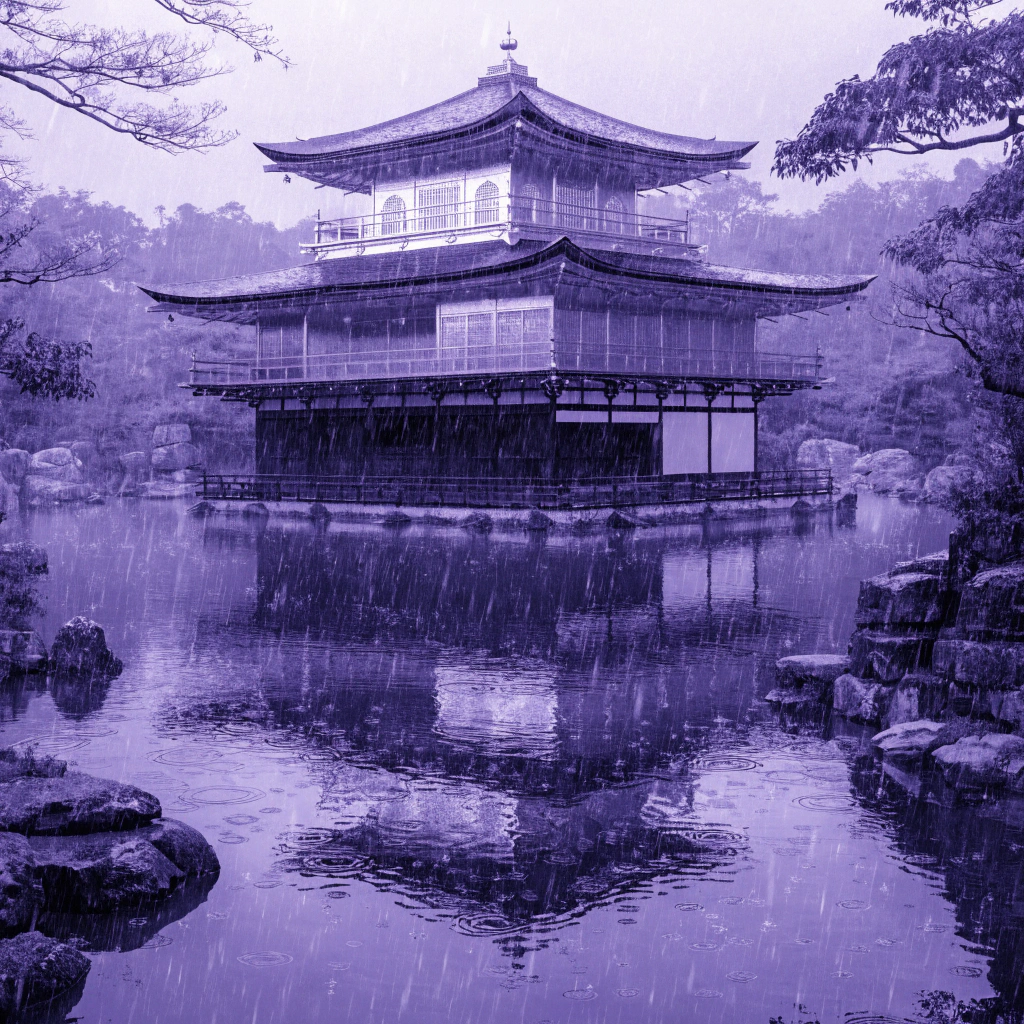
The Beautiful Golden Pavilion
Kinkaku-ji is a famous temple in Kyoto, Japan. It is a very old and beautiful building. Many people call it the Golden Pavilion.
The temple has two floors covered in real gold. It is next to a large pond. The water is very clear. You can see the gold building in the water. It looks like a mirror.
There is a big garden around the temple. The garden has many green trees and small islands. People visit the temple every day. They take many photos because the temple is very bright and pretty.
Grammatik-Spotlight
Muster: Present Simple: 'To Be'
"Kinkaku-ji is a famous temple in Kyoto, Japan."
We use 'is' for one person or thing. It helps us describe what something is or where it is located.
Muster: Present Simple: 'Have/Has'
"The temple has two floors covered in real gold."
We use 'has' for one thing (the temple) to talk about its parts or features. For many things, we use 'have'.
Teste dein Verständnis
10 Fragen · A1 Anfänger · 1 kostenlose Vorschau
Teste, was du aus diesem Artikel gelernt hast. Beantworte alle Fragen und sammle XP!
Where is the Golden Pavilion located?
Möchtest du das Quiz beenden?
9 weitere Fragen warten auf dich. Registriere dich kostenlos, um das vollständige Quiz freizuschalten und XP zu sammeln!
Kostenlos registrierenHast du schon ein Konto? Anmelden
Gut gemacht!
Weiter üben!
Bereits abgeschlossen — keine zusätzlichen XP
Registriere dich, um XP zu verdienenFragenübersicht
Where is the Golden Pavilion located?
Deine Antwort:
Richtige Antwort: Kyoto
The temple is made of silver.
Deine Antwort:
Richtige Antwort: Falsch
What is a 'pond'?
Deine Antwort:
Richtige Antwort: A small area of water
The garden has many green _____.
Deine Antwort:
Richtige Antwort: trees
The Beautiful Golden Pavilion of Japan
Kinkaku-ji is a very famous Zen Buddhist temple in Kyoto, Japan. Many people call it the Golden Pavilion because the top two floors are covered in real gold leaf. It is one of the most popular buildings in the country. Long ago, the building was a home for a powerful leader. Later, it became a Zen temple.
The temple is special because it stands next to a large lake. This lake is called the Mirror Pond. On a sunny day, you can see the reflection of the golden building in the water. The gold makes the temple look brighter than the trees around it.
The garden around Kinkaku-ji is also very beautiful and peaceful. There are many small islands and stones in the pond. This design is very traditional and old. Visitors like to walk on the paths and take photos of the scenery. Kinkaku-ji is older than many modern buildings in Kyoto, but it still looks new. It is a wonderful place to visit because you can learn about history and enjoy nature.
Grammatik-Spotlight
Muster: Comparatives
"The gold makes the temple look brighter than the trees around it."
We use 'adjective + er + than' to compare two things. For example, 'brighter than' compares the light of the temple to the light of the trees.
Muster: Past Simple
"Later, it became a Zen temple."
We use the past simple to talk about finished actions in the past. 'Became' is the irregular past form of the verb 'become'.
Teste dein Verständnis
11 Fragen · A2 Grundkenntnisse · 1 kostenlose Vorschau
Teste, was du aus diesem Artikel gelernt hast. Beantworte alle Fragen und sammle XP!
Why is the temple called the Golden Pavilion?
Möchtest du das Quiz beenden?
10 weitere Fragen warten auf dich. Registriere dich kostenlos, um das vollständige Quiz freizuschalten und XP zu sammeln!
Kostenlos registrierenHast du schon ein Konto? Anmelden
Gut gemacht!
Weiter üben!
Bereits abgeschlossen — keine zusätzlichen XP
Registriere dich, um XP zu verdienenFragenübersicht
Why is the temple called the Golden Pavilion?
Deine Antwort:
Richtige Antwort: Because the top floors have real gold on them
The building was always a Zen temple from the beginning.
Deine Antwort:
Richtige Antwort: Falsch
What does 'scenery' mean?
Deine Antwort:
Richtige Antwort: The natural view you see around you
You can see the _____ of the temple in the Mirror Pond.
Deine Antwort:
Richtige Antwort: reflection
Where is Kinkaku-ji located?
Deine Antwort:
Richtige Antwort: Kyoto
The Golden Pavilion: Kyoto's Shimmering Masterpiece
Kinkaku-ji, which is also known as the Golden Pavilion, is one of the most famous landmarks in Kyoto, Japan. This Zen Buddhist temple has been visited by millions of tourists who want to see its incredible beauty. The building is unique because its top two floors are completely covered in pure gold leaf. When the sun shines, the temple glows brightly and creates a stunning reflection in the Mirror Pond that surrounds it.
The history of Kinkaku-ji is very interesting. It was originally built in the 14th century as a retirement villa for a powerful leader named Ashikaga Yoshimitsu. After he died, the building was converted into a Zen temple according to his wishes. Unfortunately, the pavilion has been destroyed by fire several times throughout history. The most recent incident happened in 1950 when a young monk set fire to the structure. However, it was rebuilt in 1955, and the gold leaf was replaced to make it look even more magnificent than before.
The garden around the temple is also a masterpiece of Japanese design. It features many small islands and stones that represent stories from Buddhist literature. Visitors are not allowed to enter the pavilion itself, but they can walk along the paths to enjoy the view from different angles. This site has been recognized as a UNESCO World Heritage site because of its cultural importance.
Today, Kinkaku-ji remains a symbol of Kyoto's rich history. It is a place where nature and architecture are perfectly balanced. Whether you visit in the snowy winter or the colorful autumn, the Golden Pavilion is a sight that will never be forgotten by those who see it.
Grammatik-Spotlight
Muster: Relative Clauses
"Kinkaku-ji, which is also known as the Golden Pavilion, is one of the most famous landmarks in Kyoto."
Relative clauses start with words like 'which' or 'who' to give more information about a noun. In this sentence, the clause provides an alternative name for the subject.
Muster: Passive Voice
"After he died, the building was converted into a Zen temple according to his wishes."
The passive voice is formed with 'be' + past participle. It is used here because the action of converting the building is more important than who exactly did it.
Teste dein Verständnis
11 Fragen · B1 Mittelstufe · 1 kostenlose Vorschau
Teste, was du aus diesem Artikel gelernt hast. Beantworte alle Fragen und sammle XP!
What covers the top two floors of the pavilion?
Möchtest du das Quiz beenden?
10 weitere Fragen warten auf dich. Registriere dich kostenlos, um das vollständige Quiz freizuschalten und XP zu sammeln!
Kostenlos registrierenHast du schon ein Konto? Anmelden
Gut gemacht!
Weiter üben!
Bereits abgeschlossen — keine zusätzlichen XP
Registriere dich, um XP zu verdienenFragenübersicht
What covers the top two floors of the pavilion?
Deine Antwort:
Richtige Antwort: Pure gold leaf
Tourists are permitted to go inside the Golden Pavilion.
Deine Antwort:
Richtige Antwort: Falsch
What does the word 'masterpiece' mean?
Deine Antwort:
Richtige Antwort: A work of outstanding artistry
The pavilion has been _____ by fire several times throughout history.
Deine Antwort:
Richtige Antwort: destroyed
When was the pavilion rebuilt after the 1950 fire?
Deine Antwort:
Richtige Antwort: 1955
The Golden Pavilion: An Analysis of Japan’s Architectural Masterpiece
Kinkaku-ji, officially designated as Rokuon-ji, stands as a breathtaking testament to the Muromachi period's architectural ingenuity. Located in the heart of Kyoto, this Zen Buddhist temple is widely regarded as the pinnacle of Japanese garden design. While many traditional religious sites in Japan emphasize a sense of austerity and minimalism, Kinkaku-ji presents a striking contrast through its extravagant exterior. The top two stories are entirely covered in pure gold leaf, a feature that serves not merely as a display of material wealth but also as a profound spiritual metaphor. This radiant glow is intended to symbolize a purification of one’s thoughts, reflecting the 'Pure Land' of the Buddha.
The architectural composition of the pavilion is unique, as each floor represents a distinct style. The ground floor, built in the Shinden style, evokes the elegance of 11th-century imperial aristocracy. In contrast, the second floor follows the Bukke style used in samurai residences, while the uppermost floor is designed in the Chinese Zen Hall style. This fusion of diverse aesthetics creates a harmonious structure that transcends historical boundaries. Furthermore, the pavilion is topped with a bronze phoenix, further emphasizing its themes of rebirth and spiritual elevation.
One cannot fully appreciate the pavilion without acknowledging Kyoko-chi, or the Mirror Pond. The surrounding garden was meticulously designed to harmonize with the structure, utilizing the concept of 'borrowed scenery.' As the golden reflection dances upon the water’s surface, the boundary between the man-made pavilion and the natural world appears to dissolve. This integration reflects the fundamental Zen philosophy of finding balance within the universe. Had it not been for the meticulous restoration efforts in the mid-20th century, this delicate balance would have been lost to history.
Historically, the site has endured significant transformations and hardships. Originally functioning as a retirement villa for the Shogun Ashikaga Yoshimitsu, it was converted into a Zen temple following his death in 1408. However, the structure we witness today is a reconstruction from 1955. This rebuilding was necessitated by a tragic incident in 1950, when a young monk set the temple ablaze, an event that shocked the nation. Ultimately, Kinkaku-ji remains an enduring icon of Japanese culture. It invites the spectator to evaluate the complex intersection of religious devotion and aesthetic brilliance.
Grammatik-Spotlight
Muster: Passive Voice with Reporting Verbs
"Kinkaku-ji, officially designated as Rokuon-ji, stands as a breathtaking testament..."
This pattern is used to provide formal information about a subject's status or name. It is common in academic writing to establish facts without focusing on the person performing the action.
Muster: Inverted Third Conditional
"Had it not been for the meticulous restoration efforts in the mid-20th century, this delicate balance would have been lost to history."
This formal structure replaces 'If it had not been for'. It is used to discuss hypothetical past situations and their consequences, adding a sophisticated tone to the analysis.
Muster: Present Perfect for Historical Continuity
"Historically, the site has endured significant transformations and hardships."
The present perfect (has endured) connects past events to the present. It implies that the effects of these transformations are still relevant to the current state of the temple.
Teste dein Verständnis
11 Fragen · B2 Obere Mittelstufe · 1 kostenlose Vorschau
Teste, was du aus diesem Artikel gelernt hast. Beantworte alle Fragen und sammle XP!
What does the gold leaf on the top two stories primarily symbolize?
Möchtest du das Quiz beenden?
10 weitere Fragen warten auf dich. Registriere dich kostenlos, um das vollständige Quiz freizuschalten und XP zu sammeln!
Kostenlos registrierenHast du schon ein Konto? Anmelden
Gut gemacht!
Weiter üben!
Bereits abgeschlossen — keine zusätzlichen XP
Registriere dich, um XP zu verdienenFragenübersicht
What does the gold leaf on the top two stories primarily symbolize?
Deine Antwort:
Richtige Antwort: The purification of thoughts
The current structure of Kinkaku-ji is the original building from the 14th century.
Deine Antwort:
Richtige Antwort: Falsch
What does 'aesthetic' mean in the context of the article?
Deine Antwort:
Richtige Antwort: A set of principles concerned with nature and beauty
The temple was set _____ in 1950 by a young monk.
Deine Antwort:
Richtige Antwort: ablaze
Which architectural style is used for the ground floor of the pavilion?
Deine Antwort:
Richtige Antwort: Shinden style
The Gilded Paradox: Aesthetic Transcendence and Materiality at Kinkaku-ji
Rarely has a structure so perfectly encapsulated the dialectical tension between the ephemeral and the eternal as Kinkaku-ji, the Golden Pavilion of Kyoto. Originally conceived as a retirement villa for Shogun Ashikaga Yoshimitsu, the site underwent a sophisticated transformation into a Zen Buddhist temple following his death in 1408. Today, it stands not merely as a relic of the Muromachi period’s cultural zenith, but as a profound philosophical meditation on the nature of beauty and its inevitable transience.
The architectural brilliance of the pavilion lies in its eclectic synthesis of disparate styles, which somehow achieve a singular harmony. It is the seamless integration of Shinden-zukuri, Bukke-zukuri, and the Zen style that grants the building its unique aesthetic resonance. The ground floor, known as the Chamber of Dharma Waters (Hosui-in), evokes the understated elegance of the Heian aristocracy through its unpainted wood and white plaster. In stark contrast, the upper stories are swathed in pure gold leaf, a choice that might appear ostentatious to the uninitiated were it not for the deep spiritual symbolism intended. This gilding is not a mere display of temporal wealth; rather, it represents a physical incarnation of the Buddhist Pure Land, reflecting a profound yearning for spiritual transcendence amidst the chaotic suffering of the material world.
The meticulous preservation of the garden’s equilibrium further enhances the pavilion’s sublimity. Situated precariously yet elegantly on the edge of Kyoko-chi, or the Mirror Pond, the structure’s reflection creates a visual symmetry that blurs the boundary between physical reality and its shimmering, liquid double. Within this meticulously curated landscape, every rock and pine tree has been positioned with specific intentionality, adhering to the principles of borrowed scenery (shakkun) to incorporate the distant, verdant hills into the temple’s immediate vista. The result is an environment where human artifice and natural beauty are indistinguishable.
However, the history of Kinkaku-ji is marred by a dark, transformative tragedy. In 1950, a young novice monk set the pavilion ablaze, an act that served as the thematic focal point for Yukio Mishima’s literary masterpiece, 'The Temple of the Golden Pavilion.' The arsonist’s pathological obsession with the temple’s absolute beauty led him to believe that only through its total destruction could its perfection be immortalized and preserved from the slow ravages of time. It was this paradoxical relationship between preservation and annihilation that forever cemented Kinkaku-ji’s status in the Japanese collective psyche.
What remains today is a meticulous reconstruction, completed in 1955, which remains faithful to the original design while perhaps exceeding it in sheer brilliance. Modern critics often debate whether the contemporary abundance of gold leaf—thicker than the original—detracts from the Zen philosophy of wabi-sabi, which finds beauty in imperfection and modesty. Yet, it is precisely this juxtaposition of Zen austerity and golden opulence that invites visitors to contemplate the intricate complexities of human aspiration. In the final analysis, Kinkaku-ji remains an enduring symbol of Kyoto—a place where the divine and the terrestrial achieve a fleeting, yet breathtaking, harmony.
Grammatik-Spotlight
Muster: Inversion with Negative Adverbials
"Rarely has a structure so perfectly encapsulated the dialectical tension between the ephemeral and the eternal as Kinkaku-ji."
When a sentence starts with a negative or restrictive adverbial like 'rarely', the auxiliary verb comes before the subject. This is used in formal writing to add emphasis or dramatic effect.
Muster: Cleft Sentences for Emphasis
"It is the seamless integration of Shinden-zukuri, Bukke-zukuri, and the Zen style that grants the building its unique aesthetic resonance."
Cleft sentences use the structure 'It is/was + [emphasized part] + that/who' to focus the reader's attention on a specific piece of information. Here, it emphasizes the specific combination of styles.
Muster: Nominalization
"The meticulous preservation of the garden’s equilibrium further enhances the pavilion’s sublimity."
Nominalization involves turning verbs (preserve) or adjectives (sublime) into nouns. This creates a more academic, objective tone by focusing on abstract concepts and states rather than actions.
Teste dein Verständnis
12 Fragen · C1 Fortgeschritten · 1 kostenlose Vorschau
Teste, was du aus diesem Artikel gelernt hast. Beantworte alle Fragen und sammle XP!
What was the original function of the site before it became a Zen temple?
Möchtest du das Quiz beenden?
11 weitere Fragen warten auf dich. Registriere dich kostenlos, um das vollständige Quiz freizuschalten und XP zu sammeln!
Kostenlos registrierenHast du schon ein Konto? Anmelden
Gut gemacht!
Weiter üben!
Bereits abgeschlossen — keine zusätzlichen XP
Registriere dich, um XP zu verdienenFragenübersicht
What was the original function of the site before it became a Zen temple?
Deine Antwort:
Richtige Antwort: A retirement villa for a Shogun
The current pavilion is the original structure built in the 14th century.
Deine Antwort:
Richtige Antwort: Falsch
What does 'sublimity' mean in the context of the article?
Deine Antwort:
Richtige Antwort: Greatness and overwhelming beauty
The architectural brilliance of the pavilion lies in its eclectic _____ of disparate styles.
Deine Antwort:
Richtige Antwort: synthesis
According to the text, why did the monk set the temple on fire in 1950?
Deine Antwort:
Richtige Antwort: Out of an obsession to preserve its beauty through destruction
The concept of 'shakkun' involves incorporating distant scenery into the garden design.
Deine Antwort:
Richtige Antwort: Richtig
Kinkaku-ji: Ein goldener Phönix der Ästhetik und Spiritualität im Herzen Kyotos
Der Kinkaku-ji, offiziell als Rokuon-ji bekannt, erhebt sich majestätisch aus der idyllischen Landschaft Kyotos und verkörpert wie kaum ein anderes Bauwerk die Quintessenz japanischer Gartenkunst und architektonischer Raffinesse. Als Zen-buddhistischer Tempel, dessen Geschichte sich über Jahrhunderte erstreckt, fungiert er nicht nur als spirituelles Zentrum, sondern auch als ein unvergängliches Symbol für Ästhetik, Resilienz und die tiefgründige Verbindung zwischen Mensch und Natur. Seine strahlende Präsenz, die sich vor allem in der unvergleichlichen Vergoldung des Shariden, der Reliquienhalle, manifestiert, zieht alljährlich Millionen von Besuchern in ihren Bann und lädt zur Kontemplation ein. Man könnte behaupten, sein Glanz sei ein Spiegelbild der Seele Japans selbst, ein Phänomen, das sich dem flüchtigen Blick entzieht und eine tiefere Auseinandersetzung provoziert.
Die Ursprünge des Kinkaku-ji reichen bis ins späte 14. Jahrhundert zurück, als das Anwesen ursprünglich als Rückzugsort des Shogun Ashikaga Yoshimitsu diente. Nach seinem Tod im Jahre 1408 wurde es gemäß seinem testamentarischen Wunsch in einen Zen-Tempel umgewandelt. Die Anlage, wie wir sie heute bewundern, ist freilich nicht das originale Bauwerk; ihre Geschichte ist vielmehr von Zerstörung und Wiederaufbau geprägt. Am verhängnisvollsten erwies sich der Brand von 1950, der durch einen psychisch kranken Mönch gelegt wurde und das ursprüngliche Gebäude vollständig vernichtete. Dieses tragische Ereignis, das Mishima Yukio in seinem berühmten Roman „Der Tempelbrand“ literarisch verarbeitete, hätte beinahe das Ende dieses Kulturguts bedeutet. Doch aus der Asche erhob sich der Kinkaku-ji in seiner heutigen Form, detailgetreu restauriert und noch prächtiger als zuvor, ein wahrhaft goldener Phönix, der die japanische Fähigkeit zur Wiedergeburt und zur Bewahrung kultureller Werte exemplarisch demonstriert.
Die architektonische Gestaltung des Kinkaku-ji ist eine meisterhafte Synthese dreier unterschiedlicher Stile: der Shinden-Stil des ersten Stocks, der dem Palaststil der Heian-Zeit entstammt; der Buke-Stil des zweiten Stocks, der an die Samurai-Residenzen erinnert; und der Zen-Stil des dritten Stocks, der sich durch seine schlichte Eleganz auszeichnet. Diese harmonische Verschmelzung verleiht dem Pavillon eine einzigartige Dynamik. Der eigentliche Höhepunkt ist jedoch die opulente Vergoldung des zweiten und dritten Stocks mit reinem Blattgold, die dem Gebäude seinen Beinamen „Goldener Pavillon“ verleiht. Diese Vergoldung ist nicht bloß eine ästhetische Zierde; sie symbolisiert Reinheit und den Wunsch nach Schutz vor Verunreinigungen. Der Pavillon thront am Rande des Kyoko-chi, des „Spiegelteichs“, dessen ruhige Oberfläche das goldene Glühen des Bauwerks perfekt reflektiert. Dies schafft ein visuelles Spektakel, das sich mit jedem Wechsel des Tageslichts und jeder Jahreszeit wandelt, von der sanften Morgendämmerung bis zum feurigen Sonnenuntergang, eingebettet in eine Kulisse aus üppigem Grün und sorgfältig platzierten Inseln und Steinen, die die Essenz der japanischen Gartenkunst verkörpern.
Jenseits seiner materiellen Pracht birgt der Kinkaku-ji eine tiefgründige spirituelle Dimension, die untrennbar mit dem Zen-Buddhismus verbunden ist. Die Anlage ist ein Ort der Meditation und der inneren Einkehr, wo die Vergänglichkeit des Seins und die Suche nach Erleuchtung im Vordergrund stehen. Die scheinbare Opulenz des Goldes mag auf den ersten Blick im Widerspruch zu den Prinzipien der Askese stehen, die dem Zen eigen sind. Doch gerade diese Spannung, das Innehalten zwischen dem Materiellen und dem Spirituellen, provoziert eine tiefere Reflexion. Der Garten selbst ist eine Mandala-ähnliche Darstellung der buddhistischen Kosmologie, wobei jeder Stein und jede Pflanze eine symbolische Bedeutung trägt. Der Pavillon, der sich im Wasser spiegelt, könnte als Metapher für die Illusion der Welt verstanden werden, deren wahre Natur sich nur demjenigen offenbart, der über die äußere Erscheinung hinausblickt. Es wird vermutet, dass Yoshimitsu in diesem Ambiente die Einheit von Himmel und Erde, von Weltlichem und Transzendentem zu erfahren suchte.
Die nachhaltige Faszination, die der Kinkaku-ji ausübt, manifestiert sich in seiner Rolle als eines der prominentesten Wahrzeichen Japans und als UNESCO-Weltkulturerbe. Er ist nicht nur ein Magnet für Touristen aus aller Welt, sondern auch ein unverzichtbares Studienobjekt für Architekten, Kunsthistoriker und Gartenbauer. Seine Ästhetik hat unzählige Künstler inspiriert und seine Geschichte, insbesondere die des Brandes, hat literarische und philosophische Diskurse angeregt. Das Streben nach Perfektion in der Nachbildung nach der Zerstörung unterstreicht die Wertschätzung für das kulturelle Erbe und die unerschütterliche Entschlossenheit, Vergangenes zu bewahren und neu zu interpretieren. In gewisser Weise ist der Kinkaku-ji eine lebendige Chronik japanischer Geschichte, eine materielle Verkörperung spiritueller Ideale und ein zeitloses Meisterwerk, das immer wieder aufs Neue zu staunender Bewunderung anregt und zur Kontemplation über die Schönheit und Vergänglichkeit des Lebens einlädt.
Grammatik-Spotlight
Muster: Konjunktiv II in der Vergangenheit (Irreale Bedingung)
"Dieses tragische Ereignis... hätte beinahe das Ende dieses Kulturguts bedeutet."
Der Konjunktiv II in der Vergangenheit wird verwendet, um auszudrücken, dass etwas nicht geschehen ist, aber hätte geschehen können (irreale Bedingung oder Bedauern). Er wird mit 'haben' oder 'sein' im Konjunktiv II und dem Partizip II des Hauptverbs gebildet.
Muster: Nominalisierung mit Präpositionen
"die japanische Fähigkeit zur Wiedergeburt und zur Bewahrung kultureller Werte"
Nominalisierung ist die Umwandlung eines Verbs oder Adjektivs in ein Nomen. Dies erhöht die formale und abstrakte Ausdrucksweise, typisch für akademische Texte. Oft werden dabei Präpositionen wie 'zur' (zu der) oder 'von' verwendet.
Muster: Relativsätze mit Genitiv 'dessen/deren'
"Als Zen-buddhistischer Tempel, dessen Geschichte sich über Jahrhunderte erstreckt, fungiert er nicht nur als spirituelles Zentrum..."
Relativsätze mit dem Genitiv 'dessen/deren' werden verwendet, um Besitzverhältnisse oder Zugehörigkeit zu beschreiben, wobei sich das Relativpronomen auf ein Nomen im Hauptsatz bezieht. Sie ermöglichen eine präzise und ökonomische Informationsverknüpfung in komplexen Satzgefügen.
Teste dein Verständnis
12 Fragen · C2 Meisterschaft · 1 kostenlose Vorschau
Teste, was du aus diesem Artikel gelernt hast. Beantworte alle Fragen und sammle XP!
Was symbolisiert die Vergoldung des Kinkaku-ji hauptsächlich?
Möchtest du das Quiz beenden?
11 weitere Fragen warten auf dich. Registriere dich kostenlos, um das vollständige Quiz freizuschalten und XP zu sammeln!
Kostenlos registrierenHast du schon ein Konto? Anmelden
Gut gemacht!
Weiter üben!
Bereits abgeschlossen — keine zusätzlichen XP
Registriere dich, um XP zu verdienenFragenübersicht
Was symbolisiert die Vergoldung des Kinkaku-ji hauptsächlich?
Deine Antwort:
Richtige Antwort: Reinheit und Schutz vor Verunreinigungen
Der Kinkaku-ji ist seit seiner Erbauung im 14. Jahrhundert unverändert erhalten geblieben.
Deine Antwort:
Richtige Antwort: Falsch
Was bedeutet das Wort 'Quintessenz' im Kontext des Artikels?
Deine Antwort:
Richtige Antwort: Der Kern oder das Wesentliche einer Sache
Nach dem Tod von Ashikaga Yoshimitsu wurde das Anwesen gemäß seinem testamentarischen Wunsch in einen Zen-Tempel ______.
Deine Antwort:
Richtige Antwort: umgewandelt
Welches Ereignis hätte beinahe das Ende des Kinkaku-ji bedeutet und wurde von Mishima Yukio literarisch verarbeitet?
Deine Antwort:
Richtige Antwort: Ein Brand durch einen psychisch kranken Mönch
Der Kyoko-chi (Spiegelteich) reflektiert das goldene Glühen des Pavillons und ist ein wesentlicher Bestandteil der Gartenkunst.
Deine Antwort:
Richtige Antwort: Richtig

