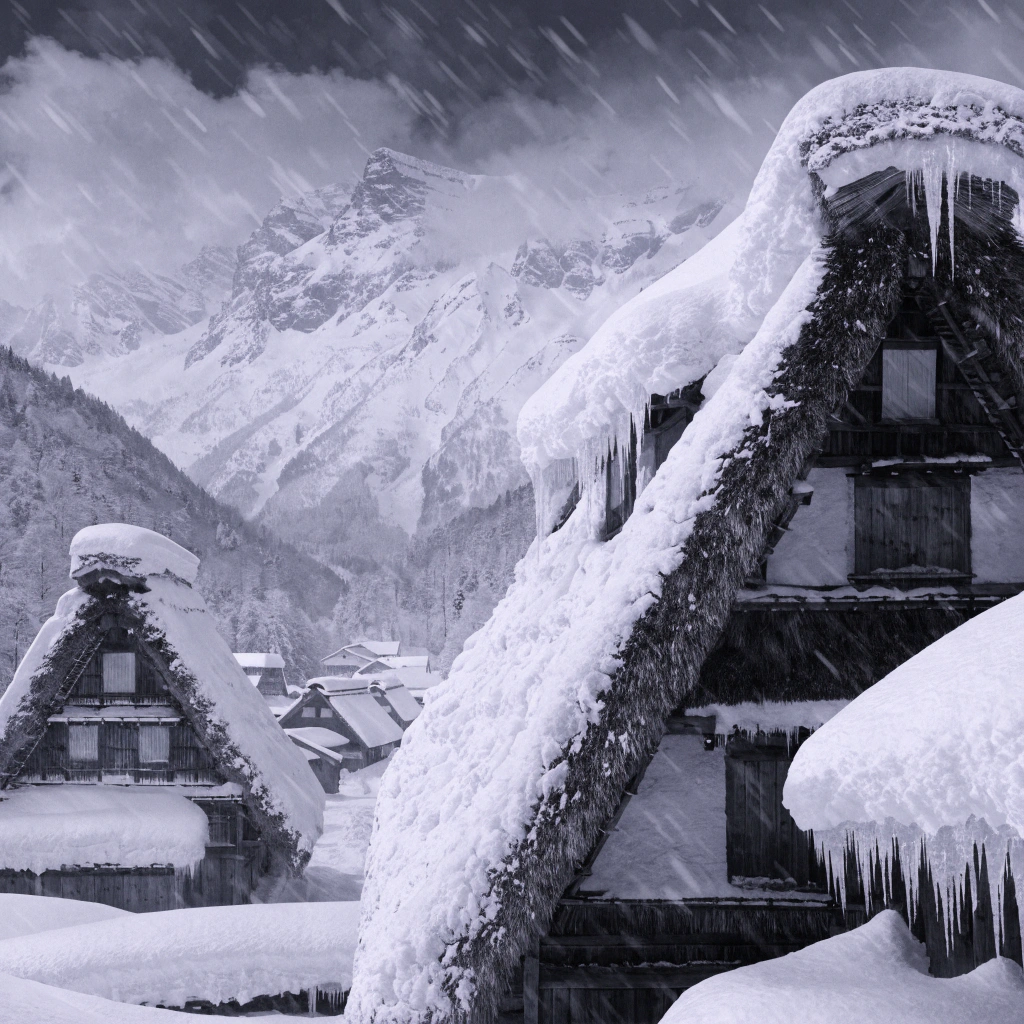
A Beautiful Village in Japan
Shirakawa-go is a very small village in Japan. It is high in the mountains. This place is famous because it is very old. Many people visit it every year. The houses in the village are very special. They have big, tall roofs made of grass. These roofs look like hands in prayer. They are strong for the heavy snow in winter. Some houses are more than 250 years old. You can walk inside the farmhouses. The village is quiet and peaceful. It is a beautiful place to see.
语法聚焦
句型: Present Simple of 'To Be'
"Shirakawa-go is a very small village in Japan."
We use 'is' for singular subjects to describe facts or states. It connects the subject to a description.
句型: Adjectives Before Nouns
"It is a beautiful place to see."
In English, we put the describing word (adjective) before the thing (noun). For example, 'beautiful' comes before 'place'.
测试你的理解
10 个问题 · A1 初学 · 1 次免费预览
测试你从这篇文章中学到的知识。回答所有问题即可获得经验值!
Where is the village of Shirakawa-go?
题目详情
Where is the village of Shirakawa-go?
你的回答:
正确答案: In Japan
The houses in the village are new.
你的回答:
正确答案: 错误
What does 'peaceful' mean?
你的回答:
正确答案: Quiet and calm
The village is high in the _____.
你的回答:
正确答案: mountains
The Beautiful Village of Shirakawa-go
Shirakawa-go is a very old and beautiful village in Japan. It is located in the mountains of Gifu. Many people visit this place because it looks like a storybook. In the past, the village was very quiet because the mountains were difficult to cross.
The village is famous for its special houses. They are called 'gassho-zukuri' houses. These houses have very steep roofs made of straw. The roofs look like hands in prayer. This shape is very important because it snows a lot in winter. The snow is heavier than in other parts of Japan, but it slides off the steep roofs easily.
Some of these houses are more than 250 years old. People still live in them today, and they take care of the village together. In 1995, Shirakawa-go became a UNESCO World Heritage site. Now, it is more popular than before. Visitors love to see the village in winter when everything is white and quiet. It is a peaceful place to learn about Japanese history.
语法聚焦
句型: Comparative Adjectives
"The snow is heavier than in other parts of Japan."
We use comparative adjectives to compare two things. For short words, we add '-er' and 'than'. For long words, we use 'more' before the adjective.
句型: Past Simple
"In 1995, Shirakawa-go became a UNESCO World Heritage site."
The past simple is used for actions that finished in the past. 'Became' is the past form of the irregular verb 'become'.
测试你的理解
11 个问题 · A2 基础 · 1 次免费预览
测试你从这篇文章中学到的知识。回答所有问题即可获得经验值!
Where is the village of Shirakawa-go located?
题目详情
Where is the village of Shirakawa-go located?
你的回答:
正确答案: In the mountains of Gifu
The roofs of the houses are flat.
你的回答:
正确答案: 错误
What does 'famous' mean?
你的回答:
正确答案: Known by many people
The roofs of the houses look like _____ in prayer.
你的回答:
正确答案: hands
Why are the roofs very steep?
你的回答:
正确答案: Because of the heavy snow in winter
Shirakawa-go: The Village of Prayer Hands
Deep in the mountains of Gifu Prefecture, you can find a village that looks like a scene from a fairy tale. This place is called Shirakawa-go, and it has been a UNESCO World Heritage site since 1995. It is famous for its traditional farmhouses, which are called 'gassho-zukuri'.
The name 'gassho-zukuri' means 'constructed like hands in prayer'. This refers to the steep, triangular roofs that are designed to withstand the heavy snow in this region. During the winter, the village is covered in deep, white snow, and the houses must be very strong. These roofs are made from straw, and they are built without using any nails. Instead, the villagers use ropes to hold the wooden beams together.
For hundreds of years, the people of Shirakawa-go have lived in harmony with nature. Because the village was isolated for a long time, the locals developed a unique culture. They have maintained these beautiful buildings through a tradition called 'yui'. This is a system where the whole community works together to replace the thatched roofs. It is a difficult job that requires many people to help.
Today, some of these farmhouses have been turned into museums or guest houses. Visitors who stay overnight can experience the traditional way of life. They can sit by the open fire and eat local food that has been prepared by the hosts. Shirakawa-go is a place where history has been preserved perfectly, offering a peaceful escape from the busy modern world.
语法聚焦
句型: Passive Voice
"This place is called Shirakawa-go, and it has been a UNESCO World Heritage site since 1995."
The passive voice is used here because the focus is on the village itself, not on who named it or who designated it. It is formed using the verb 'to be' and the past participle.
句型: Relative Clauses
"It is famous for its traditional farmhouses, which are called 'gassho-zukuri'."
The relative pronoun 'which' introduces extra information about the farmhouses. This helps connect ideas into longer, more complex sentences typical of B1 English.
测试你的理解
11 个问题 · B1 中级 · 1 次免费预览
测试你从这篇文章中学到的知识。回答所有问题即可获得经验值!
Why are the roofs in Shirakawa-go built with a steep, triangular shape?
题目详情
Why are the roofs in Shirakawa-go built with a steep, triangular shape?
你的回答:
正确答案: To withstand the heavy snow in the region
The villagers use metal nails to hold the wooden beams of the houses together.
你的回答:
正确答案: 错误
What does 'isolated' mean in the context of the article?
你的回答:
正确答案: Far away from other places and people
Shirakawa-go has been a UNESCO World Heritage _____ since 1995.
你的回答:
正确答案: site
What is 'yui'?
你的回答:
正确答案: A system where the community works together
The Architectural Resilience of Shirakawa-go: A Living Testament to Tradition
Tucked away in the mountainous Shogawa River valley of Gifu Prefecture, Shirakawa-go represents a remarkable fusion of human ingenuity and natural adaptation. This remote village, which was once largely inaccessible during the winter months, is world-renowned for its unique 'gassho-zukuri' farmhouses. These structures, some of which have stood for over two centuries, serve as a poignant reminder of a traditional lifestyle that has mostly vanished from modern Japan. Despite the challenges of the 21st century, the village remains a UNESCO World Heritage site, preserved as a symbol of cultural endurance.
The defining feature of these dwellings is their steep, thatched roofs, which are said to resemble hands pressed together in prayer. This design is not merely aesthetic; rather, it is a practical necessity born out of the region’s harsh climate. Given that the area experiences some of the heaviest snowfall in the world, the roofs must be constructed at a sharp angle to prevent the weight of the snow from crushing the buildings. Furthermore, the roofs are built without the use of nails, instead utilizing intricate wooden joints and ropes that allow the building to sway slightly during earthquakes, adding to its structural resilience.
Historically, the internal layout of these massive farmhouses was dictated by the local economy. The upper floors were primarily utilized for the cultivation of silkworms. This industry flourished because the heat rising from the ground floor—where families lived and maintained a constant fire in an open hearth—provided the ideal temperature for the larvae. Consequently, the architecture reflects a sophisticated understanding of thermodynamics and resource management. The community spirit, known as 'Yui', remains essential to this day, as the entire village collaborates to re-thatch a single roof, a labor-intensive process that requires dozens of workers.
While Shirakawa-go has transitioned from an isolated agricultural community into a global tourist destination, it faces the ongoing challenge of balancing commercial success with authentic preservation. The influx of tourists has undoubtedly boosted the local economy; however, it has also placed a strain on the delicate infrastructure. Efforts are being made to ensure that the village remains a living community rather than a mere open-air museum. By maintaining these ancient traditions, the residents of Shirakawa-go continue to honor their ancestors while successfully adapting to the demands of the modern era.
语法聚焦
句型: Participle Phrases for Providing Context
"Tucked away in the mountainous Shogawa River valley, Shirakawa-go represents a remarkable fusion..."
The past participle 'Tucked' begins a phrase that describes the subject 'Shirakawa-go'. This is a concise way to provide background information or setting at the start of a sentence.
句型: Relative Clauses with 'of which'
"These structures, some of which have stood for over two centuries, serve as a poignant reminder..."
This formal structure uses a quantifier (some) followed by 'of which' to provide additional information about a preceding noun (structures). It is common in academic or formal descriptive writing.
句型: Present Continuous Passive
"Efforts are being made to ensure that the village remains a living community..."
The structure 'are being made' focuses on the ongoing action rather than the person performing it. It is used to describe current trends, projects, or institutional actions.
测试你的理解
11 个问题 · B2 中高级 · 1 次免费预览
测试你从这篇文章中学到的知识。回答所有问题即可获得经验值!
What is the primary practical reason for the steep angle of the 'gassho-zukuri' roofs?
题目详情
What is the primary practical reason for the steep angle of the 'gassho-zukuri' roofs?
你的回答:
正确答案: To prevent heavy snow from damaging the structure
The farmhouses are constructed using metal nails to withstand earthquakes.
你的回答:
正确答案: 错误
Which word describes the ability of the buildings to withstand pressure or return to their original state?
你的回答:
正确答案: Resilience
The village is protected as a _____ World Heritage site.
你的回答:
正确答案: UNESCO
What does the term 'Yui' refer to in the context of the article?
你的回答:
正确答案: The communal spirit of helping each other
The Architectural Resilience of Shirakawa-go: A Synthesis of Tradition and Modernity
Nestled within the rugged topography of the Shogawa River valley in Gifu Prefecture, Shirakawa-go stands as a profound testament to human adaptability and cultural resilience. This UNESCO World Heritage site is not merely a picturesque relic of Japan’s pre-modern past; rather, it is a living embodiment of the 'gassho-zukuri' architectural style. Seldom has a community demonstrated such profound synergy between architectural design and environmental necessity. These farmhouses, characterized by their steep, thatched roofs, were engineered to withstand the region’s exceptionally heavy snowfall, which is among the most substantial in the world. The term 'gassho-zukuri' literally translates to 'constructed like hands in prayer,' a poignant metaphor for the structural form that prevents the accumulation of snow from crushing these wooden edifices.
The ingenuity of these structures extends beyond their aesthetic appeal. The vast attic spaces within these homes were historically utilized for sericulture—the rearing of silkworms—which provided a vital source of sustenance for the villagers during the long, isolated winters. This multifaceted use of space reflects a sophisticated understanding of resource management. Furthermore, the maintenance of these massive roofs requires a level of social cohesion that is increasingly rare in the contemporary world. It is the communal spirit, known as 'Yui,' that ensures the longevity of these thatched structures. Every few decades, the entire village converges to re-thatch a single roof, a labor-intensive process that underscores the interdependence of the inhabitants. Without this collective effort, the preservation of the village’s physical heritage would be an insurmountable challenge.
However, the transition of Shirakawa-go from a secluded agrarian community to a global tourist destination has not been without its complications. The commercialization of the village presents a stark dichotomy between economic viability and the erosion of cultural authenticity. While the influx of tourism has provided the financial capital necessary for the upkeep of the farmhouses, it has simultaneously transformed a private living space into a public spectacle. The precarious balance between welcoming visitors and maintaining the sanctity of the residents' daily lives is a central theme in the modern discourse surrounding the site. Some critics argue that the 'museumification' of the village risks stripping it of its ephemeral, lived-in quality, reducing a vibrant culture to a curated exhibit.
What remains clear is that the future of Shirakawa-go depends on a nuanced approach to heritage management. The integration of modern amenities within these ancient frames must be handled with extreme delicacy. The preservation of the village is not merely about maintaining the physical integrity of the wood and straw; it is about sustaining the intangible cultural heritage that gave rise to these forms. As globalization continues to homogenize architectural styles across the globe, the idiosyncratic beauty of Shirakawa-go serves as a reminder of the importance of localized knowledge. Ultimately, the village stands as a monument to a time when human habitation was dictated not by the mastery of nature, but by a harmonious, albeit arduous, dialogue with it.
语法聚焦
句型: Inversion after negative or restrictive adverbs
"Seldom has a community demonstrated such profound synergy between architectural design and environmental necessity."
Inversion is used for emphasis by placing the auxiliary verb before the subject. This structure is common in formal C1 writing to highlight rarity or importance.
句型: Cleft Sentences for Focus
"It is the communal spirit, known as 'Yui,' that ensures the longevity of these thatched structures."
Cleft sentences use 'It is/was... that...' to focus on a specific piece of information. Here, it emphasizes that the 'Yui' spirit, rather than any other factor, is responsible for the preservation.
句型: Nominalisation
"The commercialization of the village presents a stark dichotomy between economic viability and the erosion of cultural authenticity."
Nominalisation involves turning verbs or adjectives into nouns (e.g., 'commercialization', 'viability', 'erosion'). This creates a more academic, abstract, and sophisticated tone suitable for C1 analysis.
测试你的理解
12 个问题 · C1 高级 · 1 次免费预览
测试你从这篇文章中学到的知识。回答所有问题即可获得经验值!
What is the primary architectural purpose of the steep roofs in Shirakawa-go?
题目详情
What is the primary architectural purpose of the steep roofs in Shirakawa-go?
你的回答:
正确答案: To withstand the immense weight of heavy snowfall
The 'Yui' system refers to the financial capital provided by tourists to maintain the village.
你的回答:
正确答案: 错误
What does 'precarious' mean in the context of the article?
你的回答:
正确答案: Dangerously unstable or uncertain
The rearing of silkworms, or _____, was a vital source of income for the villagers.
你的回答:
正确答案: sericulture
What does the author suggest is a risk of 'museumification'?
你的回答:
正确答案: The living, vibrant culture will be lost to a static exhibit.
The article argues that the future of the village depends on balancing modern needs with ancient preservation.
你的回答:
正确答案: 正确
Architectural Resilience and the Socio-Cultural Paradigm of Shirakawa-go
Nestled within the undulating topography of the Shogawa River valley, the settlement of Shirakawa-go stands as a formidable bastion of Japanese tradition. This UNESCO World Heritage site, characterized by its idiosyncratic 'gassho-zukuri' farmhouses, offers a profound meditation on the symbiotic relationship between human habitation and the unforgiving elements of the natural world. Seldom does one encounter a landscape so profoundly evocative of a bygone era, where the socio-cultural fabric is woven inextricably with the threads of architectural necessity. To the casual observer, the village may appear frozen in a state of perpetual serenity; however, beneath this pastoral facade lies a history of rigorous adaptation and communal resilience.
The quintessential feature of these dwellings is their steep, thatched roofs, which resemble hands clasped in prayer—a gesture known as 'gassho.' This design is not merely an aesthetic choice but a sophisticated vernacular response to the region's arduous winters. Were the roofs to be less acute in their pitch, the staggering weight of the snowfall—often exceeding several meters in depth—would surely compromise the structural integrity of the entire edifice. The construction of these roofs is a paradigm of vernacular engineering, utilizing no metallic fasteners but rather a complex system of rope and wooden beams. This flexibility allows the structure to withstand both the crushing weight of winter snow and the seismic activity inherent to the Japanese archipelago.
Furthermore, the internal spatial organization of these farmhouses reflects a highly specialized socio-economic history. Traditionally, the upper floors were utilized for sericulture—the raising of silkworms—a practice that benefited from the heat rising from the hearth on the ground floor. This subterranean warmth, coupled with the insulating properties of the thick thatch, created a microclimate suitable for both human habitation and industrial production. It is this multifaceted utility that distinguishes the gassho-zukuri from other forms of traditional Japanese architecture, positioning it as a unique synthesis of domesticity and industry.
The preservation of Shirakawa-go is not merely a matter of material upkeep; it is inextricably linked to the concept of 'Yui,' a communal ethos of mutual assistance. Meticulously repairing a single roof is an ephemeral victory against the ravages of time, requiring the collective labor of the entire village. Every few decades, the thatch must be entirely replaced, a task that would be insurmountable for a single household. It is this very communal effort that underscores the fragility of such a heritage. As the younger generation increasingly migrates to urban centers in search of modern amenities, the traditional knowledge required for such labor-intensive upkeep becomes increasingly precarious. One might argue that the survival of the village depends less on the durability of the thatch and more on the continuity of the social bonds that facilitate its replacement.
Scholars and preservationists often posit that Shirakawa-go represents a living laboratory for the 'satoyama' concept—the harmonious coexistence of human communities and nature. However, the juxtaposition of modernity and tradition creates a palpable tension. While the influx of global tourism provides a necessary financial impetus for the restoration of these ancient structures, it simultaneously threatens to dilute the authenticity of the village’s lived experience. There is a risk that the village may devolve into a curated spectacle, a hollowed-out version of its former self, designed primarily for the consumption of the 'tourist gaze.' The challenge, therefore, lies in maintaining a delicate equilibrium between economic viability and the preservation of a functional, authentic community.
In conclusion, Shirakawa-go serves as a poignant reminder of the ingenuity inherent in vernacular architecture. It challenges the contemporary observer to consider how the built environment can reflect a profound respect for local ecology while fostering a resilient socio-cultural identity. To walk through its mist-shrouded lanes is to step into a world where every beam and every wisp of thatch tells a story of endurance, cooperation, and an unwavering commitment to the preservation of the past. It is an architectural testament to the fact that, even in an ever-accelerating globalized world, there remains a place for the slow, the communal, and the meticulously crafted.
语法聚焦
句型: Negative Inversion
"Seldom does one encounter a landscape so profoundly evocative of a bygone era, where the socio-cultural fabric is woven inextricably with the threads of architectural necessity."
When a negative adverbial like 'seldom' starts a sentence, the auxiliary verb and subject are inverted for rhetorical emphasis. This is common in academic and formal prose to heighten the tone.
句型: Second Conditional (Subjunctive)
"Were the roofs to be less acute in their pitch, the staggering weight of the snowfall—often exceeding several meters in depth—would surely compromise the structural integrity of the entire edifice."
The 'Were [subject] to [verb]' structure is a formal alternative to 'If the roofs were...'. It expresses a hypothetical situation in a sophisticated, scholarly manner.
句型: Cleft Sentence for Emphasis
"It is this multifaceted utility that distinguishes the gassho-zukuri from other forms of traditional Japanese architecture, positioning it as a unique synthesis of domesticity and industry."
A cleft sentence (It is... that...) focuses the reader's attention on a specific element of the sentence—in this case, the 'multifaceted utility'—to highlight its importance.
测试你的理解
12 个问题 · C2 精通 · 1 次免费预览
测试你从这篇文章中学到的知识。回答所有问题即可获得经验值!
What is the primary functional reason for the steep pitch of the gassho-zukuri roofs?
题目详情
What is the primary functional reason for the steep pitch of the gassho-zukuri roofs?
你的回答:
正确答案: To prevent the collapse of the structure under the weight of heavy snow.
The construction of the farmhouses relies heavily on metal nails to withstand seismic activity.
你的回答:
正确答案: 错误
Which word best describes a relationship that is mutually beneficial to all parties involved?
你的回答:
正确答案: Symbiotic
The village is described as a _____ of Japanese tradition, defending it against the pressures of the modern world.
你的回答:
正确答案: bastion
What does the concept of 'Yui' refer to in the context of the article?
你的回答:
正确答案: A communal system of mutual labor and assistance.
The article suggests that global tourism is purely beneficial for the preservation of Shirakawa-go's authenticity.
你的回答:
正确答案: 错误

